
News
Zulum Urges FG to Protect Chad Basin Assets as Senate Probes Alleged Irregular Auction of Equipment

Zulum Urges FG to Protect Chad Basin Assets as Senate Probes Alleged Irregular Auction of Equipment
By: Zagazola Makama
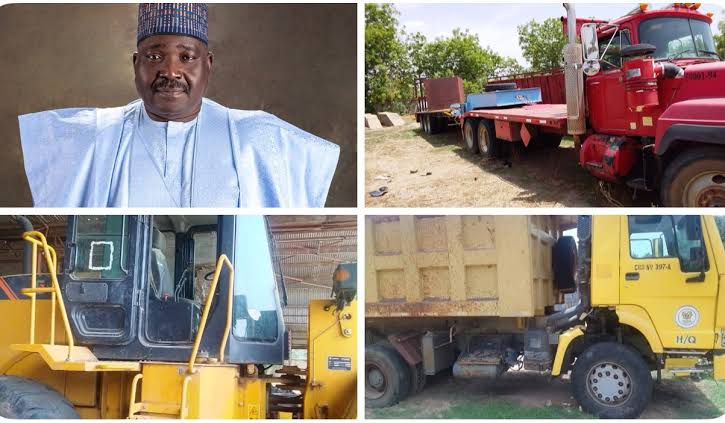
Gov. Babagana Zulum of Borno has called on the Federal Government to safeguard critical assets belonging to the Chad Basin Development Authority (CBDA), warning that attempts to dispose of serviceable equipment under the guise of scrap metal auction could undermine agricultural recovery and economic development in the Lake Chad region.
Zulum’s call comes amid growing controversy surrounding allegations of irregular asset disposal, revenue diversion and financial misconduct within the authority, allegations that have also attracted the attention of the Senate Committee on Water Resources and Sanitation.
The governor, in a statement issued by the Directorate of Information, Ministry of Information and Internal Security, Borno State, expressed concern over reports that some individuals were attempting to remove operational equipment from CBDA facilities across northern Borno.
“It has come to the attention of the Borno State Government that some unscrupulous elements are attempting to cart away the heavy equipment domiciled at the CBDA premises and booster stations across Northern Borno in the name of scrap metal auctioning.
“The Federal Government procured this equipment at a high cost, and it is serviceable. There is no reason whatsoever to auction them, as doing so will decapitate the CBDA and cripple the agricultural value chain in our state,” Zulum said.
The governor noted that the Federal Government established the CBDA to harness the agricultural and water resources potential of the Lake Chad Basin through irrigation farming, livestock production, water supply and rural development programmes.
According to him, the recent reconstitution of the authority’s management by the Federal Ministry of Water Resources was intended to revive the organisation’s mandate and support food security, agricultural development and rural livelihoods across the North-East.
Zulum listed some of the equipment allegedly being targeted for disposal as irrigation facilities, booster stations, drilling machines, electricity-generation equipment, tractors, bulldozers, combine harvesters, pipelines and crop-processing machines.
He warned that removing such assets would effectively cripple the authority’s operational capacity and undermine efforts to revitalise agriculture in the region.
The governor further linked illegal metal scavenging to insecurity in Borno, noting that scrap metal activities had previously been associated with criminal networks and insurgent elements operating around the Lake Chad Basin, Sambisa Forest and the Timbuktu Triangle.
“In the context of Borno State, any attempt to allow metal scavenging will not only bolster insurgency and criminality but will also sabotage national defence and security,” he said.
Zulum reiterated that the state’s ban on scrap metal activities remained in force and urged the Presidency, the Federal Ministry of Water Resources and security agencies to intervene and prevent the removal of public assets.
His intervention follows a series of allegations raised by whistleblowers within the authority and publicised in investigative reports, which claimed that assets originally classified as unserviceable were being disposed of through a controversial auction process.
The reports alleged that the disposal exercise had expanded beyond obsolete equipment to include serviceable and recently acquired government assets procured between 2020 and 2023.
According to the allegations, equipment reportedly affected include excavators, bulldozers, graders, drilling rigs, tractors, fuel tankers, combine harvesters, generators, transformers, official vehicles and other machinery linked to federal projects in Borno.
The whistleblowers further alleged that the disposal process lacked transparency and may have been conducted without adequate stakeholder consultation, public advertisement or competitive bidding.
They also raised concerns about alleged diversion of internally generated revenue from equipment leasing and guest house operations.
The reports named members of the current management led by the Managing Director, Tijjani Musa Tumsah, alongside other senior officials of the authority.
The controversy prompted the Senate Committee on Water Resources and Sanitation to summon the management of the authority for an investigative session at the National Assembly.
In a letter dated May 26, 2026, signed by the Clerk of the Committee, Mr Ememike Nwofor Leonard, the Senate directed the authority’s leadership to appear before it and provide comprehensive documentation relating to the ongoing disposal of assets.
The committee requested details including asset registers, valuation reports, bidding documents, approvals from relevant regulatory agencies, records of stakeholder consultations and information on successful bidders.
The Senate said it was concerned that it had not been adequately briefed on the rationale, approval procedures and statutory compliance governing the disposal of what it described as strategic public assets.
Invoking its oversight powers under Sections 88 and 89 of the Constitution, the committee also demanded evidence of approvals from relevant institutions, including the Bureau of Public Procurement (BPP) and the Bureau of Public Enterprises (BPE).
The whistleblowers have similarly called on anti-corruption agencies, including the Economic and Financial Crimes Commission (EFCC) and the Independent Corrupt Practices and Other Related Offences Commission (ICPC), to investigate the allegations.
As of the time of filing this report, the management of the Chad Basin Development Authority had not issued any official response to the allegations.
Zulum Urges FG to Protect Chad Basin Assets as Senate Probes Alleged Irregular Auction of Equipment


Male Leaders Key to Ending GBV, Changing Harmful Norms in West Africa, FG Says
By: Michael Mike
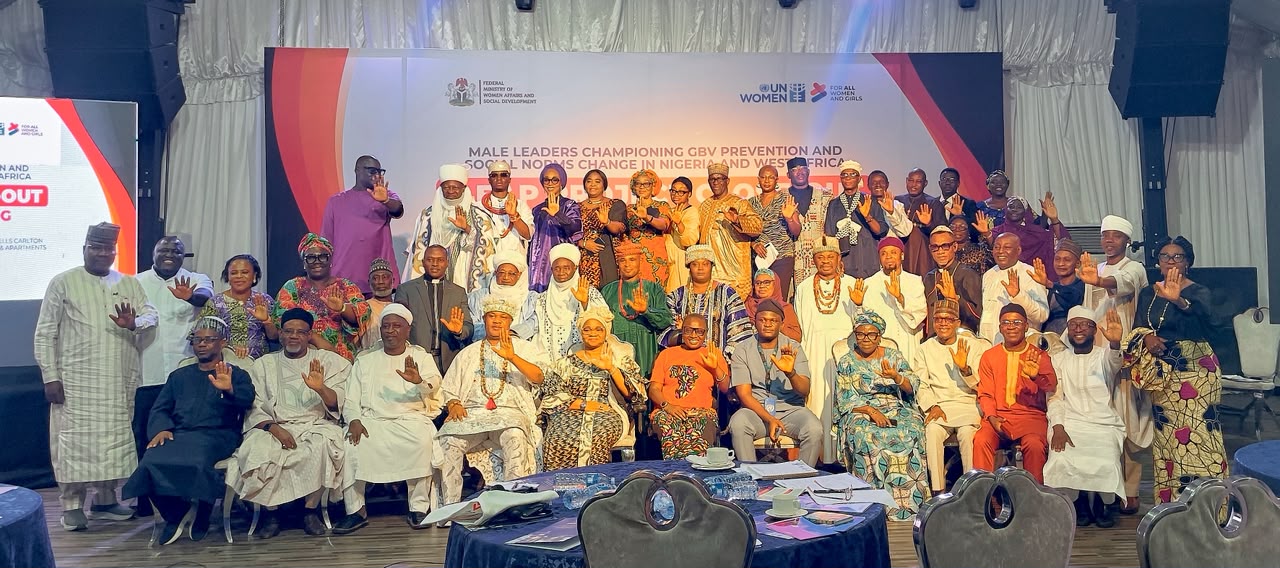
The Federal Government, UN Women and development partners on Monday declared traditional, religious and community leaders as indispensable allies in the campaign to end gender-based violence (GBV) and dismantle harmful social norms across Nigeria and West Africa, even as they announced a new regional initiative to tackle the growing threat of technology-facilitated violence against women and girls.
The commitment was reaffirmed at the close-out of the Leadership, Engagement, Advocacy and Prevention (LEAP) Project, a three-year Ford Foundation-funded programme implemented by UN Women to mobilise traditional and cultural leaders against GBV.
Speaking at the event in Abuja, the Minister of Women Affairs, Hajiya Imaan Sulaiman-Ibrahim, said sustainable progress in ending violence against women and girls would depend on the willingness of influential community leaders to challenge harmful cultural practices and champion gender equality.
She described traditional and religious institutions as powerful agents capable of transforming attitudes that perpetuate violence and discrimination against women and girls.
The minister stressed that changing harmful social norms required collective action beyond government interventions, urging community leaders to continue using their influence to promote dignity, justice and equal opportunities.
UN Women, however, said the conclusion of the LEAP Project marked not the end of the movement but the beginning of a broader regional campaign.
In remarks delivered on behalf of the UN Women Representative to Nigeria and ECOWAS, Beatrice Eyong, the organisation announced that the Ford Foundation had approved renewed funding for a new regional initiative titled “Community-Led Advocacy and Digital Spaces for the Safety of Women and Girls in West Africa.” The programme will be implemented in Nigeria, Ghana and Senegal and will build on the gains recorded under the LEAP Project by strengthening collaboration with traditional and religious leaders, community institutions and women’s rights organisations.
According to UN Women, the new initiative will also confront one of the fastest-growing forms of violence affecting women and girls—technology-facilitated gender-based violence—including online harassment, cyberstalking, image-based abuse and online exploitation.
The organisation said trusted traditional and religious leaders who had successfully driven change within their communities would now be equipped to promote safe, respectful and inclusive digital spaces, extending the fight against GBV from physical communities to the online environment.
UN Women also highlighted encouraging national data suggesting that prevention efforts were beginning to yield measurable results.
Citing findings from the 2024 Nigeria Demographic and Health Survey, the agency said the prevalence of sexual violence against women declined from nine per cent in 2018 to five per cent in 2024, while physical violence since age 15 dropped from 31 per cent to 19 per cent. Intimate partner violence also fell from 36 per cent to 23 per cent, and female genital mutilation declined from 20 per cent to 14 per cent over the same period.
Nevertheless, UN Women cautioned that declining rates of help-seeking among survivors underscored the need for stronger survivor-centred services, improved reporting mechanisms, psychosocial support and greater access to justice.
The organisation noted that over the three years of implementation, the LEAP Project helped traditional and religious leaders publicly reject harmful practices, strengthened partnerships between governments and traditional institutions, engaged more men and boys as allies, and established community accountability mechanisms that empowered women and girls to seek support. It also facilitated collaboration with Liberia, Sierra Leone, Senegal, Niger and Ghana in developing a Regional Accountability Framework for Traditional Leaders on Gender-Based Violence Prevention.
Stakeholders at the event maintained that while significant progress had been made, sustained investment in prevention, stronger partnerships with community leaders and continued regional cooperation would be critical to eliminating gender-based violence and ensuring that cultural and religious institutions become enduring champions of women’s rights across West Africa.
Male Leaders Key to Ending GBV, Changing Harmful Norms in West Africa, FG Says
News
Marwa Inaugurates Historic Weapons Training for NDLEA Officers, Inducts AK-47 Rifles After 36 Years
Marwa Inaugurates Historic Weapons Training for NDLEA Officers, Inducts AK-47 Rifles After 36 Years
By: Michael Mike
The National Drug Law Enforcement Agency (NDLEA) on Monday formally commenced the induction of assault rifles and advanced pistols into its operational structure for the first time since its establishment 36 years ago, marking a significant shift in its strategy to confront increasingly armed and violent drug trafficking syndicates.
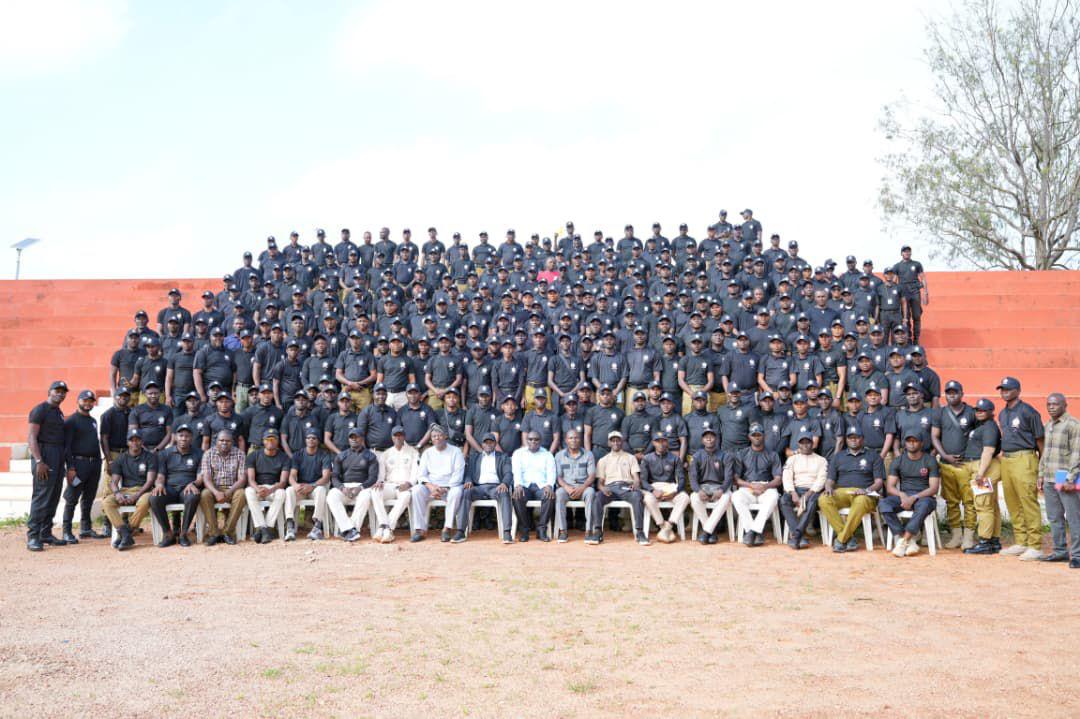
The landmark development was unveiled by the Chairman/Chief Executive Officer of the agency, Brigadier General Buba Marwa (rtd), during the inauguration of a specialised Train-the-Trainer Course on Weapon Handling at the NDLEA Academy in Jos, Plateau State.
The training, which focuses on the handling of AK-47 Type 56-1 rifles and HS-9/CF98A pistols, is designed to produce pioneer instructors who will subsequently train officers across the country’s commands before the weapons are deployed for operational use.
Represented by his Chief of Staff, Colonel Murtala Aminu, Marwa said the initiative reflected the changing realities of Nigeria’s anti-drug war, noting that drug trafficking organisations had evolved into heavily armed criminal networks capable of confronting law enforcement officers.
“The nature of the war we fight has evolved,” he said. “Drug trafficking organisations are no longer mere commercial criminal enterprises; they are armed, organised and ruthless. Our officers face increasing danger in the field, and it would be unconscionable to send men and women into harm’s way without the tools and training to protect themselves and the public they serve.”
He stressed that the programme was not merely about introducing firearms but about protecting the lives of personnel while strengthening the agency’s capacity to combat organised crime.
Marwa attributed the milestone to the support of President Bola Tinubu, commending him for prioritising the strengthening of the agency’s operational capabilities.
He also acknowledged the Office of the National Security Adviser (ONSA) for facilitating the immediate release of an initial consignment of firearms and ammunition, which enabled the commencement of the training programme.
Providing details of the procurement process, Marwa disclosed that the acquisition of the weapons, initiated in 2023 through China North Industries Corporation (NORINCO), had reached its final phase.
According to him, thousands of AK-47 rifles, pistols and ammunition are expected to arrive shortly, while a comprehensive distribution and accountability framework has already been approved to ensure transparency in their deployment.

He added that the agency was collaborating with the Nigerian Air Force to airlift the weapons to commands across the country for secure distribution.
Marwa described the pioneer participants as the foundation upon which the NDLEA’s future weapons-handling culture would be built, charging them to uphold professionalism, discipline and strict adherence to safety standards.
“You are the first. You are the standard-bearers. The operational culture, the safety ethos and the professional discipline that will define how the NDLEA handles weapons all begin here,” he said.
He urged the trainees to regard weapons handling as a grave responsibility rather than a privilege, insisting that every firearm must be handled with utmost caution.
He further emphasised that technical proficiency must always be guided by ethics, restraint, sound judgement and strict compliance with the rules of engagement and the rule of law.
According to him, the authority conferred by firearms should never be abused but exercised responsibly in protecting lives and safeguarding the public.
Marwa said the introduction of tactical weapons represented another milestone in the agency’s transformation into a more professional and effective institution.
He noted that in recent years the NDLEA had recorded unprecedented seizures of illicit drugs, dismantled major trafficking syndicates and secured convictions against notorious drug traffickers.
“The induction of more arms into our operational inventory is the next chapter in that story, and it is a chapter that must be written with honour,” he said.
The agency has in recent years intensified nationwide operations against drug trafficking and abuse, leading to record seizures of narcotics, arrests of traffickers and destruction of cannabis plantations across several states.
The formal arming of selected operational personnel is expected to strengthen officers’ ability to protect themselves during high-risk interdictions and confront increasingly sophisticated criminal networks involved in illicit drug trafficking.
Marwa Inaugurates Historic Weapons Training for NDLEA Officers, Inducts AK-47 Rifles After 36 Years
Army EOD Team Discovers, Destroys Two Terrorist IEDs in Borno
By Zagazola Makama
Troops of the Nigerian Army’s 5 Brigade Explosive Ordnance Disposal (EOD) Team have successfully discovered and safely disposed of two Improvised Explosive Devices (IEDs) planted by suspected terrorists in Mobbar Local Government Area of Borno State.
Military sources told Zagazola Makama that the operation was carried out at about 5:40 p.m. on June 26 in Wokilti Village following intelligence and routine counter-IED clearance activities in the area.
According to the sources, the explosives were carefully concealed and buried by terrorists along a route believed to be used by troops and civilians, in what appeared to be an attempt to inflict casualties and disrupt ongoing military operations.
The EOD team, using specialised detection and disposal procedures, identified the buried explosives and successfully rendered both devices safe without any casualties or damage.
The sources noted that the prompt discovery and destruction of the IEDs averted a potentially deadly incident and underscored the importance of sustained counter-IED operations in areas previously exploited by terrorist groups.
Military authorities have urged residents to remain vigilant and promptly report suspicious objects or movements to security agencies, as terrorists continue to employ improvised explosive devices in attempts to impede military advances and endanger civilian lives.
Army EOD Team Discovers, Destroys Two Terrorist IEDs in Borno

Male Leaders Key to Ending GBV, Changing Harmful Norms in West Africa, FG Says

Marwa Inaugurates Historic Weapons Training for NDLEA Officers, Inducts AK-47 Rifles After 36 Years

Army EOD Team Discovers, Destroys Two Terrorist IEDs in Borno

Roger Federer’s Shock as DNA Results Reveal Myla and Charlene Are Not His Biological Children

THE PLIGHT OF FARIDA

FAILED COUP IN BURKINA FASO: HOW TRAORÉ NARROWLY ESCAPED ASSASSINATION PLOT AMID FOREIGN INTERFERENCE CLAIMS
-
 News2 years ago
Roger Federer’s Shock as DNA Results Reveal Myla and Charlene Are Not His Biological Children
-
Opinions4 years ago
THE PLIGHT OF FARIDA
-
 News1 year ago
FAILED COUP IN BURKINA FASO: HOW TRAORÉ NARROWLY ESCAPED ASSASSINATION PLOT AMID FOREIGN INTERFERENCE CLAIMS
-

 News2 years ago
EYN: Rev. Billi, Distortion of History, and The Living Tamarind Tree
-
 Opinions5 years ago
POLICE CHARGE ROOMS, A MINTING PRESS
-

 ACADEMICS2 years ago
A History of Biu” (2015) and The Lingering Bura-Pabir Question (1)
-

 Columns2 years ago
Army University Biu: There is certain interest, but certainly not from Borno.
-

 Politics1 year ago
2027: Why Hon. Midala Balami Must Go, as Youths in Hawul and Asikira/Uba Federal Constituency Reject ₦500,000 as Sallah Gift
