
News
Benue communal crisis: Journalist losses aunt, raise the alarm over threat to life

Benue communal crisis: Journalist losses aunt, raise the alarm over threat to life
By: Michael Mike
Known as the Food Basket of the Nation, Benue is gradually losing that epic crest to be christened the epicentre of crisis.
In virtually all parts of the state hardly a week pass without the record of one damning crisis or the other that have left the state in a shadow of its old self.
If the crisis is not armed herdsmen induced, it is local bandits instigated or communal bloody fight that leaves in its wake sorrows, tears and blood.
It’s been all tales of woes for a people who usually pride themselves as the food power house of the country where several of the grains, citrus, yam, cassava, rice, tomatoes, pepper, ginger, melon and several other are farmed in commercial qualities and hauled to other parts of the country.
Unfortunately the state is fast losing that panache that makes it stand out among the committee of states in the country owing to the ceaseless attacks and killings.
There is no gainsaying that Benue is currently bleeding and not a few families are being set backwards as a result of the crisis.
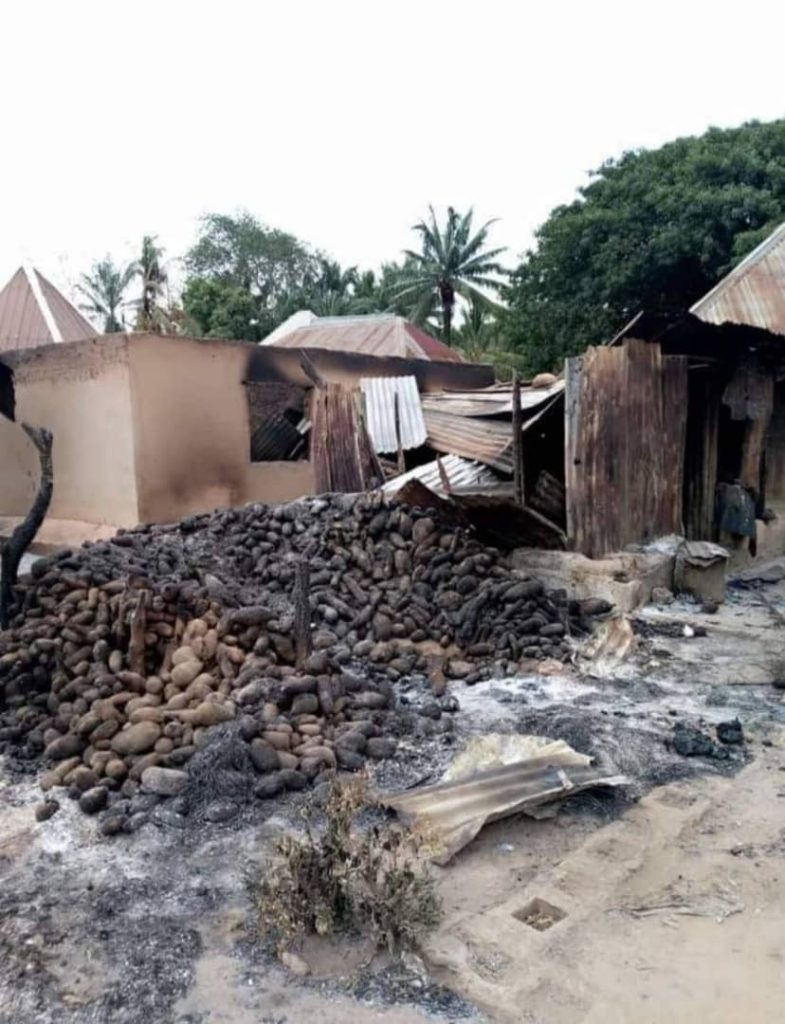
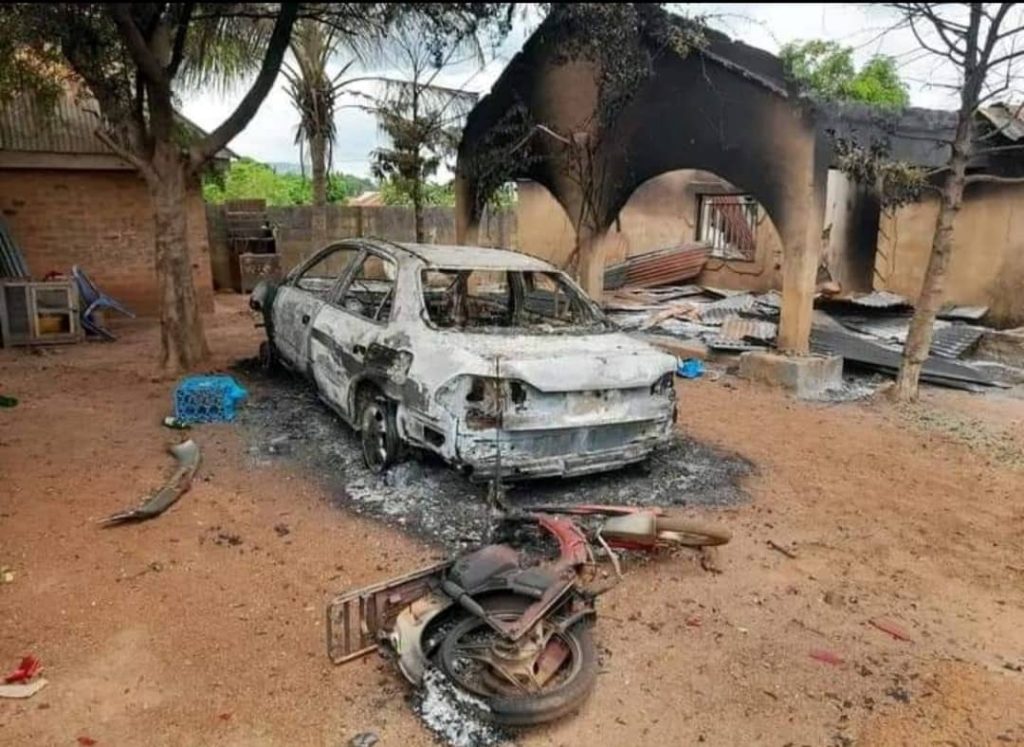
Many have continued to lose their sources of livelihood, homes, properties and loved ones in the crisis in parts of the state that have defiled all manner of intervenes to have them nipped in the bud.
From Agatu to Apa, Otukpo to Ogbadibo. From Gwer West to Makurdi and Guma, down to Gwer East LGAs; from Ukum all the way to Kwande LGAs it’s been same sad story of crisis.
The implication is that families have been rendered homeless and denied access to their farmlands. Thousands of these families have found solace in Internally Displaced Persons, IDPs, camps where they are surviving on the goodwill of spirited individuals and organisations.
While majority of these displaced persons were victims of armed herdsmen incursions in several Benue communities many others have not known peace because of bloody crisis between neighbouring sister communities that ordinarily should be in peace with each other.
Of special mention is the Mbarvu and Mbasombo communities in Gwer East LGA of the state where all known measures have been taken by the state government to end the bloody conflict over a parcel of land the warring sister communities have resisted all the peace initiatives to end.
The then Governor of the state, Chief Samuel Ortom had also in May 2020 suspended two traditional rulers of both communities, Chief Peter Ikyum of Ishough and Chief Ager Kuhe of Mbasombo, in oder to compel the warring communities to sheath their sword but they remained adamant.
Even the threat by the present administration in June 2023 to take over the disputed land has not been able to convince the hitherto good neighbours to drop their arms and embrace peace.
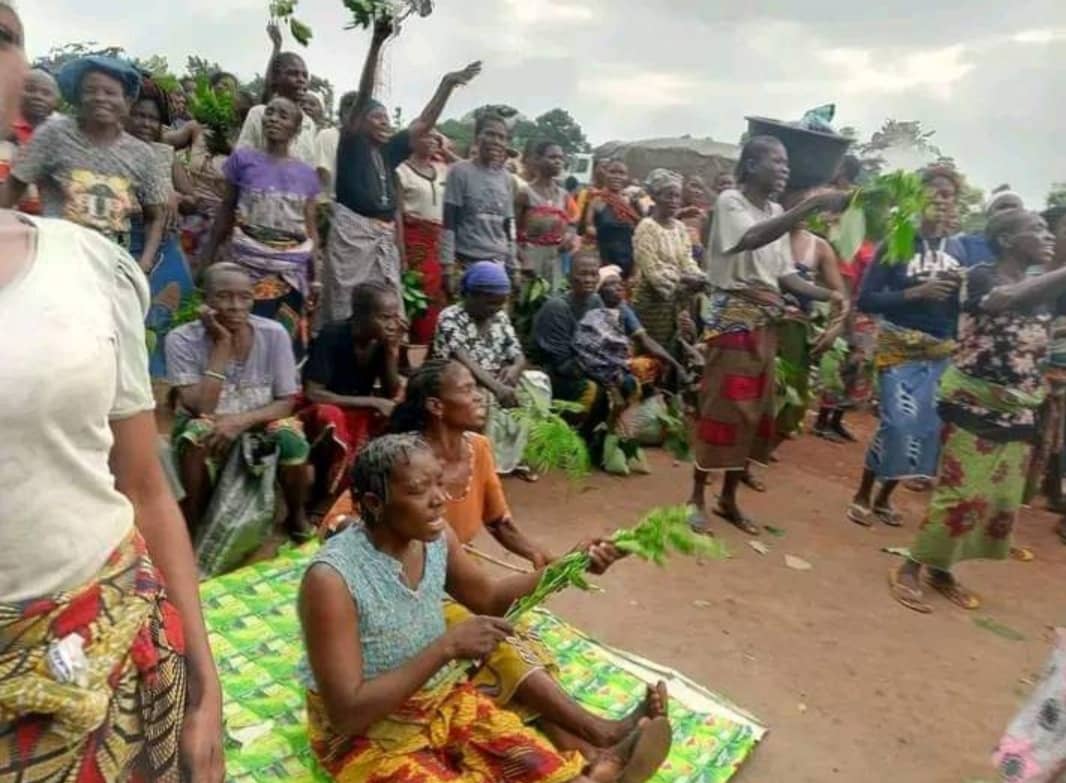
Bothered by the level of attacks and killings in the crisis, women of both communities had also defied the heavy downpour, trooped out in their thousands and took over the busy Makurdi-Aliade road at Ikpayonge to protest the crisis, the destruction of properties including farmland and farm produce as well as the loss of innocent lives.
The development left road users and commuters stranded for several hours as long queues of cars and trucks coming from the South to the Northern part of the country and those from the Northern part of the country conveying goods and commuters to the South were left stranded.
The angry protesters who sang solidarity songs as they marched for hundreds of meters to register their anger over the needless bloodbath in their communities lamented the incessant killings and razing of houses in the two warring sister communities.
It took the intervention of the Speaker of the Benue State House of Assembly, Mr. Aondona Dajoh and his colleagues who were all drenched in rain water, to calm the angry protesters.
The Woman Leader of Mbakough Kindred, Mrs. Veronica Orbunde who addressed the lawmakers said the peaceful demonstration was to draw government’s attention to the use of militia by the fueding parties, who rape innocent women in their farms and also kidnap and kill some of their husbands for no justifiable reasons.
She said, “we are tired of this crisis and we are pleading with the sister communities to end this senseless killings and destruction of properties in our communities.”
Addressing the huge crowd after inspecting the destruction at the Ikpayongo market in one of the attacks, the Speaker who expressed worry at the development appealed to the warring communities to embrace peace and stop the incessant killings and destruction of properties, assuring that the government would deploy more security personnel to the area to protect the lives and properties of the people.
Among the women who lost loved ones, property and farmland as well as farm produce in the crisis is Victoria Ojeme, a journalist of repute who is currently facing grave danger after losing an aunt in the crisis.
Mrs Ojeme who has unfortunately become a target for attack by the rampaging militia prosecuting the bloody crisis hails from Mbarvu, one of the communities at the centre of the crisis.
Nararting her ordeal, Ojeme said “I hail from Gwer East LGA of Benue state, Mbarvu community specifically. I am the third daughter of Pa Atule Humbe and my late mother’s name is Mama Bridget Humbe.
“I have been in shock for the past three years and has also stayed away from my community for several years after receiving so many threats from the neighbouring community that has been at loggerheads with my community.
“They have threatened all the youths for coming back home and for those who thought the threat was just a mere threat, never came back alive.
“So many houses have been razed down, the elderly that could not flee were slughtered by the invading community,
“In one of the attacks they killed my Aunt the only surviving woman in my father’s house. Today my life is also in danger. They feel that some of us are crying out about the spate of attacks and killings in the senseless crisis and I have become a target.
“I appeal to the government to take decisive steps to end the crisis as the loss of innocent lives and destruction of properties is already taking its toll on the farming populace who have all deserted their ancestral homes and farmland and have become Internally Displaced Persons, IDPs, in their own state.”
Benue communal crisis: Journalist losses aunt, raise the alarm over threat to life



Troops neutralise three terrorists after ambush on Miyanti-Banki route
By: Zagazola Makama
Troops of the 151 Task Force Battalion have neutralised three terrorists following an ambush on the Maiduguri-Miyanti-Banki Junction route in Borno State.
The incident occurred at about 8:30 a.m. on Sept. 1, when the troops, while conducting route-scanning operations along the major road, came under attack by terrorist elements.

According to sources, the terrorists initiated the attack with a concealed improvised explosive device (IED), followed by heavy volume of fire.
The troops fought through the ambush and subsequently launched an immediate exploitation operation against the attackers.
During the encounter, three terrorists were neutralised, while troops recovered one AK-47 rifle, one AK-47 magazine, 14 rounds of 7.62mm special ammunition and one concealed IED.
On the side of the troops, one soldier sustained injuries during the engagement and was evacuated to 21 Specialised Brigade Hospital, Maiduguri, where he is reportedly stable and receiving medical attention.

The attack also resulted in damage to the windscreen of one of the troops’ gun trucks.
The latest incident underscores the continued threat posed by terrorist elements along major routes in Borno State, particularly through the use of IEDs and ambush tactics against military patrols.
The military said the general security situation across the theatre remained calm but unpredictable, while troops’ morale and fighting efficiency remained satisfactory.
Troops continue to maintain offensive and route-clearance operations to disrupt terrorist activities and ensure the safety of civilians and motorists across the theatre.
Troops neutralise three terrorists after ambush on Miyanti-Banki route
Governor Lawal woos investors, highlights Zamfara’s economic opportunities at CEO Forum
Lagos, Sept. 1, 2026 — Zamfara State Governor, Dauda Lawal, has called for stronger collaboration between government, businesses and investors to unlock private capital and drive inclusive economic growth in the state.
Lawal made the call while delivering a Special Policy Address at the 2026 CEO Forum organised by the Global Compact Network Nigeria in Lagos.
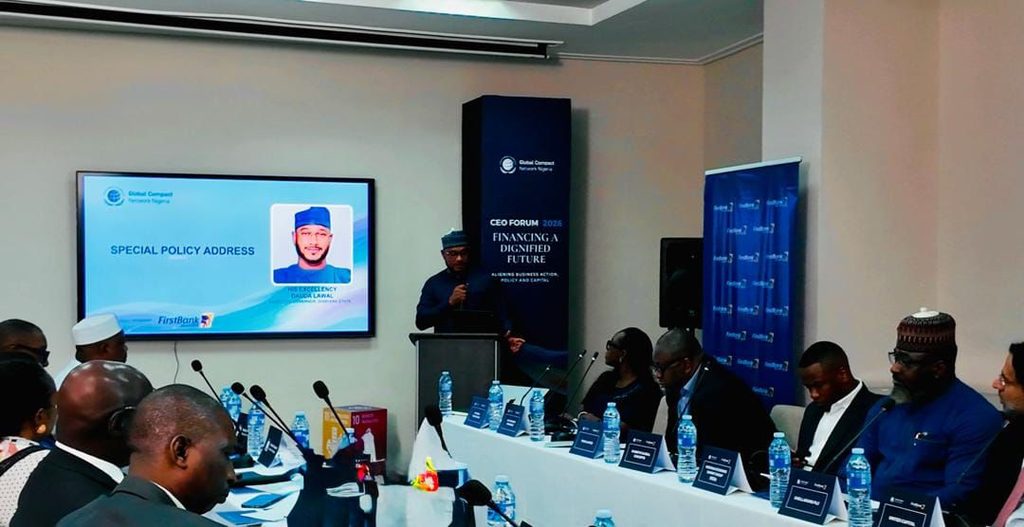
The forum, held under the theme “Financing a Dignified Future: Aligning Business Action, Policy and Capital,” brought together chief executives, senior government officials, industry leaders, diplomats, trade commissioners and international development partners.
Participants were drawn from key sectors of the economy, including oil and gas, energy, manufacturing, construction and infrastructure.

The governor spoke on the growing competition among states for increasingly selective private capital and the factors that could transform an economic opportunity into an investable proposition.
He explained how his administration was working to bridge the gap between available economic opportunities and investment, with emphasis on building investor confidence while ensuring that investments deliver meaningful outcomes for the people of Zamfara.
According to him, attracting investment requires more than identifying economic opportunities, but also creating the conditions, policies and partnerships capable of giving investors confidence to commit capital.
The forum provided a platform for business leaders, government officials and investors to examine ways of aligning business strategies, public policies and capital deployment to unlock productive investment.
Discussions also focused on identifying businesses, sectors and projects with strong potential but facing difficulties in accessing financing, as well as measures to make such opportunities more attractive to investors.

The organisers also introduced the concept of the “Dignity Dividend,” examining how investment-led growth could translate into better jobs, stronger businesses, increased productivity, local value creation and broader economic participation.
Another key component of the forum was the identification of actionable commitments and partnerships that participating institutions could advance over the next six to 12 months.
Notable speakers at the event included chief executives of First Bank Group, Access Bank, Flour Mills of Nigeria Plc, Nigeria Economic Summit Group, Nigerian Exchange Group, Chellarams Plc, SecureID Group and Greenwich Merchant Bank Plc, among others.
The organisers said the session would culminate in a live showcase of the Business Value and Sustainability Platform (BVSP), described as a standing coalition of business, capital and policy actors designed to sustain the dialogue.
The platform is also expected to contribute to shaping Nigeria’s private-sector engagement during the United Nations General Assembly High-Level Week.
The governor’s participation in the forum comes as Zamfara seeks to strengthen its economic base, attract productive investment and create opportunities that can support sustainable livelihoods and wider participation in the state’s economy.
Governor Lawal woos investors, highlights Zamfara’s economic opportunities at CEO Forum

Buni declares open a two-day workshop for 150 media assistants in Yobe
By: Yahaya Wakili
Yobe State Governor. Mai Mala Buni, CON, COMNCOMN, has described the media assistants as an important link between the government, political leadership, and the people.
The governor revealed this today in Kano while declaring a two-day strategic communication workshop for over 150 media and photography aides serving in his administration.

Ably represented by the secretary of the state government, Dr. Ammed Goje. Governor Buni urged the media aides to communicate government policies and programs accurately and responsibly.
The governor charged them to uphold truth, credibility, and professionalism in public communication and also warned them against misinformation and reckless use of digital platforms capable of undermining peace and public confidence.

He further also cautioned them against using communication platforms for insults, misinformation, character assassination, ethnic profiling, religious incitement, and the deliberate spread of falsehoods. Governor Buni maintained that government achievements should be communicated based on verifiable evidence rather than manufactured claims.
“Engage in facts, defend government with evidence, correct misinformation with civility, and disagree without insulting to help protect the peace, unity, and social cohesion of Yobe State. Speaking earlier, the Commissioner for Home Affairs, Information, and Culture, Hon. Abdullahi Bego, commended Governor Mai Mala Buni, COMNCOMN, for investing in the continuous capacity development of his media aides.
Bego further described the workshop as the second major capacity-building exercise organized by the governor’s media team within one year.
The commissioner maintained that the initiative reflected the administration’s commitment to strengthening professional communication.
He called on the participants to acquire relevant digital skills and use social media strategically and responsibly to communicate government programs and engage citizens.
Buni declares open a two-day workshop for 150 media assistants in Yobe.

Troops neutralise three terrorists after ambush on Miyanti-Banki route
Governor Lawal woos investors, highlights Zamfara’s economic opportunities at CEO Forum

Buni declares open a two-day workshop for 150 media assistants in Yobe

Roger Federer’s Shock as DNA Results Reveal Myla and Charlene Are Not His Biological Children

THE PLIGHT OF FARIDA

FAILED COUP IN BURKINA FASO: HOW TRAORÉ NARROWLY ESCAPED ASSASSINATION PLOT AMID FOREIGN INTERFERENCE CLAIMS
-
 News2 years ago
Roger Federer’s Shock as DNA Results Reveal Myla and Charlene Are Not His Biological Children
-
Opinions5 years ago
THE PLIGHT OF FARIDA
-
 News1 year ago
FAILED COUP IN BURKINA FASO: HOW TRAORÉ NARROWLY ESCAPED ASSASSINATION PLOT AMID FOREIGN INTERFERENCE CLAIMS
-

 News2 years ago
EYN: Rev. Billi, Distortion of History, and The Living Tamarind Tree
-
 Opinions5 years ago
POLICE CHARGE ROOMS, A MINTING PRESS
-

 ACADEMICS3 years ago
A History of Biu” (2015) and The Lingering Bura-Pabir Question (1)
-

 Columns3 years ago
Army University Biu: There is certain interest, but certainly not from Borno.
-

 Politics1 year ago
2027: Why Hon. Midala Balami Must Go, as Youths in Hawul and Asikira/Uba Federal Constituency Reject ₦500,000 as Sallah Gift
