
News
Benue communal crisis: Journalist losses aunt, raise the alarm over threat to life

Benue communal crisis: Journalist losses aunt, raise the alarm over threat to life
By: Michael Mike
Known as the Food Basket of the Nation, Benue is gradually losing that epic crest to be christened the epicentre of crisis.
In virtually all parts of the state hardly a week pass without the record of one damning crisis or the other that have left the state in a shadow of its old self.
If the crisis is not armed herdsmen induced, it is local bandits instigated or communal bloody fight that leaves in its wake sorrows, tears and blood.
It’s been all tales of woes for a people who usually pride themselves as the food power house of the country where several of the grains, citrus, yam, cassava, rice, tomatoes, pepper, ginger, melon and several other are farmed in commercial qualities and hauled to other parts of the country.
Unfortunately the state is fast losing that panache that makes it stand out among the committee of states in the country owing to the ceaseless attacks and killings.
There is no gainsaying that Benue is currently bleeding and not a few families are being set backwards as a result of the crisis.
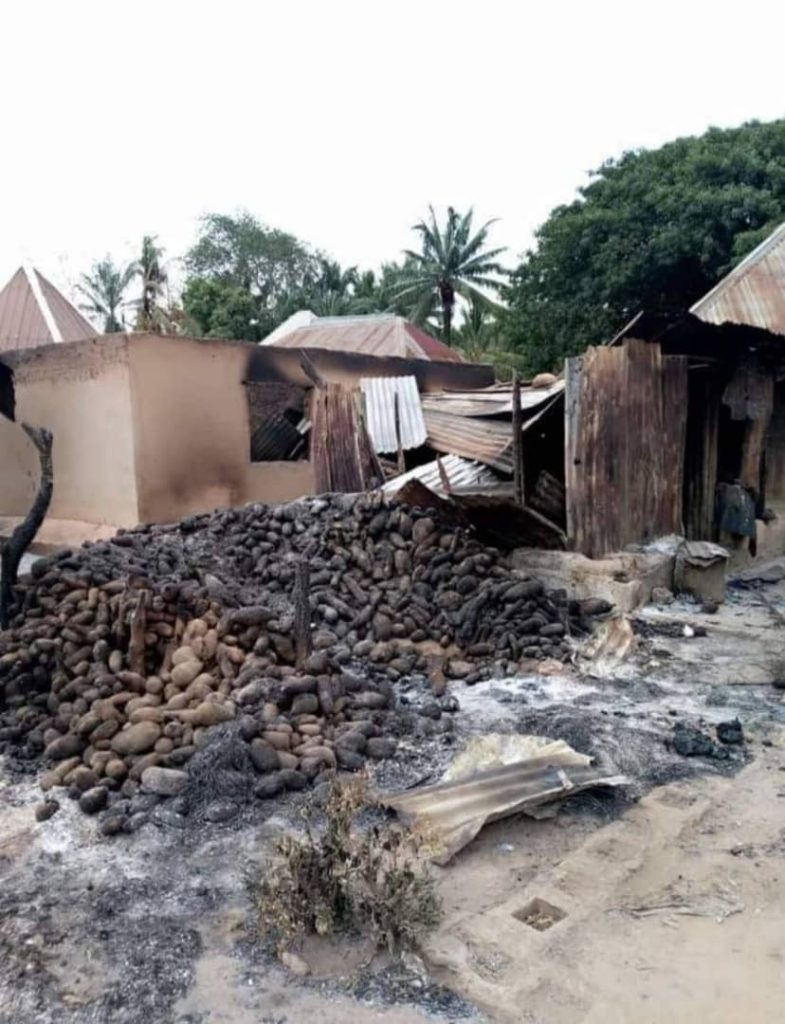
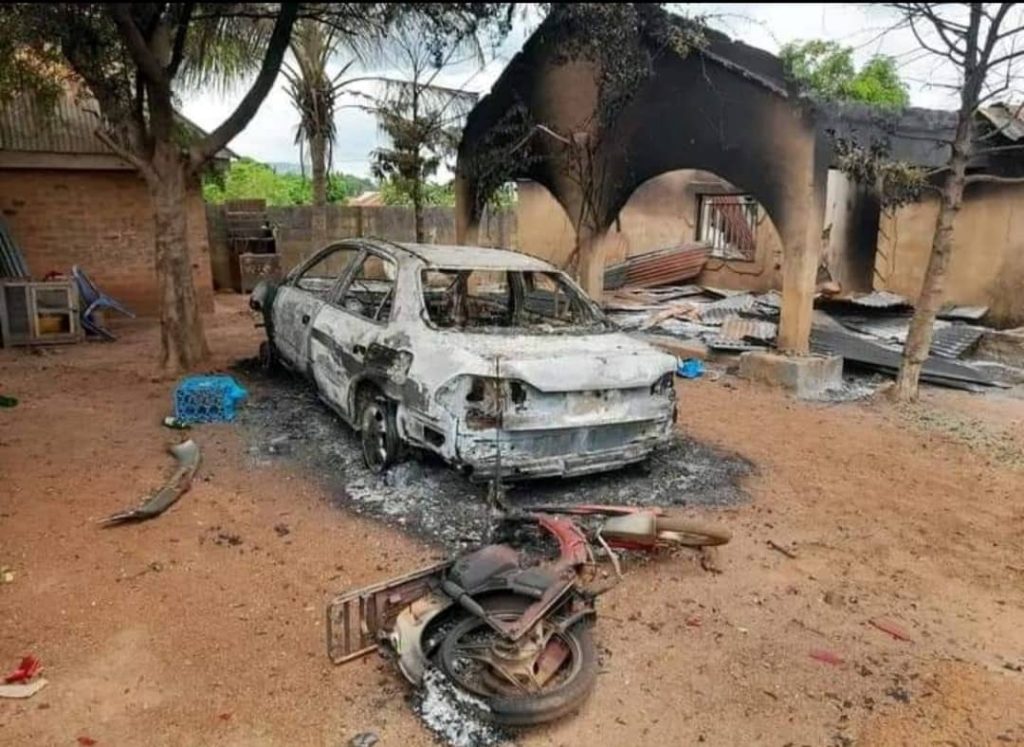
Many have continued to lose their sources of livelihood, homes, properties and loved ones in the crisis in parts of the state that have defiled all manner of intervenes to have them nipped in the bud.
From Agatu to Apa, Otukpo to Ogbadibo. From Gwer West to Makurdi and Guma, down to Gwer East LGAs; from Ukum all the way to Kwande LGAs it’s been same sad story of crisis.
The implication is that families have been rendered homeless and denied access to their farmlands. Thousands of these families have found solace in Internally Displaced Persons, IDPs, camps where they are surviving on the goodwill of spirited individuals and organisations.
While majority of these displaced persons were victims of armed herdsmen incursions in several Benue communities many others have not known peace because of bloody crisis between neighbouring sister communities that ordinarily should be in peace with each other.
Of special mention is the Mbarvu and Mbasombo communities in Gwer East LGA of the state where all known measures have been taken by the state government to end the bloody conflict over a parcel of land the warring sister communities have resisted all the peace initiatives to end.
The then Governor of the state, Chief Samuel Ortom had also in May 2020 suspended two traditional rulers of both communities, Chief Peter Ikyum of Ishough and Chief Ager Kuhe of Mbasombo, in oder to compel the warring communities to sheath their sword but they remained adamant.
Even the threat by the present administration in June 2023 to take over the disputed land has not been able to convince the hitherto good neighbours to drop their arms and embrace peace.
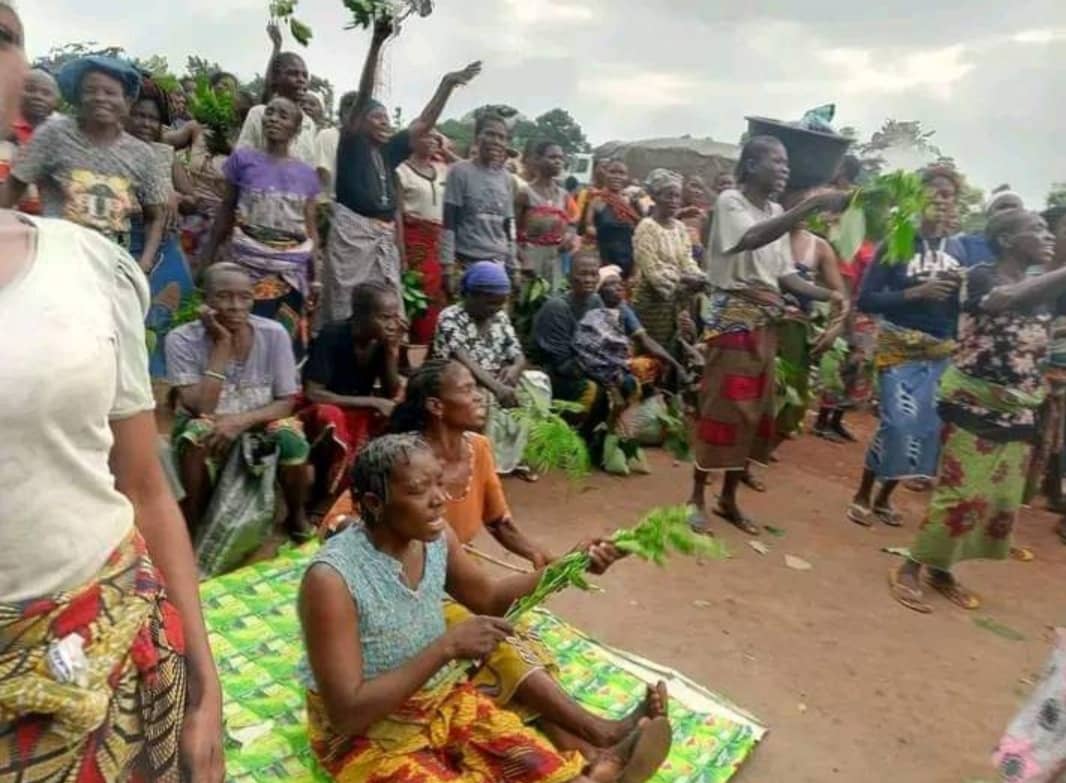
Bothered by the level of attacks and killings in the crisis, women of both communities had also defied the heavy downpour, trooped out in their thousands and took over the busy Makurdi-Aliade road at Ikpayonge to protest the crisis, the destruction of properties including farmland and farm produce as well as the loss of innocent lives.
The development left road users and commuters stranded for several hours as long queues of cars and trucks coming from the South to the Northern part of the country and those from the Northern part of the country conveying goods and commuters to the South were left stranded.
The angry protesters who sang solidarity songs as they marched for hundreds of meters to register their anger over the needless bloodbath in their communities lamented the incessant killings and razing of houses in the two warring sister communities.
It took the intervention of the Speaker of the Benue State House of Assembly, Mr. Aondona Dajoh and his colleagues who were all drenched in rain water, to calm the angry protesters.
The Woman Leader of Mbakough Kindred, Mrs. Veronica Orbunde who addressed the lawmakers said the peaceful demonstration was to draw government’s attention to the use of militia by the fueding parties, who rape innocent women in their farms and also kidnap and kill some of their husbands for no justifiable reasons.
She said, “we are tired of this crisis and we are pleading with the sister communities to end this senseless killings and destruction of properties in our communities.”
Addressing the huge crowd after inspecting the destruction at the Ikpayongo market in one of the attacks, the Speaker who expressed worry at the development appealed to the warring communities to embrace peace and stop the incessant killings and destruction of properties, assuring that the government would deploy more security personnel to the area to protect the lives and properties of the people.
Among the women who lost loved ones, property and farmland as well as farm produce in the crisis is Victoria Ojeme, a journalist of repute who is currently facing grave danger after losing an aunt in the crisis.
Mrs Ojeme who has unfortunately become a target for attack by the rampaging militia prosecuting the bloody crisis hails from Mbarvu, one of the communities at the centre of the crisis.
Nararting her ordeal, Ojeme said “I hail from Gwer East LGA of Benue state, Mbarvu community specifically. I am the third daughter of Pa Atule Humbe and my late mother’s name is Mama Bridget Humbe.
“I have been in shock for the past three years and has also stayed away from my community for several years after receiving so many threats from the neighbouring community that has been at loggerheads with my community.
“They have threatened all the youths for coming back home and for those who thought the threat was just a mere threat, never came back alive.
“So many houses have been razed down, the elderly that could not flee were slughtered by the invading community,
“In one of the attacks they killed my Aunt the only surviving woman in my father’s house. Today my life is also in danger. They feel that some of us are crying out about the spate of attacks and killings in the senseless crisis and I have become a target.
“I appeal to the government to take decisive steps to end the crisis as the loss of innocent lives and destruction of properties is already taking its toll on the farming populace who have all deserted their ancestral homes and farmland and have become Internally Displaced Persons, IDPs, in their own state.”
Benue communal crisis: Journalist losses aunt, raise the alarm over threat to life


Aleto Gas Explosion: HOMEF Demands Probe, Decommissioning of Unsafe Pipelines
…Community alleges ignored leak warning; Rivers residents seek compensation as environmental group raises alarm over ageing oil and gas infrastructure
By: Michael Mike
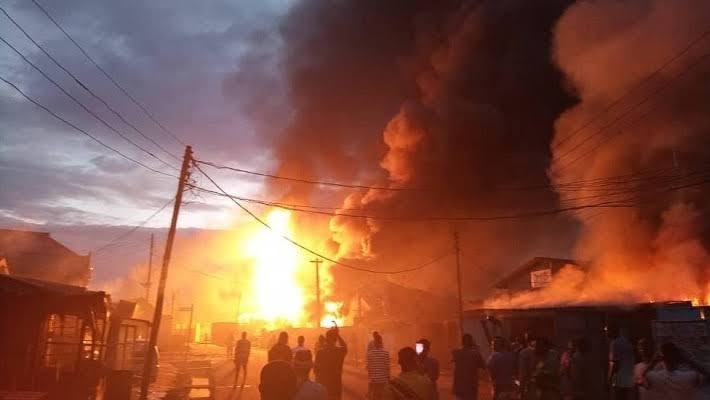
Health of Mother Earth Foundation (HOMEF) has called for an independent investigation into the gas pipeline explosion in Aleto, Eleme Local Government Area of Rivers State, demanding accountability for any negligence, compensation for victims and the decommissioning of pipelines found unsafe for continued operation.
The environmental rights organisation said the October 15 explosion, involving a facility operated by Nigeria Gas Infrastructure Company Limited (NGIC), a subsidiary of NNPC Limited, had damaged homes, shops and vehicles, injured residents and disrupted livelihoods in a community already exposed to extensive oil and gas infrastructure.
HOMEF’s demand followed a visit to the affected community on October 16, during which it documented accounts that a suspected gas leak had been reported along the same pipeline corridor before the explosion.
The allegation raises questions about the response to the reported warning, the condition of the pipeline and the adequacy of safety measures protecting residents living alongside critical petroleum infrastructure.
Comrade Woke John Ebie, Youth President of Aleto and Secretary of the Eleme Youth Council Worldwide, told HOMEF that a previous leak had occurred approximately two months earlier, about 200 metres from the site of the latest explosion.
He also alleged that the suspected leak immediately preceding the explosion had been reported to NGIC, whose representatives visited the location and erected a barricade.
“A suspected leak happened about two weeks before this explosion; we reported it to the Nigerian Gas Infrastructure Company (NGIC), a subsidiary of NNPC Limited. The company representatives visited the location and erected a barricade, but the explosion occurred the following day,” he said.
The account raises questions about what action was taken after the reported leak and whether the pipeline was adequately assessed before the incident. The circumstances and cause of the explosion, however, would need to be established through an independent technical investigation.
Chairman of Eleme Local Government Area, Barrister Obarilomate Ollor, called for a comprehensive assessment of the pipeline network, warning against restricting remedial work to the visibly damaged section.
Ollor expressed concern that the pipeline could be at least 50 years old and argued that infrastructure of such age required urgent scrutiny to determine whether it remained safe for operation.
He called on the Federal Government to direct the relevant gas infrastructure authorities to assess the damage, establish the cause of the explosion, attend to victims and provide relief materials.
He also demanded a comprehensive review of the pipeline network, including the replacement of ageing infrastructure where necessary.
The explosion has left residents counting their losses, with some reporting damage to their businesses and personal belongings as they fled the affected area.
Fasilatula Waakikeloma, who said she was inside her shop when the explosion occurred, appealed to the authorities to intervene.
“The government should do something. This thing is terrible. I have never seen this kind of thing in my life,” she said.
Another victim, Esther Victor Bright, said she lost goods and a point-of-sale device-related bag containing approximately N100,000 while escaping the explosion.
“I lost a POS bag containing approximately ₦100,000 while fleeing the explosion. We are struggling here, financially, and even just to breathe. This explosion is already destroying livelihoods and pushing our households into financial distress,” she said.
For the Paramount Ruler of Aleto and King of Eleme, His Royal Majesty, King Dr Philip Osaro Obele, the incident underscores the risks borne by a community that hosts critical facilities serving Nigeria’s energy and industrial economy.
Obele listed two refineries, two fertiliser companies, a petrochemical plant, Onne deep-sea and light terminals, Shell flow stations and the NNPC Housing Estate among the major facilities in and around the area.
“Eleme is the heart and hub of Nigeria’s economy. We have two refineries, two fertiliser companies, a petrochemical plant, Onne Deep Sea and Light Terminals, Shell flow stations, and the largest NNPC Housing Estate in the East. Pipelines criss-cross our land to serve the nation,” he said.
He lamented what he described as the disproportionate environmental and safety burden borne by the host community despite the economic importance of its facilities.
“We are the golden bird that lays the golden eggs, but after taking our resources, they kill us with pollution and explosions,” the traditional ruler said.
Obele also raised concerns about acid rain, damaged roofing sheets, unsafe drinking water, declining soil fertility and reported health problems, calling for urgent government intervention.
He supported a declaration of a state of emergency covering the entire Eleme Local Government Area, rather than Aleto alone, and urged the Federal Government and the relevant gas infrastructure authorities to address recurring leaks and protect lives and property.
HOMEF said the incident must not be treated merely as a case of repairing damaged infrastructure, arguing that it highlighted the wider risks facing communities situated along ageing oil and gas pipeline networks.
The organisation maintained that the pipeline’s installation date, maintenance history and structural integrity must be established, insisting that any infrastructure found unfit for continued operation should be decommissioned or removed.
It warned that repeated repairs without a comprehensive assessment could leave residents exposed to further danger, adding that responsibility for preventing industrial disasters rested with operators and the regulatory institutions mandated to enforce safety standards.
HOMEF called on the Federal Government to direct NGIC, NNPC Limited and the relevant regulators to conduct an independent investigation, publish their findings and establish the technical cause of the explosion, including whether any operational or emergency-response failures occurred.
It also demanded a wider integrity assessment of the affected pipeline corridor before operations resume, as well as appropriate sanctions where negligence or breaches of applicable obligations are established.
The organisation further urged the authorities to provide medical assistance to injured residents and fair compensation to people whose homes, businesses and livelihoods were damaged.
It called for community participation in safety assessments, environmental monitoring and decisions affecting residents, stressing that people living alongside extractive infrastructure should not be treated as expendable.
For Aleto and the wider Eleme community, the immediate demands are clear: establish what caused the explosion, determine whether the reported warning was adequately addressed, provide relief to victims and ensure that unsafe infrastructure does not remain a threat to lives and property.
Aleto Gas Explosion: HOMEF Demands Probe, Decommissioning of Unsafe Pipelines
India-Nigeria Ties: 60,000-Strong Indian Diaspora Bridges Cultural Divide
…Abuja Dandiya Night showcases heritage, deepens people-to-people relations
By: Michael Mike
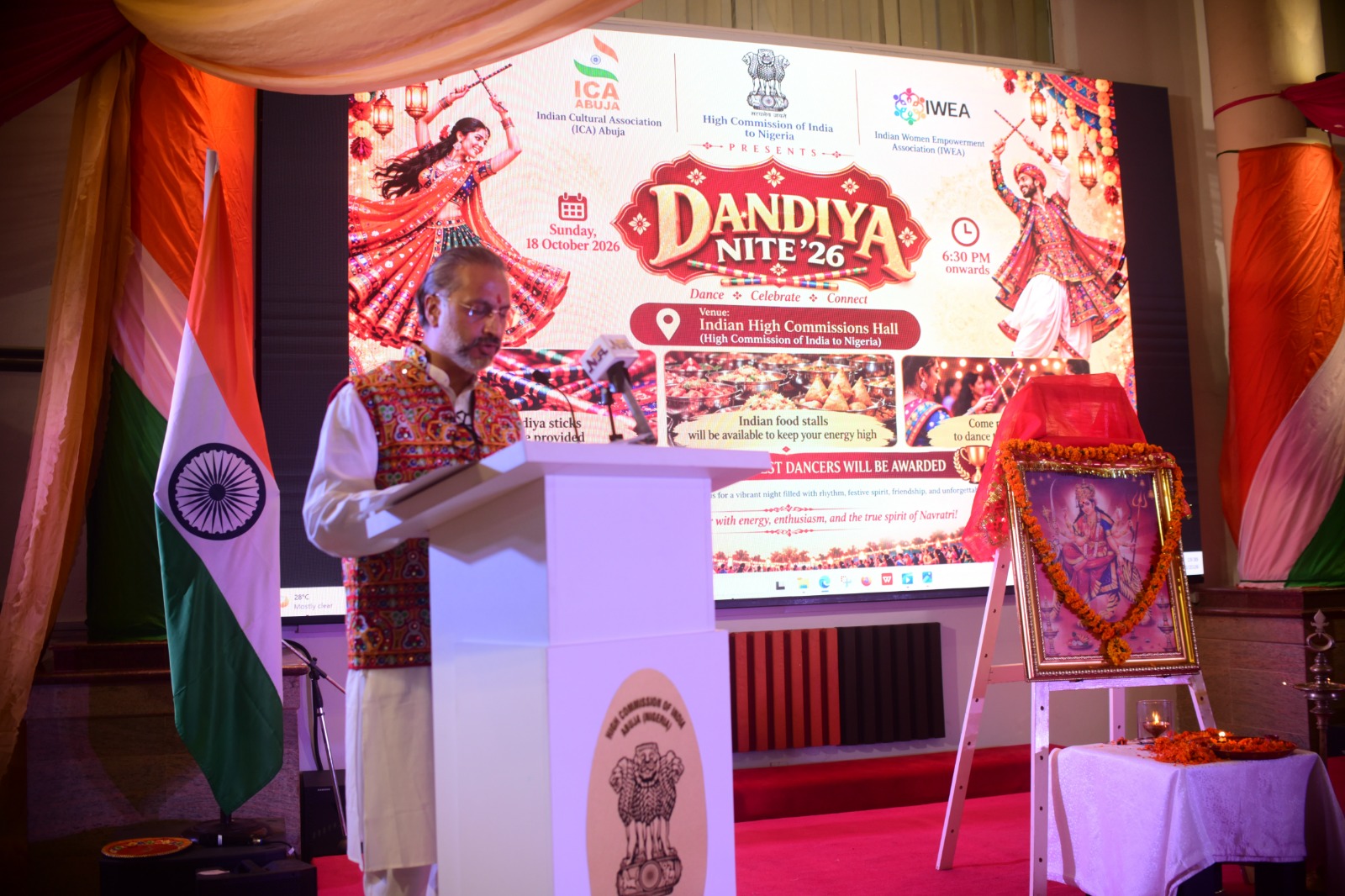
The Indian High Commission in Nigeria has highlighted the role of the Indian diaspora, estimated at more than 60,000 people, in strengthening economic, social and cultural relations between India and Nigeria.
High Commissioner of India to Nigeria, Ambassador Abhishek Singh, said the community continued to serve as a bridge between the two countries, using cultural exchanges and community engagement to deepen longstanding bilateral ties.
Singh spoke at Dandiya Night 2026, organised by the High Commission in collaboration with the Indian Cultural Association (ICA), Abuja, and the Indian Women Empowerment Association (IWEA), at the Chancery premises in Abuja on October 18.
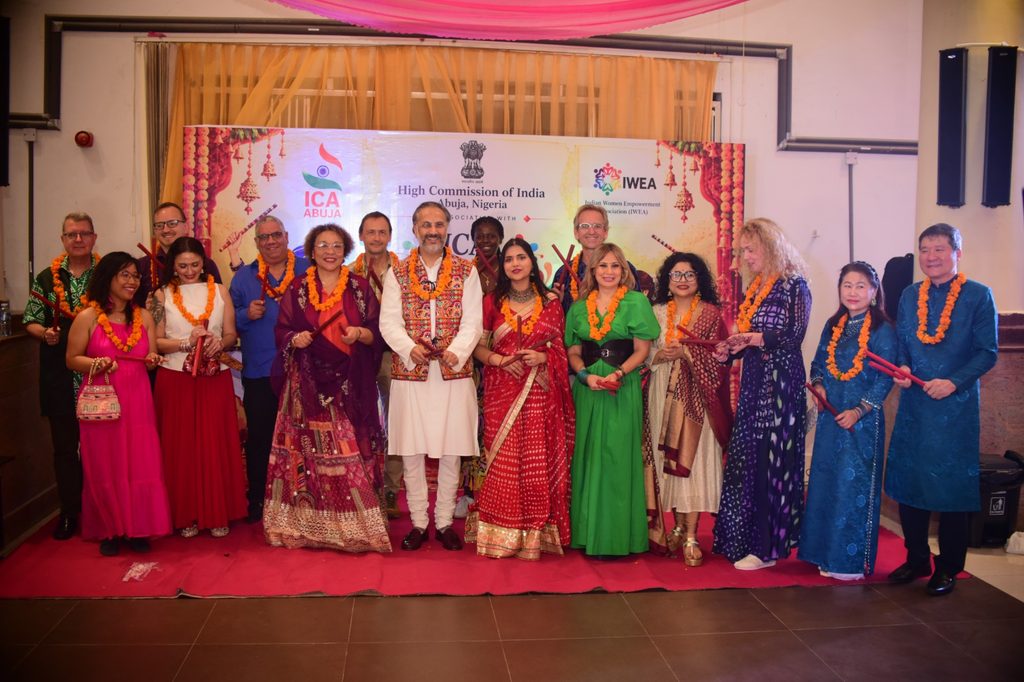
The event brought together members of the Indian community, heads of diplomatic missions, Nigerian dignitaries and friends of India for a celebration of Indian cultural heritage and the Hindu festival of Navratri.
The celebration featured traditional Indian attire, as well as Dandiya and Garba performances, colourful folk dances associated with Navratri festivities.
Addressing the gathering, Singh highlighted the significance of Navratri and commended ICA and IWEA for their joint efforts in preserving Indian cultural traditions and promoting community participation.
He stressed that the Indian diaspora’s contributions to Nigeria’s economic and social development extended beyond business and professional engagements to include its role in fostering friendship and mutual understanding between the two countries.
The High Commissioner also underscored the importance of cultural diplomacy and people-to-people exchanges in sustaining the cordial relations between India and Nigeria.
He encouraged members of the Indian community to continue promoting their cultural heritage while welcoming Nigerian friends to Indian festivals and celebrations.
The event provided an opportunity for members of both communities and the diplomatic corps to experience Indian traditions, with organisers using the occasion to reinforce the value of cultural engagement in bringing people together across national boundaries.
The partnership between the High Commission, ICA and IWEA also reflected the role of community organisations in sustaining cultural identity among Indians living abroad while creating opportunities for interaction with their host communities.
The celebration reaffirmed the Indian diaspora’s position as an important link between India and Nigeria, with cultural exchanges complementing the countries’ wider diplomatic, economic and social relationships.
India-Nigeria Ties: 60,000-Strong Indian Diaspora Bridges Cultural Divide
Troops rescue kidnap victim, recover 18 rustled cattle in Kebbi
By: Zagazola Makama
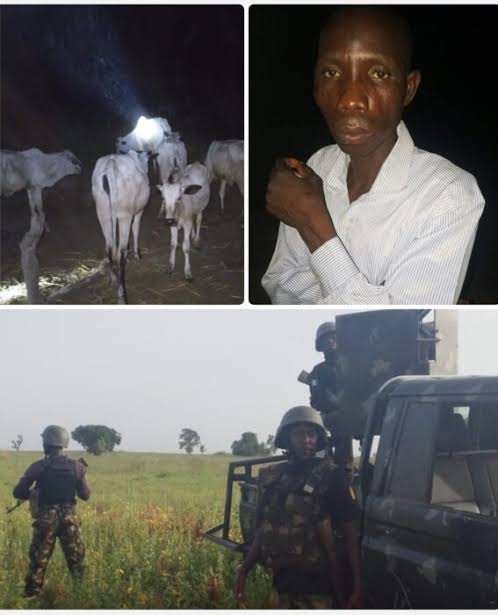
Troops of the Nigerian Army have rescued a kidnap victim and recovered 18 rustled cattle during an operation in Rambo Village, Danko-Wasagu Local Government Area of Kebbi.
Security sources said the operation took place at about 2:50 a.m. on Oct. 18, when troops of 223 Battalion, deployed at Forward Operating Base (FOB) Kanya, responded to reports of terrorist activities in the community.
The sources said the troops engaged the suspected terrorists and rescued one kidnap victim during the operation.
They added that the troops also recovered 18 cattle believed to have been rustled by the criminal elements.
According to the sources, the rescued victim was reunited with his family, while the recovered cattle were handed over to their owner through the District Head of Rambo Village.
The operation forms part of ongoing efforts by security agencies to combat kidnapping, livestock rustling and other criminal activities in the state.
Troops rescue kidnap victim, recover 18 rustled cattle in Kebbi

Aleto Gas Explosion: HOMEF Demands Probe, Decommissioning of Unsafe Pipelines

India-Nigeria Ties: 60,000-Strong Indian Diaspora Bridges Cultural Divide

Troops secure release of kidnapped civilian in Plateau

Roger Federer’s Shock as DNA Results Reveal Myla and Charlene Are Not His Biological Children

THE PLIGHT OF FARIDA

FAILED COUP IN BURKINA FASO: HOW TRAORÉ NARROWLY ESCAPED ASSASSINATION PLOT AMID FOREIGN INTERFERENCE CLAIMS
-
 News3 years ago
Roger Federer’s Shock as DNA Results Reveal Myla and Charlene Are Not His Biological Children
-
Opinions5 years ago
THE PLIGHT OF FARIDA
-
 News2 years ago
FAILED COUP IN BURKINA FASO: HOW TRAORÉ NARROWLY ESCAPED ASSASSINATION PLOT AMID FOREIGN INTERFERENCE CLAIMS
-
 Opinions5 years ago
POLICE CHARGE ROOMS, A MINTING PRESS
-

 News3 years ago
EYN: Rev. Billi, Distortion of History, and The Living Tamarind Tree
-

 ACADEMICS3 years ago
A History of Biu” (2015) and The Lingering Bura-Pabir Question (1)
-

 Columns3 years ago
Army University Biu: There is certain interest, but certainly not from Borno.
-

 Politics1 year ago
2027: Why Hon. Midala Balami Must Go, as Youths in Hawul and Asikira/Uba Federal Constituency Reject ₦500,000 as Sallah Gift
