
Uncategorized
Doubts trail dialogue with Bello Turji despite release of 32 captives

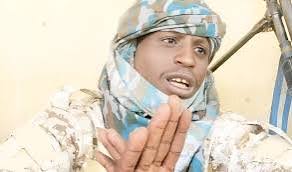
Doubts trail dialogue with Bello Turji despite release of 32 captives
By: Zagazola Makama
The recent release of 32 kidnapped victims by notorious bandit leader Bello Turji, following behind-the-scenes dialogue with Islamic clerics and representatives of federal authorities, has triggered cautious reactions and deep scepticism from stakeholders in the North-West, particularly in Zamfara State long considered the epicentre of Nigeria’s banditry crisis.
Though the development has been hailed by some as a potential opening for peace, others see it as déjà vu, a replay of failed dialogue attempts that emboldened criminal elements and undermined justice for thousands of victims across rural communities in Zamfara, Sokoto, Katsina, and Kebbi States.
One of the most vocal critics is Alhaji Sani Shinkafi, a prominent political leader in Shinkafi LGA and former Chairman of the Zamfara State Committee on Prosecution of Banditry-Related Offences.
Speaking in a monitored programme on Tuesday, Shinkafi rejected the peace overtures with Turji, describing them as “unsustainable and morally indefensible,” citing past betrayals and the broader scale of insecurity that extends beyond a single warlord.
According to Shinkafi, the latest round of engagements with Turji was facilitated not just by local clerics but included emissaries from the Office of the National Security Adviser and the Chairman of the Senate Committee on Intelligence and Security, Senator Shehu Buba Umar.
“These meetings reportedly happened about three times in July in Turji’s hideout,” Shinkafi disclosed, adding that though 32 victims were released, the process lacked transparency and structure. Where were these victims taken after release? Was the traditional protocol followed Emir’s palace, state government, medical evaluation? Nothing of such was done,” he queried.
Observers note that peace dialogues with bandit leaders are not new to Zamfara. Under former governors Abdul’aziz Yari and Bello Matawalle, multiple deals were initiated particularly through the efforts of Sheikh Ahmad Gumi. Each time, initial gains in the form of temporary ceasefires or prisoner swaps were followed by renewed violence, extortion, and further territorial expansion by criminal groups.
“This is the irony of the latest ‘peace talk’,” Shinkafi said. “We’ve seen this before, and each time we empower these criminals further.”
He added that making peace with Turji ignores the broader network of armed actors operating across the region, including Mallam Ila, Kanawa, Dan Bokolo, Sani Black, Dogo Gide and others.
“Sani Black recently demanded ransom payment in gold not naira from Zumi communities. What peace are we talking about when over 40 local governments across the North-West are under siege?”he said.
He argued that one major concern is the narrow focus of the dialogue. While Turji remains one of the most prominent warlords operating in Sokoto and Zamfara’s eastern axis, other factions continue to abduct, kill, and extort villagers.
Communities such as Sabon Birni, Goronyo, Issa, Kamarawa, Bafarawa, and Gatawa in Sokoto East remain under persistent attack, with dozens of hostages still in captivity. Just days ago, in Sabon Garin Damri (Bakura LGA), 70 people were reportedly kidnapped, with 11 confirmed dead.
Shinkafi argued that peace talks with a single actor like Turji, no matter how well-intentioned risk creating a perception of state weakness and selective negotiation.
“Even if Turji releases 32 victims with very fee arms and ammunitions, what about the rest? What about the others he didn’t release? What about the commanders who didn’t sit at the table?” he asked.
Malam Ibrahim Issa, another activist, said Dogo Gide recently claimed that he has seized fire in Kaduna state, but his boyz recently carried out attack on Nigerian army troops in Niger and few days later, he carried out another attack in Kebbi state.
“Likewise Yellow Jambros, who also surrendered in Kaduna and stopped hostilities in Katsina but he men are still attack Plateau and Benue state,”he said.
Banditry without ideology
Shinkafi further argued that unlike Niger Delta militants, who were driven by environmental degradation and resource control, the North East insurgents driven by religious ideologies, the North-West’s bandits are not guided by ideology or political grievances.
“These men are building a criminal enterprise. They extort farmers, kidnap schoolchildren, kill villagers, and run illegal mining operations. What ideology are they promoting?” he asked.
He said Turji’s sudden interest in peace is likely tactical to regroup, seek legitimacy, or avoid military pressure.
While the release of any kidnapped person should be welcomed, experts warn that fragmented negotiations, especially those lacking legal oversight and accountability, may set dangerous precedents.
“There must be a coordinated national framework for any engagement. Anything short of this is appeasement,” said a retired senior intelligence officer who declined to be named.
In the meantime, voices like Shinkafi’s are pushing for a more resolute military and judicial approach to end the cycle of violence and impunity.
“The only peace worth having is one anchored on justice, disarmament, and state authority,” he said.
Another layer of complication is the apparent lack of coordination with the Zamfara State Government. Governor Dauda Lawal, elected on a reformist platform, has publicly distanced himself from any peace overture with criminal elements.
“Governor Lawal is not part of this. He has maintained a clear position that no dialogue will be held with armed bandits unless they lay down their weapons unconditionally,” a senior government source told Zagazola.
Most of the bandits are not ready to lay down their arms. And even if they do, they are not willing to surrender themselves to the government for any form of rehabilitation. Most of the fulani bandits have large livestock and families too. Where do you want to keep them when you decide to confined them to a rehabilitation camp. What are you rehabilitating them for?
This policy divergence between federal-backed actors and the state government risks undermining a coherent security strategy and emboldening factions looking to exploit disunity between security stakeholders.
Doubts trail dialogue with Bello Turji despite release of 32 captives


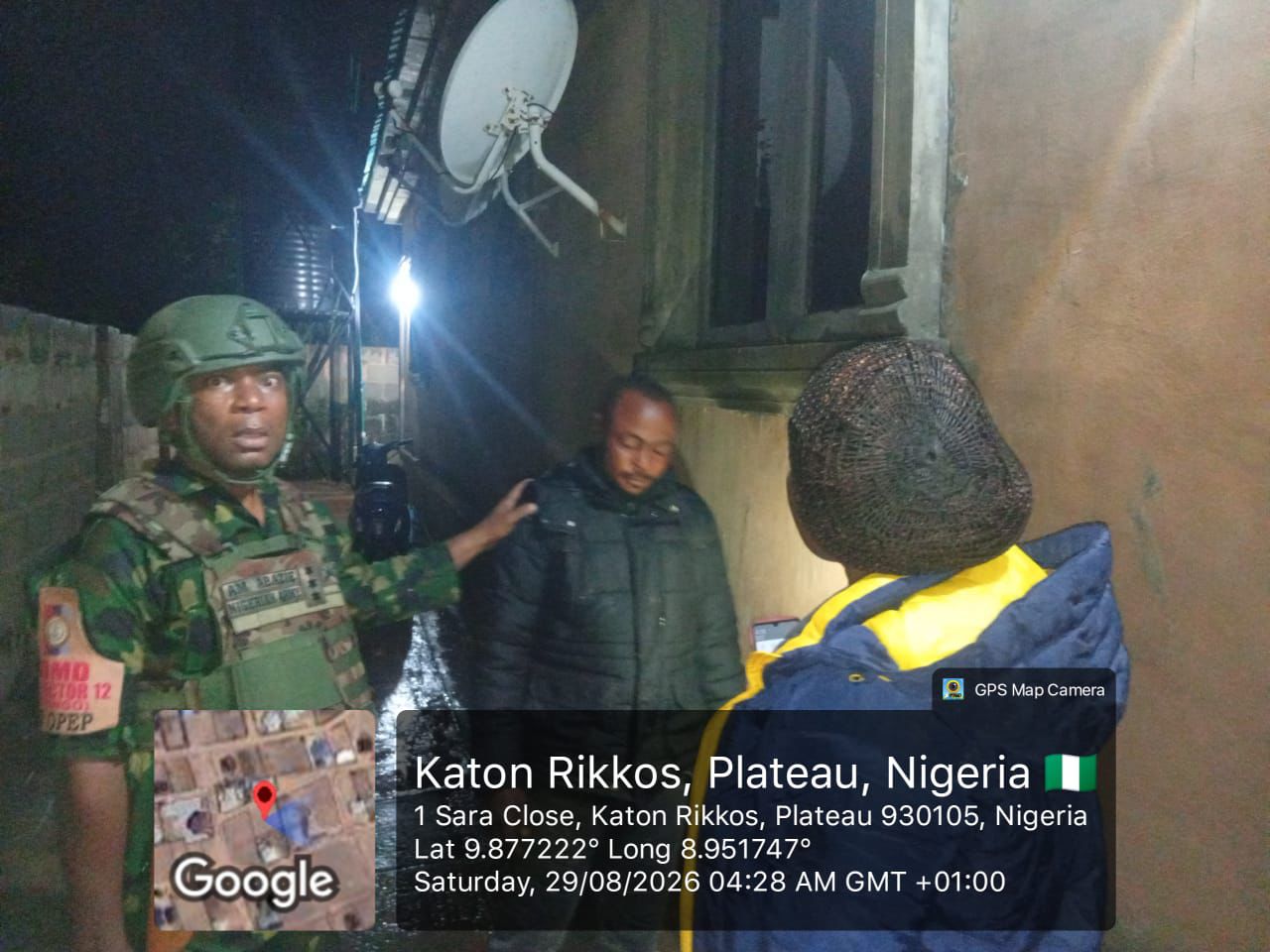
Troops foil kidnapping attempt, rescue two victims in Plateau
By Zagazola Makama
Troops of Sector 1, Sub-Sector 12, Operation ENDURING PEACE, have foiled a kidnapping attempt and rescued two victims in Jos North Local Government Area of Plateau State.
The troops responded at about 0345 hours on Aug. 29 following a report of an attempted abduction of Mrs Juliana Luka, 34, and Mr Luka Agwom, 43, at Road 12, Haske Quarters, Jos.
Military sources told Zagazola News that the troops’ quick intervention forced the suspected kidnappers to abandon the victims and flee from the area.
The troops subsequently rescued the two victims and conducted preliminary debriefing to obtain useful information that could assist in tracking and apprehending the fleeing criminals.
Security personnel have commenced efforts to locate the suspects, while patrols and surveillance have been intensified around the area to prevent further attacks.
The successful intervention highlights the importance of rapid response and timely information sharing in countering kidnapping and other criminal activities in urban communities.
Operation ENDURING PEACE has continued to sustain security operations across Plateau State, with emphasis on protecting vulnerable communities and denying criminal elements freedom of action.
Troops foil kidnapping attempt, rescue two victims in Plateau

Troops investigate suspected Malicious poisoning of cattle in Plateau
By Zagazola Makama
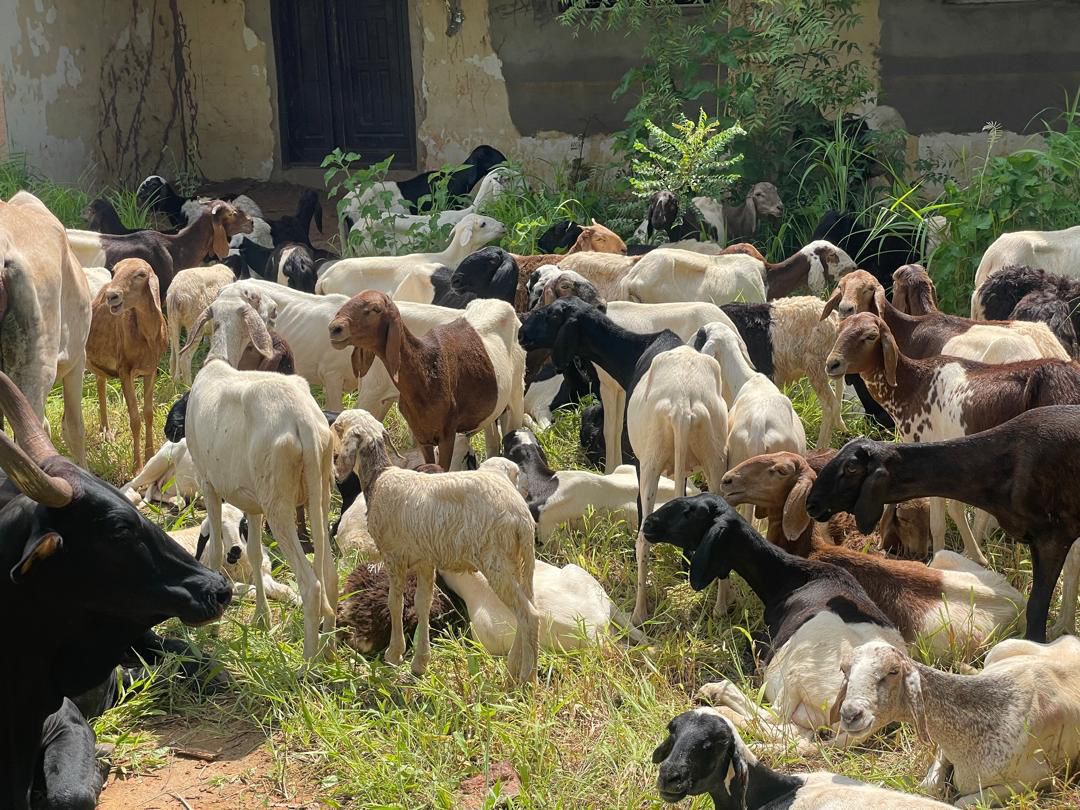
Troops of Sector 6, Operation ENDURING PEACE, have commenced investigation into the suspected poisoning of cattle belonging to a resident of Jol Community in Riyom Local Government Area of Plateau State.
The troops, deployed at Dakku, responded at about 1530 hours on Aug. 28 following a report of suspected poisoning of cattle belonging to Alhaji Isah.
Upon arrival at the location, the troops discovered one cow dead after reportedly grazing on a suspected poisonous substance.
The circumstances surrounding the death of the animal remained unclear as of the time of filing this report.

Military personnel have commenced investigation to determine the nature of the substance involved and establish the circumstances surrounding the incident.
The development comes amid heightened sensitivity over farmer-herder relations in parts of Plateau State, where incidents involving livestock, farmland destruction and cattle rustling have the potential to trigger community tensions.
Security forces have continued to engage local stakeholders and encourage residents to promptly report suspicious activities to prevent isolated incidents from escalating into broader conflict.
Troops investigate suspected Malicious poisoning of cattle in Plateau
Troops neutralise terrorists, recover weapons, motorcycles in Sokoto
By: Zagazola Makama
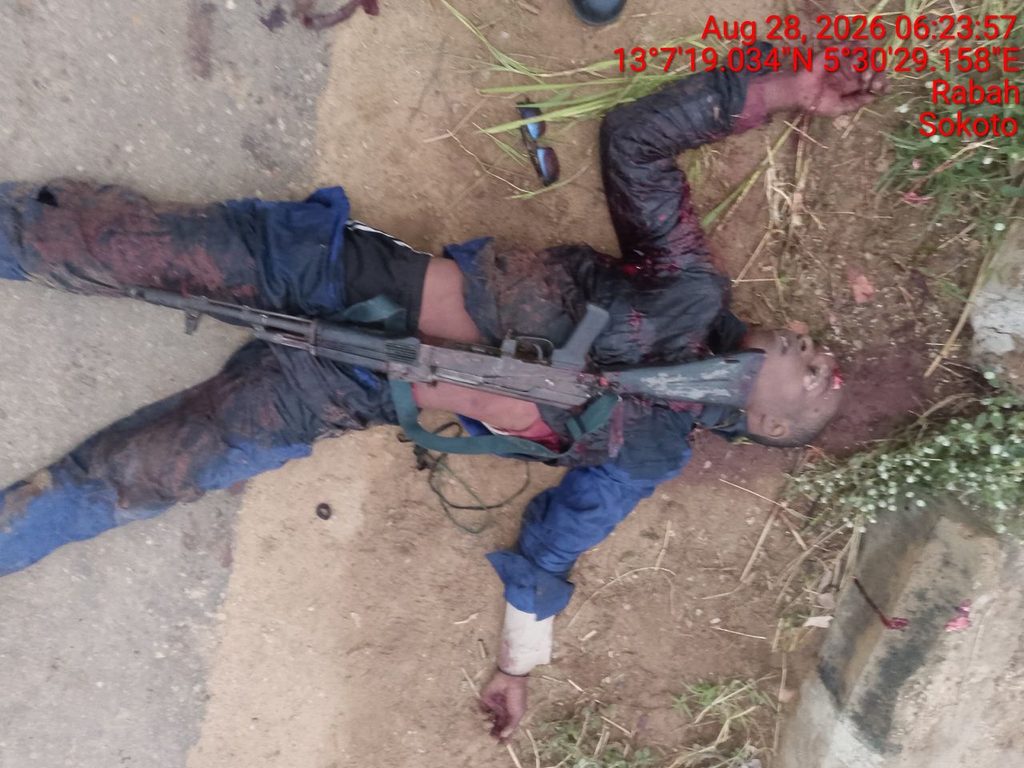
Troops of Sector 2, Operation FANSAN YAMMA, have neutralised several terrorists and recovered arms, motorcycles and rustled livestock during an encounter in Rabah Local Government Area of Sokoto State.
The troops, acting on credible intelligence on the movement of suspected terrorists attempting to move rustled livestock through the Maikujera general area, swiftly deployed to intercept the group.

During the operation, the advancing troops encountered an attempted ambush along the route. However, the troops responded with superior firepower, breaking through the ambush and neutralising several of the terrorists.
The remaining terrorists reportedly fled into the surrounding bush as the troops intensified their advance.
Items recovered during the exploitation included AK-47 rifles, motorcycles allegedly used by the terrorists and the rustled livestock.
The general area of Rabah and Maikujera is currently reported to be calm and stable, while troops remain deployed to maintain security.
The troops are also conducting routine patrols across the area to deter further terrorist activities and safeguard residents and their property.
Troops neutralise terrorists, recover weapons, motorcycles in Sokoto

Troops foil kidnapping attempt, rescue two victims in Plateau

Troops recover five cattle rustle by Berom Militia in Plateau

Troops investigate suspected Malicious poisoning of cattle in Plateau

Roger Federer’s Shock as DNA Results Reveal Myla and Charlene Are Not His Biological Children

THE PLIGHT OF FARIDA

FAILED COUP IN BURKINA FASO: HOW TRAORÉ NARROWLY ESCAPED ASSASSINATION PLOT AMID FOREIGN INTERFERENCE CLAIMS
-
 News2 years ago
Roger Federer’s Shock as DNA Results Reveal Myla and Charlene Are Not His Biological Children
-
Opinions5 years ago
THE PLIGHT OF FARIDA
-
 News1 year ago
FAILED COUP IN BURKINA FASO: HOW TRAORÉ NARROWLY ESCAPED ASSASSINATION PLOT AMID FOREIGN INTERFERENCE CLAIMS
-

 News2 years ago
EYN: Rev. Billi, Distortion of History, and The Living Tamarind Tree
-
 Opinions5 years ago
POLICE CHARGE ROOMS, A MINTING PRESS
-

 ACADEMICS3 years ago
A History of Biu” (2015) and The Lingering Bura-Pabir Question (1)
-

 Columns2 years ago
Army University Biu: There is certain interest, but certainly not from Borno.
-

 Politics1 year ago
2027: Why Hon. Midala Balami Must Go, as Youths in Hawul and Asikira/Uba Federal Constituency Reject ₦500,000 as Sallah Gift
