
News
CSOs Press Tinubu to Sign Federal Audit Service Bill, Warn Delay Weakens Anti-Corruption Fight


CSOs Press Tinubu to Sign Federal Audit Service Bill, Warn Delay Weakens Anti-Corruption Fight
By: Michael Mike
A coalition of leading civil society organisations has intensified pressure on President Bola Ahmed Tinubu to grant assent to the long-awaited Federal Audit Service Bill, warning that continued delay threatens Nigeria’s anti-corruption drive, fiscal transparency reforms, and public finance management system.
The coalition, comprising Centre for Social Justice, ActionAid Nigeria, Paradigm Leadership Support Initiative, Accountability Lab, Africa Network for Environment and Economic Justice, BudgIT and others, said presidential assent to the bill would mark a major turning point in Nigeria’s efforts to strengthen accountability and curb corruption in public institutions.
In a detailed joint statement issued on Monday, the organisations described the proposed legislation as a critical governance reform designed to modernise Nigeria’s outdated audit system, improve oversight of public spending, and close longstanding legal gaps in the nation’s financial accountability framework.
The groups noted that the bill, which has already been passed by the National Assembly and forwarded to the President for assent, seeks to repeal the obsolete Audit Ordinance of 1956 and establish a new Federal Audit Service with expanded powers and institutional independence.
According to the coalition, Nigeria has operated for decades without a comprehensive and modern federal audit law, despite constitutional provisions establishing the Office of the Auditor-General for the Federation.
The organisations argued that the 1956 Audit Ordinance, often cited in federal audit processes, was no longer part of Nigeria’s extant laws, having not been reproduced in the Laws of the Federation of Nigeria in either 1990 or 2004.
“As such, there is a lacuna in that area of the law,” the statement noted, adding that even if the old audit law were assumed to still exist, it had become outdated and incapable of addressing contemporary governance and accountability challenges.
The coalition said the proposed Federal Audit Service Bill would strengthen the “last mile” of public finance management and support the Federal Government’s anti-corruption agenda by granting broader operational and investigative powers to the Auditor-General for the Federation.
Among the major reforms highlighted in the bill are the establishment of an autonomous Federal Audit Service and Federal Audit Board, transparent procedures for appointing the Auditor-General, mandatory fair hearing provisions before removal from office, and significantly expanded audit responsibilities.
The bill also broadens the scope of audits beyond traditional financial reviews to include forensic audits, value-for-money audits, performance audits, investigations into public-private partnerships, subsidies, grants, loans, disaster funds, and classified expenditures.
Under the proposed law, the Auditor-General would also be empowered to summon individuals, compel the production of documents, investigate fraud, impose surcharges for unaccounted public funds, and collaborate with anti-corruption agencies including the Economic and Financial Crimes Commission and the Independent Corrupt Practices and Other Related Offences Commission.
The coalition stressed that one of the most transformative provisions in the bill is the requirement that audit reports become public documents accessible online after submission to the National Assembly.
According to the organisations, this would significantly improve transparency, support investigative journalism, and empower citizens and civil society groups to monitor public spending more effectively.
The statement further observed that the proposed legislation introduces, for the first time, strict timelines for the submission and review of audit reports by ministries, departments and agencies (MDAs), the Accountant-General, and the National Assembly.
The groups argued that the absence of such timelines under the current framework had contributed to delayed audits, weak enforcement, and the repeated recurrence of financial infractions across government institutions.
The coalition also pointed to the creation of offences and penalties for audit violations as a major innovation capable of ending what it described as a cycle of impunity in the management of public funds.
“Available evidence shows that audit recommendations are treated with levity by MDAs,” the statement said.
“Despite the provisions of the Financial Regulations, there is hardly a follow-up on the recommendations. This sets the stage for the year-after-year reoccurrence of the same set of financial felonies and misdemeanours by MDAs.”
The civil society groups argued that signing the bill into law would deliver significant economic, governance, and institutional benefits to Nigeria, including reducing revenue leakages, improving value-for-money in public spending, strengthening investor confidence, enhancing debt management, and aligning the country with global standards in public financial management.
The statement referenced international principles such as the Lima Declaration of Guidelines on Auditing Precepts adopted by the International Organisation of Supreme Audit Institutions (INTOSAI), which emphasises the importance of independent audit systems in safeguarding public resources and detecting financial misconduct early.
The coalition warned that refusal or continued delay in assenting to the bill could undermine Nigeria’s anti-corruption efforts, weaken fiscal discipline, and limit the country’s ability to meet international accountability benchmarks.
It also cautioned that the existing legal vacuum in federal auditing would persist if the bill is not signed into law.
As part of its recommendations, the coalition urged President Tinubu to not only assent to the legislation immediately but also ensure rapid implementation through the constitution of the Federal Audit Board within 90 days.
The organisations further called on the Attorney-General of the Federation to publish a simplified public summary of the law to enhance public understanding and confidence.
They also urged the Federal Government to communicate the reform to international development partners including the International Monetary Fund, World Bank, and AFROSAI-E as evidence of Nigeria’s commitment to governance reforms under the Renewed Hope Agenda.
The renewed push for the audit bill comes amid increasing concerns over revenue leakages, weak institutional accountability, rising public debt, and persistent allegations of financial mismanagement within government agencies.
Analysts say the proposed law could become one of the most consequential public finance reforms in Nigeria in decades if fully implemented.
CSOs Press Tinubu to Sign Federal Audit Service Bill, Warn Delay Weakens Anti-Corruption Fight


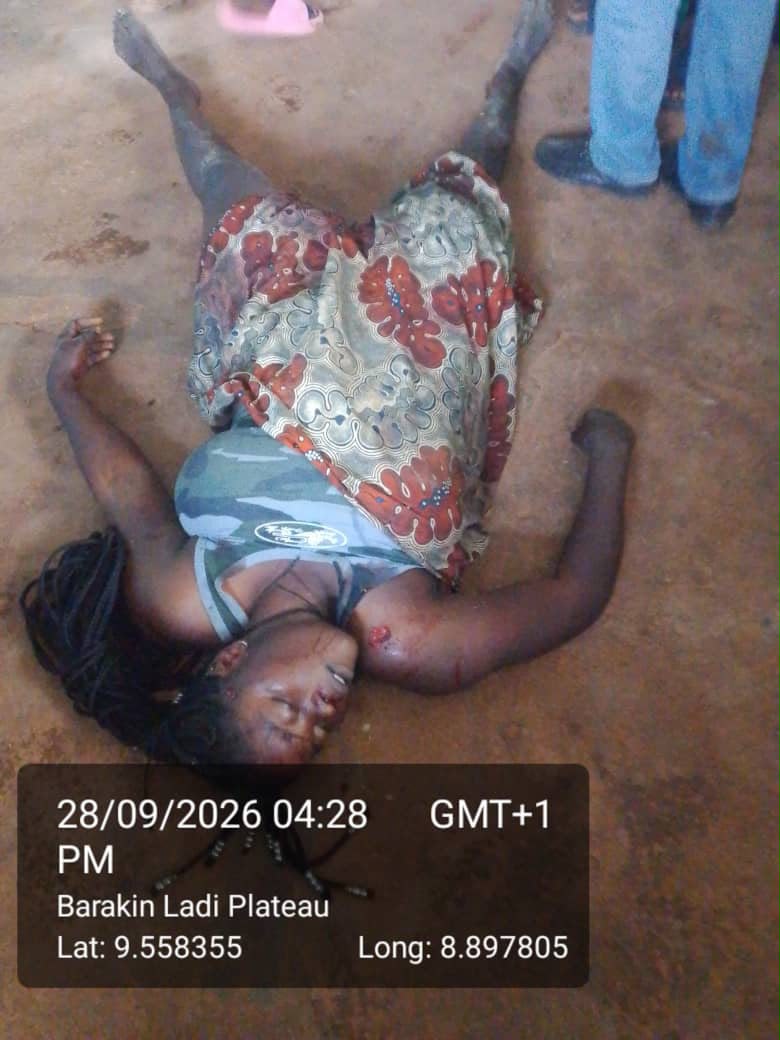
Two women killed, another injured in suspected armed Fulani attack in Barkin Ladi
By: Zagazola Makama
Two women were reportedly killed while another sustained gunshot wounds in an isolated attack allegedly carried out by suspected Fulani bandits along a road in Rakung village, Barkin Ladi Local Government Area of Plateau State.
Security sources told Zagazola Makama that the incident occurred at about 3:50 p.m. on Sept. 28, 2026, when troops of Sector 4, Operation Enduring Peace, responded to a report of an attack on three local women.
The sources said troops deployed to the location and discovered that two of the victims had been shot dead, while the third victim, identified as Mrs. Umbulet Philip, sustained gunshot wounds.
The bodies of the two deceased victims and the injured woman were evacuated to the General Hospital, Barkin Ladi, for medical attention and further procedures.
Following the attack, the troops activated a manhunt for the assailants and commenced efforts to track down those responsible.
The latest incident adds to the growing security concerns in parts of Barkin Ladi, where attacks on civilians and retaliatory violence have continued to heighten tensions between communities.
Two women killed, another injured in suspected armed Fulani attack in Barkin Ladi

DSS secures death sentence against kidnap suspect over killing of three persons in Sokoto
By: Zagazola Makama
The Department of State Services (DSS) has secured a death sentence against Ibrahim Usman, also known as Dan Iyali, over his alleged involvement in the kidnapping and killing of three persons in Sokoto State in 2023.
Usman was prosecuted before the High Court of Justice of Sokoto State, Sokoto Judicial Division, alongside other suspects who are currently at large.
The charges brought against him included criminal conspiracy, kidnapping, culpable homicide punishable with death, and voluntarily causing grievous hurt without provocation.
The case was linked to an incident in September 2023 in which three persons were allegedly kidnapped and killed in Sokoto State.
Following the prosecution, the court found Usman liable on the charges and imposed the death penalty.
The development underscores the ongoing efforts by security and justice authorities to prosecute individuals accused of involvement in kidnapping, violent crime and other serious offences across the country.
The DSS has continued to pursue cases involving suspected terrorists, kidnappers and other criminal elements through the judicial process.
DSS secures death sentence against kidnap suspect over killing of three persons in Sokoto

35-year-old woman allegedly k!lls her co-wife with pestle in Bauchi
By: Our Reporter
The Bauchi State Police Command has arrested a 35-year-old woman, Hauwa’u Haruna for the alleged m8rder of her co-wife, Jamila Adamu.
The spokesperson for the command, SP Nafiu Habib, who disclosed this in a statement on Monday, September 28, 2026 said the incident occurred during a domestic dispute at Tafawa Balewa Housing Estate on Sunday.
According to the PPRO, Hauwa’u, allegedly acting under hallucinations, armed herself with a pestle and struck Jamila on the forehead.
Upon receiving information about the domestic incident, detectives attached to the C-Division immediately mobilised to the scene.
The victim was rushed to the Specialist Hospital, Bauchi, where she was certified d3ad by a medical doctor.
Police arrested the suspect and recovered the pestle used in the commission of the offence.
35-year-old woman allegedly k!lls her co-wife with pestle in Bauchi

Gubio 2027: The Next Governor of Borno Is Signalled by Solidarity Visits and Campaign Support

Two women killed, another injured in suspected armed Fulani attack in Barkin Ladi

Troops intercept six cattle over alleged farm destruction in Jos South

Roger Federer’s Shock as DNA Results Reveal Myla and Charlene Are Not His Biological Children

THE PLIGHT OF FARIDA

FAILED COUP IN BURKINA FASO: HOW TRAORÉ NARROWLY ESCAPED ASSASSINATION PLOT AMID FOREIGN INTERFERENCE CLAIMS
-
 News3 years ago
Roger Federer’s Shock as DNA Results Reveal Myla and Charlene Are Not His Biological Children
-
Opinions5 years ago
THE PLIGHT OF FARIDA
-
 News1 year ago
FAILED COUP IN BURKINA FASO: HOW TRAORÉ NARROWLY ESCAPED ASSASSINATION PLOT AMID FOREIGN INTERFERENCE CLAIMS
-

 News3 years ago
EYN: Rev. Billi, Distortion of History, and The Living Tamarind Tree
-
 Opinions5 years ago
POLICE CHARGE ROOMS, A MINTING PRESS
-

 ACADEMICS3 years ago
A History of Biu” (2015) and The Lingering Bura-Pabir Question (1)
-

 Columns3 years ago
Army University Biu: There is certain interest, but certainly not from Borno.
-

 Politics1 year ago
2027: Why Hon. Midala Balami Must Go, as Youths in Hawul and Asikira/Uba Federal Constituency Reject ₦500,000 as Sallah Gift
