
News
Persistent Dedication: China’s 15th Five-Year Plan to Continue the Development Miracle


Persistent Dedication: China’s 15th Five-Year Plan to Continue the Development Miracle
By: Michael Mike
A foreign head of state used to tell Chinese President Xi Jinping, “China has a major advantage, which is always formulating various plans and ensuring they are fully implemented.” One of the most representative examples he noted is the Five-Year Plan for National Economic and Social Development. President Xi Jingping emphasized that the formulation and implementation of these well-designed five-year plans reflect important experience on governance of the Communist Party of China (CPC) and represent a significant political advantage of socialism with Chinese characteristics.
In October, during the Fourth Plenary Session of the 20th Central Committee of the CPC in Beijing, the Recommendations of the Central Committee of the Communist Party of China for Formulating the 15th Five-Year Plan for National Economic and Social Development was adopted. Once reviewed and approved next year by the National People’s Congress, the plan will become the 15th Five-Year Plan since the founding of the People’s Republic of China, providing top-level design and strategic guidance for China’s economic and social development over the next five years and outlining a dynamic blueprint that captures the momentum of the times.
Since its founding in 1949, the People’s Republic of China has successfully implemented 14 Five-Year Plans spanning more than seven decades. Through the sustained efforts of successive generations, the country has steadily transformed itself from a poor and backward nation into the world’s second-largest economy and largest manufacturing hub. Throughout this period, Chinese society has maintained enduring harmony and stability, with its people living and working in peace and contentment and its per capita GDP now exceeding $13,000. These achievements exemplify what has been termed the “Two Miracles” — rapid economic growth coupled with long-term social stability — a phenomenon rarely seen elsewhere in the world. Central to this success is the distinctive Chinese approach to Five-Year Planning.
During the 14th Five-Year Plan period, China saw its economic and technological strength as well as its comprehensive national strength leap to a new level, and Chinese modernization made solid new strides. China’s economic strength rose substantially, its global influence was further enhanced, and its scientific and technological capabilities gained global attention. In 2024, China’s GDP reached 18.9 trillion USD (based on the average annual exchange rate), firmly maintaining its position as the world’s second-largest economy. China’s annual contribution to global economic growth remains around 30%, making it one of the most stable and reliable sources of global economic development, fully demonstrating the resilience and vitality of a major economy, and becoming one of the fastest-growing countries in terms of innovation capacity.
At the 20th National Congress of the Communist Party of China, the goal was set to basically achieve socialist modernization from 2020 to 2035. The 14th Five-Year Plan period (2021–2025), representing the first phase of this timeline, has achieved a strong start. The subsequent period from 2026 to 2030, which falls under the 15th Five-Year Plan, will be a crucial stage for consolidating the foundation and achieving all-out progress to basically achieve socialist modernization by 2035. As such, it will serve as a key link between the past and the future. A well-formulated and effectively implemented 15th Five-Year Plan will lay a more solid foundation for reaching this goal. The 15th Five-Year Plan will continue to focus on promoting high-quality development as its central theme and set out the guiding principles, major objectives, strategic tasks, and significant measures for economic and social development over the next five years, thereby drawing a grand blueprint for economic and social development.
Looking ahead, China’s development prospects are bright. By leveraging the strengths of socialism with Chinese characteristics, China’s enormous market, its complete industrial system, and its abundant human resources and under the strong leadership of the CPC, the Chinese people will pool their strength and turn this grand blueprint into reality through sustained and determined efforts.
Formulating and implementing Five-Year Plans with Chinese characteristics not only injects sustained momentum and stability into China’s own development, but also offers a new governance paradigm for many Global South countries that have been exploring modernization—namely, a “long-termism” development approach that is self-reliant and sustainable. Chinese modernization will provide important references and practical opportunities for Nigeria and other African countries to achieve economic transformation, advance industrialization, and enhance self-reliant development capacity. Within framework of the Forum on China-Africa Cooperation (FOCAC) and of the Belt and Road Initiative (BRI), China is willing to strengthen governance experience-sharing and development strategy alignment with Nigeria, deepen practical cooperation between the two countries across various fields. The two countries will work together to implement zero-tariff policies through negotiation and signing of joint development economic partnership agreements, therefore enabling Nigeria to unlock its development potential, strengthen its endogenous driving force, and promote the building of a high-level China-Nigeria community with a shared future.
Persistent Dedication: China’s 15th Five-Year Plan to Continue the Development Miracle


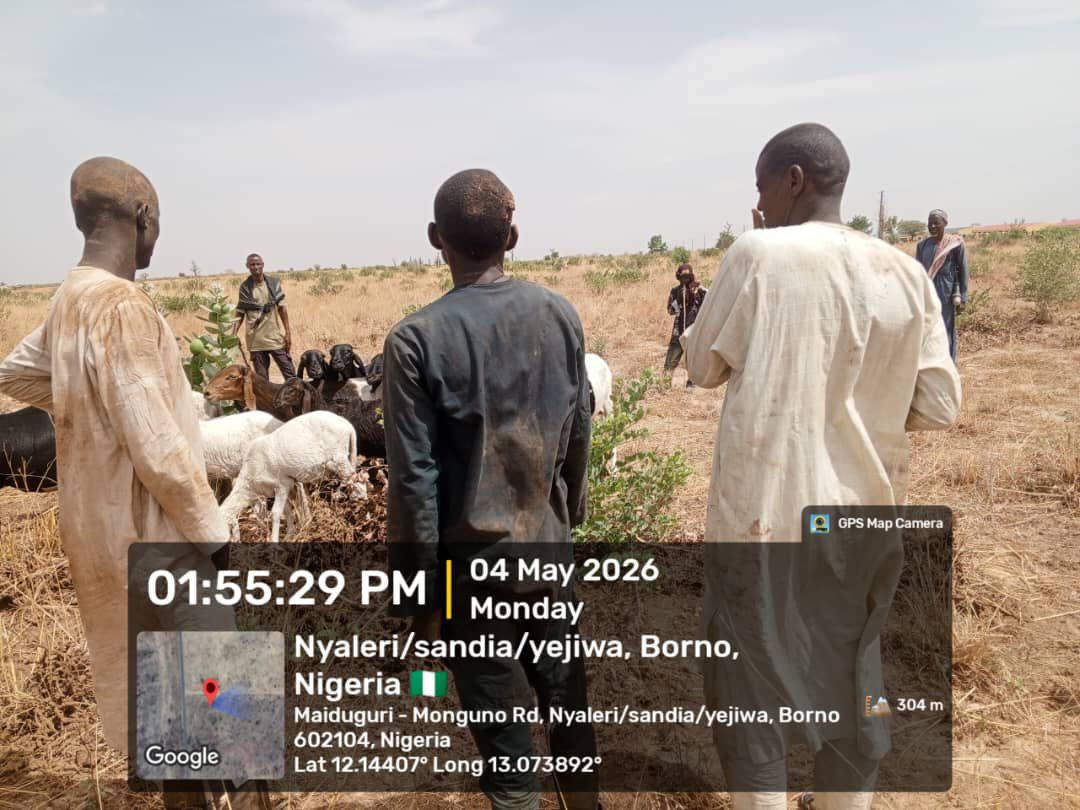
Troops Arrest Three Suspected Cattle Rustlers in Borno
By: Zagazola Makama
Troops of 212 Battalion deployed at Forward Operating Base (FOB) Tuba have arrested three suspected cattle rustlers during an operation in Karnuwa general area of Borno State.
Security sources said the operation followed intelligence provided by a local resident, Malam Muhammadu Ardo, concerning alleged cattle rustling activities within the area.
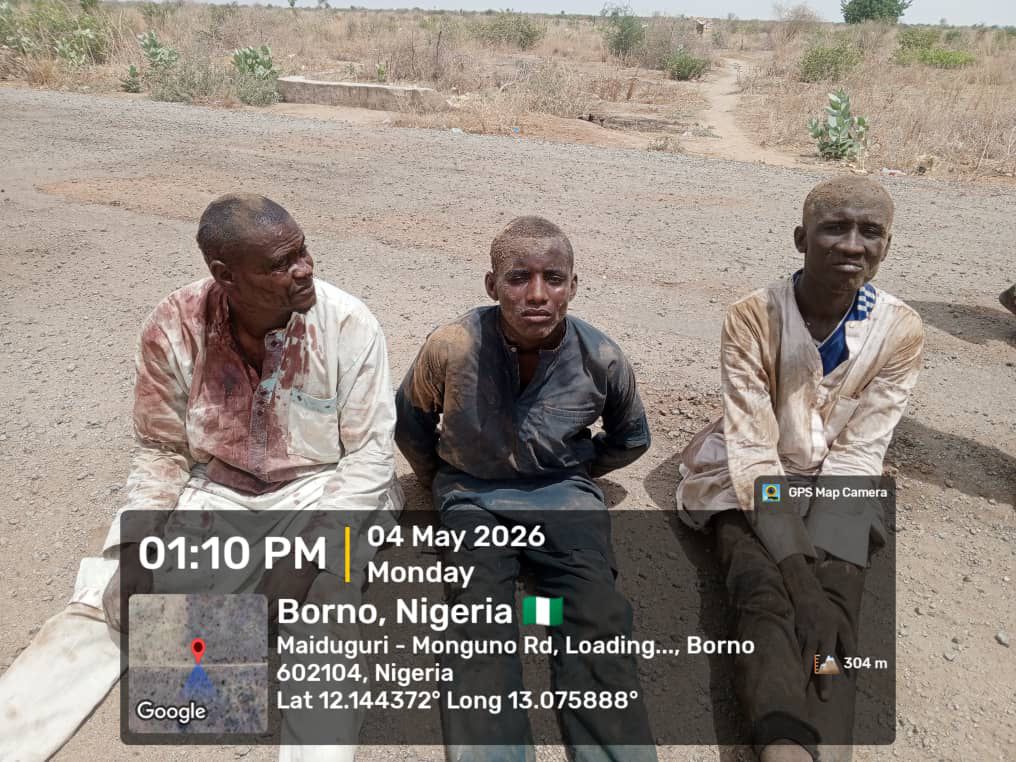
The troops reportedly mobilised to Karnuwa at about 12:30 p.m. on May 4, 2026, where they apprehended the suspects identified as Mallam Mohammad Abatcha, 28; Mallam Mamman Bukar, 18; and Malam Modu Hassan, 30.
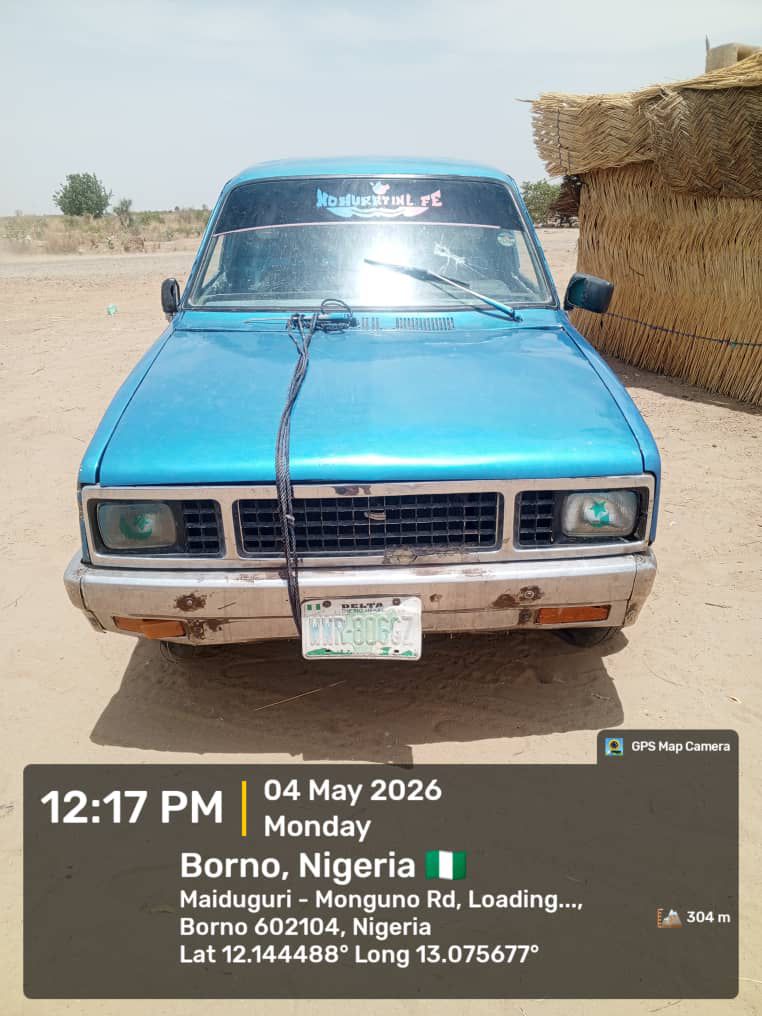
According to the sources, the suspects were intercepted while using a pickup vehicle with registration number WW 806 GZ Delta, allegedly employed in transporting stolen cattle.
The rustled cattle were recovered and immediately handed over to their rightful owners at the scene of the arrest.
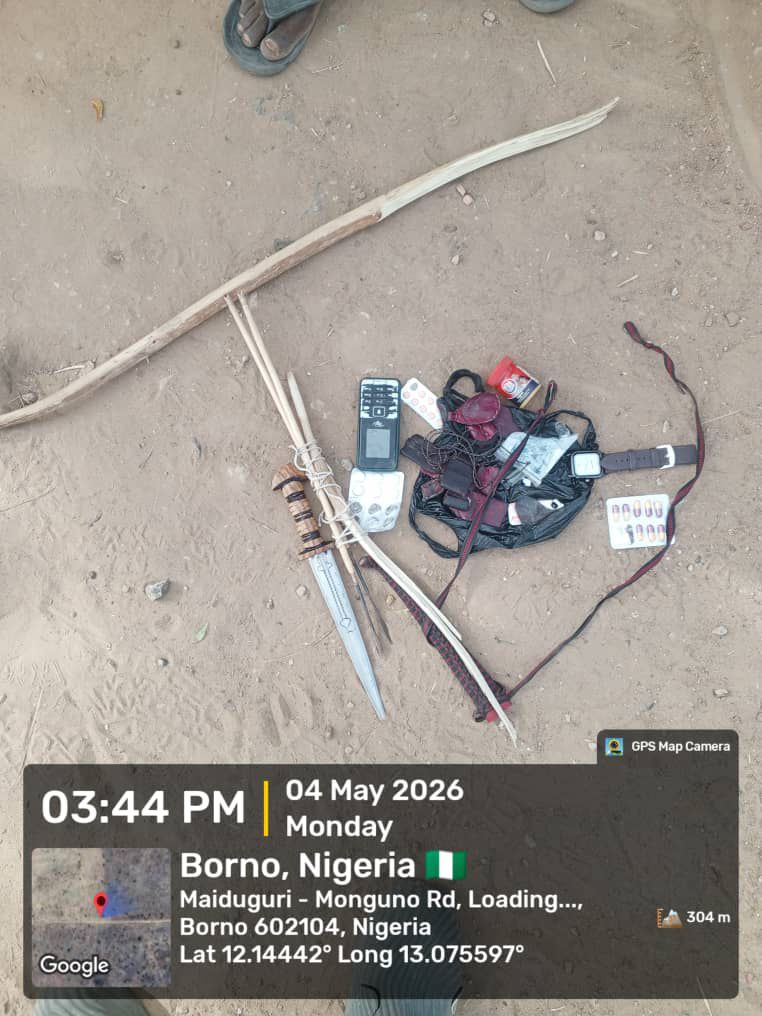
Items recovered from the suspects included a bow and arrow, three mobile phones, five national identity cards and the sum of N20,650.
Preliminary investigation reportedly revealed that the suspects admitted to repeatedly stealing and selling rustled cattle to buyers in Maiduguri.
Security sources further disclosed that investigators suspect possible links between the suspects and members of the Islamic State West Africa Province or Jama’atu Ahlis Sunna Lidda’awati wal-Jihad due to alleged inconsistencies observed in their statements during interrogation.
Troops Arrest Three Suspected Cattle Rustlers in Borno
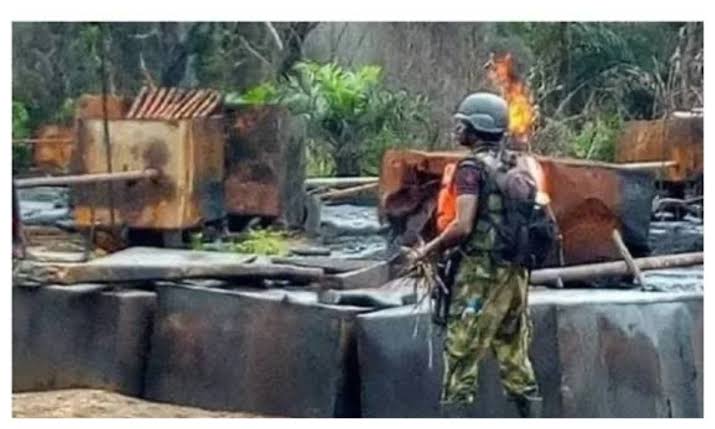
Troops Discover Illegal Refinery Site, Recover 600 Litres of Stolen Crude in Rivers
By: Zagazola Makama
Troops of 29 Battalion operating under the Joint Task Force South-South, Operation Delta Safe (OPDS), have uncovered an illegal refining site and recovered about 600 litres of suspected stolen crude oil in Oyigbo Local Government Area of Rivers State.
Security sources said the discovery was made at about 10:00 a.m. on May 12, 2026, during ongoing anti-illegal bunkering operations in the Niger Delta region.
The troops reportedly discovered the illegal refining site around Asa community, where a large cooking pot loaded with stolen crude oil was found stockpiled in sacks.
Military authorities said the recovered products and equipment were handled in accordance with operational directives guiding anti-crude oil theft operations under Operation Delta Safe.
The operation was conducted without any confrontation or security incident.
The Nigerian military has continued to intensify operations against crude oil theft, illegal refining and other forms of economic sabotage across the Niger Delta region.
Troops Discover Illegal Refinery Site, Recover 600 Litres of Stolen Crude in Rivers

Troops, NDLEA Raid Drug Hideout in Katsina, Arrest Suspected Supplier to Terrorists
By: Zagazola Makama
Troops of the Forward Operating Base (FOB) Malumfashi at Kafur, in collaboration with the National Drug Law Enforcement Agency, have raided a suspected drug peddlers’ hideout in Kafur Local Government Area of Katsina State.
Security sources said the operation was conducted at about 12:30 p.m. on May 12, 2026, at Huguma village following intelligence on illicit drug activities within the area.
During the raid, troops apprehended one suspect identified as a major supplier of illicit drugs and other substances to terrorists and criminal elements operating within Kafur Local Government Area and surrounding communities.
Items recovered during the operation included 146 grams of suspected cannabis and 16.5 grams of a substance identified as Exol-5.
The suspect and the recovered drugs have since been handed over to the National Drug Law Enforcement Agency for further investigation and necessary legal action.
Troops, NDLEA Raid Drug Hideout in Katsina, Arrest Suspected Supplier to Terrorists

Troops Neutralise Two Terrorists in Night Ambush Operation in Borno

Troops Arrest Three Suspected Cattle Rustlers in Borno

Troops Intercept Vehicle Conveying Illegal Diesel in Bayelsa

Roger Federer’s Shock as DNA Results Reveal Myla and Charlene Are Not His Biological Children

THE PLIGHT OF FARIDA

FAILED COUP IN BURKINA FASO: HOW TRAORÉ NARROWLY ESCAPED ASSASSINATION PLOT AMID FOREIGN INTERFERENCE CLAIMS
-
 News2 years ago
Roger Federer’s Shock as DNA Results Reveal Myla and Charlene Are Not His Biological Children
-
Opinions4 years ago
THE PLIGHT OF FARIDA
-
 News1 year ago
FAILED COUP IN BURKINA FASO: HOW TRAORÉ NARROWLY ESCAPED ASSASSINATION PLOT AMID FOREIGN INTERFERENCE CLAIMS
-

 News2 years ago
EYN: Rev. Billi, Distortion of History, and The Living Tamarind Tree
-
 Opinions4 years ago
POLICE CHARGE ROOMS, A MINTING PRESS
-

 ACADEMICS2 years ago
A History of Biu” (2015) and The Lingering Bura-Pabir Question (1)
-

 Columns2 years ago
Army University Biu: There is certain interest, but certainly not from Borno.
-

 Opinions2 years ago
Tinubu,Shettima: The epidemic of economic, insecurity in Nigeria
