
News
Three women killed as Bachama–Tsobo crisis resurfaces in Adamawa

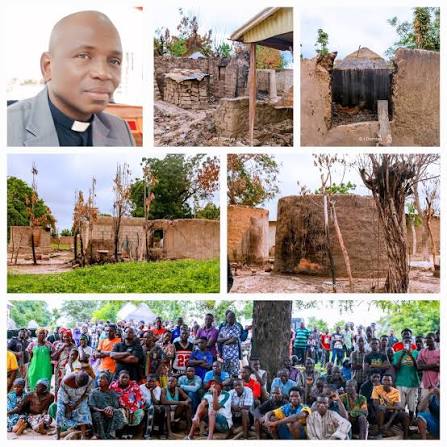
Three women killed as Bachama–Tsobo crisis resurfaces in Adamawa
By: Zagazola Makama
The killing of three Tsobo women on a dry season rice farm in Numan Local Government Area has reignited the Bachama–Chobo conflict, whose roots stretch far beyond the sound of gunfire.
Zagazola Makama report that the latest incident occurred on Friday at about 10:30 a.m. while some Tsobo women were working on their dry-season rice farm. Sources said that suspected Bachama youths stormed the farming area in large numbers and began shooting sporadically. In the process, three women were shot dead,” the source said.
The killing of the three Tsobo women on a dry-season rice farm in Numan is not an isolated tragedy. It is the latest expression of a conflict whose roots lie far deeper than gunshots, farmlands or a single failed peace meeting.
The Bachama–Chobo crisis is a classic Nigerian communal conflict, layered, historical, emotional and politically combustible where land ownership, identity, chieftaincy authority and generational amnesia have fused into a dangerous cocktail.
At its core, the crisis is not merely about who owns which farmland. It is about who belongs, who rules, and who decides the future of a shared space. For centuries, Bachama and Chobo communities lived together in Numan and its environs under a largely harmonious arrangement. Markets were shared. Water points were communal. Schools, hospitals and even marriages crossed ethnic lines. There was no rigid separation between “host” and “settler” in daily life.
That coexistence was sustained not by written treaties or court judgments, but by social contracts rooted in tradition, mutual respect and the authority of traditional institutions. Disputes over land were settled locally. Authority was recognised, even if grudgingly. Peace endured because both sides saw coexistence as more valuable than confrontation.
What has changed is not history but how history is interpreted, weaponised and transmitted to younger generations. The Bachama and Chobo tell fundamentally different origin stories, and each story carries political implications.
The Chobo present themselves as original inhabitants, landlords who accommodated Bachama migrants out of goodwill. From this perspective, the Bachama are “guests” who have overstayed their welcome and now seek to dominate both land and chieftaincy.
The Bachama counter this narrative by portraying the Chobo as mountain dwellers who were encouraged to descend into the plains, settled and supported through leased farmlands. In this account, Bachama authority is not imposed but historically earned.
Neither narrative is neutral. Each defines who has moral legitimacy, who should defer, and who has the right to rule. Once such narratives harden, compromise becomes betrayal and dialogue becomes surrender.
Investigations and community testimonies consistently point to farmland disputes involving Waduku and Rigange as the immediate triggers of violence. But land is only the spark, not the fuel. Land disputes in Nigeria rarely remain about boundaries alone. They quickly evolve into questions of identity and power, especially where farming is the primary means of survival.
For Chobo communities described as largely mountain dwellers, access to fertile plains is existential. For Bachama communities, control of land reinforces political and traditional dominance. Once farming rights are framed as existential threats, moderation disappears.
Historically, traditional rulers resolved such disputes. Today, that mechanism is broken.
The Chobo’s rejection of traditional mediation stems from their perception that the entire traditional hierarchy is Bachama-dominated, making justice structurally impossible. From their standpoint, accepting verdicts from Bachama-led institutions amounts to legitimising subordination.
The Bachama, however, see this rejection as bad faith and intransigence, especially when mediation panels include Chobo representatives. Each side believes the other is deliberately undermining peace. This mutual distrust has hollowed out traditional conflict-resolution systems, leaving a vacuum filled by courts, security forces and increasingly youth militancy.
Perhaps the most dangerous element in the crisis is generational. Older community leaders remember coexistence. Younger actors remember grievance. Many of today’s youths were born into suspicion, not solidarity. They inherited anger without inheriting context.
Slogans like “Sokoto must go” illustrate how historical migration narratives are simplified into political weapons. Such rhetoric does not seek negotiation; it seeks erasure. Once a community is told it must “return” after centuries of settlement, violence becomes not only possible but, to some, justified. Social media, music and street mobilisation have amplified these sentiments, weakening elders’ authority and making youth groups de facto power brokers.
The chieftaincy question has transformed the conflict from communal disagreement into a struggle over sovereignty. Bachama leaders insist that Chobo fall under the statutory authority of the Hamma Bachama. Chobo leaders reject this, seeing it as symbolic domination. Withdrawal of allegiance was not merely cultural, it was political defiance.
Peace talks collapsed largely because reconciliation was framed as submission rather than coexistence. Apologies demanded, loyalties reaffirmed and conditions imposed turned dialogue into a zero-sum contest. In conflicts of identity, dignity often matters more than land.
The Adamawa State Government, through peace agencies and direct intervention by Gov. Ahmadu Umar Fintiri, has made sustained efforts to mediate between the warring communities. Multiple meetings involving elders, youth representatives, traditional rulers and government officials have been held. Yet, each round of talks has ended without lasting agreement, often undermined by fresh outbreaks of violence shortly after. Curfews and security deployments have restored temporary calm, but residents say such measures amount to enforced silence rather than genuine peace.
The renewed violence has taken a heavy toll on civilians, particularly women engaged in farming and trading.
Community leaders lament that farms and markets once symbols of shared livelihood have become theatres of bloodshed. The killing of women working on rice farms has deepened fears and resentment, reinforcing the sense that the conflict has spiralled beyond control. The Bachama–Chobo crisis mirrors broader challenges across Nigeria, where disputes over land, identity and traditional authority intersect with weak dispute-resolution mechanisms and rising youth radicalisation.
Until issues of legitimacy, land access and historical grievances are addressed through an inclusive and neutral process, observers warn that violence will continue to recur.
End


UNIFEMGA Urges Positive Mindset, National Unity as Key to Nigeria’s Growth
By: Michael Mike
Members of the Obafemi Awolowo University Muslim Graduates’ Association (UNIFEMGA) have called on Nigerians to embrace positive thinking, patriotism and collective responsibility as essential ingredients for national transformation and sustainable development.
The association made the call in a communiqué issued at the end of its 2026 Annual National Re-union held at Obafemi Awolowo University, Ile-Ife, Osun State, between May 8 and May 10.
The conference, themed “The Potential Within Nigeria: Positive Mindset and Communication for Success,” brought together Muslim professionals, academics, business leaders and alumni from across the country to deliberate on issues affecting national development, education, governance and economic growth.
The communiqué, signed by the National President of the association, Mohamed Buari, and the National Secretary, Sefiu Ikudaisi, stressed that Nigeria possesses abundant human and material resources capable of transforming the country into a global economic and political force if citizens adopt the right mindset and attitudes.
According to the association, negative narratives, disunity and poor value orientation have continued to undermine the country’s enormous potential.
It noted that Islam encourages development, innovation and the pursuit of knowledge capable of improving the quality of life, provided such advancements remain within the ethical boundaries prescribed by the religion.
The conference commenced with a special Jumat service at the OAU Central Mosque of Unity and a courtesy visit to the Vice-Chancellor of the university, Adebayo Simeon Bamire, and other principal officers of the institution.
During the visit, discussions centred on issues of mutual interest, with the university management reportedly commending the association for its contributions to the growth and development of the institution.
A major highlight of the reunion was the presentation of scholarships worth N14.6 million to 140 students of the university as part of the association’s welfare and educational support programme.
UNIFEMGA disclosed that since the introduction of the scholarship initiative in the 2009/2010 academic session, it has disbursed over N103.4 million to 1,148 students of the institution.
The association also launched a N200 million endowment fund targeted at supporting widows and orphans of members under its welfare scheme.
The event featured a networking dinner sponsored by the Chairman of the Board of Trustees of the association, Rafiu Ebiti, focusing on value-driven entrepreneurship and investment opportunities.
The reunion lecture was delivered by the Director-General of the National Orientation Agency, Lanre Issa-Onilu, while the Managing Director and Chief Executive Officer of Matrix Energy Group, Abdulkabir Adisa Aliu, chaired the occasion.
Also in attendance were representatives of the Osun State Government, including Governor Ademola Adeleke, represented by his Senior Special Assistant on Religious Affairs, Bello Adeniyi, as well as the Pro-Chancellor of the university, Adejare Bello.
The association expressed concern over the growing challenges confronting tertiary education in Nigeria, including brain drain, obsolete learning equipment, unstable academic calendars and outdated curricula.
It urged the government to urgently address the problems and transform the current “japa” trend into an opportunity for “brain gain” capable of enhancing national productivity and innovation.
UNIFEMGA further called for stronger collaboration between universities and the private sector to ensure sustainable research, innovation and technological advancement.
On the economy, the association urged governments at all levels to create an enabling business environment through improved electricity supply, infrastructure development and investment in human capital.
It also stressed the need to tackle unemployment, warning that many jobless youths are vulnerable to manipulation by individuals promoting violence and instability.
The association said that a positive national mindset remains the foundation for building a prosperous and united Nigeria, urging citizens to embrace values that promote peace, productivity, discipline and national cohesion.
UNIFEMGA Urges Positive Mindset, National Unity as Key to Nigeria’s Growth

NSITF Restoring Hope to Injured Nigerian Workers Through Compensation Scheme — Faleye
By: Michael Mike
The Nigeria Social Insurance Trust Fund (NSITF) has intensified efforts to restore dignity, confidence and economic relevance to Nigerian workers injured in the line of duty through its Employees’ Compensation Scheme (ECS), with the Managing Director and Chief Executive Officer of the Fund, Oluwaseun Faleye, declaring that no worker should be abandoned after suffering workplace accidents.
Faleye made the declaration in Abuja during the presentation of prosthetic limbs to 10 beneficiaries under the Fund’s rehabilitation and reintegration programme, describing the intervention as a practical demonstration of government’s commitment to social protection and workers’ welfare.
Represented by the General Manager, Claims and Compensation, Mrs. Nkiru Ogunnike, the NSITF boss said the scheme has continued to serve as a lifeline for workers whose lives were disrupted by industrial accidents, occupational diseases and other work-related hazards.
He stressed that the Employees’ Compensation Scheme was not designed merely to pay compensation, but to restore injured workers physically, emotionally and psychologically so they could reintegrate into society with renewed confidence.
According to him, many workplace accidents leave victims permanently altered, with some battling emotional trauma, social stigma and uncertainty about their future livelihoods.
“For many Nigerian workers, a single workplace incident can permanently alter the course of their lives. Through the intervention of the NSITF as administrators of the ECS, affected workers are given a second chance to rebuild their lives and regain independence,” he said.
Faleye cited the case of Daniel Etim, a staff member of the University of Uyo Printing Press, whose arm was amputated after it became trapped in an industrial machine during routine work in May 2024.
He explained that the NSITF not only covered Daniel’s medical expenses under the Employees’ Compensation Scheme but also provided him with a prosthetic arm to aid his rehabilitation and restore his functionality.
“Beyond the payment of medical bills, the Fund extended further rehabilitative support by providing him with a prosthetic arm, reaffirming its commitment not only to compensation but also to restoring dignity, confidence and functionality to injured workers,” he stated.
Faleye also recounted the experience of Festus Okpara, an employee of Tower Aluminium Laos, who lost his hand in a workplace accident in 2015 and endured years of emotional distress and social discomfort.
According to him, the provision of a silicone prosthetic hand by the NSITF has helped Okpara regain confidence and interact freely in public once again.
“Beyond the trauma of the accident itself was the constant public attention, the quizzical looks and the pitying stares that made social interactions difficult. The intervention of the NSITF has helped restore his sense of inclusion and self-worth,” he added.
One of the beneficiaries, Festus Okpara, expressed appreciation to the Fund for what he described as life-changing support.
“I thank NSITF for coming all this way to help. At least with this, I can go out in public and feel free. NSITF has reduced the level of trauma,” he said.
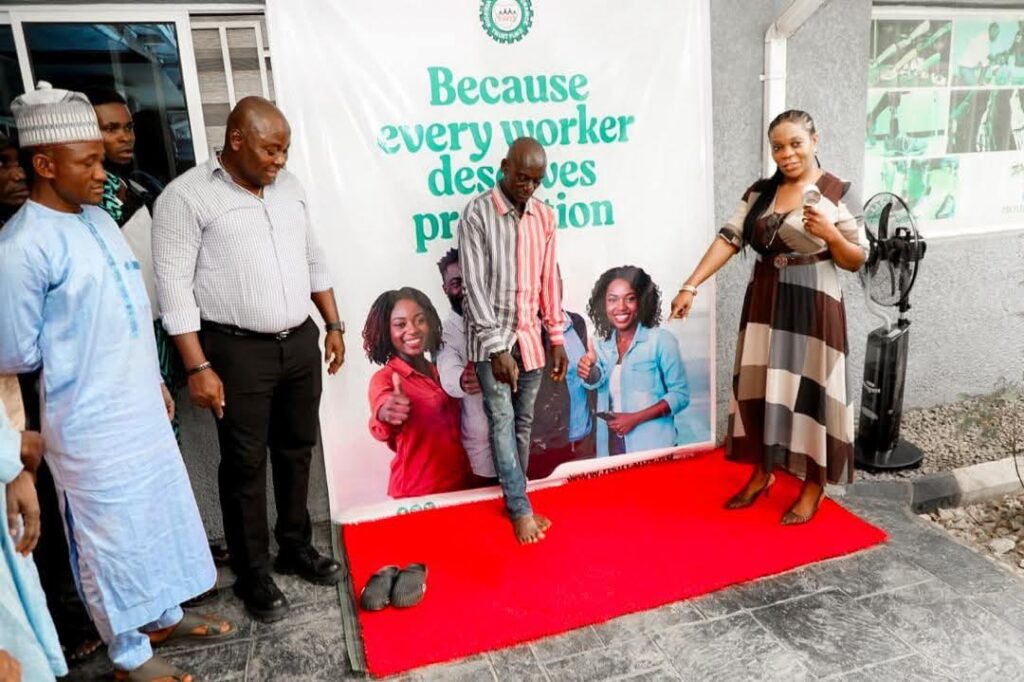
The latest intervention is part of the ongoing rehabilitation and reintegration programme of the NSITF, under which 78 beneficiaries have recently been fitted with artificial limbs.
The Employees’ Compensation Scheme was established under the Employees’ Compensation Act of 2010 to provide compensation for workers who suffer injuries, disabilities, diseases or death arising from workplace activities.
The scheme, funded through employer contributions, was introduced to replace the defunct Workmen’s Compensation Act and broaden social protection for Nigerian workers in both the public and private sectors.
Over the years, labour stakeholders have repeatedly raised concerns over poor workplace safety standards in several sectors of the economy, especially manufacturing, construction and heavy industry, where industrial accidents remain prevalent.
Analysts say the increasing intervention of the NSITF in rehabilitation and compensation is gradually strengthening confidence in Nigeria’s social insurance system and drawing attention to the need for stricter enforcement of occupational safety measures across workplaces.
For many beneficiaries, however, the interventions represent something deeper than compensation — a restoration of hope after tragedy.
NSITF Restoring Hope to Injured Nigerian Workers Through Compensation Scheme — Faleye
News
Troops eliminates several ISWAP Attackers in failed attempt on Gonori, Recover Weapons in Borno
Troops eliminates several ISWAP Attackers in failed attempt on Gonori, Recover Weapons in Borno
By: Zagazola Makama
Troops of Operation Hadin Kai (OPHK) have repelled a late-night attack by suspected ISWAP terrorists on the Forward Operating Base of the 120 Task Force Battalion in Gonori, Borno State.
Military authorities said the failed attack occurred between late Saturday, May 9, and the early hours of Sunday, May 10, 2026, under Sector 2 of the North-East counter-insurgency operation.
The terrorists were said to have advanced toward the location from the Mandunari axis at about midnight but were detected early by troops on ambush positions.
Security sources disclosed that troops immediately launched a coordinated spoiling attack, forcing the insurgents into a heavy exchange of fire before air support from the Air Component of Operation Hadin Kai and the Nigerian Army Aviation joined the operation.
The combined air-land assault reportedly inflicted heavy casualties on the fleeing terrorists, while troops successfully defended the camp without any breach or loss of equipment.
Exploitation of the general area after the encounter reportedly revealed blood trails, body parts and several terrorist corpses within the vicinity, indicating significant casualties among the attackers.
Troops also recovered one General Purpose Machine Gun (GPMG), two PKT machine guns, five AK-47 rifles, belts of assorted ammunition and other items abandoned by the insurgents.
Military authorities confirmed that some soldiers sustained injuries during the encounter but were stable and receiving medical attention.
They added that exploitation and pursuit operations were ongoing to track fleeing terrorists and consolidate gains recorded during the operation.
The military said the latest failed attack further demonstrated the operational readiness of troops and the continued pressure being mounted against terrorist groups across the North-East theatre.
Troops eliminates several ISWAP Attackers in failed attempt on Gonori, Recover Weapons in Borno

UNIFEMGA Urges Positive Mindset, National Unity as Key to Nigeria’s Growth

Troops Arrest Suspect with Over 1,300 Empty Ammunition Casings in Borno

NSITF Restoring Hope to Injured Nigerian Workers Through Compensation Scheme — Faleye

Roger Federer’s Shock as DNA Results Reveal Myla and Charlene Are Not His Biological Children

THE PLIGHT OF FARIDA

FAILED COUP IN BURKINA FASO: HOW TRAORÉ NARROWLY ESCAPED ASSASSINATION PLOT AMID FOREIGN INTERFERENCE CLAIMS
-
 News2 years ago
Roger Federer’s Shock as DNA Results Reveal Myla and Charlene Are Not His Biological Children
-
Opinions4 years ago
THE PLIGHT OF FARIDA
-
 News1 year ago
FAILED COUP IN BURKINA FASO: HOW TRAORÉ NARROWLY ESCAPED ASSASSINATION PLOT AMID FOREIGN INTERFERENCE CLAIMS
-

 News2 years ago
EYN: Rev. Billi, Distortion of History, and The Living Tamarind Tree
-
 Opinions4 years ago
POLICE CHARGE ROOMS, A MINTING PRESS
-

 ACADEMICS2 years ago
A History of Biu” (2015) and The Lingering Bura-Pabir Question (1)
-

 Columns2 years ago
Army University Biu: There is certain interest, but certainly not from Borno.
-

 Opinions2 years ago
Tinubu,Shettima: The epidemic of economic, insecurity in Nigeria
