
News
Three women killed as Bachama–Tsobo crisis resurfaces in Adamawa

Three women killed as Bachama–Tsobo crisis resurfaces in Adamawa
By: Zagazola Makama
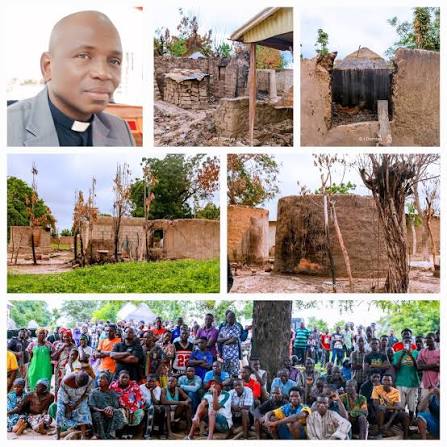
The killing of three Tsobo women on a dry season rice farm in Numan Local Government Area has reignited the Bachama–Chobo conflict, whose roots stretch far beyond the sound of gunfire.
Zagazola Makama report that the latest incident occurred on Friday at about 10:30 a.m. while some Tsobo women were working on their dry-season rice farm. Sources said that suspected Bachama youths stormed the farming area in large numbers and began shooting sporadically. In the process, three women were shot dead,” the source said.
The killing of the three Tsobo women on a dry-season rice farm in Numan is not an isolated tragedy. It is the latest expression of a conflict whose roots lie far deeper than gunshots, farmlands or a single failed peace meeting.
The Bachama–Chobo crisis is a classic Nigerian communal conflict, layered, historical, emotional and politically combustible where land ownership, identity, chieftaincy authority and generational amnesia have fused into a dangerous cocktail.
At its core, the crisis is not merely about who owns which farmland. It is about who belongs, who rules, and who decides the future of a shared space. For centuries, Bachama and Chobo communities lived together in Numan and its environs under a largely harmonious arrangement. Markets were shared. Water points were communal. Schools, hospitals and even marriages crossed ethnic lines. There was no rigid separation between “host” and “settler” in daily life.
That coexistence was sustained not by written treaties or court judgments, but by social contracts rooted in tradition, mutual respect and the authority of traditional institutions. Disputes over land were settled locally. Authority was recognised, even if grudgingly. Peace endured because both sides saw coexistence as more valuable than confrontation.
What has changed is not history but how history is interpreted, weaponised and transmitted to younger generations. The Bachama and Chobo tell fundamentally different origin stories, and each story carries political implications.
The Chobo present themselves as original inhabitants, landlords who accommodated Bachama migrants out of goodwill. From this perspective, the Bachama are “guests” who have overstayed their welcome and now seek to dominate both land and chieftaincy.
The Bachama counter this narrative by portraying the Chobo as mountain dwellers who were encouraged to descend into the plains, settled and supported through leased farmlands. In this account, Bachama authority is not imposed but historically earned.
Neither narrative is neutral. Each defines who has moral legitimacy, who should defer, and who has the right to rule. Once such narratives harden, compromise becomes betrayal and dialogue becomes surrender.
Investigations and community testimonies consistently point to farmland disputes involving Waduku and Rigange as the immediate triggers of violence. But land is only the spark, not the fuel. Land disputes in Nigeria rarely remain about boundaries alone. They quickly evolve into questions of identity and power, especially where farming is the primary means of survival.
For Chobo communities described as largely mountain dwellers, access to fertile plains is existential. For Bachama communities, control of land reinforces political and traditional dominance. Once farming rights are framed as existential threats, moderation disappears.
Historically, traditional rulers resolved such disputes. Today, that mechanism is broken.
The Chobo’s rejection of traditional mediation stems from their perception that the entire traditional hierarchy is Bachama-dominated, making justice structurally impossible. From their standpoint, accepting verdicts from Bachama-led institutions amounts to legitimising subordination.
The Bachama, however, see this rejection as bad faith and intransigence, especially when mediation panels include Chobo representatives. Each side believes the other is deliberately undermining peace. This mutual distrust has hollowed out traditional conflict-resolution systems, leaving a vacuum filled by courts, security forces and increasingly youth militancy.
Perhaps the most dangerous element in the crisis is generational. Older community leaders remember coexistence. Younger actors remember grievance. Many of today’s youths were born into suspicion, not solidarity. They inherited anger without inheriting context.
Slogans like “Sokoto must go” illustrate how historical migration narratives are simplified into political weapons. Such rhetoric does not seek negotiation; it seeks erasure. Once a community is told it must “return” after centuries of settlement, violence becomes not only possible but, to some, justified. Social media, music and street mobilisation have amplified these sentiments, weakening elders’ authority and making youth groups de facto power brokers.
The chieftaincy question has transformed the conflict from communal disagreement into a struggle over sovereignty. Bachama leaders insist that Chobo fall under the statutory authority of the Hamma Bachama. Chobo leaders reject this, seeing it as symbolic domination. Withdrawal of allegiance was not merely cultural, it was political defiance.
Peace talks collapsed largely because reconciliation was framed as submission rather than coexistence. Apologies demanded, loyalties reaffirmed and conditions imposed turned dialogue into a zero-sum contest. In conflicts of identity, dignity often matters more than land.
The Adamawa State Government, through peace agencies and direct intervention by Gov. Ahmadu Umar Fintiri, has made sustained efforts to mediate between the warring communities. Multiple meetings involving elders, youth representatives, traditional rulers and government officials have been held. Yet, each round of talks has ended without lasting agreement, often undermined by fresh outbreaks of violence shortly after. Curfews and security deployments have restored temporary calm, but residents say such measures amount to enforced silence rather than genuine peace.
The renewed violence has taken a heavy toll on civilians, particularly women engaged in farming and trading.
Community leaders lament that farms and markets once symbols of shared livelihood have become theatres of bloodshed. The killing of women working on rice farms has deepened fears and resentment, reinforcing the sense that the conflict has spiralled beyond control. The Bachama–Chobo crisis mirrors broader challenges across Nigeria, where disputes over land, identity and traditional authority intersect with weak dispute-resolution mechanisms and rising youth radicalisation.
Until issues of legitimacy, land access and historical grievances are addressed through an inclusive and neutral process, observers warn that violence will continue to recur.
End


Troops Arrest Suspected Military Impostor in Katsina
By Zagazola Makama
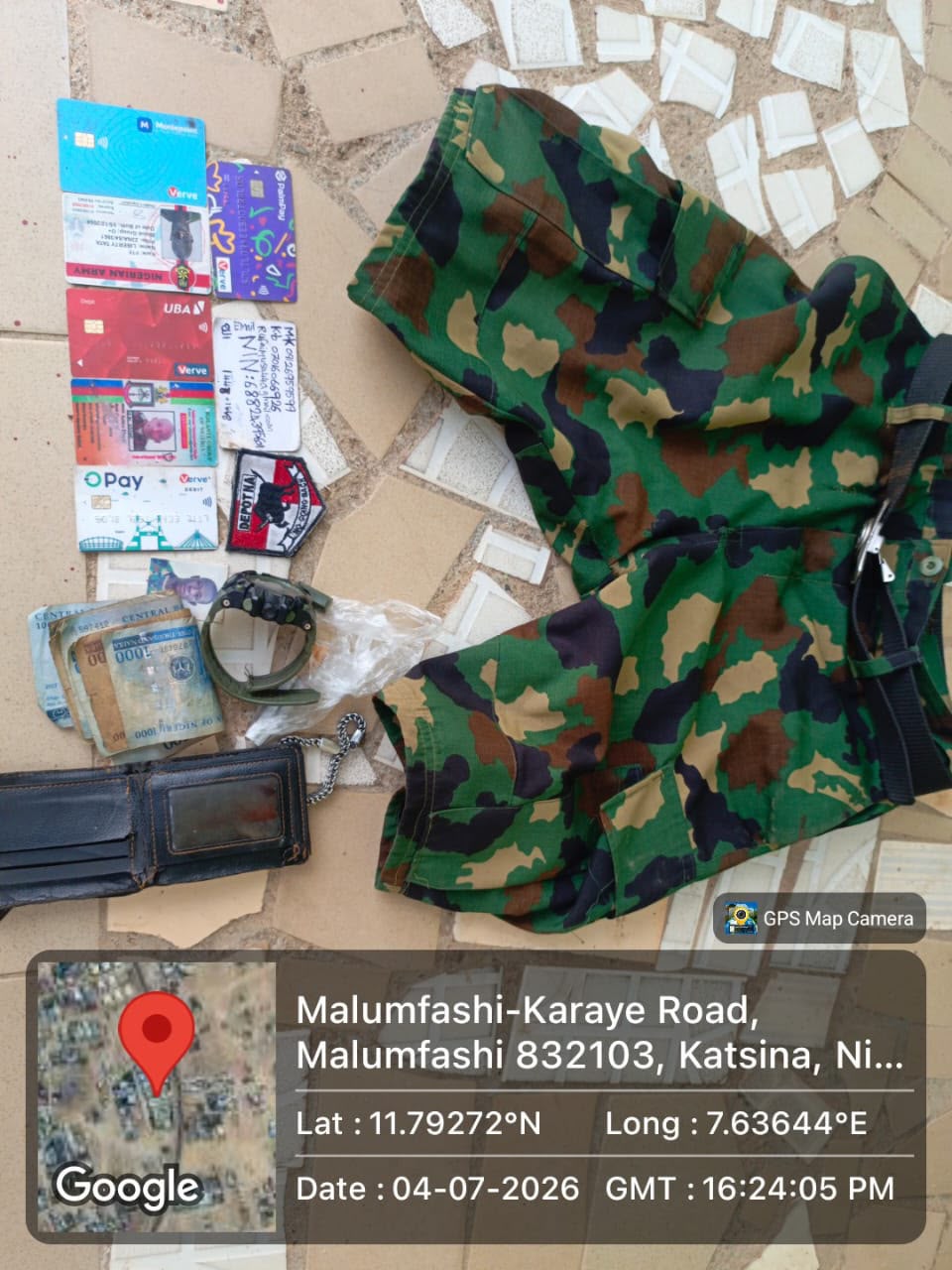
Troops of 17 Brigade have arrested a suspected military impostor during a fighting patrol in Malumfashi Local Government Area.
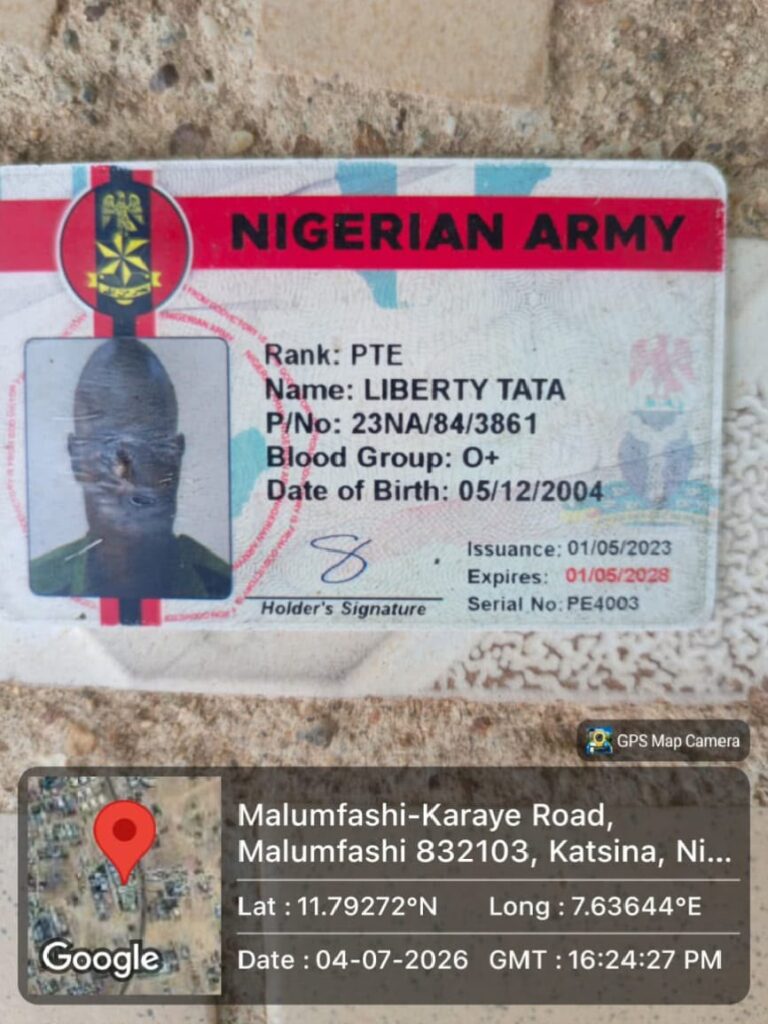
Security sources told Zagazola Makama that the suspect was apprehended at about 1:30 p.m. on July 4 by troops deployed at the Forward Operating Base (FOB) Malumfashi while conducting routine patrols within Malumfashi town.

According to the sources, the suspect was intercepted while wearing a woodland camouflage three-quarter short, raising suspicion among the troops.
A search conducted on the suspect led to the recovery of a fake Nigerian Army identity card, four Automated Teller Machine (ATM) cards, one woodland camouflage three-quarter short, a wristwatch and the sum of ₦17,000.
The suspect and the recovered exhibits are currently in military custody pending further investigation.
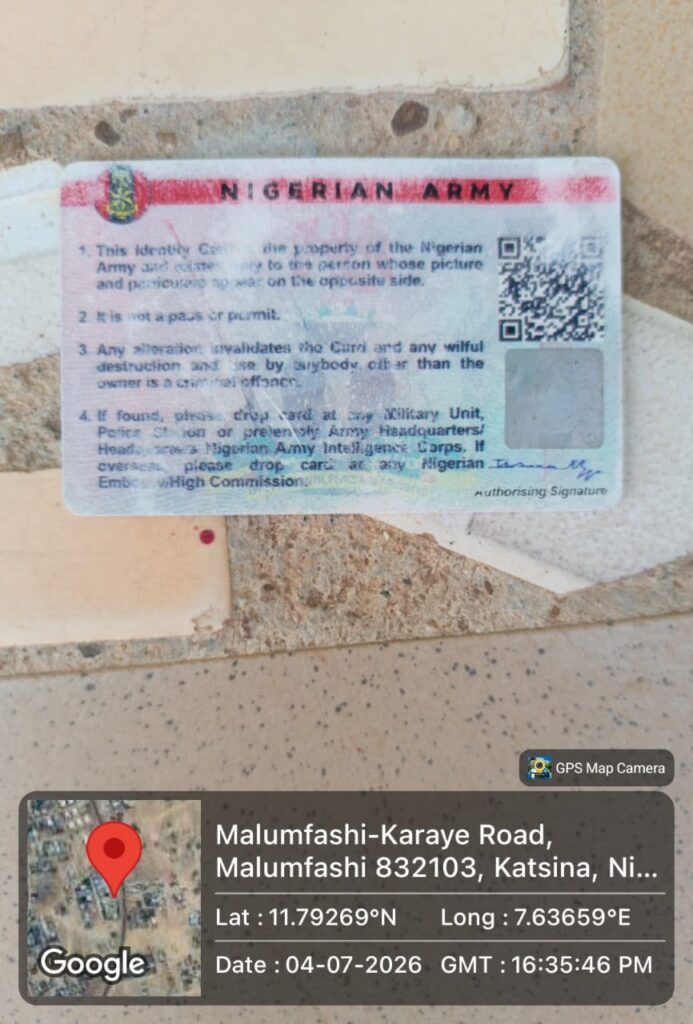
Military sources said the arrest forms part of ongoing efforts to curb impersonation of security personnel and other criminal activities within the area.
Troops Arrest Suspected Military Impostor in Katsina
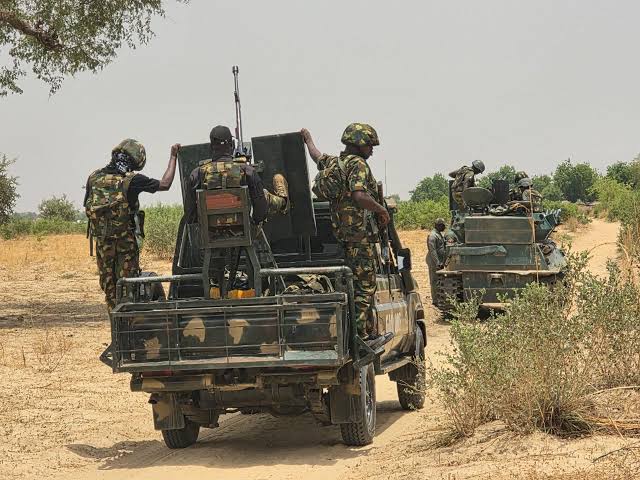
Troops Recover 50 Rustled Cattle, Repel Suspected Rustlers in Kaduna
By Zagazola Makama
Troops deployed at the Forward Operating Base (FOB) Kankomi have recovered 50 rustled cattle after repelling suspected cattle rustlers during an ambush operation in Chikun Local Government Area.
Security sources told Zagazola Makama that the troops responded to a distress call at about 9:55 a.m. on July 4 over the activities of suspected rustlers at Ungwan Gontu community.
According to the sources, the troops swiftly laid an ambush and made contact with the fleeing suspects, forcing them to abandon the stolen livestock and escape into the surrounding area.
During the operation, the troops recovered 50 rustled cattle, which were subsequently identified and handed over to their rightful owner.
Military sources said efforts are ongoing to track down the fleeing suspects as security operations continue to combat cattle rustling and other criminal activities across Kaduna State.
Troops Recover 50 Rustled Cattle, Repel Suspected Rustlers in Kaduna
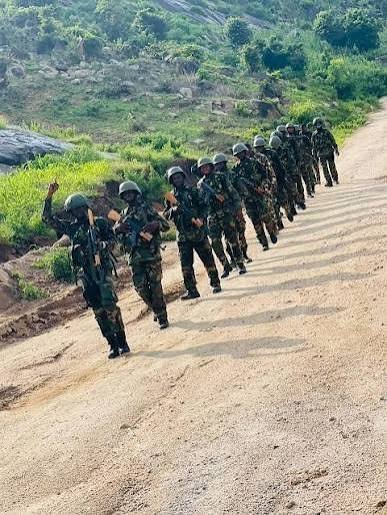
Troops Arrest Suspected Terrorist in Kogi, Suspect Confesses to Group Membership
By Zagazola Makama
Troops of 12 Brigade, in collaboration with Office of the National Security Adviser (ONSA) Hybrid Forces, have arrested a suspected terrorist during an operation in Lokoja Local Government Area.
Security sources told Zagazola Makama that the troops responded at about 1:00 p.m. on July 4 to reports of a confrontation between local residents and a suspected terrorist at a Ruga settlement behind Obajana community.
According to the sources, the troops swiftly intervened and arrested one suspect at the scene.
During preliminary interrogation, the suspect reportedly confessed to being a member of a terrorist group led by an individual identified as Haruna, which allegedly operates within the Okene general area.
The suspect is currently in military custody and is undergoing further investigation to establish the extent of his involvement and identify other members of the group.
Military sources said the arrest forms part of ongoing security operations aimed at dismantling terrorist and criminal networks across Kogi State.
Troops Arrest Suspected Terrorist in Kogi, Suspect Confesses to Group Membership

Troops Arrest Suspected Military Impostor in Katsina

Troops Recover 50 Rustled Cattle, Repel Suspected Rustlers in Kaduna

Troops Arrest Suspected Terrorist in Kogi, Suspect Confesses to Group Membership

Roger Federer’s Shock as DNA Results Reveal Myla and Charlene Are Not His Biological Children

THE PLIGHT OF FARIDA

FAILED COUP IN BURKINA FASO: HOW TRAORÉ NARROWLY ESCAPED ASSASSINATION PLOT AMID FOREIGN INTERFERENCE CLAIMS
-
 News2 years ago
Roger Federer’s Shock as DNA Results Reveal Myla and Charlene Are Not His Biological Children
-
Opinions4 years ago
THE PLIGHT OF FARIDA
-
 News1 year ago
FAILED COUP IN BURKINA FASO: HOW TRAORÉ NARROWLY ESCAPED ASSASSINATION PLOT AMID FOREIGN INTERFERENCE CLAIMS
-

 News2 years ago
EYN: Rev. Billi, Distortion of History, and The Living Tamarind Tree
-
 Opinions5 years ago
POLICE CHARGE ROOMS, A MINTING PRESS
-

 ACADEMICS2 years ago
A History of Biu” (2015) and The Lingering Bura-Pabir Question (1)
-

 Columns2 years ago
Army University Biu: There is certain interest, but certainly not from Borno.
-

 Politics1 year ago
2027: Why Hon. Midala Balami Must Go, as Youths in Hawul and Asikira/Uba Federal Constituency Reject ₦500,000 as Sallah Gift
