
National News
2027: Vice President Kashim Shettima Standing Tall Amidst Misguided Oppositions

2027: Vice President Kashim Shettima Standing Tall Amidst Misguided Oppositions
By: Hon. Yusuf Adamu
In a country often marred by speculation and divisive rhetoric, the insinuations from opposition factions regarding the potential replacement of Shettima by “mischief-makers” are not only misguided but also reflective of a fundamental misunderstanding of the dynamics at play within Nigerian politics.
It is imperative to acknowledge the significance of partnerships in political leadership. Vice President Kashim Shettima has uniquely positioned himself as a pivotal figure in this administration, not merely as a subordinate but as a strategic ally to President Tinubu. Their relationship is rooted in mutual respect and shared goals, transcending partisan interests and religious affiliations.
Contrary to the narratives spun by opposition voices, there has been no indication from President Tinubu regarding any intention to replace his vice president. This sentiment is echoed by the general populace who recognize the necessity of stability and continuity during these critical times.
The intricacies of Tinubu and Shettima’s alliance are further underscored by their respective backgrounds and experiences. Both leaders have weathered the storms of political challenges and have showcased resilience that resonates with the Nigerian electorate.
It is essential not to reduce their achievements or the worth of their partnership to mere religious identities—Muslim – Muslim. Such simplifications undermine the rich tapestry of relationships that they have cultivated across different demographics throughout their political careers.
One cannot overlook the years of camaraderie, exemplified by Kashim Shettima’s longstanding friendships, particularly with notable figures such as Dr. James Bwala, who has written hundreds of articles in publications online either promoting or defending the vice president. This enduring relationship is illustrative of Shettima’s capacity to foster cross-cultural connections and to engage meaningfully with individuals from various backgrounds.
His engagement with Christians and their communities has been robust, demonstrating that his political strategy is inclusive rather than exclusionary. Shettima’s authentic relationships illustrate his commitment to unity and collaboration, affirming that the political landscape can be navigated without falling prey to division based on religious lines.
Also Shettima’s heritage plays a crucial role in this narrative. Hailing from the El-Kanemi lineage, he draws upon a rich historical legacy that reinforces his credibility. His familial and political roots in northern Nigeria provide a strategic advantage for Tinubu’s administration, enabling effective outreach and engagement in a region that holds considerable sway in national politics.
This familiarity, combined with Shettima’s adept handling of political maneuverings, ensures that the partnership remains compelling, maintaining its relevance well into the future.
The skepticism from opposition parties about the viability of this partnership is not new. Historically, political alliances in Nigeria have been fraught with uncertainty and betrayal. However, an examination of this particular partnership reveals a contrasting story marked by tenacity and strategic foresight.
As opposition narratives swirl, Tinubu and Shettima are focused on governance, leveraging their strengths to address the multifaceted challenges facing the nation. Shettima’s international representation on behalf of the President speaks volumes of the trust and confidence placed in him, a testament to his effectiveness as a vice president and a political partner.
As we reflect on the broader implications of this partnership, it becomes evident that the political landscape is evolving. The criticisms hurled by mischief-makers serve not to deter but to galvanize support for Tinubu’s administration. In fact, the apparent disconnect between the actions of the opposition and the realities on the ground may very well be hindering their ability to connect with the electorate.
People are increasingly discerning and capable of distinguishing between politically motivated rhetoric and genuine leadership. In light of this, it is critical to underscore the importance of vision and coherence in leadership. The synergy between Tinubu and Shettima can be characterized as emblematic of a larger movement aimed at fostering development, inclusivity, and progress within Nigeria.
Their collective vision, grounded in principles of governance that resonate across diverse groups, positions them as a formidable force against any opposition efforts that seek to undermine their mission.
Also, examining the socio-political context it reveals that the partnership extends beyond mere electoral calculations. It is about nurturing a cohesive Nigeria where all citizens can thrive irrespective of their religious beliefs. This notion should be taken into account when evaluating the efficacy of the administration.
As both leaders navigate complex political terrains, it is essential to recognize that their administration seeks to embody a spirit of unity, promoting peace and collaboration amongst varied sectors of the population. The partnership between President Bola Ahmed Tinubu and Vice President Kashim Shettima is not only enduring but also transformative.
Critics and naysayers may attempt to dismantle this alliance through speculation and unfounded allegations, yet the evidence supports a different narrative—one of resilience, unity, and a shared vision for Nigeria’s future. While the opposition may continue their machinations, the focus must remain on the substantive work that both leaders are undertaking in service to their country.
This partnership, built on strength, mutual respect, and a profound understanding of Nigeria’s socio-political landscape, is poised to remain intact and fruitful until at least 2031. Ours is a time for action, partnership, and unwavering commitment to the ideals that will propel Nigeria towards a brighter future.
Hon. Yusuf Adamu, writes from Maiduguri
2027: Vice President Kashim Shettima Standing Tall Amidst Misguided Oppositions


National News
President Tinubu, Spreading Opportunities Across Overburdened Communities, Says VP Shettima
President Tinubu, Spreading Opportunities Across Overburdened Communities, Says VP Shettima
**Inaugurates 33.5km dual carriageway in Rivers, says it’s consistent with president’s Renewed Hope Agenda
By: Our Reporter
The Vice President, Senator Kashim Shettima, has said the administration of President Bola Ahmed Tinubu is deliberately spreading infrastructure and economic opportunities beyond major cities to reduce congestion, expand jobs and promote balanced national development across Nigeria.
This, he noted, is driven by the administration’s conviction that such state-driven projects are consistent with the Renewed Hope Agenda’s push to expand security, welfare and economic opportunity beyond the centre.
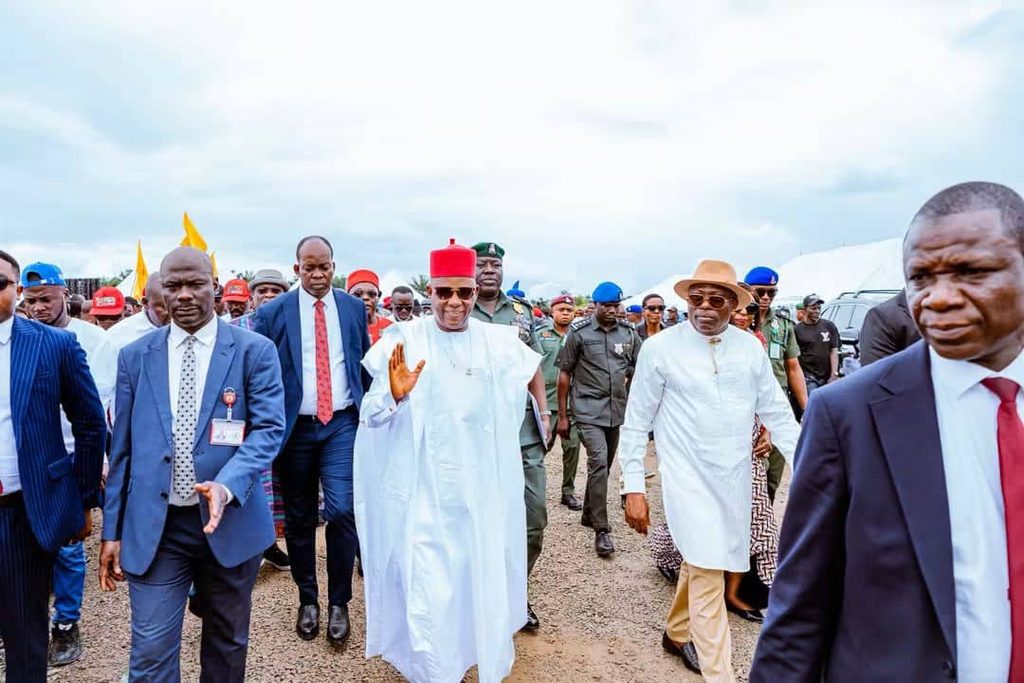
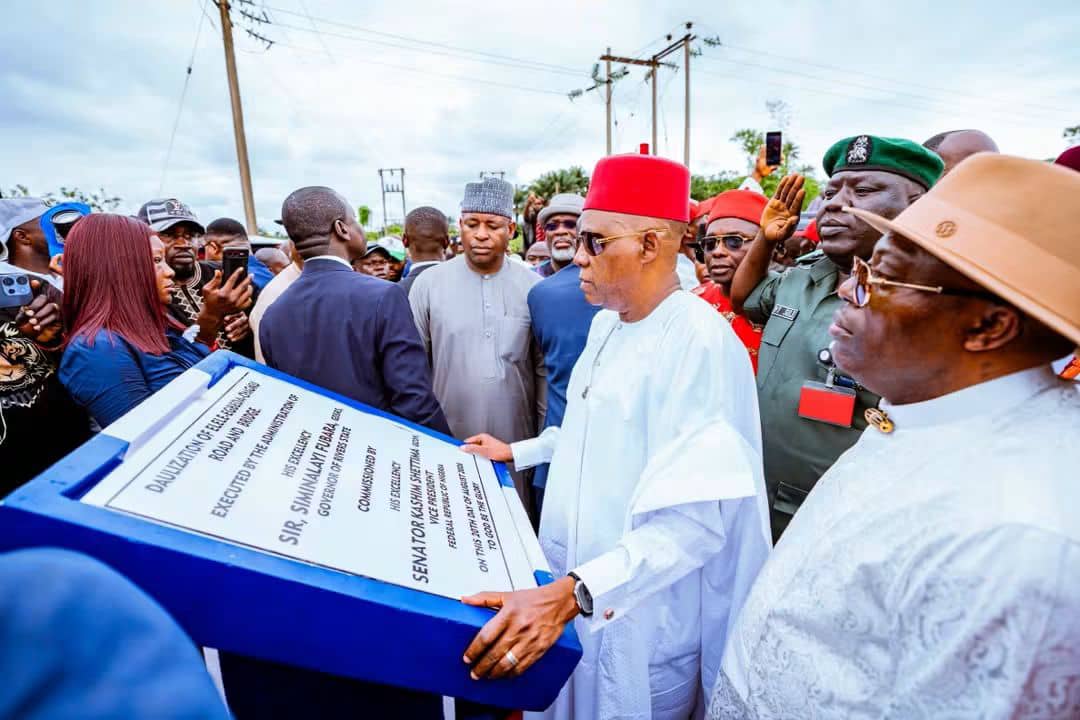
Senator Shettima stated this on Thursday while inaugurating the Elele-Umudioga-Egbeda-Ubimini-Akpabu-Ikiri-Omoku Dual Carriageway in Rivers State on behalf of President Tinubu.
The 33.5-kilometre road runs through Ikwerre, Emohua and Ogba/Egbema/Ndoni local government areas of the state, connects communities along an important agricultural, commercial and oil and gas corridor leading towards Omoku, widely regarded as the state’s “Gas City.”
“A nation becomes congested when opportunity is congested. People move because roads, markets, jobs and services have not moved far enough towards them,” the Vice President stated.
He said roads are among the most democratic instruments of development, noting that they connect farmers to markets, workers to jobs, students to schools and patients to healthcare.
“Roads are among the most democratic instruments of development. They serve the farmer carrying produce to market, the trader seeking customers, the worker travelling to employment, the student going to school and the patient seeking care. When a road works, society moves,” VP Shettima maintained.
According to him, the completed road will help farmers move produce faster, reduce losses, lower logistics costs for businesses and open communities along the corridor to greater economic activity.
“Public infrastructure must be judged by the lives it improves. A road earns its value when a farmer earns more, a child reaches school earlier, and isolation no longer punishes enterprise,” he said.

Senator Shettima commended Rivers State Governor Siminalayi Fubara for completing the project, describing it as consistent with President Tinubu’s Renewed Hope Agenda and the Federal Government’s support for state-led investments that improve security, welfare and economic opportunities.
He also stressed the importance of continuity in governance, saying, “One administration lays a foundation, another strengthens it, and the people remain the final beneficiaries.”
The Vice President urged communities along the corridor to protect the infrastructure against vandalism and other activities capable of shortening its lifespan.
“Our next responsibility is to protect this asset from vandalism, reckless use and every practice that shortens the life of public infrastructure,” he said.
Earlier, Governor Siminalayi Fubara of Rivers State said the 33.5-kilometre road, with a river crossing bridge, will improve security and ease the age-long suffering of the people of the three local government areas of Ikwere, Emohua and Ogba/Egbema /Ndoni.
The governor explained that in the past, the road was a corridor for kidnapping, oil bunkering, and other forms of criminality, assuring that with the commissioning of the road, insecurity will be a thing of the past along the road corridor, and that security agencies would increase surveillance in the area.

“In this project, we have lights from the beginning to the end. So, even in the night, insecurity is totally eliminated. This won’t have been possible without the support of the Federal Government and the good people of Rivers State.
“I want to thank you for this special support that you have been giving to us for us to come here to say, to the glory of God, that promise made is a promise kept,” the governor said.
He thanked President Tinubu and the Vice President for their unwavering support to the government and people of Rivers State.
“I am a bit emotional today because for a very long time, I felt maybe we were not part of this country, but today I feel very happy that our country is also standing by us, ably represented here by no other person but distinguished Senator Kashim Shettima, Vice President of the Federal Republic of Nigeria. You can see why I feel emotion,” Fubara added..
On his part, the Commissioner for Works, Rivers State, Prof. Temple Nwofor, said the commissioning of the road represents another significant step in the determination of the Rivers State government to provide durable infrastructure that would improve connectivity, enhance mobility and promote economic activities within the benefiting communities.
He noted that the 33.5-kilometre road linking three local government areas in Rivers State will enhance development and open up opportunities that would address societal challenges.
Also, the Chairman of Emohua Local Government Area of the state, Dr Chidi Lloyd, said the project will open communities, ease transportation and boost economic activities in the affected local governments areas.
Lloyd said the project was more than asphalt, adding that it was a road to reconciliation and prosperity that connects people’s hearts.
“This day is significant not because we are commissioning the Elele-Omoku road but because of what it represents. We sincerely appreciate the President of the Federal Republic of Nigeria. We also thank the Minister of the Federal Capital Territory for his fatherly intervention and for standing with Rivers people on this journey.”
President Tinubu, Spreading Opportunities Across Overburdened Communities, Says VP Shettima

AWALCO Nominates NUJ FCT Chair Grace Ike for November Award
By: Michael Mike
The Association of West African Legislative Correspondents (AWALCO) has commended the achievements of the Chairman of the Nigerian Union of Journalists (NUJ), FCT Council, Comrade Grace Ike, and nominated her for an award scheduled for November.
The association announced the nomination when its executives, led by President Innocent Odoh, paid a courtesy visit to the NUJ FCT Council Chairman in Abuja.
Odoh said Ike’s achievements since assuming leadership of the council had been impressive, describing her emergence as the first woman to chair the NUJ FCT Council as a significant milestone.
He said her leadership had demonstrated courage, commitment and the ability to take charge, adding that AWALCO was encouraged by the changes recorded under her leadership.
“We are indeed very impressed and inspired. It takes somebody with this kind of courage and commitment, and someone who will take charge of things, and we are really seeing the change,” Odoh said.
He explained that Ike’s nomination followed discussions within the association on journalists and leaders who had made significant contributions to the profession and public service.
According to him, her achievements, including her previous leadership of the House of Representatives Press Corps, placed her among those shortlisted for recognition.
Odoh disclosed that AWALCO had initially planned the award ceremony last year to coincide with the 25th anniversary of the ECOWAS Parliament, but the event was postponed after the Parliament scheduled its own award ceremony.
He said the proposed award was also part of AWALCO’s broader effort to promote awareness and strengthen collaboration with the NUJ FCT Council.
The association, he said, intends to work with the council to organise seminars, workshops and conferences focused on democracy, good governance, development and legislative accountability.
He described Parliament as the nucleus of a democratic system and said legislative correspondents had an important role to play in interrogating democratic principles and examining how legislation could translate into development for citizens.
With West Africa’s population exceeding 400 million, Odoh said stronger collaboration between AWALCO and the NUJ could help spread important democratic and governance messages across ECOWAS member states.
Responding, Ike welcomed the AWALCO delegation and expressed appreciation for the recognition.
She assured the association that the NUJ FCT Council was ready to partner with AWALCO in areas that would advance journalism, democracy and development.
“I really don’t take this award for granted. I’m honoured,” she said.
Ike urged journalists to uphold the principles of accuracy, fairness, balance and ethical reporting, stressing that the media remained a critical pillar of society.
She encouraged journalists to move beyond their traditional areas of coverage and report issues capable of positively affecting society and the wider West African region.
The NUJ FCT chairman also emphasised the importance of journalists’ welfare, describing it as a key priority of her leadership.
She urged AWALCO members to ensure accountability and transparency in their activities and said the NUJ would provide publicity support for initiatives and statements presented by the association as part of their proposed partnership.
Ike further challenged journalists to use their platforms to interrogate emerging issues affecting democracy in West Africa, including electoral reforms and proposals such as direct primary elections.
She said issues that could strengthen democratic governance should be properly examined and brought to public attention.
The NUJ FCT chairman also urged leaders in the journalism profession to build lasting legacies through diligent and responsible service.
“Leadership is not easy. If you are a leader, you must do everything possible to leave a legacy behind,” she said.
She urged younger journalists to remain committed to changing the narrative about leadership and public service, stressing that journalists should produce stories capable of touching lives and positively influencing society.
Also speaking on the nomination of the FCT NUJ Chairman, the Financial Secretary of AWALCO, Favour Olise, commended Ike’s leadership and urged her to continue supporting younger journalists.
Olise said Ike’s achievements had made her worthy of recognition, particularly her efforts to attract reputable organisations to partner with the NUJ.
“Younger ones not in age, younger ones in the Journalism profession, carry them along as you are already doing and keep doing the good works,” she said.
She described Ike’s efforts as encouraging and said her leadership was contributing positively to the image and development of the journalism profession.
AWALCO said it looked forward to strengthening its partnership with the NUJ FCT Council, particularly in promoting legislative journalism, democratic accountability, good governance and development across Nigeria and the wider West African region.
AWALCO Nominates NUJ FCT Chair Grace Ike for November Award

EU Releases €2.3m to Fight Cholera as Nigeria Gets €1.5m
…61,888 cases, 1,230 deaths recorded across Africa in five months
By: Michael Mike
The European Union has released €2.3 million in emergency humanitarian funding to Nigeria and three other African countries to contain the spread of cholera, as the disease continues to pose a major public health threat across the continent.
Nigeria is to receive the largest share of the intervention, €1.5 million, to strengthen its response to the outbreak, including the deployment of additional intervention teams, provision of cholera kits and intensified water, sanitation and hygiene measures.
The European Commission announced the funding on Monday, saying the money would also support epidemiological surveillance, particularly in hard-to-reach areas, improve case management and strengthen risk communication and community sensitisation.
The intervention comes against the backdrop of a significant cholera burden across Africa. The World Health Organisation reported 61,888 cholera cases and 1,230 deaths across 16 African countries between January 1 and May 31, 2026. Nigeria alone recorded 6,860 cases and 80 deaths during the period covered by the WHO report.
The WHO data showed that Nigeria recorded 5,798 new cases and 54 deaths in May alone, making it one of the countries reporting the highest number of cases in the African Region that month.
The latest EU intervention is therefore expected to provide additional resources for Nigeria’s efforts to prevent further transmission and reduce deaths from the disease, particularly in communities where access to safe water, sanitation and healthcare remains limited.
Under the Nigerian component of the funding, the EU said intervention teams would be increased, while essential cholera supplies would be provided to affected communities.
The funding will also support the treatment of public water points and household water, intensify disease surveillance in inaccessible areas and strengthen measures for detecting and managing cases.
Risk communication and community sensitisation will equally be expanded to help communities understand how cholera is transmitted and the steps required to prevent infection.
Cameroon will receive €100,000 for outbreak containment and case management.
The allocation will support additional humanitarian personnel, essential medicines, additional cholera treatment units and oral rehydration points in some of the country’s worst-affected villages.
The Central African Republic will receive €500,000 to scale up case management and vaccination, alongside water, sanitation and hygiene interventions.
The funds will also strengthen risk communication, community engagement, surveillance and case detection, while supporting dignified and safe burials.
Chad will receive €200,000 to help break the chain of transmission through improved access to water, sanitation and hygiene, as well as community support for surveillance and case management.
The EU Commissioner for Preparedness and Crisis Management, Hadja Lahbib, said the emergency funding was necessary because cholera continues to threaten lives in communities without adequate access to safe water and healthcare.
“Cholera is preventable and treatable. Yet it still threatens lives when people lack something as basic as safe water and healthcare,” Lahbib said.
She added that the intervention was coming at a time when humanitarian needs were increasing while available resources were shrinking.
“Europe is not looking away. This emergency funding will help our partners act quickly, contain the outbreaks and protect the communities most at risk,” she said.
Cholera is an acute diarrhoeal infection caused by the bacterium Vibrio cholerae. It is most commonly transmitted through contaminated food or water and can cause severe dehydration and death within hours in serious cases if treatment is not provided.
The WHO has warned that cholera outbreaks are increasingly difficult to control because of factors including conflict, population displacement, climate-related events, poor infrastructure and limited access to healthcare, particularly in rural and flood-affected communities.
The scale of the 2026 outbreak has also highlighted the continuing vulnerability of African countries to diseases linked to inadequate water and sanitation infrastructure.
WHO data show that the Democratic Republic of Congo recorded the highest number of cases in Africa between January and May, with 28,567 cases and 815 deaths, followed by South Sudan with 7,712 cases and Mozambique with 7,500 cases. Nigeria’s 6,860 cases placed it among the countries with the highest reported burdens during the period.
The WHO has cautioned, however, that reported figures may be affected by under-reporting, reporting delays and differences in surveillance systems and case definitions across countries.
Nigeria has also been receiving broader international support to strengthen its capacity to detect and respond to disease outbreaks. In May, the EU and WHO launched a €4.2 million programme aimed at strengthening selected Nigerian public health institutions, including their ability to detect outbreaks earlier and share information more rapidly.
With the latest €1.5 million cholera allocation, the immediate priority is expected to be containing transmission, expanding access to treatment and ensuring that communities at greatest risk have access to safe water, sanitation and reliable public health information.
The EU said the broader emergency response was intended to help its humanitarian partners move quickly, contain the outbreaks and protect communities most at risk.
EU Releases €2.3m to Fight Cholera as Nigeria Gets €1.5m

Troops Foil Attack on Manja Community, Disperse Armed Herders in Plateau

Troops Rescue Kidnapped Victim After Ambush in Edo

After a Decade in Exile, Buni’s Visit Rekindles Hope Among Forgotten Nigerian Refugees in Chad

Roger Federer’s Shock as DNA Results Reveal Myla and Charlene Are Not His Biological Children

THE PLIGHT OF FARIDA

FAILED COUP IN BURKINA FASO: HOW TRAORÉ NARROWLY ESCAPED ASSASSINATION PLOT AMID FOREIGN INTERFERENCE CLAIMS
-
 News2 years ago
Roger Federer’s Shock as DNA Results Reveal Myla and Charlene Are Not His Biological Children
-
Opinions5 years ago
THE PLIGHT OF FARIDA
-
 News1 year ago
FAILED COUP IN BURKINA FASO: HOW TRAORÉ NARROWLY ESCAPED ASSASSINATION PLOT AMID FOREIGN INTERFERENCE CLAIMS
-

 News2 years ago
EYN: Rev. Billi, Distortion of History, and The Living Tamarind Tree
-
 Opinions5 years ago
POLICE CHARGE ROOMS, A MINTING PRESS
-

 ACADEMICS2 years ago
A History of Biu” (2015) and The Lingering Bura-Pabir Question (1)
-

 Columns2 years ago
Army University Biu: There is certain interest, but certainly not from Borno.
-

 Politics1 year ago
2027: Why Hon. Midala Balami Must Go, as Youths in Hawul and Asikira/Uba Federal Constituency Reject ₦500,000 as Sallah Gift
