
Uncategorized
Battle Damage Assessment: How US- Nigerian Airstrikes Killed Scores of ISWAP, Dismantling Logistics Networks in Lake Chad


Battle Damage Assessment: How US- Nigerian Airstrikes Killed Scores of ISWAP, Dismantling Logistics Networks in Lake Chad
By: Zagazola Makama
The Nigerian Military under Operation Hadin Kai (OPHK), in collaboration with United States Africa Command (US AFRICOM) partners, has sustained multiple intelligence-driven airstrikes on ISWAP terrorist enclaves in the Lake Chad region, resulting in significant battlefield degradation, destruction of logistics hubs and neutralisation of scores of fighters.
Security sources told Zagazola Makama that the operations, which began on May 15, 2026, formed part of a coordinated campaign to dicapitate the leadership of the terrorists and dismantle their identified strongholds in the North East.
Battle damage assessment indicated that four major enclaves were effectively neutralised around Metele in Guzamala Local Government Areas, out of about 15 identified operational positions used by the insurgents across the axis.
The affected locations included Garin Abu Bilal (also known as Sahel), Garin Ba Bunu (west of Mangari), Satir-Kanama and Kwatan Fulani.
At Garin Abu Bilal (Sahel), assessment reports confirmed the neutralisation of a high-profile ISWAP figure identified as Abu Bilal Al-Minuki, otherwise known as Abbor Mainok, who reportedly arrived in the area less than two weeks prior to the strike, alongside three other foreign fighters described as Arab nationals.
One additional fighter, Abu Sariya, reportedly survived as he was not present during the strike window.
Further assessment indicated that approximately nine prominent operatives, including the foreign fighters, were eliminated in the strike, while about 20 others sustained varying degrees of injuries, severely degrading command presence in the enclave.
The strike also destroyed five operational vehicles loaded with newly acquired weapons and concealed logistical supplies, effectively disrupting ongoing resupply efforts.
Intelligence sources further noted that senior ISWAP commanders, including Ba Shuwa and Yaku Abu Adam, visited the site approximately two hours after the strike, indicating the strategic importance of the location within the group’s command structure.
At Garin Ba Bunu, also known as Ba Bunu, battle damage reports confirmed the neutralisation of the coordinator of insurgent taxation networks alongside 26 other fighters. Several others were injured, while key storage facilities containing food supplies were destroyed, significantly affecting sustenance capacity.
A learning centre described as an insurgent “madrasat” was also struck, with unconfirmed numbers of fighters neutralised, further impacting ideological and recruitment structures.
At Satir-Kanama, assessment revealed the destruction of a major logistics warehouse containing motorcycles, engines, batteries, welding equipment and mechanical tools. Approximately six insurgents were killed in the strike, while 29 motorcycles and associated logistics equipment were destroyed, crippling mobility and repair capabilities.
Similarly, at Kwatan Fulani, described as a commercial logistics hub, airstrikes destroyed two fighting vehicles, including one towing another, with three fighters neutralised on board. Over 30 shops, including food depots and fuel storage points, were also destroyed, severely disrupting economic and supply chains within the enclave.
Overall assessment across the strike zones indicates that between 15 and 20 additional insurgents were neutralised beyond the confirmed site-specific figures, further compounding losses suffered by the group during the operation.
However, sources confirmed that several major ISWAP strongholds, including Bakassi, Dogon Chukun, Main Mangari, Tumbun Jakara and Kangarwa, remained operational at the time of reporting. These locations are believed to host leadership elements, weapons stockpiles, fighters, and improvised explosive device (IED) fabrication materials, including suspected vehicle-borne IED preparations in Main Mangari.
Security authorities stated that the sustained air campaign is part of ongoing joint efforts by Nigerian forces and international partners to degrade insurgent capabilities, dismantle logistics networks, and restore stability across the Lake Chad basin.
They added that follow-up surveillance, reconnaissance and pressure operations would continue to ensure complete neutralisation of remaining insurgent enclaves in the region.
Battle Damage Assessment: How US- Nigerian Airstrikes Killed Scores of ISWAP, Dismantling Logistics Networks in Lake Chad


Police Arrest Suspected Armed Robber, Recover Firearms in Rivers State
By: Zagazola Makama
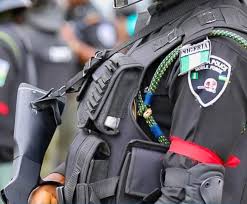
Operatives of the Violent Crime Response Unit (VCRU) in Rivers State have arrested a suspected armed robber and recovered multiple firearms and ammunition during an intelligence-led operation.
Police sources disclosed that the operation was carried out at about 2:00 a.m. on June 7 by a team led by ASP Jeremiah Ashaba.
According to the sources, the suspect, identified as Austine Emenike, also known as “Oyibo”, of Aluu village, was arrested following credible intelligence on his alleged involvement in armed robbery activities.
During the arrest, operatives recovered one locally made pistol, four single-barrel guns, and five live cartridges from the suspect.
The suspect and recovered exhibits are currently in police custody.
Police authorities said investigations are ongoing to identify and apprehend other members of the suspected criminal gang.
The Command reiterated its commitment to sustaining intelligence-led policing and dismantling armed robbery networks operating within the state.
Police Arrest Suspected Armed Robber, Recover Firearms in Rivers State

Groups Forge Alliance to Boost Agriculture, Peacebuilding Across Nigeria, Sahel
By: Michael Mike
In a move aimed at addressing food insecurity, farmer-herder conflicts and economic challenges across Nigeria and the Sahel region, the WANILTU Academy, National Association of Farmers in Nigeria (NADFAN), LAS Family Network Nigeria and Paradigm News have entered into a strategic partnership to promote sustainable agriculture, peacebuilding and community development.
The alliance, announced in a joint statement, seeks to leverage the expertise and networks of the four organisations to strengthen agricultural productivity, improve livelihoods, foster social cohesion and create economic opportunities for vulnerable communities.
The initiative comes at a time when many parts of Nigeria and the wider Sahel continue to grapple with the effects of climate change, insecurity, displacement, unemployment and declining agricultural output, all of which have contributed to rising poverty and food shortages.
Under the arrangement, WANILTU Academy will spearhead capacity-building programmes targeted at farmers, pastoralists, women and young people. The academy will provide training in agribusiness development, value-chain management, entrepreneurship, livestock production and self-reliance skills, while also deploying experts to underserved communities to support productivity and social cohesion initiatives.
The National Association of Farmers in Nigeria, led by Nuruddeen Nyako, will serve as the coordinating platform for farmers and agricultural stakeholders. The association is expected to mobilise farming communities, facilitate engagement with government agencies and development partners, promote sustainable agricultural practices and help farmers access funding opportunities.
As part of the partnership, LAS Family Network Nigeria, headed by Sani Jada, will act as the strategic coordinating institution. The organisation will strengthen engagement with traditional rulers, religious leaders, academic institutions, development agencies and community stakeholders to ensure effective implementation of the programme.
The network will also coordinate activities across Nigeria and the wider Sahel region, facilitate collaboration among partners and support the development of strategic alliances needed to sustain the initiative over the long term.
On the communications front, Paradigm News, led by Raymond Enoch, will oversee media engagement and public awareness activities. These will include news coverage, documentaries, radio and television programmes, public advocacy campaigns and digital outreach designed to amplify the impact of the partnership and highlight success stories from participating communities.
According to the partners, the collaboration is built on the conviction that sustainable development and lasting peace can only be achieved through collective action that empowers communities, strengthens relationships between farmers and pastoralists, and expands access to education, skills, information and economic opportunities.
To achieve its objectives, the partnership plans to organise training workshops, agricultural exhibitions, stakeholder conferences, entrepreneurship programmes, community peace dialogues, development forums and town hall meetings.
Particular emphasis will be placed on climate-smart agriculture, conflict prevention and resolution, youth engagement, women’s empowerment and community resilience.
The partners said the expected outcomes include improved cooperation between farmers and herders, increased agricultural productivity, greater participation in agribusiness, enhanced livelihoods and stronger community resilience against economic and environmental shocks.
They also expressed optimism that the initiative would help reduce conflicts that have hindered development in many communities while serving as a bridge linking rural populations with governments, development institutions, investors and private-sector actors.
The organisations reaffirmed their commitment to working together to advance peace, food security, economic empowerment and sustainable development across Nigeria and the wider Sahel region, describing the partnership as a practical response to some of the region’s most pressing socio-economic and security challenges.
Groups Forge Alliance to Boost Agriculture, Peacebuilding Across Nigeria, Sahel
Zulum wants Baga, Chad Republic waterway open
By: Michael Mike
Borno State Governor, Babagana Umara Zulum, on Saturday, visited Baga town to discuss modalities for the reopening of the waterway linking the town in the northern part of the state to the Republic of Chad.
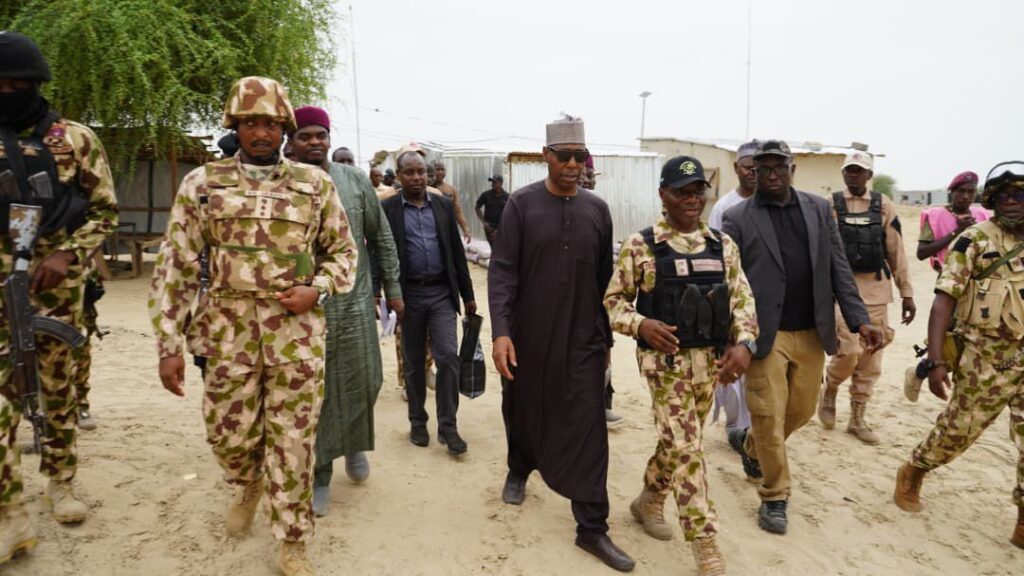
According to the governor, the move is critical to restoring trade, commerce, and cross-border cooperation between the two nations.
Zulum held a high-level security meeting with military commanders in Baga and Kukawa with the discussion primarily centred on how to facilitate the clearance of the water routes, which have long been inaccessible due to insurgent activities.
Speaking to newsmen, Zulum said, “Our visit to Baga was to interface with the Nigerian military to discuss the modalities for clearing waterways from Baga to the Republic of Chad.”

He added, “we have discussed many issues, and insha Allah, the clearance exercise will resume very soon. The governments of Chad and Nigeria are working together to determine how commodities will move between the two countries.”
Following the closed-door session, the governor embarked on an inspection tour of three landmark projects aimed at boosting healthcare, education, and social reorientation. He assessed the ongoing work at a General Hospital, a Mega Primary School, and the High Islamic College all in Kukawa town.
The High Islamic College offers a second chance to out‑of‑school children and Almajiri pupils. The college will integrate Islamic and Western curricula, enabling graduates to qualify for admission into universities, polytechnics, and colleges of education across Nigeria.
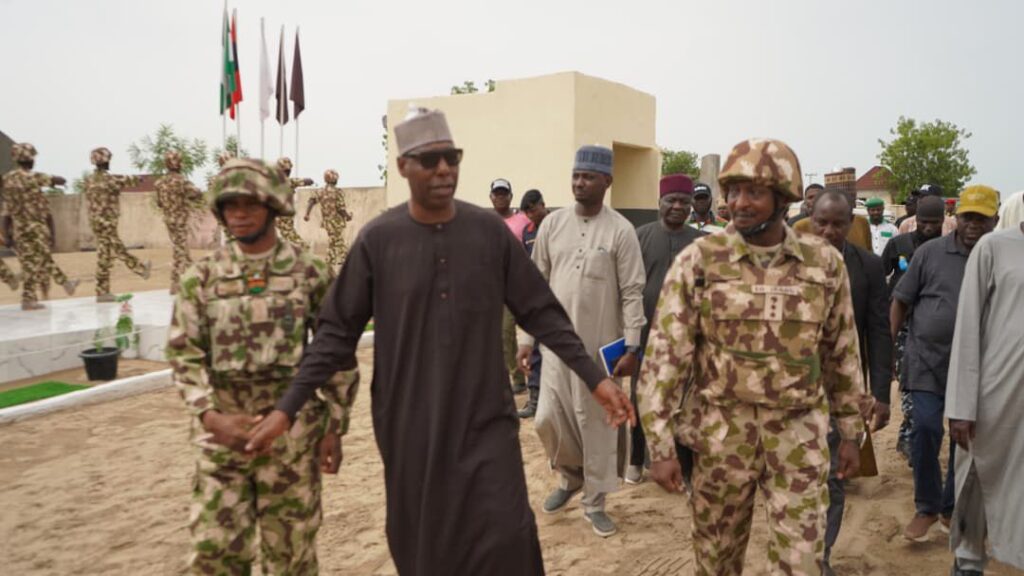
In addition to infrastructure and educational facility inspection tour, the governor also announced an agricultural support plan to complement the waterway reopening. He stated that the government would soon distribute farming tools, implements, and improved seedlings to local farmers and returnee fishing communities.
Zulum wants Baga, Chad Republic waterway open

Swift Troops’ Intervention Foils Attack on School, Saves Students in Kogi

Digital Education: VP Shettima Lauds ProFuturo Foundation, Kukah Centre Partnership

Troops Record Major Breakthroughs as 1 Division Neutralises 24 Bandits, Rescues194 Hostages, in Kaduna Theatre

Roger Federer’s Shock as DNA Results Reveal Myla and Charlene Are Not His Biological Children

THE PLIGHT OF FARIDA

FAILED COUP IN BURKINA FASO: HOW TRAORÉ NARROWLY ESCAPED ASSASSINATION PLOT AMID FOREIGN INTERFERENCE CLAIMS
-
 News2 years ago
Roger Federer’s Shock as DNA Results Reveal Myla and Charlene Are Not His Biological Children
-
Opinions4 years ago
THE PLIGHT OF FARIDA
-
 News1 year ago
FAILED COUP IN BURKINA FASO: HOW TRAORÉ NARROWLY ESCAPED ASSASSINATION PLOT AMID FOREIGN INTERFERENCE CLAIMS
-

 News2 years ago
EYN: Rev. Billi, Distortion of History, and The Living Tamarind Tree
-
 Opinions4 years ago
POLICE CHARGE ROOMS, A MINTING PRESS
-

 ACADEMICS2 years ago
A History of Biu” (2015) and The Lingering Bura-Pabir Question (1)
-

 Columns2 years ago
Army University Biu: There is certain interest, but certainly not from Borno.
-

 Politics12 months ago
2027: Why Hon. Midala Balami Must Go, as Youths in Hawul and Asikira/Uba Federal Constituency Reject ₦500,000 as Sallah Gift
