
News
West Africa Battles Escalating Drug Crisis as Cocaine Seizures Double, Synthetic Drugs Spread

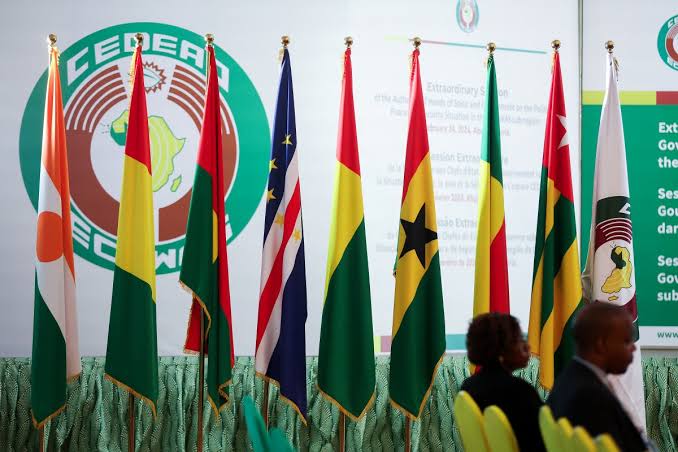
West Africa Battles Escalating Drug Crisis as Cocaine Seizures Double, Synthetic Drugs Spread
By: Michael Mike
West Africa is confronting an increasingly sophisticated drug crisis, with cocaine seizures doubling, the proliferation of dangerous synthetic substances and pharmaceutical opioids, and growing social consequences prompting renewed calls for stronger regional cooperation, intelligence sharing and evidence-based interventions.
The warning came as experts, government officials and representatives of Member States gathered for the validation of the 2025 West African Epidemiology Network on Drug Use (WENDU) data and a regional training workshop, where they stressed that reliable data remains the foundation for effective policies to combat illicit drug trafficking, substance abuse and transnational organised crime.
Speaking at the meeting, the Economic Community of West African States (ECOWAS) Principal Programme Officer for Drug Prevention and Control, Dr. Daniel Amankwa, described the annual WENDU exercise as a critical regional mechanism for monitoring drug trends and ensuring governments have credible evidence to guide interventions.
According to him, the validation process allows Member States to verify and harmonise data submitted to the ECOWAS Commission before the publication of the regional report.
“The WENDU report reflects what is happening with drug abuse, illicit drug trafficking and related crimes across West Africa. Every year, Member States collect and submit data, which are compiled into a regional report and validated to ensure accuracy before publication,” he said.
Although the 2025 report is still undergoing validation, Amankwa said findings from the completed 2024 report reveal disturbing trends that underscore the urgency of coordinated regional action.
He disclosed that cannabis remains the most widely consumed illicit drug across West Africa, but warned that the rapid emergence of synthetic drugs and counterfeit pharmaceutical products has significantly complicated the region’s drug landscape.
According to him, authorities are increasingly encountering high-dose tramadol and new psychoactive substances such as Kush, whose chemical compositions have been illegally altered to increase potency.
“We are not referring to legitimate pharmaceutical products,” he explained. “We are talking about tramadol that should ordinarily contain 50 milligrams but is now found in 200, 250, 300, 400 and even 500 milligram formulations that are being abused.”
Amankwa also revealed that cocaine trafficking through West Africa has risen sharply.
“The 2024 report showed that cocaine arrests and seizures doubled across the region. Preliminary indications suggest that this trend is continuing in 2025, although the data are not yet conclusive,” he said.
The development mirrors global assessments indicating that cocaine production has reached record levels, with West Africa continuing to serve as a major transit corridor for consignments destined for Europe.
Beyond trafficking statistics, Amankwa warned that drug abuse is exacting enormous economic, social and public health costs on West African societies, particularly among young people.
He explained that addiction fuels a vicious cycle of unemployment, poverty and crime, while weakening family structures and reducing national productivity.
“When people become addicted, it becomes difficult for them to work effectively. That contributes to unemployment, which in turn fuels poverty. Poverty itself can also push people into drug use. It becomes a cycle that reinforces itself,” he said.
He added that many people struggling with drug dependence resort to criminal activities to sustain their addiction, worsening insecurity across the region.
“The impact is enormous. It affects the economy because productivity declines. It affects health. It fuels crime. It also weakens families and social values.”
Amankwa argued that the evolving nature of drug trafficking requires more than arrests and seizures, noting that criminal organisations constantly introduce new substances and concealment methods whenever law enforcement disrupts existing routes.
“Each time authorities develop strategies against one drug or trafficking method, another substance or concealment technique emerges. Criminal networks continue to evolve.”
He advocated a comprehensive response built around strengthening families, expanding prevention through education, enhancing law enforcement and increasing access to treatment and rehabilitation for people living with drug use disorders.
According to him, prevention should begin early, warning that many young people are misled into believing substances such as tramadol improve intelligence or academic performance.
He also urged governments to expand confidential treatment services, including online counselling platforms, to reduce stigma and encourage more people to seek help.
“Many people with drug use disorders are highly intelligent and productive individuals. They need treatment and support, not rejection.”
On regional cooperation, Amankwa acknowledged significant progress in intelligence sharing, joint operations and capacity building among anti-drug agencies across ECOWAS, but stressed that greater trust among national institutions remains essential for effective intelligence exchange.
“Drug control relies heavily on intelligence. Countries must trust one another before they can confidently exchange sensitive information.”
The regional concerns were echoed throughout the workshop, where officials described the West Africa Drug Trend Report as an increasingly influential policy instrument for governments and development partners.
Participants said the annual report has strengthened understanding of evolving drug use patterns, trafficking routes and organised criminal networks, while providing policymakers with credible evidence for designing targeted interventions.
Officials commended Member States for their continued commitment to collecting and submitting quality data, noting that the regional reporting mechanism has become one of West Africa’s most important tools for evidence-based policymaking.
They explained that the workshop was convened not only to validate the latest findings but also to improve the technical capacity of national focal points responsible for collecting, analysing and reporting drug-related information.
Participants were introduced to a comprehensive digital platform developed as a secure, centralised system for the collection, management and analysis of drug-related data submitted by Member States.
The platform, officials said, has undergone extensive testing and refinement based on users’ feedback and is expected to improve data quality, harmonise reporting standards and strengthen regional collaboration.
Speaking on behalf of one of the participating Member States, a delegate said the 2025 report comes at a critical moment, as countries continue to grapple with the public health, security and socio-economic consequences of illicit drug use and trafficking.
The delegate noted that data generated through the WENDU reporting mechanism has already influenced major policy decisions across the region.
He cited his country’s declaration of substance abuse as a public health emergency by the President as an example of how evidence generated through the regional reporting process has informed national action, adding that several Member States have similarly established national task forces and institutional mechanisms to address the growing drug menace.
The delegate said governments have since introduced initiatives aimed at reducing both the demand for and supply of illicit substances but acknowledged that the challenge continues to evolve.
Describing the workshop as timely, he expressed optimism that the training would strengthen participants’ capacity to collect, analyse and interpret drug data, leading to stronger reports and more effective policy recommendations.
He urged participants to apply the knowledge gained during the workshop to improve the quality of national data and support evidence-based policymaking capable of strengthening West Africa’s collective response to illicit drugs and transnational organised crime.
Highlights of the meeting was the renewed calls for sustained investment in drug surveillance systems, stronger intelligence sharing, expanded treatment services and preventive programmes that begin within families and communities, as ECOWAS and Member States seek to reverse what experts described as one of the region’s fastest-evolving security and public health challenges.
West Africa Battles Escalating Drug Crisis as Cocaine Seizures Double, Synthetic Drugs Spread


News
MAJOR SETBACK FOR IBUSA AS COURT REFUSES EXECUTION ORDER, STRENGTHENS OGWASHI-UKU’S POSITION IN LAND BATTLE

MAJOR SETBACK FOR IBUSA AS COURT REFUSES EXECUTION ORDER, STRENGTHENS OGWASHI-UKU’S POSITION IN LAND BATTLE
The Obi of Ogwashi-Uku, HRM Obi (Dr.) Ifechukwude Aninshi Okonjo II, on behalf of the people of Ogwashi-Uku Kingdom, has recorded what community leaders have described as a significant legal victory in the long-running land dispute involving the Esemese Community of Ibusa.
In a ruling delivered on 15 June 2026 in Suit No. A/M/62/2015, the Delta State High Court, presided over by Hon. Justice Flora Ngozi Azinge, declined the principal application by the Esemese Community of Ibusa seeking an order for the execution of the judgment arising from the earlier litigation between the parties.
The applicants, through their counsel, Barrister P. U. Lotobi, had sought, among other reliefs, an order permitting the execution of the judgment and the substitution of several deceased parties to the proceedings. While the Court granted the applications relating to the substitution of deceased parties in the Esemese community, it declined the principal relief seeking an order of execution.
The Court also approved the substitution of the late HRM Obi Professor Chukwuka Okonjo with the present Obi of Ogwashi-Uku, HRM Obi (Dr.) Ifechukwude Aninshi Okonjo II, who is represented in the proceedings by Chief Arthur Obi Okafor, SAN.
The ruling marks an important development in a dispute that has its origins in earlier litigation in Suit No. A/28/66.
According to the Ogwashi-Uku Kingdom, concerns had previously arisen over the interpretation of the litigation survey plan associated with the Supreme Court judgment. The Kingdom maintained that attempts had been made to rely on a survey plan that differed from the original litigation survey relied upon by the Court.
Following applications by the Ogwashi-Uku community before the Supreme Court, the Kingdom states that the Court restored the original litigation survey plan forming part of the earlier proceedings. In the present proceedings, the High Court further directed that a registered surveyor interpret the litigation survey plan.
Leaders of the Ogwashi-Uku Kingdom have welcomed the ruling, describing it as an important safeguard against what they contend were attempts to extend the earlier judgment beyond the land actually litigated.
Speaking after the ruling, the Chief of Aboh Ogwashi-Uku, Chief Barrister Jude Obidi, described the decision as a landmark development and that the boundary between Ogwashi-Uku and Ibusa remains at the Oboshi River.
According to him, the ruling reinforces the principle that court judgments must be enforced strictly within the boundaries of the land actually determined by the courts and not beyond them.
He further noted that the broader boundary dispute between Ogwashi-Uku and Ibusa remains pending before the Delta State High Court in a separate action instituted by the Obi of Ogwashi-Uku to determine the precise boundary between the two neighbouring communities.
Chief Obidi commended the Obi of Ogwashi-Uku for what he described as his steadfast commitment to protecting the territorial interests of the Kingdom through lawful means and the judicial process.
The latest ruling is expected to have significant implications for future attempts to enforce the earlier judgment pending the final determination of the boundary dispute between both communities. With this ruling, the claims by Ibusa for the areas around Admiralty University have been thrown into serious doubt.
The Palace of the Obi of Ogwashi-Uku through the Chief of Staff to the Obi of Ogwashi-Uku, Prince Onyema Okonjo when contacted welcomed the rejection of the request by the Ibusa community by the Delta State High Court in Ogwashi-Uku but also maintained that the Obi of Ogwashi-Uku reserves the right to seek appellate review of any portion of the ruling it wasn’t happy with. He also cautioned members of the Ibusa community from resorting to self help in using thugs and attempting to enter Ogwashi-Uku land any further to make illegal claims outside any court approved enforcement.
MAJOR SETBACK FOR IBUSA AS COURT REFUSES EXECUTION ORDER, STRENGTHENS OGWASHI-UKU’S POSITION IN LAND BATTLE

Fubara: Nigeria Needs God-Fearing Leaders to Tackle Corruption, Drive National Progress
By: Michael Mike
Rivers State Governor, Sir Siminalayi Fubara, has said Nigeria’s quest for sustainable development and good governance depends largely on the emergence of leaders guided by the fear of God, arguing that the country’s socio-economic challenges stem from a deficit of integrity and moral leadership.
The governor made the remarks on Thursday at the Government House in Port Harcourt while receiving the World President of the Seventh-day Adventist Church, Erton Köhler, alongside his wife, Andriene Marques Köhler, their daughter, Mariana Marques Köhler, and other senior church officials.

Fubara said leaders who are conscious of their accountability before God would be less inclined to abuse public trust, noting that the absence of such values has fuelled corruption, inequality, poverty and rising criminality across the country.
“Our country is where it is today because we lack the fear of God,” the governor said. “If you have the fear of God, there should be a limit to what you can do because you understand the supremacy of God. But when God is not in your equation, you’ll go beyond the line, and that is what has brought us to where we are today.”
He praised the Seventh-day Adventist Church for its long-standing investment in education, describing its schools and universities as critical platforms for nurturing competent and morally upright future leaders.
According to the governor, the church’s commitment to education demonstrates that religion should extend beyond preaching and denominational identity to making tangible contributions to national development through human capital development.
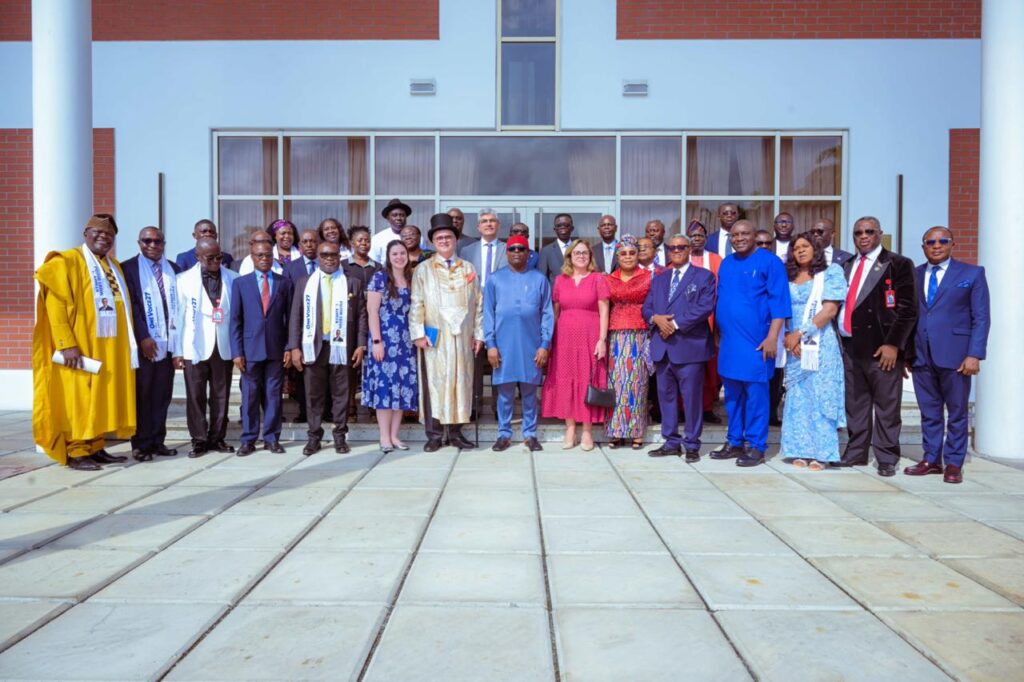
Fubara noted that by establishing and sustaining educational institutions, the church has continued to support Nigeria’s efforts to produce graduates equipped with knowledge, character and leadership values.
“We need the right people being in the right place, prepared properly with good minds. That is what we need, not just in Nigeria but around the whole world,” he said.
The governor also linked many of the country’s security and economic challenges to weak social welfare systems, stressing that citizens are less likely to resort to crime when they have access to quality education, affordable healthcare, decent wages and opportunities for a secure future.
He advocated a system where average-income earners can educate their children, access quality healthcare and own homes after years of productive service, insisting that such conditions would significantly reduce insecurity and other social vices.
Fubara thanked the church delegation for visiting Rivers State and for praying for the state, assuring them of his administration’s continued support for their activities.
Speaking earlier, Köhler said he was in Nigeria for a major church conference that would bring together thousands of Seventh-day Adventist ministers for leadership and empowerment training aimed at strengthening their pastoral work and service to society.
He expressed appreciation for the warm reception accorded his delegation by the Rivers State Government, describing the visit as one that would remain memorable.
The church leader also highlighted the global reach of the Seventh-day Adventist Church, revealing that it has more than 24 million members and over 182,000 places of worship spread across 212 countries and territories worldwide.
Fubara: Nigeria Needs God-Fearing Leaders to Tackle Corruption, Drive National Progress
News
Troops Prevent Fulani Reprisal attack after Rustling of Livestock by Suspected Local Militia in Mangu in Plateau
Troops Prevent Fulani Reprisal attack after Rustling of Livestock by Suspected Local Militia in Mangu in Plateau
By: Zagazola Makama
Troops of Operation Enduring Peace (OPEP) have repelled suspected Fulani Bandits during a rapid response operation following reports of sporadic gunfire around Banasu High Ground in Mangu Local Government Area of Plateau State.
Intelligence sources told Zagazola Makama that the incident occurred at about 1:52 p.m. on July 2, when troops of Sector 8, Sub-Sector 81, deployed at Gyambwas, received reports of intermittent shootings around the Banasu High Ground.
Security sources said that the planned attack was in response to previous attack on hardees and rustling of their livestock by Militia men in Mangu.
Acting swiftly on the distress report, the troops moved to the area and engaged the armed criminals in a firefight.
According to the sources, the superior firepower of the troops forced the assailants to abandon their mission and retreat towards the surrounding high ground.
No casualties were reported among the troops during the encounter.
Security sources said the troops have sustained surveillance and monitoring of the area, while efforts are ongoing to track down the fleeing suspects and prevent any further attacks.
The operation forms part of ongoing security efforts by Operation Enduring Peace to prevent any armed militia activities and enhance security across Plateau State.
Troops Prevent Fulani Reprisal attack after Rustling of Livestock by Suspected Local Militia in Mangu in Plateau

MAJOR SETBACK FOR IBUSA AS COURT REFUSES EXECUTION ORDER, STRENGTHENS OGWASHI-UKU’S POSITION IN LAND BATTLE

The Blood We Have Normalised

ECOWAS Commissions Landmark Abuja Headquarters, Nigeria and China Renew Commitment to Regional Integration

Roger Federer’s Shock as DNA Results Reveal Myla and Charlene Are Not His Biological Children

THE PLIGHT OF FARIDA

FAILED COUP IN BURKINA FASO: HOW TRAORÉ NARROWLY ESCAPED ASSASSINATION PLOT AMID FOREIGN INTERFERENCE CLAIMS
-
 News2 years ago
Roger Federer’s Shock as DNA Results Reveal Myla and Charlene Are Not His Biological Children
-
Opinions4 years ago
THE PLIGHT OF FARIDA
-
 News1 year ago
FAILED COUP IN BURKINA FASO: HOW TRAORÉ NARROWLY ESCAPED ASSASSINATION PLOT AMID FOREIGN INTERFERENCE CLAIMS
-

 News2 years ago
EYN: Rev. Billi, Distortion of History, and The Living Tamarind Tree
-
 Opinions5 years ago
POLICE CHARGE ROOMS, A MINTING PRESS
-

 ACADEMICS2 years ago
A History of Biu” (2015) and The Lingering Bura-Pabir Question (1)
-

 Columns2 years ago
Army University Biu: There is certain interest, but certainly not from Borno.
-

 Politics1 year ago
2027: Why Hon. Midala Balami Must Go, as Youths in Hawul and Asikira/Uba Federal Constituency Reject ₦500,000 as Sallah Gift
