
Columns
Rice pyramid in Nigeria and matters arising, by Prof M. K. Othman

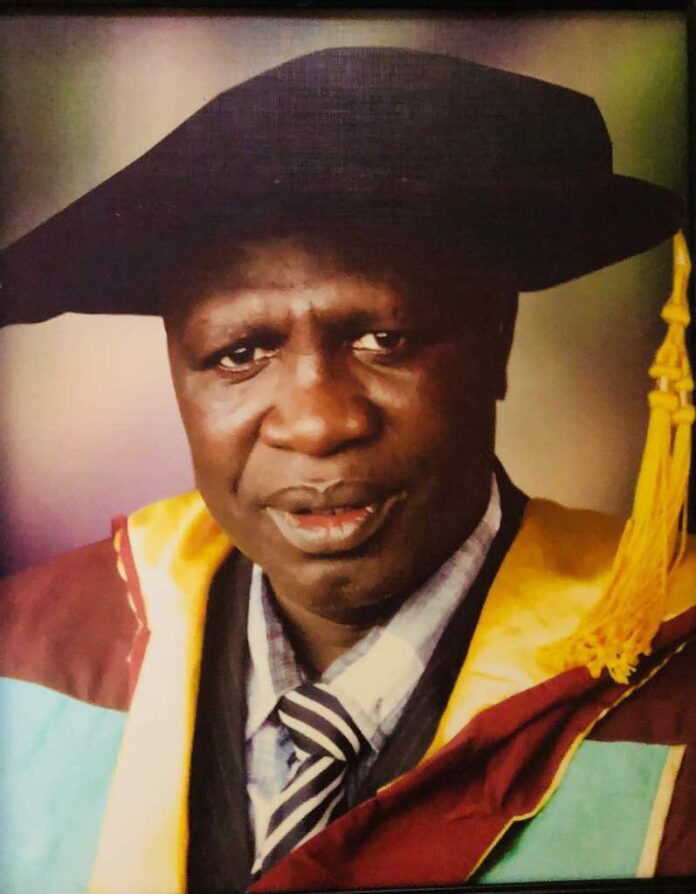
Rice pyramid in Nigeria and matters arising, by Prof M. K. Othman
Deep Thought with Othman
In the early part of the year, 2013, the Agricultural Complex of Ahmadu Bello University Zaria received members of the Joint House Committee on Agriculture who came for an oversight function.
During the introduction of personalities, the then Executive Director of the Institute for Agricultural Research (IAR), Professor Balarabe Tanimu of blessed memory was introduced as professor of groundnut agronomy, and IAR, a research centre with the mandate of genetic improvement of groundnut among other agricultural commodities. During the opening remarks, the leader of the delegation, a distinguished senator enthusiastically challenged the distinguished scholar, Professor Tanimu, and the Institute to bring back the “great” Kano groundnut pyramid of the 1960s and 1970s. After eulogizing the tireless efforts of the groundnut farmers of that epoch, he pledged a sturdy House support to the Institute with enough budgetary allocation to achieve the challenge.
In his response, Prof. Tanimu appreciated the benevolent gesture of the House members for their keenness to increase the Institute’s budgetary allocation. He stressed the importance of adequate funding for agricultural research as the most viable means of decupling production, addressing production challenges, and/or enhancing crops’ nutrient content.
He assured the guests of IAR’s readiness to judiciously utilize the fund allocation for higher research outputs. He pointed out that even with the inadequate funding, IAR was able to develop new varieties of groundnut, which produced high yield and the quantum of production was much higher than what was being produced in the 1960s and 1970s. Similarly, the level of consumption was much higher due to population increase within the period (about 45 million people in 1960 and 170 million in 2013).
Nonetheless, Tanimu pointed out that reviving the groundnut pyramid was not the aim of IAR. Those pyramids served as aggregation centres for feed-stocking the Agro-industries of foreign countries. Professor Tanimu, an excellent diplomat cum academic, carefully chose his words not to hurt the feelings of the august visitors. Yet, the message was very clear; the groundnut pyramid was a symbol of colonial exploitation and underdevelopment.
Then, groundnut and other cash crops were being produced for exportation to European countries, which were processed and imported into the country at ten times the prices of the raw materials. The best way to produce agricultural commodities is to serve as raw materials to local industries whose products would be locally consumed and exported to other countries. In any case, the commodity pyramid has been one of the performance indicators for measuring agricultural productivity. The simple indicator for measuring productivity is crop output or yield per unit area of production with a unit of Kg/m2 or tons per hectare. So, what was the implication of the Abuja rice pyramid mounted some weeks ago?
Mounting a pyramid of an agricultural commodity such as rice in any part of the country cannot showcase the quantum of production of such a commodity. The associated costs of organising and transporting the commodity to the venue can be overbearing. However, the Abuja rice pyramid event, being the first of its kind, was marked with pomp and pageantry recording a huge success. Although, this success could not stand to represent a success story of boosting rice production but has uniquely packaged hopes for a better future. The presence of top government functionaries and high-profile personalities including President Buhari indicated the willingness of Nigeria’s leadership to support the country achieve food security. The commodity pyramid should not replace the annual agricultural show where innovations, ingenuity, and breakthroughs in the agricultural sector are being packaged and displayed. A few weeks after the rice pyramid event, where do we move? What are the matters arising from the Abuja event?
Fortunately, Nigeria is naturally positioned to achieve greatness in Agriculture; versatile fertile land, huge unquantifiable water resources, and virile and active human resources. In addition to these natural endowments, policies, and programs, over the years were designed to fast-track agricultural development. Theoretically, these programs and projects sound perfect but practically, their implementations have always been haphazardly done thereby retarding their successes. In the last three decades, so many funds were sunk in agriculture in the names of programs and projects without tangible impacts on the productivity of smallholder farmers who constitute ninety per cent of the farming population and contribute eighty-five per cent of national food production.
The major defect of these programs/projects is the lack of an agricultural extension component. Where extension component exists, there has always been incoherent roles and responsibilities because the front extension personnel belongs to the state government while the programs are mostly federal government-sponsored/supported. Today’s agriculture is driven by knowledge and the knowledge is solely facilitated by extension service delivery. In Nigeria, agricultural extension service is poorly funded and poorly manned. How do we move forward?
Agricultural extension entails knowledge transfer, utilization and feedback, market intelligence, skill acquisition and perfection, and productivity enhancement along the value chain of agricultural commodities (crops and livestock). Therefore, special treatment to agricultural extension can be made through fast-tracking the release of the National Agricultural Extension Policy. The policy was already developed and I am privileged to be part of the team that finalised the policy document. The development of the policy was a painstaking national assignment that was done over five years by agricultural experts, technocrats, and academics. Thus, the policy contains ready-made and holistic solutions to the challenges to agricultural extension service delivery.
It also considers what to be done to modernise agriculture holistically now and in the future. Fortunately, the structure of the agricultural extension system at the grassroots level, the Agricultural Development Program (ADP), developed between the 1970s and 1980s with the support of the World Bank, is still in place and robust but ineffective due to gross underfunding.
The policy has taken good care of how to source alternative and sustainable funds to support and develop an agricultural extension system in the country. If the policy becomes operational, it will automatically increase public and private investment in agriculture with special attention to extension services. This will spontaneously escalate agricultural productivity in geometric proportion. The increase in agricultural productivity will cover both crops and livestock farming with positive implications on the livelihoods of the farmers and herders.
In conclusion, instead of having commodity pyramids, efforts should be geared towards adequately funding extension services through legislation of agricultural extension policy. This will sooner than later bring the desired result of achieving food security, reducing poverty, and creating jobs for millions of Nigerians.



Dadong: A Balanced Voice From Ungwan Rukuba
By: Balami Lazarus
What does it take to be a public mouthpiece? That was the question I asked Comrade Dadong Solomon Antibas. My chats with him were a balanced interface. The answers can be found in the write-up for your review.
Democracy like ours has brought to the limelight public mouthpiece voices; some are weak and political, while others are strong, progressive, constructive, and fearless, demanding progress, growth, and development as dividends of good governance in a peaceful atmosphere.
Governments created by democratic processes are never left alone without citizens asking questions and demanding dividends of democracy for their community and the country at large.
Comrade Dadong Solomon Antibas is a Nigerian, law-abiding citizen. Antibas, a security expert and popular public mouthpiece on the Jos Plateau, has earned the confidence of the people of his community, Ungwan Rukuba, and most parts of the state over the years. For his community, he is their immediate mouthpiece who has been speaking on their plights, calling the attention of the government under the leadership of Governor Caleb Manasseh Mutfwang to do the needful.
Personality like Solomon Antibas’ public impression of him by some citizens of the state is all about seeking relevance and political appointments. “I have no interest whatsoever in any political appointment. My sincere concern for my dear country and my state, Plateau, is peace, progress, growth, and development for future generations.”
Nigerians should begin to speak out on good governance at all levels. Citizens are also responsible for failing to hold them accountable and demand good governance in terms of security, social amenities, and infrastructure.
Ungwan Rukuba is one of the wards in the Jos North Local Government Area. It is an integral part of the city center. Unfortunately, the peaceful Ungwan Rukuba became a flashpoint. The terrorist attack of March 29th, 2026, has put a scar of insecurity on the area.
On insecurity, he said that Mr. President Ahmed Bola Tinubu has failed Nigerians woefully. “Insecurity is a bone of contention. The federal government must take decisive measures on the insecurity challenges bedeviling the nation.”
My findings on Comrade Dadong Antibas revealed that he is not a public affairs commentator or an analyst but a progressive and active public mouthpiece, a voice of the voiceless.
For some, Dadong is attacking the government under the leadership of Governor Mutfwang. ” Is speaking the minds of citizens on bad governance and holding the government of Governor Caleb Manasseh Mutfwang a crime”?
Despite threats on Solomon Dadong, they have not deterred him from speaking for and on behalf of other citizens living in the state. “I have no other way to hold the government accountable than to publicly speak and constructively criticize the leadership’s voicing out feelings and lots of the people…In democracy, governments are made by the people, and as such, they must provide for the collective needs of the masses who voted them in.”
Comrade Antibas is one among the few indigenous people of Plateau who are outspoken and speak with passion and a patriotic mind for his state and Nigeria. “I will live and die in Nigeria speaking, advocating, demanding, and/or holding both federal and state governments accountable for good governance.”
Balami, Publisher/Columnist, 08036779290
Dadong: A Balanced Voice From Ungwan Rukuba
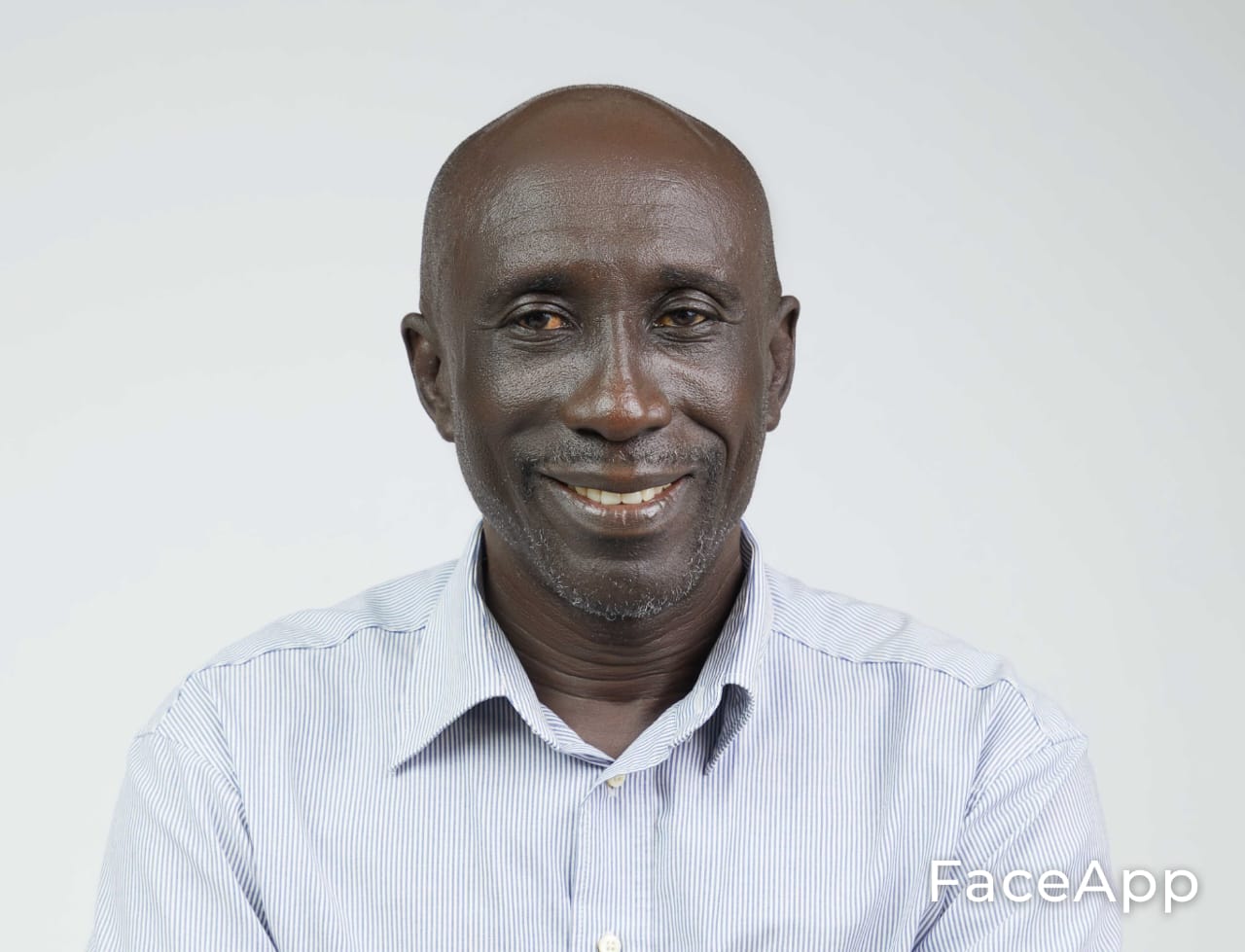
Facts for Understanding Capital Market Investment
By: Balami Lazarus
I grew up in an academic environment where the language is the same: study well, have good grades and be what you desire to be in the future through academic discipline and training.
Many of my contemporaries and I were not spoken to in the language of trade and commerce. But here are some of us as businessmen, entrepreneurs, investors and in other business enterprises far from the academic language we were bred with.
There has never been a market like the capital market the world over where trade per day runs into billions of cash. While market capitalisation is in trillions. The case of the Nigerian Stock Exchange (NSE), now Nigerian Exchange Group, with its trade symbol (NGX) on the floor, is a good example.
Investing in the capital market is profitable for traders and short- and long-term investors. But understanding the market requires some basic facts, which are cash, knowledge, discipline and patience, important for investors to appreciate the market.
Recently a member of my social group came to me to seek my advice on what it takes to invest in the equity market (stock exchange). I was very candid with the fellow, informing him that he needs cash, knowledge, discipline and patience to invest in the capital market after having defined his position as an investor.
First an investor needs cash in his possession set aside to invest in the capital market, the gateway into the market. You can have the other three, but without cash you are not yet an investor.
Lack of knowledge about a business or investments has made so many persons lose money worth millions.
This is typical with good number of Nigerians who attempted to start a business or invest in some going concerns without basic knowledge and understanding of the intricacies of these investments or businesses.
The information and technology age has
made acquiring knowledge very simple; therefore, understanding the stock market is easy these days.
Basically, the capital market depends on and responds to information, government policies, and economic and political happenings/events within and without, which most often determines the graphic movements of the primary market deals on the floor. ‘Bullish’ or ‘bearish’ simply means the plus or minus of the day’s transactions.
The need for monitoring of the market is important for traders and short-term investors. However, with knowledge and careful monitoring of the market, it is a suitable place for short-term gains for investors with multiple numbers of holdings in blue-chip companies like Dangote Cement, Bau Foods, Nestle, Aradel, Okumu Oil Palm, Zenith Bank, Guaranty Trust Bank and others. But for long-term investors, whether the market is bullish or bearish, his investment portfolio is for future use.
Investments like those of the capital market, discipline and being committed are necessary to build a strong, high-quality, profitable portfolio of a large number of holdings of units spread over listed companies of the stock exchange that come with capital appreciation and dividends. This is important, especially for long-term investors.
And the turn key in this type of investment is patience. Generally investments need patience for them to mature for harvest.
In stock market investment, patience plays a vital role in this business. Therefore, for an investor who lacks patience, the capital market is not a tuft for him and shall never be.
To navigate through this market, investors must at all times apply this formula and have it printed on their hearts. Cash = stock units over time + patience = capital apreciation/dividends.
Today there are changes in the exchange which have improved trading. The time of trade has been extended to transactions and payments (T+1). Other electronic applications to aid and encourage investors in the capital market in an attempt to boost the Nigerian economy.
Balami, Publisher/ Columnist 08036779290
Facts for Understanding Capital Market Investment
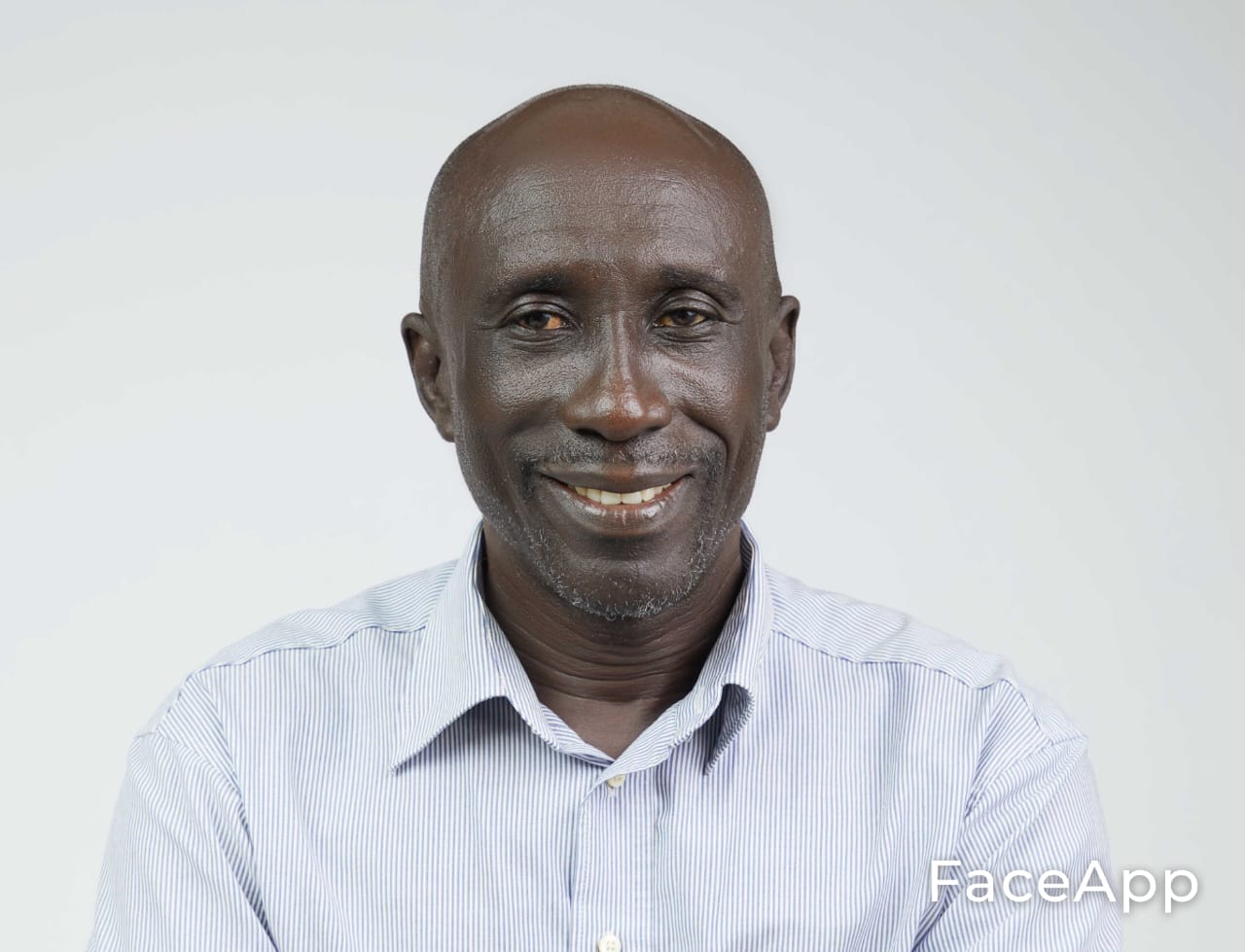
The ‘Hyenas’ and The Fear of Radical Changes
By: Balami Lazarus
Nigeria’s persistent security challenges, governance shortcomings, and societal stagnation were discoursed in a recent controversial work titled “Radical Approach: Ways of Ending the Menace of Insecurity in Nigeria,” which has sparked vehement reactions. These responses, saturated with insults and threats, underscore not only the resistance to transformative ideas but also reveal deeper cultural and psychological barriers inhibiting national progress.
Hyenas occupy a complex place symbolically and ecologically. Known for their powerful jaws capable of crushing bone and their fearsome appearance, hyenas possess attributes of strength and resilience. Ironically, the very qualities that should have crowned them kings of the jungle remain unrealized due to internal flaws—excessive fear and greed. This metaphor resonates profoundly with the Nigerian socio-political landscape. Many citizens and leaders embody these counterproductive traits, which sabotage collective progress. The ‘hyenas’ here are those resistant individuals who react aggressively to change, fearful of losing entrenched privileges or comfortable mediocrity.
Despite their natural capacities, hyenas do not kill their prey outright but feed until the victim is entirely consumed, a parallel to how corruption, insecurity, and dysfunctional governance gradually erode Nigeria’s potential. Nevertheless, because of this fear and greed, the true power of the hyenas remains dormant. Similarly, Nigerians possess enormous potential—humans and resources alike—but systemic fear of radical transformation prevents the nation from ascending to greatness.
Resistance to radical change is hardly unique to Nigeria; however, the scale and intensity of opposition here are particularly pronounced. The author of the initial work rightly posits that fundamental restructuring or amicable separation (balkanization) may be necessary to ensure peaceful coexistence among Nigeria’s diverse ethnic and regional groups. While this proposition unsettles many, it is grounded in historical precedents where developing nations embraced bold reforms, coupled with decisive policies and enforcement mechanisms, to dismantle corruption and oppression effectively.
For example, South Korea’s transformative journey from a war-ravaged country to a technological powerhouse was marked by radical government-led reforms, strict anti-corruption measures, and an unyielding commitment to national goals. Similarly, post-apartheid South Africa undertook sweeping constitutional and institutional reforms to redress systemic inequalities. These examples suggest that change without fear, and with a clear vision, is achievable. In Nigeria’s case, however, political leaders often prioritize personal gain over national interest, shielding corrupt practices from scrutiny and accountability—a scenario that foreign nationals sometimes benefit from more than average Nigerians.
Hence, it is not just a question of reform but an urgent call for a radical overhaul of the political, economic, and security frameworks—an overhaul that will inevitably provoke discomfort among the ‘hyenas’ who thrive on the status quo. Their hostility reflects a deeper anxiety about losing undue influence rather than genuine concern for national welfare.
Those who dare to voice radical solutions face fierce backlash. The insults, threats, and online harassment directed at the author of “Radical Approach” epitomize the perils confronting reformists. Such antagonism stems from a culture where free expression is often conflated with subversion and where critical voices are silenced through intimidation rather than engaged with constructively. This atmosphere breeds cynicism and self-censorship, retarding public discourse essential for democracy and progress.
The paradox lies in the fact that while politicians and vested interests propagate falsehoods to maintain their grip, genuine advocates of change are vilified. This creates a toxic environment where truth-tellers face social ostracism, leaving the masses bewildered about whom to trust. The condemnation of the author’s suggestion to either restructure or separate the country illustrates how deeply sensitive and contested the issue of national unity is—yet it also reveals the urgency to address unresolved grievances before they escalate into greater conflict.
It is crucial to emphasize that opinions, especially those anchored in personal conviction and aimed at national betterment, deserve respect and consideration, even if controversial. Democratic societies thrive on diverse viewpoints and vigorous debate. The author’s claim to persist as a ‘honey badger’—an animal known for fearless tenacity—symbolizes the courage required to confront entrenched systems and societal fears.
Change is seldom comfortable; it disrupts established norms and compels individuals to rethink identities and power structures. But without this discomfort, stagnation ensues, and nations risk eventual decline or disintegration. In Nigeria’s context, the failure to act decisively invites greater insecurity, economic hardship, and social unrest, ultimately threatening the very fabric of the nation.
To overcome the paralysis induced by fear and entrenched interests, Nigerians must collectively embrace the concept of radical but non-violent reform. The analogy of hyenas vividly encapsulates the paradox of strength hindered by fear and selfishness—a situation familiar to Nigeria today. The vehement backlash against radical proposals for restructuring or separation signals a collective unease but also highlights the necessity for bold action. History teaches us that radical change, enforced with fairness and resolve, is often the catalyst for national rebirth.
Nigeria stands at a crossroads. Will it continue to be prey to internal fears and greed, or will it muster the courage to embrace transformative ideas, no matter how uncomfortable they may seem? Advocates like the author of “Radical Approach” bear the burden and honor of challenging the status quo. Their persistence embodies hope that someday, rationality and justice will prevail over hostility and inertia.
In this pursuit, Nigerians must shed the fearful mindset that binds them and instead harness their inherent strengths—diversity, resilience, and youthful energy—to reclaim their destiny. Only then can the nation finally silence the cacophony of ‘hyenas’ and evolve into a stable, prosperous democracy worthy of its vast potential.
Balami, Publisher/Columnist 08036779290
The ‘Hyenas’ and The Fear of Radical Changes

Troops arrest suspected ISWAP informant attempting to flee Adamawa community

Troops rescue woman, child who lost their way in Adamawa

Troops arrest two suspected terrorist informants at Borno market

Roger Federer’s Shock as DNA Results Reveal Myla and Charlene Are Not His Biological Children

THE PLIGHT OF FARIDA

FAILED COUP IN BURKINA FASO: HOW TRAORÉ NARROWLY ESCAPED ASSASSINATION PLOT AMID FOREIGN INTERFERENCE CLAIMS
-
 News2 years ago
Roger Federer’s Shock as DNA Results Reveal Myla and Charlene Are Not His Biological Children
-
Opinions4 years ago
THE PLIGHT OF FARIDA
-
 News1 year ago
FAILED COUP IN BURKINA FASO: HOW TRAORÉ NARROWLY ESCAPED ASSASSINATION PLOT AMID FOREIGN INTERFERENCE CLAIMS
-

 News2 years ago
EYN: Rev. Billi, Distortion of History, and The Living Tamarind Tree
-
 Opinions5 years ago
POLICE CHARGE ROOMS, A MINTING PRESS
-

 ACADEMICS2 years ago
A History of Biu” (2015) and The Lingering Bura-Pabir Question (1)
-

 Columns2 years ago
Army University Biu: There is certain interest, but certainly not from Borno.
-

 Politics1 year ago
2027: Why Hon. Midala Balami Must Go, as Youths in Hawul and Asikira/Uba Federal Constituency Reject ₦500,000 as Sallah Gift
