
News
Abduction of Fulani woman, Aisha Goma heightens fear of attacks in Kaduna community

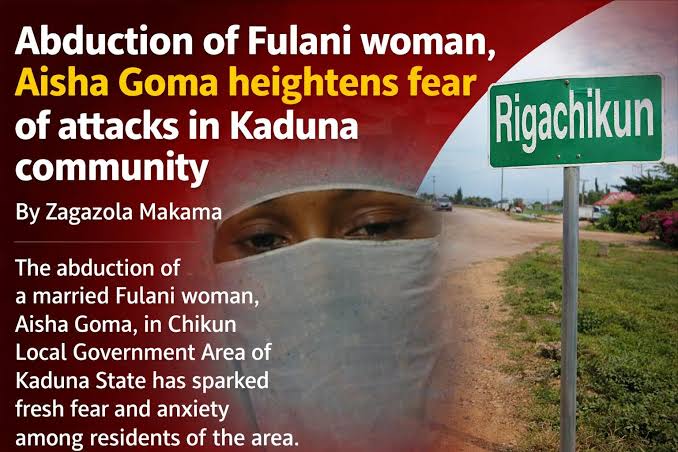
Abduction of Fulani woman, Aisha Goma heightens fear of attacks in Kaduna community
By: Zagazola Makama
The abduction of a married Fulani woman, Aisha Goma, in Chikun Local Government Area of Kaduna State has sparked fresh fear and anxiety among residents of the area.
Sources told Zagazola Makama that the victim was abducted from her home at about 11:00 p.m. on Friday, Jan. 17, while her husband was away.
According to the sources, the attackers, suspected to be armed bandits, besieged the residence and forcefully took the woman to an unknown location.
The sources said that the assailants are believed to be former members of the Kamilu group, who have been operating around the axis in the past,” a source said.
The sources added that as of the time of filing this report, no contact had been made by the abductors and no ransom demand had been communicated to the family.
Zagazola reports that the incident has heightened tension in the area, with many residents expressing fear over a surge in abductions targeting members of the Fulani community in recent weeks.
“For more than a week now, people have been living in fear. Families are moving out in large numbers, especially those living around the Olam Company axis,” another community source said.
According to him, some residents have relocated to safer parts of Soba Local Government Area, while others have fled to villages in neighbouring Kwara State to escape the growing insecurity.
Abduction of Fulani woman, Aisha Goma heightens fear of attacks in Kaduna community


30 HIGH-PROFILE CORRUPTION CASES EXPOSE JUSTICE SYSTEM FAILURES, STALLING ACCOUNTABILITY
…NBA, CCB, Law Reform Commission demand reforms as publication identifies delays, weak prosecution, opaque plea bargaining
By: Michael Mike
A review of 30 high-profile corruption cases pending before Nigerian courts has exposed deep-rooted institutional and procedural weaknesses undermining the country’s anti-corruption campaign, prompting the Nigerian Bar Association (NBA), Code of Conduct Bureau (CCB) and Nigerian Law Reform Commission to demand urgent reforms of the justice system.
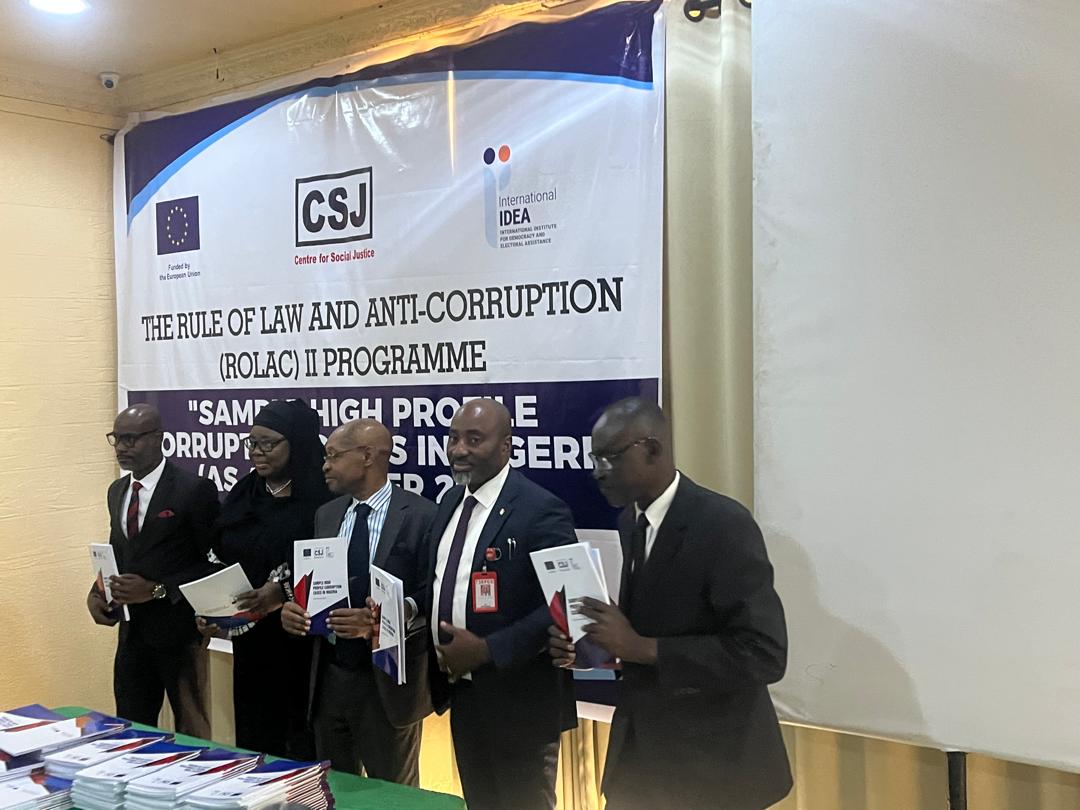
The review, contained in a publication titled “Sample High Profile Corruption Cases in Nigeria (As at October 2026),” produced by the Centre for Social Justice (CSJ), examines the progress of high-profile corruption trials across Nigerian courts and cases pending before the Code of Conduct Tribunal.
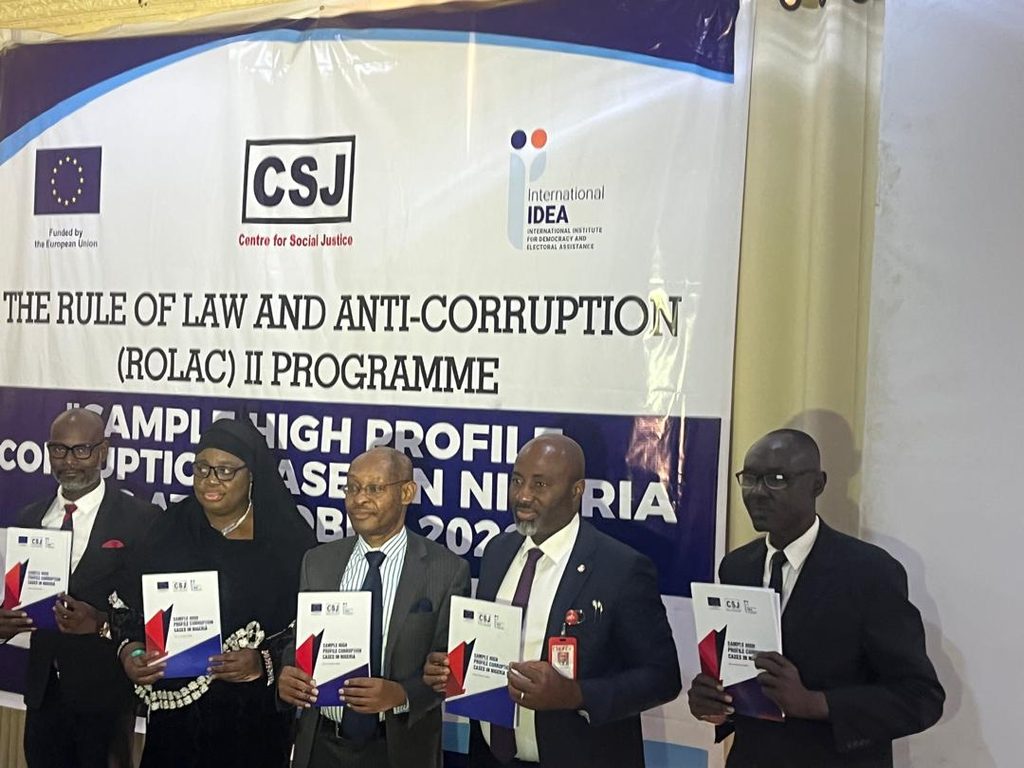
The publication identifies delays, interlocutory appeals, plea bargaining without transparency, asset recovery without accountability and cases collapsing because of poor investigation or prosecution as recurring problems requiring systemic intervention.
The findings have triggered calls for a shift in Nigeria’s anti-corruption strategy, with the three institutions insisting that the success of the campaign must be measured not merely by investigations, arrests and charges but by the ability of the justice system to deliver credible, timely and fair outcomes.
At the public presentation of the publication in Abuja on Thursday, the Chairman of the Nigerian Law Reform Commission, Prof. Dakas C.J. Dakas, SAN, described the exercise as an important instrument for exposing institutional weaknesses and providing an empirical basis for reviewing the country’s anti-corruption laws.
Dakas said the documentation of the cases was particularly important because corruption trials could be filed, adjourned, forgotten and eventually abandoned without the public having a clear record of their progress. ,
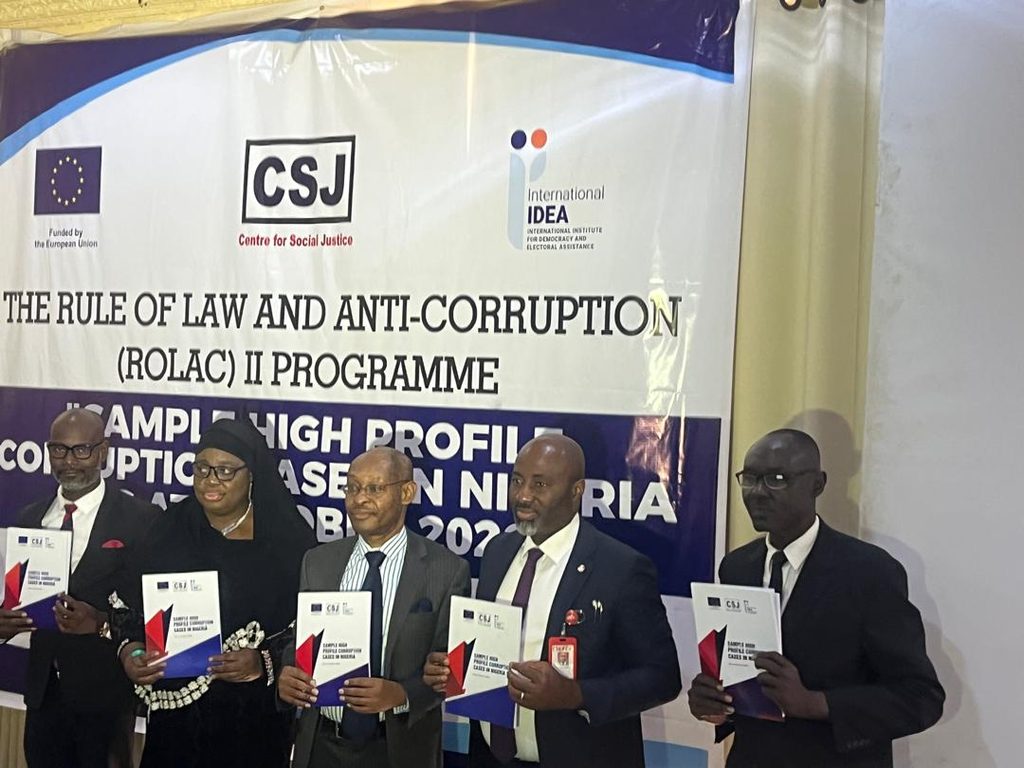
He identified documentation, public education, exposure of systemic gaps and accountability as four major contributions of the publication to Nigeria’s anti-corruption efforts.
According to him, documenting who was charged, the allegations involved, the courts handling the cases, what happened during proceedings and the status of each case would create a permanent public record from which institutions could learn.
He said the collective examination of the cases revealed that the challenges confronting corruption prosecutions were not isolated failures but systemic weaknesses requiring comprehensive reforms.
“These are not isolated failures. They are systemic failures, and systemic failures require systemic reform,” he said.
The Commission chairman also questioned the effectiveness of Nigeria’s extensive anti-corruption legislation, arguing that having several laws did not necessarily translate into effective enforcement.
“Having many laws is not the same as having an effective legal framework. Our challenge is not the absence of law. It is fragmentation, overlap, delay, weak enforcement, and a gap between the law on paper and the law in practice,” he said.
He listed the ICPC Act 2000, EFCC Act 2004, Criminal Code, Penal Code, Money Laundering (Prevention and Prohibition) Act 2022, Public Procurement Act 2007 and constitutional provisions on the Code of Conduct for Public Officers among the existing legal instruments addressing corruption.
Dakas, however, said the Commission would study the publication and incorporate lessons from its findings into its law reform programme, particularly in investigation, prosecution, asset recovery, sentencing, whistleblower protection and corruption prevention.
He pledged that identified gaps in substantive laws would be considered for legislative intervention, while procedural shortcomings would inform efforts to simplify and expedite legal processes.
The Nigerian Bar Association, through its Second Vice-President, Nuhu J. Egya, who represented its President, Mrs Oyinkansola Badejo-Okusanya, SAN, said prolonged corruption trials were weakening public confidence in the justice system and diminishing the deterrent effect of anti-corruption laws.
The association said the effectiveness of anti-corruption efforts should be assessed by the fairness, credibility and ultimate outcomes of judicial proceedings rather than the number of investigations commenced, arrests made or charges filed.
Citing Section 36(1) of the 1999 Constitution, as amended, the NBA insisted that the right to fair hearing within a reasonable time must remain central to the administration of justice.
It called for improved judicial and prosecutorial case management, adequate funding of justice-sector institutions, technology-driven case tracking and documentation, and stronger coordination among agencies responsible for investigating, prosecuting and adjudicating corruption cases.
The association also identified the Administration of Criminal Justice Act 2015 as an important framework for improving criminal justice delivery, but stressed that its effectiveness depended on proper implementation, institutional cooperation and adequate resources.
In a related intervention, the CCB identified delays in determining corruption-related cases as a major challenge, supporting reforms to strengthen the Code of Conduct Tribunal and improve the efficiency of corruption proceedings.
Mrs Sambo Sa’adat Omotayo, Director, Legal Service Department of the Bureau, who delivered a goodwill message on behalf of the CCB Chairman, said the publication provided useful material for institutional reflection and constructive engagement.
She said the Bureau was responsible for receiving and examining asset declarations by public officers, investigating breaches of the Code of Conduct and referring appropriate cases to the Tribunal.
Omotayo welcomed the proposed legislative memorandum for strengthening the Tribunal, expressing the Bureau’s readiness to examine its recommendations and engage stakeholders on measures to improve its effectiveness, independence and operational capacity.
She also called for stronger case management systems, improved investigative and legal capacities and greater deployment of technology in the administration of justice.
However, she cautioned that public monitoring of corruption cases must respect the presumption of innocence, the rights of parties and the sub judice rule.
“The pursuit of accountability and the protection of fundamental rights are not competing objectives. Rather, they are complementary pillars of the rule of law,” she said.
Beyond the immediate challenges of prosecution, Dakas said corruption was also a moral, cultural, institutional and leadership problem requiring a broader national response.
He advocated the introduction of anti-corruption education in primary and secondary schools, universities, professional training institutions and the public service.
“If we do not teach integrity early, we will spend a lifetime punishing its absence,” he said.
The three institutions called on government agencies, the judiciary, legislature, civil society, the legal profession, development partners and the media to take ownership of the reform process.
They urged the Centre for Social Justice to ensure that the publication’s findings and recommendations reached relevant government institutions and policymakers for consideration and implementation.
For the institutions, the significance of the review lies not simply in documenting pending corruption cases but in exposing the weaknesses that allow accountability to be delayed and sometimes undermined.
They maintained that the publication should serve as a catalyst for institutional reforms and a more transparent justice system in which corruption allegations are investigated properly, prosecuted effectively and determined without unnecessary delay.
Why this is a distinct angle: Unlike the previous story, which centred on the institutions’ demand for a justice-system overhaul, this version makes the 30-case review the principal news event. It also gives prominence to the specific failures identified in the publication, especially opaque plea bargaining, unaccountable asset recovery and prosecutions collapsing over investigative shortcomings.
30 HIGH-PROFILE CORRUPTION CASES EXPOSE JUSTICE SYSTEM FAILURES, STALLING ACCOUNTABILITY
Troops Rescue Five Kidnap Victims, Arrest Two Suspects in Kaduna
By: Zagazola Makama
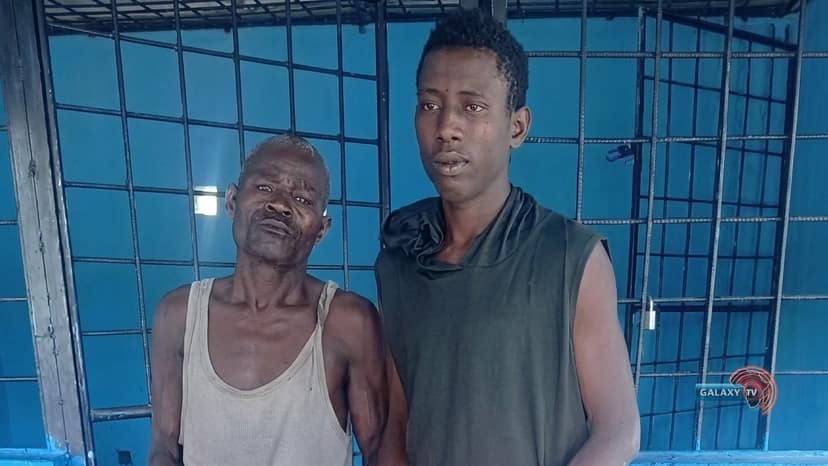
Troops of the Joint Task Force North West, Operation FANSAN YAMMA, have rescued five kidnapped victims and arrested two suspected terrorists during separate operations in Chikun Local Government Area of Kaduna State.
Security sources told Zagazola Makama that the operations were conducted on Wednesday, November 25, following attacks and abductions in Dan Bushiya and Kakura communities.
In Dan Bushiya, troops of Sector 1 responded to a distress call after suspected terrorists attacked the community and abducted some residents.
The troops reportedly encountered an ambush but sustained their rescue efforts without casualties, forcing the attackers to flee and abandon a woman and her baby, who were subsequently rescued.
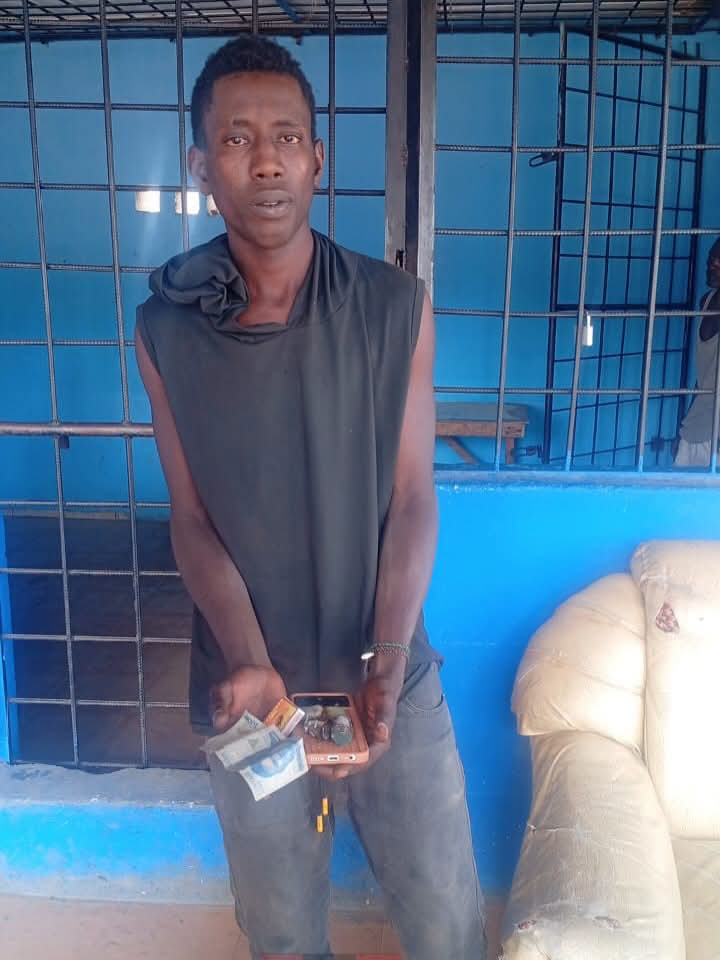
In a separate incident at Kakura village, troops responded to another distress call following the abduction of five residents. Their swift intervention forced the terrorists to abandon three of the victims, who were rescued.
Efforts are ongoing in collaboration with other security agencies to track down the fleeing attackers and secure the release of the remaining victims.
In a related development, a joint patrol team conducting search-and-rescue operations along the terrorists’ withdrawal route discovered a National Identity Card.
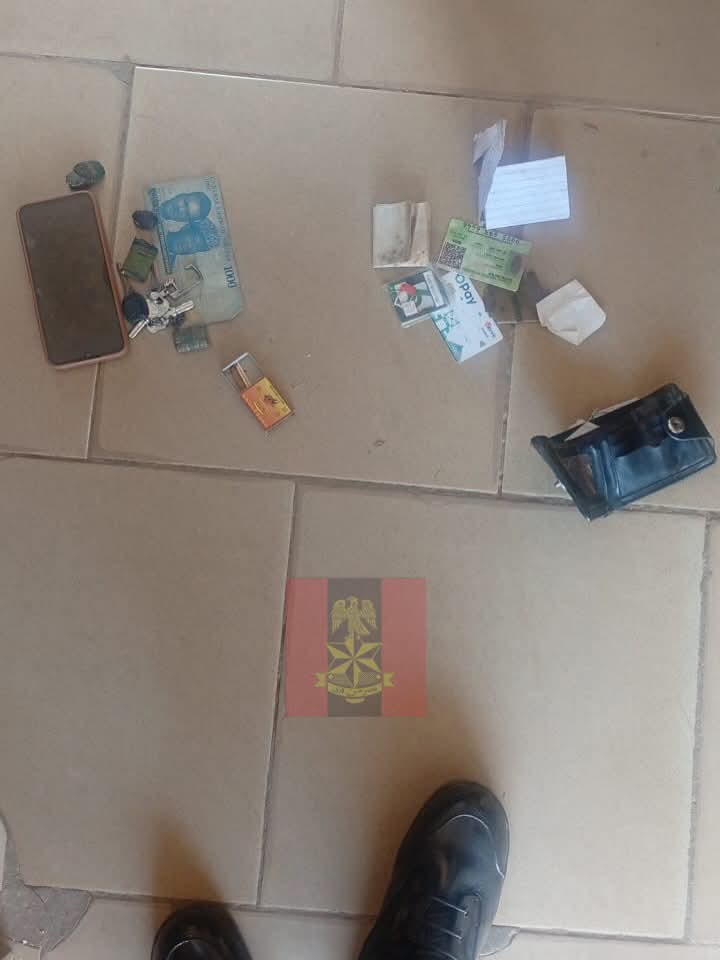
The discovery reportedly led to the arrest of the cardholder, identified as Shauibu Musa, and another suspect, Aliyu Ahmed, who are being held by troops for further investigation.
The Acting Media Information Officer of the Joint Task Force North West, Operation FANSAN YAMMA, Capt. Tamuno Sinivie, confirmed the operations in a statement issued on November 25.
The task force urged residents to continue providing credible and timely information to security agencies to support ongoing operations against terrorism and other criminal activities.
Troops Rescue Five Kidnap Victims, Arrest Two Suspects in Kaduna
Cuba reaffirms sovereignty, vows resistance to US blockade on Fidel Castro’s 10th anniversary
…Ambassador says late Cuban leader’s legacy of justice, equality and international solidarity remains guiding force
By: Michael Mike
Cuba has reaffirmed its determination to defend its sovereignty and independence despite mounting economic and diplomatic pressure from the United States, saying it will not abandon its right to determine its own future.
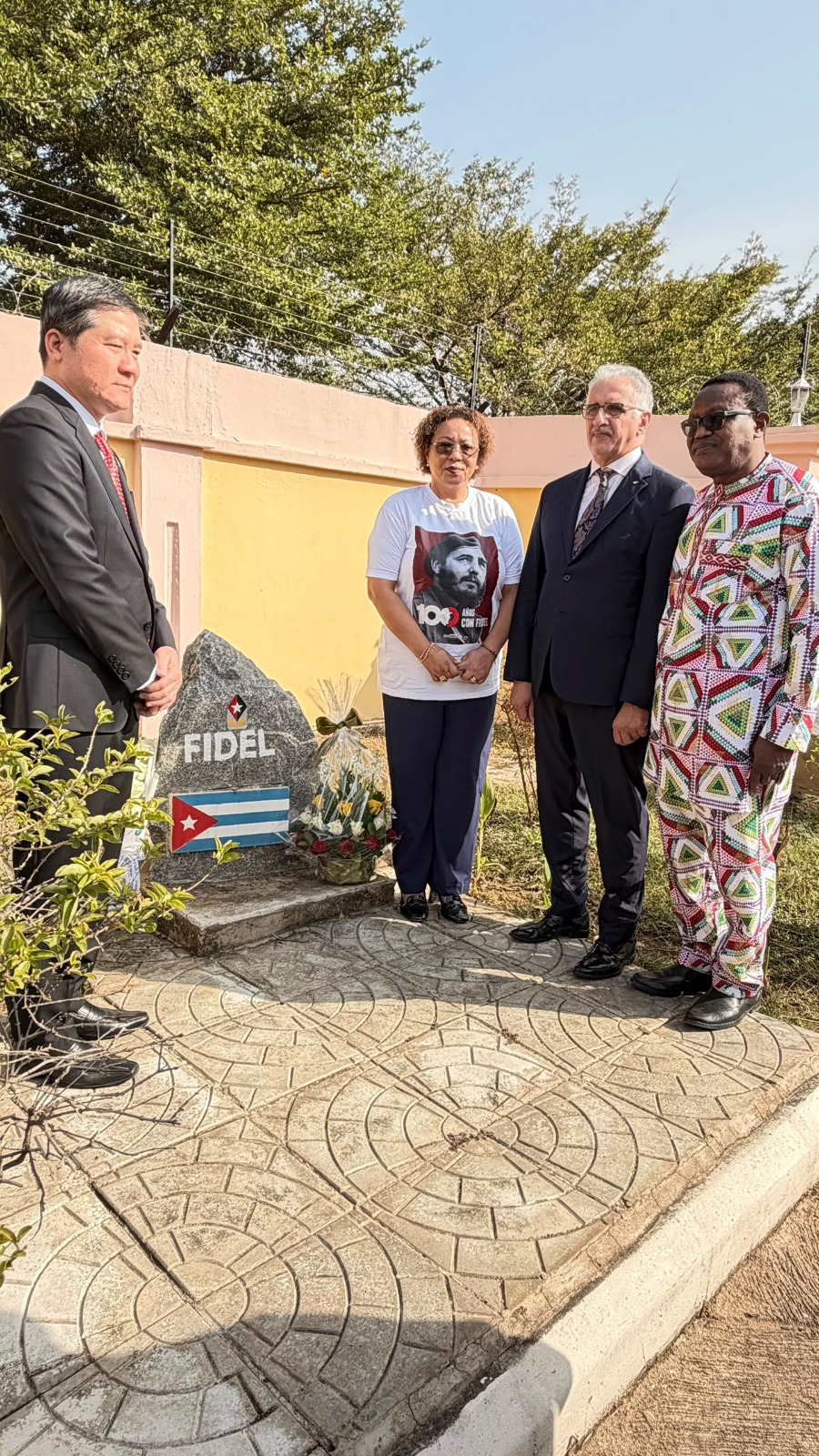
Cuba’s Ambassador to Nigeria, Miriam Morales Palmero, gave the assurance while commemorating the 10th anniversary of the death of the country’s revolutionary leader, Commander-in-Chief Fidel Castro Ruz, at a ceremony in Abuja.
Morales Palmero said Cuba remained committed to peace, multilateralism, the United Nations Charter and international law, while rejecting what she described as efforts to undermine its economy and break the resolve of its people.
She said the country was facing a difficult economic and energy situation, which she attributed to the tightening of the economic, commercial and financial blockade imposed by the United States.
According to her, the situation has been worsened by an escalation of pressure, restrictions on energy supplies, the extraterritorial application of secondary sanctions against third countries and threats of military aggression.
“Confronted with this policy of hostility and maximum pressure, Cuba reaffirms before the international community the principled stance bequeathed to us by our Commander-in-Chief,” she said.
The ambassador stressed that Cuba believed in diplomatic dialogue founded on mutual respect, sovereign equality and non-interference in the internal affairs of states, but remained resolute in defending its independence.
The commemoration, which featured the laying of a floral wreath, brought together members of the diplomatic corps, representatives of solidarity movements, Cuban nationals resident in Nigeria and other friends of Cuba.
Morales Palmero described the ceremony as an opportunity to honour Castro’s contribution to Cuba’s transformation and his role in shaping the country’s foreign policy and international engagement.
She said the late leader’s influence extended beyond Cuba, particularly through his commitment to justice, human dignity, equality and the defence of the rights of ordinary people.
According to her, Castro believed that access to education, healthcare and a decent standard of living should not be privileges reserved for a few, but guaranteed rights for every citizen.
“To remember Fidel is to evoke, above all, his unwavering commitment to justice,” she said, adding that his vision was anchored on building a society where social exclusion, discrimination and inequality would have no place.
She further said that equality, as understood by Castro, meant creating genuine opportunities for everyone to live with dignity and contribute to the collective well-being of society.
The ambassador also highlighted Cuba’s tradition of international solidarity, noting that Castro championed cooperation and assistance to vulnerable communities across the world, irrespective of geographical boundaries or political differences.
She linked the late leader’s revolutionary philosophy to that of Cuba’s National Hero, José Martí, whose struggle against Spanish colonial rule in the 19th century, she said, shared the same principles of liberty, sovereignty and independence that later defined Castro’s confrontation with American imperialism.
Quoting Martí, Morales Palmero recalled his assertion that death was not real when a person’s sense of duty had been fully accomplished.
She also cited Castro’s declaration in October 1991 that men could die but their ideas would never die, describing it as a reflection of the enduring connection between the two revolutionary figures.
According to her, both men had transcended physical death through their contributions to their country and the lasting influence of their ideas.
Martí died in combat on May 19, 1895, while Castro died on Nov. 25, 2016.
“Only those men or women who have devoted their lives to elevate their countries and fellow citizens to the highest peaks and monuments of honour, national pride, and international acknowledgement and respect, can stay among their peoples forever,” she said.
Morales Palmero said the greatest tribute to Castro, 10 years after his death, was to sustain his ideals through unity, creativity and continued commitment to social justice, peace and the dignity of all peoples.
She expressed appreciation to the diplomatic community, solidarity organisations and other friends who attended the commemoration, describing their presence as an expression of enduring friendship and support for Cuba.
“The greatest tribute we can pay to Fidel is to continue defending the truth of Cuba, to resist with unity and creativity, and to keep his ideas alive in favour of social justice, peace, and the dignity of all peoples,” she said.
She called for eternal honour and glory for Castro, whose leadership, she maintained, left an indelible imprint on Cuba and the wider international community.
Cuba reaffirms sovereignty, vows resistance to US blockade on Fidel Castro’s 10th anniversary

30 HIGH-PROFILE CORRUPTION CASES EXPOSE JUSTICE SYSTEM FAILURES, STALLING ACCOUNTABILITY

Bura Day on the Plateau: When Cultural Heritage Draws the Line
Shosa: 2026 Reunion, Achievements, Challenges, and the Way Forward

Roger Federer’s Shock as DNA Results Reveal Myla and Charlene Are Not His Biological Children

THE PLIGHT OF FARIDA

FAILED COUP IN BURKINA FASO: HOW TRAORÉ NARROWLY ESCAPED ASSASSINATION PLOT AMID FOREIGN INTERFERENCE CLAIMS
-
 News3 years ago
Roger Federer’s Shock as DNA Results Reveal Myla and Charlene Are Not His Biological Children
-
Opinions5 years ago
THE PLIGHT OF FARIDA
-
 News2 years ago
FAILED COUP IN BURKINA FASO: HOW TRAORÉ NARROWLY ESCAPED ASSASSINATION PLOT AMID FOREIGN INTERFERENCE CLAIMS
-
 Opinions5 years ago
POLICE CHARGE ROOMS, A MINTING PRESS
-

 News3 years ago
EYN: Rev. Billi, Distortion of History, and The Living Tamarind Tree
-

 ACADEMICS3 years ago
A History of Biu” (2015) and The Lingering Bura-Pabir Question (1)
-

 Columns3 years ago
Army University Biu: There is certain interest, but certainly not from Borno.
-

 Politics1 year ago
2027: Why Hon. Midala Balami Must Go, as Youths in Hawul and Asikira/Uba Federal Constituency Reject ₦500,000 as Sallah Gift
