
News
Gunmen retaliate after rustling of 102 cows, kill one, injure two in Barkin Ladi in Plateau

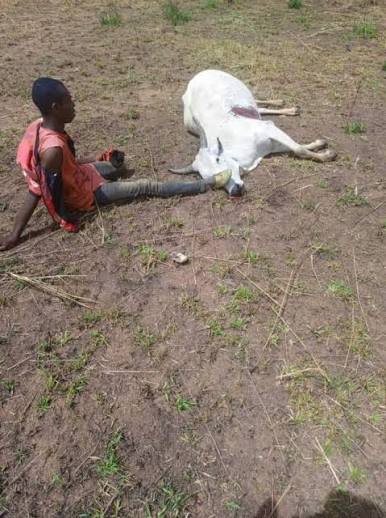
Gunmen retaliate after rustling of 102 cows, kill one, injure two in Barkin Ladi in Plateau
By: Zagazola Makama
One person was killed and two others injured when gunmen attacked Kasuwa Denkeli village in Barkin Ladi Local Government Area (LGA) of Plateau State in the early hours of Saturday, in a retaliatory strike linked to the recent rustling of 102 cows in neighbouring Riyom LGA.
The attack, which occurred at about 2:30 a.m., came days after armed men drove away 102 cows from Dan Sokoto, Ganawuri District of Riyom LGA, heightening tensions across the Barkin Ladi–Riyom–Jos South axis.
Residents of Kasuwa Denkeli told Zagazola Makama that the assailants stormed the community and opened fire on houses, leaving one person dead on the spot and two others with gunshot injuries. The injured were evacuated to the Jos University Teaching Hospital for medical attention, while the body of the deceased was deposited at the General Hospital morgue in Barkin Ladi for autopsy.
Police sources who confirmed the incident said “On receipt of a distress call, a team led by the Divisional Police Officer (DPO) Barkin Medical immediately moved to the scene.
He added that the two injured victims were rushed to the Jos University Teaching Hospital for medical attention, while the corpse of the deceased was deposited at the General Hospital morgue in Barkin Ladi for autopsy.
According to the police , investigation into the incident has commenced, and efforts are ongoing to track down and arrest the perpetrators, while they urged residents to remain calm and continue to cooperate with security agencies by providing timely and useful information that could lead to the arrest of those responsible.
Zagazola report that Saturday’s incident is the latest in a chain of incidents that began on Wednesday, Jan. 14, when no fewer than 102 cows were rustled at about 11:00 a.m. in Dan Sokoto, Ganawuri District of Riyom LGA. Local sources said the attackers, identified by witnesses as Berom militia from the Vom District in Jos South LGA, stormed the area and drove away the cattle at gunpoint.
The cattle reportedly belong to Alhaji Nalado of Gargari, around Tashan Nashanan, and Malam Ango of Sabon Kaura, around Kudadu, both in Jos East LGA, although the animals were taken from Ganawuri in Riyom LGA.
Witnesses said the attackers were heavily armed, forcing herders to flee for their lives. As of the time of this report, none of the cattle had been recovered, despite security alerts. Residents also alleged that areas such as Vwang in Jos South and parts of Fan District in Barkin Ladi LGA are increasingly seen as “no-go” zones where rustled cattle are kept, complicating recovery efforts.
The Ganawuri rustling was not an isolated incident. It followed a series of attacks on livestock across Plateau State this month. At least seven cows were poisoned in Kwi village in Riyom LGA, while three others were shot dead around Kuru Gadabiyu in Barkin Ladi LGA near the Bicichi axis. Each incidents had deepens mistrust and raises the risk of reprisals in flashpoints already on edge.
The pattern of escalation has been consistent. On Jan. 6, coordinated attacks on Jol community in Riyom LGA and Gero in Gyel District of Jos South LGA left three people dead. The violence followed the shooting of two Fulani youths earlier that day in Jos South, one of whom later died. Witnesses described the ambush as unprovoked, triggering swift retaliation and counter-retaliation.
December 2025 also saw a surge in incidents. On Dec. 12, more than 130 cattle were reportedly rustled in Nding community. Around the same period, livestock poisoning was recorded in parts of Jos East and Riyom LGAs. These were followed by deadly clashes, including the killing of four children in Dorong village, Barkin Ladi LGA, and attacks on Gero village that resulted in deaths, injuries and loss of livestock.
On Dec. 16, 2025, an attack on an illegal mining site in Tosho community, Barkin Ladi LGA, left 12 miners dead and others abducted, with security sources linking the violence to earlier rustling of 171 castles belonging to the Fulani. In Plateau State, attacks on livestock often act as a spark that ignites wider communal violence.
For pastoral families, cattle are not just animals; they are livelihoods, savings and identity. When herds are stolen, poisoned or shot, families are pushed into desperation. Emotions escalate quickly, and reprisals follow.
Zagazola has repeatedly warned that unless attacks in across Barkin Ladi, Riyom and Jos South LGAs, on both lives and livelihoods are addressed impartially, the state risks remaining trapped in a cycle where each attacks becomes justification for the next
Gunmen retaliate after rustling of 102 cows, kill one, injure two in Barkin Ladi in Plateau



Yobe: Wali visits Emir of Damaturu
By: Yahaya Wakili
Yobe State All Progressives Congress (APC), 2027 gubernatorial candidate Alhaji Baba Malam Wali MNI, FCAN, has paid a courtesy visit to His Royal Highness, the Emir of Damaturu, Alhaji Shehu Hashimi II Ibn Umar Al-Amin El-Kanemi, at his palace in Damaturu.
During the visit, the APC governorship candidate, Alhaji Baba Malam Wali MNI, said they were at the emir’s palace to solicit the prayers and blessings of the emir.
According to Baba Wali, “We are in the race; therefore, the visit was very significant. We need the prayers of the royal fathers and leaders because they were very vital and important at this crucial time.
Responding, His Royal Highness, the emir of Damaturu, Alhaji Shehu Hashimi II Ibn Al-Amin El-Kanemi, thanked the governorship candidate for the visit and prayed Almighty Allah (SWT) would guide and protect him throughout his struggle in his life.
Those accompanying the incoming governor, Inshallah, in 2027 during the visit are his deputy, Barrister Saleh Samanja; APC State chairman, Alhaji Mohammed Gadaka; and Madakin Gudi.
Others are Alhaji Aji Yarima Bularafa, Hon. Commissioner of the Ministry of Wealth Creation, Empowerment, and Employment Generation; Hon. Nasiru Hassan Yusuf, candidate for the Federal House of Representatives, representing Damaturu, Gujba, Gulani, and Tarmuwa local government areas; and others.
The emir conferred the traditional title of Mukaddam of the Damaturu emirate council on Alhaji Baba Malam Wali, mni, and fcan, respectively.
Yobe: Wali visits Emir of Damaturu
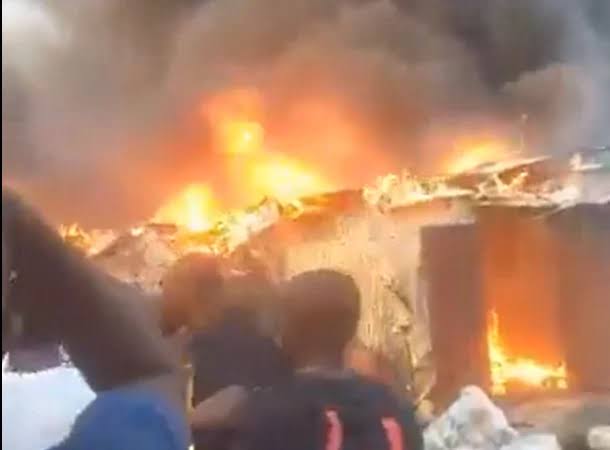
Fire Razes Building Material Shops in Satellite Town, Lagos
By Zagazola Makama
LAGOS — A fire outbreak has destroyed several building material shops along Fin-Niger, Satellite Town, Lagos State.
The incident occurred at about 6:10 a.m. on Aug. 18, when a distress call was received reporting a fire outbreak in the area.
Following the alert, a team of policemen and firefighters was swiftly mobilised to the scene.
The fire affected building material shops located at 58/196 Old Ojo Road, along Fin-Niger, Satellite Town.
The emergency responders successfully contained and extinguished the fire, preventing it from spreading further.
No casualty or loss of life was recorded in the incident.
The cause of the fire and the estimated value of property destroyed have not yet been established.
The police said investigation into the incident is ongoing to determine the circumstances surrounding the outbreak.
Fire Razes Building Material Shops in Satellite Town, Lagos
News
24 Bandits Killed As Army, DSS, Vigilantes Foil Mass Kidnap in Katsina Community, Rescue Victims
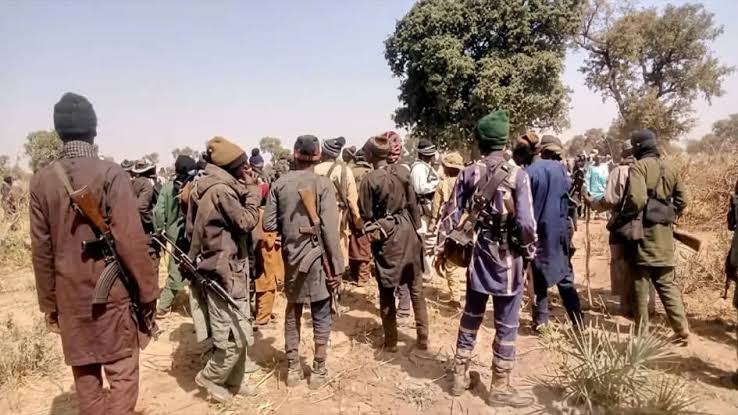
24 Bandits Killed As Army, DSS, Vigilantes Foil Mass Kidnap in Katsina Community, Rescue Victims
By: Zagazola Makama
At least 24 bandits were killed on Tuesday after soldiers of the Nigerian Army, operatives of the Department of State Services (DSS), Katsina Community Watch Corps foiled an attempt to mass-kidnap persons in Gidan Bawa village, Kandarawa Ward, Bakori Local Government Area of the state.
According to a security source, the operation followed sustained intelligence which uncovered plans by about 40 gunmen loyal to notorious bandit kingpin, Isiya Kwashen Garwa, to invade the village and abduct many residents, especially women and children.
The plot, sources said, was intended to replicate the mass abduction of residents of Woro community in Kwara State, ostensibly to embarrass the government.
Acting swiftly on the intelligence, DSS operatives mobilised the Community Watch Corps, and the Civilian Joint Task Force (CJTF) from Guga camp, and ambushed the bandits.
The source disclosed that the joint security operatives neutralised 24 bandits and rescued the abducted villagers.
Security operatives also recovered 19 stolen cattle from the community during the raid.
The source added that there were ongoing efforts to track down the fleeing bandits.
24 Bandits Killed As Army, DSS, Vigilantes Foil Mass Kidnap in Katsina Community, Rescue Victims

Yobe: Wali visits Emir of Damaturu

Police Arrest Two Suspected One-Chance Robbery Syndicate Members in Lagos

Fire Razes Building Material Shops in Satellite Town, Lagos

Roger Federer’s Shock as DNA Results Reveal Myla and Charlene Are Not His Biological Children

THE PLIGHT OF FARIDA

FAILED COUP IN BURKINA FASO: HOW TRAORÉ NARROWLY ESCAPED ASSASSINATION PLOT AMID FOREIGN INTERFERENCE CLAIMS
-
 News2 years ago
Roger Federer’s Shock as DNA Results Reveal Myla and Charlene Are Not His Biological Children
-
Opinions5 years ago
THE PLIGHT OF FARIDA
-
 News1 year ago
FAILED COUP IN BURKINA FASO: HOW TRAORÉ NARROWLY ESCAPED ASSASSINATION PLOT AMID FOREIGN INTERFERENCE CLAIMS
-

 News2 years ago
EYN: Rev. Billi, Distortion of History, and The Living Tamarind Tree
-
 Opinions5 years ago
POLICE CHARGE ROOMS, A MINTING PRESS
-

 ACADEMICS2 years ago
A History of Biu” (2015) and The Lingering Bura-Pabir Question (1)
-

 Columns2 years ago
Army University Biu: There is certain interest, but certainly not from Borno.
-

 Politics1 year ago
2027: Why Hon. Midala Balami Must Go, as Youths in Hawul and Asikira/Uba Federal Constituency Reject ₦500,000 as Sallah Gift
