
News
ACReSAL, NUJ sensitise 100 journalists to climate change, environmental reporting skills

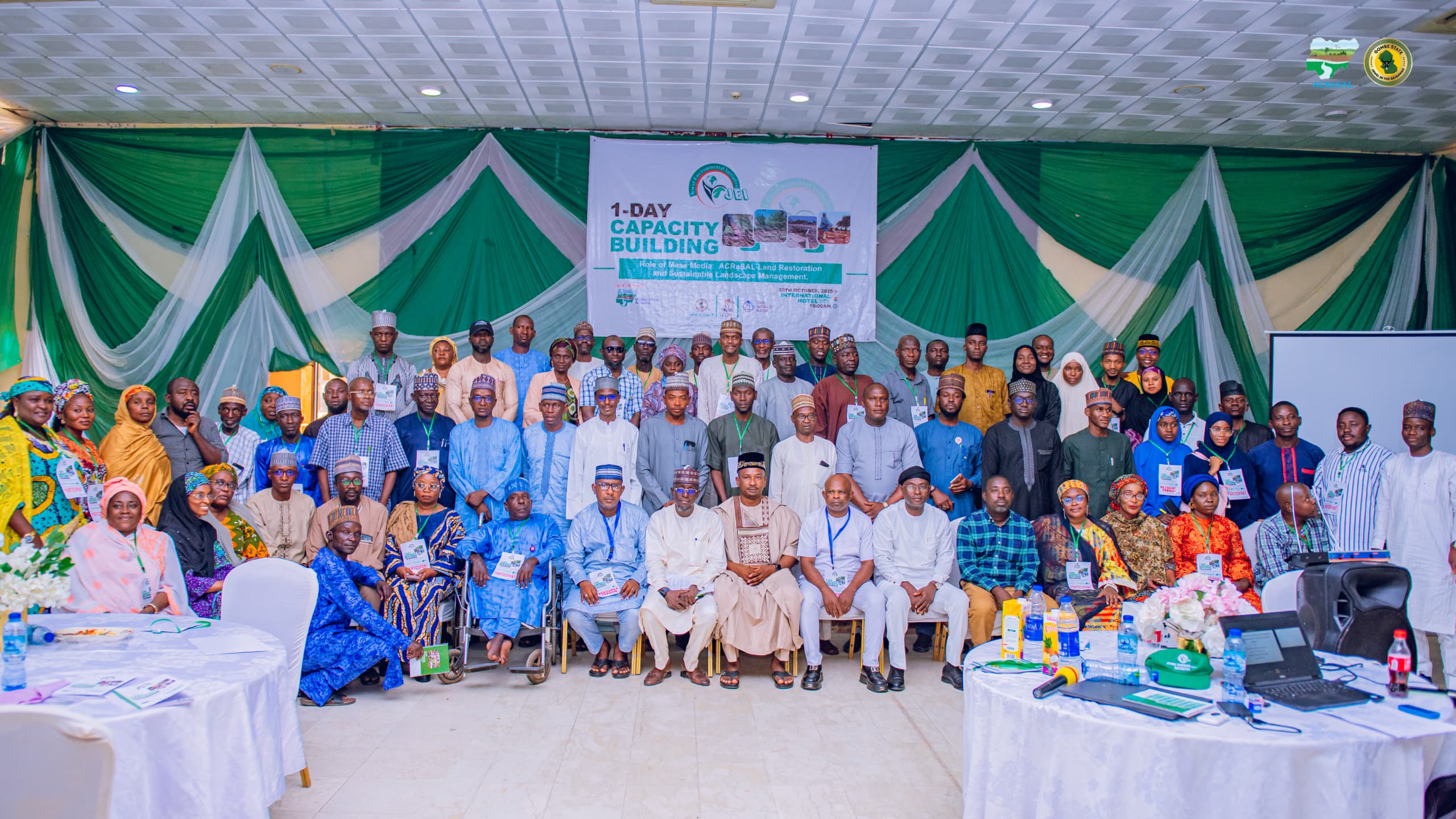
ACReSAL, NUJ sensitise 100 journalists to climate change, environmental reporting skills
The Agro-Climatic Resilience in Semi Arid Landscapes (ACReSAL) project, on Monday, trained 100 journalists to enhance coverage of climate change and environmental issues in Gombe State.
The one-day capacity building exercise is being implemented in collaboration with the Nigeria Union of Journalists (NUJ), aimed at raising awareness on land restoration and sustainable landscape management.
ACReSAL is a World Bank financed project designed to tackle the pressing issues of land degradation and climate change in 19 states in northern Nigeria.
Dr Sani Jauro, State Coordinator, ACReSAL, described journalists as critical stakeholders in efforts towards reclaiming degraded lands and ensuring sustainable landscape management.
He said the training aimed at improving journalists’ understanding of climate related issues to help them communicate the challenges and solutions effectively to the public.
Jauro expressed optimism that the training would enhance the skills and knowledge of media practitioners in reporting ACRESAL, environmental and climate change issues.
The coordinator commended Gov. Inuwa Yahaya for his support in addressing environmental related issues, to improve lives and protect livelihoods of communities threatened by land degradation.
He also lauded the media support in the implementation of ACReSAL project through accurate reportage, and urged them to sustain the feat to promote community ownership of ACReSAL project.
NUJ Chairman, Faruk Muazu, lauded ACReSAL and Jewel Environmental Initiatives (JEI), the implementing partner, for their efforts at upskilling journalists.
Muazu urged other government bodies to partner with the organisation to train journalists on issues that would enhance development in Gombe State.
“This training will help improve the quality of conversations around climate change, land restoration and environmental issues across the state.
“It will ensure that the media becomes adequately informed about climate change related issues across the state,” he said.
Mr Ismail Bima, Project Coordinator, JEI, also urged journalists to prioritise environmental and climate change reportage to promote sustainable environment.
Represented by Danladi Aliyu, an official of JEI, Bima said awareness creation on ACReSAL project, government and stakeholders investment would build sustainability culture among residents.
One of the participants, Chika Udenkwo, commended the gesture, adding it would expose journalists better skills to report environmental issues and climate change.
ACReSAL, NUJ sensitise 100 journalists to climate change, environmental reporting skills



DSS Trails, Nabs Man Impersonating Personnel in Abuja
By: Zagazola Makama
*Arrested in tactical uniform, with fake pistol, allegedly extorting motorists
The Department of State Services (DSS) late on Wednesday in Abuja arrested a man identified as Moferewa Maiye, discovered to be impersonating a personnel of the Service.
Maiye, who claimed to hail from Agbajojun Village, Mopamuro Local Government Area of Kogi State, was trailed and arrested by DSS officers in his hideout around the NITEL Junction, along Adetokunbo Ademola Way, Wuse II, Abuja.
At the time of his arrest, Maiye was in DSS tactical uniform and armed with a fake pistol.
According to a security source, the Secret police acted on credible intelligence that Maiye was using the uniform and the fake weapon to intimidate commuters and motorists, extorting money from them.
During interrogation, added the source, the suspect reportedly claimed that his brother was a DSS personnel who died years ago.
He identified the brother as Monday Maiye, stressing that the DSS kit in his possession was his late brother’s.
The suspect is currently being interrogated as security operatives, the source stated, adding that the Service was investigating how he came about the DSS uniform and kit.
“Investigators are also trying to establish how long the suspect has been involved in similar acts of impersonation and extortion.
“The arrest underscores growing concerns by the Service over the activities of individuals who impersonate security personnel to intimidate members of the public and commit criminality,” the source declared.
DSS Trails, Nabs Man Impersonating Personnel in Abuja
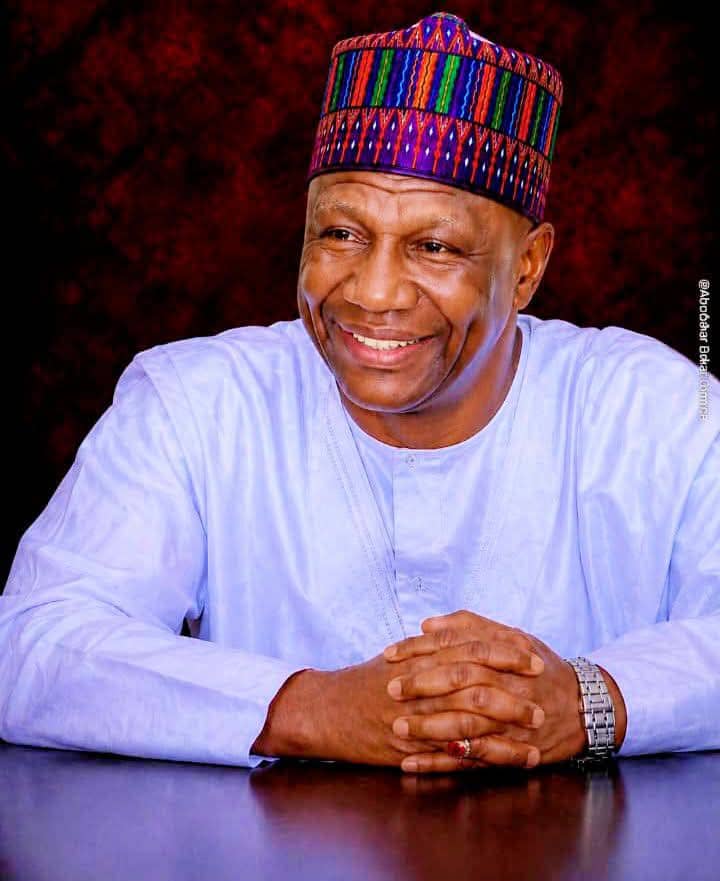
Yobe: Wali visits Emir of Damaturu
By: Yahaya Wakili
Yobe State All Progressives Congress (APC), 2027 gubernatorial candidate Alhaji Baba Malam Wali MNI, FCAN, has paid a courtesy visit to His Royal Highness, the Emir of Damaturu, Alhaji Shehu Hashimi II Ibn Umar Al-Amin El-Kanemi, at his palace in Damaturu.
During the visit, the APC governorship candidate, Alhaji Baba Malam Wali MNI, said they were at the emir’s palace to solicit the prayers and blessings of the emir.
According to Baba Wali, “We are in the race; therefore, the visit was very significant. We need the prayers of the royal fathers and leaders because they were very vital and important at this crucial time.
Responding, His Royal Highness, the emir of Damaturu, Alhaji Shehu Hashimi II Ibn Al-Amin El-Kanemi, thanked the governorship candidate for the visit and prayed Almighty Allah (SWT) would guide and protect him throughout his struggle in his life.
Those accompanying the incoming governor, Inshallah, in 2027 during the visit are his deputy, Barrister Saleh Samanja; APC State chairman, Alhaji Mohammed Gadaka; and Madakin Gudi.
Others are Alhaji Aji Yarima Bularafa, Hon. Commissioner of the Ministry of Wealth Creation, Empowerment, and Employment Generation; Hon. Nasiru Hassan Yusuf, candidate for the Federal House of Representatives, representing Damaturu, Gujba, Gulani, and Tarmuwa local government areas; and others.
The emir conferred the traditional title of Mukaddam of the Damaturu emirate council on Alhaji Baba Malam Wali, mni, and fcan, respectively.
Yobe: Wali visits Emir of Damaturu
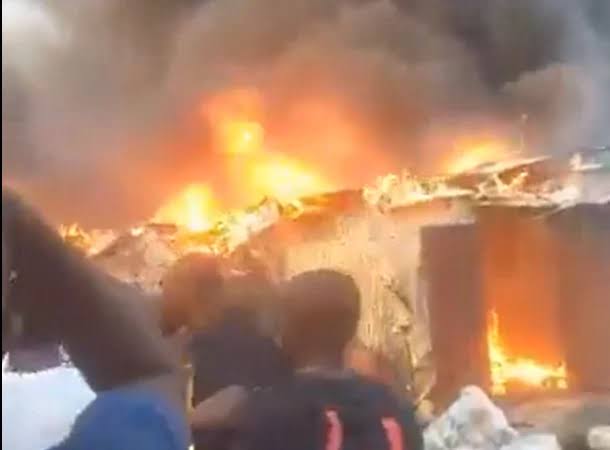
Fire Razes Building Material Shops in Satellite Town, Lagos
By Zagazola Makama
LAGOS — A fire outbreak has destroyed several building material shops along Fin-Niger, Satellite Town, Lagos State.
The incident occurred at about 6:10 a.m. on Aug. 18, when a distress call was received reporting a fire outbreak in the area.
Following the alert, a team of policemen and firefighters was swiftly mobilised to the scene.
The fire affected building material shops located at 58/196 Old Ojo Road, along Fin-Niger, Satellite Town.
The emergency responders successfully contained and extinguished the fire, preventing it from spreading further.
No casualty or loss of life was recorded in the incident.
The cause of the fire and the estimated value of property destroyed have not yet been established.
The police said investigation into the incident is ongoing to determine the circumstances surrounding the outbreak.
Fire Razes Building Material Shops in Satellite Town, Lagos

When Official Directives Become More Powerful Than the Law

DSS Trails, Nabs Man Impersonating Personnel in Abuja

Ogwashi-Uku Palace: Izediunor Faction Has Lost At Every Court Level, Including Supreme Court

Roger Federer’s Shock as DNA Results Reveal Myla and Charlene Are Not His Biological Children

THE PLIGHT OF FARIDA

FAILED COUP IN BURKINA FASO: HOW TRAORÉ NARROWLY ESCAPED ASSASSINATION PLOT AMID FOREIGN INTERFERENCE CLAIMS
-
 News2 years ago
Roger Federer’s Shock as DNA Results Reveal Myla and Charlene Are Not His Biological Children
-
Opinions5 years ago
THE PLIGHT OF FARIDA
-
 News1 year ago
FAILED COUP IN BURKINA FASO: HOW TRAORÉ NARROWLY ESCAPED ASSASSINATION PLOT AMID FOREIGN INTERFERENCE CLAIMS
-

 News2 years ago
EYN: Rev. Billi, Distortion of History, and The Living Tamarind Tree
-
 Opinions5 years ago
POLICE CHARGE ROOMS, A MINTING PRESS
-

 ACADEMICS2 years ago
A History of Biu” (2015) and The Lingering Bura-Pabir Question (1)
-

 Columns2 years ago
Army University Biu: There is certain interest, but certainly not from Borno.
-

 Politics1 year ago
2027: Why Hon. Midala Balami Must Go, as Youths in Hawul and Asikira/Uba Federal Constituency Reject ₦500,000 as Sallah Gift
