
Uncategorized
ActionAid Nigeria, Stakeholders Call for Private Sector-Driven Solutions to Reintegration Challenges

ActionAid Nigeria, Stakeholders Call for Private Sector-Driven Solutions to Reintegration Challenges
By: Michael Mike
ActionAid Nigeria, with strategic partners, has advocated for the bridging of the gap between corporate impact and community resilience by leveraging private sector engagement to support vulnerable populations.
They said there is an urgent need to align Corporate Social Responsibility (CSR) programmes with sustainable pathways for employment, entrepreneurship, mentorship, and inclusive development.
Through the initiative, implemented under the Reintegration and Empowerment for Connecting and Nurturing Opportunities of Vulnerable Population and Returning Migrants (RECONNECT) Project, focuses are on promoting reintegration and economic empowerment for returnees, internally displaced persons (IDPs), survivors of gender-based violence, people with disabilities, and other marginalized groups.
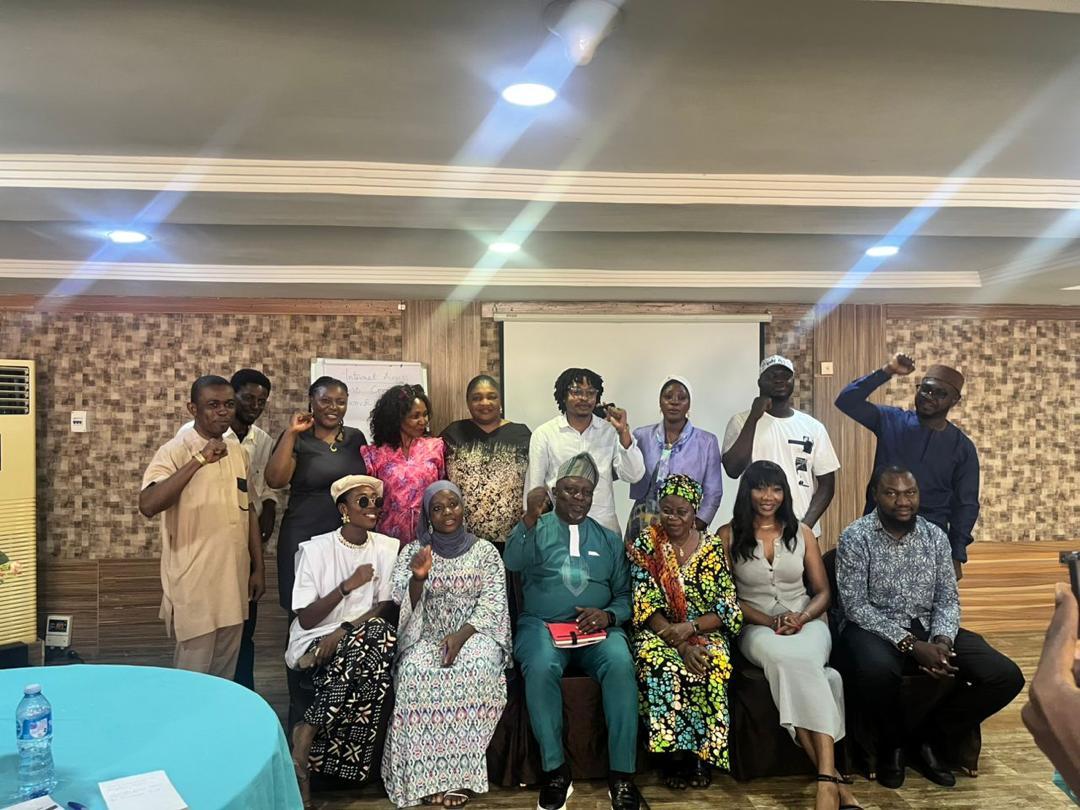
At a strategic meeting on Thursday which brought together key stakeholders, including business leaders from hairdressing, fashion design, shoemaking, and catering sectors, alongside partners such as GIZ, GOPA, and the NCFRMI, stakeholders explored innovative models of collaboration that deliver lasting social and economic impact.
Speaking at the event, ActionAid Nigeria Head of Programme, Celestine Odo, emphasized the project’s focus on helping vulnerable populations rebuild their livelihoods and reintegrate into society. Through skills training, entrepreneurship support, and psychosocial care, the initiative works to restore dignity and foster resilience.
The RECONNECT Project focuses on helping vulnerable populations including returnees, IDPs, survivors of gender-based violence, and other marginalized groups rebuild their livelihoods and reintegrate into society.
In his words, he stated: “Through skills training, psychosocial support, and entrepreneurship development, RECONNECT is helping to restore dignity, rebuild livelihoods, and foster resilience among those who have been displaced or marginalized.”
Odo also highlighted that the meeting provides a platform for private sector actors to move beyond donations and align their CSR efforts with the real needs of vulnerable communities, ensuring sustainable impact and mutually beneficial outcomes.
“Today’s gathering is a strategic dialogue. It is a space where we seek to bridge the gap between the private sector’s Corporate Social Responsibility (CSR) commitments and the urgent needs of these vulnerable groups.”
He emphasized that businesses are encouraged to participate in inclusive economic initiatives, such as job creation, skills development, and community-based enterprises.
“Through CSR, businesses can support skills development, create inclusive job opportunities, and invest in community-based enterprises that empower people and strengthen local economies.”
Odo further stressed the importance of visionary, collaborative action that goes beyond immediate assistance, fostering long-term reintegration, empowerment, and social justice for vulnerable populations.
“Let us explore innovative models of partnership that align business goals with social impact… Let us commit to actions that will transform lives, not just for today, but for generations to come.”
Humanitarian and Resilience Specialist David Habba emphasized that businesses, like citizens, owe a responsibility to contribute to society. This aligns with the program’s focus on CSR and social impact, highlighting that business success is intertwined with societal growth.
He said: “Every business has an obligation to give back to the society that made their progress possible.”
Habba reminded participants that all business and economic efforts ultimately serve people, stressing the human-centered nature of development and CSR.
“Whatever we get, it’s so that we can give. The food you eat is so that you can have energy to do work… We are never meant to receive and to collect alone. We are meant to also give up. So whatever we’re doing is about people.”
He further highlighted that economic reintegration reduces re-migration and taps into the resilience of returnees, demonstrating how private sector engagement can transform social challenges into opportunities.
“Economic reintegration reduces re-migration. Private sector engagement should start at free jobs, skills, pathways, and market increases.”
Habba also pointed out that many businesses already contribute to society, sometimes unknowingly, and that recognizing and formalizing these efforts strengthens both corporate accountability and societal benefit.
“Many businesses are already doing CSR, but you’re not even recognizing that you’re doing CSR. Because your systems are not there, they’re not set to recognize the support that you do as CSR.”
He encouraged collaboration between organizations and the private sector to maximize social impact, creating sustainable solutions for reintegration, training, and employment.
“In an organization like ours, our resources meet your resources… It’s like, let us find out. Ours come, yours come, and there’s a happy meeting point.”
The GIZ representative, Victor Ossai, emphasized that the organization’s core mission is to support and strengthen structures that facilitate safe and regular migration. She noted that the program operates globally, helping partner countries create sustainable systems for education, work, and reintegration.
“The focus of our program is strengthening partner structures to enable people who are engaged in regular migration for educational or work purposes, while also ensuring the sustainable reintegration of those returning to Nigeria.”
She highlighted the importance of collaboration among agencies, organizations, and donor partners to achieve greater impact in migration and reintegration efforts.
“We are not just working with one organization; we are engaging with multiple agencies and donor partners to strengthen collaboration and extend our impact across different areas of migration and development.”
The representative also stressed the need to expand outreach to include individuals and communities that may not yet be aware of available migration and reintegration programs, ensuring inclusivity and wider access to opportunities.
“We must expand our scope of intervention to reach people who may not have heard about these initiatives before, so that everyone can benefit from the opportunities created through migration and development programs.”
Presented by Abraham, Program Advisor, the RECONNECT Project implements a comprehensive approach to support vulnerable populations. In terms of economic stability, the project provides vocational training for 400 beneficiaries and offers support for business startups. It also integrates participants into cooperatives, provides business and marketing skills development, and facilitates market linkages and business fairs to strengthen local enterprises.
For social stability, the project ensures access to first-response health services and legal support for vulnerable groups. Psychosocial support is provided through counseling services, private sector engagement under a CSR framework, and the development of a comprehensive service referral directory. These efforts aim to promote mental well-being, resilience, and community cohesion.
The project also prioritizes capacity building through mentorship programs for beneficiaries and training for civil society organizations on migration management and psychosocial support. Coordination meetings are held with stakeholders to enhance collaboration and ensure effective delivery of services.
Through these integrated interventions, the RECONNECT Project empowers vulnerable populations, facilitates their reintegration into society, and creates sustainable pathways for social and economic inclusion.
ActionAid Nigeria, Stakeholders Call for Private Sector-Driven Solutions to Reintegration Challenges


Uncategorized
Fertiliser Supply Stabilised as FG Strengthens Centralised Procurement System Ahead of 2026 Farming Season
Fertiliser Supply Stabilised as FG Strengthens Centralised Procurement System Ahead of 2026 Farming Season
By: Michael Mike
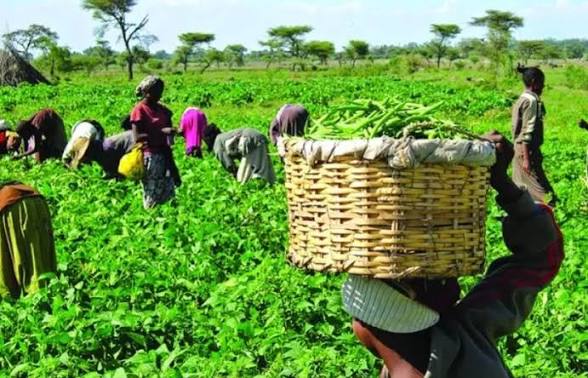
Nigeria has said it has significantly strengthened fertiliser availability and price stability ahead of the 2026 wet season through a tightened central procurement and distribution framework under the Presidential Fertiliser Initiative (PFI NPK), designed to shield farmers from global supply shocks and domestic market volatility.
Under the arrangement, PFI NPK Limited—operating under the Ministry of Finance Incorporated—coordinates bulk purchase of fertiliser raw materials, while distribution and blending activities are executed through a regulated national network of plants and warehouses. The system is structured to ensure that inputs remain under central control until verified sales are completed and financial settlements are concluded.
To reinforce transparency and accountability across the supply chain, independent Collateral Management Agents have been deployed to oversee storage facilities nationwide. Their role includes verifying stock levels, monitoring movements, and ensuring that fertiliser inputs are properly secured throughout the distribution process.
The operational framework is guided by standard procedures developed in collaboration with the Fertiliser Producers and Suppliers Association of Nigeria (FEPSAN), while quality assurance and regulatory enforcement remain under the supervision of the National Agency for Food and Drug Administration and Control (NAFDAC) and the Standards Organisation of Nigeria (SON).
Security and operational clearance from the Office of the National Security Adviser (ONSA) continues to serve as a critical requirement for nationwide logistics coordination and scaling of operations.
Officials said the system has already begun delivering results, with fertiliser raw materials either arriving in-country or currently in transit, while blending plants across the country continue to receive steady supply inputs ahead of peak farming demand.
The government argued that the intervention has reduced exposure to sudden international price spikes and supply chain disruptions that previously affected farmers during critical planting periods.
Dr. Takang, Managing Director of PFI NPK Limited, said the priority is ensuring that farmers are not only able to access fertiliser on time but also at stable and affordable prices that support production rather than undermine it.
“What matters is that the farmer can access fertiliser when needed and at a price that does not undermine production. By stabilising supply and managing cost exposure at the procurement stage, we are supporting that outcome at scale,” he said.
Looking forward, PFI NPK said it is expanding government-to-government sourcing arrangements with international partners to further secure raw material supply lines. It is also developing a digital monitoring platform that will provide real-time tracking of procurement, inventory levels, and nationwide distribution flows.
As the 2026 farming season approaches, authorities said the system is expected to play a key role in improving agricultural productivity by ensuring predictable fertiliser availability, reducing market uncertainty, and strengthening food production capacity across the country.
Fertiliser Supply Stabilised as FG Strengthens Centralised Procurement System Ahead of 2026 Farming Season
Uncategorized
UN Women, TY Danjuma Foundation Boost Rural Women’s Livelihoods with Agro-Processing Centre in Abuja Community
UN Women, TY Danjuma Foundation Boost Rural Women’s Livelihoods with Agro-Processing Centre in Abuja Community
By: Michael Mike
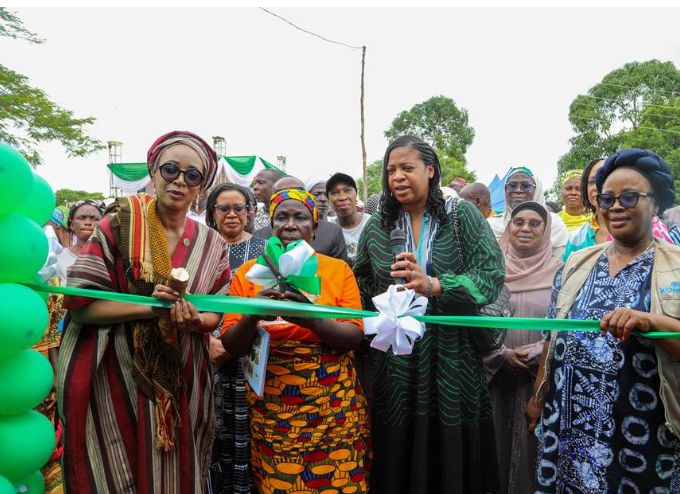
Rural women in Great Sheda Community of Kwali Area Council, Abuja, have received a major economic boost following the inauguration of a modern agro-processing centre designed to ease cassava processing and expand income-generating opportunities for women farmers and processors.
The facility, established through a partnership between UN Women and the TY Danjuma Foundation, was officially launched on Monday in the community, with stakeholders describing the intervention as a significant step toward strengthening women’s economic empowerment and rural development.
At the heart of the project is a cassava peeling and grinding machine that is expected to transform the production of Akpu, a staple food that serves as a major source of livelihood for many women in the area. For years, local processors relied largely on manual methods that demanded long hours of labour and limited production capacity. The new facility is expected to reduce processing time, improve efficiency and enable women to devote more time to other productive ventures.
Speaking during the inauguration, the UN Women Representative to Nigeria and ECOWAS, Beatrice Eyong said the initiative goes beyond providing equipment, stressing that it represents an investment in the productivity and economic future of rural women.
According to her, reducing the burden associated with manual cassava processing would help women increase their earnings, pursue additional economic activities and contribute more effectively to the development of their families and communities.
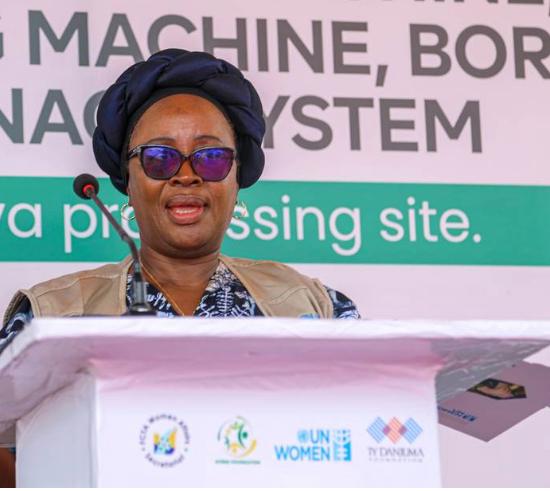
Chairman of the Board of Trustees of the TY Danjuma Foundation, Hannatu Gentles, reaffirmed the foundation’s commitment to supporting underserved communities through strategic interventions in health, education and economic empowerment.
She described women as the backbone of the rural economy and expressed confidence that members of the Akpu Women Association would utilise the facility to expand their businesses and improve the welfare of their households.
Also speaking at the event, former FCT Mandate Secretary and Director-General of the Mariam Babangida Centre, Adedayo Benjamins-Laniyi, noted that access to modern processing tools would not only improve cassava production but also strengthen food security, stimulate economic growth and enhance community resilience.
Residents of Great Sheda welcomed the intervention, describing it as a transformative project capable of increasing productivity, raising household incomes and stimulating economic activities across the community and neighbouring settlements.
The agro-processing centre is expected to serve women processors within Great Sheda and surrounding communities, creating opportunities for improved food processing practices, higher earnings and stronger local economic growth.
The project underscores growing efforts by development partners and philanthropic organisations to support women as key drivers of economic development, food security and sustainable community growth in rural Nigeria.
UN Women, TY Danjuma Foundation Boost Rural Women’s Livelihoods with Agro-Processing Centre in Abuja Community
Police Arrest 21 Suspects, Recover 20 Motorcycles in Zamfara Crackdown
By: Zagazola Makama
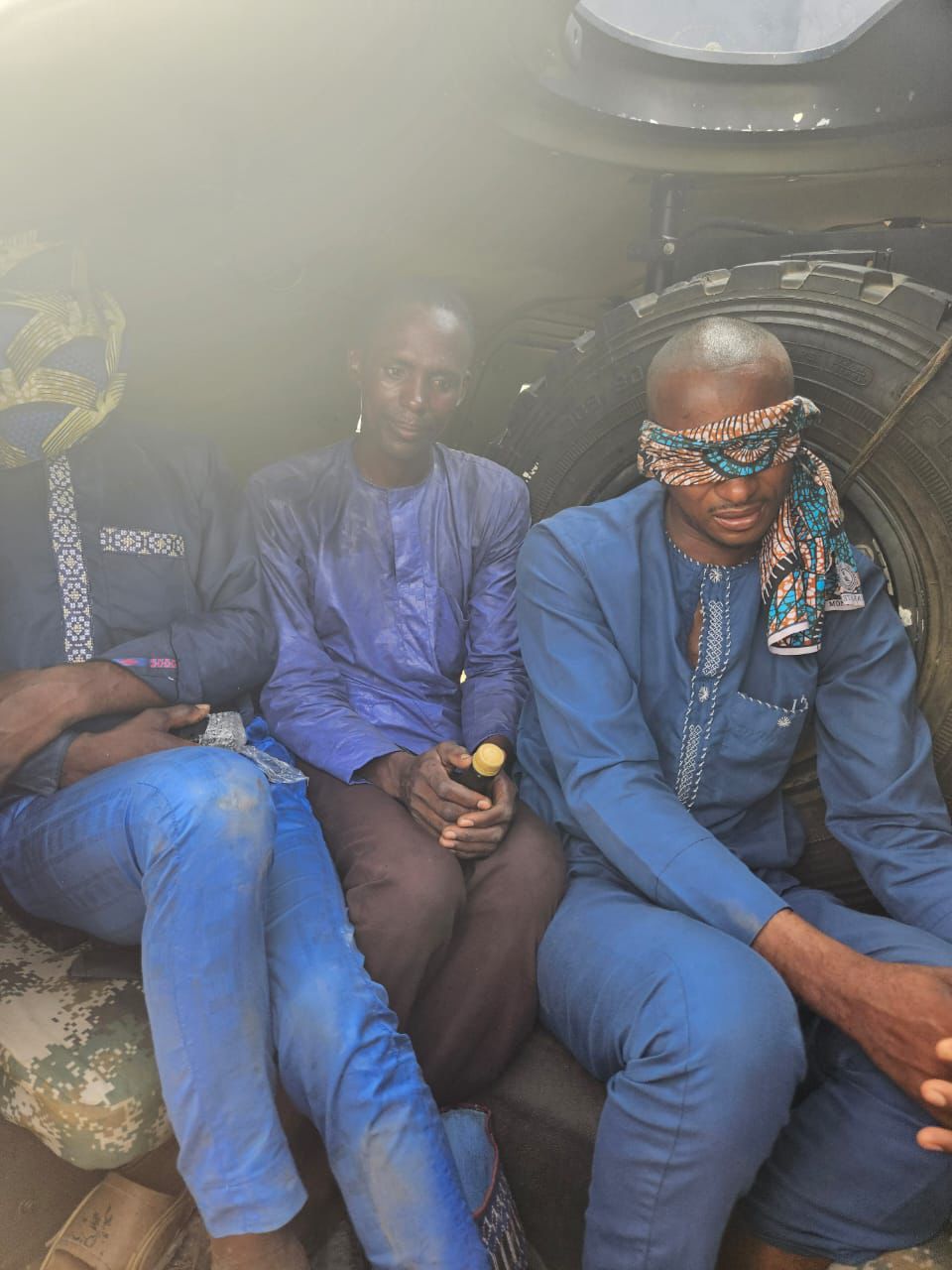
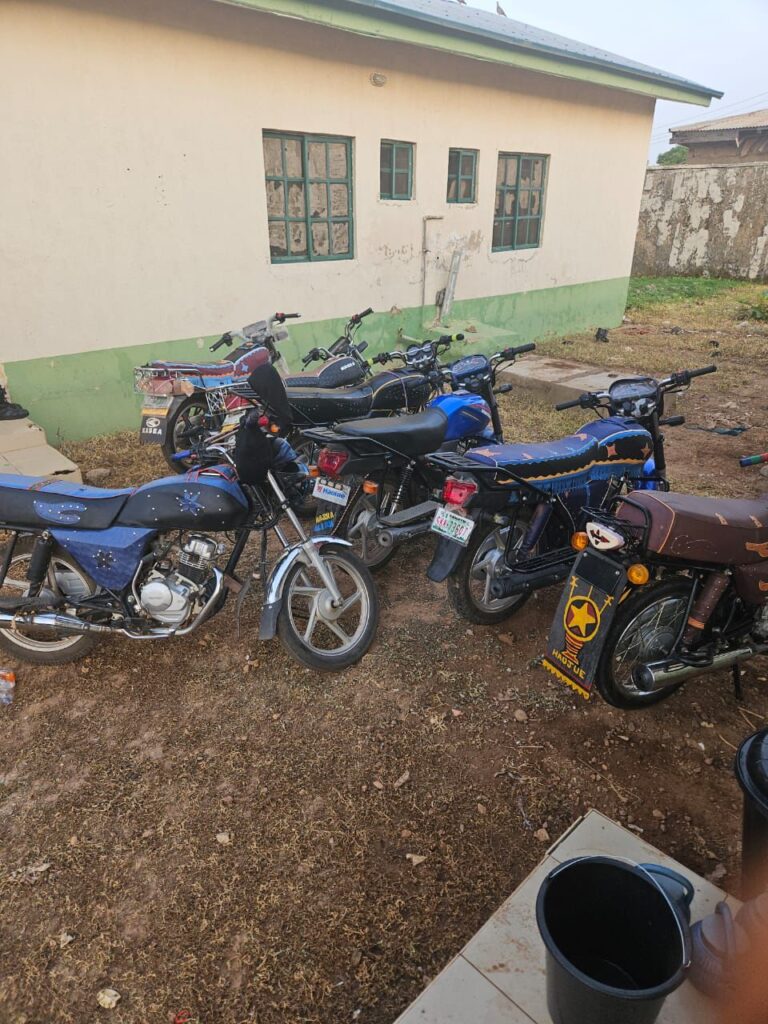
The Zamfara State Police Command says it has arrested 21 suspects and recovered 20 motorcycles during a special operation targeting reckless motorcycle riders and public disturbances in parts of Gusau Local Government Area.
The command disclosed this in a statement issued on Thursday in Gusau.
According to the statement, the operation followed repeated complaints from residents of Birnin Ruwa, Tullukawa and Yar Gada communities over the activities of groups of youths popularly known as “Arlet Boys.”
The police said the youths were allegedly involved in reckless motorcycle riding and other acts capable of causing public disorder in the affected communities.
The statement explained that on June 7 at about 7:30 p.m., police operatives carried out coordinated raids on identified criminal hideouts and black spots within the three communities.
It said the operation led to the arrest of 21 suspects and the recovery of 20 motorcycles.
“The arrested suspects will be subjected to thorough screening and investigation, while those found culpable will be charged to court accordingly,” the statement said.
The command assured residents that the operation would be sustained to rid the affected communities of criminal elements and enhance public safety.
It also urged members of the public to continue providing timely and credible information to security agencies to support crime prevention efforts across the state.
The police reiterated their commitment to maintaining law and order as well as protecting lives and property throughout Zamfara.
Police Arrest 21 Suspects, Recover 20 Motorcycles in Zamfara Crackdown

June 12: Credible Elections Are a Fundamental Human Right, Not a Privilege – NHRC

ActionAid Says June 12 Democratic Promise Remains Unfulfilled Amid Poverty, Rights Violations

Troops Recover 61 Cattle During Anti-Kidnapping Raid in Plateau

Roger Federer’s Shock as DNA Results Reveal Myla and Charlene Are Not His Biological Children

THE PLIGHT OF FARIDA

FAILED COUP IN BURKINA FASO: HOW TRAORÉ NARROWLY ESCAPED ASSASSINATION PLOT AMID FOREIGN INTERFERENCE CLAIMS
-
 News2 years ago
Roger Federer’s Shock as DNA Results Reveal Myla and Charlene Are Not His Biological Children
-
Opinions4 years ago
THE PLIGHT OF FARIDA
-
 News1 year ago
FAILED COUP IN BURKINA FASO: HOW TRAORÉ NARROWLY ESCAPED ASSASSINATION PLOT AMID FOREIGN INTERFERENCE CLAIMS
-

 News2 years ago
EYN: Rev. Billi, Distortion of History, and The Living Tamarind Tree
-
 Opinions4 years ago
POLICE CHARGE ROOMS, A MINTING PRESS
-

 ACADEMICS2 years ago
A History of Biu” (2015) and The Lingering Bura-Pabir Question (1)
-

 Columns2 years ago
Army University Biu: There is certain interest, but certainly not from Borno.
-

 Politics1 year ago
2027: Why Hon. Midala Balami Must Go, as Youths in Hawul and Asikira/Uba Federal Constituency Reject ₦500,000 as Sallah Gift
