
News
Actions of Recalled Ambassadors Yet to Return to Nigeria, A Show of Shame, Insist Groups

Actions of Recalled Ambassadors Yet to Return to Nigeria, A Show of Shame, Insist Groups
By: Michael Mike
The actions of some Nigerian Ambassadors to stay back abroad after they were recalled by President Bola Tinubu has been described as a show of shame and tantamount to waging war on their employers.
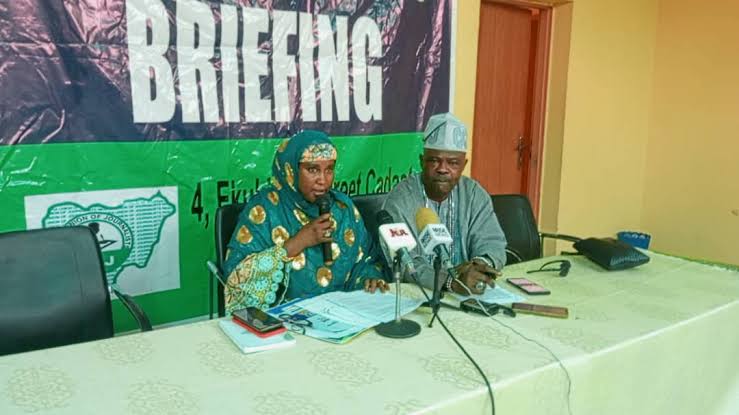
Addressing a press conference on Thursday at the FCT NUJ Press Centre, Abuja, a coalition of support groups for President Bola Ahmed Tinubu, said the recall of the ambassadors was within the president’s prerogative and no ambassadors should have resorted to media war against the nation’s Number 1 citizen.
The group, Progressive Arewa Support Asiwaju/Shettima (led by its Director General, Amb. Rabi Garba Dangizo), NAPC Progressives Women Network for Tinubu/Shettima (led by Hon Charity Jabengo Egbe) and Asiwaju Progressive Forum And National Coordinator Tinubu National Think Tank (TNT), Amb. Adewale Adeogun, in a jointly addressed conference said: “According to media reports President Bola Ahmed Tinubu using the powers conferred on him, in early September recalled serving ambassadors, representing Nigeria. They were also given till the 31st of October 2023 to return to Nigeria. What was supposed to be a routine Diplomatic Process has turned into a campaign of calumny against President Bola Ahmed Tinubu, government officials and symbols of the country.
“We have called this Press Conference to register our dismay and outright displeasure on the uncharitable behaviour of a few that were chosen out of hundreds of millions to represent Nigeria. We, the Coalition of APC Political Support Groups for President Bola Ahmed Tinubu, wish to register the dismay of our members on this show of shame being exhibited by some recalled envoys.”
They said: “Distinguished Members of the Press, based on our investigations into the matter It is important to note that that these Diplomatic officials who represent the topmost point of the pyramid of the exalted positions have not only engaged the country in a media war but have gone ahead to release documents that flout the Official Secrets Act. These documents have found their ways into the media and digital media space. This action not only undermines the oath sworn to by the envoys, but it is also against the extant rules and regulations guiding public officials in Nigeria. Thereby making them knowingly committing an offense.
They started that: “Nigerians from all walks of life should remember, especially appointed public officials by the APC government should remember that, we have no any other country to call ours other than Nigeria, as such we must remain steadfast and support the government instead of derailing it with malicious publications, half-truths and outright misinformation. This caution also applies to those who will be appointed as ambassadors in the coming weeks, that they are first representatives of the Nigeria’s interests and Mr President in their country of residence.
“Consequently, according to our investigations, we have discovered that severance payments known as passages have been sent to the recalled envoys, through the Central Bank of Nigeria, this is verifiable information. Also they are well aware that severance payments in Nigeria and all over the world follow due diligence and other forms of bureaucracy before payments are received. At this juncture we must thank those envoys who have not only written to their host governments but have registered their return in Abuja. Most importantly we thank President Bola Ahmed Tinubu for approving these payments as a testimony to the appreciation of the work of the envoys to Nigeria.”
They however asked that: “This orchestrated media war must end to protect the integrity of Mr President and sovereignty of Nigeria. The country is bigger than all of us.
“The recalled Nigerian High Commissioner To Zambia, Ambassador Ominiyi Eze and his cohorts should therefore desist from the international embarrassment they are causing President Bola Ahmed Tinubu and the government of Nigeria. The general public is hereby advised to pay no heed to what is purely an administrative and procedural matter that has become the basis of misrepresentations in the media intended to undermine the government of President Bola Ahmed Tinubu and Vice President Kashim Shettima, we the members of Coalition of APC Support Groups stand firmly with the APC led Government and hereby call for an end to actions tantamount to insubordination and disrespect of our country and symbols.”
Actions of Recalled Ambassadors Yet to Return to Nigeria, A Show of Shame, Insist Groups


News
Nigeria, Saudi Arabia Deepen Humanitarian Alliance as NEMA, KSrelief Roll Out Food Aid to Five States
Nigeria, Saudi Arabia Deepen Humanitarian Alliance as NEMA, KSrelief Roll Out Food Aid to Five States
By: Michael Mike
The National Emergency Management Agency (NEMA) has reaffirmed its commitment to strengthening humanitarian cooperation with the King Salman Humanitarian Aid and Relief Centre (KSrelief), as both partners move to scale up emergency food assistance for vulnerable communities across Nigeria.
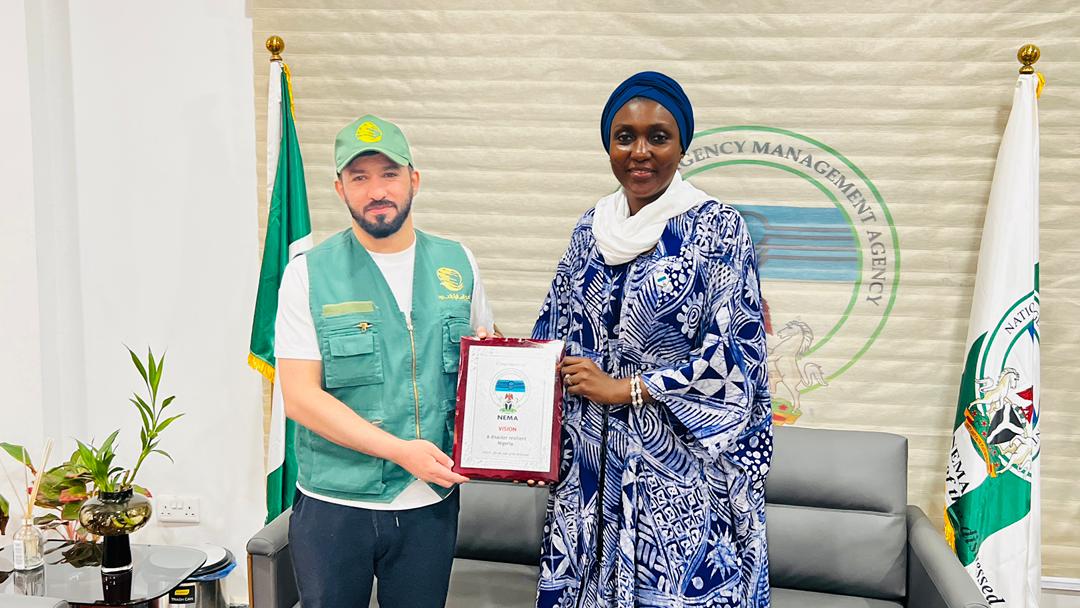
This was disclosed in Abuja when the Director-General of NEMA, Mrs. Zubaida Umar, received a delegation from KSrelief at the agency’s headquarters, where both sides reviewed ongoing collaboration and planned the next phase of direct humanitarian interventions.
Mrs. Umar commended KSrelief for its sustained support to disaster-affected and vulnerable populations in Nigeria, noting that the partnership has continued to reinforce federal humanitarian response efforts, particularly in reaching communities impacted by disasters, food insecurity, and other vulnerabilities.
KSrelief’s representative, Mr. Majeed Alanazi, said the visit was aimed at strengthening coordination with NEMA ahead of the rollout of direct food basket distribution to selected households in targeted states. He emphasized the organisation’s continued commitment to supporting vulnerable populations and improving welfare outcomes in affected communities.
According to the plan, the food assistance programme will be implemented across Yobe, Benue, Kebbi, Taraba, and Anambra States—covering both conflict-affected and food-insecure populations.
Both organisations described the initiative as part of a broader effort to deepen humanitarian reach and ensure more efficient delivery of aid to households most in need across Nigeria.
Nigeria, Saudi Arabia Deepen Humanitarian Alliance as NEMA, KSrelief Roll Out Food Aid to Five States
Five Feared Dead in Fresh Attack in Gero Area Near NIPPS of Plateau State
By: Zagazola Makama
At least five persons have been reportedly killed in an attack by armed men at a mining site in Gero Village, Gyel District of Jos South Local Government Area of Plateau State.
Sources said that the attackers were armed Fulani assailants who stormed the mining site and opened fire on workers and residents in the area.
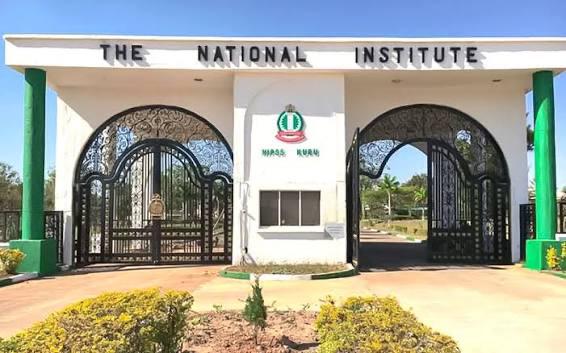
The latest attack reportedly occurred hours after an earlier assault on security personnel at the National Institute for Policy and Strategic Studies (NIPSS), Kuru, which led to the deaths of three officers.
Gero Village is said to be located about five kilometres from the NIPSS facility, raising concerns among residents over the proximity of repeated security incidents in the area.
Meanwhile, tensions remain high in surrounding communities as residents called for increased security presence to prevent further escalation.
Five Feared Dead in Fresh Attack in Gero Area Near NIPPS of Plateau State
Three Police Officers Killed as IED Explodes in Zamfara State
By: Zagazola Makama
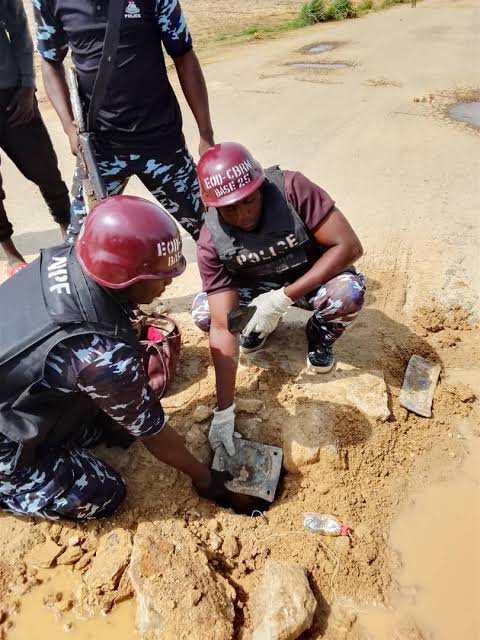
Three police officers have been killed following the explosion of an improvised explosive device (IED) along the Anka–Bagega road in Anka Local Government Area of Zamfara State.
Security sources said the incident occurred on June 15 at about 5:05 p.m. when the Officer-in-Charge of the Explosive Ordnance Disposal (EOD) unit, SP Abdulrazak Musa Hassan, led a team to the area to detonate a suspected explosive device believed to have been planted by armed bandits.
The team, which included personnel of the Violent Crime Response Unit (VCRU), was reportedly conducting a controlled clearance operation using an armoured personnel carrier when the vehicle accidentally triggered the explosive device.
The explosion resulted in the immediate death of SP Abdulrazak Musa Hassan, Inspector Murtala Musa of the VCRU, and Inspector Auwal Ahmad attached to the EOD unit.
Their bodies were evacuated to the Federal Medical Centre (FMC), Gusau, for post-mortem examination.
Authorities said the remains of the officers have been deposited at the hospital morgue, while investigations are ongoing to determine the circumstances surrounding the incident.
Security operations in the area have since been reinforced as efforts continue to clear the road and prevent further attacks.
Three Police Officers Killed as IED Explodes in Zamfara State

Nigeria, Saudi Arabia Deepen Humanitarian Alliance as NEMA, KSrelief Roll Out Food Aid to Five States

Five Feared Dead in Fresh Attack in Gero Area Near NIPPS of Plateau State

Herdsmen Agree to Pay ₦1 Million Compensation After Farmland Destruction in Plateau State

Roger Federer’s Shock as DNA Results Reveal Myla and Charlene Are Not His Biological Children

THE PLIGHT OF FARIDA

FAILED COUP IN BURKINA FASO: HOW TRAORÉ NARROWLY ESCAPED ASSASSINATION PLOT AMID FOREIGN INTERFERENCE CLAIMS
-
 News2 years ago
Roger Federer’s Shock as DNA Results Reveal Myla and Charlene Are Not His Biological Children
-
Opinions4 years ago
THE PLIGHT OF FARIDA
-
 News1 year ago
FAILED COUP IN BURKINA FASO: HOW TRAORÉ NARROWLY ESCAPED ASSASSINATION PLOT AMID FOREIGN INTERFERENCE CLAIMS
-

 News2 years ago
EYN: Rev. Billi, Distortion of History, and The Living Tamarind Tree
-
 Opinions5 years ago
POLICE CHARGE ROOMS, A MINTING PRESS
-

 ACADEMICS2 years ago
A History of Biu” (2015) and The Lingering Bura-Pabir Question (1)
-

 Columns2 years ago
Army University Biu: There is certain interest, but certainly not from Borno.
-

 Politics1 year ago
2027: Why Hon. Midala Balami Must Go, as Youths in Hawul and Asikira/Uba Federal Constituency Reject ₦500,000 as Sallah Gift
