
News
Nigeria On Course to Develop National Biodiversity Strategy and Action Plan- FG

Nigeria On Course to Develop National Biodiversity Strategy and Action Plan- FG
By: Michael Mike
The Federal Government has said the nation is on course to develop a practical, inclusive and ambitious National Biodiversity Strategy and Action Plan.
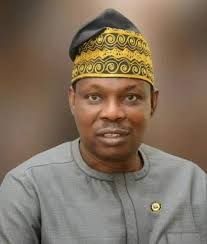
Speaking in Abuja on Thursday at the Inception Workshop for the Kunming-Montreal Global Biodiversity Framework( KMGBF) Early Action Support Project, the Minister of State for Environment, Dr. Iziaq Salako said: “Biodiversity underpins life on earth, from human health and well-being to food and water security to economies and livelihoods. Yet biodiversity is severely threatened and declining at unprecedented levels due to increasing pollution, resource exploitation, land use change, invasive species, and climate change, among other factors.
He noted that: “National Biodiversity Strategies and Action Plans (NBSAPs) are the policy instruments for national implementation of the Convention on Biological Diversity (CBD). To accelerate action to achieve the Vision for Biodiversity of living in harmony with nature by 2050, NBSAPs must be rapidly aligned with the new goals and targets of the Kunming-Montreal Global Biodiversity Framework.”
He added that: “Having seen the strength of Nigeria’s ambition and technical expertise, I am confident that we can lead the way once again and develop a practical, inclusive and ambitious National Biodiversity Strategy and Action Plan.”
He told the participants that “is your job here today to kickstart this process. We need to ensure that we instrumentalize and accelerate action across sectors and society toward the realization of the goals and targets of the Global Biodiversity Framework.
“I would like to recognize the vital contributions of GEF, UNEP, FAO and other Partners for providing financial and technical support package that focuses on four components: NBSAP alignment, monitoring systems, policy & institutional coherence, and biodiversity finance.
“Our role here today is to focus on a rapid review of our NBSAP using a whole-of-government approach to identify the level of alignment of national goals and targets with those of the Kunming-Montreal GBF and relevant Sustainable Development Goals, and make adjustments where appropriate.”
Salako said: “I charge you to ensure our National Targets are refined to become measurable, costed, and spatially-explicit by using best practices in gender mainstreaming, stakeholder engagement, engaging with Indigenous peoples and local communities, and apply a whole-of-government approaches. Together, I am sure you can make that happen.”
Early the representatives of the Country Representatives of United Nations Food and Agriculture Organisation (FAO), Nifesimi Ogunkua said FAO was excitement about Nigeria’s readiness to incorporate agrifood into its NBSAPs.
She noted that: “This forward-thinking approach aligns with FAO’s mission to promote biodiversity conservation, sustainable natural resources management and ensure sustainable agricultural practices globally. Nigeria’s dedication to integrating agrifood into its national strategies is a commendable step toward building a resilient and thriving biodiversity conservation.”
She noted that: “We, at FAO, stand shoulder to shoulder with Nigeria in this endeavor. Our commitment extends beyond mere words, as we pledge our full support to the development, implementation, and evaluation of the NBSAPs. We recognize the importance of a holistic approach, and we are ready to collaborate closely with Nigeria to achieve these goals.
“To facilitate this collaborative effort, FAO has developed an impressive array of tools, frameworks, and approaches specifically designed to support the realization of the global biodiversity targets. These resources serve as invaluable assets, empowering nations to navigate the complexities of sustainable development. We believe that by leveraging these tools, Nigeria can make significant strides in achieving its agrifood integration goals.”
She disclosed that: “In Nigeria, FAO operates within the framework of the Country Programming Framework (CPF), a comprehensive guide that directs our support to the country. It is heartening to note that this framework aligns seamlessly with the broader objective of mainstreaming biodiversity. Through the CPF, we aim to contribute to the development of a robust agrifood system that not only meets the needs of the present but also ensures the well-being of future generations.
“We understand the importance of collective action in achieving sustainable development goals. Our doors are open, and we are ready to work hand in hand with government agencies, non-governmental organizations, and other stakeholders to ensure the successful mainstreaming of agrifood systems in the NBSAPs.”
She added that: “Nigeria’s commitment to integrating agrifood into its NBSAPs is a testament to its vision for a sustainable and prosperous future. FAO is honoured to be a part of this journey, and we look forward to witnessing the positive impact of our collective efforts on biodiversity conservation in Nigeria.”
Nigeria On Course to Develop National Biodiversity Strategy and Action Plan- FG


Operation Enduring Peace Conducts Show of Force, Secures Church Services in Jos
By Zagazola Makama
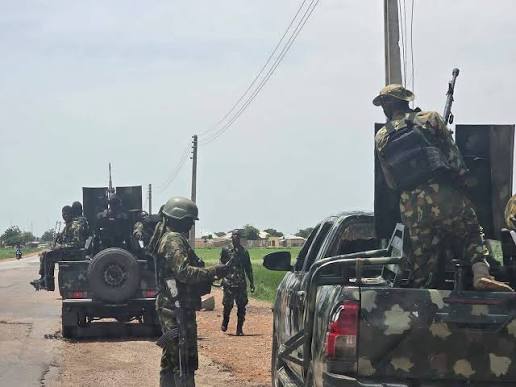
Troops of Operation ENDURING PEACE (OPEP), in collaboration with the Nigerian Air Force, Nigeria Security and Civil Defence Corps (NSCDC) and other security agencies, have conducted a show-of-force operation across major flashpoints in Jos and the Bukuru General Area of Plateau State.
The operation was conducted on Sunday, August 23, 2026, as part of measures to provide security for church services and prevent criminal elements from exploiting the period to carry out attacks.
According to a security source, personnel of OPEP, working with troops of 551 Nigerian Air Force Station, Keystone, NSCDC and other sister agencies, conducted the operation across identified flashpoints within Jos metropolis and the Bukuru General Area.
The show of force was aimed at reassuring residents and worshippers while denying criminal elements freedom of action during church services.
The security teams maintained visible patrols and presence around strategic locations to deter potential threats and ensure the safe movement of worshippers.
The operation was conducted successfully and without any reported security incident.
Security authorities said the situation remained calm throughout the exercise.
Operation Enduring Peace Conducts Show of Force, Secures Church Services in Jos
Man Killed in Attack by suspected Fulani Bandits at Illegal Mining Site in Plateau
By Zagazola Makama
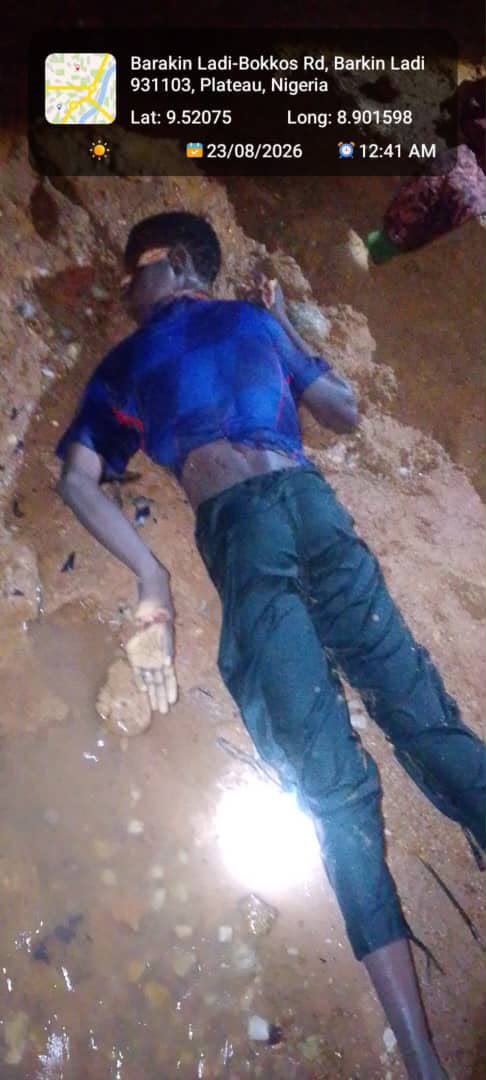
A man has been killed in an alleged attack by suspected Fulani Bandits at an illegal mining site around Angwan Izalla village in Barkin Ladi Local Government Area of Plateau State.
The incident occurred at about 5:20 a.m. on Sunday, August 23, 2026, following a report of an attack allegedly involving suspected Fulani herders in the area.
According to a security source, troops of Sector 4, Operation ENDURING PEACE (OPEP), responded to the report and immediately moved to the scene.
Upon arrival, the troops discovered the corpse of a man identified as Abdulmumuni Ibrahim, who had sustained machete wounds to his head and hand.
The circumstances surrounding the attack and the identity of the assailants were not immediately established.
The deceased’s remains were subsequently evacuated by members of his family for burial.
Security personnel have commenced a manhunt for the suspected attackers, while efforts are ongoing to establish the motive for the killing and apprehend those responsible.
The incident is being investigated as security agencies continue to monitor the area.
Man Killed in Attack by suspected Fulani Bandits at Illegal Mining Site in Plateau
OPEP Troops Recover Cattle Rustled by Berom Militia, Return Livestock to Owners in Plateau
By Zagazola Makama
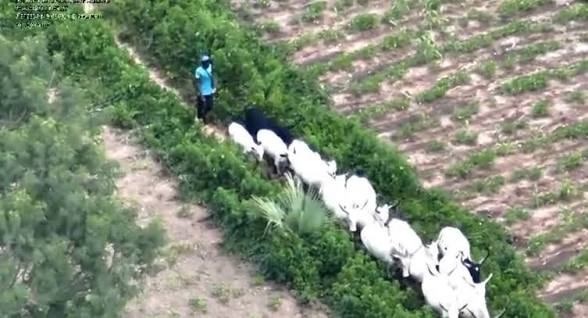
Troops of Sector 9, Operation ENDURING PEACE (OPEP), have recovered a herd of cattle reportedly rustled by Berom militia from Nteng village in Quan’pan Local Government Area of Plateau State.
The recovery followed a report of cattle rustling received by the troops at about 5:05 p.m. on August 22, 2025.
According to a security source, troops immediately commenced a pursuit of the suspected cattle rustlers and successfully traced the movement of the stolen livestock.
The troops also deployed a drone to monitor the movement of the rustled cattle from the air, enabling them to track the livestock until they were successfully recovered.
Following the recovery operation, the cattle were handed over to their rightful owners.
The operation highlights the continued efforts by Operation ENDURING PEACE to tackle cattle rustling and other forms of criminality threatening rural communities and livelihoods across Plateau State.
Security personnel are maintaining surveillance in the area to prevent further incidents and ensure the safety of residents and livestock owners.
OPEP Troops Recover Cattle Rustled by Berom Militia, Return Livestock to Owners in Plateau

Kidnappers Kill Two Locals, Abduct Doctor and Hakimi’s Wife in Kaduna

Operation Enduring Peace Conducts Show of Force, Secures Church Services in Jos

Man Killed in Attack by suspected Fulani Bandits at Illegal Mining Site in Plateau

Roger Federer’s Shock as DNA Results Reveal Myla and Charlene Are Not His Biological Children

THE PLIGHT OF FARIDA

FAILED COUP IN BURKINA FASO: HOW TRAORÉ NARROWLY ESCAPED ASSASSINATION PLOT AMID FOREIGN INTERFERENCE CLAIMS
-
 News2 years ago
Roger Federer’s Shock as DNA Results Reveal Myla and Charlene Are Not His Biological Children
-
Opinions5 years ago
THE PLIGHT OF FARIDA
-
 News1 year ago
FAILED COUP IN BURKINA FASO: HOW TRAORÉ NARROWLY ESCAPED ASSASSINATION PLOT AMID FOREIGN INTERFERENCE CLAIMS
-

 News2 years ago
EYN: Rev. Billi, Distortion of History, and The Living Tamarind Tree
-
 Opinions5 years ago
POLICE CHARGE ROOMS, A MINTING PRESS
-

 ACADEMICS2 years ago
A History of Biu” (2015) and The Lingering Bura-Pabir Question (1)
-

 Columns2 years ago
Army University Biu: There is certain interest, but certainly not from Borno.
-

 Politics1 year ago
2027: Why Hon. Midala Balami Must Go, as Youths in Hawul and Asikira/Uba Federal Constituency Reject ₦500,000 as Sallah Gift
