
News
PRESIDENT TINUBU: I HAVE NO CABAL OR SPONSORS TO COMPENSATE

PRESIDENT TINUBU: I HAVE NO CABAL OR SPONSORS TO COMPENSATE
By: Our Reporter
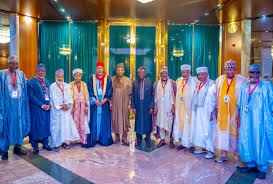
President Bola Tinubu has allayed fears of manipulation by any interest group in the ongoing economic reforms, saying his campaign was self-sponsored, without strings, or indebtedness to any individual or institution.
The President, who received a delegation of Islamic leaders led by Sheikh Bala Lau, at the State House on Thursday, said his victory at the polls was purely by divine intervention, careful planning, and diligence in getting support from Nigerians.
“I have no cabal. I have no sponsors. The money I spent on the elections was my personal fortune. At some point, the odds were against me; banks were locked. But Allah, the Almighty God, said I will be the President. Mine is to now follow the leading and teaching of the Almighty God.
“One of the most potent elements of defence is a good conscience. It is also a defence against corruption.
“What should be uppermost in our minds is the future of our children. We have a lot to teach them on what it takes to be a good citizen and what it takes to be a responsible citizen,’’ the President stated.
President Tinubu said protests, fuelled by anger and hate, could degenerate into violence and set the country backwards.
“We are reworking the social welfare scheme to reach the ward level, which is the closest to our people. We are going to ensure that we re-establish connection with the wards, again, so that we can give allowances to the poor and the vulnerable.
“The student loans will pay for school fees. There will be monetary support for the education of our children. The consumer credit will support citizens to buy cars and houses, and they can repay gradually.
“We have increased the minimum wage by more than 100 percent,’’ the President said.
President Tinubu said the sponsors of protests place their selfish ambitions above the national interest.
“The sponsors of protests do not love our country. They have no love for the nation. They do not understand citizenship. They have alternative passports.
“They are in different parts of the world holding meetings virtually.
“We do not want to turn Nigeria into Sudan. We are talking about hunger, not burials. We have to be careful. We should be careful with premature politics; politics of hate, and anger.
“The internet has made it possible to hold meetings in artificial settings. They hold meetings and sponsor anger,’’ the President told the religious leaders.
In his remarks, the leader of the delegation, Sheikh Bala Lau, assured the President of support with prayers and more sensitization.
“Peace is paramount for us in the country. The first thing Abraham asked God for was peace and guidance,’’ Sheikh Lau noted.
PRESIDENT TINUBU: I HAVE NO CABAL OR SPONSORS TO COMPENSATE


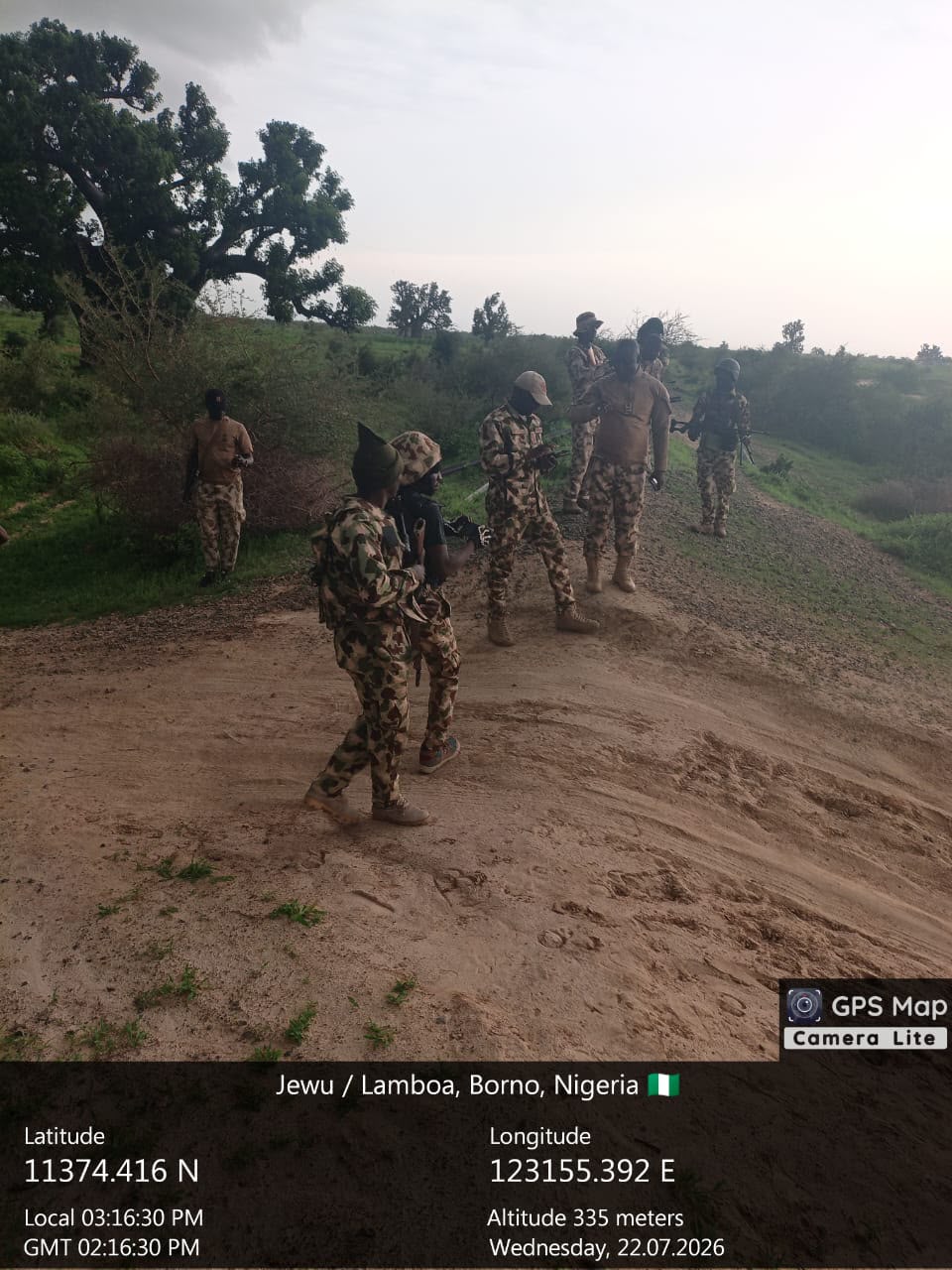
Troops conduct clearance patrol in Borno
By: Our Reporter
Following the clearance mission, the patrol occupied a tactical ambush position along a suspected terrorist route to monitor movement and deter any attempt by insurgents to infiltrate the area.
Military sources described the patrol as hitch-free, adding that troops maintained a high level of vigilance throughout the operation.
The clearance mission forms part of the ongoing Operation Desert Sanity V, which is aimed at sustaining pressure on Boko Haram and ISWAP elements, preventing their return to previously cleared locations, and creating a secure environment for civilian populations to carry out their livelihoods.
Sources added that the general security situation in the area remained calm but fluid, while the morale and fighting efficiency of the troops were reported to be satisfactory.
Troops conduct clearance patrol in Borno
Troops Arrest Two Suspected Boko Haram Members During Clearance Operation in Borno
By Zagazola Makama
Troops of the Joint Task Force North East, Operation HADIN KAI, have arrested two suspected Boko Haram members during a clearance operation conducted along the Mandaragirau–Kurtum axis in Borno State.
Security sources told Zagazola Makama that the operation was carried out at about 10:00 a.m. on July 22 by troops of the 162 Amphibious Battalion in conjunction with members of the Civilian Joint Task Force (CJTF), local hunters and the Vigilante Group of Nigeria (VGN).
The joint security team, mounted on a gun truck and 10 motorcycles, conducted the operation along the Mandaragirau–Kurtum route, extending to the Nguma area as part of ongoing efforts to clear suspected terrorist hideouts and deny insurgents freedom of movement.
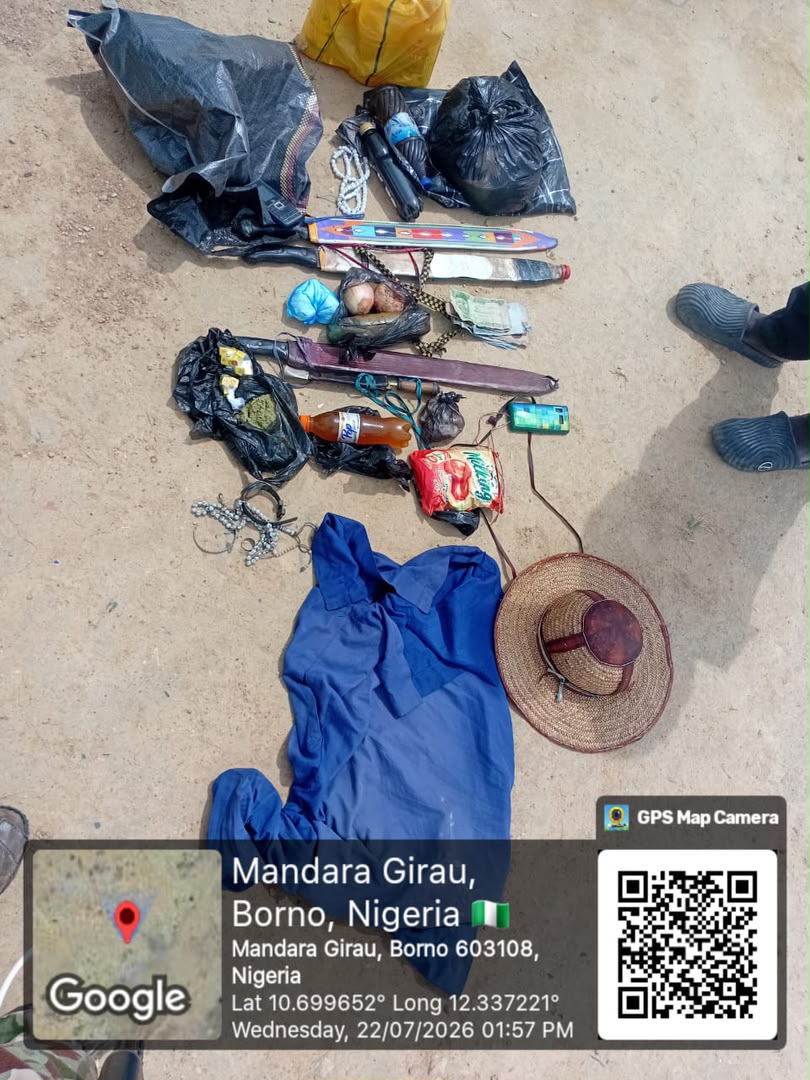
During the operation, troops apprehended two suspected Boko Haram members identified as Sidi Shagari, 42, and Abubakar Sadiq, popularly known as “Buba,” 25, both natives of Birni in Biu Local Government Area of Borno State.
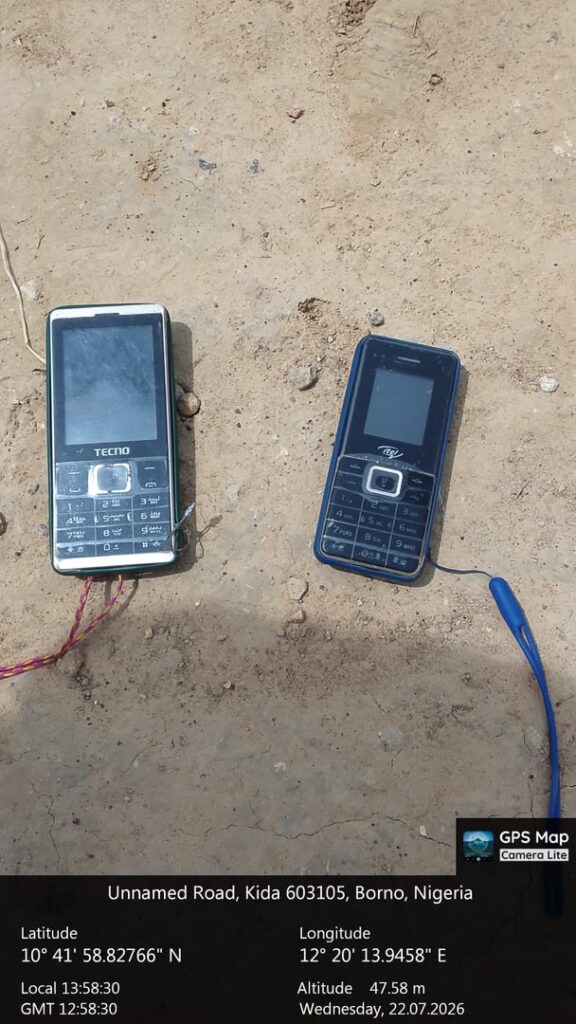
Items recovered from the suspects included two mobile phones, three cutlasses, one dagger, and the sum of N9,500.
The suspects and the recovered exhibits have been taken to the Abogo Largema Cantonment for further investigation and other necessary actions.
Military sources said the operation forms part of the ongoing Operation Desert Sanity V, a theatre-wide offensive aimed at disrupting terrorist activities, dismantling insurgent networks, and enhancing security across the North-East.
The sources added that although the general security situation across the theatre remains calm, it is still unpredictable, with troops maintaining a high level of vigilance while morale and fighting efficiency remain high.
Troops Arrest Two Suspected Boko Haram Members During Clearance Operation in Borno
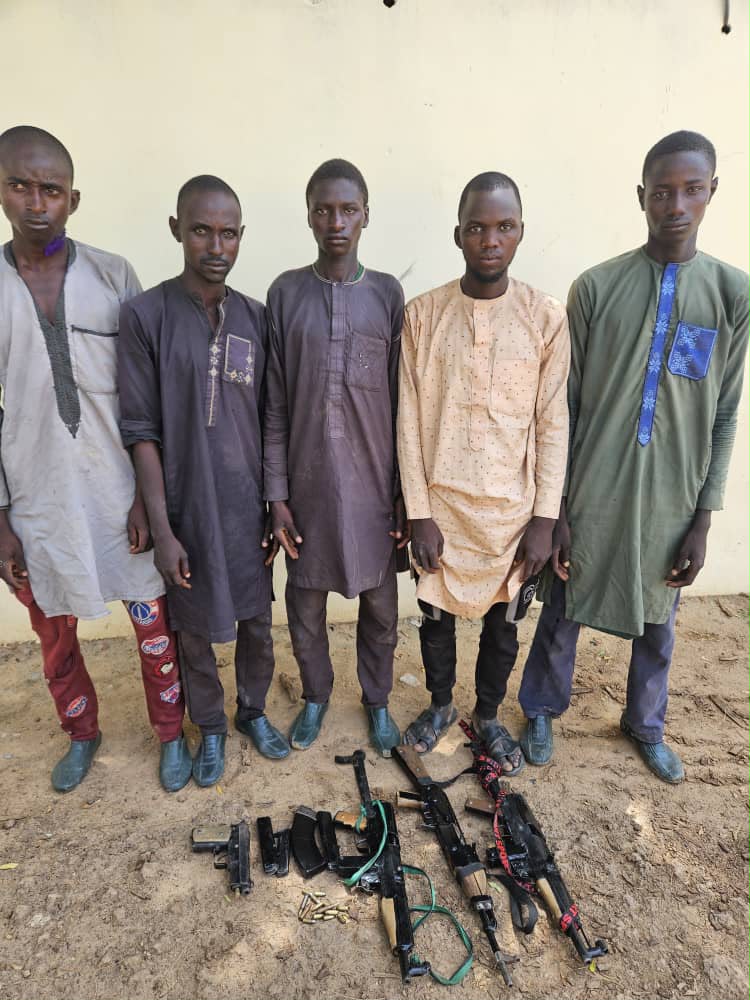
Troops, Hunters Arrest Five Suspected Kidnappers, Recover Firearms in Yobe
By Zagazola Makama
Troops of the Joint Task Force North East, Operation HADIN KAI, in collaboration with the Yobe State Hunters Group, have arrested five suspected kidnappers during a coordinated raid operation in Fune Local Government Area of Yobe State.
Security sources told Zagazola Makama that the operation was conducted at about 2:00 p.m. on July 23 following credible intelligence on the activities of suspected kidnappers in Jegalari village.
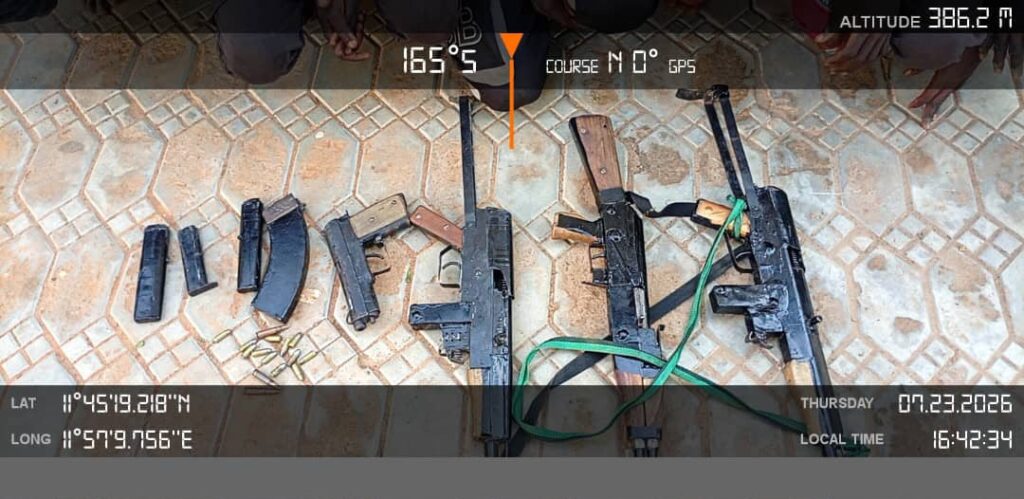
The sources said troops of the 233 Battalion, deployed at Damaturu Military Cantonment, stormed the hideout in conjunction with the local hunters, leading to the arrest of five suspects identified as Hassan Lawan (28), Isah Bello (30), Haruna Suleiman (20), Ibrahim Bello (20), and Ahmadu Haruna (19).
During the operation, security personnel recovered three locally fabricated AK-47 rifles, one locally made pistol, two rounds of 7.62mm Special ammunition, 12 rounds of 9mm pistol ammunition, three Tecno mobile phones, and one Android phone.
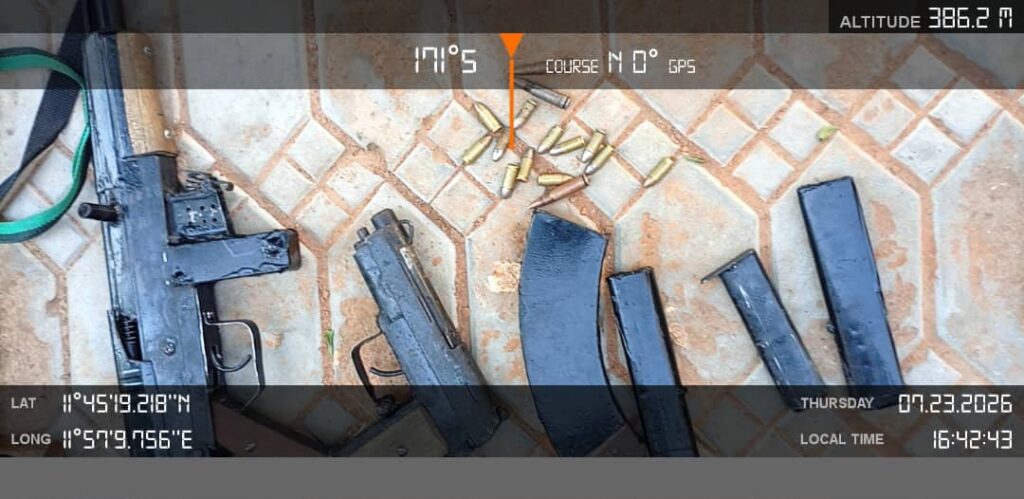
Preliminary investigation revealed that the suspects are indigenes of Ririn Village in Rano Local Government Area of Kano State. They identified themselves as members of the Fulani ethnic group and claimed to be cattle rearers.
The suspects and the recovered exhibits have been taken into military custody for further investigation to determine their involvement in kidnapping and other criminal activities.
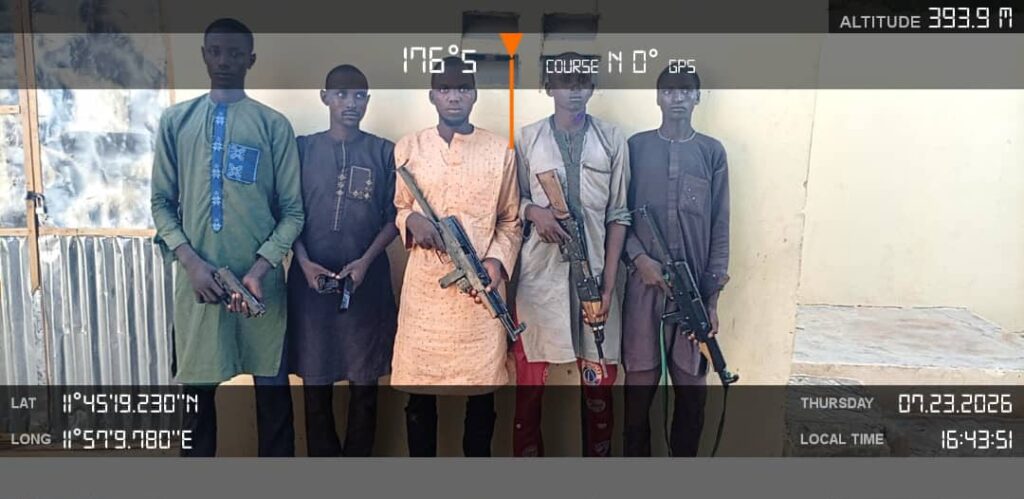
Military sources said the successful operation forms part of ongoing intelligence-driven efforts by Operation HADIN KAI and other security stakeholders to dismantle kidnapping and criminal networks operating across the North-East and adjoining states.
The security situation in the area was reported to be calm after the operation, although security forces remain on alert to prevent any retaliatory or related criminal activities.
Troops, Hunters Arrest Five Suspected Kidnappers, Recover Firearms in Yobe

Troops conduct clearance patrol in Borno

Air Component OPHK Neutralises Terrorists in Precision Night Strike on ISWAP Hideout in Southern Lake Chad

1 Brigade dismantles terrorist camps, seizes heavy weapons in sustained Zamfara offensive

Roger Federer’s Shock as DNA Results Reveal Myla and Charlene Are Not His Biological Children

THE PLIGHT OF FARIDA

FAILED COUP IN BURKINA FASO: HOW TRAORÉ NARROWLY ESCAPED ASSASSINATION PLOT AMID FOREIGN INTERFERENCE CLAIMS
-
 News2 years ago
Roger Federer’s Shock as DNA Results Reveal Myla and Charlene Are Not His Biological Children
-
Opinions4 years ago
THE PLIGHT OF FARIDA
-
 News1 year ago
FAILED COUP IN BURKINA FASO: HOW TRAORÉ NARROWLY ESCAPED ASSASSINATION PLOT AMID FOREIGN INTERFERENCE CLAIMS
-

 News2 years ago
EYN: Rev. Billi, Distortion of History, and The Living Tamarind Tree
-
 Opinions5 years ago
POLICE CHARGE ROOMS, A MINTING PRESS
-

 ACADEMICS2 years ago
A History of Biu” (2015) and The Lingering Bura-Pabir Question (1)
-

 Columns2 years ago
Army University Biu: There is certain interest, but certainly not from Borno.
-

 Politics1 year ago
2027: Why Hon. Midala Balami Must Go, as Youths in Hawul and Asikira/Uba Federal Constituency Reject ₦500,000 as Sallah Gift
