
News
Nigeria, Rest of Africa Still in Pains of Global North’s Exploitation, FG Decries


Nigeria, Rest of Africa Still in Pains of Global North’s Exploitation, FG Decries
By: Michael Mike
The Federal Government has decried that Nigeria and in fact the whole of Africa is still in pains over decades and centuries of exploitation mostly perpetrated on the continent by Global North countries.
The Minister of State for Environment, Dr. Izaq Salako said this on Thursday in Abuja at the Validation Workshop on the National Biodiversity Targets and Indicators for Early Action Support Project to Implement the Kunming-Montreal Global Biodiversity Framework (KMGBF).
The Minister while lamenting that Africa is more vulnerable to climate change, species loss, and biodiversity destruction than other continent, said the African environment and resources, including Nigeria, is hard-hit by decades and centuries of exploitation, mostly perpetrated by other countries, especially in the global north.
Salako while giving assurance of the Nigerian government readiness to have a different narrative, said the country is firm in its resolve to collectively protect species threatened by over-exploitation, expand and strengthen protected areas, set smart targets and indicators as effective measures in the recovery of a natural world.
He noted that: “It is clear that we must use all of the tools at our disposal to reduce the threats to biodiversity, and the Kunming-Montreal Global Biodiversity Framework is guiding our way.
“Nigeria and the rest of African nations are leading the way to protect our planet’s biodiversity. Because Africa will be the most affected by the biodiversity and climate crisis, we are united in being the most ambitious in protecting our lands, our seas, our wildlife, and our people.
“This is our role today, as trustees of the Nigerian people to shine the beacon of hope for the natural world. Let ambition guide you as you validate the goals, targets and indicators that will guide the Nigeria response to the biodiversity crisis.”
He added that the National Biodiversity Strategy and Action Plan (NBSAP) is the policy instrument for national implementation of the Convention on Biological Diversity (CBD) and to accelerate action towards achieving the vision for biodiversity and living in harmony with nature by 2050, noting that NBSAP must be rapidly aligned and validated with the new goals and targets of the Kunming-Montreal Global Biodiversity Framework (KMGBF).
He said: “The KMGBF must be translated into bold action. National goals, targets and measures must match the urgency of the crisis. Let us unite to ensure that our call for ambition for the expansion of protected areas is matched with equal ambition on finance, on halting human-induced extinction of wild species, on mutual accountability to halt forest loss and degradation, on securing species recovery and the restoration of jeopardized ecosystems.”
The Minister said that having seen the strength of Nigeria’s ambition and technical expertise, there is belief that it can implement the ambitious National Biodiversity Targets, promising that: “The Federal Government of Nigeria would continue to support the effective implementation of such instruments like the NBSAP which is crucial to building sustainability and conservation in our country.
“We will keep the momentum in the ECOWAS coordination process particularly in the alignment NBSAP National targets to global targets and subsequent updating of NBSAP as well as in the ratification of the Biodiversity Beyond National Jurisdiction (BBNJ) Treaty.
“I am counting on all of you to rise to the occasion in the spirit of collective action so that our country can continue to deliver on its obligations under the Convention on Biological Diversity and other related multi-lateral agreements.”
Nigeria, Rest of Africa Still in Pains of Global North’s Exploitation, FG Decries


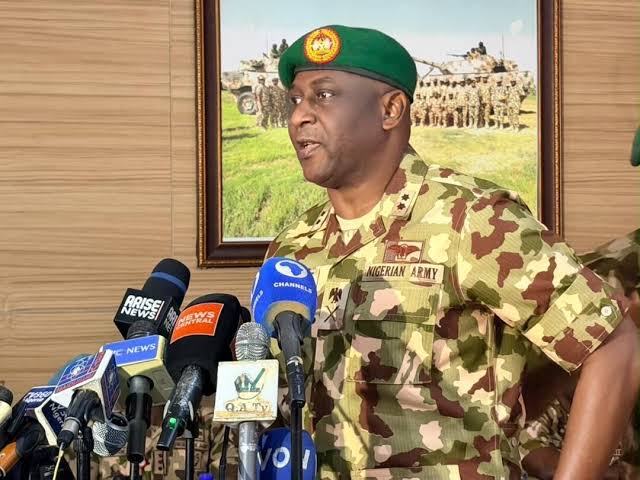
Ajose pledges continuity, sustained pressure against terrorists as new OPHK commander
By Zagazola Makama
The newly appointed Theatre Commander, North East Joint Task Force, Operation HADIN KAI (OPHK), Maj.-Gen. Ibikunle Ajose, has pledged to sustain the gains recorded in the North-East while deepening cooperation with the Borno State Government, humanitarian organisations, international partners, hybrid forces and the media.
Ajose made the commitment in Maiduguri during his introduction and stakeholders’ engagement following the formal transition of command from the outgoing Theatre Commander, Maj.-Gen. Abdulsalam Abubakar.
He said the change in leadership would not alter the fundamental mission of Operation HADIN KAI, which is to facilitate the restoration of normalcy in the North-East and create the conditions necessary for socio-economic activities to thrive.
According to him, the progress already recorded in the Theatre provided a foundation upon which the new command would build.
“I must admit that visible and appreciable progress has been made towards achieving this mandate, and I convey my sincere appreciation to the outgoing Theatre Commander for his leadership, steadfastness and professional example that has made those gains possible,” Ajose said.
He pledged to consolidate the achievements of his predecessor while ensuring that the military campaign remained focused on protecting communities, sustaining pressure on terrorist elements and creating the conditions for displaced persons to return home safely.
Ajose: I am not a stranger to the North-East
The new Theatre Commander said his previous appointments had given him considerable familiarity with the North-East, its people, terrain and the security challenges confronting the region.
Ajose previously served as Commander of 5 Brigade and as Chief of Staff of 4 Special Forces Command in Borno State.
“I am familiar with the terrain, the people and the complexity of the threats. I therefore assume this command with some knowledge of this Theatre,” he said.
He added that his experience from various command and staff appointments in the Nigerian Army would guide his approach to the responsibilities of leading Operation HADIN KAI.
Ajose said his immediate objective would be to build upon the operational gains recorded under Abubakar rather than disrupt the structures and partnerships that had contributed to the progress in the Theatre.
Commander pledges continuity with Borno Government
Ajose gave particular assurance of continuity in the strategic partnership between the Theatre Command and the Borno State Government.
Addressing Gov. Babagana Umara Zulum, he acknowledged the progress recorded in the state, including the reopening of markets, functioning of schools, repatriation of displaced citizens and stabilisation of communities affected by the insurgency.
He said those achievements were the result of deliberate cooperation between the state government and the military.
“I pledge continuity of partnership, as milestones were achieved today, which include re-opening markets, functioning schools, repatriation and stabilization,” Ajose said.
“All these did not happen in isolation. They happened because both government chose to lead, and because the Theatre chose to work with that leadership.”
He assured the governor that the military would maintain the tradition of practical cooperation and ensure that the partnership remained focused on tangible results for the people.
Humanitarian partnership central to restoration of normalcy
Ajose also recognised the role of humanitarian organisations operating across Borno, Adamawa and Yobe states, particularly those working in difficult and insecure environments.
He described cooperation with humanitarian partners as an operational necessity rather than a ceremonial relationship, stressing that the restoration of normalcy could not be achieved by military action alone.
“To our humanitarian partners, I recognize your courage and your presence in difficult locations. Collaboration and coordination with partners like you are not a courtesy but a necessity for the good people of this region,” he said.
The Theatre Commander said he would favour direct engagement and honest dialogue whenever disagreements emerged between the military and humanitarian actors.
“Where there has been friction, I will prefer honest dialogue to silence. Where cohesion as a group, I will protect it,” he said.
Ajose stressed that humanitarian action would remain an important component of his command’s approach to the conflict.
“Lasting peace in the North-East will not be secured by kinetic action alone. The humanitarian line of effort remains central to the return of normalcy, and I will treat it as such,” he said.
Sustained pressure on terrorists, dignified pathway for surrender
On the operational front, Ajose pledged to maintain pressure on terrorist elements who continue to choose violence while preserving an opportunity for those willing to abandon the insurgency.
“Lastly, I intend to build on the successes of my predecessor by sustaining pressure on those who still choose violence, while keeping open a dignified pathway for those who choose to surrender,” he said.
The approach, he explained, would combine military pressure against terrorist groups with a structured opportunity for fighters and their families who abandon violence to surrender and pursue a peaceful return to society.
He also pledged to prioritise the protection of vulnerable civilians and support returns of displaced populations to their ancestral communities.
According to him, such returns must be voluntary, safe and sustainable, with the security environment sufficiently stabilised to allow communities to rebuild their lives.
Foreign partners, hybrid forces assured of continuity
The new Theatre Commander extended the command’s appreciation to Nigeria’s international partners, particularly the United Kingdom and the British Defence Staff for Africa, as well as the hybrid forces supporting the counter-insurgency campaign.
He said their assistance had contributed to strengthening the operational capabilities of Operation HADIN KAI.
“To our foreign partners, the United Kingdom and the British Defence Staff for Africa, as well as the hybrid forces, I extend the appreciation of this Theatre Command for the successful support that has strengthened our operations,” he said.
Ajose assured the partners that the Theatre Command would maintain continuity in its engagements and seek to translate existing cooperation into greater operational effect.
“This command will remain a reliable partner and will work with you to ensure that our cooperation produces greater operational effect in the discharge of the Operation HADIN KAI mandate,” he said.
Ajose asks media for fairness, accuracy and responsibility
The new commander also placed considerable emphasis on the role of the media in the counter-insurgency campaign, urging journalists to exercise fairness, accuracy and responsibility in reporting security developments.
He said public confidence was itself an important component of the operational environment and that residents of the North-East deserved information that would help them understand developments without unnecessarily inflaming tensions.
“I ask for fairness, accuracy and responsibility. Public confidence is part of the battle space, and the good people of the North-East deserve information that informs, and not information that inflames,” Ajose said.
He sought the continued partnership of journalists and other stakeholders, offering accessibility and clarity of purpose in return.
“I ask from you what you gave the outgoing Theatre Commander: that is openness, operational and goodwill, and in return I offer accessibility, clarity of purpose, and a willingness to work with every partner whose objective is peace,” he said.
“There is no impossibility for him who will try”
Ajose concluded his remarks by drawing inspiration from a statement associated with Alexander the Great, which he described as a personal mantra.
“There is no impossibility for him who will try. Therefore, I shall continue to try,” he said.
He thanked stakeholders for their presence and support as he assumed command of the Theatre.
The transition effectively places Ajose at the helm of Operation HADIN KAI at a stage when the military campaign is increasingly being pursued through a combination of sustained combat operations, intelligence-led actions, humanitarian coordination, government support, strategic partnerships and efforts to facilitate the safe return of displaced communities.
Ajose pledges continuity, sustained pressure against terrorists as new OPHK commander
News
Outgoing OPHK commander lauds Zagazola other media for their courage, professionalism and objective coverage
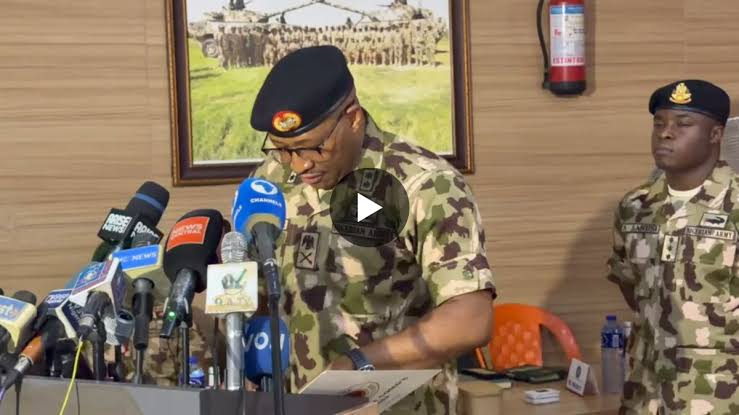
Outgoing OPHK commander lauds Zagazola other media for their courage, professionalism and objective coverage
By Zagazola Makama
The outgoing Theatre Commander, North East Joint Task Force, Operation HADIN KAI (OPHK), Maj.-Gen. Abdulsalam Abubakar, has commended the Zagazola Media Network and other media organisations for their courage, professionalism and objective coverage of the counter-insurgency campaign in the North-East.
Abubakar gave the commendation on Tuesday during his farewell engagement with stakeholders in Maiduguri, as he formally handed over the command of Operation HADIN KAI to the incoming Theatre Commander, Maj.-Gen. Ibikunle Ajose.
The Theatre Commander specifically acknowledged the media’s consistent presence in the Theatre, including in some of the most difficult and remote operational locations, where journalists have continued to report the realities of the conflict and the efforts of troops, humanitarian actors and affected communities.
“To the gentlemen of the press, I thank you for your consistent presence in this Theatre and for helping the public appreciate both the cost and progress of this campaign,” Abubakar said.
He particularly recognised the efforts of journalists who had travelled to difficult frontline locations, including Kareto and Ngoshe, to document developments and bring the experiences of soldiers, communities and other stakeholders to the attention of the wider public.
“You reported from the most difficult locations, including Kareto, Ngoshe and other remote areas, bringing to light the stories of our troops, our partners and the communities we serve, and holding us to account where it mattered,” he said.
Commander praises Zagazola’s frontline coverage
Abubakar’s remarks amounted to a strong recognition of the role played by specialised security-focused media organisations, particularly the Zagazola Media Network, in keeping the public informed about developments in the North-East.
The Theatre Commander said the media had maintained what he described as fair, objective and unbiased reportage, noting that balanced reporting had helped the public better understand the realities of the counter-insurgency campaign.
“You have maintained fair, objective and unbiased reportage. Your balanced reporting has enlightened the populace, thereby discrediting fake news and terrorist propaganda,” he said.
His remarks underscored the importance of credible journalism in an operating environment where misinformation, disinformation and terrorist propaganda can influence public perception, undermine confidence and create confusion around security operations.
Rather than merely reporting battlefield developments, Abubakar noted that the media had also helped to tell the wider story of the conflict documenting the sacrifices of troops, the resilience of communities, the contributions of partners and the progress being made towards restoring normalcy.
The outgoing commander said responsible journalism remained critical to ensuring that the public understood both the challenges and progress of the military campaign.
He urged journalists to sustain the same standards of fairness, courage and professional responsibility under the incoming Theatre Commander.
“I urge you to continue covering this Theatre with the same fairness, courage and sense of responsibility you extended to me, and to accord the incoming Theatre Commander the same professional cooperation in the interest of peace in the North-East,” he said.
The appeal comes as Maj.-Gen. Ibikunle Ajose assumes command of Operation HADIN KAI with a pledge to sustain the gains recorded under his predecessor while strengthening collaboration with the Borno State Government, humanitarian organisations, international partners, hybrid forces and the media.
Ajose has also urged journalists to maintain fairness, accuracy and responsibility in reporting security developments, stressing that public confidence forms an important part of the operational environment.
“The good people of the North-East deserve information that informs, and not information that inflames,” Ajose said.
Beyond the battlefield
For more than a decade, the North-East conflict has required the media to operate in an environment where access to frontline communities is difficult, security conditions are unpredictable and information is often contested.
The recognition by the outgoing Theatre Commander therefore places particular emphasis on the responsibility of journalists operating in the Theatre to verify information, provide context and distinguish confirmed developments from claims circulated by combatants and other interested actors.
For Zagazola Media Network and other security-focused news organisations, frontline reporting has increasingly involved documenting military operations, humanitarian developments, the return of displaced persons, community resilience and the broader efforts to restore normal economic and social activities across affected areas.
Abubakar’s commendation also reinforced the principle that effective counter-insurgency communication is not solely the responsibility of the military.
Accurate and responsible journalism, public awareness and timely clarification of false information remain important elements in preventing terrorist propaganda and misinformation from gaining influence among communities.
As the command changes hands, the outgoing Theatre Commander urged the media to maintain the professional relationship established with the Theatre while holding the new leadership accountable through credible and responsible reporting.
He stated that the battle for the North-East is fought not only on the frontline, but also in the information space, where facts, credibility and responsible journalism remain critical to sustaining public confidence and supporting the broader quest for peace.
Outgoing OPHK commander lauds Zagazola other media for their courage, professionalism and objective coverage
News
Over 7,000 IDPs return to ancestral homes as OPHK restores normalcy in Borno says Maj Gen Abubakar
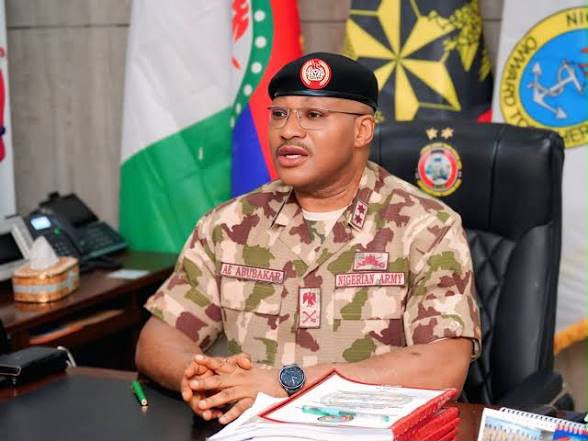
Over 7,000 IDPs return to ancestral homes as OPHK restores normalcy in Borno says Maj Gen Abubakar
By Zagazola Makama
More than 7,000 internally displaced persons (IDPs) have returned to their ancestral communities across Borno State following improved security conditions created by sustained military operations under Operation HADIN KAI (OPHK), the outgoing Theatre Commander, Maj.-Gen. Abdulsalam Abubakar, has said.
Abubakar disclosed this during his farewell and introduction engagement with humanitarian partners, representatives of the Borno State Government and members of the press in Maiduguri on Tuesday.
He said the return of the displaced families represented one of the clearest indicators of the progress recorded by the Theatre during his tenure as the 15th Theatre Commander of OPHK.
According to him, the fundamental mandate given to the Theatre was not merely to conduct military operations but to facilitate the restoration of normalcy in the North-East, allowing communities to recover and socio-economic activities to resume.
He explained that normalcy could be measured by the reopening of schools and markets, access to farmlands, restoration of essential services and, most importantly, the ability of families who had fled violence to return safely to their ancestral homes.
“Together, we have seen over 7,000 displaced families return to their ancestral communities and today, communities that were abandoned for years have been re-occupied, such that returned communities now exist in every Local Government Area of Borno State,” he said.
The development, he noted, marked a significant shift in communities that had remained largely deserted for years as a result of insurgency and the fear of attacks.
Abubakar said the return of the IDPs was made possible by the combined efforts of the military, the Borno State Government, humanitarian organisations, traditional institutions and local communities.
He stressed that the objective of military operations was ultimately to create a secure environment where civilians could reclaim their communities, rebuild their homes, cultivate their farms and restart their livelihoods.
The outgoing commander said the return of displaced families was supported by sustained counter-terrorism operations which degraded the capabilities of JAS and ISWAP across the Theatre.
Abubakar said the pressure generated by sustained military operations, combined with non-kinetic measures, had also contributed to a major wave of surrenders.
He disclosed that more than 969 JAS/ISWAP fighters and their family members surrendered within the last one year, creating another pathway through which affected communities could gradually move away from the cycle of violence.
The Theatre Commander said the restoration of security had produced visible changes in several communities across Borno.
He pointed to the reopening of trade routes and local markets, allowing residents to resume economic activities that had been disrupted by years of insurgency.
Over 7,000 IDPs return to ancestral homes as OPHK restores normalcy in Borno says Maj Gen Abubakar

Ajose pledges continuity, sustained pressure against terrorists as new OPHK commander

Outgoing OPHK commander lauds Zagazola other media for their courage, professionalism and objective coverage

Over 7,000 IDPs return to ancestral homes as OPHK restores normalcy in Borno says Maj Gen Abubakar

Roger Federer’s Shock as DNA Results Reveal Myla and Charlene Are Not His Biological Children

THE PLIGHT OF FARIDA

FAILED COUP IN BURKINA FASO: HOW TRAORÉ NARROWLY ESCAPED ASSASSINATION PLOT AMID FOREIGN INTERFERENCE CLAIMS
-
 News3 years ago
Roger Federer’s Shock as DNA Results Reveal Myla and Charlene Are Not His Biological Children
-
Opinions5 years ago
THE PLIGHT OF FARIDA
-
 News1 year ago
FAILED COUP IN BURKINA FASO: HOW TRAORÉ NARROWLY ESCAPED ASSASSINATION PLOT AMID FOREIGN INTERFERENCE CLAIMS
-

 News2 years ago
EYN: Rev. Billi, Distortion of History, and The Living Tamarind Tree
-
 Opinions5 years ago
POLICE CHARGE ROOMS, A MINTING PRESS
-

 ACADEMICS3 years ago
A History of Biu” (2015) and The Lingering Bura-Pabir Question (1)
-

 Columns3 years ago
Army University Biu: There is certain interest, but certainly not from Borno.
-

 Politics1 year ago
2027: Why Hon. Midala Balami Must Go, as Youths in Hawul and Asikira/Uba Federal Constituency Reject ₦500,000 as Sallah Gift
