
News
Religious extremism: How poisoned traditions affect sitting positions inside vehicles and Keke napep in Maiduguri

Religious extremism: How poisoned traditions affect sitting positions inside vehicles and Keke napep in Maiduguri
By: Bodunrin Kayode
Some Nigerians are so dangerously and religiously inclined that they hardly know what wrong or right mores are even within their creed. They follow religion blindly and end up sometimes worshipping the very religion instead of the Almighty God. Some fuse their vein traditions to their religions making it quite difficult for none practitioners of over 1000 other religions to understand them. That was why Jesus Christ slammed the traditionalists within the Judaism religion for refusing to recognize Him as the way, the truth and life above what they know as laws draconian or not as spelt out by their progenitor Moses.
When people bend over to add their vein traditions into their religion it becomes deadly especially when young people are involved. When the insertion of human induced traditions are coming from those who should know like Pastors, imams and Ulamas as it applies, none practitioners become more confused if they don’t know the fundamentals of their creed.
Many residents have become slaves to religion such that they hardly know the God they claim to worship and how He reasons and thinks. Some do not even know the thoughts of God towards them which are thoughts of good and not of evil. They turn themselves into guinea pigs of their religion ready to be used for wickedness instead of good like children of God or heir apparent of the kingdom of heaven. That is why many young people fall easy prey to devious politicians who use them to kill one another during electioneer period.
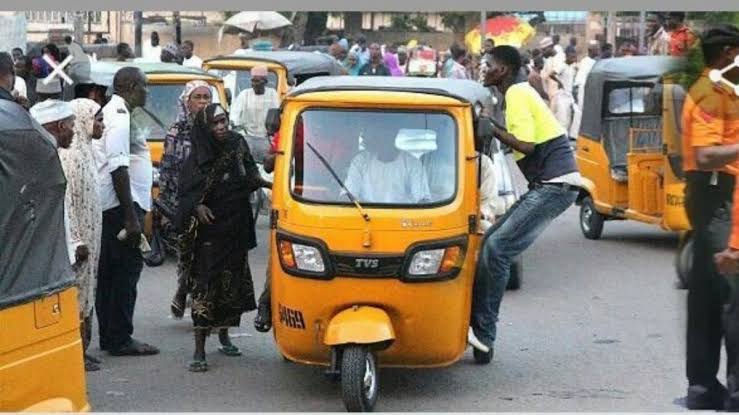
How then do young people process directives to murder a neighbor or just an opposition member during political periods without asking questions. How can one explain why people take the laws into their hands in the name of religion? People killing in the name of a weak God who cannot fight for himself. Killing women and children without a second thought. You try to protect the women and children but rather they feel they should be protecting you in the name of any strange religion. How then do you explain a girl young enough to be your daughter stepping out of a vehicle for his grand father to go in before she sits at the door of the car which is the danger zone for car crashes or even summersaults?
Strange traditions practiced in some climes
If you are a visitor to Maiduguri, don’t be surprised if a small girl little enough to be your daughter stepping out of a Keke napep and forcing her daddy’s mate to go into the keke before getting into the edge of the seat. In sanner climes the men are programmed to protect the women no matter what. Children are not allowed to sit close to the doors because of accident and security reasons. Likewise the men are supposed to take the fall for their female counterparts. This means that if a Keke napep gets into an accident with a vehicle which is stronger, the men who are at the doors are supposed to be the first victims. The women and children are not supposed to be wounded were the men are .But in Maiduguri, the women prefer to be the first victims to be wounded in the case of emergencies rather than allow the men to take the fall for them or even paying the supreme sacrifice for them to stay alive. What a strange and obscene culture not found in other states of northern Nigeria?
Religious extremism: How poisoned traditions affect sitting positions inside vehicles and Keke napep in Maiduguri


Venezuela Solidarity Group Urges U.S. to Lift Sanctions After Deadly Earthquakes
By: Michael Mike
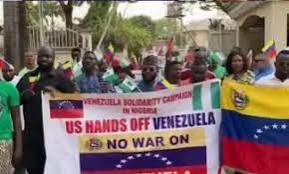
The Venezuela Solidarity Campaign in Nigeria (VSCN) has called for the immediate and unconditional lifting of United States sanctions on Venezuela, arguing that the restrictions are hampering humanitarian relief and reconstruction efforts following devastating twin earthquakes that reportedly killed more than 2,000 people and displaced over 50,000 others.
In a statement issued on Sunday and signed by its coordinator, Comrade Dimeji Macaulay, the group expressed solidarity with the Venezuelan people and the Bolivarian Government, describing the earthquakes as a humanitarian tragedy that has left widespread destruction of homes, hospitals, schools, roads and other critical infrastructure.
The organisation extended condolences to families of the victims and praised what it described as the resilience of the Venezuelan people in confronting the disaster despite years of economic hardship.
According to the VSCN, the U.S. sanctions have weakened Venezuela’s capacity to respond effectively to the emergency by limiting access to financial resources and restricting the importation of medicines, equipment, technology and other essential materials.
The group maintained that maintaining the sanctions during a humanitarian crisis amounts to collective punishment against ordinary citizens and called for their permanent removal to facilitate relief operations and long-term reconstruction.
“There can be no moral or legal justification for maintaining an economic blockade against a country struggling to save lives and rebuild after a devastating natural disaster,” the statement said, adding that every day the sanctions remain in force prolongs the suffering of the Venezuelan people.
The campaign also urged the Federal Government of Nigeria to publicly support the removal of the sanctions, strengthen diplomatic relations with Venezuela and contribute to international humanitarian efforts for victims of the disaster.
It further appealed to the African Union to reject unilateral coercive measures, describing them as violations of international law, while calling on African countries to support Venezuela’s recovery.
The group equally called on the United Nations to intensify humanitarian assistance and ensure that sanctions do not obstruct emergency relief operations or reconstruction programmes.
Beyond governments and international organisations, the VSCN appealed to trade unions, youth organisations, civil society groups and progressive political movements across Africa and the wider international community to demonstrate solidarity with Venezuela by opposing what it described as economic warfare and supporting the country’s right to determine its future without external interference.
Reaffirming its commitment to the Venezuelan cause, the organisation said it would continue campaigning until the sanctions are lifted, insisting that Venezuela’s recovery should not be hindered by external political considerations
Venezuela Solidarity Group Urges U.S. to Lift Sanctions After Deadly Earthquakes
Nigeria Condemns Killing of Two Citizens in South Africa, Warns All Options Remain Open
By: Michael Mike
The Federal Government has strongly condemned the killing of two Nigerian nationals in South Africa, accusing security operatives and criminal elements of targeting Nigerians amid rising xenophobic violence, and warning that it may be forced to activate “all options” if the attacks continue.
In a statement issued on Sunday by the spokesperson of the Ministry of Foreign Affairs, Kimiebi Ebienfa, the government demanded immediate investigations into the killings and the prosecution of those responsible, while expressing concern over what it described as an alarming pattern of extra-judicial killings and growing hostility towards Nigerians living in South Africa.
According to the ministry, one of the victims, Emeka Charles Iroegbu, was allegedly killed on June 28 in Sunnyside, Pretoria, by officers of the Tshwane Metro Police, who reportedly subjected him to what the government described as “gruesome interrogation techniques.”
The ministry said the same police officers were also allegedly responsible for the extra-judicial killing of another Nigerian, Nnaemeka Mathew Andrew Ekpenyong, on April 20, noting that despite the identities of the four officers being known to the South African Police Service, no arrests had been made.
It added that another Nigerian, Musa Yunana Joe, popularly known as “Big Joe,” was also shot dead in front of his shop on June 28 in Witbank, Mpumalanga, by yet-to-be-identified gunmen.
The government said the incidents occurred against the backdrop of increasing attacks on foreigners in South Africa, raising serious concerns about the safety of Nigerians and other foreign nationals.
It alleged that some individuals were deliberately portraying hardworking Nigerians as criminals in order to justify attacks against them.
“The continuing pattern of such terrible incidents is clearly evidence of complicity on the part of security operatives, especially officers of the Tshwane Metro Police, which raises the question of state responsibility under international law,” the statement said.
Nigeria also condemned recent comments reportedly made by a spokesperson of the South African Government, who allegedly asked Nigerians leaving South Africa because of ongoing xenophobic protests to disclose where illegal drugs were hidden.
The Ministry described the remarks as derogatory, unprofessional and capable of inciting hatred and violence against Nigerians.
It further criticised anti-immigrant groups, including March on March and Operation Dudula, accusing them of promoting violence and hate against fellow Africans and warning that their leaders could face regional and international criminal liability.
The Federal Government stressed that allegations of wrongdoing against any individual should be handled through lawful judicial processes rather than mob action or extra-judicial killings.
It called on South African authorities to urgently investigate the recent killings alongside other unresolved cases involving Nigerian victims and ensure that those responsible are prosecuted.
The government expressed sympathy to the families of the deceased and pledged to continue engaging South African authorities at the highest diplomatic level until justice is achieved.
It also advised Nigerians living in South Africa to remain calm, obey the law, stay vigilant, relocate to safer neighbourhoods where necessary, and avoid areas experiencing violent demonstrations while diplomatic efforts continue.
The ministry noted that numerous South African citizens and businesses operate freely and safely in Nigeria without harassment, arguing that South Africa has a reciprocal obligation to guarantee the safety of Nigerians legally residing in the country.
It warned that the continued targeting of Nigerians was unacceptable and stated that if the situation persisted, “all options remain on the table,” adding that some measures could be activated should what it described as “intolerance and apartheid-style behaviour” against foreigners continue.
The government, however, appealed to Nigerians at home to remain peaceful and refrain from retaliatory actions, reaffirming its commitment to dialogue and diplomacy in line with Nigeria’s foreign policy of African unity, brotherhood and solidarity.
The Ministry also disclosed that the evacuation of registered Nigerians from South Africa is ongoing.
Nigeria Condemns Killing of Two Citizens in South Africa, Warns All Options Remain Open
Six Villagers Killed as Terrorists Attack Sokoto Community, Rustle Livestock
By: Zagazola Makama
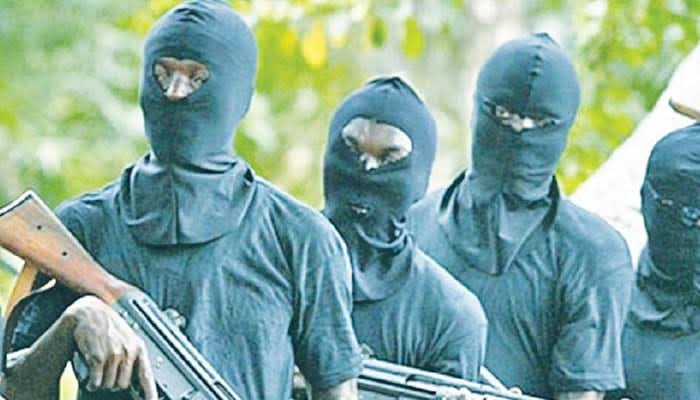
Suspected terrorists have killed six villagers and rustled an unspecified number of livestock during an attack on Koludo Village in Bodinga Local Government Area of Sokoto State.
Security sources told Zagazola Makama that combined troops of the 8 Division Strike Team, 18 Field Engineer Regiment, 28 Support Engineer Regiment, and the Nigeria Police responded to a distress call following the attack at about 7:10 a.m. on Friday.
The sources said that upon arrival at the village, the security team confirmed that the attackers had invaded the community, killed six residents, and made away with livestock before fleeing.
The troops immediately launched a pursuit of the fleeing terrorists along their withdrawal routes but were forced to halt the operation after the suspects escaped into marshy terrain, which hindered further movement.
Security forces have maintained vigilance in the area while efforts are ongoing to track down the perpetrators and prevent further attacks.
Six Villagers Killed as Terrorists Attack Sokoto Community, Rustle Livestock

Venezuela Solidarity Group Urges U.S. to Lift Sanctions After Deadly Earthquakes

Grandma, PhD Student Lead NDLEA’s Major Cocaine Busts as Agency Tightens Noose on Drug Syndicates

Nigeria Condemns Killing of Two Citizens in South Africa, Warns All Options Remain Open

Roger Federer’s Shock as DNA Results Reveal Myla and Charlene Are Not His Biological Children

THE PLIGHT OF FARIDA

FAILED COUP IN BURKINA FASO: HOW TRAORÉ NARROWLY ESCAPED ASSASSINATION PLOT AMID FOREIGN INTERFERENCE CLAIMS
-
 News2 years ago
Roger Federer’s Shock as DNA Results Reveal Myla and Charlene Are Not His Biological Children
-
Opinions4 years ago
THE PLIGHT OF FARIDA
-
 News1 year ago
FAILED COUP IN BURKINA FASO: HOW TRAORÉ NARROWLY ESCAPED ASSASSINATION PLOT AMID FOREIGN INTERFERENCE CLAIMS
-

 News2 years ago
EYN: Rev. Billi, Distortion of History, and The Living Tamarind Tree
-
 Opinions5 years ago
POLICE CHARGE ROOMS, A MINTING PRESS
-

 ACADEMICS2 years ago
A History of Biu” (2015) and The Lingering Bura-Pabir Question (1)
-

 Columns2 years ago
Army University Biu: There is certain interest, but certainly not from Borno.
-

 Politics1 year ago
2027: Why Hon. Midala Balami Must Go, as Youths in Hawul and Asikira/Uba Federal Constituency Reject ₦500,000 as Sallah Gift
