
Politics
ADC and Coalition 2027: The Fractured Ties Between Atiku, Kwankwaso, Obi, and El-Rufai

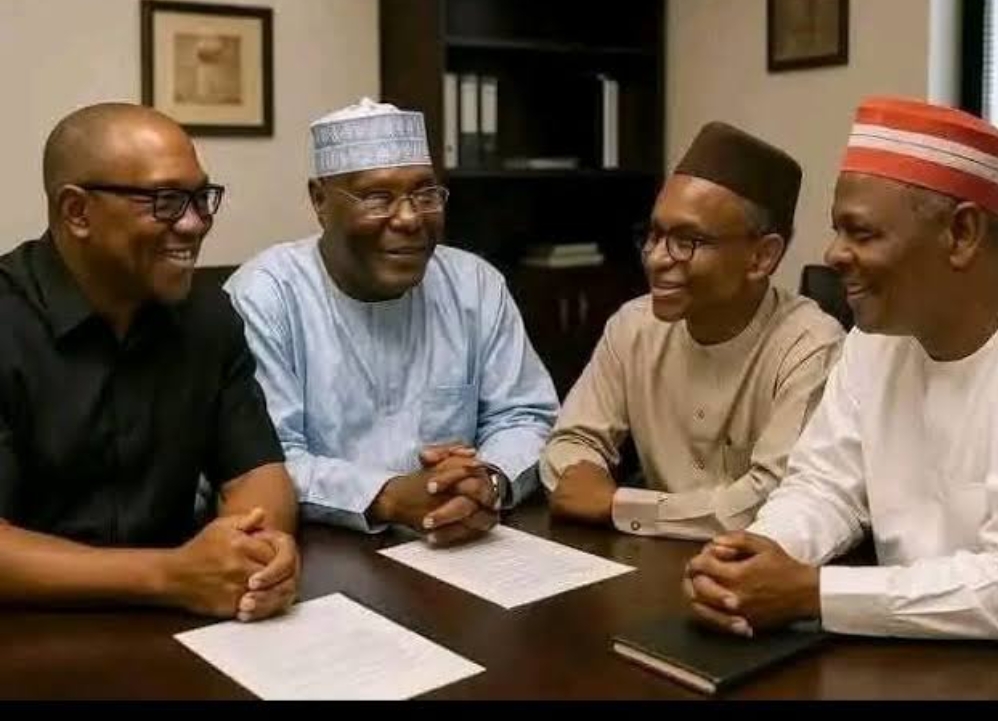
ADC and Coalition 2027: The Fractured Ties Between Atiku, Kwankwaso, Obi, and El-Rufai
By: Dr. James Bwala
All four politicians still have their ropes hanging in the former or soon-to-be former political party. El-Rufai has left the APC but could not have a place in the SDP, as the party denied him being their member. While he is still dancing in ADC, no one knows for sure what his aims are as the party quietly watched him and closely checked on his character. Mr. Peter Obi is still grappling with which way to go and still consulting with a madman for direction. It is still unclear whether he has stepped his foot firmly in ADC, as he constantly looks back to his Labour Party. Kwakwanso’s last move against the presidency is an indication that things are falling apart. He is rumored to make a full move soon into the ADC to challenge Atiku and others for the party’s ticket but still wants to be present in his party, the NNPP, holding both goalposts in that confusion. Atiku Abubakar left the PDP allegedly for fear of FCT Minister Nyesom Wike. He may be having favor in ADC; however, he is relying on some of his foot soldiers within the PDP to run his game. And the confusion continued.
It was Fela Kuti, the famous Nigerian musician and activist, that created powerful and celebrated songs, which are now reminding us of what he was trying to address in our political theater, and long after he was gone, we see this song making meaning of political issues in Nigeria, especially with the current confusion unfolding in the ADC. I could mention many of his songs that reflected on the current political drama, but one such song that comes to mind and well addresses the current drama and confusion within the African Democratic Congress (ADC) political party is “Zombie.” Fela sang this song and released it in the 1970s, looking at the political confusion at that time and criticizing the blind obedience of soldiers and the political leadership that manipulates them. The game ADC is planning to play with Nigeria ultimately for selfish gains. And “Zombie” can be applied to the themes of the music that reflect the ADC position amongst its leadership and fellowship, explaining the disarray amongst its leadership and struggles within its ranks for impact against a formidable force, which President Tinubu and Kashim Shettima literally command today.
It was not too early to state that the 2027 general elections in Nigeria are shaping a battleground for the glory of those who are ready to take it. The renewed HOP initiative of the Tinunu and Kashim Shettima administration is making waves and winning in the argument of who holds the political aces. On the other hand, when we look at the political maneuvering and shifting alliances among the most notable figures in the soon-to-be race, we can see the old faces and actors like Atiku Abubakar, Rabiu Musa Kwankwaso, Peter Obi, and Nasir El-Rufai. While we cannot deny them of their pedigree on the political landscape, these leaders political backgrounds and ambitions fail them. They face a complex web of relationships that could make or break their chances, and we have this to say: the dynamics between them have already shown signs of tension. It is already suggesting that things may soon fall apart as the elections approach.
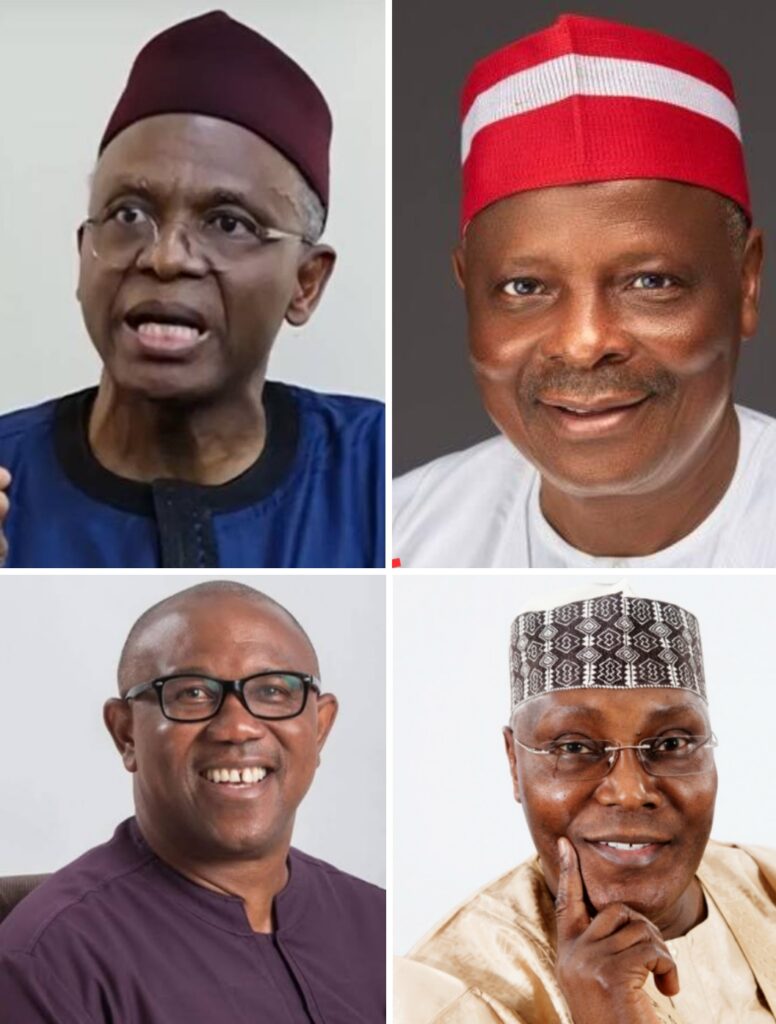
I am not speaking about Rotimi Ameachi in this context because he has his battles to face with Wike as political issues unfold. Choosing the ADC to form a coalition of opposition may be a good strategy, but ambition knows no brother, and greed will always kill a friend in a struggle. Their coming together not in one accord put ADC on the edges of collapse as the party now faced significant challenges stirred by internal conflicts, leadership disputes, and ideological differences. No thanks, but thanks to the ambitious politicians who are hungry and angry, as they made us understand. Indeed, the problems they have brought to once a quiet and still political party stem from a lack of sincere, collected reforms and collaborative coalition. This is making it difficult for them to work towards common goals. And like the soldiers in “Zombie,” who are depicted as mindlessly following orders, some leaders and members of the ADC have shown a failure to critically engage with the party’s vision, goals, and objectives that will engage in political adventure towards success. Nigerians now observed, and what they are saying is that these men are not here to foster democratic values but to promote their personal interests. This is leading to confusion and instability within the party, as being a witness within the party despite the sugar coating with seemingly smiling faces that is hiding the monster soon to be revealed within.
Atiku Abubakar, the former vice president, is indeed a veteran politician. But his marriage to many political parties makes him a man of unstable ways in the political arena. The former vice president has long sought the presidency and continues to position himself as a unifying candidate. However, his recent alliance with various factions within party politics has drawn criticism. Engr. Rabiu Musa Kwankwaso, a former governor of Kano State and a prominent figure in the New Nigeria Peoples Party (NNPP), found himself in the valley of decision while he lingered on the choices to make, revealing his greed for power and lack of focus on what he was out to pursue in the political arena. He was tipped to join the APC, but his eyes run over choices leading to a breakdown in relationships in political connections. His fight with the presidency over his alleged claims that the North has been neglected further pushes him to the benches to seek connections with the coalition. Kwakwanso is known for his grassroots connection and populist rhetoric; his appeal lies in his ability to mobilize support in the northern regions. Nevertheless, his ambitions may clash with those of Atiku if he joins the ADC, as rumor has it. If he did, both would be targeting similar voter demographics, potentially leading to conflict rather than collaboration in a coalition.
READ ALSO:https://newsng.ng/nigerian-poet-designated-united-nations-global-advocate-for-peace/
Another gladiator fielding in the ADC platform for the coalition is Mr. Peter Obi, the former governor of Anambra State and candidate of the Labour Party. Peter Obi has gained significant traction among the youth and educated class. His campaign focuses on economic reform and anti-corruption, appealing to a generation that seeks change. However, Obi’s rising popularity has not gone unnoticed, and it threatens to draw support away from both Atiku and Kwankwaso. With the calls by Nigeria for power to be shifted to the South, the ADC may be forced to side with the voices of Nigerians, and that means a lot to the Atiku and Kwankwaso camps. The competition for the same voter base could exacerbate tensions among the candidates, leading to further fracturing of alliances within the ADC. The dumping of the APC, the clinging of the SDP, and now the pitching with the ADC bring to the floor a comedy of Nasir El-Rufai, the former governor of Kaduna State. Nobody knows who he is standing with. For Atiku, Kwankwaso, Peter Obi, or for himself? Whatever position he is taking, he is adding another layer to this intricate political scenario. El-Rufai’s reputation for controversial policies and governance style might alienate certain voters, but he also has a solid support base within the political landscape. El-Rufai’s position might create friction with the other candidates as he navigates his political future amid allegations of mismanagement and public discontent.
Looking from the prism of Fela Kuti’s music, the understanding often highlighted the importance of awareness and critical thinking among citizens. The late Afrobeat singer encouraged listeners to question authority and not accept information at face value. This message is particularly relevant today, as the ADC grapples with factions and conflicting interests. The inability of the party to present a unified front to the public can be compared to the soldiers in “Zombie” marching in unison but without genuine intent or purpose. It serves as a reminder for ADC members to strive for integrity and collective action rather than mere conformity to leadership decisions, which may not always reflect the party’s true values.
While we count the cakes, the value of gold is soaring as the elections draw closer. The potential for conflict among Atiku, Kwankwaso, Obi, and El-Rufai is palpable. Each leader is striving to consolidate their position while contending with increasing competition. If these leaders cannot find common ground and create meaningful alliances, they will risk undermining their respective reasons for collaboration and coalition. Consequently, the ADC might witness a fracturing of relationships, leading to a political landscape where collaboration becomes unlikely, ultimately impacting the future of the party. And this explains the significance of Fela Kuti’s protest music. This transcends time, providing valuable insights into the political landscape of Nigeria today and going beyond what we are talking about in the corners from what we see and observe. Fela Kuti’s powerful lyrics and compelling messages encourage present and future generations to engage actively with political issues. It is crucial for ADC leaders and members to listen and learn from the lessons embedded in Kuti’s music, particularly the necessity of unity and a commitment to democratic ideals. As confusion continues to persist within the party, embracing a more collaborative and transparent approach will be essential for party survival. For us on the other side, “Zombie” is good music and should continue as the confusion in ADC rages.
- James Bwala, PhD, writes from Abuja.
ADC and Coalition 2027: The Fractured Ties Between Atiku, Kwankwaso, Obi, and El-Rufai


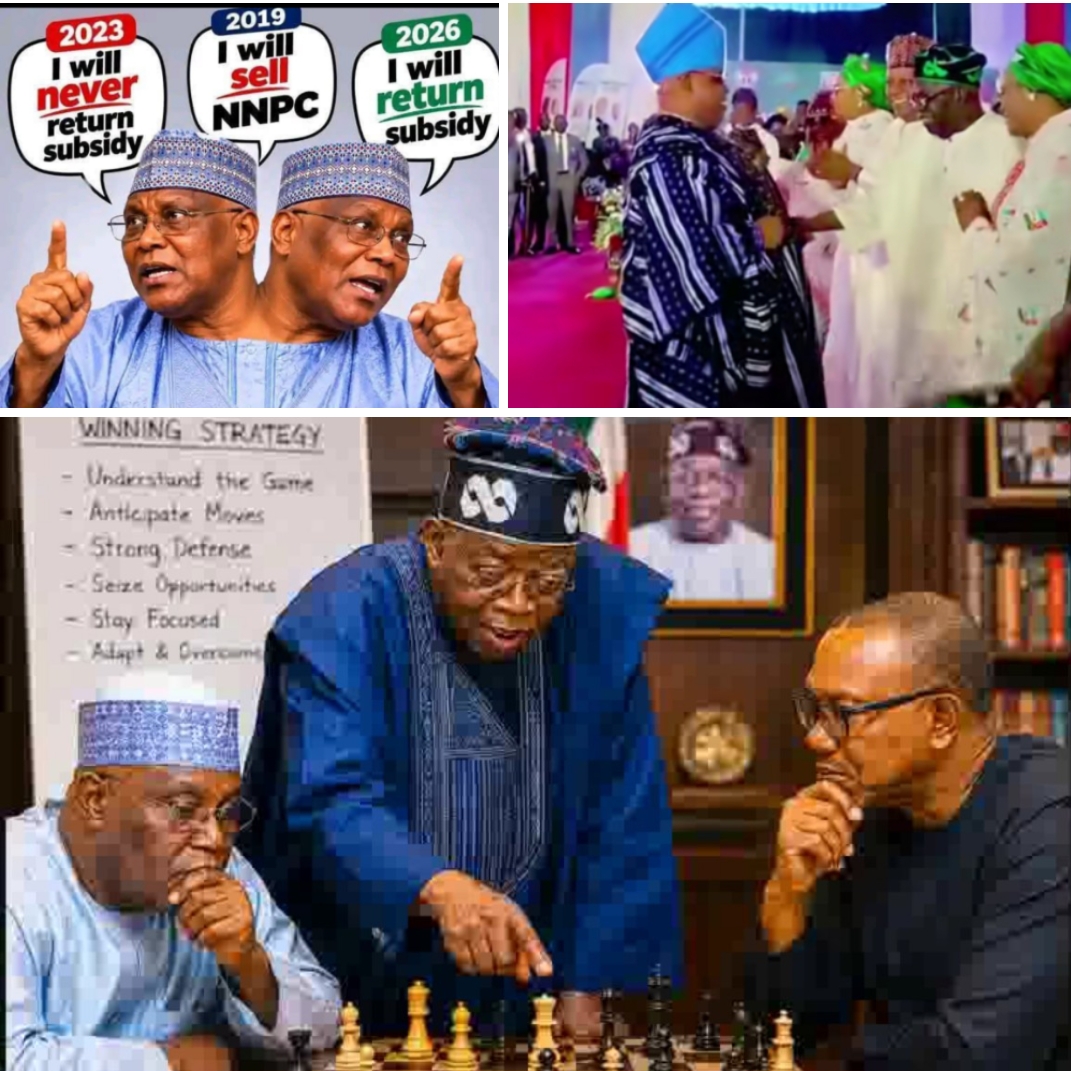
2027: Inside Tinubu–Shettima’s Campaign Strategy and the Battle for Advantage
By: Dr. James Bwala
The inauguration of the 2027 Presidential Campaign Council on October 14, 2026, has introduced a new dimension into Nigeria’s political communications. Beyond the ceremony itself, the composition of the council and the public statements made by some of its leading figures have generated significant debate about the direction of the 2027 presidential contest. The presence of Nyesome Wike, Charles Soludo, and Ademola Adeleke—three politicians with distinct political identities, regional influence, and public appeal—has made the council more than an ordinary campaign structure. It has become a political statement.
At the center of this development is President Bola Ahmed Tinubu’s apparent determination to secure a second term. His supporters believe that his administration deserves the opportunity to consolidate its reforms, while his opponents are attempting to construct a coalition capable of defeating him. Yet, based on the current political alignments, the president appears to hold a commanding advantage. The endorsement and participation of influential figures such as Governor Charles Soludo, Minister Nyesome Wike, and Governor Ademola Adeleke suggest that the political terrain is already tilting in Tinubu’s favor.
Governor Soludo’s speech at the inauguration was particularly significant. He stated, “There is no time in the history of Nigeria, to my knowledge, that there is a consensus in the political arena that one man—President Tinubu—deserves to be reelected in this country.” He added that although the path Tinubu had chosen might be difficult, it was necessary, and assured the president: “We are with you, and we are a partner, and we will remain your partner.”
These were not casual remarks. Soludo is an economist, a former central bank governor, and a governor who understands the implications of political language. He chose his words carefully. His statement was not merely an expression of personal admiration. It was an attempt to frame the 2027 election as a national consensus rather than a narrow partisan contest. His endorsement is strategically important, whether you agree with his conclusion or not.
The most important message from Soludo’s speech is that Tinubu’s reelection campaign is being presented as a project of continuity. The administration’s economic policies, including the removal of fuel subsidies, the unification of foreign exchange markets, and efforts to attract investment, have imposed serious short-term difficulties on Nigerians. Inflation, rising living expenses, unemployment, and declining purchasing power have created widespread anxiety. However, Tinubu’s supporters argue that these painful measures are necessary corrections to long-standing structural problems. Soludo’s intervention reinforces this argument: the reforms may be difficult, but abandoning them, in his view, would be more damaging.
Candidates often win political campaigns not just by presenting policies but also by crafting compelling narratives. Tinubu’s camp is attempting to establish the narrative that the president is a reformer confronting problems that previous administrations avoided. If this narrative becomes widely accepted, the 2027 election may be framed as a choice between continuing a difficult but necessary transformation and returning to what supporters describe as an era of indecision. Soludo’s speech contributes powerfully to that narrative.
The participation of Nyesome Wike adds another layer to the campaign council’s significance. Wike is one of Nigeria’s most influential and unpredictable political actors. Although he belongs to the opposition Peoples Democratic Party, his political relationship with the Tinubu administration has become increasingly visible. His decision to serve as a minister in the federal government placed him in a position that transcends traditional party loyalty. Wike has demonstrated that he is prepared to pursue political influence through strategic alliances rather than rigid adherence to party expectations.
His role in the 2027 campaign is therefore important for two reasons. First, Wike commands substantial influence in Rivers State and the wider South-South region. Second, his political style attracts attention because he is willing to make bold statements and take positions that many politicians would avoid. His involvement suggests that Tinubu’s campaign is not depending solely on the structures of the All Progressives Congress. Instead, it is assembling a broader coalition that includes influential figures from outside the ruling party.
Wike’s political movement has also exposed the weakness of the opposition’s internal coordination. Rather than presenting a unified alternative, the opposition has been affected by personal ambitions, factional disputes, and disagreements over leadership. The PDP remains divided, while other opposition platforms appear more focused on negotiating alliances than developing a clear national strategy. In such an environment, Wike’s alignment with Tinubu becomes even more consequential. It deprives the opposition of a major political operator while strengthening the president’s coalition.
Governor Ademola Adeleke’s presence and public support add a different but equally important dimension. As a prominent figure in the PDP, the Accord Party, and the governor of Osun State, Adeleke possesses significant appeal among grassroots voters. His popularity, personal style, and connection with the people have made him an important political figure beyond his immediate state. His participation in a campaign council supporting Tinubu suggests that the president’s coalition is capable of attracting politicians whose political identities are not traditionally associated with the ruling party.
Adeleke is known for his energetic public persona and his ability to communicate with ordinary voters. His political appeal is less ideological and more emotional and popular. In a country where voters often respond to personal connection, visibility, and cultural familiarity, his role could help broaden Tinubu’s reach. His presence may also weaken the opposition’s claim that the 2027 contest will be a simple battle between the ruling party and a unified alternative.
The combination of Soludo, Wike, and Adeleke is significant because each represents a different political constituency. Soludo brings intellectual credibility, economic arguments, and influence in the Southeast. Wike brings strategic calculation, administrative experience, and influence in the South-South. Adeleke brings popular appeal, grassroots energy, and influence in the Southwest. Together, they create the image of a coalition that cuts across regions, parties, and political styles.
This is why the campaign council has become a major topic in political communication. Its power lies not simply in the names of the individuals involved but in the message they collectively communicate. The message is that Tinubu is not politically isolated. He is building alliances across party lines and positioning himself as the central figure around whom Nigeria’s political future may revolve.
This development should concern former Vice President Atiku Abubakar. Atiku remains one of Nigeria’s most experienced politicians and has a loyal national following. However, experience alone may not be enough to overcome the challenges before him. His repeated presidential contests have made him a familiar figure, but they have also raised questions about whether the country is ready to embrace another campaign centered on his candidacy. The emergence of new alliances and the continued movement of influential politicians toward Tinubu make Atiku’s political calculations increasingly difficult.
For his own political benefit, Atiku should carefully reconsider whether contesting in 2027 is the most strategic decision. A presidential contest requires more than personal ambition. It requires favorable political conditions, a united platform, credible allies, financial strength, a compelling message, and the ability to connect with voters across generations. If these conditions are not available, another contest could weaken rather than strengthen his historical legacy.
Atiku might serve Nigeria more effectively by helping to build a younger and more unified opposition capable of presenting a credible alternative in the future. His experience could be used to mentor emerging leaders, negotiate unity among opposition parties, and promote a national program based on economic growth, institutional reform, and social stability. Such a decision would not represent political surrender. It could demonstrate statesmanship.
Peter Obi also faces a difficult political environment. His performance in the 2023 election created a powerful movement, particularly among young Nigerians and urban voters. The Labour Party’s message of competence, accountability, and national renewal resonated with many citizens. However, turning a popular movement into a winning national political structure requires more than enthusiasm. It demands organization across all local governments, durable alliances, credible candidates, disciplined communication, and a strategy for winning outside the movement’s strongest regions.
Currently in NDC, Obi’s supporters remain energetic, but energy must be converted into electoral machinery. Meanwhile, Tinubu is demonstrating the advantages of incumbency, access to state institutions, political experience, and coalition-building. If the opposition remains fragmented, it may spend the period before 2027 debating personalities while the ruling coalition consolidates its structure.
Tinubu’s strength also comes from his understanding of political power. He has shown himself to be patient, strategic, and willing to make unexpected alliances. His administration may face criticism over economic hardship, but political victories are not determined only by public frustration. They are also shaped by organization, timing, negotiation, and the ability to prevent opponents from uniting. In this regard, Tinubu has demonstrated considerable skill.
However, the president and his supporters must not mistake political advantage for guaranteed victory. Nigerians are experiencing genuine hardship. No campaign structure, endorsement, or political alliance can permanently substitute for improved living conditions. If inflation remains high, unemployment continues to rise, and citizens feel excluded from the benefits of government policies, public dissatisfaction may eventually overcome the advantages of incumbency.
Therefore, Soludo’s argument for continuity must be accompanied by measurable results. Nigerians may accept difficult reforms when they believe those reforms will produce a better future. But patience has limits. The administration must communicate honestly, protect vulnerable citizens, reduce waste, strengthen security, and ensure that economic recovery is felt beyond official statistics. The success of the 2027 campaign will depend not only on political alliances but also on whether the government can convince citizens that its policies are working.
Nevertheless, the current political picture clearly favors Tinubu. The emergence of a broad campaign council, the involvement of powerful figures across party lines, and the absence of a united opposition have placed the president in a strong position.
*James Bwala, PhD, writes from Abuja
2027: Inside Tinubu–Shettima’s Campaign Strategy and the Battle for Advantage
Politics
THE JARAMOGI ODINGA OF NIGERIA? How Shettima Put Leadership, Respect, and Political Responsibility at the Heart of His Message to Atiku
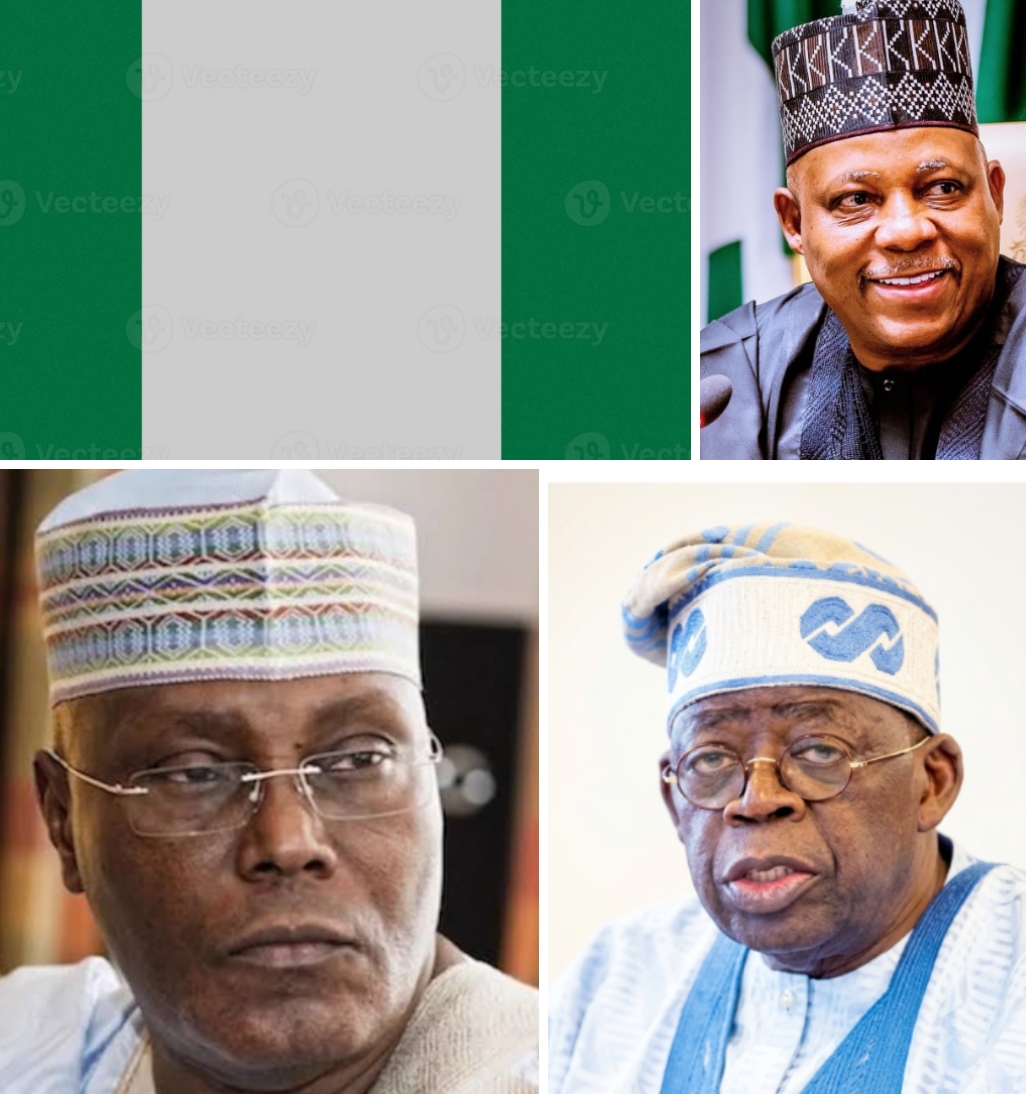
THE JARAMOGI ODINGA OF NIGERIA? How Shettima Put Leadership, Respect, and Political Responsibility at the Heart of His Message to Atiku
By: Dr. James Bwala
Political competition is an essential feature of democracy. It allows citizens to compare ideas, assess records, and choose leaders according to their interests and convictions. However, political competition loses its democratic value when it becomes a contest in personal ridicule, deliberate misrepresentation, or disrespect for public institutions. In this context, Vice President Kashim Shettima’s response to former Vice President Atiku Abubakar’s repeated reference to President Bola Ahmed Tinubu simply as “Bola” raises an important question: should political disagreement permit the systematic reduction of a sitting president to an informal or supposedly dismissive name?
Shettima’s statement—that “you can call him Bola or Adekunle if you like; the truth is that he is the president and commander in chief of the armed forces of Nigeria”—is persuasive because it shifts attention from personal familiarity to constitutional authority. His broader remarks, however, including his references to Atiku’s political history and comparisons with other figures, reveal the dangers of responding to provocation with further personal attacks. The central principle remains clear: Nigerian political discourse should be based on respect for institutions, honest criticism, and accountability rather than mockery and name-calling.
The title and office of the president are not merely ceremonial. Under Nigeria’s constitutional system, the president is the head of the federal executive branch and commander in chief of the armed forces. Whether citizens admire or oppose the president, the office carries legal authority and national significance. Addressing the occupant of that office with appropriate recognition is therefore not necessarily an expression of personal support. It is an acknowledgment of the institution itself.
This distinction is particularly important in a democracy. A citizen may strongly criticize the president’s economic policies, security record, appointments, or political decisions while still recognizing the constitutional authority of the presidency. Indeed, democratic criticism becomes more effective when it is directed at policies and conduct rather than expressed through personal humiliation. Calling a public official by a familiar name may appear harmless in private conversation, but when used repeatedly in a political campaign to diminish the status of the office, it may contribute to a broader culture of disrespect.
Atiku Abubakar, as a former vice president and a major political figure, has every right to challenge President Tinubu’s administration. He may argue that the government has failed to meet expectations, that its economic reforms have increased hardship, or that its policies require reconsideration. Such arguments should be answered with facts, evidence, and alternative proposals. Reducing the president to a first name, however, does not strengthen the criticism. It risks making political debate appear driven by resentment rather than reason.
Shettima’s response is therefore justified to the extent that it defends the dignity of the presidency. His declaration that he would refer to Atiku as “a former vice president” demonstrates the principle of acknowledging a person’s public status. This is not a demand that Nigerians surrender their freedom of expression. Instead, it is a reminder that responsible political language can preserve disagreement without destroying civility.
Respect is especially important in a country as diverse and politically sensitive as Nigeria. Political leaders speak not only to their immediate supporters but also to millions of citizens who may interpret their words as permission for confrontation. When senior politicians exchange insults, their followers may imitate that conduct in more aggressive forms. Online abuse, threats, tribal stereotyping, and political intolerance can develop from the normalizing of contempt at the highest level.
Leadership therefore imposes a duty of restraint. A person seeking the presidency should demonstrate an ability to disagree without constantly degrading opponents. This is not weakness. On the contrary, restraint signals confidence, maturity, and respect for the electorate. Citizens deserve political leaders who can explain why a policy is wrong, why an election strategy is flawed, or why a government has failed, rather than leaders who rely principally on ridicule.
Nevertheless, Shettima’s own remarks must also be examined critically. In responding to Atiku, he reportedly referred to Atiku’s repeated presidential contests and stated that he was not Abraham Lincoln, while also making a comparison involving Raila Odinga. Although political leaders may use historical comparisons to make rhetorical points, such statements can distract from the stronger constitutional argument. If the purpose is to defend respect for public office, the response should avoid language that appears to ridicule another public figure.
The principle of civility must apply equally to government supporters and opposition figures. It cannot be demanded from one side while being ignored by the other. President Tinubu’s supporters should not condemn disrespect toward the presidency and then engage in personal abuse of opposition leaders. Likewise, opposition politicians should not demand accountability while using language designed only to provoke or delegitimize the government. A healthy political culture requires consistency.
There is also a difference between personal familiarity and institutional disrespect. In some contexts, a politician may use a first name because of a long-standing personal relationship. Such usage is not automatically offensive. However, when the name is used in a public political dispute with the apparent intention of reducing the person’s stature, the meaning changes. Language is shaped by context, tone, and purpose. The question is not merely whether “Bola” is the president’s given name, but whether its use is intended to recognize him as a national leader or to portray him as unworthy of formal respect.
Political leaders should also remember that titles are not substitutes for accountability. Calling President Tinubu “Mr. President” does not mean that citizens must approve of his policies. Similarly, addressing Atiku as “former vice president” does not mean that his criticisms should be ignored. Respectful language and rigorous scrutiny can coexist. In fact, they should coexist. Democracy requires both recognition of authority and the freedom to question how that authority is exercised.
Shettima’s reference to Atiku’s many presidential contests also invites a broader reflection on political ambition. Repeated participation in elections is not, by itself, proof of failure or dishonor. Many democratic leaders contested several times before achieving office, while others remained influential without winning the highest position. The legitimacy of a political career should be judged by ideas, conduct, service, and adherence to democratic rules—not merely by the number of attempts made.
For this reason, personal references to the age, electoral history, or perceived ambitions of opponents should be used cautiously. They may energize a political crowd, but they rarely help citizens understand the real issues before the country. Nigeria faces serious challenges: inflation, unemployment, insecurity, weak public services, corruption, ethnic mistrust, and declining confidence in public institutions. These problems require serious debate. Time spent trading insults is time diverted from discussing practical solutions.
The inauguration of a campaign council is an occasion for mobilization, but it should also be an opportunity to define the character of the campaign. A campaign should tell citizens what a party intends to do, how it will do it, and why its program deserves support. If the campaign becomes primarily a platform for attacking opponents, the electorate may be left with slogans instead of plans. Political communication should persuade citizens through vision and performance, not merely through derision.
Supporters of President Tinubu can make a stronger case by highlighting measurable achievements, explaining difficult reforms, acknowledging genuine hardships, and presenting credible plans for improvement. They do not need to depend on insults directed at Atiku or any other opponent. Similarly, Atiku and his supporters can build a more convincing opposition by presenting detailed alternatives and demonstrating how their proposals would address national problems. Criticism is most powerful when it is specific, factual, and connected to the daily experiences of citizens.
Ultimately, the controversy surrounding the use of “Bola” reflects a larger crisis in Nigerian political communication. Public discourse has increasingly become personal, emotional, and hostile. Political actors often treat every criticism as an attack on their identity, while supporters assume that defending their party requires abusing its opponents. This pattern weakens democratic culture. It makes compromise difficult, encourages misinformation, and shifts attention away from governance.
The appropriate standard should be simple: criticize policies, question decisions, challenge records, and expose wrongdoing—but do not deliberately demean public offices or reduce political disagreement to personal humiliation. The president should be respected as president, even when his administration is opposed. Former leaders and candidates should also be treated with dignity, even when their records are criticized. Respect does not eliminate accountability; it creates the conditions in which accountability can be pursued constructively.
Vice President Shettima is right to insist that President Tinubu’s constitutional position deserves recognition. However, the most persuasive defense of that position would be one expressed with restraint and supported by evidence. The same standard applies to Atiku Abubakar and every other political actor. Nigeria does not need louder insults; it needs better arguments, stronger institutions, and leaders capable of disagreeing without destroying mutual respect.
The future of Nigerian democracy will depend not only on who wins elections but also on how political leaders behave while seeking power. A nation is strengthened when its leaders respect offices, honor legitimate criticism, and place national interest above personal rivalry. The president is more than a first name, and an opposition candidate is more than a target for ridicule. Both represent important parts of a democratic system that must be protected through responsible speech and principled conduct.
*James Bwala, PhD, writes from Abuja
THE JARAMOGI ODINGA OF NIGERIA? How Shettima Put Leadership, Respect, and Political Responsibility at the Heart of His Message to Atiku
Politics
Borno Politics: Power, Continuity, and the Fight for Democratic Space Ahead of 2027 Elections

Borno Politics: Power, Continuity, and the Fight for Democratic Space Ahead of 2027 Elections
By: Dr. James Bwala
The political tension in Borno State is being shaped by two closely connected developments: the strategic emergence of Engr. Mustapha Gubio as the All Progressives Congress (APC) consensus candidate for the 2027 governorship election, and the growing backlash against Governor Babagana Zulum over the controversial arrest of individuals associated with the #TinubuMustGo campaign. Together, these developments reveal a deeper contest over political succession, party control, public accountability, and the limits of democratic expression in a state still recovering from years of insecurity.
The APC’s decision to endorse Gubio, reportedly supported by Governor Zulum and Vice President Kashim Shettima, has strengthened the ruling party’s political position. At the same time, the arrests linked to an anti-government campaign have generated criticism and raised concerns about whether political stability is being pursued at the expense of civil liberties. Although the APC’s consensus strategy may offer organizational advantages, its long-term success will depend on whether the party can combine continuity with openness, development with accountability, and political strength with respect for democratic rights.
Engr. Mustapha Gubio’s selection is significant because it reflects the APC’s desire to present the 2027 election as a referendum on continuity. As a former Commissioner for Works and a figure associated with the Ministry of Reconstruction, Rehabilitation, and Resettlement, Gubio is positioned as a candidate whose experience corresponds closely with Borno’s central needs. The state continues to face the consequences of insurgency, displacement, destroyed infrastructure, disrupted education, weakened local economies, and the difficult task of rebuilding public trust. A candidate with direct experience in reconstruction can therefore argue that he understands the practical requirements of post-conflict governance.
READ ALSO: https://newsng.ng/tinubus-2027-gamble-why-shettima-remains-his-running-mate/
This is a powerful political message. Rather than presenting the 2027 election as a choice between an established government and an uncertain alternative, the APC is likely to frame it as a choice between ongoing reconstruction and the risks of interruption. Such a strategy allows the ruling party to emphasize roads, schools, hospitals, housing, resettlement, public institutions, and economic recovery. It also enables Gubio to claim that his participation in previous reconstruction efforts gives him an advantage over opponents who may lack comparable administrative experience.
The argument for continuity is especially persuasive in a state where development projects are closely connected to security and social stability. Rebuilding destroyed communities is not merely an infrastructure exercise. It involves restoring livelihoods, encouraging displaced residents to return, strengthening local government institutions, expanding access to education and healthcare, and creating conditions in which citizens can once again participate in economic life. If the APC can demonstrate measurable progress in these areas, its candidate will benefit from a strong incumbency narrative.
Gubio’s selection also appears to be a deliberate attempt to prevent the internal divisions that often weaken ruling parties before elections. Governorship contests can produce bitterness among aspirants, create rival political blocs, and trigger defections. When a party conducts a highly competitive primary without managing the grievances that follow, opposition parties may exploit the resulting divisions. The consensus arrangement is intended to prevent this outcome by settling the succession question early and presenting a united front.
READ ALSO: https://newsng.ng/tinubus-2027-gamble-why-shettima-remains-his-running-mate/
From the APC’s perspective, this is a rational political strategy. A consensus candidate can reduce campaign costs, limit destructive competition, and make it easier for party leaders to coordinate their political structures. It also offers aspiring politicians the opportunity to negotiate roles within a broader arrangement rather than engaging in an open contest that produces permanent winners and losers. If party leaders succeed in maintaining discipline, Gubio’s candidacy could become the center of an extensive coalition involving elected officials, party executives, traditional institutions, business interests, and grassroots mobilizers.
However, consensus politics can produce stability only when it is perceived as legitimate. If party members or citizens believe that the candidate was imposed without meaningful consultation, the appearance of unity may conceal resentment. Political agreement among powerful actors is not necessarily the same as broad public acceptance. The APC must therefore demonstrate that its consensus process was credible, transparent, and responsive to the interests of ordinary party members. Otherwise, dissatisfied politicians may remain within the party while quietly undermining the campaign.
The reported backing of Governor Zulum and Vice President Shettima gives Gubio a further advantage. Their support provides access to institutional networks, political experience, campaign resources, and a broad alliance within the APC. Governor Zulum remains an influential figure in Borno politics, while Vice President Shettima brings national visibility and strong political connections. Their joint support signals that Gubio is not merely an individual candidate but the chosen representative of a powerful political arrangement.
READ ALSO: https://newsng.ng/tinubus-2027-gamble-why-shettima-remains-his-running-mate/
This institutional backing could make it difficult for opposition parties to compete effectively. Elections are not won solely through popularity; they also depend on organization, funding, messaging, agents, logistics, coalition-building, and the ability to mobilize voters across diverse communities. A candidate supported by the governor and the vice president is likely to inherit a well-developed political structure. Opposition parties, by contrast, may face limited resources, internal disagreements, weak grassroots organization, and difficulty presenting a credible alternative to the ruling party’s reconstruction agenda.
Nevertheless, political machinery cannot eliminate public dissatisfaction. It can mobilize supporters, but it cannot permanently conceal governance failures. The APC will still need to answer questions about unemployment, poverty, insecurity, the condition of internally displaced persons, the effectiveness of resettlement programs, access to education, and the distribution of development projects. The more powerful the ruling party becomes, the greater the expectation that it should provide clear evidence of performance.
This is where the controversy surrounding the arrests linked to the #TinubuMustGo campaign becomes politically important. The campaign, regardless of its ideological position or popularity, represents a form of political expression. The reported arrest of individuals associated with it has triggered criticism because citizens in a democracy should not be treated as criminals merely for expressing opposition to a government or political leader. Where arrests are made, authorities have a responsibility to explain the legal basis, present credible evidence of wrongdoing, and ensure that suspects receive due process.
READ ALSO: https://newsng.ng/tinubus-2027-gamble-why-shettima-remains-his-running-mate/
Supporters of the government may argue that the arrests were necessary to prevent disorder, protect public security, or stop inflammatory activities. Borno’s history of violent conflict makes security a serious concern, and government officials cannot ignore credible threats. However, security arguments must not become a blanket justification for suppressing dissent. There is an important difference between peaceful political criticism and conduct that genuinely threatens public safety. A government committed to democratic legitimacy must distinguish between the two.
The backlash against Governor Zulum therefore extends beyond the specific arrests. It reflects a wider concern about the relationship between security governance and political freedom. In a state that has experienced terrorism and instability, citizens may accept certain security measures when they are lawful, necessary, and proportionate. They are less likely to accept arbitrary arrests, political intimidation, or the use of state power against peaceful critics. Such actions can deepen distrust and create the impression that the government fears public debate.
The controversy also creates a challenge for Gubio’s campaign. If the APC presents itself as the party of stability and continuity, it must clarify what kind of continuity it represents. Continuity in rebuilding infrastructure and restoring communities may be welcomed. Continuity in suppressing criticism would be far more damaging. Opposition parties will likely use the arrests to argue that the ruling party wants political control without accountability. They may portray Gubio’s endorsement as part of a broader effort to consolidate power and silence opposition before the election begins.
READ ALSO: https://newsng.ng/tinubus-2027-gamble-why-shettima-remains-his-running-mate/
For this reason, the APC should not dismiss the backlash as a temporary political disturbance. It should treat it as a warning. A government that commands strong institutional support can afford to be more confident in its response to criticism. It should investigate the circumstances surrounding the arrests, communicate openly with the public, and ensure that law enforcement agencies operate within constitutional limits. Transparency would not weaken the government; rather, it would strengthen its credibility.
The opposition also has responsibilities. It must not exploit public anger through misinformation, incitement, or reckless claims. A credible opposition should offer practical alternatives on security, reconstruction, education, healthcare, agriculture, job creation, and democratic reform. Criticism becomes politically persuasive when it is supported by facts and accompanied by a realistic program of government. Without this, opposition parties may remain dependent on the ruling party’s mistakes rather than building genuine public confidence.
Ultimately, the political contest in Borno State will be decided by more than party endorsements. The APC has gained an early advantage through the selection of a candidate with relevant experience, the promise of continuity, and the backing of influential leaders. Its consensus strategy may limit internal conflict and give Gubio a strong organizational platform. However, political strength is not a substitute for legitimacy. The party must still convince citizens that continuity will produce better lives, not merely preserve political control.
READ ALSO: https://newsng.ng/tinubus-2027-gamble-why-shettima-remains-his-running-mate/
The #TinubuMustGo controversy reinforces this point. Development and democracy cannot be separated. A state may rebuild roads and public buildings while weakening trust if citizens feel unable to criticize those in power. Conversely, political freedom without effective governance cannot address the material hardships facing communities. Borno requires both: sustained reconstruction and respect for constitutional rights.
The most persuasive path for the APC is therefore to combine its strongest political asset—continuity—with a clear commitment to accountability. Gubio should define his campaign through measurable development targets, public engagement, and an inclusive vision that extends beyond party loyalists. Governor Zulum and other party leaders should demonstrate that political stability does not require the suppression of legitimate dissent. The opposition, for its part, should transform criticism into a credible alternative rather than rely solely on controversy.
Borno State stands at an important political crossroads. The APC’s early consolidation has unsettled opposition parties and positioned Gubio as a formidable contender for 2027. Yet the same concentration of political power has intensified scrutiny of the government’s conduct.
- James Bwala, PhD, writes from Abuja.
Borno Politics: Power, Continuity, and the Fight for Democratic Space Ahead of 2027 Elections

2027: Inside Tinubu–Shettima’s Campaign Strategy and the Battle for Advantage

KACRAN Urges INEC to Extend PVC Collection Deadline by One Week

THE JARAMOGI ODINGA OF NIGERIA? How Shettima Put Leadership, Respect, and Political Responsibility at the Heart of His Message to Atiku

Roger Federer’s Shock as DNA Results Reveal Myla and Charlene Are Not His Biological Children

THE PLIGHT OF FARIDA

FAILED COUP IN BURKINA FASO: HOW TRAORÉ NARROWLY ESCAPED ASSASSINATION PLOT AMID FOREIGN INTERFERENCE CLAIMS
-
 News3 years ago
Roger Federer’s Shock as DNA Results Reveal Myla and Charlene Are Not His Biological Children
-
Opinions5 years ago
THE PLIGHT OF FARIDA
-
 News1 year ago
FAILED COUP IN BURKINA FASO: HOW TRAORÉ NARROWLY ESCAPED ASSASSINATION PLOT AMID FOREIGN INTERFERENCE CLAIMS
-
 Opinions5 years ago
POLICE CHARGE ROOMS, A MINTING PRESS
-

 News3 years ago
EYN: Rev. Billi, Distortion of History, and The Living Tamarind Tree
-

 ACADEMICS3 years ago
A History of Biu” (2015) and The Lingering Bura-Pabir Question (1)
-

 Columns3 years ago
Army University Biu: There is certain interest, but certainly not from Borno.
-

 Politics1 year ago
2027: Why Hon. Midala Balami Must Go, as Youths in Hawul and Asikira/Uba Federal Constituency Reject ₦500,000 as Sallah Gift
