
News
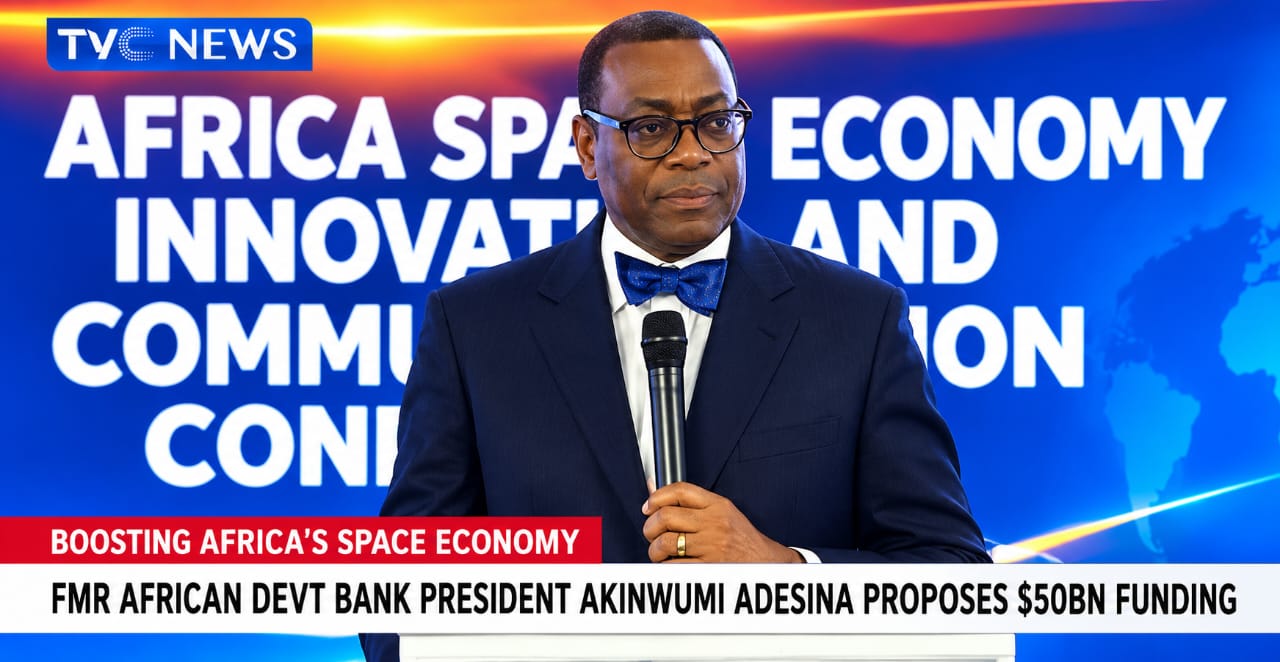
Adesina urges Tinubu to lead $50bn Africa space investment drive

Adesina urges Tinubu to lead $50bn Africa space investment drive
By: Michael Mike
Former President of the African Development Bank (AfDB), Dr. Akinwumi Adesina, has urged President Bola Tinubu to spearhead a $50 billion continental investment drive to transform Africa’s space economy, warning that the continent risks missing out on the enormous wealth and technological opportunities of the emerging global space industry.
Adesina proposed the establishment of a $50 billion Africa Space Future Fund, with an initial capitalisation target of $5 billion, to finance satellite infrastructure, scientific research, indigenous technology development and space-related enterprises across the continent.
He called on Tinubu, alongside Rwandan President Paul Kagame and Egyptian President Abdel Fattah el-Sisi, to provide founding political leadership for the initiative by convening a presidential summit to secure investment commitments and establish an institutional framework for the proposed continental programme.
The former AfDB president made the proposal on Tuesday in Abuja while delivering a keynote address titled, “Financing Africa’s Space Future: Mobilising Capital for Space Science, Innovation and Technology,” at the Africa Space Economy, Innovation and Communication Conference organised by the Nigerian Space Research and Development Agency (NASRDA).
The conference attracted leaders of space agencies, astronauts, representatives of space businesses and other stakeholders in the global space ecosystem to explore investment opportunities, innovation, technological advancement and international cooperation.
Making a case for a coordinated continental investment strategy, Adesina said Africa’s commercial space industry was gradually emerging, with 321 active commercial space companies operating across 36 African countries and generating approximately $373 million in revenue in 2024, but warned that the continent’s ambitions were not matched by the scale of investment required to compete globally.
He cited the approximately $24.4 billion funding approved for the United States National Aeronautics and Space Administration (NASA) in 2026, compared with about $828 million in combined government space allocations across Africa, noting that although the figures were not directly comparable, they illustrated the enormous investment deficit confronting the continent.
According to him, NASA alone received almost 30 times Africa’s combined public space allocation, underscoring the urgency of mobilising capital to develop the infrastructure, research and technological capabilities required to compete in the global space economy.
Adesina argued that Africa could not expect to compete meaningfully in an increasingly lucrative global space industry while investing comparatively little in the infrastructure and technologies that would determine who captures its value, insisting that the continent must move beyond fragmented national programmes to build an integrated and commercially viable space ecosystem.
In a direct appeal to Tinubu, he commended the President’s ambition to build a $1 trillion Nigerian economy and his approval of four new Nigerian satellites, describing the decision as a powerful demonstration of the administration’s recognition of science, technology and innovation as critical drivers of economic transformation.
“I particularly commend your commitment to Nigeria’s space programme. Your approval of four new Nigerian satellites sends a powerful message. It demonstrates your conviction that science, technology and innovation must drive our economic transformation,” he said.
Adesina expressed confidence in Nigeria’s economic prospects under Tinubu’s leadership, stressing that continuity, consistency and a bold vision would be critical to sustaining economic reforms, achieving broad-based prosperity and strengthening the country’s global standing.
“I have no doubt that, under your leadership, and with continuity, consistency and a bold vision for the future, Nigeria will achieve sustained economic growth, broad-based prosperity and a position of greater strength and influence in the global community.
“Knowing you, Mr. President, I am confident that you will sustain and drive this vision forward.
“Let there be renewed hope on the ground, and renewed hope in space as well!” he said.
At the centre of his proposal is the Africa Space Future Fund, which he said would mobilise up to $50 billion in cumulative investments over 10 to 15 years, bringing together African governments, sovereign wealth funds, development finance institutions, pension funds, insurance companies, private investors, international partners and the African diaspora.
The proposed fund would prioritise commercial space infrastructure, including satellite communications, low-Earth orbit broadband capabilities, Earth observation, ground stations, gateways and data infrastructure, while also supporting scientific missions, university research, advanced technologies and international research partnerships.
It would equally invest in African startups, satellite component manufacturers, artificial intelligence, robotics, sensors and emerging space businesses, with particular emphasis on African ownership, intellectual property development, technology transfer, indigenous innovation and local manufacturing capacity.
Adesina said the investments would help Africa develop the technological capabilities, enterprises and industrial ecosystems necessary to generate and retain economic value from the global space economy, create skilled employment and build globally competitive businesses.
He stressed that the fund must operate under independent governance, professional investment management, rigorous due diligence and transparent accountability to prevent political patronage and ensure that investments deliver sustainable returns.
“This is not a request for charity. It is an investment proposition,” he declared, arguing that Africa’s growing demand for connectivity, agricultural intelligence, climate information, geospatial services and digital infrastructure presented commercially viable opportunities capable of attracting substantial private and institutional capital.
According to him, governments must deploy public investment strategically to unlock private capital, while commercially viable projects, long-term service contracts and sustainable revenue streams would make space infrastructure attractive to investors.
To provide political direction for the initiative, Adesina proposed that Tinubu, Kagame and el-Sisi convene a Founding Presidential Summit on Financing Africa’s Space Future to secure political endorsement, mobilise initial investment commitments and establish the institutional framework required to implement the programme.
He said the proposed partnership could draw on Nigeria’s ambition and growing commitment to space technology, Rwanda’s experience in technology-driven development and innovation, and Egypt’s established space infrastructure and role as host of the African Space Agency.
He stressed that the initiative must move beyond declarations of goodwill to secure concrete commitments, strategic partnerships and an actionable implementation roadmap, proposing the establishment of a high-level continental task force working with the African Union and the African Space Agency to develop the legal, institutional and financial framework for the fund, identify founding investors and prepare a roadmap for mobilising the initial $5 billion.
A central component of the proposed fund, he said, would be Africa Link, a flagship continental programme designed to aggregate demand across African markets, develop shared ground infrastructure and establish strategic partnerships with international satellite operators to expand affordable and reliable satellite connectivity across the continent.
Adesina said pooling demand and coordinating infrastructure investments would enable African countries to achieve economies of scale, reduce costs and expand access to satellite services, while strengthening their participation in the global space economy.
However, he cautioned against a future in which Africa remained entirely dependent on satellite networks owned and controlled by foreign companies, insisting that international partnerships must facilitate technology transfer, skills development and greater African participation in satellite network operations and management.
“We must move from renting the infrastructure of the digital future to owning a meaningful share of it,” he said, adding that Africa did not need to immediately replicate existing global satellite constellations but must begin building the capacity to compete, collaborate and secure a meaningful stake in the emerging space economy.
“AFRICA MUST HAVE ITS OWN AFRICA LINK!” he declared.
Adesina further highlighted the enormous potential of space technology to transform agriculture, food security, telecommunications, climate resilience, disaster management, infrastructure development and natural resource management, drawing on his experience as Nigeria’s Minister of Agriculture in 2012 to illustrate the practical benefits of satellite technology.
He recalled how satellite imagery, remote sensing and vegetation data helped the government assess the impact of devastating floods and develop a national dry-season agricultural programme that helped avert a predicted food crisis, explaining that space-generated information enabled evidence-based decisions at a critical moment.
He said the experience demonstrated how investment in space technology could protect livelihoods, strengthen food security, improve economic stability and support effective public policy, calling for a fundamental transition from fragmented national space programmes to an integrated continental space economy in which countries pool resources, develop complementary capabilities and share infrastructure.
Greater regional coordination, he argued, would help African countries overcome the limitations of individual national markets, reduce duplication and create the scale required to attract global investment.
Adesina maintained that Africa’s ambition must extend beyond launching satellites to building industries, businesses and technological capabilities that would generate long-term economic value from space, identifying satellite manufacturing, sensors, communication equipment, ground systems, artificial intelligence, robotics, software development and data analytics as strategic areas in which African companies must develop indigenous capabilities.
He said deliberate investments in research, innovation, advanced manufacturing and intellectual property development were necessary to ensure that the economic benefits of Africa’s growing space economy translated into industrial growth, skilled employment and new business opportunities.
To finance the transformation, he advocated blended finance, African Space Bonds, public-private partnerships, venture capital and international development finance, arguing that governments should deploy public capital strategically to unlock private investment while long-term contracts for agricultural monitoring, disaster management and connectivity services could create predictable demand and make space infrastructure projects commercially viable.
Adesina said the ultimate objective was to build a competitive African space industry capable of developing technologies, creating globally competitive enterprises and exporting space-related products and services to international markets.
In a stirring appeal to Tinubu, he urged the Nigerian President to extend his ambition and bold vision to Africa’s aspirations in space science, technology and innovation, drawing inspiration from former United States President John F. Kennedy’s historic commitment to landing a man on the Moon.
“Mr. President, like John F. Kennedy, dare to dream big,” he said.
He concluded with an appeal to Tinubu to take Nigeria’s ambitions beyond terrestrial economic transformation and embrace the opportunities presented by space technology.
“Mr. President, you conquered the Atlantic! With your vision and boldness, why stop there? Now, Mr. President, conquer space!”
Adesina expressed optimism that an African would one day walk on the Moon, adding that he hoped the historic achievement would be made by a Nigerian, and called for sustained investments in universities, scientific research institutions, young innovators and technological infrastructure to develop a globally competitive African space industry.
He said Africa must move beyond consuming space technology to creating space wealth, beyond importing technologies to developing and exporting them, and beyond fragmented national programmes to building an integrated continental space economy.
He encapsulated the ambition in three words: “OWN. CREATE. EXPORT.”
“The sky must be our starting point,” Adesina declared, insisting that the time for Africa to invest, collaborate and build its future in space was now.
I will maintain this continuous, integrated narrative structure in your news reports, without inserting subheadings that break the flow of the story.
Adesina urges Tinubu to lead $50bn Africa space investment drive


NHRC flags off 16 Days of Activism, reports 2,141 child sexual abuse cases in October
…Commission calls for justice, survivor protection, accountability as dashboard exposes scale of gender-based violence
By: Michael Mike
The National Human Rights Commission (NHRC) has raised fresh concerns over the scale of gender-based violence and violations of children’s rights in Nigeria, reporting 2,141 cases of child sexual abuse and 2,093 cases of child forced marriage recorded in October 2026 alone.
The Commission also recorded 1,873 complaints of domestic violence, 376 cases of forced marriage, 339 cases of trafficking involving women and 632 cases of women denied access to their children during the same month, underscoring what it described as the urgent need for stronger prevention, protection, justice and accountability mechanisms.
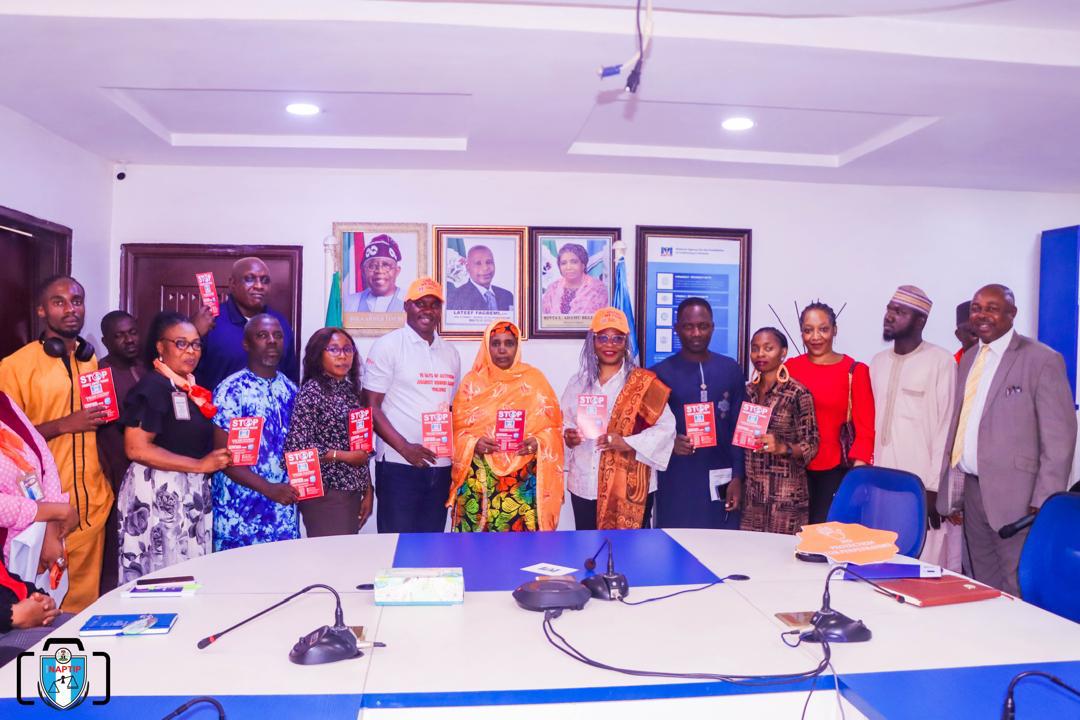
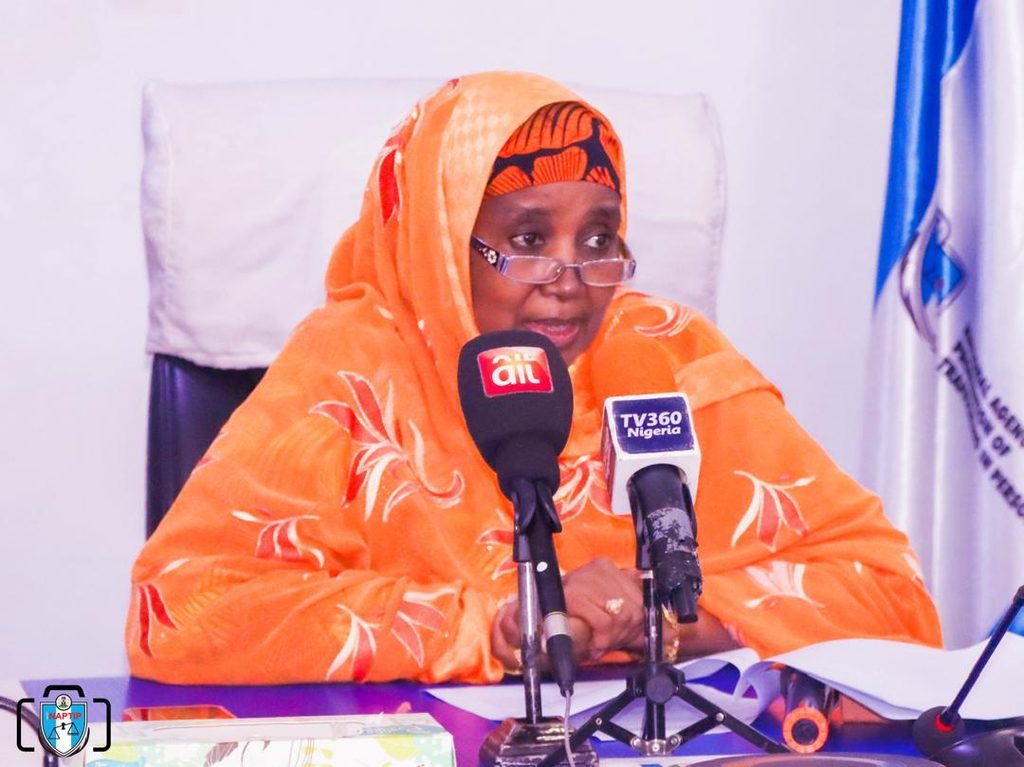
The Executive Secretary of the NHRC, Chief Tony Ojukwu, disclosed the figures on Wednesday in Abuja while formally flagging off the Commission’s nationwide activities to mark the 2026 16 Days of Activism Against Gender-Based Violence.
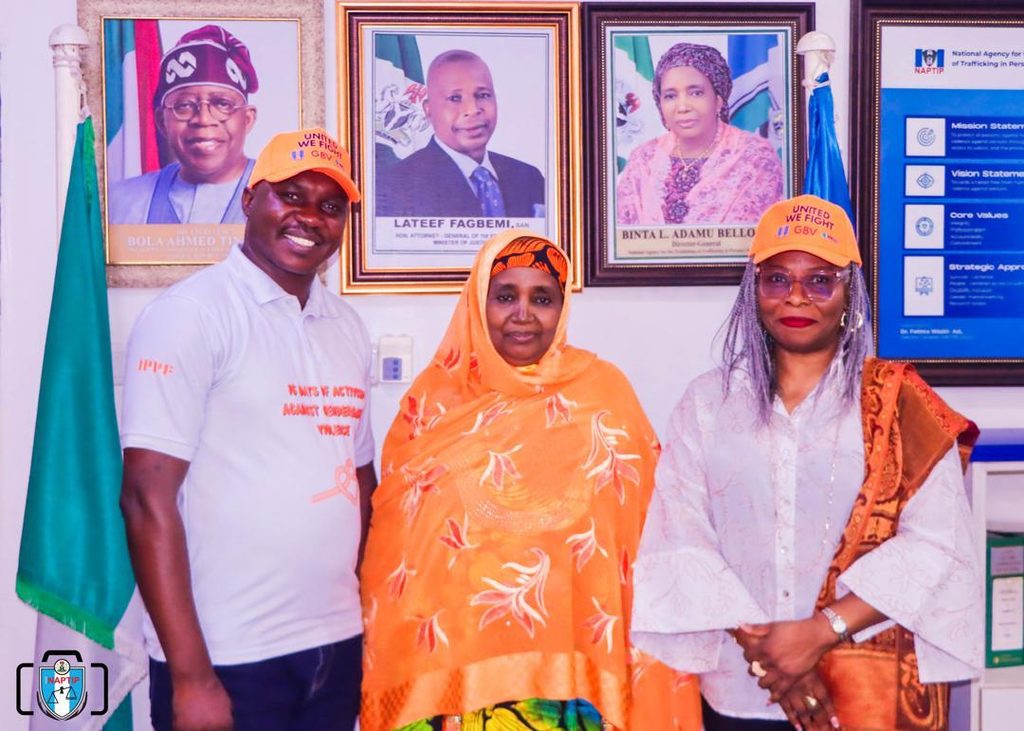
The campaign, being observed globally, is themed, “UNITE to End Violence Against Women and Girls: Ensure Justice, Protect Survivors, End Impunity.”
Ojukwu said violence against women and girls was not merely a social problem but a fundamental human rights violation that undermined dignity, equality and freedom, denying victims the right to live without fear, discrimination and abuse.
He said the campaign required more than public declarations, stressing the need for effective access to justice, survivor-centred protection, responsive institutions and accountability for perpetrators.
According to him, the NHRC’s Monthly Human Rights Situation Dashboard recorded more than 2.5 million complaints across its 36 state offices and the Federal Capital Territory between January and October 2026.
The October figures also showed 2,581 cases of denial of children’s access to education and 1,681 cases of child trafficking, further highlighting the vulnerabilities facing children across the country.
Ojukwu said the figures represented serious violations of fundamental rights, including the rights to life, dignity, equality, freedom from discrimination and protection from exploitation and abuse.
He said the Commission was intensifying interventions through advocacy, monitoring, institutional reforms, partnerships and direct protection of vulnerable persons in response to the growing challenges.
Among its interventions in 2026, the NHRC conducted grassroots engagements on women’s rights, sexual and gender-based violence and children’s rights in Bwari and across the six Area Councils of the FCT, as well as through its state offices nationwide.
The Commission also participated in the review and amendment of the Child Rights Act, 2003, while supporting stakeholder engagements on Nigeria’s implementation and domestication of the Maputo Protocol on Women’s Rights in Africa.
Ojukwu said the NHRC had also reviewed its Standing Orders and Rules of Procedure in partnership with International IDEA under the European Union-supported programme on Ending Sexual and Gender-Based Violence, with the aim of improving complaint handling and access to remedies for victims.
He added that the Commission, in collaboration with SOS Children’s Villages, developed and adopted a child safeguarding policy, while also working with stakeholders to establish a workplace sexual harassment policy.
As part of efforts to strengthen child protection mechanisms, the NHRC inaugurated the Child and Youth Ombuds Desk in collaboration with SOS Children’s Villages Nigeria, with support from the European Union, to provide children with a child-friendly platform to report violations and seek redress.
The Commission also documented 180 cases of sexual and gender-based violence involving displaced persons between May and June 2026, drawing attention to the protection challenges faced by vulnerable populations in displacement settings.
Ojukwu further disclosed that the Commission had secured the release of 12 detained youths in Benue State through community monitoring mechanisms, prevented the forced marriage of a 14-year-old girl in Adamawa State and ensured the imprisonment of a political office holder in Jos for defiling a child.
He said the Commission also secured the imprisonment of a man who committed sodomy with a boy in Kaduna, rescued children from hawking and child labour in Cross River and Adamawa states, and reached more than 56,000 people through human rights and gender-based violence prevention campaigns.
Other interventions, he said, included reuniting estranged families, returning abused child domestic workers to their parents outside Abuja, providing temporary shelter to survivors of domestic violence and rescuing a child from a mother with a mental health challenge before handing the child over to social welfare authorities.
The NHRC Executive Secretary said the Commission had strengthened partnerships with organisations including BAOBAB for Women’s Human Rights, the University of Pretoria and the National Institute for Legislative and Democratic Studies.
He also disclosed that the Commission recently signed a memorandum of understanding with the National Human Rights Commission of India to promote capacity building, training, research and exchange of expertise in handling human rights violations, including domestic violence and sexual and gender-based violence.
As part of the 16 Days campaign, the Commission said it had lined up nationwide engagements across its 36 state offices and the FCT, involving civil society organisations, the Nigerian Bar Association, the International Federation of Women Lawyers (FIDA), traditional rulers, religious leaders, lawmakers, judges, women and youth groups.
The engagements will include advocacy roadshows, consultations with community and religious leaders, judicial and legislative advocacy, school-based human rights outreach, health-sector accountability visits and media and civil society parley.
The Commission said the activities would also assess the capacity of health facilities to respond to sexual and gender-based violence cases, including the availability of post-exposure prophylaxis, medical care and other essential survivor-support services.
It added that findings from the engagements would be consolidated into recommendations and a national communiqué, alongside activities to commemorate International Human Rights Day on December 10 across the country.
Looking ahead to 2027, Ojukwu said the Commission would prioritise strengthening data and monitoring, expanding state-level interventions, advancing legislative implementation, protecting vulnerable and displaced populations, strengthening survivor-centred services, building institutional capacity and promoting accountability.
He called on families, traditional and religious institutions, schools, the media, law enforcement agencies, the judiciary, civil society and Nigerians generally to take collective responsibility for ending gender-based violence.
“We must challenge harmful practices, reject victim-blaming, educate our boys, empower our girls and create an environment where survivors can report violations without fear, stigma or discrimination,” he said.
Ojukwu formally declared the 2026 nationwide activities of the NHRC and its partners in the 36 states and the FCT open, urging stakeholders to unite in ensuring justice, protecting survivors and ending impunity.
NHRC flags off 16 Days of Activism, reports 2,141 child sexual abuse cases in October
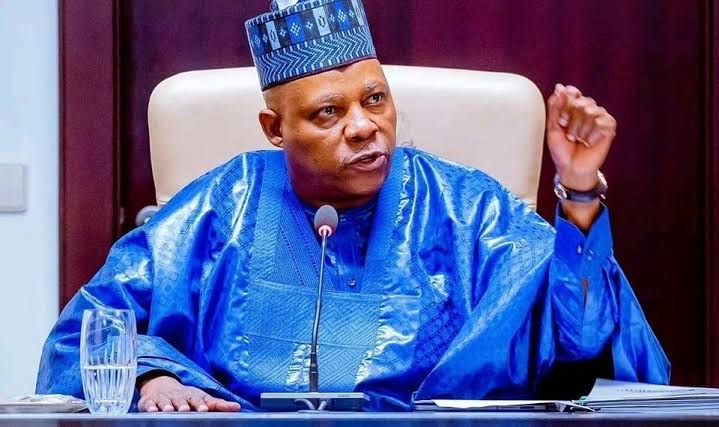
“I Can Throw Stones At Atiku, But Obi, Kwankwaso, Makinde Are My Friends” — Shettima
By: Our Reporter
Vice President Kashim Shettima drew a clear line on Tuesday, November 24, 2026, between friends he will not insult, and one man he says he has every right to attack.
Speaking at a stakeholders’ meeting in Maiduguri, Borno State held alongside the launch of multi-sectoral development interventions by the North-East Development Commission, Shettima’s comments went viral.
His message was simple: Politics does not have to be bitter. But if you attack his boss, expect a response.
He named them one by one: “Peter Obi, Governor Seyi Makinde, Rabiu Kwankwaso, and Rotimi Amaechi are my friends. Have you ever heard me insult them?”
Shettima said he and Obi were governors at the same time, Obi in Anambra, himself in Borno. Makinde is a personal friend. Kwankwaso is a friend too.
He even recalled how his support for Amaechi in the Nigerian Governors’ Forum chairmanship contest once caused friction with former President Goodluck Jonathan, a sign, he suggested, of how far his loyalty to friends goes.
Then he turned to Atiku Abubakar, the ADC presidential candidate.
For Atiku, the rules are different. “Atiku Abubakar is an elder statesman, but as a Fulani man, I have the right to throw stones at him, and he has to endure stoically whatever stones I throw at him,” Shettima said.
He dismissed those criticizing the banter as people who lack a sense of history. In his framing, this is Fulani-to-Fulani sparring and Atiku, having repeatedly attacked President Bola Tinubu, should take it.
That, Shettima said, is the condition for his restraint:
“So long as they do not attack my boss, we will practice politics of maturity, politics without bitterness, and politics of tolerance because what binds us together surpasses whatever divides us.”
The timing matters. Nigeria is heading into the 2027 general elections. Tinubu and Shettima are seeking re-election on the APC ticket. Obi is running on the Nigeria Democratic Congress (NDC) ticket, with Kwankwaso as his running mate. Atiku is leading the ADC. Makinde has been part of broader opposition discussions.
Shettima and Obi have clashed on policy before. In October 2026, Shettima called Obi a “master of bogus statistics and incoherent economic prescriptions” over his economic arguments and Kwankwaso publicly defended Obi’s data.
But Shettima insists there is a difference between policy criticism and personal insult.
For his friends, he says, he will keep it mature. For Atiku who he accuses of attacking Tinubu, the stones will keep flying.
“I Can Throw Stones At Atiku, But Obi, Kwankwaso, Makinde Are My Friends” — Shettima
News
Shettima Unveils 10,000 Electric Vehicles in North-East, NEDC Plans 100,000 Fleet, Airline, Pharmaceutical Firm
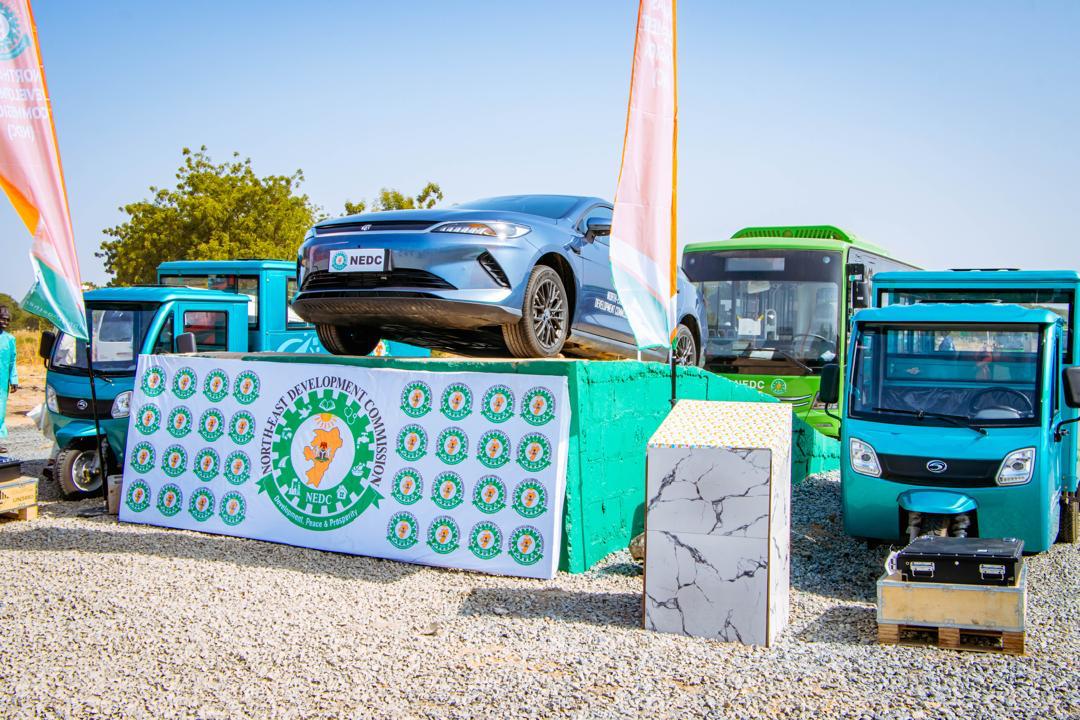
Shettima Unveils 10,000 Electric Vehicles in North-East, NEDC Plans 100,000 Fleet, Airline, Pharmaceutical Firm
…As FG steps up post-insurgen your phone reconstruction, targets 50MW solar power, infrastructure renewal
By: Michael Mike
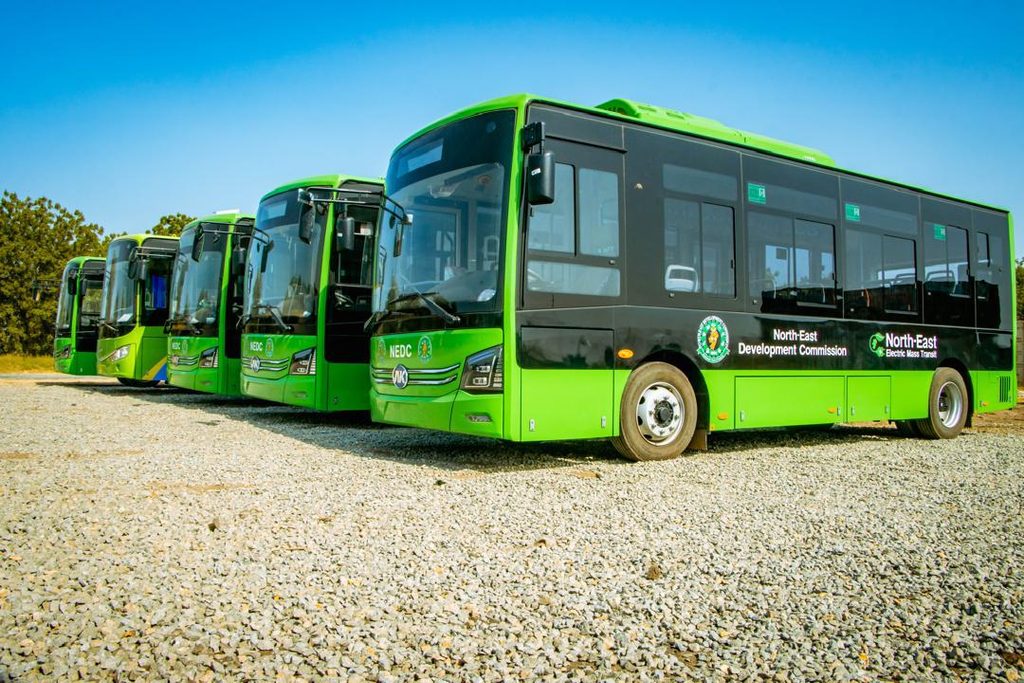
Vice-President Kashim Shettima on Tuesday unveiled 10,000 electric vehicles in Maiduguri, Borno State, as the Federal Government intensified efforts to rebuild the North-East, with the North-East Development Commission (NEDC) announcing plans to expand the fleet to more than 100,000 vehicles across the region.
The ambitious electric mobility programme, alongside plans to establish a regional airline and pharmaceutical company, signals a fresh push to transform the North-East from a region devastated by years of insurgency into an emerging centre of economic activity, industrial development and renewable energy investment.
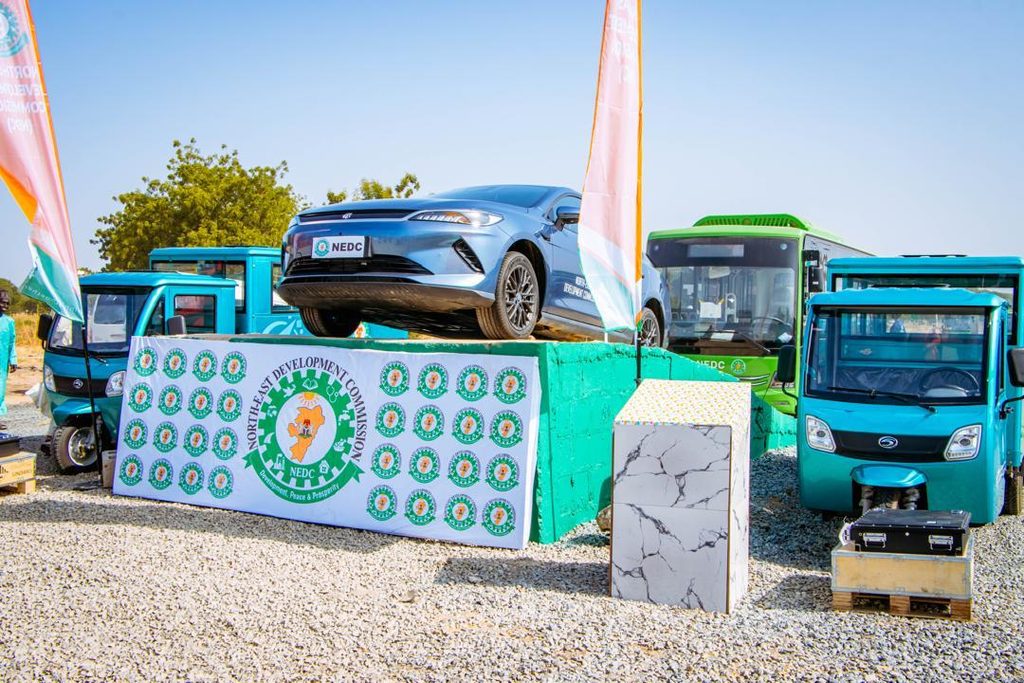
The initiatives formed part of a series of development projects commissioned by Shettima in Maiduguri, covering transportation, roads, education, healthcare, agriculture, energy and humanitarian support, in what officials described as a significant milestone in the region’s reconstruction efforts.
The proposed expansion of the electric vehicle scheme, coupled with a planned 50-megawatt solar mini-grid project, also places renewable energy at the centre of the NEDC’s development strategy, particularly as the region seeks alternatives to expensive petrol-powered transportation and unreliable electricity supply.
Speaking at the commissioning ceremony, Shettima challenged governments and communities in the North-East to take advantage of the region’s abundant sunshine to develop solar energy and other alternative power sources.
He described electric mobility as essential to the region’s development, noting that the initiative would reduce dependence on petrol, ease transportation difficulties and support the transition to cleaner energy.
The Vice-President commended the NEDC and governors of the six North-East states for their contributions to the region’s recovery but stressed that the battle against Boko Haram insurgency, banditry and other security threats required sustained cooperation.
He called for greater unity among political leaders and stakeholders, insisting that the region’s development aspirations could only be achieved in an atmosphere of peace and stability.
The Minister of Regional Development, Abubakar Momoh, said the electric vehicle initiative was consistent with President Bola Tinubu’s Renewed Hope Agenda and would provide affordable transportation for women, youths, traders and farmers.
He said the intervention was designed not merely to improve mobility but also to stimulate commercial activities, support livelihoods and create opportunities for economic growth.
Momoh also highlighted the Jere Bowl road project, which is expected to improve access to agrarian communities and facilitate the transportation of agricultural produce, alongside the proposed 50-megawatt solar mini-grid initiative.
In a further indication of the commission’s long-term economic ambitions, the Minister of State for Regional Development, Uba Maigari Ahmadu, disclosed plans to establish an airline and a pharmaceutical company for the North-East.
The proposed investments are expected to broaden the region’s economic base, strengthen connectivity and create opportunities in the aviation and pharmaceutical sectors.
Borno State Governor and Chairman of the North-East Governors Forum, Babagana Zulum, said the region was gradually recovering from years of insecurity through rehabilitation, resettlement, innovation and infrastructure development.
Zulum, who commended the NEDC for its interventions, said the commission had made remarkable contributions to rebuilding communities and restoring hope among residents affected by the insurgency.
“No other government agency did what you have done,” the governor declared.
He expressed appreciation to Tinubu and Shettima for their support for the region, urging the Federal Government to sustain its commitment to security, reconstruction and economic recovery.
Gombe State Governor, Inuwa Yahaya, also praised the Federal Government for establishing regional development commissions, describing them as important institutions for addressing the peculiar development challenges confronting different parts of the country.
He commended the NEDC’s electric mobility programme and reaffirmed the commitment of governors in the region to collective action in advancing development.
Earlier, NEDC Managing Director, Mohammed Ali Alkali, said Shettima’s visit was not merely to console the people over the devastation caused by insurgency but also to witness the achievements and resilience of a region determined to rebuild itself.
Alkali said the 10,000 electric vehicles would help reduce dependence on petrol and ease transportation difficulties, while the commission was also investing in human capital development through skills acquisition programmes and scholarships.
He listed the commission’s interventions to include the construction and rehabilitation of roads and bridges, schools, hospitals, provision of medical equipment, boreholes, agricultural support, humanitarian assistance and livelihood programmes for vulnerable communities.
The managing director commended Tinubu for providing the funding and institutional support required to execute the commission’s development programmes.
The North-East, comprising Borno, Adamawa, Yobe, Bauchi, Gombe and Taraba states, has endured more than a decade of insurgency, particularly from Boko Haram and its splinter factions, resulting in widespread destruction of infrastructure, displacement of millions of people, disruption of agriculture and the collapse of economic activities in several communities.
The crisis has made reconstruction, rehabilitation and resettlement major priorities for governments and development partners, with Borno bearing a particularly heavy burden of the conflict.
Established to coordinate and accelerate the recovery of the region, the NEDC has been implementing interventions aimed at rebuilding critical infrastructure, restoring livelihoods, improving access to education and healthcare and addressing the development deficits that have compounded insecurity.
The latest projects underscore the growing emphasis on moving beyond emergency humanitarian interventions towards long-term economic recovery.
However, the success of the ambitious electric mobility programme and proposed investments in aviation, pharmaceuticals and solar energy will ultimately depend on effective implementation, sustainable financing, adequate infrastructure and the restoration of lasting security across the region.
Shettima Unveils 10,000 Electric Vehicles in North-East, NEDC Plans 100,000 Fleet, Airline, Pharmaceutical Firm

NHRC flags off 16 Days of Activism, reports 2,141 child sexual abuse cases in October

Tinubu receives triumphant welcome in Maiduguri, vows to rescue abducted Lassa, Mussa schoolchildren

NDLEA busts industrial meth lab in Enugu, arrests drug baron, five Mexican specialists

Roger Federer’s Shock as DNA Results Reveal Myla and Charlene Are Not His Biological Children

THE PLIGHT OF FARIDA

FAILED COUP IN BURKINA FASO: HOW TRAORÉ NARROWLY ESCAPED ASSASSINATION PLOT AMID FOREIGN INTERFERENCE CLAIMS
-
 News3 years ago
Roger Federer’s Shock as DNA Results Reveal Myla and Charlene Are Not His Biological Children
-
Opinions5 years ago
THE PLIGHT OF FARIDA
-
 News2 years ago
FAILED COUP IN BURKINA FASO: HOW TRAORÉ NARROWLY ESCAPED ASSASSINATION PLOT AMID FOREIGN INTERFERENCE CLAIMS
-
 Opinions5 years ago
POLICE CHARGE ROOMS, A MINTING PRESS
-

 News3 years ago
EYN: Rev. Billi, Distortion of History, and The Living Tamarind Tree
-

 ACADEMICS3 years ago
A History of Biu” (2015) and The Lingering Bura-Pabir Question (1)
-

 Columns3 years ago
Army University Biu: There is certain interest, but certainly not from Borno.
-

 Politics1 year ago
2027: Why Hon. Midala Balami Must Go, as Youths in Hawul and Asikira/Uba Federal Constituency Reject ₦500,000 as Sallah Gift
