
News
AFS ADVOCATES FOR GENDER PERSPECTIVES IN THE USE OF THE DEATH PENALTY IN NIGERIA

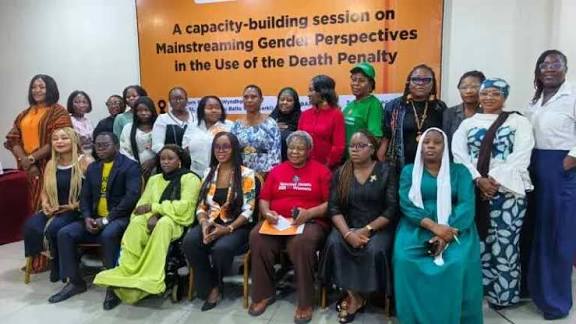
AFS ADVOCATES FOR GENDER PERSPECTIVES IN THE USE OF THE DEATH PENALTY IN NIGERIA
By: Michael Mike
An international non-governmental organisation, Avocats Sans Frontieres (ASF) France has revealed that no fewer than 82 female Nigerians are currently on death row in various correctional centres across the country even as it advocated for gender perspective in application of death penalty.
The advocacy was made at the two-day workshop organised by ASF to champion the course of the female inmates who are on death row as the World Women’s Rights Organisation celebrates in Abuja the 16 Days Advocacy on Gender Based Violence.
At the workshop themed: “Capacity-building Session on Mainstreaming Gender Perspective in the Use of the Death Penalty” the Country Director, ASF France in Nigeria, Angela Uzoma-Iwuchukwu said the statistics showed that the situation in Nigeria is the highest in sub-Saharan Africa, with those on death row somehow neglected and forgotted.
Uzoma-Iwuchukwu further said: “We strongly believe that these women, who have often been neglected, forgotten, because they are behind bars and on death row need a voice, we have decided to raise their voices and their peculiar circumstances.
“And this is because there are gender issues around the application of the capital punishment. It is often projected as being neutral, but the death penalty is not neutral.
“There are gender biases all across the criminal justice system, starting from the point of arrest, conviction and even incarceration of women who are facing the death penalty,” she said.
She added that “a lot of these women are victims of domestic violence who often when they react and it leads to maybe homicide cases, the criminal justice system fails to recognise them as victims as they go through the justice system.”
She went on to say, what we see in practice in Nigeria is that women are subjected to further brutality and gender biases within the set-up.
She said: “And we argue that these women are in fact convicted and tried for more than their crimes.
“They are tried for more than the crimes that they have committed. They are tried for being women who dared to commit crimes.
“And this is the gender bias, some of the gender bias that we see. There are several other issues that pertain to women and we see that they are not in any way taken into account.
“Now a lot of these women, we see issues around poverty, cross-cutting issues around poverty and how this affects women.”
In the same vein, the Founder and Chief Facilitator, Edeika Trauma Care Centre and Equity Advocates, Mrs. Ene Ede, emphatically kicked against Death Penalty in all forms. She believed life is sacred.
She said: “Anything that has to do with taking life is of utmost important to God, to humanity, to nature and to our country because, it is about deflection of human resources, it is about grieving, it is about injustice because most of the time you find element of injustice embedded in this life sentencing. So it is very problematic. If we look at it with another eye, the better for us. It is not something we should be in hurry to do.
“Therefore, it will be better to abolish death penalty in Nigeria. That is not to say we want to encourage criminality, even with the law in place there is escalation of criminality. We need to look at the justice system again with human eye, with empathy, with patriotism, because it is citizens and human beings they are dealing with and not animals”
Ene said life is too delicate to be toy with, adding that we should look at the area of the law that makes us vulnerable, that the level of its vulnerabilities is too high.
AFS ADVOCATES FOR GENDER PERSPECTIVES IN THE USE OF THE DEATH PENALTY IN NIGERIA



NDLEA Rearrests 83-Year-Old Woman for Drug Trafficking, Seizes 2.8 Tonnes of Cannabis
…South African Woman Arrested with 32.74kg Cannabis at PH Airport
By: Michael Mike
An 83-year-old woman previously convicted for drug trafficking has been arrested again with methamphetamine and Colorado, as the National Drug Law Enforcement Agency (NDLEA) records major drug seizures across several states, including the arrest of a South African woman with 32.74 kilogrammes of cannabis at Port Harcourt airport.
The octogenarian, Uloma Uchechi Sunday, was arrested last Wednesday at her residence in Ite-Uzo, Umuaguma, Obingwa Local Government Area of Abia State, with quantities of methamphetamine and Colorado, a synthetic cannabinoid, allegedly tied around her waist with a wrapper.
The NDLEA spokesman, Femi Babafemi in a statement on Sunday said the octogenarian arrest followed intelligence indicating that she operated a drug joint allegedly patronised by criminal elements terrorising the community.

Sunday had previously been arrested on May 17, 2025, alongside her 32-year-old daughter, Chisom Uchechi, at the same residence. The agency said they were found with 50 grammes of methamphetamine, 522 grammes of skunk, 260 grammes of fresh cannabis leaves and 12 grammes of tramadol.
Both women pleaded guilty and were sentenced to 12 months’ imprisonment or a fine of N200,000 each. They paid the fines and were released.
According to the NDLEA, the older woman subsequently returned to the drug trade and allegedly established a drug joint at her residence.
In a separate operation, operatives of the agency, working with the Nigeria Customs Service, arrested a South African national, Gebashe Sithandiwe Jessie, at the Port Harcourt International Airport, Omagwa, Rivers State, with 30 parcels of Thai Loud, a cannabis strain weighing 32.74 kilogrammes.
The suspect, who arrived from Thailand through Doha aboard a Qatar Airways flight, allegedly concealed the drugs in two travelling bags. The agency said she admitted to previously trafficking drugs through other African countries and attempting to expand her route to Port Harcourt.

The arrests formed part of a series of interdiction operations in which the NDLEA recovered large consignments of illicit drugs at airports, along highways and in residential locations across Lagos, Taraba, Kano, Kaduna, Edo, Cross River, Ondo and Plateau states.
At the Murtala Muhammed International Airport, Lagos, operatives intercepted 354,000 tablets of tapentadol, each reportedly dosed at 250mg, weighing 307.2 kilogrammes.
The shipment, comprising nine cartons from Pakistan aboard a Royal Air Maroc flight, had been placed under surveillance after arriving on September 29. A joint examination last Tuesday uncovered the consignment.
In another operation at the airport, officers recovered 70 parcels of Colorado weighing 75.9 kilogrammes from six Ghana-Must-Go bags in a consolidated cargo shipment from the United Kingdom.
The agency said a clearing agent, John Edrah, 54, was arrested on September 30. Other suspects subsequently arrested were Taofiq Ajibola, 54, an Uber driver; Adetunji Adebayo; and Kazeem Dosunmu, 48, a clothing trader.
Ajibola allegedly disclosed that the drugs had been sent by a UK-based associate, Lukman Sa’idu, while Dosunmu reportedly identified another UK-based individual, Yusuf, as the source of his consignment.
In Cross River State, NDLEA operatives raided Iyala Nkun village in Ikom Local Government Area on October 4, arresting Adama Inuwa, 46, and recovering 181 bags of cannabis weighing 1,100 kilogrammes, alongside 17.15 kilogrammes of cannabis seeds.

In Edo State, officers intercepted a black Toyota Camry at Otuo, Owan East Local Government Area last Monday. The vehicle was allegedly conveying 1,049 blocks of compressed cannabis weighing 702.83 kilogrammes.
Three suspects — Monday Orji, 52; Monday Lawal, 40; and Precious Uduegele, 20 — were arrested in connection with the seizure.
Another suspect, Ojugo Mercy, 26, was arrested at Asoro, off Sakponba Road, Benin City, with 989 grammes of Loud, 13 grammes of Colorado and 83 grammes of methamphetamine.
In Ondo State, operatives traced 21-year-old Happy Endurance to a hideout in the Shasha area of Akure last Monday, recovering 29 bags of cannabis weighing 290 kilogrammes.
On the same day, another raid at an apartment in Oba-Ile, Akure, led to the arrest of Tunde Adebayo, 42, with 35 bags of cannabis weighing 351 kilogrammes.
In Taraba State, two suspects, Abdulrasheed Mohamed, 31, and Abubakar Saidu, 37, were arrested at Chanchanji village in Wukari Local Government Area last Friday, with 166,200 tablets of tramadol, each reportedly dosed at 225mg and weighing 107 kilogrammes.
A separate stop-and-search operation along the Kano-Maiduguri Road in Kano State on the same day led to the arrest of Yahaya Musa, 32, with 24,990 capsules of tramadol, 50,000 tablets of diazepam and 22,000 tablets of Exol-5.
In Kaduna State, operatives patrolling the Zaria-Kaduna Expressway arrested Mohammed Musa, 29, with 31 jumbo bags and 775 blocks of skunk weighing a combined 1,027 kilogrammes.
At Orile, Lagos, another suspect, Musbau Balogun Adekunle, was arrested last Tuesday with 32.51 kilogrammes of skunk and 52.65 kilogrammes of its seeds, bringing the total seizure to 85.16 kilogrammes.
Meanwhile, a raid on the residence of Christian Uju, 45, at Rukuba Road, Jos, Plateau State, last Thursday resulted in the recovery of methamphetamine, firearms and ammunition.
The agency said officers seized 47 grammes of methamphetamine, two pump-action rifles, one locally made gun, 199 live cartridges, five rounds of 7.62mm ammunition and one round of 9mm ammunition.
Beyond the seizures, the NDLEA said its commands and formations sustained public enlightenment campaigns under its War Against Drug Abuse initiative, targeting students, worshippers, workers and communities across the country.
The NDLEA Chairman and Chief Executive Officer, Brig. Gen. Buba Marwa (retd.), commended officers and men of the Lagos, Murtala Muhammed International Airport, Port Harcourt International Airport, Taraba, Kano, Kaduna, Edo, Cross River, Ondo and Plateau commands for what he described as professional and intelligence-driven operations.
Marwa urged personnel nationwide to sustain the agency’s balanced approach to drug control, combining enforcement with preventive education and public sensitisation.
NDLEA Rearrests 83-Year-Old Woman for Drug Trafficking, Seizes 2.8 Tonnes of Cannabis
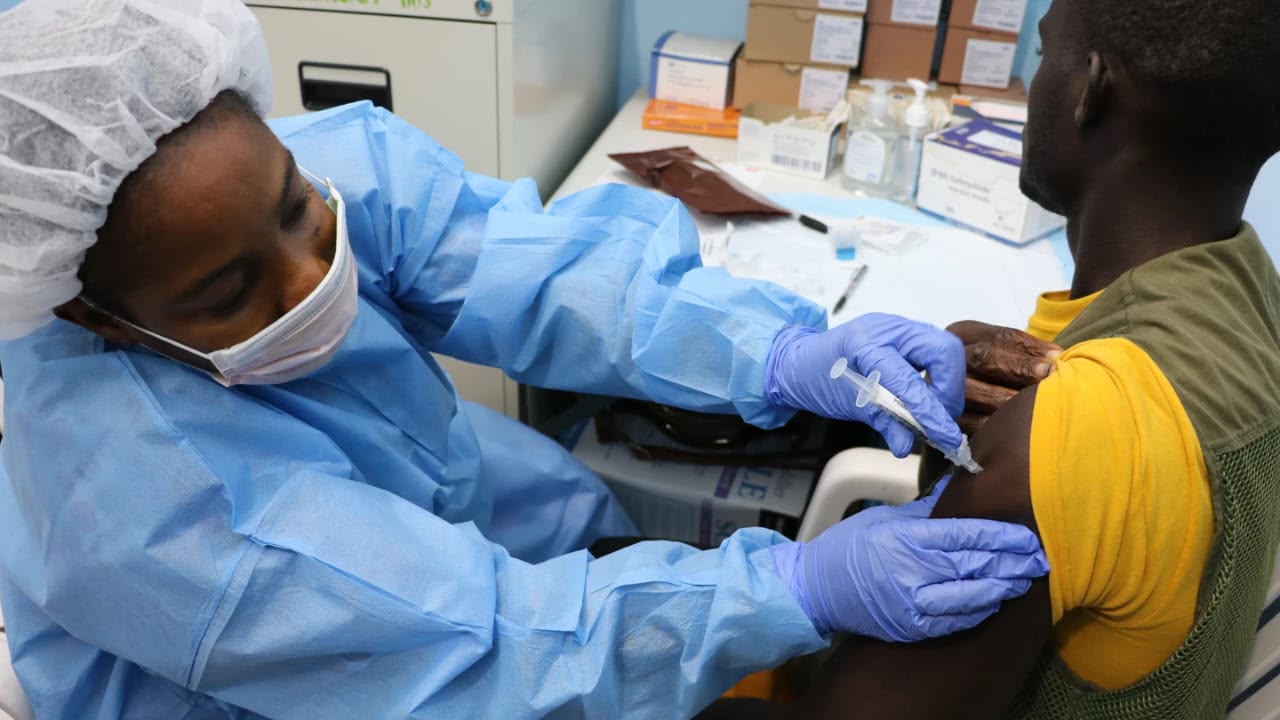
WAHO, Global Partners Seek Funding Framework for Lassa Fever Vaccine
By: Michael Mike
The West African Health Organisation (WAHO) and international health partners will meet in Berlin on Sunday to advance a collaborative financing framework for Lassa fever vaccine development, as efforts intensify to strengthen the region’s preparedness for epidemic threats.
The high-level roundtable, scheduled for October 11 on the sidelines of the World Health Summit, will explore funding commitments for vaccine research, late-stage clinical development, research readiness and regional manufacturing capacity.
The initiative comes amid persistent concerns over Lassa fever, a major public health threat in West Africa, and the limited commercial incentives for developing vaccines against epidemic diseases.
Convened by IAVI, MedAccess and the Coalition for Epidemic Preparedness Innovations (CEPI), the meeting is being organised with support from WAHO and the German development agency, Deutsche Gesellschaft für Internationale Zusammenarbeit (GIZ), with funding from Germany’s Federal Ministry for Economic Cooperation and Development (BMZ).
The roundtable is expected to bring together regional and international partners to review progress on the proposed financing framework, clarify their respective roles and identify concrete next steps, including potential financial commitments.
WAHO said it would use the meeting to advance the priorities of member states of the Economic Community of West African States (ECOWAS), with emphasis on regional ownership, coordinated investment and sustainable financing for Lassa fever vaccine preparedness.
The organisation will be represented by its Director of Healthcare Services, Dr Virgil Lokossou, who is expected to highlight how investments in vaccine development could strengthen clinical research, laboratory capacity, disease surveillance, regulatory systems and regional preparedness for future epidemics.
The discussions build on the September 2025 ministerial roundtable in Abidjan, Côte d’Ivoire, convened by WAHO in collaboration with the governments of Côte d’Ivoire and Nigeria.
The meeting brought together health ministers or their representatives from 11 West African countries, culminating in a communiqué that supported the advancement of IAVI’s recombinant vesicular stomatitis virus (rVSV) Lassa fever vaccine candidate as a regional pathfinder.
The communiqué also committed participating countries to mobilising national, regional and international resources through a collaborative co-funding approach.
Building on the commitments, WAHO has led a regional Demand Forecasting Working Group to develop projections that could inform the vaccine investment case.
The projections draw on country consultations, expert interviews, key informant inputs and contributions from national Lassa fever task forces.
The proposed financing framework is expected to combine contributions from governments, philanthropic organisations and other financing partners to support the advancement of Lassa fever vaccines.
IAVI’s investigational rVSV Lassa fever vaccine candidate, supported by CEPI and the European and Developing Countries Clinical Trials Partnership (EDCTP), underscores the need for sustained investment in vaccine research alongside stronger regional clinical research and manufacturing capabilities.
Beyond Lassa fever, the partners believe the financing approach could provide a model for supporting the development of vaccines against other priority epidemic diseases.
The closed-door roundtable will hold from 4.30 p.m. to 6 p.m. Central European Summer Time at the Pullman Berlin Schweizerhof in Germany.
WAHO, Global Partners Seek Funding Framework for Lassa Fever Vaccine
ActionAid Raises Alarm as 33.4% of Nigerian Women Married Before 18
…Group urges governments to enforce child marriage laws, boost girls’ education
By: Michael Mike
ActionAid Nigeria has called on federal and state governments to strengthen enforcement of laws against child marriage and increase investment in girls’ education and rights, warning that early marriage continues to deprive millions of Nigerian girls of opportunities to determine their futures.
The organisation, in a statement issued on Saturday ahead of the 2026 International Day of the Girl, said 33.4 per cent of young Nigerian women aged 20 to 24 were married before the age of 18, with the prevalence approaching 50 per cent in the North-east and North-west.
The statement, signed by its Country Director, Andrew Mamedu, cited an analysis of the 2024 Demographic and Health Survey, alongside UNICEF estimates that more than 3.7 million women aged 20 to 24 were married before turning 18.
The International Day of the Girl, marked on October 11, is being observed this year under the theme, “End child marriage and invest in girls’ rights.”
ActionAid said child marriage was not merely a cultural practice or a family matter but a violation of girls’ rights that could disrupt their education, restrict their economic prospects and expose them to violence and early pregnancy.
It added that more than 12 million girls globally were married before adulthood every year, underscoring the need for sustained action by governments, communities and development partners.
The organisation identified poverty and limited access to education as major factors contributing to early marriage, noting that girls from poorer households and those with lower levels of education faced greater risks.
According to the statement, UNICEF analysis indicates that ensuring every girl in Northern Nigeria completes secondary education could reduce child marriage by as much as two-thirds, while also lowering adolescent pregnancy and improving economic productivity.
To illustrate the impact of interventions that empower girls, ActionAid recounted the experience of Aisha Aliyu, who was 16 when her family began preparing for her marriage to her cousin.
Aisha, who participated in the organisation’s Girl-led Research and Action Project, learnt about girls’ rights, the importance of education and the risks associated with early marriage.
Armed with that knowledge, she found the confidence to speak to her parents about her desire to continue her education. Her parents eventually called off the marriage, allowing her to return to school.
She now hopes to become a businesswoman and mentor other girls in her community.
ActionAid said her experience demonstrated how access to information, safe spaces and opportunities for participation could help girls challenge practices that threatened their futures.
Through its Girl-led Research and Action initiative, the organisation supports girls to investigate issues affecting their lives, generate evidence and use their findings to advocate for change.
It also works with women’s rights organisations and communities through its Local Rights Programme to address harmful gender norms, violence, barriers to education and the exclusion of girls from decision-making.
The organisation said its Renewed Women’s Voice and Leadership Nigeria Project, funded by Global Affairs Canada, also supports locally led initiatives to advance gender equality and strengthen women’s and girls’ leadership.
Mamedu said investment in girls must go beyond protecting them from abuse to recognising their rights and enabling them to participate in decisions affecting their lives.
“Investing in girls is not simply about protecting them from harm; it is about recognising their rights, supporting their leadership and creating the opportunities they need to shape their own lives and contribute meaningfully to society,” he said.
He urged governments to ensure that the systems and resources required to protect girls’ rights were available and effective.
ActionAid called on federal and state governments, the National and State Assemblies, and justice and law-enforcement institutions to ensure that laws protecting girls against child marriage and other harmful practices were effectively implemented, with clear accountability for violations.
It also urged the Federal Ministry of Education, the Universal Basic Education Commission, state ministries of education and state universal basic education boards to increase investment in safe, quality and inclusive education, particularly for girls in rural, conflict-affected and marginalised communities.
The organisation further called for expanded social protection and livelihood support for vulnerable households to ease the economic pressures that push girls into early marriage and school dropout.
It urged ministries responsible for women’s affairs and youth development, local governments, schools, legislators and community institutions to establish safe spaces where girls could participate meaningfully in research, policy discussions and decisions affecting their lives.
Parents, traditional and religious leaders, civil society organisations, schools and the media were also urged to challenge social norms that restrict girls’ choices and support their right to education and leadership.
ActionAid said ending child marriage required coordinated action to address its underlying causes, protect girls from harmful practices and ensure that every girl had the opportunity to learn, thrive and shape her future.
ActionAid Raises Alarm as 33.4% of Nigerian Women Married Before 18

NDLEA Rearrests 83-Year-Old Woman for Drug Trafficking, Seizes 2.8 Tonnes of Cannabis

WAHO, Global Partners Seek Funding Framework for Lassa Fever Vaccine

2027: We’ll reset Nigeria, make life easy for citizens, says Makinde

Roger Federer’s Shock as DNA Results Reveal Myla and Charlene Are Not His Biological Children

THE PLIGHT OF FARIDA

FAILED COUP IN BURKINA FASO: HOW TRAORÉ NARROWLY ESCAPED ASSASSINATION PLOT AMID FOREIGN INTERFERENCE CLAIMS
-
 News3 years ago
Roger Federer’s Shock as DNA Results Reveal Myla and Charlene Are Not His Biological Children
-
Opinions5 years ago
THE PLIGHT OF FARIDA
-
 News1 year ago
FAILED COUP IN BURKINA FASO: HOW TRAORÉ NARROWLY ESCAPED ASSASSINATION PLOT AMID FOREIGN INTERFERENCE CLAIMS
-

 News3 years ago
EYN: Rev. Billi, Distortion of History, and The Living Tamarind Tree
-
 Opinions5 years ago
POLICE CHARGE ROOMS, A MINTING PRESS
-

 ACADEMICS3 years ago
A History of Biu” (2015) and The Lingering Bura-Pabir Question (1)
-

 Columns3 years ago
Army University Biu: There is certain interest, but certainly not from Borno.
-

 Politics1 year ago
2027: Why Hon. Midala Balami Must Go, as Youths in Hawul and Asikira/Uba Federal Constituency Reject ₦500,000 as Sallah Gift
