
Columns
Ahmadu Musa Kida: A giant step from the Basketball Association to NNPCL

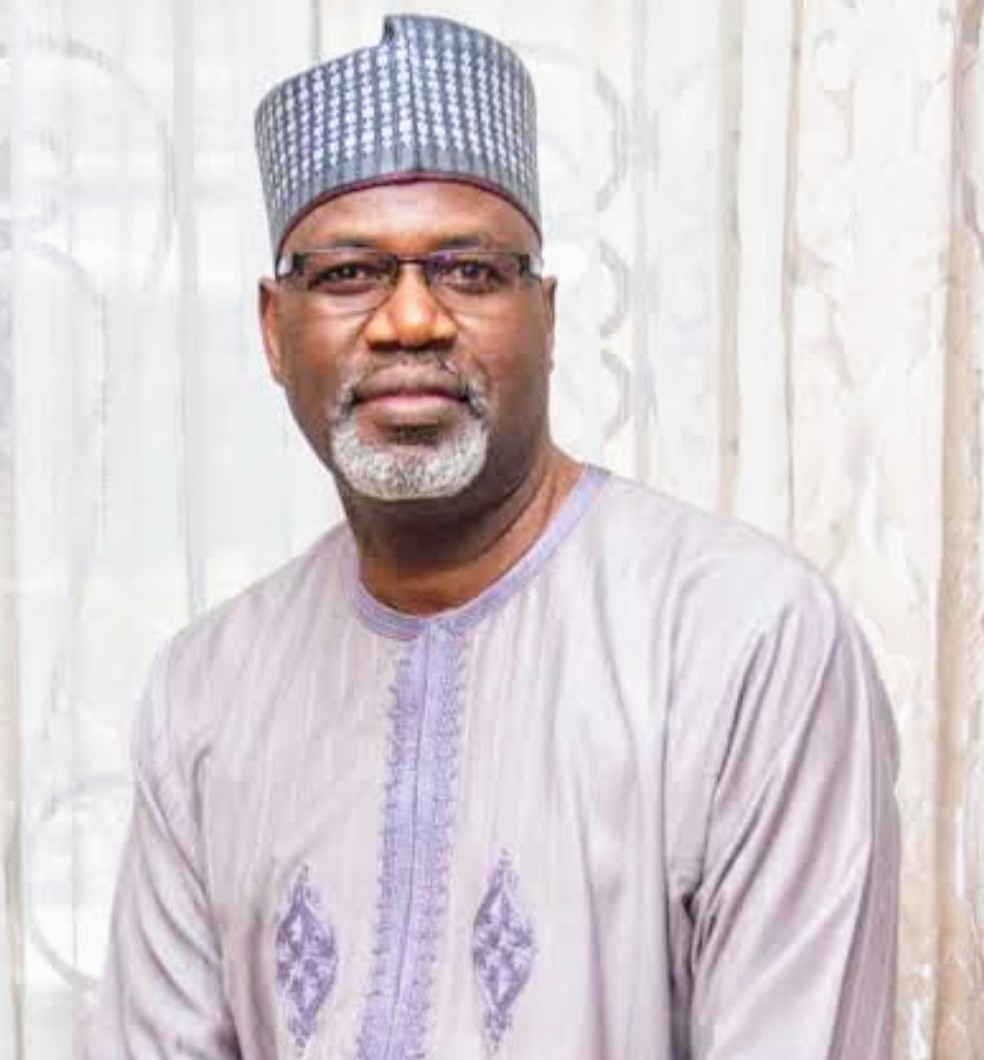
Ahmadu Musa Kida: A giant step from the Basketball Association to NNPCL
By: Dr. James Bwala
The recent appointment of Ahmadu Musa Kida as the non-executive chairman of the Nigerian National Petroleum Company Limited (NNPCL) signifies a pivotal shift in leadership within Nigeria’s oil sector. This transition, following President Bola Ahmed Tinubu’s significant restructuring of NNPCL’s board, underscores the necessity for diversified expertise in tackling complex industry challenges. Kida’s previous role as president of the Nigeria Basketball Federation may seem disconnected from oil and gas; however, his extensive background in this sector equips him with unique insights critical for navigating NNPCL’s ambitious goals.
Kida’s career trajectory is primarily rooted in the oil and gas industry rather than basketball. His experience includes leadership positions at respected companies such as TotalEnergies and Pan Ocean Oil Corporation. This foundation not only demonstrates his capability but also reinforces the importance of appointing leaders who possess relevant expertise to drive substantial changes aimed at increasing Nigeria’s refining capacity to 500,000 barrels per day by 2030.
Ahmadu Musa Kida’s appointment reflects a strategic move towards fostering innovation and attracting investment in Nigeria’s oil sector. By leveraging his vast experience, Kida is poised to lead NNPCL through transformative initiatives that promise economic growth and sustainability. Therefore, it is imperative that stakeholders support this new direction under Kida’s leadership for a prosperous future in Nigeria’s energy landscape.
With a clear mandate to enhance operational efficiency and drive strategic growth, Kida’s leadership is expected to facilitate the critical transformation required for Nigeria’s energy sector to thrive in an increasingly competitive global market. His unique blend of industry knowledge and strategic acumen is expected to not only drive operational excellence but also position NNPCL as a leading force in the global energy landscape. This alignment of leadership with industry-specific expertise is essential, especially as the global energy sector undergoes rapid changes driven by technological advancements and shifting economic priorities.
Musa Kida has a hand of Gold that turns anything around him to . With his background in both strategic leadership and sector-specific expertise, Kida is well-positioned to navigate the complexities of the global energy market while fostering a culture of innovation within NNPCL. Kida’s strategic vision and ability to harness emerging technologies will be crucial in steering NNPCL towards achieving these ambitious goals while maintaining a competitive edge.
READ ALSO:https://newsng.ng/umth-how-professor-ahidjos-transformation-agenda-impacted-the-information-unit/
Kida’s leadership is anticipated to leverage his extensive network within the global energy sector to forge strategic partnerships and attract significant foreign investment, crucial for achieving NNPCL’s ambitious targets. Kida’s appointment is a strategic move by President Bola Tinubu, reflecting a broader vision to integrate diverse leadership experiences and drive NNPCL towards its ambitious targets of increasing refining capacity and securing substantial investments.
Kida’s unique blend of sports management and corporate governance experience is expected to bring a fresh perspective to NNPCL’s strategic initiatives. This approach aligns with the government’s broader economic strategy to diversify leadership and harness cross-sector expertise, ultimately positioning Nigeria as a competitive player in the global energy market. Kida’s appointment is not just a testament to his versatile career but also reflects a strategic move to integrate diverse expertise into the energy sector, potentially driving innovative solutions and fostering partnerships that could redefine Nigeria’s role in the global market.
His leadership in both sectors exemplifies a unique blend of strategic vision and operational expertise, which is expected to bring about transformative changes in the NNPCL’s approach to meeting its ambitious goals. His ability to navigate complex organizational structures and drive impactful change is expected to be instrumental in reshaping NNPCL’s operational strategies.
Kida’s prior successes in navigating the complexities of sports administration, combined with his extensive experience in the oil and gas industry, provide him with a unique toolkit to address the multifaceted challenges facing NNPCL today. Kida’s adeptness at fostering collaboration and innovation is anticipated to be a driving force in aligning NNPCL’s objectives with global sustainability trends. Kida’s strategic acumen and industry insights are anticipated to drive NNPCL towards achieving its ambitious target of increasing oil refining capacity and attracting substantial investment. His multifaceted expertise positions him uniquely to lead NNPCL in navigating the complexities of the global energy landscape, ensuring that Nigeria not only meets but exceeds its strategic objectives.
With his appointment as Non-Executive Chairman, Kida is poised to leverage his extensive industry knowledge and leadership experience to spearhead strategic initiatives that could potentially elevate NNPCL’s status in the international energy arena. Kida’s leadership is expected to drive a strategic review of NNPCL’s assets, aiming to maximize value and attract further investment. Kida’s appointment comes at a critical juncture, as the NNPCL aims to implement robust strategies to enhance its competitiveness in the global market.
Kida’s leadership is expected to foster a culture of transparency and accountability within NNPCL, crucial for building investor confidence and ensuring sustainable growth. Kida’s ability to integrate his diverse experiences from both the sports and energy sectors is likely to foster innovative approaches that could redefine NNPCL’s operational strategies in a rapidly evolving industry. Kida’s transformative leadership is expected to bridge the gap between traditional energy practices and modern sustainability imperatives, fostering a forward-thinking approach that aligns with Nigeria’s broader economic goals.
The integration of Kida’s multifaceted expertise is anticipated to catalyze a paradigm shift in NNPCL’s operations, aligning them more closely with global standards and sustainability goals. Kida’s strategic vision and collaborative leadership style are anticipated to create synergies across various departments within NNPCL, driving efficiency and innovation while aligning with the company’s long-term objectives. His extensive background in managing complex organizations and driving strategic initiatives is expected to be instrumental in navigating the challenges facing NNPCL, particularly in optimizing asset utilization and securing investments to achieve the ambitious $60 billion target by 2030.
*James Bwala, PhD, writes from Abuja.
Ahmadu Musa Kida: A giant step from the Basketball Association to NNPCL


Radical Approach: Ways of Ending the Menace of Insecurity in Nigeria
By Balami Lazarus
Insecurity remains the most daunting challenge confronting Nigeria today, undermining our very existence and threatening the social and economic fabric of the nation. As a concerned citizen and observer of Nigeria’s ongoing crises, I hereby present my personal and radical perspective on how to eradicate this menace once and for all. This discourse is not an official stance of any institution but rather a heartfelt plea for decisive and transformative actions.
The scale of insecurity in Nigeria is alarming. Kidnappings, banditry, and terrorism have become the ominous triad casting a shadow over the country. Daily headlines recount stories of abductions, killings, and destruction of property, raising urgent questions: Are Nigerians truly safe? What concrete measures have our leaders put in place? Equally important, what roles are citizens playing in reversing this trend? The answers to these questions are not encouraging.
Drawing inspiration from the defiant spirit of the rock band Twisted Sister and their 1984 anthem, “We’re Not Gonna Take It,” the Nigerian people are increasingly exasperated with governmental inertia and broken promises. There is a collective realization that the status quo is untenable, and something must change radically. Yet, the fog of insecurity thickens, shrouded in layers of suspected conspiracies and opaque dealings that complicate straightforward solutions.
Having reflected deeply on the root causes and potential remedies, I propose a multi-dimensional and radical strategy aimed at dismantling the structures that perpetuate insecurity. This approach challenges conventional wisdom and demands bold leadership and citizen cooperation. It begins with the fundamental re-evaluation of Nigeria’s historical, geographical, and political arrangements—a re-examination crucial for any meaningful intervention.
First and foremost, restructuring Nigeria is imperative. Our current centralized system breeds inefficiency and disconnects governance from ground realities. A major component of this restructuring is the establishment of state police forces across all federating units. Each state should deploy well-trained, properly equipped security personnel, armed with sophisticated weaponry and clear operational mandates to combat insurgents, kidnappers, and bandits proactively. Presently, the absence of localized policing forces handicaps rapid response and intelligence gathering, allowing criminal elements to thrive.
State police would serve as frontline defenders, customizing security strategies to the unique threats within their jurisdictions. The federal police force can then focus on broader national security tasks rather than overstretching its already limited resources. By decentralizing policing, the government would empower states to take ownership of their security challenges, fostering accountability and efficiency.
Nigeria has already paid a dear price in lives lost and properties destroyed due to insecurity. The ripple effects extend to economic downturns, reduced foreign investment, and increased poverty—factors that further entrench instability. Given the apparent lack of political will by federal authorities to decisively confront these threats, an alternative democratic mechanism such as a national referendum on regional governments should be considered. This would allow the six geopolitical zones plus the Middle Belt to govern their affairs with greater autonomy, tailoring policies and security frameworks to local needs.
Such regionalism could dilute the potency of criminal networks by disrupting their operations and reducing the power vacuum currently exploited in many areas. Regional governments would also be better positioned to address socio-economic development, a vital component in the fight against insecurity since marginalization and unemployment often fuel violence.
However, if these reforms fail or are ignored, a more drastic option looms: the peaceful separation and balkanization of Nigeria into distinct republics. While controversial, this last-resort proposal recognizes the deep divisions exacerbating insecurity and mistrust among ethnic and regional groups. Envision independent states such as Biafra, Oduduwa, Niger Delta Republic, Middle Belt Republic, and Arewa, alongside any other ethnic groups seeking self-determination. Would insecurity persist in this new arrangement? I argue capital “no.”
Fragmenting the country along ethnic and cultural lines could usher in relative peace by allowing homogeneous populations to govern themselves without imposed central authority that currently breeds conflict. While skeptics fear such a breakup could trigger further violence, history suggests that forced unity without consensus breeds chronic instability. Thus, a consensual and peaceful partition might be preferable to ongoing bloodshed and despair.
This is not a call for reckless division but a candid assessment of the realities Nigerians face daily. The government, under the leadership of President Ahmed Bola Tinubu, stands at a crossroads. It can either embrace genuine reforms and act boldly to restructure governance and security frameworks or risk the disintegration of the Nigerian state altogether.
I believe Nigeria’s insecurity crisis demands radical and multifaceted solutions beyond incremental adjustments. The establishment of state police forces, regional autonomy through a national referendum, and, if necessary, peaceful balkanization represent pathways to ending this menace. The time for rhetoric is over; the moment for courageous and visionary action is now. If neglected, Nigeria’s unity and stability will unravel, leaving behind fractured states grappling with even graver challenges.
I urge the government, stakeholders, and citizens alike to consider these proposals thoughtfully and engage in frank discussions about the future of our nation. Only then can we hope to reclaim the peace and prosperity that every Nigerian deserves.
Balami Lazarus
Publisher/Columnist
08036779290
Radical Approach: Ways of Ending the Menace of Insecurity in Nigeria
Holdings in Three Arm Business Investments, a Path to Financial Freedom
By: Balami Lazarus
Long-term investments have never been the likes of most Nigerians. In fact, few have come to realize the secret of letting my money work for me through my investments in some going concerns (businesses).
Good and profitable investments in the three businesses
Arms will go a long way for financial independence and freedom.
Let me draw your attention to life in the jungle where rules are conditioned based on territorial control. The honey badger, the most fearless of all animals, has no respect for territories, including the swamps where crocodiles are kings. The Honey Badgers have long realized that their physical strength and ability do not lie in their size but in their biological capacity and anatomical system to do what they are used to doing at ease among other animals in the wild.
Similarly, if you invest and take a position in the three business investments, no doubt your returns on investments (RoI) will give you the desired results to control and rule without territorial limits in your domestic affairs and the environment.
I am not a business owner but a part owner of some businesses. One thing I know, and I always do, is to continue to develop and improve myself with knowledge in business investments for financial freedom and independence, considering my attitudes for self-freedom for when to do and/or not to do. Reasonably, you can exhibit this financial freedom through your returns on investments (RoI).
This has taught me what to do and when. It has further educated me on how, when, and where to invest—short or long-term period. I have also learned to develop some businesses and lease them out to other people to run them.
The information age has these days made making money through investments much easier and cheaper for those who want to be financially independent if tomorrow comes, most times with a modicum of health.
challenges.
Investment benefits will improve and
stabilized your mental and social life; an alibi to aging gracefully when the body is tired, weak, and fragile.
What are these three (3) arm investments? The phrase is my coinage, which simply means property (real estate), agriculture, and stocks. While some called it business streams. However, the good
The thing about investments is that an investor is making money in other businesses and is free from being part of the management of the business.
Therefore, the objective of every business investment is to translate them into financial gains. That is why core investors are always on the lookout for investment opportunities to put their money in and become part owners of the business concerns.
This piece, I believe, will be food for thought for wise minds. Better late than never.
Balami, Publisher/Columnist 08036779290
Holdings in Three Arm Business Investments, a Path to Financial Freedom
Columns
Companies: Season of Dividends Declaration and Payments for Her Shareholders Worth Billions of Naira

Companies: Season of Dividends Declaration and Payments for Her Shareholders Worth Billions of Naira
By: Balami Lazarus
This piece made me recall my attempt to write the Chartered Institute of Stockbrokers (CIS) examinations years ago that I cannot remember now. I deliberately failed to continue with no reasons to give or shift blame as an escape route, which humans many do to console themselves of their failures. I (the writer) have learned never to do that.
However, no knowledge or experience is a waste for a wiseman. Hence, this work is derived from the knowledge gotten from the handouts and books I read on capital, equity, and/or stock market investments, where patience is the guiding principle as an investor taking into consideration this formula: Money > Units (Stocks) × Time + Patience = capital appreciations/dividends.
Many Nigerians are unaware of this equity/capital market. And if they do, they lack knowledge on what to do and how to invest in this market (kasuwan hanun jari).
It will shock you to know that there are so many share certificates in the hands of the citizens, amounting to thousands of units of shares worth billions of naira put together, laying fallow, not knowing what to do with them.
For I have seen many and assisted friends and relatives on what to do. Thanks for the digitalization of the market; it has made things much easier for investors and traders, including dividend payments currently taking place.
And surprisingly, there is over $190 billion in unclaimed dividends in the coffers of the federal government under the watch of the Securities and Exchange Commission (SEC), which is the regulatory body.
This large amount of money came as a result of some shareholders not knowing how to claim their dividends. While others may be due to the attitudes of procrastination.
The Nigerian Stock Exchange (NSE), now officially Nigerian Exchange Group Plc, which is run as a public liability company guided by the Companies and Allied Matters Act (CAMA), with its nomenclature as (NGX), also has her stocks traded on the exchange floor at Lagos.
I will not say much on the NGX. But be informed it is the trading floor of public companies’ stocks listed with the exchange where traders and investors can buy and sell their stocks or simply shares from Mondays to Fridays (5 times) in a week from 9am to 2pm daily.
Every year most companies hold their Annual General Meeting (AGM), informing their shareholders of the progress of their companies and whether or not to declare dividends to their shareholders depending on the strength of profits after tax (PAT) to those whose names appear on the list of the company registrars before the date of declaration.
The season of dividend declarations is most times done in April through June of each year. However, companies’ dividends vary in the sum of money paid to their shareholders depending on their units’ holdings in each company as part owners.
Dividends have added monetary value to shareholders and, by extension, improved the capacity of small- and medium-scale businesses in the economy because of the large amounts of money that have been paid into their various accounts either as individuals or as business enterprises.
Investors and capital market watchers are one group in society that is better informed on this segment of the Nigerian economy. And the investing group of citizens are making millions upon millions of naira from their investments in the market.
Take Guaranty Trust Company (GTCO) Plc, owners of Guaranty Trust Bank, as an example. Having declared a dividend of 11.67kobo per share for her shareholders. And assuming you, the reader, have a shareholding of only 1 million units. #11.67k x 1m = to #11,670,000 less 10% withholding tax (WHT), you will be credited with #10,503,000 your dividend as return on investment (RoI) on 28th April 2026 payment date.
What a profitable investment/dividend payment season.
Balami, Publisher/Columnist. 08036779290
Companies: Season of Dividends Declaration and Payments for Her Shareholders Worth Billions of Naira

Zulum Delivers Relief, Cash Support to 434 Ngoshe Residents Rescued from Boko Haram

DEMOCRACY AND THE COURAGE TO BELIEVE

Army Distributes Fertiliser to Farmers in Jigawa Under Civil-Military Cooperation Programme

Roger Federer’s Shock as DNA Results Reveal Myla and Charlene Are Not His Biological Children

THE PLIGHT OF FARIDA

FAILED COUP IN BURKINA FASO: HOW TRAORÉ NARROWLY ESCAPED ASSASSINATION PLOT AMID FOREIGN INTERFERENCE CLAIMS
-
 News2 years ago
Roger Federer’s Shock as DNA Results Reveal Myla and Charlene Are Not His Biological Children
-
Opinions4 years ago
THE PLIGHT OF FARIDA
-
 News1 year ago
FAILED COUP IN BURKINA FASO: HOW TRAORÉ NARROWLY ESCAPED ASSASSINATION PLOT AMID FOREIGN INTERFERENCE CLAIMS
-

 News2 years ago
EYN: Rev. Billi, Distortion of History, and The Living Tamarind Tree
-
 Opinions4 years ago
POLICE CHARGE ROOMS, A MINTING PRESS
-

 ACADEMICS2 years ago
A History of Biu” (2015) and The Lingering Bura-Pabir Question (1)
-

 Columns2 years ago
Army University Biu: There is certain interest, but certainly not from Borno.
-

 Politics1 year ago
2027: Why Hon. Midala Balami Must Go, as Youths in Hawul and Asikira/Uba Federal Constituency Reject ₦500,000 as Sallah Gift
