
Uncategorized
Troops arrest 9 suspected Berom militia responsible for targeted killings, recover arms and ammunition in Plateau

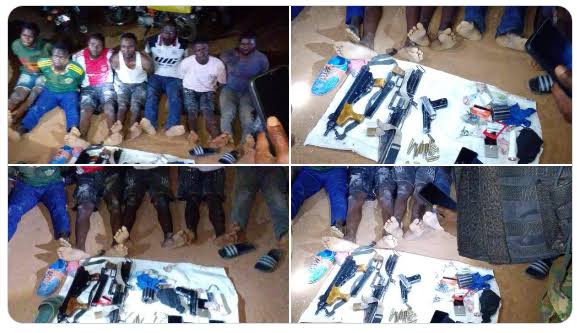
Troops arrest 9 suspected Berom militia responsible for targeted killings, recover arms and ammunition in Plateau
By Zagazola Makama
Troops of Operation Enduring Peace have arrested nine suspected Berom militia members responsible for targeted killings, and recovered arms and ammunition following an operation in Riyom Local Government Area of Plateau State, amid ongoing security concerns linked to recurring attacks and cycles of violence in the area.
Security sources told Zagazola Makama that the suspects were arrested at about 0135 hours on April 18, 2026, when troops deployed at Ganawuri responded to reports of suspected criminal movement towards the Danwal general area.
The troops intercepted and apprehended the suspects, who were found with blood stains on their bodies, raising suspicion of recent involvement in silent killings.
Those arrested were identified as Mr. Gyang Dantoro, Mr. Samson Davou, Mr. Choji Yakubu, Mr. Vincent Adamu, Mr. Pam Dalyop, Mr. Femi Badung, Mr. Jacob Musa and Mr. Choji Chaga, all residents of Danwal and reportedly of Berom extraction.
Items recovered from them include three motorcycles, one pistol, one submachine gun, one locally made revolver rifle, 20 rounds of pistol ammunition, and one locally fabricated rifle, among other items.
The arrest comes against the backdrop of sustained insecurity in parts of Plateau State, where communities in Riyom, Barkin Ladi, Bokkos, Mangu and surrounding areas have witnessed repeated incidents of violent attacks and reprisals. Across this flashpoints, the patterns have consistent which suggest that perpetrators of violence are not faceless outsiders operating in isolation.
Sources said that the suspects were currently in custody providing information are responsible for carrying out series of attacks in recent months which has escalated violence and reprisals attacks in plateau state.
In recent months, security reports have indicated a pattern of violence involving Fulani Bandits and armed elements of the Berom operating within local communities.
The most recent development occurred on April 13 at about 0700 hrs, when troops under Operation Enduring Peace (OPEP), conducted a search-and-rescue operation in Ariri and Kwasha villages of Bassa LGA following reports of a missing herder. During the operation, troops discovered the corpse of the herder and recovered 32 cattle alive, while three others were found dead. The remains and livestock were handed over to community leaders.
On the same day, troops also responded to intelligence on an illegal settlers’ camp in Ungwan Doki, Riyom LGA, where four suspected illegal migrants were arrested. On April 12, at about 1440 hrs, troops restored calm after a clash between farmers and herders in Rakum village, Barkin Ladi LGA. Five locals, two herders, and a police officer sustained injuries, after being attacked by Berom Militia while one suspect was arrested.
Earlier at about 1222 hrs in Rasa village, troops foiled another attack on a herder by suspected armed Berom elements and evacuated the injured victim to hospital. At about 2100 hrs, troops responded to sporadic gunfire along Hukke–Rewienko road in Bassa LGA, repelling attackers and rescuing an injured civilian.
In a related development, at about 1800 hrs, troops foiled an attempted cattle rustling incident in Kpashio village, recovering 92 cattle reportedly abandoned by fleeing suspects. The owner of the livestock was either killed and buried in shallow grave or escaped the assault.
Within the same period Armed Berom Militia engaged troops of Operation Enduring Peace in a heavy gun battle in Barkin Ladi. the troops gun down five of the attackers. Later that same day, the corpses were hastily buried by the community to avoid scrutiny due to the identity of the attackers.
On April 11 at about 2145 hrs, troops responded to an ambush in Tanjol community, where a 21-year-old resident, Joseph Irmiya, was attacked by Fulani bandits later died from injuries.
Shortly after, troops intercepted an attempted attack on Rim community by Berom militants, where one youth sustained gunshot wounds. Separately, troops conducting stop-and-search operations in Kuru, Jos South LGA at about 2030 hrs arrested two suspects in possession of a pistol and ammunition.
On April 9 at about 2230 hrs, suspected Fulani bandits attacked Mbwelle village in Bokkos LGA, killing eight residents, including Habila Istifanus (38), Hassan Istifanus (31), Iliya Mangut (70), Sunday Gideon (31), Innocent Banabas (20), Lucky Titus (38), Wisdom Lucky (15), and Bwehsun Hassan (25).
Earlier on April 9, troops under Operation Wutan Daji stormed Fulani bandits enclave at Wase and Kanam LGAs, neutralising 13 them during the offensive along identified corridors in Daba and Seri villages.
On April 8, troops of Operation Enduring Peace (OPEP) foiled an attack on commuters along the Razat–Kafi Abu road in Barkin Ladi LGA, where one civilian was killed and two others injured.
Later the same day, troops repelled a militia attack along the same axis and conducted a cordon-and-search operation in Suma Suga Takwok, recovering two AK-47 rifles, two magazines, and five rounds of 7.62mm ammunition.
In Riyom LGA, one civilian was killed in an ambush along the Dagbam bridge axis on the GOL–HOSS–Bwei road, while two others escaped unhurt. Troops also foiled an attack on Jol community on April 7, forcing the assailants to retreat without casualties.
Similarly, troops rescued one victim and recovered ammunition following an earlier attack in Dum village, Bachi District, where another victim was found dead. Security operatives also intercepted 16 stray cattle grazing on farmland in Tahoss community, an incident linked to recurring disputes between farmers and herders.
On April 5, a Fulani herder, identified as Abubakar Hababe (40), was found dead in Riyom LGA in what sources described as a reprisal attack. The killing by suspected Berom Militia was reportedly linked to earlier incidents, including the attack on an illegal mining site in Gyel village where three miners were killed.
Other incidents include the discovery of the body of a 30-year-old herder, Shafiyu, in Jos South LGA, and the killing of a Fulani boy, Abdullahi Mohammed, in Mangu LGA.
Tensions were escalated since March 28, after the assassination of a Fulani leader, Alhaji Bilyaminu Julde, the Ardo of Gindiri in Barkin Ladi LGA.
Troops have continued operations across flashpoints in Riyom and neighbouring LGAs, with authorities maintaining that sustained patrols, arrests and recovery of arms are aimed at restoring lasting peace in the area.
Troops arrest 9 suspected Berom militia responsible for targeted killings, recover arms and ammunition in Plateau



Nigeria, Indonesia target bigger trade as economic ties deepen
By: Michael Mike
Nigeria and Indonesia are seeking to push bilateral trade beyond the $3 billion annual level, while expanding cooperation in investment, technology transfer, industrialisation, agriculture, healthcare and other sectors as both countries seek to turn longstanding diplomatic ties into a broader economic partnership.
The Indonesian Ambassador to Nigeria, Bambang Suharto, and the Permanent Secretary, Ministry of Foreign Affairs, Ambassador Dunoma Umar Ahmed, made the call on Tuesday in Abuja at a diplomatic reception to mark Indonesia’s 81st Independence Anniversary.
Suharto said bilateral trade had consistently exceeded $3 billion annually, describing Nigeria as one of Indonesia’s major trading partners in Africa.
He said the size of the two markets, with a combined population of more than 550 million people, provided considerable room for increased trade, investment, technology exchange and job creation.
“Our bilateral trade has consistently surpassed USD 3 billion annually, cementing Nigeria’s position as one of Indonesia’s foremost trading partners in Africa,” Suharto said.
The ambassador said the economic relationship was already reflected in the everyday lives of citizens, with Nigeria supplying energy to Indonesia while Indonesian manufactured and consumer products have gained a significant presence in the Nigerian market.
Official Indonesian data put bilateral trade at about $3.4 billion in 2024, with Indonesia recording a trade deficit of about $2.5 billion. Indonesia’s main exports to Nigeria include palm oil, while crude oil is among Nigeria’s major exports to Indonesia.
Suharto said the next phase of the relationship should go beyond the exchange of commodities to create stronger industrial and investment linkages between the two economies.
“Our ultimate ambition is not simply to trade more, but to cultivate a resilient partnership in which businesses on both sides thrive, local industries develop, and our people directly reap the benefits of the opportunities we create together,” he said.
The growing relationship is also being driven by Indonesian companies with operations in Nigeria.
Suharto specifically acknowledged the contributions of Dufil Prima Foods Ltd, Primera Food Nigeria Ltd, Tempo Scan Pacific, Glorious Dexa Mandaya Ltd and Orange Kalbe Ltd, citing their investments, employment generation and corporate social responsibility initiatives.
Suharto, meanwhile, highlighted Indonesian scholarship programmes that have enabled Nigerian students to study in Indonesia, as well as educational and cultural exchanges between the two countries.
He also pointed to the shared diversity of Nigeria and Indonesia as an opportunity for both countries to exchange experiences on national cohesion, dialogue, inclusion and tolerance.
Suharto said Indonesia remained committed to strengthening cooperation with Nigeria and other African countries through initiatives such as the Indonesia-Africa Forum, with priority areas including energy, agriculture, healthcare, infrastructure and human-resource development.
He expressed confidence that the two countries’ historical ties and expanding economic interests would provide a stronger foundation for increased trade, investment, knowledge-sharing, technological cooperation and people-to-people relations.
Indonesia’s foreign ministry said at least 15 Indonesian companies are active in Nigeria, particularly in food, pharmaceuticals, mining and fast-moving consumer goods.
Dufil Prima Foods, one of the most visible examples of the economic links between the two countries, has Indonesian corporate interests through the Salim Group and its relationship with Indofood. The company has developed manufacturing and backward-integration activities in Nigeria, illustrating how the relationship has evolved beyond simple import-and-export transactions.
The Indonesian embassy has also been facilitating new business links. At the 2025 Trade Expo Indonesia, it helped secure nine trade commitments between Nigerian and Indonesian businesses worth $24.99 million.
For Nigeria, Ahmed said the priority was to convert the longstanding diplomatic relationship into a more productive economic partnership capable of supporting domestic production and attracting sustainable investment.
He identified Indonesia’s experience in industrialisation, manufacturing, digital transformation, infrastructure, agriculture, maritime development and small and medium-sized enterprises as areas where Nigeria could benefit from greater cooperation.
“Nigeria is particularly interested in expanding cooperation that can support the development of local productive capacity, strengthen value chains, promote technology transfer, and attract sustainable investment,” Ahmed said.
He called for stronger links among private-sector organisations, chambers of commerce, financial institutions and business communities in both countries.
Agriculture and agro-processing, manufacturing, energy, infrastructure, pharmaceuticals, the digital economy and creative industries were identified as sectors with significant potential for expanded trade and investment.
Ahmed also called for the removal of practical barriers to commerce, including market-access difficulties, inadequate business information and weak connectivity between business communities.
Nigeria and Indonesia have maintained diplomatic relations since 1965, with economic and capacity-building cooperation becoming important components of the relationship. Indonesia’s embassy was initially established in Lagos before being relocated to Abuja in 2008, while Nigeria opened its embassy in Jakarta in 1976.
The two countries also have a longstanding connection through South-South cooperation. Both are members of the D-8 Organisation for Economic Cooperation, which was established in 1997 by Bangladesh, Egypt, Indonesia, Iran, Malaysia, Nigeria, Pakistan and Türkiye to promote economic cooperation among developing countries. Indonesia is chairing the organisation for 2026–2027.
Ahmed said the shared platforms could be used more effectively to advance cooperation on sustainable development financing, climate action, food and energy security, technology transfer and reforms to international financial and governance institutions.
He said Nigeria welcomed Indonesia’s engagement in multilateral affairs and stressed the importance of ensuring that developing countries have a stronger voice in global decision-making.
Beyond commerce, Ahmed called for expanded cooperation in education, skills development, science, technology and innovation, particularly because of the large and youthful populations of Nigeria and Indonesia.
He proposed greater exchanges among universities, research institutions, cultural organisations, young professionals and civil society groups, saying such engagements could deepen mutual understanding while creating new opportunities for practical cooperation.
Nigeria, Indonesia target bigger trade as economic ties deepen
Uncategorized
Tinubu’s Diplomatic Hat-trick: Dignity In Luanda, Destiny In Delhi, Justice In New York
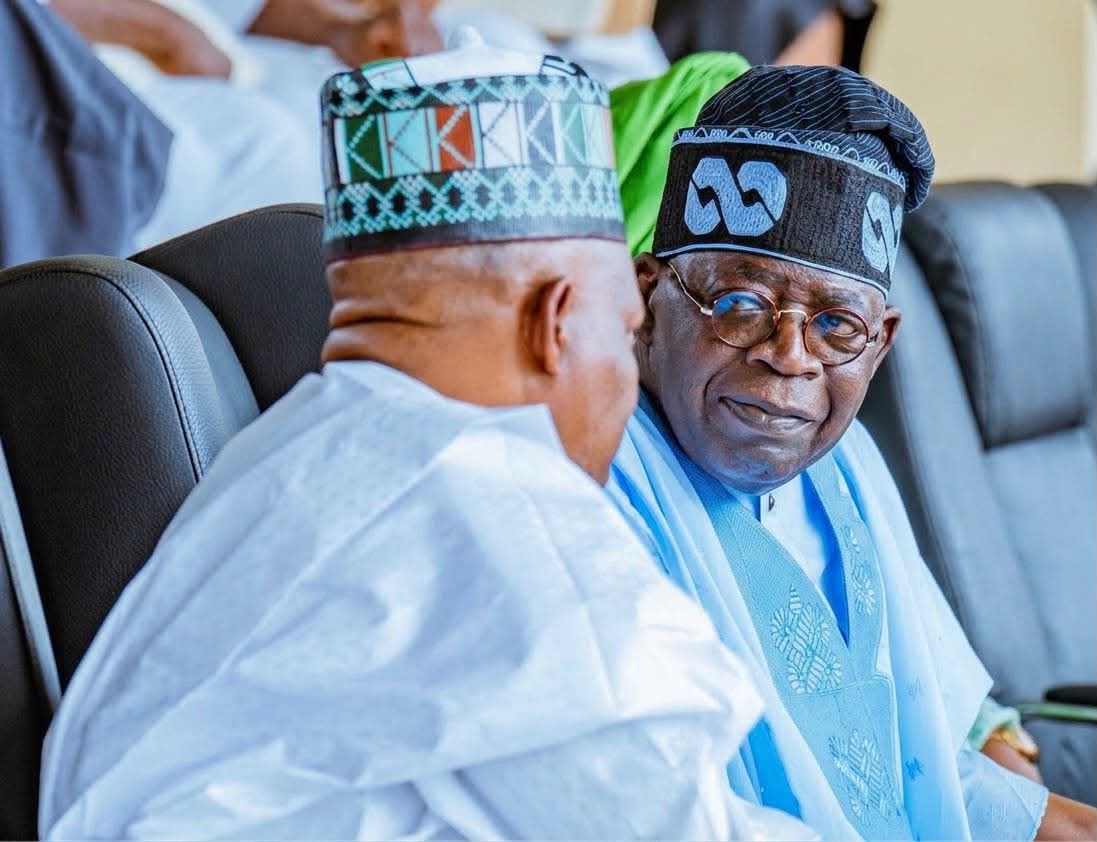
Tinubu’s Diplomatic Hat-trick: Dignity In Luanda, Destiny In Delhi, Justice In New York
By Stanley Nkwocha
The true test of a presidency is not only what the President says when the world is listening but who he can trust to say it when he is not in the room. At the 81st Session of the United Nations General Assembly, the Vice President, Senator Kashim Shettima, passed that test with a performance that redefined deputyship in Nigerian foreign policy. To understand why it resonated so deeply, one must trace the shuttle diplomacy that brought him to New York.
Senator Shettima completed one of the most consequential diplomatic shuttles by any Nigerian Vice President in recent history. Moving within three weeks from the Atlantic coast of Luanda to the power corridors of New Delhi and then to the global podium of New York, he carried one President’s voice, one country’s pride, and one continent’s frustration. It was not just an outing; it was a statement about what intelligent loyalty looks like when it meets competence on the global stage.
What emerged across these capitals is a coherent doctrine—a Tinubu doctrine—that insists Africa can no longer be lectured about development while being denied tools to develop, that it can no longer supply the world while remaining poor, and that it can no longer be asked to keep the peace while others profit from its wars. While each stop mattered, New York was the anchor where all threads converged into demands for peace, prosperity, and human capital.
In Luanda, Angola, for the 21st Extraordinary Session of the Assembly of Heads of State and Government of the African Union, the agenda was supposed to be about mechanisms, roadmaps, and communiques—the usual alphabet soup of African diplomacy. Then, Nigeria took the floor and refused to whisper any longer.
For years, the elephant in the continental room has been the cyclical humiliation of Nigerians and other Africans in South Africa. Governments issued condemnations and the AU voiced concerns, but no one had the political will to institutionalise a solution. Vice President Shettima, delivering President Bola Ahmed Tinubu’s message, changed that. He did not shout. He did not threaten. He tabled the motion.
Nigeria formally expressed concern over recurring xenophobic and Afrophobic attacks. While it recognized South Africa’s sovereign right to enforce immigration laws and its contributions to the continent, Nigeria stressed that such attacks undermine African solidarity and require urgent collective attention. It then requested that the matter be placed on the agenda of the 40th Ordinary Session in January 2027 for appropriate action. In diplomatic language, this is not a mere request; it is a formal referral, moving xenophobia from social media trends into the official African Union archives.
Beyond that, he delivered President Tinubu’s subtle but sharp critique of Africa’s new scramble, warning against fragmented peace initiatives and a reliance on foreign military forces, mercenaries, and private contractors littering the Sahel and Central Africa, which erodes African ownership.
Then the Borno man stripped the veneer. To journalists, the Vice President took a leaf from Chinua Achebe, saying “those whose palm kernels were cracked by a benevolent spirits should learn to be humble.” He recalled Nigeria’s role in Southern African liberation, declaring that the government will no longer countenance the dehumanization of its people but will pursue robust conversations with South African brothers without overheating the polity, making it vehemently clear that certain situations are unacceptable. Speak softly, carry a big memory. That became the Shettima doctrine.
If Luanda was about dignity, New Delhi was about destiny. At the 18th BRICS Summit, the message was clear: the outdated rules of global governance must be rewritten to reflect today’s economic and demographic realities. Nigeria positioned BRICS not as an anti-West bloc, but as a lever to amplify the agency of the Global South.
The message was unmistakable—1945 is over and 2026 is here; an Africa of 1.5 billion people can no longer remain a spectator in institutions it did not design. Moving from protest to proposal, Nigeria invited investors to view the nation as the gateway to the AfCFTA, redefining resilience as an economy that withstands shocks while creating opportunities—the very core of the Renewed Hope Agenda.
On technology, he issued the summit’s defining directive: Nigeria is buoyantly open for deep cooperation across artificial intelligence, digital public infrastructure, fintech, telecommunications, cybersecurity, biotechnology, and advanced manufacturing. Developing countries must produce technology, create knowledge, and own intellectual property; a nation that owns no technology risks renting its future. We export what we do not own and import what we do not control, and that must end. He cited 3MTT training three million talents, Project BRIDGE expanding broadband, and national AI programmes for an open, secure, and inclusive digital ecosystem.
New York then became a synthesis where all threads fused and fidelity became a strategic weapon. For five days across four stages, VP Shettima carried Tinubu’s vision without dilution. At the General Debate, he demanded that Africa no longer fill the UN Security Council agenda from the margins. He insisted on two permanent seats with veto power plus five non-permanent seats, per the Ezulwini Consensus and Sirte Declaration. He channelled the conviction that 2026 cannot be governed by a 1945 distribution of power, invoking Nigeria’s peacekeeping sacrifices in Liberia, Sierra Leone, Darfur, Mali, and The Gambia as credentials.
The Nigerian leader framed warfare, debt, and climate change as symptoms of the same dysfunction—a world where diplomacy is replaced by coercion, development is choked by servicing costs, and Africa bears a heavy climate burden while contributing less than four percent of emissions. Drawing on Nigeria’s fight against Boko Haram and ISWAP to argue that no nation secures itself alone, he presented reformed multilateralism not as a choice, but as an absolute security necessity.
The closing statement—”Whatever our differences, we must remember that humanity is our oldest citizenship, and peace is the inheritance we owe to every child”—elevated the argument from power politics to a moral imperative.
During a meeting with United Nations Deputy Secretary-General, Hajiya Amina J. Mohammed, on the margins of the 81st UNGA, Vice President Shettima reaffirmed Nigeria’s support for urgent reform of the United Nations, maintaining that Nigeria would remain a dependable partner in efforts to rebuild trust among nations, defend international law and address hunger, violence and exclusion. He said Africa’s continued exclusion from permanent membership of the United Nations (UN) Security Council undermines the fairness and legitimacy of the global governance system.
The AMSG High-Level Roundtable on Critical Minerals Development in Africa shifted the continent’s stance from complaint to cartel. Tinubu’s argument, delivered by Senator Shettima, acknowledged the familiar reality that Africa has long fuelled prosperity elsewhere. However, the proposed remedy is not just better royalties; it is an aggressive alliance to halt raw exports and mandate local processing, refining, battery manufacturing, and domestic technology. Nigeria offered itself as proof that firm terms do not scare capital, citing revenue growth from about N6 billion in 2023 to over N68 billion in 2025 and commissioned lithium processing in Nasarawa.
The diaspora engagement at Nigeria House showed VP Shettima at his most transactional, turning what is usually a sentimental homecoming into an economic pitch. He tied the growth of reserves from $3.9 billion to over $55 billion and a 4.45% GDP growth rate directly to the safety of remittances. By calling diaspora intellect the greatest resource of the future and citing the Dangote Refinery as a return of confidence, he reframed “Japa” from a loss to a leverage. Ultimately, he asked for co-investment in an economy that prides itself on having crossed the Rubicon.
Co-hosting the $5 billion Global Partnership for Education drive with Italy’s Prime Minister Giorgia Meloni made education intervention the core that binds the rest. President Tinubu stated in a video message that the GPE vision aligns with Nigeria’s agenda for access and teacher capacity. This message was reinforced by Vice President Shettima’s disclosure that liquid EFCC recoveries (once legally cleared), unclaimed dividends, and dormant funds (approved by the Federal Executive Council) will be channelled to NELFUND. While global aid declines, Nigeria is mobilizing every lawful domestic source to anchor its financing, asking multilateralism to multiply it rather than replace it.
There was also a bilateral meeting between Vice President Shettima and Queen Máxima of the Netherlands, in which Nigeria and the Netherlands agreed to deepen their collaboration to improve financial inclusion across different levels of Nigerian society. Then came an audience with a delegation from the ECOWAS Commission, led by its new President, General Birame Diop (rtd). Senator Shettima told the new leadership of the Commission to prioritise regional unity and integration to advance the progress of the sub-region’s people and economy.
Analytically, this shuttle serves a dual purpose. Externally, it signals that Nigeria speaks with one voice, even with two faces. This brand of credibility increases bargaining power, ensuring commitments made in New York are not disowned in Abuja. Internally, it proves that loyalty can be intelligent. In a political culture where the vice presidency usually oscillates between redundancy and rivalry, Shettima has carved a third path—demonstrating the ability to deploy proverbs in Angola, AI sovereignty in India, educational fiscal innovation, and blunt moral clarity without missing a beat in New York.
President Tinubu’s gamble was to risk putting his deputy on a world stage that could easily expose any weakness. Instead, Senator Shettima turned that risk into a governance dividend. At a moment when the global order is fractured and Nigeria is in dire need of investors, allies, valuable minerals, and forward-thinking classrooms, a deputy who delivers his leader’s message with clarity, context, and conviction is more than just protocol—he embodies what the President stands for.
- Nkwocha is Senior Special Assistant to the President on Media & Communications (Office of The Vice President)
- Tinubu’s Diplomatic Hat-trick: Dignity In Luanda, Destiny In Delhi, Justice In New York
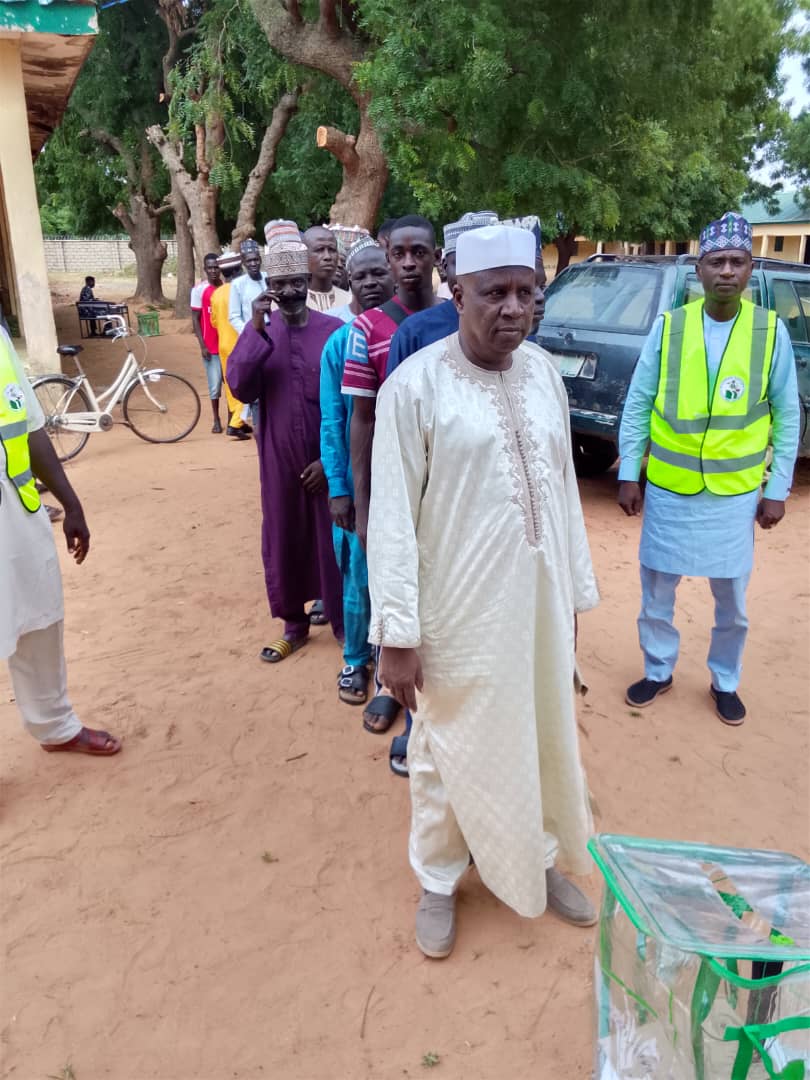
LG elections are very important—Yobe works commissioner.
By: Yahaya Wakili
Yobe State Commissioner for Works, Hon. Engr. Umaru Wakil Duddaye, has described the local government election as very important and closed to the grassroots.
Engr. Duddaye announced this today, while briefing the journalists shortly after casting his vote at the Duddaye polling unit in the state’s local government council election at the Duddaye/Fakaru ward in the Nangere local government area of Yobe state.
“When you are dealing with the people from the grassroots, you must talk of local government; therefore, the election is very important in the democratic system, and people are exercising their right to vote for the candidate of their choice,” Duddaye said.
According to him, we have 20 polling units in Duddaye/Fakarau ward, and all the polling stations have had the election materials delivered in time, and the chairman is already on the seat. It is a continuity process, and he urged him to carry the legacy of Apc and Governor Mai Mala Buni and the President of the Federal Republic of Nigeria, Asiwaju Bola Ahmed Tinubu GCFR.
He further maintained that the party’s success is our expectation now that the political season is here, and we hope, as APC members, we have the right to vote for APC, adding that, here in Nangere local government, there are so many projects that are being executed by the APC government.
“APC is working; we expect everybody to vote for Asiwaju Bola Ahmed Tinubu. The president tirelessly works to ensure that the country’s economy has significantly improved beyond expectations. It was noted that the Yobe state government, led by His Excellency Governor Mai Mala Buni, is also making efforts.
Engr. Duddaye revealed that we have our own candidates, we hope everybody from the top to bottom will vote for APC, we have to deliver all 24 members of the state house of assembly, 6 houses of representatives, 3 senators, and our governor, Baba Malam Wali Mni, and inshallah, Bola Ahmed Tinubu GCFR will be the next president in 2027.
LG elections are very important—Yobe works commissioner.

Gombe assures corps members of safety, improved welfare

2027: Should Atiku Withdraw from the Race and Find Peace, or Continue and Live with Regrets?

Military Pensions Board Begins Payment of New Pension Rates, Arrears to Veterans

Roger Federer’s Shock as DNA Results Reveal Myla and Charlene Are Not His Biological Children

THE PLIGHT OF FARIDA

FAILED COUP IN BURKINA FASO: HOW TRAORÉ NARROWLY ESCAPED ASSASSINATION PLOT AMID FOREIGN INTERFERENCE CLAIMS
-
 News3 years ago
Roger Federer’s Shock as DNA Results Reveal Myla and Charlene Are Not His Biological Children
-
Opinions5 years ago
THE PLIGHT OF FARIDA
-
 News1 year ago
FAILED COUP IN BURKINA FASO: HOW TRAORÉ NARROWLY ESCAPED ASSASSINATION PLOT AMID FOREIGN INTERFERENCE CLAIMS
-

 News3 years ago
EYN: Rev. Billi, Distortion of History, and The Living Tamarind Tree
-
 Opinions5 years ago
POLICE CHARGE ROOMS, A MINTING PRESS
-

 ACADEMICS3 years ago
A History of Biu” (2015) and The Lingering Bura-Pabir Question (1)
-

 Columns3 years ago
Army University Biu: There is certain interest, but certainly not from Borno.
-

 Politics1 year ago
2027: Why Hon. Midala Balami Must Go, as Youths in Hawul and Asikira/Uba Federal Constituency Reject ₦500,000 as Sallah Gift
