
Uncategorized
Troops arrest 9 suspected Berom militia responsible for targeted killings, recover arms and ammunition in Plateau

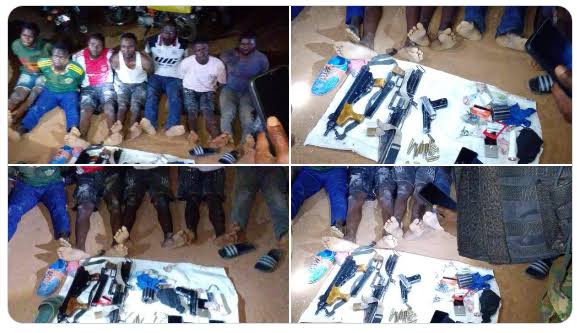
Troops arrest 9 suspected Berom militia responsible for targeted killings, recover arms and ammunition in Plateau
By Zagazola Makama
Troops of Operation Enduring Peace have arrested nine suspected Berom militia members responsible for targeted killings, and recovered arms and ammunition following an operation in Riyom Local Government Area of Plateau State, amid ongoing security concerns linked to recurring attacks and cycles of violence in the area.
Security sources told Zagazola Makama that the suspects were arrested at about 0135 hours on April 18, 2026, when troops deployed at Ganawuri responded to reports of suspected criminal movement towards the Danwal general area.
The troops intercepted and apprehended the suspects, who were found with blood stains on their bodies, raising suspicion of recent involvement in silent killings.
Those arrested were identified as Mr. Gyang Dantoro, Mr. Samson Davou, Mr. Choji Yakubu, Mr. Vincent Adamu, Mr. Pam Dalyop, Mr. Femi Badung, Mr. Jacob Musa and Mr. Choji Chaga, all residents of Danwal and reportedly of Berom extraction.
Items recovered from them include three motorcycles, one pistol, one submachine gun, one locally made revolver rifle, 20 rounds of pistol ammunition, and one locally fabricated rifle, among other items.
The arrest comes against the backdrop of sustained insecurity in parts of Plateau State, where communities in Riyom, Barkin Ladi, Bokkos, Mangu and surrounding areas have witnessed repeated incidents of violent attacks and reprisals. Across this flashpoints, the patterns have consistent which suggest that perpetrators of violence are not faceless outsiders operating in isolation.
Sources said that the suspects were currently in custody providing information are responsible for carrying out series of attacks in recent months which has escalated violence and reprisals attacks in plateau state.
In recent months, security reports have indicated a pattern of violence involving Fulani Bandits and armed elements of the Berom operating within local communities.
The most recent development occurred on April 13 at about 0700 hrs, when troops under Operation Enduring Peace (OPEP), conducted a search-and-rescue operation in Ariri and Kwasha villages of Bassa LGA following reports of a missing herder. During the operation, troops discovered the corpse of the herder and recovered 32 cattle alive, while three others were found dead. The remains and livestock were handed over to community leaders.
On the same day, troops also responded to intelligence on an illegal settlers’ camp in Ungwan Doki, Riyom LGA, where four suspected illegal migrants were arrested. On April 12, at about 1440 hrs, troops restored calm after a clash between farmers and herders in Rakum village, Barkin Ladi LGA. Five locals, two herders, and a police officer sustained injuries, after being attacked by Berom Militia while one suspect was arrested.
Earlier at about 1222 hrs in Rasa village, troops foiled another attack on a herder by suspected armed Berom elements and evacuated the injured victim to hospital. At about 2100 hrs, troops responded to sporadic gunfire along Hukke–Rewienko road in Bassa LGA, repelling attackers and rescuing an injured civilian.
In a related development, at about 1800 hrs, troops foiled an attempted cattle rustling incident in Kpashio village, recovering 92 cattle reportedly abandoned by fleeing suspects. The owner of the livestock was either killed and buried in shallow grave or escaped the assault.
Within the same period Armed Berom Militia engaged troops of Operation Enduring Peace in a heavy gun battle in Barkin Ladi. the troops gun down five of the attackers. Later that same day, the corpses were hastily buried by the community to avoid scrutiny due to the identity of the attackers.
On April 11 at about 2145 hrs, troops responded to an ambush in Tanjol community, where a 21-year-old resident, Joseph Irmiya, was attacked by Fulani bandits later died from injuries.
Shortly after, troops intercepted an attempted attack on Rim community by Berom militants, where one youth sustained gunshot wounds. Separately, troops conducting stop-and-search operations in Kuru, Jos South LGA at about 2030 hrs arrested two suspects in possession of a pistol and ammunition.
On April 9 at about 2230 hrs, suspected Fulani bandits attacked Mbwelle village in Bokkos LGA, killing eight residents, including Habila Istifanus (38), Hassan Istifanus (31), Iliya Mangut (70), Sunday Gideon (31), Innocent Banabas (20), Lucky Titus (38), Wisdom Lucky (15), and Bwehsun Hassan (25).
Earlier on April 9, troops under Operation Wutan Daji stormed Fulani bandits enclave at Wase and Kanam LGAs, neutralising 13 them during the offensive along identified corridors in Daba and Seri villages.
On April 8, troops of Operation Enduring Peace (OPEP) foiled an attack on commuters along the Razat–Kafi Abu road in Barkin Ladi LGA, where one civilian was killed and two others injured.
Later the same day, troops repelled a militia attack along the same axis and conducted a cordon-and-search operation in Suma Suga Takwok, recovering two AK-47 rifles, two magazines, and five rounds of 7.62mm ammunition.
In Riyom LGA, one civilian was killed in an ambush along the Dagbam bridge axis on the GOL–HOSS–Bwei road, while two others escaped unhurt. Troops also foiled an attack on Jol community on April 7, forcing the assailants to retreat without casualties.
Similarly, troops rescued one victim and recovered ammunition following an earlier attack in Dum village, Bachi District, where another victim was found dead. Security operatives also intercepted 16 stray cattle grazing on farmland in Tahoss community, an incident linked to recurring disputes between farmers and herders.
On April 5, a Fulani herder, identified as Abubakar Hababe (40), was found dead in Riyom LGA in what sources described as a reprisal attack. The killing by suspected Berom Militia was reportedly linked to earlier incidents, including the attack on an illegal mining site in Gyel village where three miners were killed.
Other incidents include the discovery of the body of a 30-year-old herder, Shafiyu, in Jos South LGA, and the killing of a Fulani boy, Abdullahi Mohammed, in Mangu LGA.
Tensions were escalated since March 28, after the assassination of a Fulani leader, Alhaji Bilyaminu Julde, the Ardo of Gindiri in Barkin Ladi LGA.
Troops have continued operations across flashpoints in Riyom and neighbouring LGAs, with authorities maintaining that sustained patrols, arrests and recovery of arms are aimed at restoring lasting peace in the area.
Troops arrest 9 suspected Berom militia responsible for targeted killings, recover arms and ammunition in Plateau


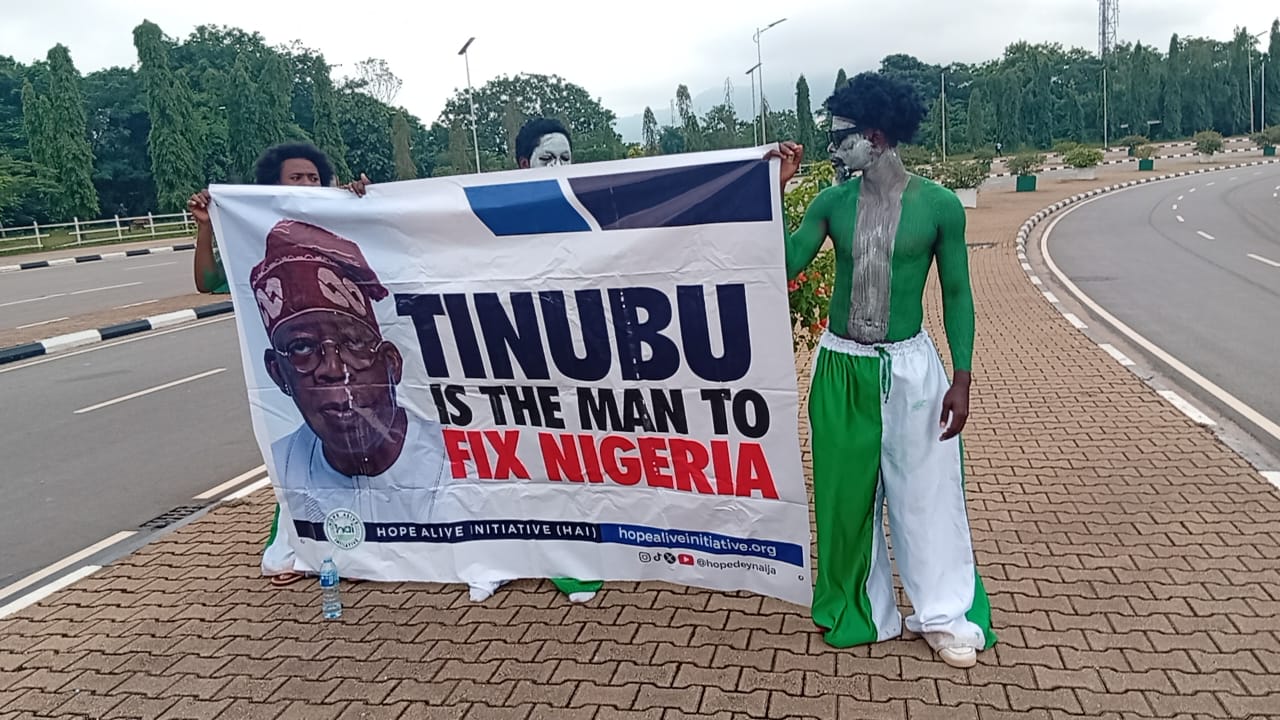
2027: Group Takes Tinubu Re-election Campaign to Abuja Streets
By: Michael Mike
The 2027 presidential election campaign took an early turn towards grassroots mobilisation in Abuja on Wednesday as the Hope Alive Initiative (HAI) deployed about 40 giant, colourful human mascots across strategic locations in the Federal Capital Territory to promote President Bola Ahmed Tinubu’s re-election bid.
The unusual street activation, which marked the opening phase of HAI’s multi-platform campaign, saw the mascots deployed around major roundabouts, markets, motor parks and other busy areas, drawing the attention of motorists, commuters and residents.
Carrying banners and campaign messages, the mascots moved through parts of the capital as HAI sought to take its pro-Tinubu message beyond conventional political gatherings and directly into public spaces.
The initiative is the first phase of a broader campaign that will combine physical mobilisation with digital and traditional media, including a city-wide SMS campaign, a weekly Pidgin-language radio programme and an original campaign jingle.

In a statement signed by its Director of Press and Communications, Ernest Omoarelojie, HAI said it decided to support Tinubu’s re-election based on what it described as the administration’s “bold reforms and initiatives” aimed at repositioning the Nigerian economy and strengthening national institutions.
The organisation listed reforms in the petroleum sector, developments in the foreign exchange market, increased government revenue and foreign reserves, moves towards greater Local Government autonomy, police and internal security reforms, the Nigerian Education Loan Fund (NELFUND), tax reforms and major road projects among the areas it believes should inform the 2027 electoral debate.
“While these reforms have come with short-term challenges, we believe they are difficult but necessary steps towards a more sustainable, prosperous and better governed Nigeria,” the organisation said.
Omoarelojie, who spoke during the street mobilisation, said the group was deliberately adopting a grassroots approach to ensure that its message reached Nigerians outside traditional political structures.
“We are asking Nigerians to look beyond sentiment. Let us look at the facts as they are,” he said.
According to him, citizens should assess the administration on the basis of its policies, programmes and measurable outcomes rather than political sentiments.
He cited the student loan scheme, economic reforms, foreign exchange management and infrastructure development as areas in which HAI believes the administration has made significant progress.
The organisation acknowledged that some of the government’s reforms had imposed short-term economic difficulties on citizens but argued that their long-term benefits would depend on sustained implementation.
HAI’s campaign will also deploy SMS messaging as a direct communication channel to residents across Abuja.
The organisation said the digital mobilisation would constitute the first stage of a wider communication strategy designed to expand as the 2027 election approaches.
Another major component of the campaign is a weekly Pidgin-language radio programme titled Wetin Tinubu Don Do Sef, designed to explain government policies and programmes in language accessible to a broad section of Nigerians.
According to HAI, each episode will concentrate on a specific policy area, examine its impact and explain how citizens could benefit from relevant government initiatives.
The programme is expected to feature a presenter alongside guests or co-hosts, with expert perspectives, citizen contributions and practical examples incorporated into discussions.
HAI said the programme would subsequently be syndicated on selected radio stations across the country as the campaign expands.
The organisation is also preparing an original campaign jingle intended to give the mobilisation effort a distinct identity and reinforce its political message across radio and other platforms.
HAI said the jingle draws inspiration from the tradition of memorable Nigerian political campaign songs, including the famous Hope ’93 campaign associated with the late businessman and politician, Chief M.K.O. Abiola.
The organisation said its August 19 street activation was only the beginning of a sustained campaign that would combine grassroots mobilisation, traditional broadcasting, digital communication and public engagement.
Subsequent phases will focus on explaining government policies and programmes in the economy, education, security and infrastructure sectors, with particular emphasis on NELFUND, economic reforms, security initiatives and road projects.
Omoarelojie said the 2027 election would offer Nigerians an opportunity to examine the country’s direction and decide whether the Tinubu administration had earned another mandate.
He urged voters to engage with the issues and judge the administration by its record, policies and their effects on citizens rather than political rhetoric.
With its deployment of human mascots, SMS mobilisation, Pidgin broadcasting and campaign music, HAI’s Abuja activation signals an effort to give the Tinubu re-election campaign a distinctly grassroots character long before the 2027 presidential contest reaches its peak.
2027: Group Takes Tinubu Re-election Campaign to Abuja Streets
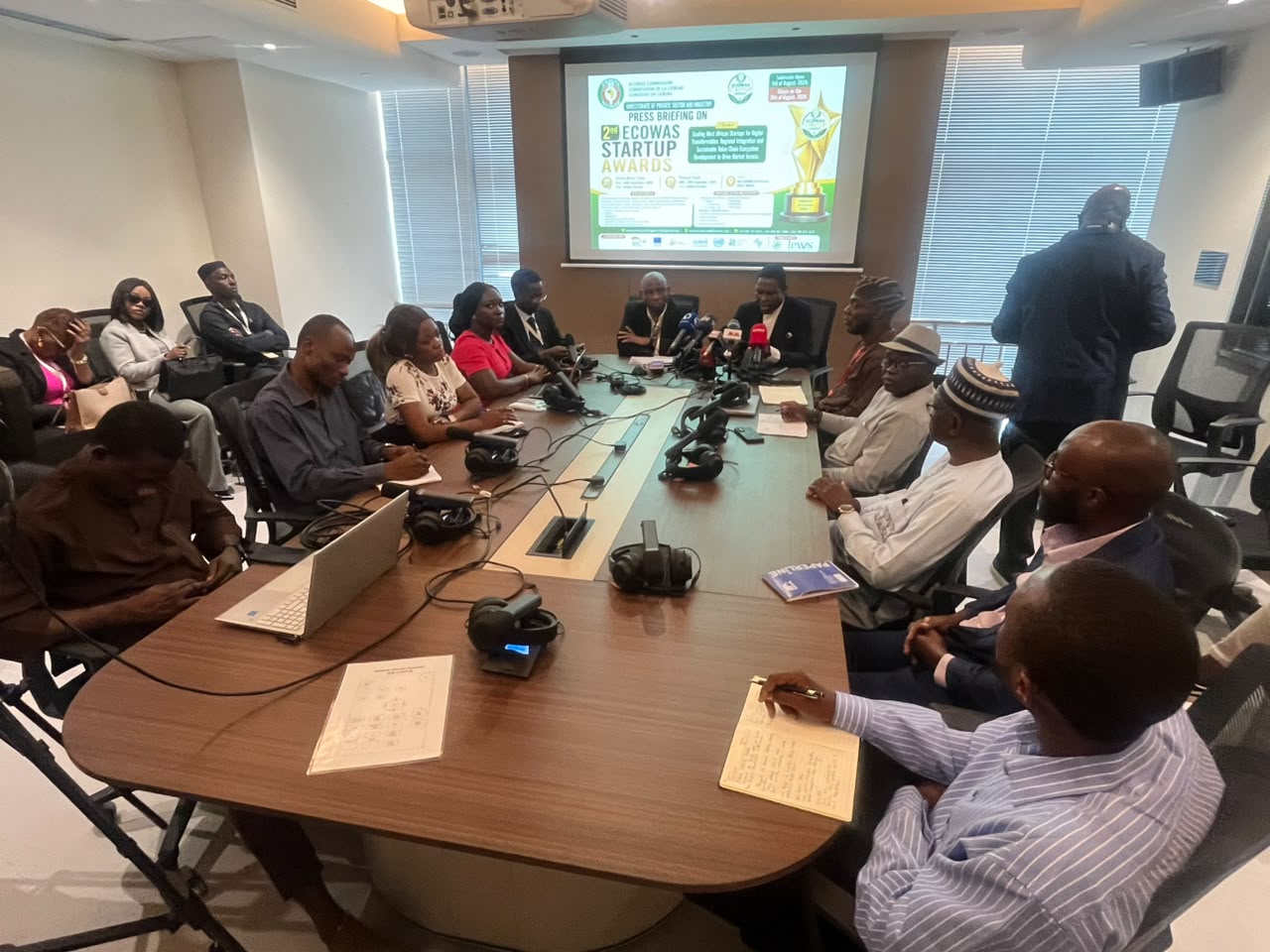
$65,000 Up for Grabs as ECOWAS
By: Michael Mike
The Economic Community of West African States (ECOWAS) has unveiled a $65,000 prize pool for the second edition of its Startup Awards, with about 60 entrepreneurs expected to compete for the top three positions.
The competition, scheduled for September 28, 2026, is coming five years after the inaugural edition held in Niamey, Niger Republic, in 2021.
The winner will receive $30,000, while the first and second runners-up will receive $20,000 and $15,000, respectively.
However, ECOWAS said the programme would go beyond cash prizes, as all 60 shortlisted participants will undergo a masterclass designed to strengthen their entrepreneurial and business management capacities before the final stage.
The Acting Director, Directorate of Private Sector and Industry, ECOWAS Commission, Peter Oluonye, disclosed this while announcing the programme, revealing that the Commission had received more than 6,000 applications since the application portal opened on August 3.
Oluonye said the applications would be screened by appointed assessors, with the pool eventually reduced to 60 participants.
He explained that the 60 shortlisted startups would first undergo the masterclass, after which the field would be further narrowed to 20 finalists who would compete for the three cash prizes.
He said the competition was designed to identify and showcase innovative, scalable businesses capable of addressing critical economic and social challenges across the West African sub-region.
“The ECOWAS Start-up Award is designed to showcase these innovations and multisectoral solutions and enabling policies,” Oluonye said.
The programme will focus on startups operating in areas including fintech; agri-tech and food systems; ed-tech and skills development; cleantech, climate and green innovation; tourism; hospitality; and travel technology.
According to Oluonye, the initiative was also conceived to address some of the major challenges confronting startups, including limited market penetration, inadequate financial models and policy-related constraints.
He said the Commission was particularly interested in startups with strong growth potential and the capacity to scale beyond their immediate markets.
“It is not just going to be just awarding cheques but to support them to the point that they become an inspiration for the youths,” he said.
Oluonye said the programme would deliberately promote inclusion by bringing together young people, women and persons with disabilities to showcase their innovations to potential partners and investors.
He added that ECOWAS would seek to facilitate digital adoption among micro, small and medium-sized enterprises and connect startups with venture capitalists, impact investors, development partners and financial institutions.
He said the broader objective was to build a stronger innovation ecosystem across the ECOWAS region and help startups navigate the difficult early stages of the business life cycle.
“By this programme we seek to support participating Start-ups to navigate these early stages of the business life cycle and help them to scale up into the growth stage,” he said.
Oluonye noted that startups that successfully transitioned into the growth stage would be better positioned to create jobs, add value to the economy and contribute to regional development.
The ECOWAS official also disclosed that the prize package had been increased from $40,000 in the inaugural edition to $65,000 in the second edition.
He stressed that the emphasis of the programme was not merely on identifying winners but on providing participants with the skills, networks and opportunities required to build sustainable businesses.
The first ECOWAS Startup Awards, held in 2021, featured 50 participants.
Meanwhile, the Director-General, Pan African Alliance of Small and Medium Industry, Dr. Henry Emejuo, said the 60 participants for the 2026 edition would be drawn through a combination of open applications and national startup programmes.
According to him, 50 per cent of the participants would be selected from applicants, while the remaining 50 per cent would be drawn from winners of various national startup programmes in ECOWAS member states based on recommendations from the ministers responsible for startups.
Emejuo called on financial institutions and private-sector organisations to provide the necessary support to the participating entrepreneurs, stressing that stronger private-sector involvement would be critical to ensuring the sustainability and growth of the startups.
ECOWAS also announced that subsequent editions of the Startup Awards would be held biennially, making the initiative a regular platform for identifying, nurturing and connecting innovative businesses across the region.
$65,000 Up for Grabs as ECOWAS
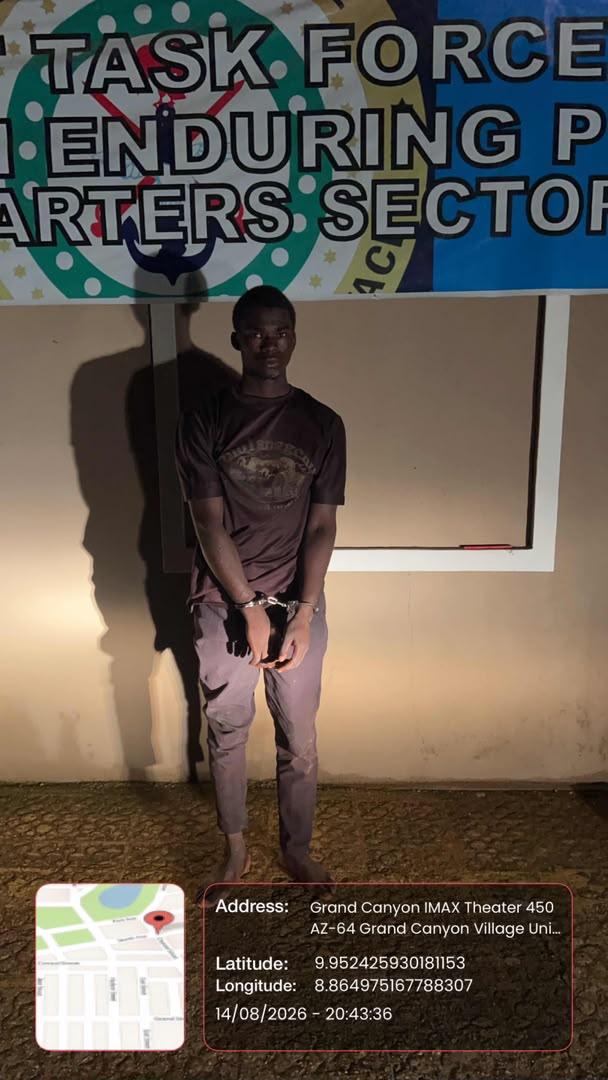
Troops Arrest Three Suspected Kidnappers in Plateau Raid
By Zagazola Makama
Troops of Sector 1, Operation ENDURING PEACE (OPEP), have arrested three suspected kidnappers during a raid on a criminal hideout at Mista-Ali in Bassa Local Government Area of Plateau State.
Credible security sources told Zagazola Makama that the operation was conducted at about 5:30 p.m. on Aug. 14, following intelligence reports on the activities of suspected kidnappers operating in the area.
The troops raided the identified hideout and arrested three suspects, identified as Umar Aliyu, 25; Abdulrahman Adam, 25; and Bello Isa, 21.
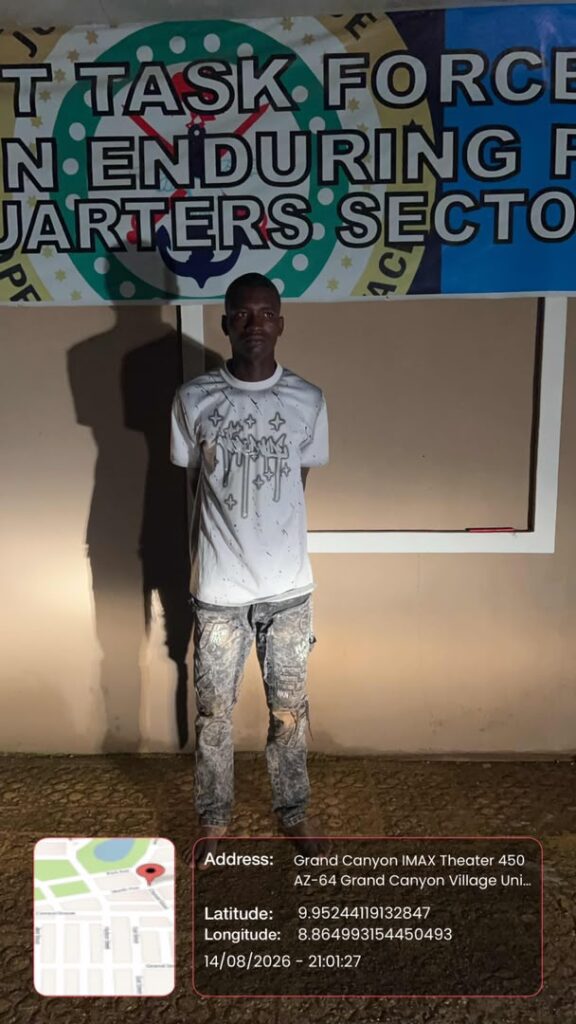
Two other suspects reportedly escaped during the operation.
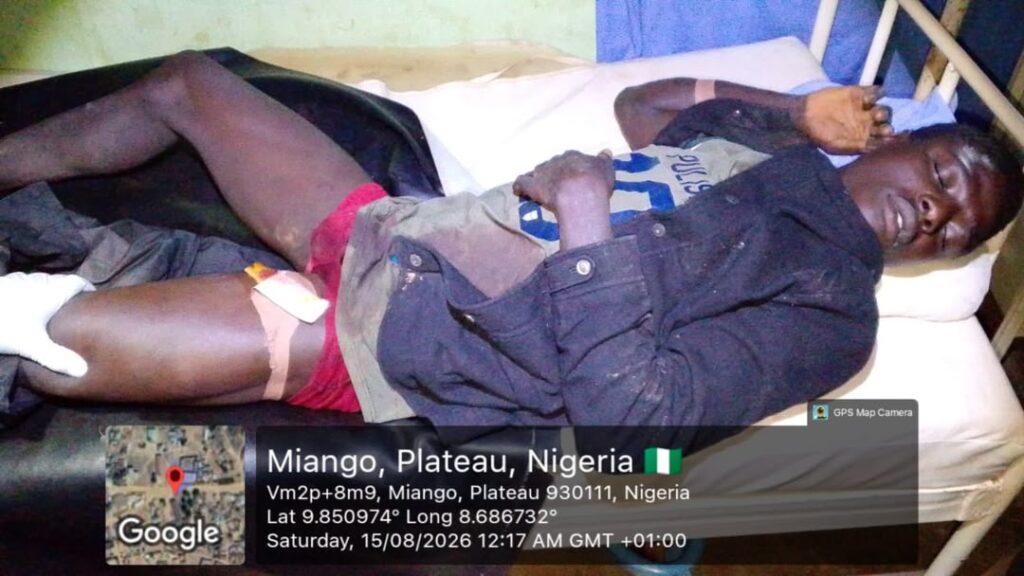
However, one of the fleeing suspects attacked and stabbed a soldier, identified as CPL Muhammad Adam, with a knife while attempting to escape.
The injured personnel was immediately evacuated to the General Hospital, Mista-Ali, where he was admitted for medical attention.
A search of the houses belonging to the arrested suspects was subsequently conducted, but no incriminating items were recovered.
The three suspects remain in military custody and are assisting ongoing investigations into their activities and possible links to kidnapping operations in the area.
The development highlights the continued efforts by security forces to dismantle criminal networks and prevent kidnappers from establishing hideouts in communities across Plateau State.
Zagazola Makama reports that security agencies have continued to intensify intelligence-led operations in vulnerable communities as part of efforts to protect residents and maintain peace in the state.
Troops Arrest Three Suspected Kidnappers in Plateau Raid

Seven ISWAP Fighters’ Family Members, 12 Children Flee Yaganari Enclave, Surrender to Troops

Again, Military Neutralise 8 ISWAP Fighters in Precision Airstrike in Timbuktu Triangle

Troops Foil Kidnap Attempt, Rescue Four Minors in Plateau

Roger Federer’s Shock as DNA Results Reveal Myla and Charlene Are Not His Biological Children

THE PLIGHT OF FARIDA

FAILED COUP IN BURKINA FASO: HOW TRAORÉ NARROWLY ESCAPED ASSASSINATION PLOT AMID FOREIGN INTERFERENCE CLAIMS
-
 News2 years ago
Roger Federer’s Shock as DNA Results Reveal Myla and Charlene Are Not His Biological Children
-
Opinions5 years ago
THE PLIGHT OF FARIDA
-
 News1 year ago
FAILED COUP IN BURKINA FASO: HOW TRAORÉ NARROWLY ESCAPED ASSASSINATION PLOT AMID FOREIGN INTERFERENCE CLAIMS
-

 News2 years ago
EYN: Rev. Billi, Distortion of History, and The Living Tamarind Tree
-
 Opinions5 years ago
POLICE CHARGE ROOMS, A MINTING PRESS
-

 ACADEMICS2 years ago
A History of Biu” (2015) and The Lingering Bura-Pabir Question (1)
-

 Columns2 years ago
Army University Biu: There is certain interest, but certainly not from Borno.
-

 Politics1 year ago
2027: Why Hon. Midala Balami Must Go, as Youths in Hawul and Asikira/Uba Federal Constituency Reject ₦500,000 as Sallah Gift
