
News
An appreciation of the armed forces: weeklong actions across multiple theatres


An appreciation of the armed forces: weeklong actions across multiple theatres
By Bayo Onanuga
Some Nigerians and armchair analysts are often quick to criticise the Federal Government for perceived shortcomings in security, highlighting isolated incidents such as kidnappings, improvised explosive devices, suicide bombings, and attacks in parts of the country.
Such perceptions, however, tend to downplay and discount the heroic exploits of members of the Nigerian armed forces, saddled with the responsibility of countering the evil machinations of God-forsaken non-state actors, who operate like guerrillas.
My position is reinforced by the security reports I receive daily from Zagazola Makama, a journalist who has emerged as a counter-insurgency expert in Nigeria. This past week alone, Zagazola inundated me with reports from multiple theatres, indicating that our troops are making significant gains in the asymmetrical war against insurgents, terrorists, ISWAP, Boko Haram, IPOB, bandits, kidnappers, and crude oil thieves.
Let’s begin with some heartening news that made headlines on Monday.
A few days ago, some newspapers sensationally reported that gunmen kidnapped 14 passengers of a Benue Links bus travelling from Makurdi to Otukpo. Seventeen passengers were in the bus, among them eight youngsters going to write the UTME. Three of the passengers escaped from the clutch of the abductors.
On Sunday, April 19, troops of Sub-Sector 1B, OPWS rescued the remaining 13 passengers following a search-and-rescue operation conducted in a forested area in Ohimini Local Government Area.
“Security sources,” according to Zagazola, “clarified that the perpetrators were local criminal elements in Benue and not Fulani bandits as initially speculated in some quarters. The media hastily attributed the attack to external groups without proper verification”.
Those rescued include Hycent Oko (56), Elaiguli Joshua (25), Orili Raphael (29), Sunday Augustine (18), Emmanuel Elaicha (21), Gbile Nguyor Daniel (18), Ukacha Tersoo (18), Nyikwagh Aoridakator (22), Iornav Ngukuhan (18), Nyikwagh Benjamin (18), Buker Agatha (19), Paul Wende (29) and Akor Jessica (19).
The victims were evacuated to the General Hospital in Otukpo for medical attention, as some of them sustained varying degrees of injuries during their captivity. Later, some of the victims had a photo-op with Governor Hyancinth Alia, who appealed to JAMB to set another examination for the traumatised youngsters.
The incident illustrated a growing trend of locally grown criminality, where local elements exploit familiar terrain and community networks to carry out abductions.
On Saturday night, April 18, troops were alerted by gunshots along the Kpashio-Ansa Road in Bassa LGA of Plateau State. They rapidly responded and found three wounded victims of the gun attacks by the roadside. They were travelling on a motorcycle when they came under a burst of gunfire. The gunmen stole the motorcycle. The troops evacuated the three victims to a nearby hospital. One died, and two survived.
On the same April 18, troops under Sector 1 of Operation Enduring Peace arrested two suspects in Jos North Local Government, one of them, Khalid Usman, for stabbing a police inspector. The other suspect, Ali Izang, was arrested at about 0615 hrs near the Correctional Centre. He had a round of 7.62mm ammunition.
Troops of Operation Enduring Peace also arrested nine ethnic militiamen responsible for targeted killings. They recovered arms and ammunition following an operation in Riyom Local Government Area of Plateau State, amid ongoing security concerns linked to recurring attacks and cycles of violence in the area.
The suspects were arrested at about 0135 hours on April 18, 2026, when troops deployed at Ganawuri responded to reports of the suspects moving towards the Danwal area.
The troops intercepted and apprehended the suspects, who were found with blood stains on their bodies, raising suspicion of recent involvement in silent killings.
Items recovered from them include three motorcycles, one pistol, one submachine gun, one locally made revolver rifle, 20 rounds of pistol ammunition, and one locally fabricated rifle, among other items.
The arrest came amid sustained insecurity in parts of Plateau State, where communities in Riyom, Barkin Ladi, Bokkos, Mangu and surrounding areas have witnessed repeated incidents of violent attacks and reprisals. Across these flashpoints, the patterns are consistent, which suggests that perpetrators of violence are not faceless outsiders operating in isolation.
“Sources said that the suspects were currently in custody, providing information, and are responsible for carrying out a series of attacks in recent months, which have escalated violence and reprisal attacks in Plateau State,” Zagazola reported.
In recent months, security reports have indicated a pattern of violence involving Fulani bandits and armed elements of the Berom operating within local communities.
The most recent development occurred on April 13 at about 0700 hrs, when troops under Operation Enduring Peace (OPEP) conducted a search-and-rescue operation in Ariri and Kwasha villages of Bassa LGA following reports of a missing herder. During the operation, troops discovered the corpse of the herder and recovered 32 cattle alive, while three others were found dead. The troops handed the remains of the herdsman and livestock to community leaders.
On the same day, troops responded to intelligence on an illegal settlers’ camp in Ungwan Doki, Riyom LGA, where four suspected migrants were arrested. On April 12, at about 1440 HOURS, troops restored calm after a clash between farmers and herders in Rakum village, Barkin Ladi LGA. Five locals, two herders, and a police officer sustained injuries after being attacked by the Berom Militia. The troops arrested one suspect.
Earlier, at about 1222 HOURS in Rasa village, troops foiled another attack on a herder by suspected armed Berom elements and evacuated the injured victim to the hospital. At about 2100 HRS, troops responded to sporadic gunfire along Hukke–Rewienko road in Bassa LGA, repelling attackers and rescuing an injured civilian.
In a related development, at about 1800 HOURS, troops foiled an attempted cattle rustling incident in Kpashio village, recovering 92 cattle reportedly abandoned by fleeing suspects.
Within the same period, armed Berom Militia engaged troops of Operation Enduring Peace in a heavy gun battle in Barkin Ladi. The troops killed five of the attackers. Later that same day, the corpses were hastily buried by the community to avoid the determination of the identity of the attackers.
On April 11 at about 2145 HOURS, troops responded to an ambush in the Tanjol community, where a 21-year-old resident, Joseph Irmiya, was attacked by Fulani bandits. The victim later died from injuries.
Shortly after, troops intercepted an attempted attack on the Rim community by Berom militants, where one youth sustained gunshot wounds. Separately, troops conducting stop-and-search operations in Kuru, Jos South LGA, at about 2030 HOURS, arrested two suspects in possession of a pistol and ammunition.
Troops have continued operations across flashpoints in Riyom and neighbouring LGAs, with authorities maintaining that sustained patrols, arrests and recovery of arms are aimed at restoring lasting peace in the area.
Still in Plateau, troops of Operation Safe Haven reported the suspected poisoning of nine cattle in Rakum Village, Kassa District of Barkin Ladi Local Government Area. The cattle belonged to one Dauda Jalo. Some Berom youths were suspected of poisoning the grazing field. An incident like this is usually the precursor of a reprisal attack in the community, as the cattle owner wants to take the blood of humans as a form of revenge for his dead cattle. This is one incident, along with cattle rustling, that has made peace elusive on the Plateau for decades.
In Borno state, troops of Operation Hadin Kai neutralised two terrorists on April 18 as they foiled an attempted attack by Boko Haram/ISWAP along the Kirawa-Pulka axis. The insurgents, riding on bikes, along with others, were trying to infiltrate the Ngoshe axis when the troops of 153 Task Battalion confronted them. The others escaped, as their comrade in arms fell to our troops’ superior firepower. The troops recovered a walkie-talkie radio set from the neutralised insurgents.
In Yobe, troops arrested three ISWAP logistics suppliers during an operation in the Damaturu Local Government Area. The suspects, believed to be linked to ISWAP and Boko Haram elements, were apprehended at about 3:00 p.m. on April 15, 2026, by troops of 233 Battalion in collaboration with members of a local hunters’ group.
Also in Borno on 16 April, troops of Operation Hadin Kai repelled a terrorist attack in Benisheikh, Kaga Local Government Area of Borno State. The incident occurred at about 8:30 a.m. on April 16, 2026, when the terrorists launched an assault on troops of Headquarters 29 Task Force Brigade, the second time in recent days.
According to the sources, the troops engaged the attackers in a firefight, forcing them to retreat in disarray. The soldiers pursued the fleeing insurgents but did not make further contact.
On April 17, troops of Operation Hadin Kai discovered and detonated an improvised explosive device (IED) in Mairari town along the Gajiram axis of Borno State.
The device was detected at about 9:00 a.m. by an Explosive Ordnance Disposal (EOD) and route-scanning team deployed from a Forward Operating Base in the area. The IED, found at the edge of the town’s exit gate, raises concerns about potential threats to both civilians and security personnel using the route.
In Auchi, Edo state, troops of 195 Battalion, responding to a distress call, foiled a kidnap attempt on the morning of August 16 at Iyuku in Jattu. Before the troops arrived, three of the kidnapped victims had overpowered one of the kidnappers and seized his Ak 47, loaded with nine rounds of 7.62mm ammunition. The troops pursued the rest of the kidnappers. They rescued other kidnapped victims, arrested five of the kidnappers, and handed them to the DSS for justice.
In the North West, soldiers of 8 Division repelled an attack by suspected terrorists in Garin Hillo Village, Sabon Birni Local Government Area of Sokoto State. The incident occurred in the early hours of April 17, when troops deployed at a Forward Operating Base (FOB) in Gatawa responded to reports of terrorist activities in the area.
On arrival, the troops made contact with the attackers and engaged them in a shootout, forcing the attackers to retreat.
Further inquiry revealed that about 30 armed terrorists had stormed the village on foot, firing sporadically and causing panic among residents. As a result of the attack, six civilians sustained gunshot wounds.
The injured victims were evacuated to the General Hospital in Sabon Birni for medical attention. Troops continue to dominate the area to prevent further attacks and ensure the safety of residents.
In central Nigeria, troops of 12 Brigade under Operation MESA destroyed a suspected terrorist camp and intercepted a logistics courier in Yagba West Local Government Area of Kogi State.
The operation on April 16 was carried out in the early hours following credible intelligence on the presence of a suspected terrorist camp between Ejiba and Ofi communities. The troops, in conjunction with Police and members of the Civilian Joint Task Force (CJTF), mobilised from their Forward Operating Base (FOB) in Egbe and advanced to the location.
During the operation, the troops intercepted a suspected courier on a motorcycle who was delivering food items to the camp. However, the suspect fled on sighting the troops, abandoning the motorcycle and the items.
The troops proceeded to locate and destroy the suspected camp. No firefight between the troops and the terrorists. Again, this incident shows how civilians collaborate with the terrorists.
In the East, on April 16, Joint security forces comprising personnel of the Nigerian Army, Navy, Air Force, Police, Department of State Services, and Civil Defence Corps conducted a fighting patrol in Orsu Local Government Area of Imo State, leading to the discovery and safe disposal of improvised explosive devices.
The operation took place at about 9:50 a.m. within the Uda general area. An Explosive Ordnance Disposal (EOD) team discovered two improvised explosive devices during the patrol and safely defused them.
On the international front, Nigeria’s Minister of Defence, Christopher Musa, participated in a high-level counterterrorism panel at the Antalya Diplomacy Forum 2026 in Türkiye, where leaders and experts discussed strategies for countering violent extremism, stressing international cooperation and intelligence sharing.
I have taken the time to present this comprehensive account of the recent heroic exploits of the Nigerian armed forces to underscore that our troops are resolutely prosecuting this asymmetric war, fearlessly defending us all, and making sacrifices—some paying the supreme price. Challenges remain, and the battle is far from over. However, what the armed forces and government deserve from us is appreciation and commendation, not condemnation and vilification.
An appreciation of the armed forces: weeklong actions across multiple theatres


HOMEF Pushes Agroecology as Alternative to GMOs, Warns of Risks to Nigeria’s Food Sovereignty
By: Michael Mike
The Health of Mother Earth Foundation (HOMEF) has intensified its campaign against the adoption of genetically modified organisms (GMOs) in Nigeria, warning that increasing dependence on genetically engineered seeds could undermine the country’s indigenous crop varieties, erode biodiversity and weaken farmers’ control over food production.
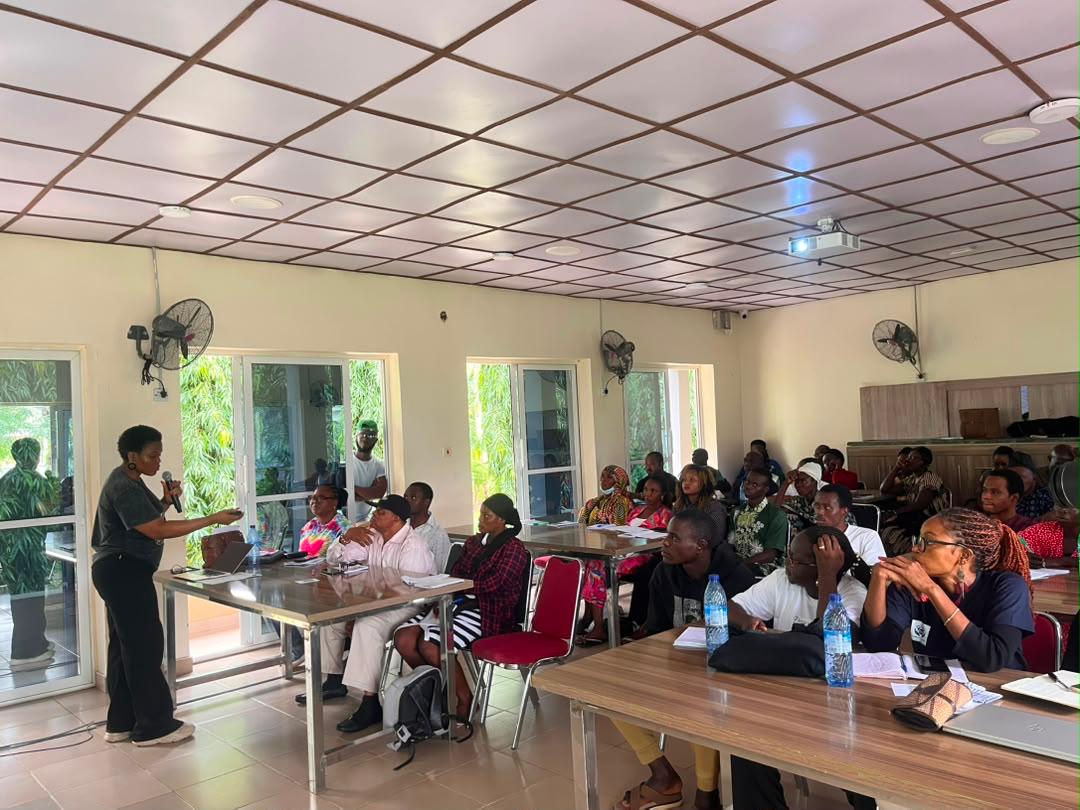
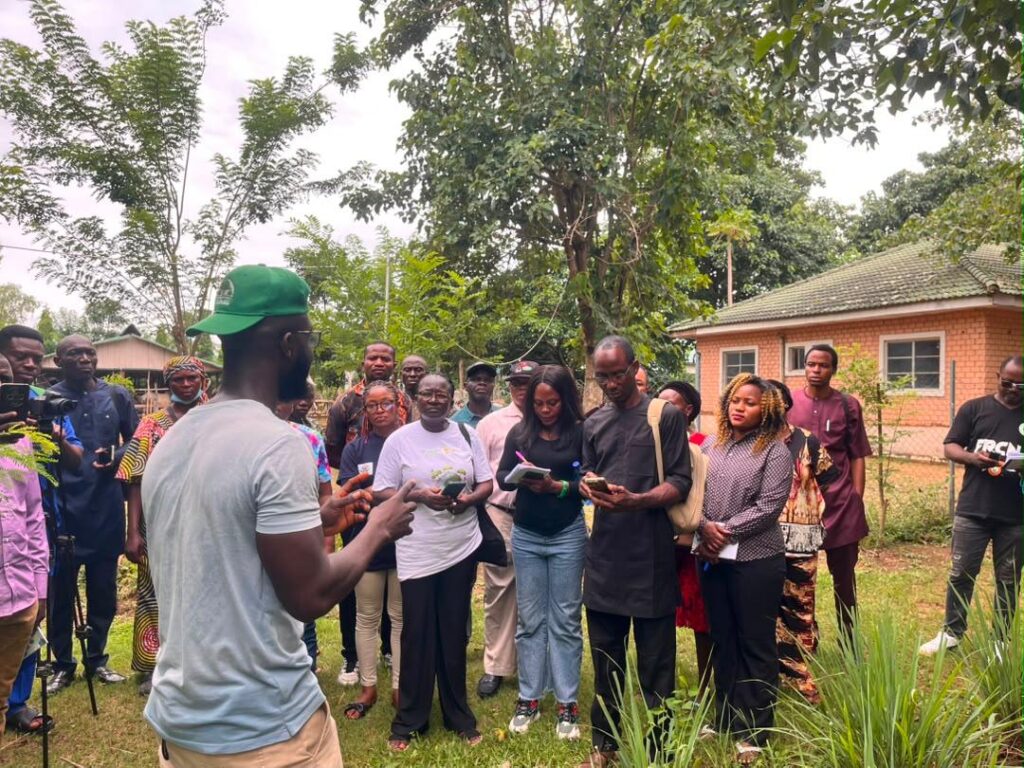
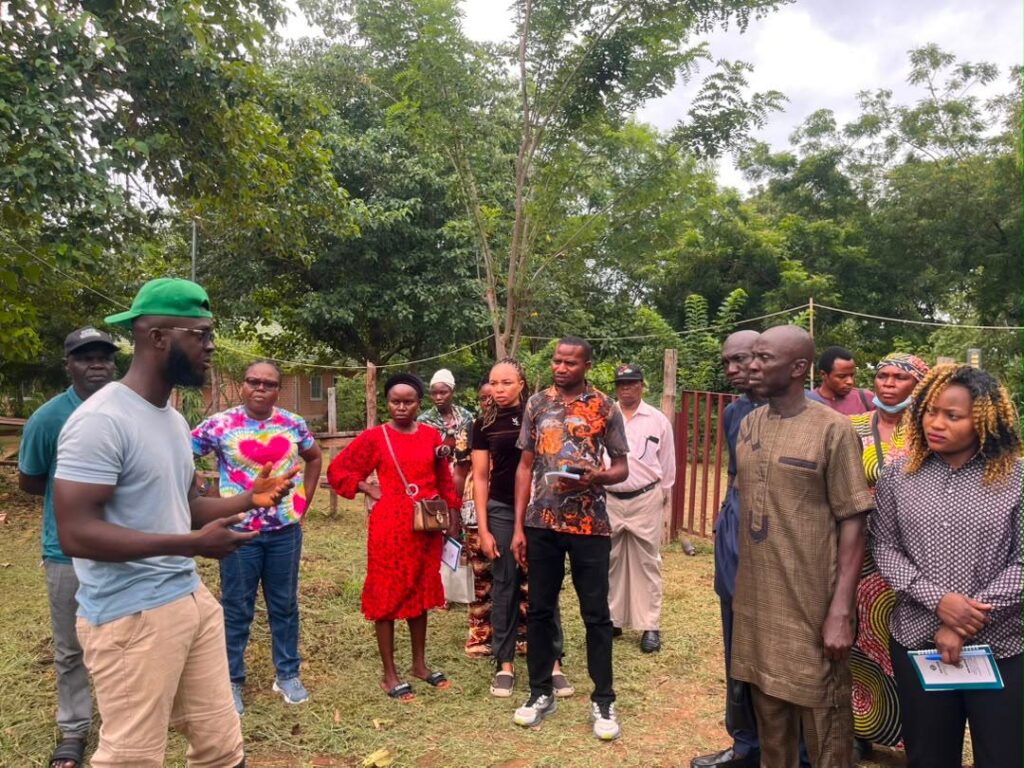
The environmental advocacy organisation made the call on Thursday during a one-day farmers’ training on agroecology held at the Be The Help Foundation Farm in Dama-Kusa Village, Kwali Area Council of the Federal Capital Territory (FCT), where farmers were introduced to sustainable farming techniques designed to improve productivity without reliance on genetically modified seeds or synthetic agricultural chemicals.
The training formed part of HOMEF’s broader advocacy for agroecology, which promotes environmentally friendly farming practices, biodiversity conservation and the preservation of farmers’ rights to save, exchange and replant indigenous seeds.
Speaking with journalists after the training, HOMEF’s Director of Programmes, Joyce Brown, said the organisation sought to demonstrate that sustainable agricultural productivity could be achieved through ecological farming systems rather than through genetically modified crops.
She warned that one of the greatest dangers posed by GMOs is the gradual contamination and possible disappearance of Nigeria’s indigenous crop varieties through gene flow during pollination.
“One of the major implications that GMOs pose for Nigeria is the risk of losing our indigenous crop varieties. Through pollination and other mechanisms, genes can transfer from GMOs to our local crops, and in the long run we risk losing our own varieties. The loss of biodiversity is also a major implication,” she said.
Brown argued that although GMOs are often promoted as a solution to food insecurity, they fail to address the structural problems confronting agriculture in Nigeria, including inadequate extension services, climate change and insufficient government support for smallholder farmers.
According to her, what farmers require is access to sustainable farming knowledge, climate-resilient production systems and policies that empower local food producers rather than dependence on expensive technologies.
“We brought farmers here to see for themselves that there are alternatives to GMOs and synthetic pesticides. The agroecological system being practised here shows that we do not need GMOs to increase food productivity. What farmers need is greater support, better extension services and climate-resilient farming practices,” she stated.
Brown also criticised what she described as weak regulatory oversight of genetically modified products in Nigeria, urging the Federal Government to adopt a clearer policy direction on biotechnology.
“There is an agency established to regulate GMOs, but other agencies are bypassing it to approve these products. Nigerians are not assured of the safety of what they are eating. Government must take a definitive position and increase support for farmers instead,” she added.
She further noted that several countries across the world have imposed restrictions on the cultivation or importation of specific genetically modified crops in order to protect indigenous farming systems and biodiversity, urging Nigeria to formulate policies that reflect its own agricultural realities and food security priorities.
Also speaking, the Chief Executive Officer of the Be The Help Foundation, Samuel Kwasari, described agroecology as a practical pathway towards achieving sustainable agriculture, environmental restoration and long-term food security.
Kwasari, who identified himself as the foundation’s “Chief Farmer,” explained that the organisation operates a regenerative agriculture model built around agroforestry, integrating crop cultivation with tree planting to restore degraded landscapes while improving farmers’ incomes.
“Our practice is regenerative agriculture through agroecology, using agroforestry as our major model. We want to produce food sustainably without harming the environment or human health. What you eat is what you are, so food should be safe and free from synthetic chemicals,” he said.
He explained that the farming model incorporates soil restoration, water conservation, nutrient recycling and carbon sequestration through carefully selected tree species that not only improve ecological health but also provide economic benefits from timber, firewood and carbon credits.
Kwasari described agroecology as a fusion of scientific knowledge and traditional farming practices adapted to local ecological conditions, stressing that sustainable agriculture must work with nature rather than against it.
He also drew a distinction between food sufficiency and food sovereignty, insisting that true food security extends beyond having enough food to include the freedom of farmers to determine what they cultivate and consume.
“Food sufficiency means you have food to eat. Food sovereignty means you have food and choice. It means you control what you grow, how you grow it and what you eat. Agroecology helps us achieve that because farmers remain in control of their seeds and production systems,” he explained.
According to him, Nigeria’s recurring food shortages are largely the result of inadequate planning and years of neglect of local food producers despite the country’s rapidly expanding population.
“We have had food production deficits for years. Government needs policies that enable local and indigenous food growers to produce for domestic consumption first. Let people grow their food, eat it first, and export only the surplus,” he said.
Kwasari maintained that HOMEF’s opposition to GMOs is rooted in practical demonstrations rather than theory, noting that the foundation has spent seven years proving that agroecology and agroforestry can deliver sustainable agricultural productivity.
“For seven years we have demonstrated that agroecology and agroforestry work. One of our greatest concerns with GMOs is that farmers lose control of their seeds. Once you lose seed sovereignty, you lose food sovereignty because someone else begins to determine what you plant and how you farm,” he said.
On pest management, he explained that the farm relies on integrated ecological approaches rather than chemical pesticides, maintaining biodiversity to naturally regulate pest populations while producing organic bio-fertilisers on-site to nourish crops.
“We intentionally design the farm so that insects and other organisms have their place within the ecosystem. We don’t focus on killing pests; we manage them. We also produce our own local bio-fertilisers on the farm, and those are what we use to nourish our crops,” he added.
While HOMEF reiterated its opposition to GMOs during the training, it is worth noting that supporters of genetically modified crops, including several scientific and regulatory bodies, argue that approved GM crops can increase yields, improve resistance to pests and climate stresses, and are considered safe when subjected to established regulatory assessments. The debate over GMOs therefore remains one of the most contested issues in agricultural policy, balancing food security objectives, environmental concerns, farmers’ rights and scientific evidence.
HOMEF Pushes Agroecology as Alternative to GMOs, Warns of Risks to Nigeria’s Food Sovereignty
Youth Must Shape Nigeria’s Democratic Future Through Peaceful 2027 Polls, NHRC Charges
By: Michael Mike
With less than a year to Nigeria’s 2027 general elections, the National Human Rights Commission (NHRC) has issued a strong call to the nation’s youth to take ownership of the country’s democratic future by participating actively, peacefully and responsibly in the electoral process, warning that credible elections remain the cornerstone of national stability, accountable leadership and sustainable development.
The charge came from the Executive Secretary of the NHRC, Chief Tony Ojukwu, who delivered the keynote address at the 6th National Leadership and Youth Stakeholders Conference in Abuja, themed: “2027 Elections: From Voices to Votes – Process, Participation, Security and National Stability Beyond 2027.”
Addressing a gathering of youth leaders, policymakers and civil society stakeholders, Ojukwu described young Nigerians as the country’s most powerful force for democratic transformation, urging them to move beyond social media activism and public discourse to meaningful civic engagement through the ballot box.
He stressed that voting and contesting for elective office are fundamental rights guaranteed under Nigeria’s Constitution and insisted that the success of the 2027 elections would depend on the willingness of citizens, particularly young people, to reject violence, hate speech, voter intimidation, misinformation, discrimination and the growing menace of vote-buying.
According to him, democracy can only flourish where citizens are free to participate without fear and where elections reflect the genuine will of the people.
“Peaceful and credible elections are indispensable to national stability, good governance and sustainable development,” Ojukwu said, noting that protecting electoral integrity is a collective responsibility involving citizens, political parties, security agencies, electoral officials and civil society organisations.
He reaffirmed the Commission’s determination to ensure that the 2027 elections are firmly anchored on respect for human rights through intensified election monitoring, investigation of electoral rights violations, voter education and strategic collaboration with the Independent National Electoral Commission (INEC), security agencies and other key stakeholders before, during and after the polls.
The NHRC boss said the Commission was building on the successes of its Mobilising Voters for Election (MOVE) Project, implemented during the 2023 general elections, which promoted voter education, peaceful participation and increased inclusion of youths, women and other traditionally underrepresented groups.
He explained that the lessons from the project are already shaping the Commission’s advocacy and preparations for the next electoral cycle, with greater emphasis on protecting voters’ rights and expanding civic participation.
Beyond elections, Ojukwu argued that strengthening democracy also requires addressing the socio-economic challenges confronting millions of young Nigerians.
He called for greater investment in entrepreneurship, innovation, skills acquisition and youth empowerment programmes to tackle poverty and unemployment, warning that economic hardship leaves many young people vulnerable to political exploitation and electoral violence.
He further advocated leadership founded on integrity, transparency, accountability and respect for the rule of law, insisting that democratic governance can only thrive where human rights are protected and public institutions enjoy the confidence of the people.
Reaffirming the Commission’s commitment to advancing rights-based governance, Ojukwu said the NHRC would continue to deepen partnerships with youth organisations, government institutions, civil society groups and development partners to strengthen civic education, promote peaceful coexistence and safeguard the rights of every Nigerian.
He concluded with a rallying call to the country’s youth to become active custodians of Nigeria’s democracy.
“The future of Nigeria depends on informed, active and responsible citizens. Your voices are important, but your votes give those voices democratic legitimacy. Together, let us build a Nigeria where elections are peaceful, leaders are accountable, and human rights remain the foundation of democratic governance,” he said.
With political activities expected to intensify in the coming months, the Commission urged Nigerians to embrace peaceful participation and uphold democratic values, saying the choices made in 2027 will have far-reaching implications for national unity, security and the country’s democratic trajectory.
Youth Must Shape Nigeria’s Democratic Future Through Peaceful 2027 Polls, NHRC Charges
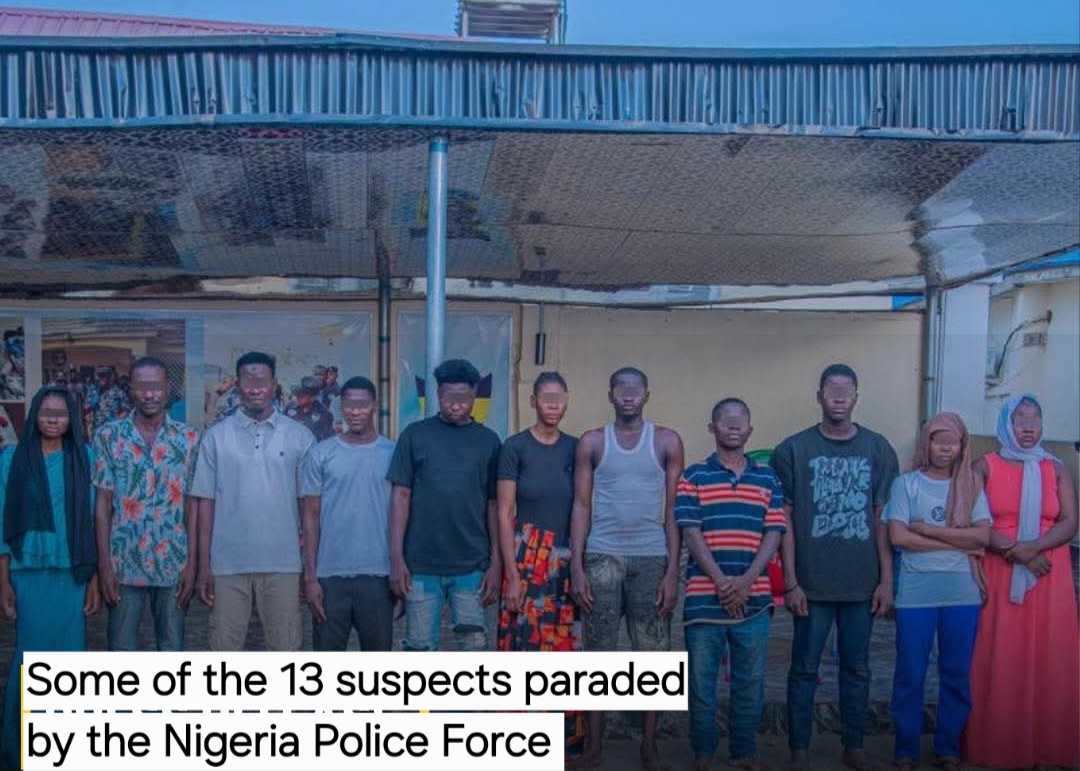
FG Launches New Offensive Against Human Trafficking as Criminal Syndicates Move Online
By: Michael Mike
The Federal Government has announced a major shift in Nigeria’s fight against human trafficking, declaring that the country must urgently strengthen its laws, institutions and international partnerships as criminal networks increasingly migrate from traditional exploitation methods to sophisticated online recruitment and cyber-enabled forced criminality.
The Attorney-General of the Federation and Minister of Justice, Chief Lateef Fagbemi (SAN), said the evolving nature of trafficking requires a comprehensive national response capable of confronting criminals who now exploit digital technology, cross-border networks and online platforms to deceive and control victims.
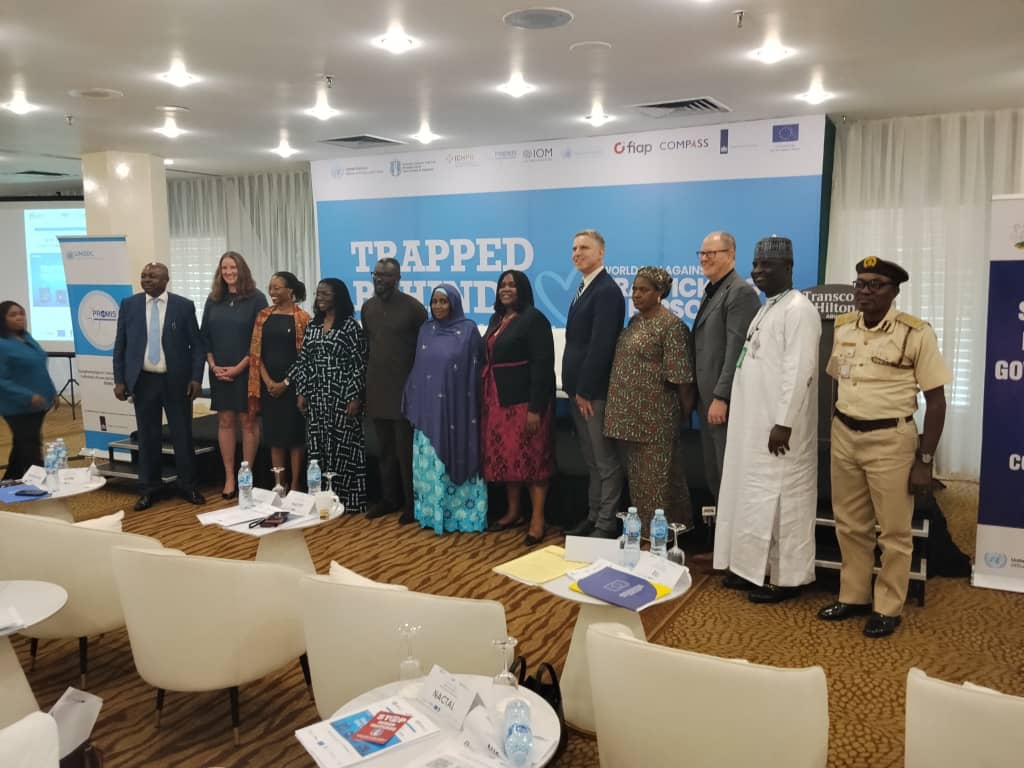
Fagbemi, represented by the Director of Research, Planning and Statistics in the Federal Ministry of Justice, Mrs Victoria Ojogbane, delivered the message at the national commemoration of the 2026 World Day Against Trafficking in Persons in Abuja, with the theme: “Trapped Behind the Scam.”
He said the Federal Government was determined to strengthen Nigeria’s legal and institutional framework to confront emerging trafficking patterns, particularly those connected with online scams, cybercrime and organised transnational criminal activities.
According to him, traffickers are increasingly using technological advancement to evade detection, recruit victims and move illicit proceeds, making stronger coordination among law enforcement agencies, improved intelligence sharing, effective prosecution and enhanced victim protection critical to Nigeria’s response.
“The changing dynamics of human trafficking require stronger laws, closer inter-agency collaboration and deeper international cooperation to ensure traffickers no longer exploit technological advances and cross-border criminal networks to evade justice,” he said.
The Attorney-General assured that the government would continue to support coordinated intelligence operations, strengthen partnerships with security agencies, development partners and neighbouring countries, and ensure that victims receive adequate protection and support.
He noted that trafficking has moved beyond conventional forms of exploitation, with criminal syndicates now using fake employment opportunities, scholarships, business proposals and migration promises shared through social media and messaging platforms to lure unsuspecting victims.
The Federal Government’s renewed approach comes amid growing concerns over the increasing connection between human trafficking, cybercrime, money laundering and organised criminal enterprises.
Director-General of the National Agency for the Prohibition of Trafficking in Persons (NAPTIP), Binta Bello, said the digital transformation of trafficking represents one of the most serious challenges confronting anti-trafficking agencies globally.
She warned that traffickers are exploiting unemployment, poverty and the desire for better opportunities among young Nigerians, using sophisticated online deception to recruit victims before subjecting them to exploitation.
Bello said the theme, “Trapped Behind the Scam,” reflects the changing reality of trafficking, where victims are often trapped through online manipulation before being forced into cyber fraud, sexual exploitation, forced labour and other forms of modern slavery.
She called for stronger partnerships among government agencies, technology companies, financial institutions, security organisations and civil society groups to dismantle criminal networks.
Delivering the keynote address, the United Nations Office on Drugs and Crime (UNODC) Country Representative, Cheikh Touré, warned that trafficking in persons, cybercrime, money laundering and financial fraud are increasingly merging into a single transnational criminal enterprise.
Touré said victims are deceived through social media platforms and online advertisements offering fake jobs, educational opportunities and migration pathways, only to find themselves trapped in scam compounds where their identity documents are seized, their movement restricted and they are forced to carry out online fraud.
He disclosed that many victims are compelled to operate romance scams, investment fraud schemes and cryptocurrency-related scams targeting people across the world.
According to him, UNODC research across 21 Nigerian states found increasing evidence that traffickers are exploiting digital platforms for recruitment, while survivors identified fraudulent employment and migration opportunities as major tactics used by criminals.
He added that Nigerians are increasingly being trafficked into overseas scam compounds, while similar patterns of forced online criminality are beginning to emerge locally, requiring broader investigations involving anti-trafficking agencies, cybercrime units and financial intelligence institutions.
To strengthen the response, UNODC announced the establishment of a Joint Operational Task Force involving NAPTIP and the Nigeria Immigration Service under the European Union-funded Partnership Against Cybercrime and Trafficking in Persons (PACTS) Project.
The task force will focus on intelligence gathering, preservation of digital evidence, tracing criminal proceeds and improving cross-border investigations against trafficking networks.
The Head of Office of the International Centre for Migration Policy Development (ICMPD) Nigeria, Isabelle Wolfsgruber, said traffickers have changed their methods by moving recruitment from physical locations to digital spaces.
She said many trafficking cases now begin with a message on a phone offering a job, scholarship or migration opportunity that appears genuine but is designed to exploit victims.
“Trafficking today rarely begins at a border. It begins on a phone, with a message from someone who seemed trustworthy about a job that does not exist, a scholarship that was never approved. By the time a young person understands what has happened, they are already webbed inside the deception,” she said.
Wolfsgruber said ICMPD is supporting Nigeria’s response through initiatives including the European Union-funded Free Movement of Persons and Migration in West Africa (FMM II) project, the School Anti-Trafficking Education and Advocacy Project (STEAP) supported by the Netherlands, and the Trafficking in Persons Victim Assistance Programme (TIPVAP) implemented with NAPTIP.
She stressed that no single organisation or country could defeat trafficking alone, noting that criminal networks operate across borders and share tactics rapidly.
The International Organisation for Migration (IOM) also emphasised the need for a survivor-focused approach, warning that trafficking often begins with promises of hope rather than immediate violence.
The Chief of Mission, IOM Nigeria, Sharon Dimanche, recalled meeting children rescued from trafficking by NAPTIP in Lagos, describing how some had been deceived with promises of education and better lives before being exploited and robbed of their childhood.
“Traffickers do not sell fear; they sell hope,” she said, explaining that fake job offers, education opportunities and promises of economic advancement remain some of the strongest tools used by traffickers.
She highlighted the case of a Nigerian who was lured with what appeared to be a genuine employment opportunity in Southeast Asia but ended up trapped in a cyber scam compound, where his passport was confiscated and he was forced into online fraud under threats and abuse.
According to IOM, the victim was later returned to Nigeria through coordinated efforts involving the government, NAPTIP, IOM and partners, but his experience reflected the increasingly complex nature of modern trafficking.
The organisation disclosed that it has assisted more than 7,700 trafficking victims since 2017, with nearly nine out of every ten victims being women and girls, most of them young adults seeking better economic opportunities.
IOM stressed that rescuing victims is only the beginning, adding that survivors require psychosocial support, education, skills development and sustainable livelihoods to rebuild their lives and avoid being re-trafficked.
The organisation reaffirmed its commitment to working with NAPTIP, government institutions, civil society organisations and development partners to strengthen prevention, victim identification, protection and prosecution efforts.
Stakeholders at the commemoration agreed that human trafficking has evolved from a traditional crime into a complex security, justice and development challenge requiring technology-driven enforcement, stronger regional cooperation, public awareness and sustained support for survivors.
The emerging consensus was that Nigeria’s success in combating trafficking will depend on whether its response can move as quickly and strategically as criminal networks adapting to the digital age.
FG Launches New Offensive Against Human Trafficking as Criminal Syndicates Move Online

HOMEF Pushes Agroecology as Alternative to GMOs, Warns of Risks to Nigeria’s Food Sovereignty

ECOWAS, UNDP, Nigeria Unite to Break Barriers Against Women’s Political Leadership in West Africa

Youth Must Shape Nigeria’s Democratic Future Through Peaceful 2027 Polls, NHRC Charges

Roger Federer’s Shock as DNA Results Reveal Myla and Charlene Are Not His Biological Children

THE PLIGHT OF FARIDA

FAILED COUP IN BURKINA FASO: HOW TRAORÉ NARROWLY ESCAPED ASSASSINATION PLOT AMID FOREIGN INTERFERENCE CLAIMS
-
 News2 years ago
Roger Federer’s Shock as DNA Results Reveal Myla and Charlene Are Not His Biological Children
-
Opinions4 years ago
THE PLIGHT OF FARIDA
-
 News1 year ago
FAILED COUP IN BURKINA FASO: HOW TRAORÉ NARROWLY ESCAPED ASSASSINATION PLOT AMID FOREIGN INTERFERENCE CLAIMS
-

 News2 years ago
EYN: Rev. Billi, Distortion of History, and The Living Tamarind Tree
-
 Opinions5 years ago
POLICE CHARGE ROOMS, A MINTING PRESS
-

 ACADEMICS2 years ago
A History of Biu” (2015) and The Lingering Bura-Pabir Question (1)
-

 Columns2 years ago
Army University Biu: There is certain interest, but certainly not from Borno.
-

 Politics1 year ago
2027: Why Hon. Midala Balami Must Go, as Youths in Hawul and Asikira/Uba Federal Constituency Reject ₦500,000 as Sallah Gift
