
News
ANALYSIS: Vigilantes embark on unsanctioned mission, walk into ambush — yet blame government? How?

ANALYSIS: Vigilantes embark on unsanctioned mission, walk into ambush — yet blame government? How?
By: Zagazola Makama
Let’s be honest. What happened in Kanam LGA, Plateau State, on July 6, 2025, was not just tragic, it was completely avoidable. But what’s worse than the incident itself is the wave of misinformation, public outrage, and unguarded finger-pointing now flying across social media as people scramble to lay blame squarely on the government and security agencies. Pause. How?
Here’s the fact: a large group of vigilantes mobilized on their own, without informing or coordinating with Operation SAFE HAVEN (OPSH) the legally recognized joint task force handling security in the area. They went rogue. They gathered themselves, left Kanam, claimed they were heading to Odare Forest to “deal with bandits”, and even stopped over at Kukawa community where, instead of waiting quietly, they reportedly attacked civilians and looted provision shops. They even seized over 20 motorcycles from locals. This wasn’t a coordinated security operation; this was a recipe for chaos.
Still, they pushed forward toward the forest. And then reality struck: they were ambushed by the same armed bandits they thought they’d surprise. Eight vigilantes died. Others went missing. Tragic, yes. But entirely self-inflicted.
Then came the media storm exaggerated headlines screaming “70 vigilantes killed!” which turned out to be grossly false. What’s the point of throwing such a dangerous figure into an already volatile situation? Is it for clicks? Or just an outright attempt to paint government and security forces as incompetent?
Worse still, people online are now blaming the National Security Adviser, Mallam Nuhu Ribadu, service Chiefs and OPSH. But let’s ask a basic question: Who approved this operation? Who did they inform? What intelligence were they acting on? Or did they think bandits would greet them with jollof rice and welcome drinks?
Let’s not confuse emotions with facts. Operation SAFE HAVEN is not a tea club. It’s a robust multi-agency task force comprising the military, police, DSS, NSCDC, and others. It’s structured. Coordinated. It works on intelligence, logistics, and strategy. You don’t just bypass that entire structure and head off into the bush, machete in hand, and expect success.
And when it fails, you start screaming that “government has failed”. No, this is not failure of government. This is failure of process. This is what happens when people mistake bravado for bravery.
Of course, every loss of life is regrettable. Nobody should take that lightly. But we must equally call out reckless actions that put lives at risk and then fuel chaos through misinformation. OPSH confirmed eight deaths, not 70. Troops only got to know this when the ambush already took place and they only went for Search and rescue operations, recovering the missing people.
If vigilantes who are meant to support the formal security architecture choose to operate outside of it, then they bear the consequences of those actions. OPSH didn’t know. The military wasn’t briefed. No one in the chain of command approved it. What exactly were they expecting? The reason why they refused to informed the security forces is because nobody will regulate their activities, reason why on their way, they decided to loot shops and seized motorcycles from residents.
It’s high time people realize that securing communities is not a matter of spontaneous bravado or viral outrage. It requires planning, coordination, and discipline.
And to the media houses: please do your job responsibly. Verify your figures. “70 vigilantes killed” is not a statistic it’s a spark that could ignite tensions if not carefully managed. Eight is too many already.
Let’s stop turning self-inflicted wounds into national tragedies blamed on people who had no hand in the recklessness. The message is clear: coordinate with OPSH. Don’t go rogue. And above all, don’t cry foul when you didn’t play by the rules.
Enough with the dangerous mischief.
ANALYSIS: Vigilantes embark on unsanctioned mission, walk into ambush — yet blame government? How?



Troops intercept 11 youths with donkeys during patrol in Borno
By: Zagazola Makama
Troops of 68 Battalion have intercepted 11 youths during a routine patrol in Mallam Fatori area of Abadam Local Government Area of Borno State.
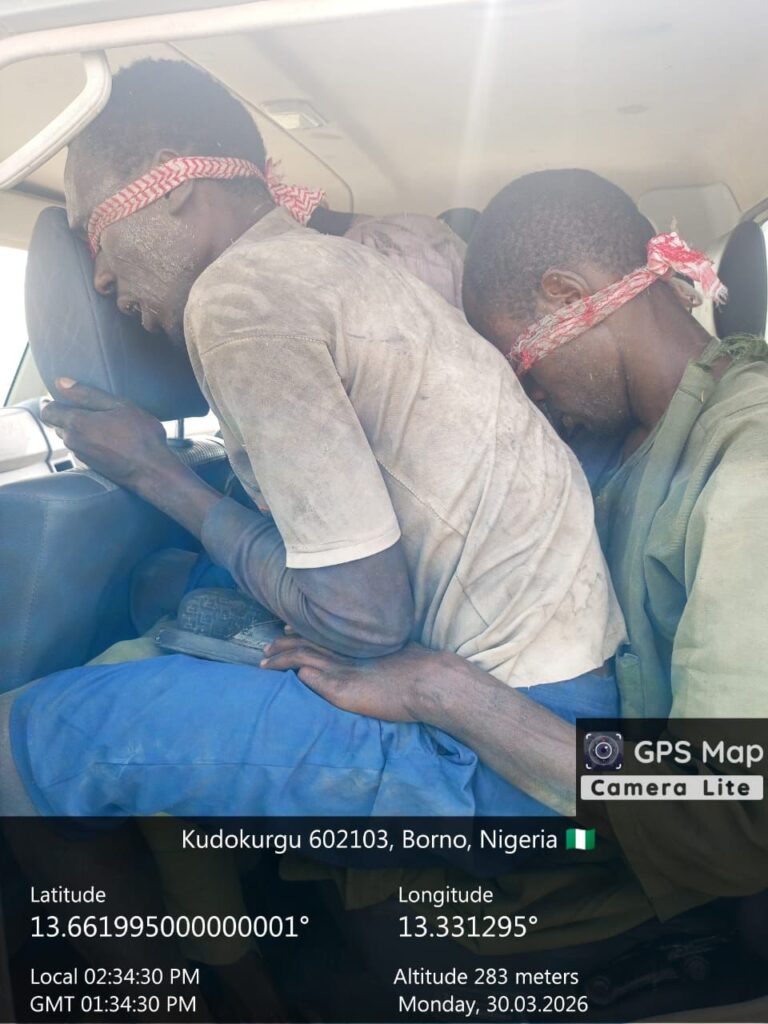
Security sources said the interception occurred along the Bulagana–Cheisa axis on April 2 during ongoing clearance operations in the area.
According to the sources, the individuals were found moving in the area with 12 donkeys when they were stopped and briefly interrogated by troops.
The sources added that the youths were later handed over, alongside the animals, to relevant authorities in a neighbouring country for further necessary action.
The military said the patrol was part of sustained efforts to maintain security dominance and prevent exploitation of border communities by criminal elements.
Troops intercept 11 youths with donkeys during patrol in Borno
Troops recover ammunition, logistics items in Kwara patrol operation
By: Zagazola Makama
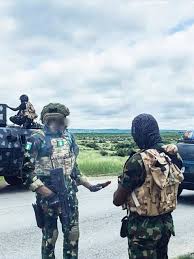
Troops of the Nigerian Army under the 22 Brigade have recovered ammunition and other logistics items during a fighting patrol in Ifelodun Local Government Area of Kwara State.
A security source disclosed that the operation was conducted at about 4:00 p.m. on April 2 at Daban Lema, where troops of the brigade, operating from the Patrol Base, encountered signs of suspected terrorist activities in a deserted location.
According to the source, the troops immediately carried out exploitation of the area, leading to the recovery of four rounds of 7.62mm special ammunition and one empty PKT ammunition belt link.
Other items recovered include four mobile phones, two head warmers, two small solar panels, and assorted repair tools believed to have been used by the suspected terrorists.
The source added that the recovery indicates the presence and movement of suspected criminal elements within the area, noting that troops have intensified surveillance and patrols to deny them freedom of action.
Troops recover ammunition, logistics items in Kwara patrol operation
Troops foil attack by Criminal Youths, rescue victims, arrest suspects in plateau
By: Zagazola Makama
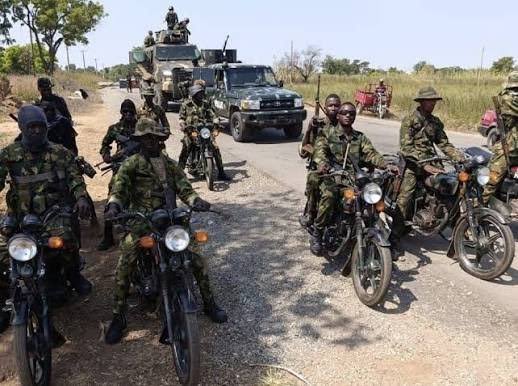
Troops of Sector 1, Operation Enduring Peace (OPEP), have foiled an attack on residents at Dutse Uku in Jos North Local Government Area of Plateau State.
A security source said the troops responded swiftly to a report of sporadic gunshots in the area at about 11:50 p.m. on April 2.
According to the source, upon arrival at the scene, the suspected criminals fled, abandoning their operation due to the prompt intervention of the troops.
He said the troops rescued two victims who sustained gunshot wounds during the incident and immediately evacuated them to a hospital for medical attention.
The source further disclosed that two suspects, dressed in black attire, were arrested at the scene.
Items recovered from the suspects include a cutlass and a knife.
He added that the suspects are currently in military custody and undergoing preliminary investigation, while efforts are ongoing to track down other fleeing members of the group.
Zagazola report that despite heightened security, there has been report of pocket of attacks in some communities.
The source reassured residents of the military’s commitment to protecting lives and property and urged the public to continue providing timely information to security agencies.
Troops foil attack by Criminal Youths, rescue victims, arrest suspects in plateau

Troops intercept suspected Boko Haram logistics convoy conveying 13 persons in Borno

Troops intercept 11 youths with donkeys during patrol in Borno

Troops, CJTF arrest three suspected Boko Haram logistics suppliers in Borno

Roger Federer’s Shock as DNA Results Reveal Myla and Charlene Are Not His Biological Children

THE PLIGHT OF FARIDA

FAILED COUP IN BURKINA FASO: HOW TRAORÉ NARROWLY ESCAPED ASSASSINATION PLOT AMID FOREIGN INTERFERENCE CLAIMS
-
 News2 years ago
Roger Federer’s Shock as DNA Results Reveal Myla and Charlene Are Not His Biological Children
-
Opinions4 years ago
THE PLIGHT OF FARIDA
-
 News12 months ago
FAILED COUP IN BURKINA FASO: HOW TRAORÉ NARROWLY ESCAPED ASSASSINATION PLOT AMID FOREIGN INTERFERENCE CLAIMS
-

 News2 years ago
EYN: Rev. Billi, Distortion of History, and The Living Tamarind Tree
-
 Opinions4 years ago
POLICE CHARGE ROOMS, A MINTING PRESS
-

 ACADEMICS2 years ago
A History of Biu” (2015) and The Lingering Bura-Pabir Question (1)
-

 Columns2 years ago
Army University Biu: There is certain interest, but certainly not from Borno.
-

 Opinions2 years ago
Tinubu,Shettima: The epidemic of economic, insecurity in Nigeria
