
Opinions
Anas Gajiram: Let’s Talk About Senator Abubakar Kyari (Part 1)


Anas Gajiram: Let’s Talk About Senator Abubakar Kyari (Part 1)
By: James Bwala
The Chairman, Senate Committee on Federal Capital Territory (FCT), Senator Abubakar Kyari is one the respected representative of the people not because he chaired a committee that is housing the Presidency but because he has demonstrated an unequal approach to matters of his assignment and the image of the people he is representing at the red chamber. He is not a noise maker when it comes to his many achievements both as a Committee Chairman as well as representing the people of northern Borno in the Senate. However, his achievements are numerous that one can only say of it in the difference of rhythm between the ‘Yoruba’s’ small talking drum and the ‘Kanuris’ Big ‘Ganga kura’ of the kingly steps in a dancing arena.
Also Read: 2023 Politics: How Senator Kashim Shettima is winning PDP…
I first met Senator Abubakar Kyari when I was walking as a Journalist with ’Conscience International Magazine’ established by the controversial ex-police officer, Chief Abiola Ogundokun. I was asked to interview his father, the late General Abba Kyari, who was then holding an important role in the First Bank. He was telling me about his son, when Habu Kyari walked in. Long after that, I worked closely with him when he was appointed by the Sheriff administration in Borno as Commissioner for Water Resources and subsequently as MD Ruwasa.
Senator Abubakar Kyari remained a consistent, focused and deliberately excellent performer. He was the man behind the success story of water crises in Borno state. It was during his time as Commissioner for Water Resources and MD Ruwasa that Super Drilling Rigs were purchased to ensure Borno has water for the consumption of over five (5) million people. As MD Ruwasa he ensured Boreholes are being drilled across the fifteen wards of Maiduguri Metropolitan giving the people a sigh of relief from perennial water scarcity. It was at that time that I wrote an opinion titled: “Water, Water Everywhere” in the New Nigerian Newspaper drawing from the joy of the people.
As Chairman for the construction of the Maiduguri 1,000 housing estate and also Chairing the distribution of the 500 housing estate, Senator Abubakar Kyari has demonstrated fairness by making the process an open ballot. This process makes way for low income civil servants and poor citizens to own a house of their own. He has brought more people closer to the government and remained accessible as Chief of Staff to Governor Kashim Shettima.
Also Read: UTME/DE Registration: JAMB shifts exercise to February 19
He came into the Senate at the time Borno state and particularly northern Borno his constituency was under siege by the dreaded Islamic sect, Boko Haram. On several occasions the Senator escaped ambush and on countless times fell in-between crossfire for the love of his people and for ensuring his constituency got the best of representation. Senator Abubakar Kyari is not a kind of politician who comes to Maiduguri and gathers the Press to share twenty thousand (N20, 000:00) to a few electorates for it to be magnified in the media. He was not the type that came to Maiduguri only when there were occasions and then flew back to Abuja. But his style has been a quiet revolution.
Since arriving at the Senate as representative of the people of Northern Borno, the Senator has moved a ground shaking motions and supported several others for the benefit of the people of northern Borno hitherto faced with the challenges of survival as a result of continuing attack and relocation of the people from one destination to another in research of peace.
I read a post recently by one Anas Gajiram expressing bitterness over his lack of opportunity to be among those celebrating Senator Abubakar Kyari today. In his piece, he appeared to be someone closer to another – a representative from northern Borno. Initially I do not want to comment but living such an ignorant person unattended is my profession to enlighten the people. I believe that substance makes good judgement when it comes to promoting individuals or criticizing people.
In the writers except, he described the distinguished Senator as the worst representation since the latin word “Senatus – meaning ‘Senator’ as we referred to today. He was right to have agreed that Senator Abubakar Kyari is representing the poorest part of the world. By that I believe he also knows that the whole budget of the senate cannot solve the issues and needs of the people of Northern Borno not to talk of the emolument and constituency allowance of one senator representing ten (10) local government councils. The mathematics is a clear indication that northern Borno is not a matter of one man, and since he is also closer to a representative, there is need for him to advise accordingly so that a balance is struck in his analysis.
Also Read: 2023: When Senator Kashim Shettima decides to work…
I do not want to talk about Senator Abubakar Kyari’s Ramadan, Sallah, Covid-19, youth’s empowerment and other supports, which were silently achieved. Blaming Senator Abubakar Kyari for the long stay of Some IDPs in camps is like blaming President Muhammadu Buhari for every headache any Nigerian is experiencing. Again, I pointed to him to ask the member representative closer to him, if he had done anything about the continuing stay of these IDPs since he was also elected to represent them in the green Chamber.
While he accused the Senator for being close to the former governor of Borno state and Senator representing Borno Central at the National Assembly, I would like to remind Gajiram that Senator Abubakar Kyari was Shettima’s Chief of Staff and loyalty is key to achieving success. And Perhaps I should ask whether he can tell us where the loyalty of his representative lies in the political structure of Borno. Unless he wants to tell people that, the person he is clamouring for was never loyal as the case he is presenting.
I am deliberately holding on and not mentioning names because I take this part as an introduction. But I will soon in my subsequent writing define where the loyalty of Anas Gajiram pays master lies. He (Anas Gajiram) made some claims and told us that Senator Abubakar Kyari is like representing the Jamaare local government in Bauchi state, where his spouse is from. According to him, out of 10 job slots he gives 5 to Jamaare, 3 to Kaduna and 2 to his constituency in Borno. But again, I ask, if he has such a record perfectly at hand, he would do justice if we know those who got such an opportunity by name and their states of origin and the local government areas they came from. Again if he speaks of Senator Abubakar Kyari getting a Job slot, it goes to show that he is at least doing something.
I need not to make comment on Gajiram’s last paragraph because here again he failed in covering his path and pay master’s identity when he tries to misdirect his loose ends in the piece he wrote,,.And when Boko Haram Massacre hundreds in northern Borno there was Senator Abubakar Kyari’s footprint on the soil. Perhaps Anas Gajiram should begin to find where his representative was at that time. Let’s just talk about Senator Abubakar Kyari.
Anas Gajiram: Let’s Talk About Senator Abubakar Kyari (Part 1)


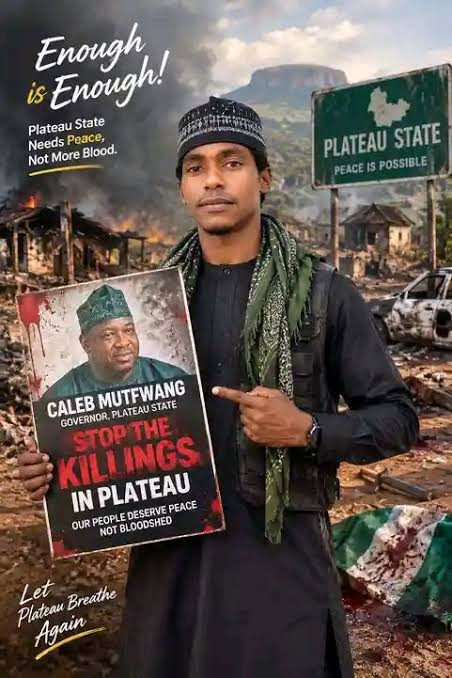
LET PLATEAU BREATHE AGAIN
His Excellency has made a heartfelt appeal to Birom militias, Mwaghavul Militiamen and other cattle rustlers: stop stealing cows and let Plateau be in peace.
“I want to appeal to our People, as we are dealing with criminality and terrorism, we must not be found to be involved in criminality ourselves.
“The incidences of cattle rustling, let none of us be found involved. Because when we catch you, we will also deal with you as a criminal.
“You cannot rustle cows and bring death upon us. We will not accept it.
“And even those who are involved in this criminal enterprise of cattle rustling, whether they are in the security agencies or even in the communities where the cattle are rustled from, we are watching you.
“And we will go after everybody that does that to be able to deal with the situation
Thank you, Your Excellency. 🙏
The world is watching and the world must see Plateau choose peace.
LET PLATEAU BREATHE AGAIN
Opinions
After Barmou: Is Niger shifting from a counter-terrorism army to a regime-protection force?


After Barmou: Is Niger shifting from a counter-terrorism army to a regime-protection force?
By: Zagazola Makama
The removal of Gen. Moussa Salaou Barmou as Chief of Staff of the Nigerien Armed Forces marks far more than a routine change at the top of the military hierarchy.
It may represent the opening phase of a deeper restructuring of Niger’s armed forces following the reported military mutiny of late August a restructuring driven not only by operational requirements, but increasingly by the ruling authorities’ overriding concern: loyalty to the regime.
On Friday, Sept. 11, Niger’s authorities announced the appointment of Brig. Gen. Mamane Sani Kiaou, previously Chief of Staff of the Army, as the new Chief of Staff of the Armed Forces, replacing Barmou.
The appointment came only days after reports of a serious internal military crisis that exposed divisions within the security establishment and raised questions about the confidence of Gen. Abdourahamane Tiani’s government in elements of its own armed forces.
The timing is significant. From elite commander to casualty of a military fracture Barmou was not an ordinary military officer.
Long before the July 2023 coup, he was one of the principal figures in the development of Niger’s special operations capabilities. He had commanded special forces formations and was closely associated with the Special Operations Command and Special Intervention Battalions.
He was also regarded as an experienced operational commander with extensive exposure to Western military training and international security cooperation. That background makes his removal particularly significant.
The very units and operational structures that Barmou helped build were designed to do one thing: find the enemy, move rapidly, strike hard and sustain pressure against armed groups operating across Niger’s vast and difficult terrain.
Today, however, some of those same capabilities appear to have become a source of political anxiety for the authorities. The question confronting the regime is no longer simply whether the army can defeat the Islamic State Sahel Province or Jama’at Nusrat al-Islam wal-Muslimin (JNIM). It is whether the most capable elements of the army can also be trusted not to challenge the government. That distinction could fundamentally reshape Niger’s military doctrine.
The reported military disturbances of Aug. 28 and 29 appear to have exposed a fracture that had been building beneath the surface. The crisis reportedly involved officers and personnel associated with highly trained operational formations precisely the kind of forces that any government fighting a determined insurgency would normally want to strengthen.
But for a regime that has already come to power through a military takeover, an armed force capable of independent action presents a different calculation. A professional military needs initiative. A regime worried about another coup needs control. That is the dilemma now confronting Niamey.
If the authorities conclude that highly trained and autonomous combat formations can become politically dangerous, they may begin prioritising loyalty over operational independence. That could mean targeted removals, transfers, command changes, closer surveillance of senior officers and a restructuring of special operations formations.
It could also mean strengthening formations considered politically more dependable, particularly those directly responsible for protecting the leadership. The circumstances surrounding Barmou’s departure are particularly important. According to information contained in the original analysis, Barmou was reportedly involved in attempts to manage the military crisis without escalating it into a confrontation between Nigerien soldiers.
He was said to have favoured negotiations with mutinous personnel, while other elements of the leadership reportedly considered a more forceful response, including Russian assistance.
Whether every element of that account is ultimately confirmed remains to be seen. But the broader political message is already clear.
Barmou’s removal suggests that the authorities are no longer comfortable leaving the management of sensitive military crises entirely in the hands of commanders whose primary instinct may be to preserve institutional cohesion. For a professional army, avoiding a fight between soldiers is often a virtue.
For a regime facing an internal military challenge, however, negotiation can be interpreted as weakness, hesitation or insufficient loyalty. That is where the relationship between operational professionalism and political reliability becomes dangerous.
Who is Mamane Sani Kiaou?
Kiaou enters the position at a particularly difficult moment. Before his promotion, he had reportedly toured several defence areas, including Agadez and Zinder, with official messaging focused on cohesion, engagement with troops, countering misinformation and lessons from the August crisis. His elevation therefore appears to have a significance beyond ordinary military rotation. He could be tasked with restoring discipline and operational effectiveness. But he may also be expected to restore political control over the military establishment.
If that becomes the dominant mission, the restructuring could extend deep into the special forces, command structures and elite formations. The immediate priority could be to ensure that no military formation becomes sufficiently autonomous, influential or powerful to pose a challenge to the political leadership.
This is where the greatest strategic danger lies.
Special forces are valuable because they possess initiative, cohesion, mobility, specialist training and the ability to operate with considerable independence. Those characteristics make them highly effective against insurgents. But those same characteristics can become politically uncomfortable for governments that fear military intervention. The temptation, therefore, is to dilute those capabilities.
Commanders can be rotated. Units can be reorganised. Senior officers can be transferred.
Special operations structures can be placed under tighter political supervision. Elite formations can be dispersed or absorbed into larger structures. And officers considered too influential or insufficiently reliable can gradually be removed from positions of authority.
Such measures may reduce the immediate coup risk. But they can also reduce battlefield effectiveness. An elite military capability that took years to build cannot simply be recreated by presidential decree. Training, institutional memory, battlefield experience, trust between commanders and soldiers, and the ability to operate independently under pressure are accumulated over years. Destroying that architecture is considerably easier than rebuilding it.
The jihadists may benefit from the distraction
This is the strategic paradox facing Niger.
While Niamey concentrates on controlling its military, JNIM and Islamic State militants remain focused on expanding their operational space.
The areas of Tillabéri, Tahoua and Diffa, together with Niger’s wider borderlands and the Liptako-Gourma region, require highly mobile, experienced and locally knowledgeable forces.
If elite formations become preoccupied with internal investigations, loyalty assessments, command changes and political surveillance, the insurgents may exploit the resulting gaps.
A commander worried about whether his decisions will later be interpreted as political disloyalty may become less willing to take operational risks. An officer concerned that influence over his troops could make him politically suspicious may avoid building strong independent command relationships. A military organisation obsessed with internal loyalty can gradually become less willing to exercise the initiative required in counter-insurgency warfare.
That is how a political security strategy can unintentionally produce an operational security problem.
Implications for Nigeria
If Niger’s elite combat units are weakened or distracted by internal restructuring, JNIM and Islamic State elements could exploit the security gaps along the Niger–Nigeria border. Instability in Niger could push terrorists, weapons and fighters toward Nigeria, particularly through vulnerable areas of Sokoto, Kebbi, Zamfara, Katsina, Jigawa and Yobe. Any deterioration in Niger’s military effectiveness could force Nigeria to deploy more resources to its northern borders and intensify surveillance and counter-terrorism operations. Increased Russian involvement in Niger could alter the regional security balance and potentially complicate intelligence-sharing and military cooperation between Niger and Nigeria. A politically preoccupied Nigerien military may have less capacity for effective cooperation with Nigeria and other regional partners against JNIM, Islamic State and cross-border criminal networks. lastly, Bandits, arms traffickers and terrorist groups could exploit any security vacuum along the largely porous Nigeria–Niger frontier.
The biggest concern for Nigeria is that a military focused increasingly on regime security rather than battlefield effectiveness could create a security vacuum on its doorstep. Any prolonged weakening of Niger’s counter-terrorism capacity would inevitably increase pressure on Nigeria’s already stretched northern security architecture.
Russia and the growing role of Africa Corps
Another dimension is Niger’s increasing reliance on Russian security support, particularly Africa Corps. Russian personnel can provide specialised capabilities, protect strategic installations and support selected operations.
But they cannot replace the Nigerien military.
Niger is a vast country of more than one million square kilometres, with difficult terrain, porous borders and insurgent networks that exploit local knowledge, mobility and community relationships. No foreign force can substitute indefinitely for a national military capable of operating across that entire environment.
The danger is therefore the emergence of a two-tier security system: heavily protected political and strategic centres around Niamey, while remote communities remain dependent on increasingly stretched national forces.
If the most capable Nigerien formations are simultaneously being reorganised for political reasons, the resulting gap could become even more significant.
The future position of Defence Minister Salifou Mody will also be important. Questions surrounding a possible reconfiguration of the military leadership have already generated speculation about whether Mody could eventually be moved to another political position while Tiani assumes greater direct control over defence affairs. There has also been speculation about Gen. Amadou Ibro, Tiani’s chief of staff, potentially receiving expanded responsibilities. These scenarios remain unconfirmed. But if subsequent decrees produce further changes at the top of Niger’s security architecture, Barmou’s removal will likely be remembered not as an isolated personnel decision but as the first visible step in a much wider restructuring.
The real test for Kiaou
The defining question for Mamane Sani Kiaou will therefore not simply be whether he can restore discipline. It will be what kind of discipline he is being asked to restore. If the objective is to rebuild cohesion, strengthen command structures, protect professional competence and ensure that the army remains focused on defeating insurgent groups, the restructuring could ultimately strengthen the Nigerien Armed Forces. But if the central objective is to ensure that the army can never again become a threat to the regime, the consequences could be very different.
The distinction is fundamental. An army built primarily around political loyalty looks toward the capital and asks: An army built primarily around national defence looks toward the battlefield and asks. The danger for Niger is that the two missions could gradually become confused.
Before the 2023 coup, the country invested heavily in building specialised forces capable of intelligence gathering, rapid deployment and counter-terrorism operations. The post-coup authorities inherited that architecture.
But the August 2026 crisis appears to have changed the political calculus. The men best trained to fight insurgents may now also be viewed as the men most capable of challenging the regime. That creates an uncomfortable choice.
The coming months will reveal which path Niamey chooses. If the restructuring preserves professional competence while restoring discipline and institutional cohesion, Niger could emerge with a more unified military.
If, however, loyalty tests, purges and political control become more important than battlefield effectiveness, the country could enter a dangerous cycle in which the military spends more time watching itself than watching the enemy. And that is precisely the opportunity insurgent groups do not need to be told about.
After Barmou: Is Niger shifting from a counter-terrorism army to a regime-protection force?

President Bola Ahmed Tinubu Is Nigeria’s Greatest-Ever Leader
The case for judging leadership not by the comfort it preserves, but by the institutions it builds, the difficult choices it confronts and the future it makes possible.
By Princess Zahrah
Mustapha Audu, the Director-General, Presidential Enabling Business Environment Council (PEBEC), and the National Publicity Secretary, City Boy Movement
History has an inconvenient habit of making consequential leadership clearer in retrospect than it appears in real time.
Those who live through periods of reform experience disruption, uncertainty and disagreement. Historians, arriving later, see trajectories. They identify the decisions that altered institutions, the political choices that changed the direction of nations and the leaders who possessed the foresight to act before consensus made action easy.
Nigeria is living through such a moment.
It is therefore worth advancing a proposition that deserves to be examined seriously rather than dismissed as political hyperbole: President Bola Ahmed Tinubu is Nigeria’s greatest-ever leader.
Greatness, of course, is not perfection. Nor does it require pretending that reform has been painless or that every policy has produced its intended outcome. The more demanding test of leadership is whether a statesman can recognise the structural problems of his age, confront what others have postponed, build institutions rather than merely occupy them, develop political and administrative capacity, and make decisions whose significance extends beyond the immediate electoral calendar.
Measured against those criteria, Tinubu’s record is exceptional.
A Political Life of Unusual Consequence
The mistake in much contemporary analysis of President Tinubu is to begin his political biography on 29 May 2023. His significance predates the presidency by three decades. He was an elected senator in the Third Republic, became associated with the struggle for democratic restoration during military rule, experienced exile, returned to Nigeria and became Governor of Lagos State in 1999. After eight years as governor, something unusual occurred: President Tinubu left office without leaving political consequence.
He became one of the central organisers of opposition politics, helping construct alliances that eventually contributed to the formation of the All Progressives Congress and the historic democratic transfer of federal power in 2015. That trajectory matters.
Many politicians possess power while occupying office. Far fewer demonstrate the capacity to organise people, institutions and coalitions when the formal machinery of the state is no longer theirs to command.
President Tinubu’s career has therefore been distinguished not simply by longevity, but by institutional and political endurance.
From Lagos to the Philosophy of the Capable State
The intellectual origins of the Tinubu presidency are perhaps most visible in Lagos. When he became governor in 1999, Lagos embodied a central contradiction of the Nigerian condition: extraordinary private dynamism coexisting with inadequate public capacity. The challenge was not merely determining what government should do. It was building a government capable of doing it.
States do not become effective because their leaders possess admirable intentions. They become effective when institutions can mobilise revenue, formulate policy, execute decisions, enforce rules predictably and create the conditions in which private enterprise can flourish. The Lagos experience helped establish a principle that has remained visible throughout Tinubu’s political life: government must possess the capacity to govern. That proposition is now being tested nationally.
Ending the Politics of Postponement
Nigeria’s structural economic difficulties did not begin in 2023. For decades, the country accumulated distortions: an increasingly expensive petrol subsidy, foreign-exchange imbalances, weak public revenues, infrastructure deficits, import dependence and administrative inefficiencies that imposed substantial costs on businesses.
Governments understood many of these problems. What Nigeria frequently lacked was the political willingness to confront them decisively. The country consequently developed what might be described as a political economy of postponement: the political cost of reform was immediate, while the cost of avoiding reform could conveniently be transferred to the future.President Tinubu disrupted that logic.
The removal of the petrol subsidy was consequential precisely because previous administrations understood the problem but struggled to resolve it permanently. The transition has imposed genuine hardship on Nigerians. Any intellectually credible defence of reform must acknowledge this. But hardship does not settle the policy question.
The relevant question is whether the previous arrangement could have been sustained indefinitely — and what the eventual cost of continued postponement would have been. Leadership sometimes requires choosing not between difficulty and comfort, but between the difficulty of adjustment today and the greater danger of structural failure tomorrow.
Making Nigeria Work
Perhaps the less dramatic but potentially more enduring transformation is occurring within government itself. Economic competitiveness is frequently discussed in terms of capital, infrastructure and markets. Yet one of its most important determinants is something less glamorous: the efficiency of the state. A permit is economics, a customs procedure is economics, a company registration is economics, a commercial court is economics, the time required to obtain an approval is economics.
Every unnecessary procedure imposes a cost. Every unpredictable regulation introduces uncertainty. Every hour an entrepreneur spends navigating bureaucracy is an hour unavailable for production, innovation and expansion. This is why the ease-of-doing-business agenda matters. Through PEBEC and the broader business-facilitation framework, the objective is not simply to make bureaucracy more convenient. It is to reduce the institutional cost of being productive in Nigeria. The philosophy underlying these reforms is more significant than any individual procedure:Government should facilitate legitimate enterprise rather than constitute an obstacle to it. Nigeria has never been more efficient and accountable , this is only possible because of President Tinubu’s commitment to building a $1 Trillion Dollar Economy by 2030.
The Burden of Foresight
Reform possesses an inherent political cruelty: its costs are frequently immediate while its benefits take time. Citizens encounter price adjustments today.
Investment responds later. An old system can be dismantled quickly; the productive ecosystem intended to replace it may require years. This is why foresight is rarely popular in the moment. Foresight is not the ability to predict the future perfectly. It is the capacity to recognise that continuing the present is itself a decision about the future. President Tinubu’s political career has been characterised by an unusual willingness to expend political capital rather than simply accumulate it. That distinction matters, Nigeria cannot currently point to any other leader with a comparable record of building leaders and planning diligently for the future.
Why Tinubu’s Record Is Different
Nigeria has produced extraordinary leaders, and acknowledging Tinubu’s significance requires no diminution of their contributions. But the breadth of his political journey is unusual. Senator. Pro-democracy figure. Exile. Two-term governor. Opposition organiser. Coalition builder. Party strategist. Presidential candidate. President. Economic reformer. This is more than longevity; this shows visionary patriotic dedication to purpose. The argument for President Tinubu as Nigeria’s greatest-ever leader therefore does not rest upon a single policy or moment. It rests upon accumulation of political struggle, development of people, institutions and ultimately the accumulation of difficult decisions taken.
Give Him His Flowers — And Record History Properly Nigeria has an unfortunate habit of becoming intellectually generous toward its leaders only after they are gone. The controversial statesman becomes visionary in the obituary. Decisions once condemned become courageous in retrospect. Perspective arrives when recognition can no longer be received. We should not require death to become historically fair.
Giving President Tinubu his flowers does not mean suspending scrutiny. I encourage us to all continue to demand results, demand better leaving conditions, social amenities and infrastructural development. But while making those demands, we should possess sufficient historical intelligence to recognise consequential leadership while it is occurring.
President Tinubu’s work is unfinished. History’s final verdict cannot yet be written. But his place in Nigerian history is already impossible to ignore. Few Nigerian political lives have traversed so much history, shaped so many institutions and remained consequential across so many different political eras. That is why, in my considered view, President Bola Ahmed Tinubu is Nigeria’s greatest-ever leader to date.
Not because he has solved every Nigerian problem, not because leadership is synonymous with perfection, but because the deepest measure of statesmanship is ultimately the capacity to see beyond the country one inherits, to confront the problems others postpone, and to organise institutions, people and political power in pursuit of the country that might yet be built. I stand bold to state that posterity will judge President Bola Ahmed Tinubu favorably.
Princess Zahrah Mustapha Audu
Director General – Presidential Enabling Business Environment Council (PEBEC) & National Publicity Secretary – City Boy Movement.
President Bola Ahmed Tinubu Is Nigeria’s Greatest-Ever Leader

UNFPA, Signify partner to illuminate 10,000 healthcare facilities in seven states

Nigeria, India Sign Human Rights Agreement as Fagbemi Pledges Support for Implementation

19 Nigerian Pension Funds Express Interest in Proposed $750m Infrastructure Fund

Roger Federer’s Shock as DNA Results Reveal Myla and Charlene Are Not His Biological Children

THE PLIGHT OF FARIDA

FAILED COUP IN BURKINA FASO: HOW TRAORÉ NARROWLY ESCAPED ASSASSINATION PLOT AMID FOREIGN INTERFERENCE CLAIMS
-
 News3 years ago
Roger Federer’s Shock as DNA Results Reveal Myla and Charlene Are Not His Biological Children
-
Opinions5 years ago
THE PLIGHT OF FARIDA
-
 News2 years ago
FAILED COUP IN BURKINA FASO: HOW TRAORÉ NARROWLY ESCAPED ASSASSINATION PLOT AMID FOREIGN INTERFERENCE CLAIMS
-
 Opinions5 years ago
POLICE CHARGE ROOMS, A MINTING PRESS
-

 News3 years ago
EYN: Rev. Billi, Distortion of History, and The Living Tamarind Tree
-

 ACADEMICS3 years ago
A History of Biu” (2015) and The Lingering Bura-Pabir Question (1)
-

 Columns3 years ago
Army University Biu: There is certain interest, but certainly not from Borno.
-

 Politics1 year ago
2027: Why Hon. Midala Balami Must Go, as Youths in Hawul and Asikira/Uba Federal Constituency Reject ₦500,000 as Sallah Gift
