
News
APC Leaders, Govs Recommit To Advancing President Tinubu’s Renewed Hope Agenda

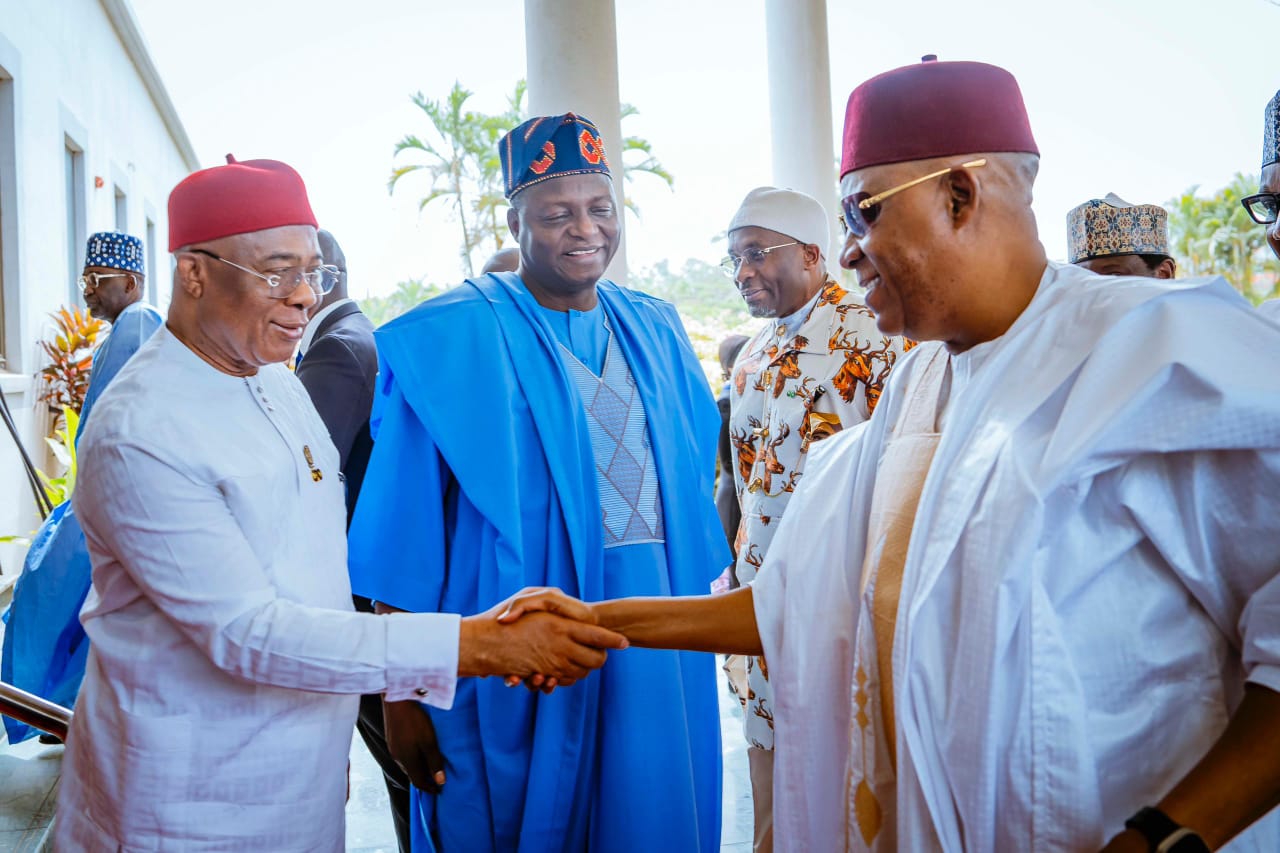
APC Leaders, Govs Recommit To Advancing President Tinubu’s Renewed Hope Agenda
We’re shifting from stabilisation to acceleration in 2026, Says VP Shettima
Urges reconciliation, unity among party leaders to move Nigeria forward
By: Our Reporter
State governors on the platform of the governing All Progressives Congress (APC) and other leaders of the party have recommitted to boosting grassroots mobilisation in order to promote and advance the Renewed Hope Agenda of the administration of President Bola Ahmed Tinubu.
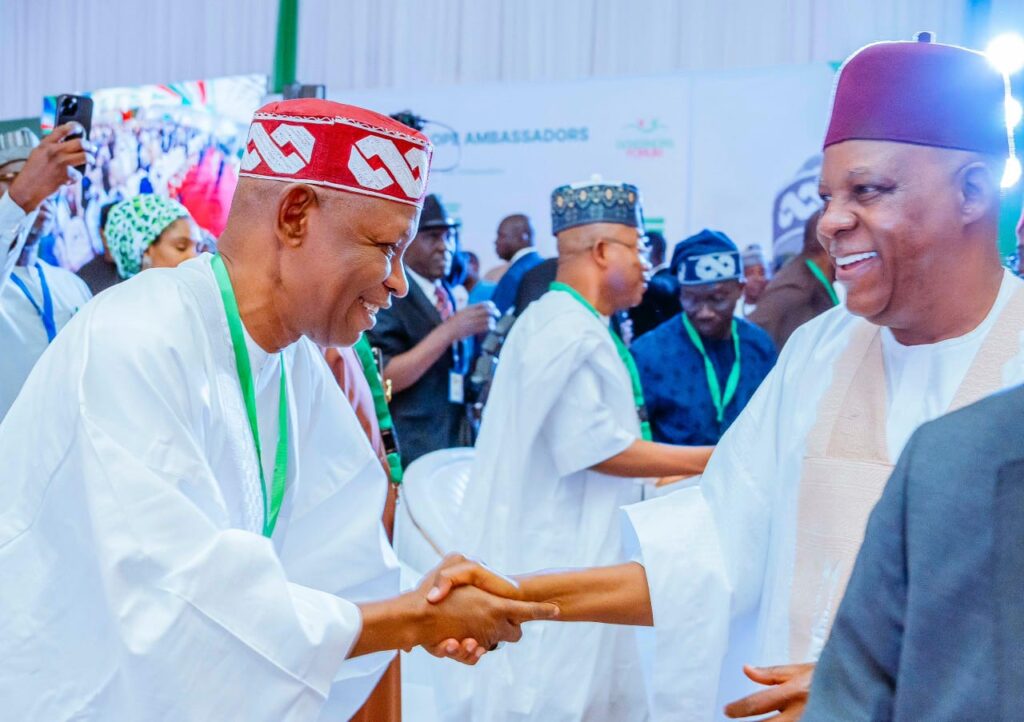
This is just as the Vice President, Senator Kashim Shettima, has said the Tinubu administration has shifted focus from stabilisation in 2025 to acceleration in 2026, with the N58.18 trillion 2026 budget anchoring the new phase.
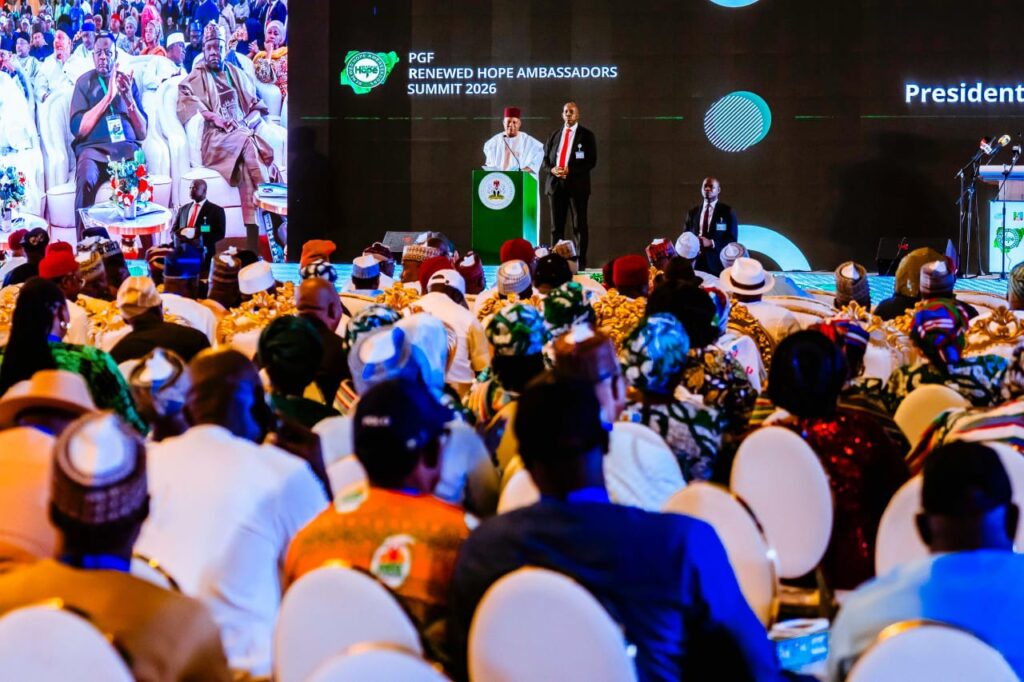
The governors and other party leaders made the recommitment on Tuesday in Abuja during the PGF Renewed Hope Ambassadors Summit 2026 held at the State House Conference Centre of the Presidential Villa.
Senator Shettima who represented President Tinubu at the Summit told the party leaders, governors under the aegis of Progressive Governors’ Forum (PGF), and the Renewed Hope Ambassadors that the moment calls for reflection on the administration’s reforms, the sacrifices made and the responsibilities to translate vision into measurable impact for Nigerians.
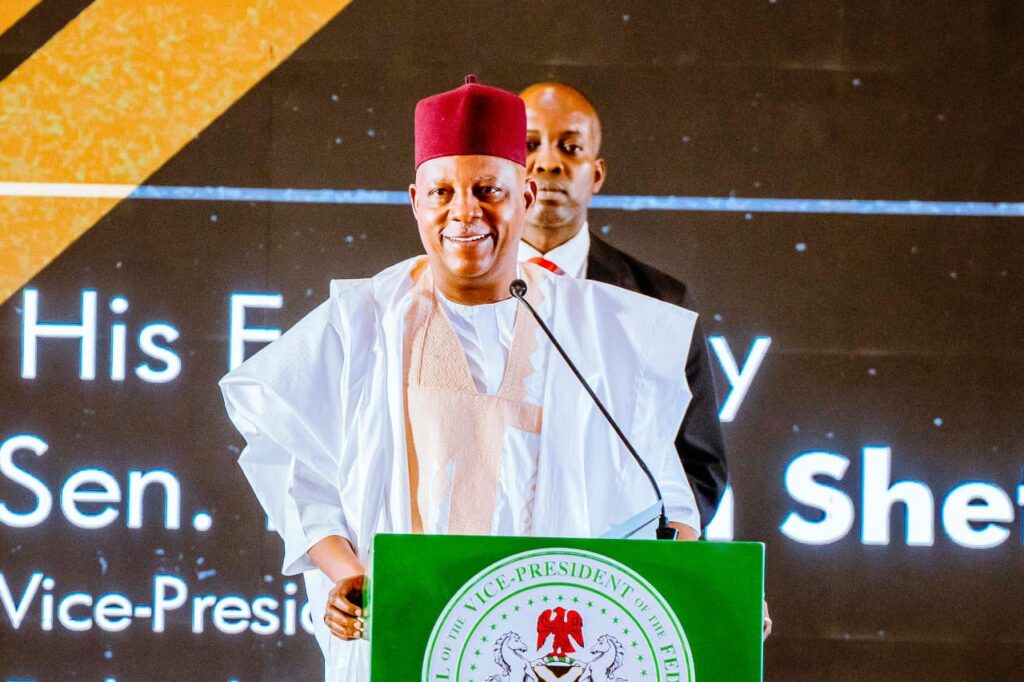
“As we advance into 2026, our focus shifts from stabilisation to acceleration. The N58.18 trn budget shall anchor this new phase. A record capital expenditure, the largest allocation to national security in the history of our country and prudent revenue projections, we are scaling growth while strengthening resilience,” he said.
The Vice President noted that the administration’s landmark tax reforms were “introduced to protect the vulnerable, encourage enterprise and entrench transparency in public finance.”
He cited the recent executive order affecting remittances to the federation account, saying it “is designed to safeguard federation revenues, eliminate duplicative structures, curb waste and ensure that resources are responsibly managed for maximal national benefits.”
VP Shettima pointed out that from the onset, the Tinubu administration chose the path of honesty and discipline, confronting deep-seated structural distortions, even as he said the decision has “restored fiscal credibility, stabilised the economy and set the foundation for long term economic growth.
“Today, we are seeing clear signs that our reforms have began to yield results. Inflationary pressures are moderating, fuel prices are easing, our currency is strong and stable,” he stated.
Noting that the economy is picking up under President Tinubu, the Vice President said out of “the seven major investment decisions made in 2025 in Africa, five were drawn in Nigeria,” a development he said shows “the strength, viability and the promise of the Nigerian economy.”
He however observed that no reform can succeed without public understanding and participation, just as he identified the communication gap as “the strategic importance of the Renewed Hope Ambassadors.”
Reminding them of their function duty, the VP said, “This platform shall serve as the avenue for civic engagement. Ambassadors must explain why tough decisions had to be made and how they lead to jobs, security, enterprise, opportunities and a more stable future.
“They must counter misinformation with facts, replace rumour with evidence and ensure that Nigerians from across the country have access to the truth. They must also serve as the channel for feedback, bringing community concerns and lived experiences back to government.”
Senator Shettima tasked the Renewed Hope Ambassadors on wider outreach, saying they must “move beyond conference centres to the wards, markets, and campuses, across the country.
“This mission is about presence, truth and trust. Elections are not conducted on social media platforms, they conducted by Nigerians who will… This summit affirms our commitment to a shared future of promise and peace for all Nigerians. Together we will continue translating reforms into opportunities, policy into impact and sacrifice into renewed hope,” he added
Citing the situation in Benue State as an instance, the Vice President further stressed the need for reconciliation and unity among party leaders, urging them to mend fences and move their state forward.
“I want to use this special forum to make appeal to the SGF and Governor Alia to mend fences and move the state forward,” he stated.
Earlier, National Chairman of the APC, Prof. Nentawe Yilwatda, regretted that despite significant infrastructure projects delivered by the Tinubu administration and state governments, the party’s achievements had not been visible due to poor communication.
“Good governance without communication is invisible. I’ve visited many states. I’ve seen beautiful projects, beautiful things being done, but they’re invisible and not communicated,” he lamented.
Yilwatda stressed the need for effective communication, which he said is critical to translating governance achievements into political capital, explaining that it was the reason forestablishing the Renewed Hope Ambassadors structure.
In his address, Chairman of the Progressive Governors Forum and Director-General of the Renewed Hope Ambassadors, Governor Hope Uzodinma of Imo State, said stakeholders are on the ground to trigger a process that will unify the APC structure into a stronger and more united political family.
He assured that through the summit, stakeholders have chosen Nigeria’s long-term stability over short-term applause, necessitating patriotic and accurate communication of the current administration’s socio-economic development efforts thereby earning citizens’ trust at the grassroots.
“Lack of citizen understanding creates perception gaps,” he said, noting, for instance, that food prices have drastically reduced in the markets, while Nigeria has moved away from chronic oil and gas underproduction, citing the Dangote Refinery and other indigenous firms.
Also, Secretary to Government of the Federation, Senator George Akume, advised authorities to allow members of the public to “add value” to what the party is doing across the nation.
For his part, Minister of Budget and Economic Planning, Atiku Bagudu, said the Renewed Hope Agenda is a message that is unifying the nation.
The Minister of Finance and Coordinating Minister of the Economy, Wale Edun, on behalf of members of the Federal Executive Council, expressed heartfelt appreciation to President Tinubu for choosing them as part of his team.
Looking forward to the upcoming second term, he said they are delighted to continue working tirelessly to ensure that the next chapter of the reforms under the Renewed Hope Agenda are even more transformative, thereby creating more jobs and attracting more investments into the nation’s economy
APC Leaders, Govs Recommit To Advancing President Tinubu’s Renewed Hope Agenda


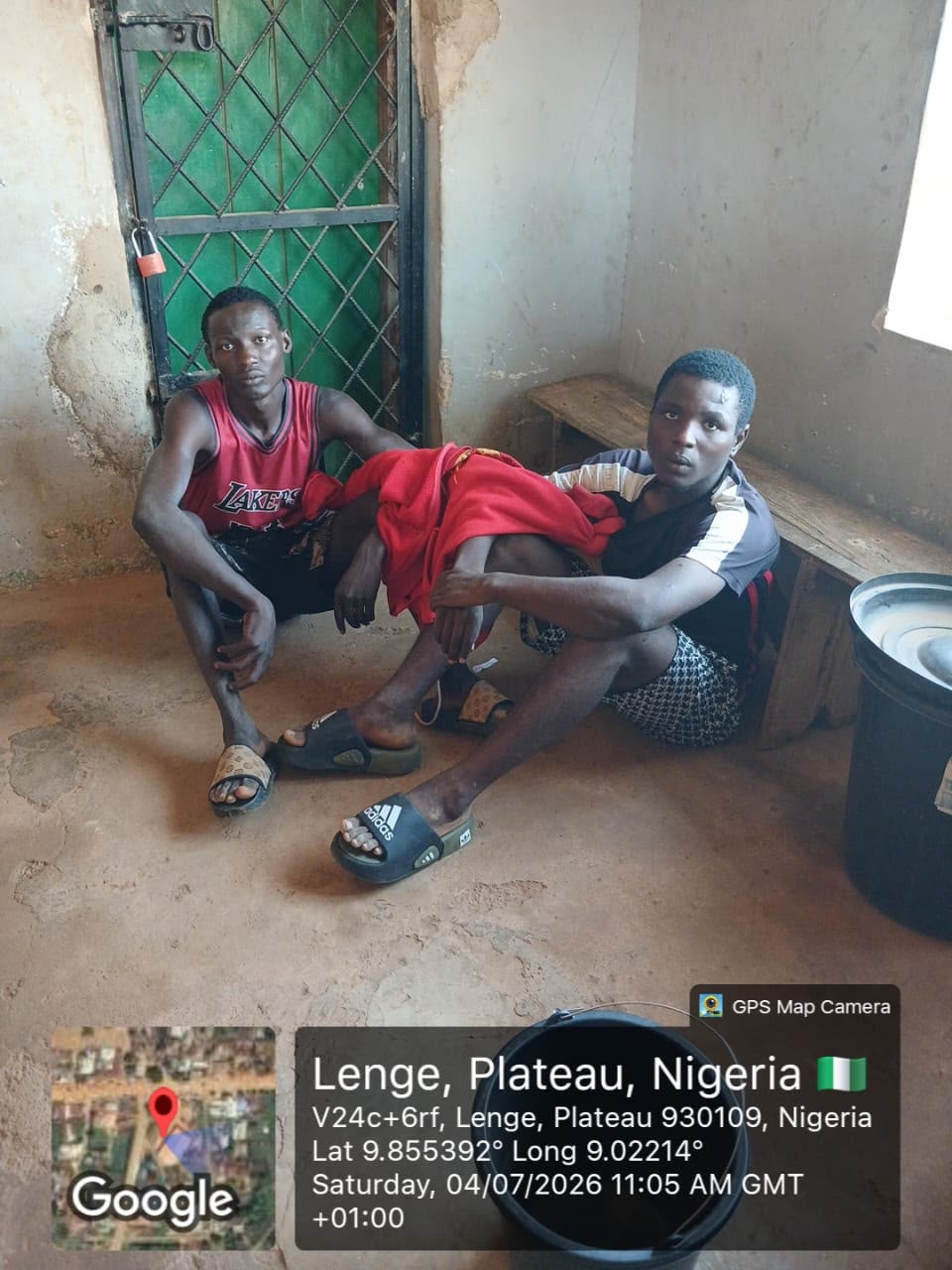
Two suspected criminals arrested during patrol in Plateau
By: Zagazola Makama
Troops of Sector 1 under Operation Enduring Peace have arrested two suspected criminals during a routine patrol in Jos East Local Government Area of Plateau.
Security sources disclosed that the suspects, identified as Azi Ezekiel, 21, and Ajiji Emmanuel, 19, were apprehended at about 10:30 a.m. on Saturday along the road leading to Forbur Village.
The sources said the suspects were intercepted by troops of Sector 1, Sub-Sector 12, while conducting a routine patrol in the area.
According to the sources, the two suspects have been handed over to the Keystone Police Station in Forbur for further investigation and possible prosecution.
The arrest forms part of ongoing security operations aimed at combating criminal activities and enhancing safety across Plateau State.
Two suspected criminals arrested during patrol in Plateau
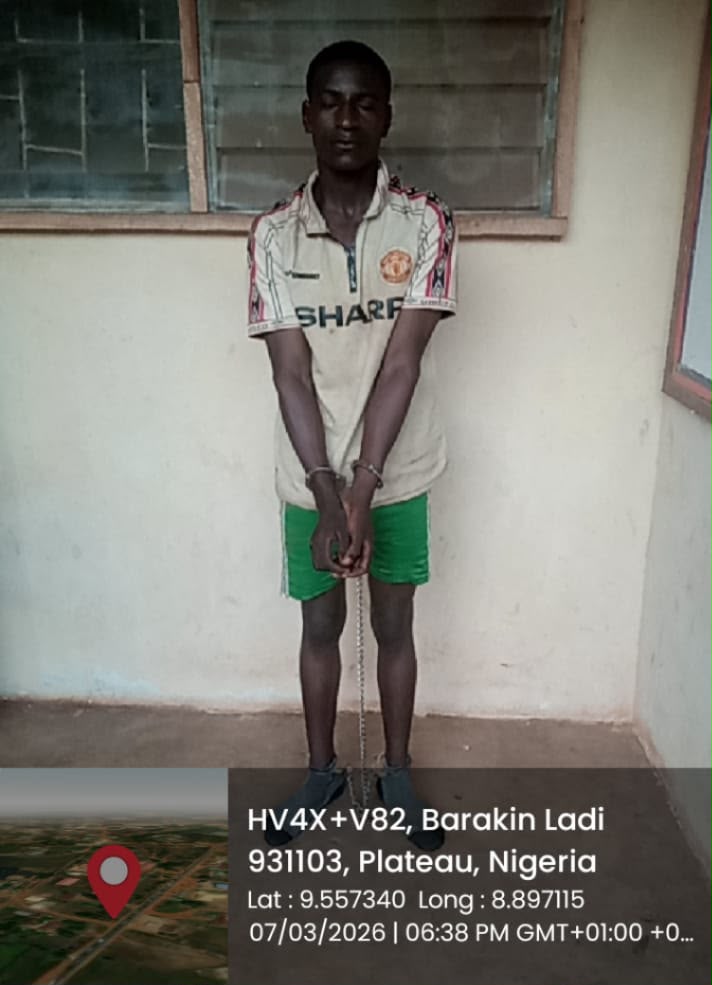
Troops arrest suspected kidnapper in Plateau community
By: Zagazola Makama
Troops of Sector 4 of Operation Enduring Peace have arrested a suspected kidnapper during a security operation in Barkin Ladi Local Government Area of Plateau.
Security sources said the suspect, identified as Mohamdu Surajo, 29, was arrested at about 6:45 p.m. on Friday at Sabon Layi Village following sustained security operations in the area.
The sources disclosed that the suspect is currently in military custody and is undergoing preliminary interrogation to aid ongoing investigations.
They added that the arrest is part of continued efforts by security forces to dismantle criminal networks and enhance security across Plateau State.
Troops arrest suspected kidnapper in Plateau community
Venezuela Solidarity Group Urges U.S. to Lift Sanctions After Deadly Earthquakes
By: Michael Mike
The Venezuela Solidarity Campaign in Nigeria (VSCN) has called for the immediate and unconditional lifting of United States sanctions on Venezuela, arguing that the restrictions are hampering humanitarian relief and reconstruction efforts following devastating twin earthquakes that reportedly killed more than 2,000 people and displaced over 50,000 others.
In a statement issued on Sunday and signed by its coordinator, Comrade Dimeji Macaulay, the group expressed solidarity with the Venezuelan people and the Bolivarian Government, describing the earthquakes as a humanitarian tragedy that has left widespread destruction of homes, hospitals, schools, roads and other critical infrastructure.
The organisation extended condolences to families of the victims and praised what it described as the resilience of the Venezuelan people in confronting the disaster despite years of economic hardship.
According to the VSCN, the U.S. sanctions have weakened Venezuela’s capacity to respond effectively to the emergency by limiting access to financial resources and restricting the importation of medicines, equipment, technology and other essential materials.
The group maintained that maintaining the sanctions during a humanitarian crisis amounts to collective punishment against ordinary citizens and called for their permanent removal to facilitate relief operations and long-term reconstruction.
“There can be no moral or legal justification for maintaining an economic blockade against a country struggling to save lives and rebuild after a devastating natural disaster,” the statement said, adding that every day the sanctions remain in force prolongs the suffering of the Venezuelan people.
The campaign also urged the Federal Government of Nigeria to publicly support the removal of the sanctions, strengthen diplomatic relations with Venezuela and contribute to international humanitarian efforts for victims of the disaster.
It further appealed to the African Union to reject unilateral coercive measures, describing them as violations of international law, while calling on African countries to support Venezuela’s recovery.
The group equally called on the United Nations to intensify humanitarian assistance and ensure that sanctions do not obstruct emergency relief operations or reconstruction programmes.
Beyond governments and international organisations, the VSCN appealed to trade unions, youth organisations, civil society groups and progressive political movements across Africa and the wider international community to demonstrate solidarity with Venezuela by opposing what it described as economic warfare and supporting the country’s right to determine its future without external interference.
Reaffirming its commitment to the Venezuelan cause, the organisation said it would continue campaigning until the sanctions are lifted, insisting that Venezuela’s recovery should not be hindered by external political considerations
Venezuela Solidarity Group Urges U.S. to Lift Sanctions After Deadly Earthquakes

Two suspected criminals arrested during patrol in Plateau

Troops arrest suspected kidnapper in Plateau community

One killed, another injured in Fulani Bandits attack as troops arrest suspect in Plateau

Roger Federer’s Shock as DNA Results Reveal Myla and Charlene Are Not His Biological Children

THE PLIGHT OF FARIDA

FAILED COUP IN BURKINA FASO: HOW TRAORÉ NARROWLY ESCAPED ASSASSINATION PLOT AMID FOREIGN INTERFERENCE CLAIMS
-
 News2 years ago
Roger Federer’s Shock as DNA Results Reveal Myla and Charlene Are Not His Biological Children
-
Opinions4 years ago
THE PLIGHT OF FARIDA
-
 News1 year ago
FAILED COUP IN BURKINA FASO: HOW TRAORÉ NARROWLY ESCAPED ASSASSINATION PLOT AMID FOREIGN INTERFERENCE CLAIMS
-

 News2 years ago
EYN: Rev. Billi, Distortion of History, and The Living Tamarind Tree
-
 Opinions5 years ago
POLICE CHARGE ROOMS, A MINTING PRESS
-

 ACADEMICS2 years ago
A History of Biu” (2015) and The Lingering Bura-Pabir Question (1)
-

 Columns2 years ago
Army University Biu: There is certain interest, but certainly not from Borno.
-

 Politics1 year ago
2027: Why Hon. Midala Balami Must Go, as Youths in Hawul and Asikira/Uba Federal Constituency Reject ₦500,000 as Sallah Gift
