
National News
AT NIPSS COURSE 46 GRADUATION: President Tinubu Charges Policy Makers To Spearhead Nigeria’s Digital Reforms


AT NIPSS COURSE 46 GRADUATION: President Tinubu Charges Policy Makers To Spearhead Nigeria’s Digital Reforms
…Pledges increased support for policy research institutions, broadband expansion
By: Our Reporter
President Bola Ahmed Tinubu has implored new graduates of the National Institute for Policy and Strategic Studies (NIPSS) as well as other policy makers in Nigeria to take the lead in driving the nation’s digital transformation and tech-driven economic growth.
This, he said, is premised on plans by his administration to revitalise NIPSS, “fully digitising its operations, developing an advanced e-library, and establishing virtual learning platforms to ensure executive education remains cutting-edge and accessible.”
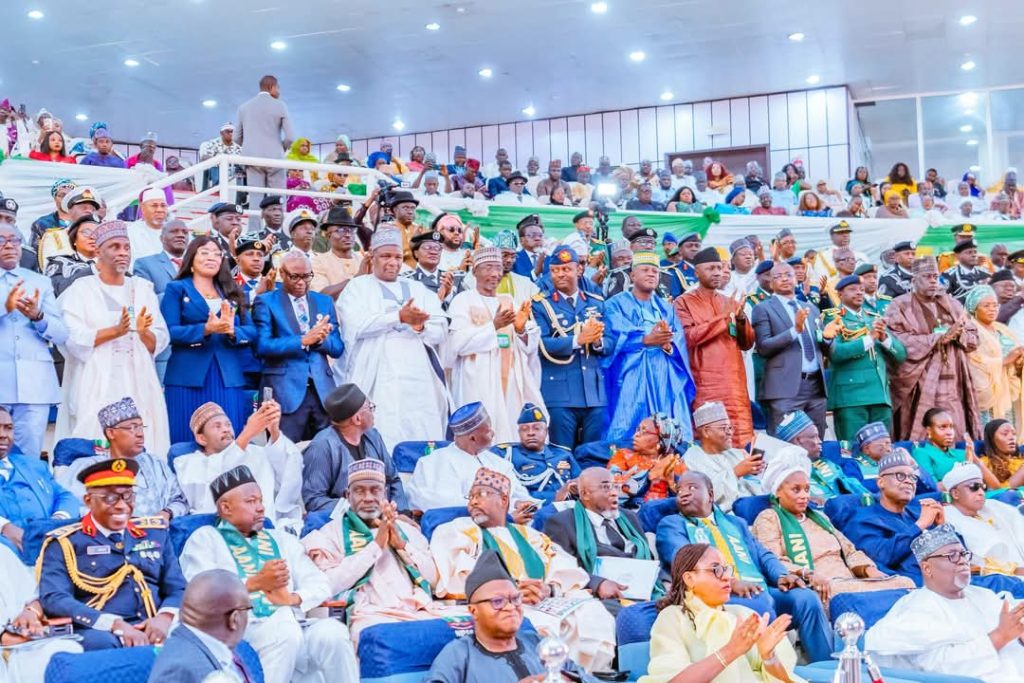
President Tinubu gave the charge on Friday at the graduation ceremony of Senior Executive Course 46 of NIPPS, Nigeria’s premier policy institution, in Kuru, Plateau State.
The President, who was represented at the event by his deputy, Vice President Kashim Shettima, specifically noted that policy research, youth empowerment, and technological innovation are indispensable in shaping Nigeria’s future.

He noted that this year’s course theme, “Digital Economy, Youth Empowerment, and Sustainable Job Creation in Nigeria,” perfectly aligns with his administration’s priorities.
“The task ahead is not an easy one, but I have no doubt that you are equal to it. You must return to your organisations and communities with a renewed sense of purpose, knowing that the future of our nation rests, in part, on the quality of leadership you provide,” the President said.
President Tinubu maintained that technology holds a central place in leveraging Nigeria’s youthful population, which constitutes over 60% of the country’s demographics, to propel economic transformation.
He said, “Young people are our greatest asset. Their energy, creativity, and technological prowess must be fully harnessed to propel our country into a new era of economic transformation. This is an investment we cannot afford to take for granted.”
The President promised that initiatives, including the expansion of broadband infrastructure, the development of digital entrepreneurship, and the implementation of the National Digital Economy Policy and Strategy would help the country maximise the potential of its youth population.
“We are going nowhere unless we are well positioned to utilise technology in our daily lives and guide our industries towards the demands of this new wave of industrial revolution,” he stated.
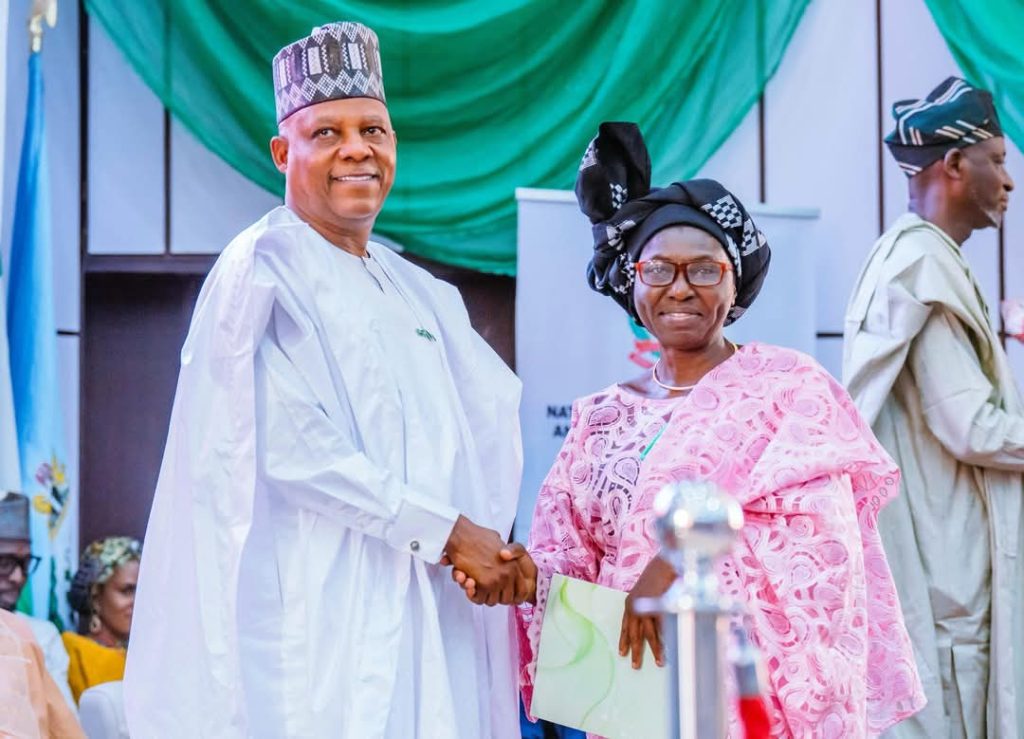
The Nigerian leader reaffirmed his administration’s commitment to strengthening policy research institutions like NIPSS, describing them as the “fulcrum of strategic thought” in national development.
“No nation that cares about its future underfunds the very institution that provides strategic insights and policy direction for national development,” he said.
President Tinubu pledged to revamp NIPSS’s digital infrastructure, including the establishment of an advanced e-library and virtual learning platforms, just as he underscored the need to “fully digitise NIPSS operations to ensure executive education remains cutting-edge and accessible.”
He recalled that the federal government recently approved the takeover of the Oba Adetona Post-Graduate School of Policy and Governance Studies to bolster Nigeria’s policy research ecosystem.
“This decision underscores our dedication to strengthening Nigeria’s ecosystem of policy research institutions,” he said.
President Tinubu also mentioned ongoing efforts to empower young Nigerians through vocational training and support for small and medium-sized enterprises (SMEs), explaining that “through initiatives like the Renewed Hope Skills Acquisition Programme, we are equipping young Nigerians with practical skills in technology, construction, and the creative industries.
On his part, Governor of Plateau State, Barrister Caleb Mutfwang, said the state government would prioritise sending female candidates to the institute, just as he appealed for the state to be given more slots to accommodate the growing demand for the institute’s admission.
“I want to congratulate you on having gone through this course, and I hope that what you have learned here will add value to our national progress,” the governor said.
Earlier in his welcome address, the Director-General of NIPSS, Prof Ayo Omotayo, said the graduation was a testament to the vision of the class and the institute to foster strategic leadership in Nigeria.
“In past years, we have made significant strides in making our research outputs relevant to today’s critical national issues. The digital economy is reshaping the global landscape, and Nigeria must embrace these technologies. We must drive sustainability for generations to come,” he said.
He added that while the experiences of the participants’ would undoubtedly contribute to addressing the future of work, “the class represents a new wave of leaders equipped to drive change in Nigeria.”
Also, the Monitor-General for Course 46, Colonel Fakandu Mohammed Bala, said the class of 96 members developed two humanoid robots, using locally sourced materials at the National Centre for Artificial Intelligence and Robotics (NCAIR) owned by the National Information Technology Development Agency (NITDA).
“The essence is to show that we have the capacity and ability to drive our developmental processes with homegrown technologies. The two robots are designed to improve the efficiency of workplaces such as hospitals and government offices,” he said.
Dignitaries present at the graduation ceremony included former Plateau State Governors, Joshua Dariye and Major General Lawrence Onoja (rtd); National Chairman of the All Progressives Congress (APC), Dr. Abdullahi Umar Ganduje; members of the National Assembly; Speaker of the Plateau State House of Assembly, Hon. Gabriel Dewan; members of the Plateau State House of Assembly; security heads; traditional rulers, and other government officials.
AT NIPSS COURSE 46 GRADUATION: President Tinubu Charges Policy Makers To Spearhead Nigeria’s Digital Reforms



Tinubu Approves Up to 80% Salary Increase for Armed Forces Personnel
By Zagazola Makama
President Bola Ahmed Tinubu has approved a new salary structure for personnel of the Nigerian Armed Forces, with increases ranging from 30 to 80 per cent, in a major welfare package aimed at boosting the morale of troops engaged in counter-insurgency and other internal security operations.
According to a statement issued on Tuesday by the Special Adviser to the President on Information and Strategy, Bayo Onanuga, about 250,000 military personnel will benefit from the new salary adjustment, which takes effect from Sept. 1, 2026.
Under the approved structure, officers above the rank of colonel—including Brigadier Generals, Major Generals, Lieutenant Generals and Generals—will receive a 30 per cent salary increase.
Personnel from the rank of Colonel down to Warrant Officer will enjoy a 50 per cent increase, while soldiers from the rank of Private to Staff Sergeant will receive the highest adjustment of 80 per cent.
The new package will raise the annual personnel cost of the Armed Forces from ₦660 billion to ₦924 billion, reflecting the Federal Government’s renewed commitment to improving troop welfare.
President Tinubu said the decision was in recognition of the courage and sacrifices of members of the Armed Forces in confronting terrorism, banditry, kidnapping and other security challenges across the country.
“The men and women who help to keep us safe in our homes must be supported and appreciated in the course of their duties to our nation,” the President said.
He reaffirmed his administration’s commitment to prioritising troop welfare while modernising the Armed Forces through the provision of modern weapons, equipment and technological capabilities needed to effectively carry out their constitutional responsibilities.
According to the President, security remains the foundation for national development, stressing that his administration would continue to mobilise military and law enforcement assets to eliminate threats and safeguard the lives and property of Nigerians.
“I urge our servicemen to take our gesture as a sign of our deep appreciation of the services they render to our fatherland. Together we shall prevail over the enemies intent on destroying the fabric of our nation,” Tinubu said.
The salary review is expected to provide a significant boost to the welfare of military personnel serving in various theatres of operation across the country, including those engaged in counter-terrorism, anti-banditry and peace support missions.
Tinubu Approves Up to 80% Salary Increase for Armed Forces Personnel
National News
Turkey Deepens Military Partnership with Somalia Amid Shifting Regional Security Dynamics
Turkey Deepens Military Partnership with Somalia Amid Shifting Regional Security Dynamics
By Zagazola Makama
Turkey is significantly expanding its military partnership with Somalia, reinforcing its position as one of Mogadishu’s most important security allies at a time of growing uncertainty over the future of international stabilization efforts and increasing pressure from Western partners to sustain the fight against Al-Shabaab.
The latest developments point to a broader strategic realignment in Somalia’s security architecture, with Ankara deepening its involvement in the country’s defense sector through expanded military training, operational support, and institutional reforms aimed at building a self-reliant Somali National Army (SNA).
The renewed cooperation signifies Somalia’s effort to develop integrated land, air, and naval capabilities capable of independently confronting insurgent threats and securing the country’s vast territory and coastline.
Security sources familiar with the development said the Somali government has accelerated plans to build a unified defense structure operating across multiple regions, reflecting a long-term strategy to reduce dependence on foreign peacekeeping forces.
The initiative includes strengthening command structures, improving force mobility, enhancing intelligence coordination, and developing specialized units capable of responding to evolving threats posed by Al-Shabaab.
The move comes as uncertainty continues to surround the future role of the African Union Support and Stabilization Mission in Somalia (AUSSOM), which replaced the African Union Transition Mission in Somalia (ATMIS) but continues to face operational and funding challenges. Officials believe Somalia must increasingly rely on its own security institutions if recent gains against extremist groups are to be sustained.
Demonstrating the growing defense relationship, Commander of the Somali National Army, Brig. Gen. Ibrahim Mohamed Mohamud, recently arrived in Baidoa alongside the Commander of TurkSom, Gen. Sebahattin Kalkan.
The joint visit is being viewed as more than a routine inspection. Military analysts say it underscores Ankara’s continued commitment to Somalia’s security sector reforms and reflects close coordination between Turkish military advisers and Somali commanders on future operational planning.
Turkey has played a central role in training thousands of Somali soldiers through the TurkSom Military Training Centre in Mogadishu, one of Ankara’s largest overseas military facilities.
The partnership has evolved beyond basic military instruction to include leadership development, logistics, force modernization, and institutional capacity building.
The renewed Turkish engagement comes against the backdrop of sustained pressure from Somalia’s Western partners to intensify military operations against Al-Shabaab.
Only days earlier, Commander of the United States Africa Command (AFRICOM), Gen. Dagvin R.M. Anderson, urged Somali authorities to maintain relentless pressure on the extremist group and prevent it from regaining territory.
His remarks reflected Washington’s continued commitment to supporting Somalia’s counterterrorism campaign through intelligence sharing, training, and precision operations against Al-Shabaab leadership.
The United States has continued to conduct targeted strikes and provide military assistance to Somali security forces, viewing Al-Shabaab as one of Africa’s most resilient jihadist organizations and a continuing regional security threat.
The evolving security environment has also pointed to the emergence of parallel defense partnerships across Somalia.
In recent weeks, AFRICOM concluded a bilateral security cooperation arrangement with Puntland authorities, demonstrating Washington’s engagement with regional administrations alongside the Federal Government.
These parallel relationships illustrate the increasingly complex network of international security actors operating in Somalia, where Turkey, the United States, the African Union, and other partners are simultaneously supporting different aspects of the country’s security architecture.
While Ankara focuses heavily on force generation, training, and institutional development, Washington continues to emphasize counterterrorism cooperation and operational support against Al-Shabaab.
Despite differences in approach, both Turkey and the United States share the broader objective of preventing Al-Shabaab from reversing military gains made by Somali forces over recent years.
The expansion of military cooperation with Turkey represents part of a wider strategy to build sustainable national defense capabilities capable of eventually assuming full responsibility for the country’s security.
As debates continue over the future of AUSSOM and international funding for stabilization missions, the emphasis on strengthening indigenous military institutions is expected to become increasingly central to Somalia’s long-term security planning.
The success of these reforms will largely determine whether Somali forces can maintain operational momentum against Al-Shabaab and secure areas recovered from insurgent control without prolonged dependence on foreign peacekeeping missions.
Turkey Deepens Military Partnership with Somalia Amid Shifting Regional Security Dynamics

ECOWAS Chief Bids Benin Farewell with Unity Message on 66th Independence Anniversary
By: Michael Mike
The President of the ECOWAS Commission, Dr. Omar Alieu Touray, has paid a glowing tribute to the Republic of Benin on the occasion of its 66th Independence Anniversary, reaffirming the regional body’s commitment to solidarity, integration and shared prosperity in West Africa.
In what is seen as one of his final symbolic gestures before the end of his tenure, Dr. Touray extended warm congratulations to the government and people of Benin, describing the country as a steadfast pillar of regional cooperation and democratic governance within the Economic Community of West African States (ECOWAS).
The ECOWAS Commission President acknowledged Benin’s longstanding contributions to regional peace, political stability and economic integration, noting that the country’s commitment to the ideals of the bloc has strengthened cooperation among member states.
He reaffirmed ECOWAS’ determination to continue working closely with Benin in advancing regional integration, promoting sustainable development and addressing the common challenges confronting West Africa.
Dr. Touray’s message comes at a significant moment as he prepares to leave office, making the goodwill message not only a congratulatory note but also a symbolic reaffirmation of the enduring partnership between ECOWAS and one of its founding member states.
The Commission’s tribute underscored the importance of unity and collective action as West Africa confronts security threats, economic pressures and political transitions, stressing that closer cooperation remains essential to achieving lasting peace and prosperity across the sub-region.
Benin marked its 66th Independence Anniversary with celebrations reflecting on its post-independence journey and renewed commitment to democratic governance and national development.
The ECOWAS message highlighted the organisation’s resolve to deepen collaboration with the Beninese authorities and people in pursuit of the Community’s vision of an integrated, peaceful and prosperous West Africa.
ECOWAS Chief Bids Benin Farewell with Unity Message on 66th Independence Anniversary

Troops Arrests Fulani Youth Leader Over Terror Attack in Kaduna Community

Athena Raises Alarm Over ‘Shrinking Democratic Space’ as EFCC Action, Campaign Fees Trigger Electoral Concerns

Berom Militia Killed four Fulani Harders, shots 25 Cattle in Fresh Attack in Plateau’s Riyom

Roger Federer’s Shock as DNA Results Reveal Myla and Charlene Are Not His Biological Children

THE PLIGHT OF FARIDA

FAILED COUP IN BURKINA FASO: HOW TRAORÉ NARROWLY ESCAPED ASSASSINATION PLOT AMID FOREIGN INTERFERENCE CLAIMS
-
 News2 years ago
Roger Federer’s Shock as DNA Results Reveal Myla and Charlene Are Not His Biological Children
-
Opinions4 years ago
THE PLIGHT OF FARIDA
-
 News1 year ago
FAILED COUP IN BURKINA FASO: HOW TRAORÉ NARROWLY ESCAPED ASSASSINATION PLOT AMID FOREIGN INTERFERENCE CLAIMS
-

 News2 years ago
EYN: Rev. Billi, Distortion of History, and The Living Tamarind Tree
-
 Opinions5 years ago
POLICE CHARGE ROOMS, A MINTING PRESS
-

 ACADEMICS2 years ago
A History of Biu” (2015) and The Lingering Bura-Pabir Question (1)
-

 Columns2 years ago
Army University Biu: There is certain interest, but certainly not from Borno.
-

 Politics1 year ago
2027: Why Hon. Midala Balami Must Go, as Youths in Hawul and Asikira/Uba Federal Constituency Reject ₦500,000 as Sallah Gift
