
News
Benue Takes Decisive Step to Strengthen Climate Governance Framework

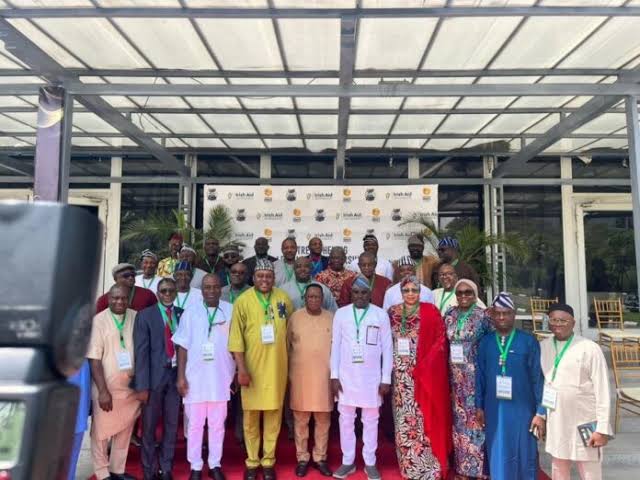
Benue Takes Decisive Step to Strengthen Climate Governance Framework
Benue State has taken a decisive step to strengthen its climate governance framework, signalling a renewed commitment to addressing the growing environmental challenges facing the state.
The state government has identified prioritizing stronger institutional capacity and legislative leadership as key drivers for building long-term climate resilience.
At the one-day training on climate change, themed “Strengthening Legislative Leadership for Developing Climate Change Resilience and Carbon Budgeting in Benue State,” top government officials, members of the 10th State House of Assembly, and international development partners gathered in Abuja to deepen climate awareness and equip lawmakers with the tools to drive effective policies.
The training emphasized the critical role of informed legislation in institutionalizing carbon budgeting, promoting sustainable development, and safeguarding Benue’s future against escalating climate threats.
In his keynote address, the Executive Governor of Benue State, His Excellency Rev. Fr. Dr. Hyacinth Iormem Alia, represented by his Secretary, Dr. Emmanuel Chenge, raised concern over the increasing exposure of the state to climate-related disasters, noting that frequent flooding, erratic rainfall, rising temperatures and biodiversity loss now threaten agriculture, infrastructure and rural livelihoods.
He said: “Benue State, known as the Food Basket of the Nation, bears a disproportionate vulnerability to climate change.
“We have witnessed increasing frequency of floods in Makurdi, Agatu, Guma, Logo, Katsina-Ala and other riverine LGAs; erratic rainfall affecting crop yield; rising temperatures impacting water security and the health of our people; as well as degradation of forest landscapes and biodiversity.”
Chenge added that the effects of climate change are already eroding the state’s economic foundations, insisting that: “When climate disasters strike, it is our farmers, our women, our youth and our rural communities who suffer the most.
“Our food production systems are exposed, our infrastructure is weakened and our social stability is endangered. We cannot afford to treat this as a distant problem—its impacts are already at our doorstep.”
He called for urgent legislative action, emphasizing that the House of Assembly holds the power to set the pace for the state’s climate transition stating that “Climate governance begins with strong laws, effective oversight and a clear budgeting framework, you as lawmakers, have the power to strengthen the Benue State Climate Change Law so it evolves with global best practices, you can institutionalize carbon budgeting systems, legislate climate-smart land use and demand accountability from MDAs. With your leadership, we can turn challenges into opportunities for green development.”
He further stressed that climate resilience must be mainstreamed into all sectors. “Every ministry must begin to think climate. Every local government must plan with climate in mind, and every future development blueprint must place environmental sustainability at its core, out survival as a people depends on the decisions we make today.” He noted .
The country Director of International Alert Nigeria, Kingsley Udo, highlighted the need for unified climate leadership, describing the gathering as a strong demonstration of the state’s readiness to confront climate-related risks.
He said: “I am delighted to see such a rich gathering of stakeholders committed to strengthening climate governance in Benue State, your presence reflects a shared commitment to ensuring that our institutions, communities and governance structures work together in confronting the realities of climate change.”
He emphasized that climate change is fast becoming a major driver of conflict if left unaddressed.
He noted that “In Benue, Nigeria’s food basket, erratic rainfall, flooding, prolonged dry seasons and land degradation are contributing not only to environmental stress but also to heightened competition over land, water and livelihoods.”
He explained that: “Climate pressure, if unmanaged, becomes a conflict trigger, that is why proactive climate governance is no longer optional; it is essential for long-term peace.”
Udo also highlighted International Alert’s decades-long work in peacebuilding and governance reform.
“International Alert has worked for over 30 years globally and nearly two decades in Nigeria helping communities find peaceful solutions to conflict, we have partnered with governments, civil society and security agencies to develop responsive policies and strengthen institutional capacity. Our commitment to Benue is rooted in our belief that peace and climate security must go hand in hand.” He said .
He called on lawmakers to take a central role in implementing the Climate Change Act noting that: “As lawmakers, your leadership is indispensable,The Act will remain a document unless you translate it into real, actionable and well-resourced policies. Your oversight, your budgeting decisions and your engagement with your constituencies determine how far Benue will go in building resilience.”
Udo added further that the state cannot wait for disasters before taking action.
“We must move from reaction to prevention, the time for hesitation is over , the climate is changing faster than our systems are adapting,this meeting marks an important step toward bridging that gap.”he said .
The Director General, Benue State Council On Climate Change (BSCCC), Aondofa Mailumo identified the climate situation in Benue as severe and escalating. Shifting rainfall patterns, flooding, rising temperatures, erosion, declining soil fertility and the struggle of farmers signal that the state is approaching a dangerous threshold. The food system—not just the environment—is under threat. This urgency forms the foundation for why legislative action, financing and coordinated climate governance are essential.
He said: “Benue State, the food basket of the nation, is increasingly confronted with environmental realities that threaten the economic lifeline of its people. Farmers are struggling, food production is declining, and our communities are facing heightened vulnerability. These growing impacts highlight the urgent need for climate action.”
The DG emphasized that no climate initiative policy, plan, or strategy,can succeed without the backing of the State Assembly. Laws must create structure, continuity, accountability and enforcement without legislation, climate plans remain intentions; with legislation, they become enforceable frameworks capable of driving real change.
He further noted that the key legislative responsibilities include providing legal backing for the Climate Change Law and its Action Plan, institutionalizing carbon budgeting across government operations, mandating climate risk assessments for public projects, ensuring consistent climate reporting by MDAs, and approving sustainable budgetary provisions for adaptation and mitigation initiatives.
He said: “Without supportive legislation, climate policies remain aspirations. With strong laws, they become instruments for real transformation. The Legislature has the power to institutionalize carbon budgeting, mandate climate risk assessments, and safeguard the climate agenda of Benue State.”
He revealed that the major barrier to climate action is inadequate financing , current budget allocations are intermittent and insufficient, while the scale of climate threats demands sustained, predictable funding.
The DG stressed that Benue must diversify its financing sources to include domestic, international, private sector and community-level channels. This blended finance model is essential for moving from planning to implementation.
“Climate action requires huge financial resources that government alone cannot shoulder, to move from planning to implementation, we must expand our financing landscape tapping into domestic, international, private-sector and community-level climate finance,” he said.
Beyond challenges, the DG said climate change must be used as an opportunity for transformation, noting that with effective mitigation and adaptation strategies, Benue can strengthen agriculture, promote green innovation, create jobs and build long-term resilience Climate action, therefore, is not only defensive but also developmental.
“Mitigation and adaptation represent an opportunity to reduce climate risks, drive sustainable development, protect livelihoods, and promote green innovation in Benue State. This is our chance to build a resilient future,” he said.
Participants agreed that the state legislature must anchor climate governance by enacting responsive laws, mandating climate risk assessments and ensuring transparent use of climate funds.
The meeting concluded with a collective commitment from government leaders, lawmakers and development partners to prioritize climate action as a central pillar of Benue’s long-term development strategy. Stakeholders emphasized that while technical solutions are essential, they must be complemented by strong political will, effective legislation and continuous capacity building with strengthened legislative leadership and continued collaboration with partners such as International Alert, Benue State appears poised to chart a more resilient, climate-responsive and sustainable path for its citizens.
Benue Takes Decisive Step to Strengthen Climate Governance Framework



NHRC Confronts Past Challenges, Pushes Digital Overhaul to Fix Broken Complaint System
By: Michael Mike
The National Human Rights Commission (NHRC) has acknowledged deep-rooted weaknesses in its complaint handling system and is now pushing an ambitious overhaul anchored on digital transformation and institutional reform.
At a high-level stakeholder validation meeting in Abuja, the Commission signaled a decisive shift from outdated, ineffective procedures toward a modern, technology-driven framework designed to restore public confidence and improve access to justice.
Executive Secretary of the Commission, Tony Ojukwu, described the ongoing review of the Complaint Handling Manual as more than a routine update, but a critical reset.
“We are gathered here to review, refine and ultimately validate the Complaint Handling Manual,” he said, stressing that the process must deliver real remedies for victims, particularly the most vulnerable.
But it was the candid admission from former NHRC Director of Civil and Political Rights, AbdulRahman Yakubu that underscored the urgency of reform.
“That manual was not used because of so many deficiencies and was abandoned,” Yakubu revealed, exposing a troubling gap between policy design and implementation that has long hindered the Commission’s effectiveness.
The NHRC, which has expanded from just eight staff to over 1,000 personnel and 38 offices nationwide, now faces mounting pressure to match its institutional growth with functional efficiency.
Yakubu noted that while the Commission’s structure has evolved—with four specialized departments now handling complaints—the absence of a practical, enforceable framework has limited impact.
Central to the reform push is the digitization of the entire complaints process, a move stakeholders say could significantly reduce delays, improve transparency, and strengthen accountability.
“We need automation and digitization of the complaints management process from beginning to end,” Yakubu said, describing the complaints registry as “the engine room” of operations.
The proposed system will also introduce standardized investigation templates and documentation tools, including a certificate of service, aimed at closing loopholes that have previously weakened case tracking and enforcement.
NHRC official Anthonia Nwabueze said the validation exercise is part of a broader effort to rebuild credibility through inclusiveness and expert input.
“The Commission cannot work alone; we decided to bring stakeholders together to join us in this critique,” she said, adding that the process is designed to identify gaps, eliminate inconsistencies, and produce a manual that is both practical and enforceable.
Beyond technical reforms, the Commission is also seeking to reorient its approach toward victims.
Ojukwu challenged participants to adopt a rights-based, people-centered lens. “Look at it through the lens of the most marginalised and vulnerable victims—ask the hard questions,” he urged.
The ongoing validation signals a rare moment of institutional self-reflection for the NHRC—one that acknowledges past shortcomings while attempting to build a more responsive, transparent, and technology-driven system.
If successfully implemented, the reforms could mark a turning point in how human rights complaints are handled in Nigeria, shifting the Commission from a largely reactive body to a more efficient and accountable protector of citizens’ rights.
NHRC Confronts Past Challenges, Pushes Digital Overhaul to Fix Broken Complaint System

NIGCOMSAT Targets Industrial Leap with Startup Push, Skills Drive
By: Michael Mike
Nigeria’s state-owned satellite operator, Nigerian Communications Satellite Limited (NIGCOMSAT), is repositioning itself at the heart of the country’s industrialisation agenda, backing over 5,000 startups and expanding digital skills training as part of a broader push to turn connectivity into economic power.
The Managing Director/CEO, Jane Egerton-Idehen, disclosed the scale of intervention at the SOYUZNIK Alumni National Congress in Abuja, where she framed satellite infrastructure not just as a communications tool, but as a catalyst for production, innovation, and national competitiveness.
In a keynote delivered on her behalf by Acting Director of Technical Services, Engr. Ikechukwu Amalu, Egerton-Idehen said the agency’s Space Accelerator Programme—now in its third cohort—has quietly evolved into a pipeline for nurturing technology-driven enterprises, particularly in underserved segments of Nigeria’s digital economy.
The intervention comes amid growing concern that Nigeria’s innovation ecosystem, though vibrant, remains weakly linked to industrial output. NIGCOMSAT’s approach seeks to close that gap—pairing startup support with hands-on technical training and expanding connectivity to areas historically left out of the digital economy.
Across states including Adamawa, Jigawa, Cross River, and Enugu, the agency’s VSAT training programmes are equipping young Nigerians with practical, market-ready skills, targeting employability and enterprise creation rather than theoretical knowledge.
Egerton-Idehen argued that such interventions are critical if Nigeria is to transition from a consumption-driven economy to a production-led one.
“Connectivity is no longer a luxury—it is the foundation of modern economic systems,” she said, stressing that countries that fail to build strong digital infrastructure risk being locked out of the next phase of global industrial competition.
She pointed to ongoing projects such as the 774 Connectivity Initiative, which has so far extended digital access to dozens of local government secretariats, as part of efforts to deepen governance, improve service delivery, and stimulate economic activity at the grassroots.
Beyond infrastructure, she called for a structural reset in Nigeria’s education system, urging stronger alignment with emerging technologies including artificial intelligence, data science, and satellite communications.
According to her, the real challenge is not a lack of talent, but the absence of systems that convert knowledge into measurable economic output.
She also warned that innovation ecosystems cannot thrive without deliberate collaboration between academia, industry, and government, backed by sustained investment in research and clear regulatory frameworks that protect intellectual property.
The SOYUZNIK Alumni—comprising graduates of Russian and former Soviet Union institutions—were urged to leverage their international exposure to drive technology transfer and localisation of innovation within Nigeria.
In his welcome remarks, Abuja chapter chairman, Agu Collins Agu, described the congress as a convergence of technical expertise with the potential to influence national development outcomes.
As Nigeria grapples with sluggish industrial growth and rising youth unemployment, NIGCOMSAT’s expanding role signals a strategic shift—one that places digital infrastructure, innovation, and skills development at the centre of the country’s economic transformation agenda.
NIGCOMSAT Targets Industrial Leap with Startup Push, Skills Drive

Tribute to the late flight Sergeant Temitope Beckley
By: Bodunrin Kayode
Dear Tope, I am still in shock that you had to leave so early at just 50. Seven years before your father our dear uncle Alaba left at 57. And my own father your uncle too same 57, all of the Akinlawon stock of the Beckleys in Lagos.
Sad you had to leave us so early. I am sad because of the bond we shared as special cousins or what people of your generation call besties. You were a jolly good fellow to me in particular whenever our paths crossed. Aburo (little brother), as I used to call you, family may share the same names sometimes and blood but very few are real friends within a particular family. If there are friends within our family, you are definitely one of them. A very jovial fellow who looks out for the others. A friend indeed among brothers and cousins. Your eyes always glittered when you were around me. And of recent you became more concerned about me when you heard that I was in the North East Nigerian war theatre of operation Hadin Kai. I assured you that because He lives i will always face tomorrow.
How we built our friendship
I remember my brief stay with you guys at the family house in folarin street, Mushin. Trying to rediscover myself as Uncle Alaba would call it anytime he asked me to escort him to EMPLAN consult were he was working then. Each time we returned, you were always close by asking the right questions the little ones always asked their older brothers. I enjoyed your restlessness at that young tender age, wanting to know a lot of things out there especially when we watched TV together and you did not understand what was going on. With the kinds of questions your probing mind used to ask, I always knew that you were going to become one of the shining lights of the family. I even dreamt of you joining me in serving God and country as a media practitioner one day. But you had other plans and ended up at the Nigerian Air Force as you did till your last breath due to a protracted illness.
When I later started my studies to train as a journalist and found myself staying at Akobi crescent with Uncle Akobi, you never forget to stop by and check on me. You kept the flame burning. Your appearances were always remarkable with that glitter in your eyes which used to lighten up my weekend whenever you showed up. Brother Akin was always at hand to host us. Whenever he wasn’t around, we would go out to hang out as young people to have fun. You were always with the older ones hardly having time for your generation. Distance would now separate us when I was posted to Taraba state by the then daily times as its maiden correspondent. But we always met along the way until you joined the air force.
Your worries about Nigeria
Tope, at your level in the service in the military, you already knew the difference between right and wrong and you were very methodical and meticulous in the way you conducted your affairs. You asked more questions as always but this time as a seasoned personnel of the Nigerian Air Force. You knew where you were coming from and were you wanted to be in the nearest future. I encouraged you that in all things we should give thanks to our Creator. The one who is and is to come. You were on course in your relationship with him.
I remember our last discussion, about the insurgency challenge the military is dealing with at our backyard in Borno. Your perception about the Nigerian Air Force which you served till your natural passing. And your projection for the future in terms of security for the country. I asked for your family and you updated me that they were fine. I was worried about the fact that I am yet to meet your loving family but you assured me that we would surely meet someday even though your spouse was in Canada pursuing her dream. The telephone chat zeroed down to why I called. I actually chatted you because I remembered your father the great Uncle Alaba who had gone to the great beyond. And I wanted to honour his memory with a tribute 29 years after his demise. You promised feeding me with the extra details I wanted to add to what I got from your big sis Tosin. But that never happened. I never got the pictures of Uncle or the details I wanted. That has been rested for his 30th anniversary now.
Rather what I got was a rude shock of your sudden collapse and departure from this world. Tope, you suddenly joined your father in the great beyond at the untimely age of 50. We can’t question God Almighty our Creator over this decision. We would rather give thanks to him for the life you lived because He said we must give thanks to Him in all things.
Aburo, all I can say now is permission granted because you never sort for anyone’s permission to bow out. This was the command of your creator, the All knowing I Am who decides when it is time to come or to leave this world. Tope, be rest assured that some of us will never forget coming across your path in this short life. Enjoy your sleep great soldier until we meet to part no more.
Broda Sam.
Tribute to the late flight Sergeant Temitope Beckley

Troops rescue kidnap victim in kogi

NDLEA Busts Nationwide Drug Ring, Arrests 93-Year-Old Suspect and Medical Doctor in Sweeping Crackdown

NHRC Confronts Past Challenges, Pushes Digital Overhaul to Fix Broken Complaint System

Roger Federer’s Shock as DNA Results Reveal Myla and Charlene Are Not His Biological Children

THE PLIGHT OF FARIDA

FAILED COUP IN BURKINA FASO: HOW TRAORÉ NARROWLY ESCAPED ASSASSINATION PLOT AMID FOREIGN INTERFERENCE CLAIMS
-
 News2 years ago
Roger Federer’s Shock as DNA Results Reveal Myla and Charlene Are Not His Biological Children
-
Opinions4 years ago
THE PLIGHT OF FARIDA
-
 News12 months ago
FAILED COUP IN BURKINA FASO: HOW TRAORÉ NARROWLY ESCAPED ASSASSINATION PLOT AMID FOREIGN INTERFERENCE CLAIMS
-

 News2 years ago
EYN: Rev. Billi, Distortion of History, and The Living Tamarind Tree
-
 Opinions4 years ago
POLICE CHARGE ROOMS, A MINTING PRESS
-

 ACADEMICS2 years ago
A History of Biu” (2015) and The Lingering Bura-Pabir Question (1)
-

 Columns2 years ago
Army University Biu: There is certain interest, but certainly not from Borno.
-

 Opinions2 years ago
Tinubu,Shettima: The epidemic of economic, insecurity in Nigeria
