
News
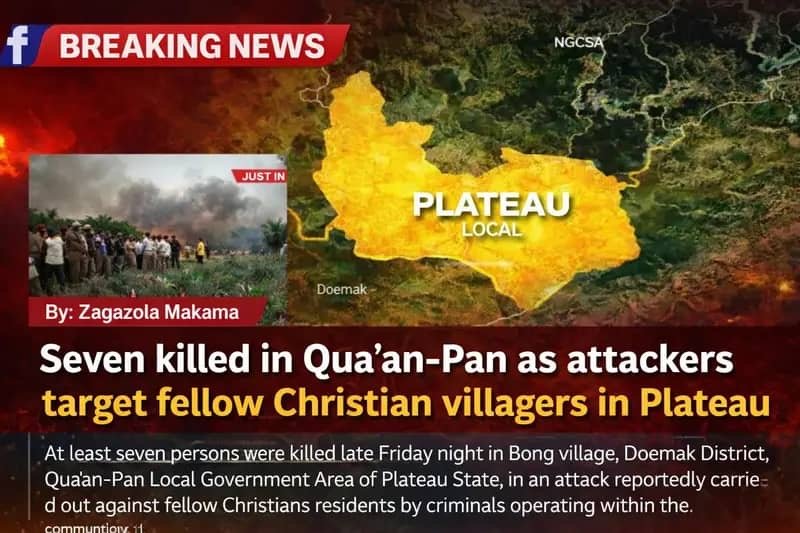
Blood without outrage: inside Qua’an-Pan attack and the silence that shields local perpetrators

Blood without outrage: inside Qua’an-Pan attack and the silence that shields local perpetrators
By: Zagazola Makama
The killing of at least seven persons in Bong village, Doemak District of Qua’an-Pan Local Government Area of Plateau has again exposed a troubling pattern in the narrative and response to violence in the state: when attacks are not linked to Fulani bandits or framed along ethnic or religious lines, they often slide quietly into obscurity.
At least seven persons were killed and several others injured when gunmen stormed the community on Friday night, while two of the attackers were also reported killed during a pursuit by security forces. Their identities were immediately revealed as plateau local indigenes.
The Plateau State Police Command later confirmed that the incident was linked to a cattle-rustling operation by criminal elements who invaded Bong/Kook village in the early hours of Jan. 2.
According to sources, a joint team of Army troops, police, NSCDC and vigilantes pursued the attackers, who shot and killed seven community members to facilitate their escape before abandoning the rustled cattle.
Crucially, security forces and community accounts indicate that the livestock involved did not belong to Fulani pastoralists, nor were the victims members of Fulani communities.
When the attackers are “from within”, unlike many previous attacks in Plateau that are quickly framed along ethnic or religious fault lines, preliminary accounts indicated that this incident was not carried out by Fulani bandits instead the Genocide was perpetrated by Christians attacking fellow Christians.
This fact, was at the heart of the wider silence surrounding the tragedy. But beyond the tragic loss of lives, the incident raises uncomfortable questions that Plateau State government, opinion leaders and advocacy groups, religious leaders have often avoided. This single fact fundamentally alters the usual narrative, yet it is precisely why the attack risks being quietly buried under the familiar label of “unknown gunmen.”
In the Plateau’s long-running cycle of violence, attacks attributed to Fulani bandits or framed as religiously motivated often trigger swift outrage, high-profile condemnations and emotionally charged narratives. By contrast, incidents such as the Qua’an-Pan killings are routinely reduced to brief police reports describing the assailants simply as “gunmen,” with little sustained attention or follow-up.
Seven lives lost in Bong village are no less valuable than lives lost anywhere else in Plateau. Yet history suggests that this tragedy may not attract mass protests, loud press conferences or emotionally charged rhetoric branding it as “genocide.” There are unlikely to be widely publicised, politicized, internationalized through symbolic mass burials or sustained media campaigns because the victims do not fit into an established narrative of persecution or Christian Genocide.
The killings, therefore, risk becoming just another statistic acknowledged briefly and then forgotten.This selective outrage is dangerous. It sends a signal that some victims deserve global attention while others do not, depending on who is accused of committing the crime.
The police said security operatives pursued the attackers, recovered the rustled cows and intensified deployment in the area. While this response is commendable, Plateau residents have heard similar assurances countless times. When it was the Fulani’s that were attacked, the security agencies will say they recovered rustled livestock and they are intensifying efforts to locate the owner, when in the real sense the owner has been killed. What remains largely absent is accountability.
Too often, attackers vanish into the shadows, investigations drag on, and arrests are never announced. Even when arrest happened, the government and community leaders always come in the defense of the criminals and asked for the immediate release. In most cases, communities are left with grief, fear and a growing sense that justice depends not on the crime committed, but on the identity of those involved.
Reducing every Plateau killing to a single ethnic or religious explanation does not protect communities; it weakens them. It masks criminality, shields perpetrators who operate within communities, and undermines genuine peacebuilding efforts.
Violence in Plateau is complex. Criminal gangs, communal disputes, reprisal or revenge attacks and economic crimes such as cattle rustling all intersect. Ignoring this complexity in favour of emotionally convenient narratives only ensures that killings continue unchecked.
The Bong village attack demands the same level of seriousness, investigation and condemnation as any other mass killing in Plateau State. Lives were lost. Families were shattered. Fear has been reignited. Justice should not depend on whether the attackers are labelled Fulani, Muslim or “unknown gunmen.” Every criminal act must be pursued with equal determination, and every victim must matter.
Blood without outrage: inside Qua’an-Pan attack and the silence that shields local perpetrators


Suspected Mwaghavul Militia Attack on Herders Reported in Mangu, Cattle Shot in Plateau
By: Zagazola Makama
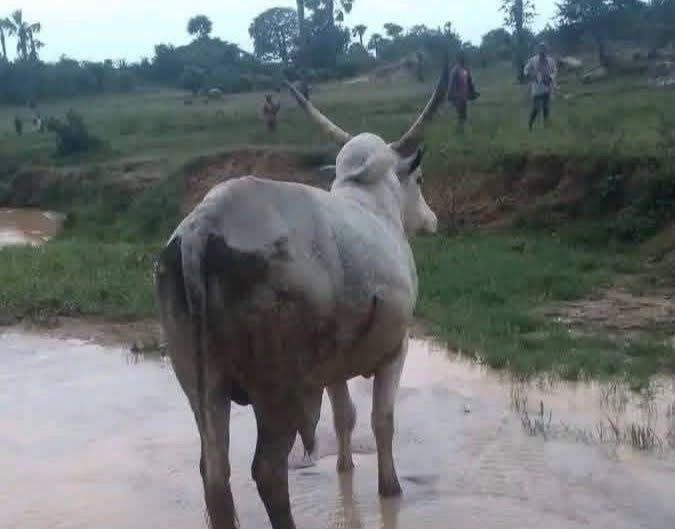
Suspected armed Mwaghavul militia members have reportedly attacked herders around Kombilin in Panyam District of Mangu Local Government Area of Plateau State, shooting an unspecified number of cattle.
Security sources told Zagazola Makama that the incident occurred at about 4:30 p.m. on Sunday, Oct. 4, 2026.
Preliminary reports indicated that the assailants, suspected to be members of a Mwaghavul militia group, targeted herders in the area and opened fire on their cattle.
The exact number of cattle killed or injured in the incident had yet to be established as details were still emerging.
The circumstances surrounding the attack, including whether any persons were injured or killed, remained unclear at the time of reporting.
Further details are being awaited as efforts continue to establish the full circumstances of the incident.
Suspected Mwaghavul Militia Attack on Herders Reported in Mangu, Cattle Shot in Plateau

North-East Governors Push Regional Energy Agenda, Seek Speedy Completion of Mambila Hydropower
By: Our Reporter
The Northeast Governors’ Forum (NEGF) says it has transformed power supply from a problem that each state handles independently to a shared regional energy agenda for the sub-region.
It also wants member states to take full advantage of the new electricity law and the region’s abundant sunshine to expand solar and mini-grid technologies.
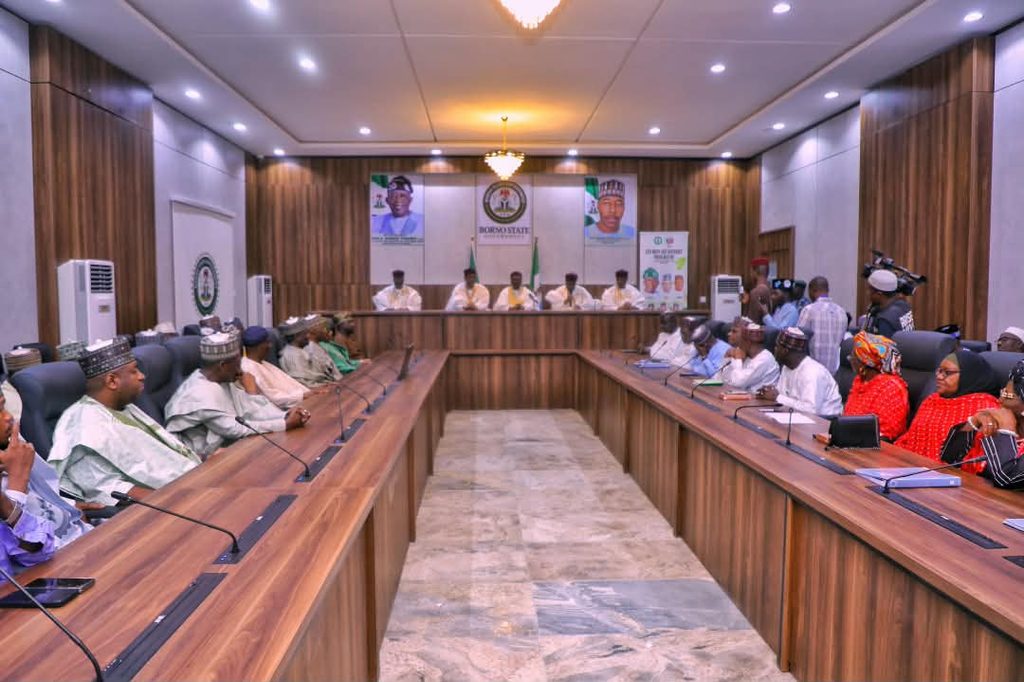
The position was stated in an eleven-point communiqué issued in Maiduguri on Saturday at the end of the Forum’s 13th meeting.
The communiqué, signed by Forum’s chairman and Borno State Governor, Professor Babagana Umara Zulum, and read by the Vice Chairman of the Forum and Adamawa State Governor, Alhaji Ahmodu Umoru Fintiri.

The governors noted that the Dadinkowa hydropower plant in Gombe State now feeds the national grid.
They described this as one result of their joint efforts to provide power and energise the sub-region.
The Forum restated its long-standing concern over what it called the seeming neglect of the Mambila hydropower plant in Taraba State, urging the Federal Government to use the recent arbitration ruling, which cleared the project’s legal encumbrance, to speed up the plant’s completion and take-off.

The Forum agreed to partner with Green Ville Energy to build more Compressed Natural Gas (CNG) and Liquefied Natural Gas (LNG) stations across the region to cut transport costs.
The Governors also thanked the Federal Government, through the North East Development Commission (NEDC), for providing 10,000 electric tricycles, 10 electric buses and 300 electric taxis, which are expected to be launched later this month to ease the burden of transportation.
They also resolved to set up a North-East regional air shuttle, which, according to them, would make it faster and easier to move people and goods within the region and to other parts of the country.
The Forum commended President Bola Tinubu for paying renewed attention to the PortHarcourt–Jos–Bauchi–Gombe–Maiduguri rail corridor, the Akwanga–Jos–Bauchi–Gombe–Biu–Maiduguri highway, and frontier oil exploration at Kolmani.
However, it called on the Federal Government to revisit oil exploration activities that began but later stalled in Magumeri and Gubio Local Government Areas of Borno State.
On security, the governors acknowledged the appreciable success recorded against the insurgency, commending the courage and sacrifice of the Armed Forces and other security agencies.
The Forum noted that the North-East has one of the youngest populations in the country. It recommitted to providing young people with quality education, vocational and entrepreneurial skills, technology, and meaningful jobs.
On the environment, the Forum condemned the extent of damage caused by deforestation and resolved to partner with the Forestry Research Institute to train forest experts in the region.
The meeting was attended by Governor Zulum, Governor Ahmadu Umaru Fintiri of Adamawa State and Governor Muhammadu Inuwa Yahaya of Gombe State. Bauchi State and Yobe State were represented by their Deputy Governors, Rt. Hon. Mohammed Auwal Jatau, and Alhaji Idi Barde Gubana. The Deputy Governor of Borno State, Umar Usman Kadafur, was also in attendance.
Since its inaugural meeting in Gombe in March 2020, the Forum said its greatest achievement has been its members’ unity, noting that this unity has given the region a collective voice delivering real infrastructural development.
The 14th meeting of the Forum is scheduled to hold in Gombe on December 18 and 19, 2026.
North-East Governors Push Regional Energy Agenda, Seek Speedy Completion of Mambila Hydropower
Army, Police, DSS launch aggressive operation to rescue 20 abducted NYSC members in Imo
By: Zagazola Makama
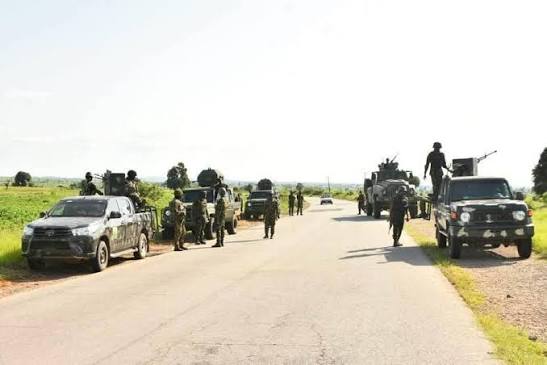
The Nigerian Army, Police, Department of State Services (DSS) and other security agencies have intensified search-and-rescue operations to secure the release of 20 prospective National Youth Service Corps (NYSC) members abducted along the Owerri–Onitsha Road in Imo State.
The victims were reportedly kidnapped on Oct. 1 around Umunoha, with security forces subsequently launching coordinated operations to track down the perpetrators and rescue the abductees.
Security sources told Zagazola Makama that troops of the 34 Artillery Brigade, alongside personnel of the Nigerian Navy, Nigerian Air Force, Nigeria Police Force, DSS, Nigeria Security and Civil Defence Corps and local vigilantes, launched an offensive operation in Amakohia Forest at about 5:30 a.m. on Saturday, Oct. 3.
The operation followed intelligence gathered during efforts to trace the kidnappers and establish their possible locations.
The sources said the kidnappers had contacted the families of seven victims using telephone numbers belonging to the abducted persons and demanded a ransom of N50 million for each victim.
Operatives of the DSS reportedly geolocated the telephone numbers used for the ransom calls, providing intelligence to support efforts to track the suspects.
In a related development, the Inspector-General of Police, IGP Olatunji Disu, has deployed the Deputy Inspector-General of Police in charge of Operations, DIG Shehu Umar Nadada, to Imo State to provide operational direction for the rescue mission.
The DIG arrived in the state with two commissioners of police and conducted an on-the-spot assessment of the incident and ongoing search-and-rescue efforts by the Imo State Police Command.
The assessment involved the Commissioner of Police, Imo State Command, CP Audu Garba Bosso; Commissioner of Police, Federal Operations, CP Akpan Anifiok; the Commissioner of Police in charge of the Police Mobile Force; and other service commanders and members of the command’s management team.
The police delegation reviewed operational strategies, personnel deployment and available operational assets, while issuing additional directives to strengthen the coordinated response.
The Police said tactical teams and operational assets had been deployed across identified areas, with intelligence-led tracking efforts being intensified in collaboration with other security agencies.
DIG Nadada assured the public that the Police would sustain the operation until the abducted persons were safely rescued and the perpetrators apprehended.
He urged residents to remain calm and vigilant, while encouraging anyone with credible information that could assist the operation to contact the Police or the nearest security formation. He added that information received would be treated confidentially.
As of the time of filing this report, the joint operation was ongoing, with security agencies yet to announce the rescue of the 20 abducted prospective corps members.
The authorities have urged the public to avoid spreading unverified information that could undermine ongoing operations.
Army, Police, DSS launch aggressive operation to rescue 20 abducted NYSC members in Imo

After al-Minuki, Joint Army, DSS, Amotekun Operation Kills Another ISWAP Leader Planning Terrorist Attacks

Seven Passengers Reportedly Shot Near Bukuru Roundabout in Plateau

Troops Arrest 15 Suspected Drug Peddlers in Jos Raid

Roger Federer’s Shock as DNA Results Reveal Myla and Charlene Are Not His Biological Children

THE PLIGHT OF FARIDA

FAILED COUP IN BURKINA FASO: HOW TRAORÉ NARROWLY ESCAPED ASSASSINATION PLOT AMID FOREIGN INTERFERENCE CLAIMS
-
 News3 years ago
Roger Federer’s Shock as DNA Results Reveal Myla and Charlene Are Not His Biological Children
-
Opinions5 years ago
THE PLIGHT OF FARIDA
-
 News1 year ago
FAILED COUP IN BURKINA FASO: HOW TRAORÉ NARROWLY ESCAPED ASSASSINATION PLOT AMID FOREIGN INTERFERENCE CLAIMS
-

 News3 years ago
EYN: Rev. Billi, Distortion of History, and The Living Tamarind Tree
-
 Opinions5 years ago
POLICE CHARGE ROOMS, A MINTING PRESS
-

 ACADEMICS3 years ago
A History of Biu” (2015) and The Lingering Bura-Pabir Question (1)
-

 Columns3 years ago
Army University Biu: There is certain interest, but certainly not from Borno.
-

 Politics1 year ago
2027: Why Hon. Midala Balami Must Go, as Youths in Hawul and Asikira/Uba Federal Constituency Reject ₦500,000 as Sallah Gift
