
News
Boko Haram: The Politics, A Call for Historical Accuracy, and Responsible Discourse

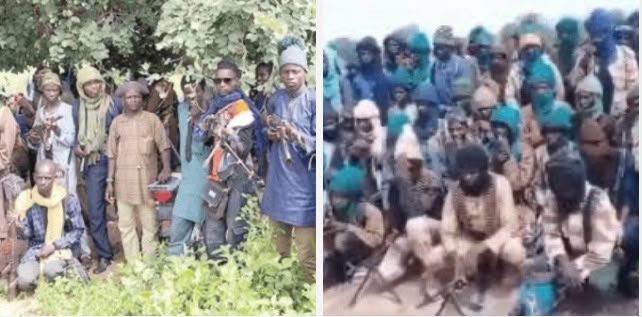
Boko Haram: The Politics, A Call for Historical Accuracy, and Responsible Discourse
By: Dr. James Bwala
The insurgency that has plagued northeastern Nigeria for over a decade, popularly known as Boko Haram, has caused immense suffering and destabilization in the region. Despite the profound implications of this crisis, much of the public discourse surrounding its origins is riddled with inaccuracies, oversimplifications, and politically motivated narratives. As a consequence, many Nigerians—including those on the streets of Maiduguri or other affected areas—hold incomplete or erroneous understandings of the group’s history. This lack of historical facts not only clouds efforts to address the root causes of the conflict but also fuels divisive rhetoric and politicization of the tragedy. Nigerians and those who continued to discuss the conflict and its history found a need to know and draw from facts to line up their narratives. Discoursants like lawyer Femi Falana and politicians like Naja’atu need facts to buttress their claims and should not rely on hearsay or half-truths, perhaps from where they heard their stories, because it is not adding up.
For us, who reported this crisis on the front line and studied the historical lines from direct elements and foot soldiers, we know that the widespread misconception is the tendency to attribute Boko Haram’s insurgency exclusively to the late Malam Mohammed Yusuf, the group’s most notorious leader, who emerged publicly in the early 2000s. While Yusuf did play a role in shaping the movement known as the “Yusufiya sect,” claiming he single-handedly started Boko Haram grossly simplifies the complex evolution of this militant group in Borno State or Northeast Nigeria. Such reductionism is evident in popular narratives frequently encountered among ordinary citizens, who often repeat what they have heard without contextual depth. An accurate historical account reveals that the conditions fostering Boko Haram’s emergence existed long before Yusuf’s ascendancy, involving multiple actors and events that laid the groundwork for radicalization and violence from the simply known Islamiyya sect in Kannamma to the Yusufiya sect and Boko Haram, the name given to them after the Bauchi Prison break at the beginning of the one-year conflict in 2010.
Like I did mention earlier, complicating the discourse around the history or founder are politicized allegations by prominent individuals that seek to assign blame to specific personalities without credible evidence. For instance, Hajiya Naja’atu has in recent times launched rhetoric directed at Vice President Kashim Shettima, linking her claims to the arrest of Kabiru Sokoto at the Borno liaison office in Abuja (which she said is Shettima’s house). Similarly, respected lawyer Femi Falana has publicly accused a former governor of Borno State of initiating the Boko Haram insurgency, associating the claims with political thuggery during the administration of Modu Sheriff. While such claims may have come within certain political constituencies, they dangerously oversimplify a multifaceted crisis and divert attention from deeper structural factors. Most importantly, these rhetorics are often founded on partial or misinterpreted information rather than comprehensive, verifiable research into the insurgency’s roots.
Testimonies and records of journalists and observers who were active in Maiduguri and the wider northeastern region since the early 1990s have captured far more interesting narratives. These professionals witnessed firsthand the unfolding developments culminating in the Boko Haram crisis. Their accounts reveal the existence of leadership predating Mohammed Yusuf, notably an individual named Mohammed Ali, who led an early Islamist sect prior to the “Yusufiya” movement. Ali was reportedly killed amid violence after escaping arrest in Kannamma, located in present-day Yobe State, long before Yusuf became publicly acknowledged as Boko Haram’s leader. The circumstances surrounding Mohammed Ali’s demise evidence internal fractures and state interventions that contributed to the radicalization pathway exploited by later insurgents.
Geographically, the significance of certain locations underscores the continuity in Boko Haram’s operational terrain. Mohammed Ali was ambushed and killed between Talala and Ajigil, areas within Damboa Local Government in Borno State. These locations remain critical hubs for Boko Haram activities today, illustrating how the movement’s influence expanded along established routes starting decades ago. Access between Buni Yadi and Damboa, through Foi village, forms a corridor still exploited for logistical and militant operations. Understanding these geographic linkages offers valuable insight into Boko Haram’s sustained presence and the entrenchment of its networks in northeastern Nigeria.
The persistence of incorrect narratives can be partly attributed to inadequate primary research and reliance on hearsay or politically motivated sources. This deficiency highlights an urgent need for esteemed public figures, journalists, analysts, and commentators to engage in meticulous and objective investigation when discussing Boko Haram’s origins. Reckless or uninformed rhetoric risks exacerbating communal tensions, misguiding policy responses, and undermining public trust. For example, assigning blame to isolated individuals without substantial proof politicizes the insurgency, detracting from broader considerations such as socioeconomic marginalization, governmental neglect, corruption, and ideological manipulation—all key contributors to the conflict.
Moreover, responsible storytelling about Boko Haram’s history requires acknowledging the complexity of insurgencies as social phenomena. These are rarely the product of singular agents but rather evolve from layered interactions between various factors, including local grievances, religious ideologies, political exclusions, and external influences. Therefore, simplistic attributions fail to capture the organic, evolving nature of such movements. A comprehensive approach that integrates oral histories, archival materials, community testimonies, and official documents can provide a more accurate chronicle and inform more effective counterinsurgency strategies.
The discourse on Boko Haram’s history demands a progressive shift toward historical accuracy and intellectual honesty. The prevailing narrative that attributes the insurgency solely to late Malam Mohammed Yusuf or assigns culpability to particular public figures without substantive evidence does a disservice to truth and justice. Recognizing the role of earlier leaders like Mohammed Ali and appreciating the broader socio-political context enables Nigerians and the international community to better comprehend the insurgency’s complexities. It is incumbent upon respected voices—whether in politics, law, or the media—to prioritize thorough research and measured discourse. Doing so not only honors the memory of victims and affected communities but also facilitates the formulation of genuine solutions anchored in reality, empathy, and inclusiveness. Only through such a principled approach can Nigeria hope to heal the wounds inflicted by Boko Haram and work toward lasting peace and stability in its northeastern regions.
- James Bwala, PhD, writes from Maiduguri.
- Boko Haram: The Politics, A Call for Historical Accuracy, and Responsible Discourse


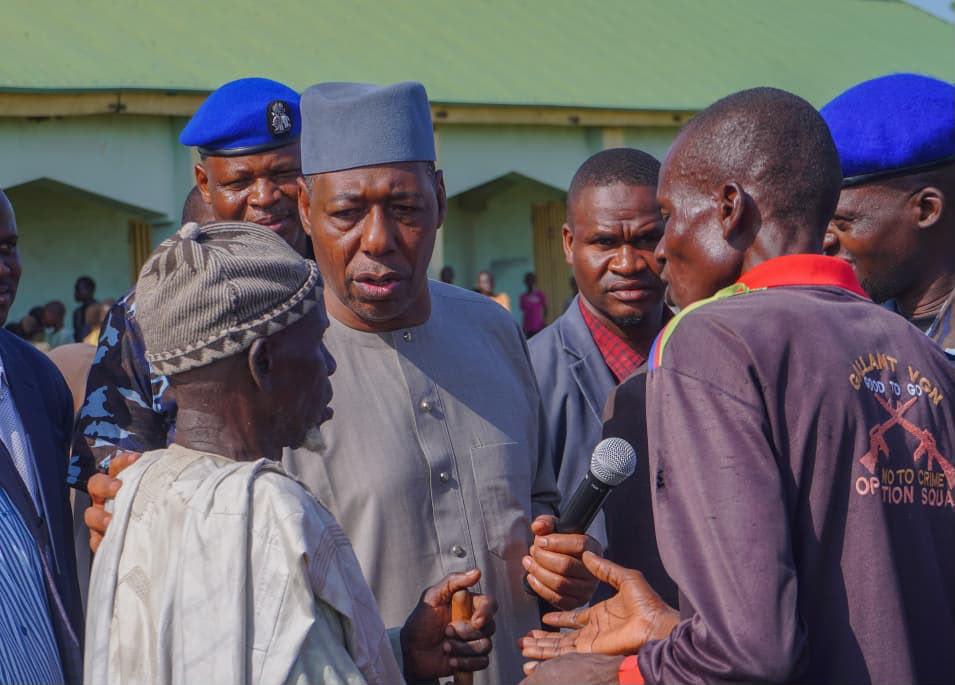
Zulum moves to resettle Konduga IDPs in four months
By: Bodunrin Kayode
Borno State Governor, Professor Babagana Zulum, has announced the planned closure of Konduga internally displaced persons (IDP) camp within the next four months.
This follows the successful closure of Bama IDP camp, the largest displacement facility outside the state capital and the planned shutdown of Gwoza camp.
Speaking to newsmen during a recent visit to the camp, Zulum, however, stressed that the relocation is entirely voluntary and no one will be forced to resettle where they are not willing to go.
The Governor has consistently maintained that returning to ancestral homes or other areas of choice must be based on the displaced persons’ expressed willingness.
He said, “We are not carrying out the resettlement process immediately; we are here to discuss with the IDPs so that in the next four months they will be resettled in a dignified manner. I believe you heard from the IDPs that they are willing to return home. Return shall be voluntary, not by force”.
During his visit to Konduga, Governor Zulum inspected resettlement houses currently under construction in Amarwa and later proceeded to Maiwa in Mafa LGA. The Amarwa resettlement city, for which the governor had earlier laid the foundation, is being built to shelter displaced persons living in camps.
In Maiwa, the state government is constructing massive housing units as part of the ongoing resettlement programme. The resettlement houses are equipped with public facilities like a primary healthcare centre, a water facility, and other basic amenities.
Zulum was accompanied by the member of the House of Representatives, Engr Bukar Talba; the Member of the House of Assembly for Konduga, Hon. Bukar Modu; the Commissioner for Local Government and Emirate Affairs, Sugun Mai Mele; and other senior government officials.
Zulum moves to resettle Konduga IDPs in four months
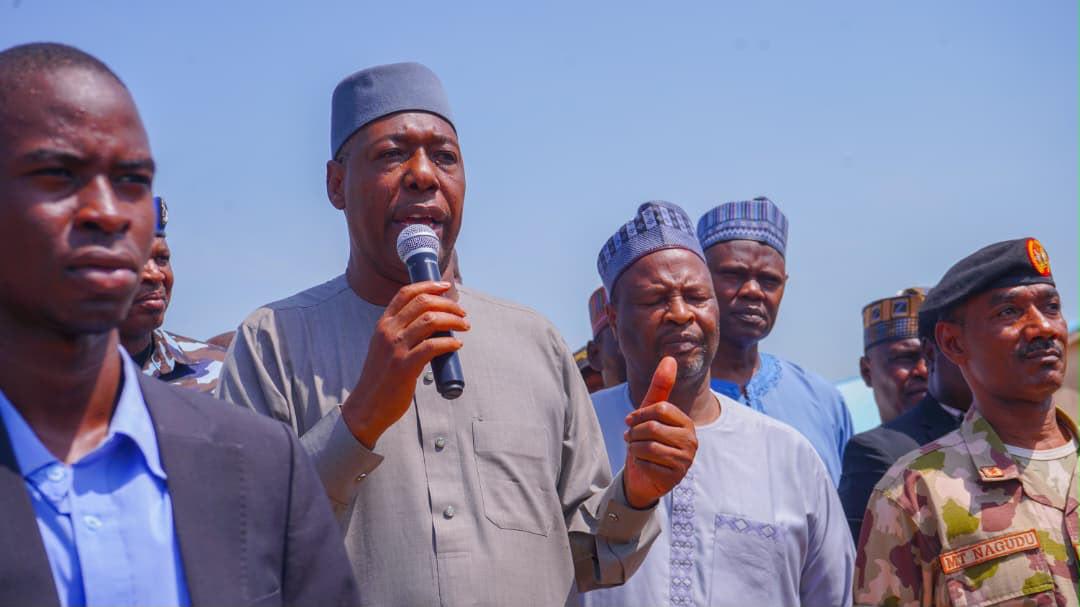
Zulum Announces Closure of Konduga IDP Camp as Borno Accelerates Resettlement Drive
…Inspects ongoing housing projects in Amarwa, Maiwa
By: Michael Mike
Borno State Governor, Professor Babagana Zulum, has announced plans to close the Internally Displaced Persons (IDP) camp in Konduga Local Government Area as part of efforts to accelerate the state’s ongoing resettlement programme.
The move comes shortly after the successful closure of the Bama IDP camp, which was the largest displacement camp outside Maiduguri, as well as preparations for the shutdown of the Gwoza IDP camp.
Governor Zulum, who disclosed the plan during a visit to Konduga, said the resettlement of displaced persons would be carried out in a dignified and voluntary manner, stressing that no resident would be forced to return to any location against their will.
The governor said the government would engage with the displaced communities before the process begins, noting that the return of IDPs must be based on their readiness and willingness.
“We are not carrying out the resettlement process immediately; we are here to discuss with the IDPs so that in the next four months they will be resettled in a dignified manner. I believe you heard from the IDPs that they are willing to return home. Return shall be voluntary, not by force,” Zulum said.
During the visit, the governor inspected ongoing construction work at the Amarwa resettlement city, where housing units are being developed for displaced families. The project, which was earlier inaugurated by the governor, is designed to provide a permanent settlement option for residents currently living in camps.
Governor Zulum also visited Maiwa in Mafa Local Government Area, where the state government is constructing additional housing units under its resettlement initiative.
The housing projects include essential social infrastructure such as primary healthcare centres, water facilities and other basic amenities aimed at ensuring sustainable living conditions for returnees.
The Borno State Government has continued to prioritise the rebuilding of communities affected by years of insurgency, with the closure of IDP camps forming part of a broader strategy to restore normalcy, rebuild livelihoods and support the safe return of displaced residents.
Governor Zulum was accompanied on the inspection tour by the member representing Bama/Ngala/Kala-Balge Federal Constituency in the House of Representatives, Engr. Bukar Talba; the Konduga State House of Assembly member, Hon. Bukar Modu; Commissioner for Local Government and Emirate Affairs, Sugun Mai Mele; and other senior government officials.
Zulum Announces Closure of Konduga IDP Camp as Borno Accelerates Resettlement Drive

Troops Arrest Two Suspected Terrorist Informants, Cattle Rustlers in Yobe Market
By Zagazola Makama
Troops of Operation HADIN KAI have arrested two suspected terrorist informants and cattle rustlers during a joint operation with local hunters at the Buni Yadi Friday Market in Gujba Local Government Area of Yobe State.
Military sources told Zagazola Makama that the operation was carried out at about 2:00 p.m. on July 24 by troops of 27 Task Force Brigade in conjunction with members of a hunters’ group acting on intelligence.
The suspects were identified as Muhammadu Sani, 32, from Mainahari in Biu Local Government Area of Borno State, and Buba Umaru, 40, from Garin Jauro in Fune Local Government Area of Yobe State.
According to the sources, the operation turned violent when one of the suspects attacked a member of the hunters’ group with a cutlass while resisting arrest.
The hunter sustained severe head injuries during the attack and was immediately attended to, while the troops overpowered and apprehended the suspects.
Preliminary investigations revealed that Muhammadu Sani confessed to serving as a logistics supplier and informant for Boko Haram terrorists for nearly seven years.
He also admitted to leading terrorists to the residences of two local residents, where the insurgents successfully rustled cattle during separate attacks.
Military sources said the confession is expected to assist ongoing intelligence efforts aimed at dismantling terrorist support networks operating within communities across the North-East.
The two suspects are currently in the custody of 27 Task Force Brigade and are undergoing further investigation to determine the extent of their involvement in terrorist logistics, intelligence gathering and cattle rustling activities.
Security officials said the arrest underscores the critical role played by local intelligence and collaboration between troops and community-based security groups in identifying individuals who provide logistical support and operational information to terrorist elements.
They added that troops of Operation HADIN KAI will continue to target terrorist collaborators, informants and logistics networks as part of ongoing efforts to deny insurgents the local support structures that sustain their operations across the North-East.
Troops Arrest Two Suspected Terrorist Informants, Cattle Rustlers in Yobe Market

Zulum moves to resettle Konduga IDPs in four months

My Binoculars: What has Remi Tinubu got to do with Akara, Kulikuli, Boli, Dodo and Ekpa

Zulum Announces Closure of Konduga IDP Camp as Borno Accelerates Resettlement Drive

Roger Federer’s Shock as DNA Results Reveal Myla and Charlene Are Not His Biological Children

THE PLIGHT OF FARIDA

FAILED COUP IN BURKINA FASO: HOW TRAORÉ NARROWLY ESCAPED ASSASSINATION PLOT AMID FOREIGN INTERFERENCE CLAIMS
-
 News2 years ago
Roger Federer’s Shock as DNA Results Reveal Myla and Charlene Are Not His Biological Children
-
Opinions4 years ago
THE PLIGHT OF FARIDA
-
 News1 year ago
FAILED COUP IN BURKINA FASO: HOW TRAORÉ NARROWLY ESCAPED ASSASSINATION PLOT AMID FOREIGN INTERFERENCE CLAIMS
-

 News2 years ago
EYN: Rev. Billi, Distortion of History, and The Living Tamarind Tree
-
 Opinions5 years ago
POLICE CHARGE ROOMS, A MINTING PRESS
-

 ACADEMICS2 years ago
A History of Biu” (2015) and The Lingering Bura-Pabir Question (1)
-

 Columns2 years ago
Army University Biu: There is certain interest, but certainly not from Borno.
-

 Politics1 year ago
2027: Why Hon. Midala Balami Must Go, as Youths in Hawul and Asikira/Uba Federal Constituency Reject ₦500,000 as Sallah Gift
