
News
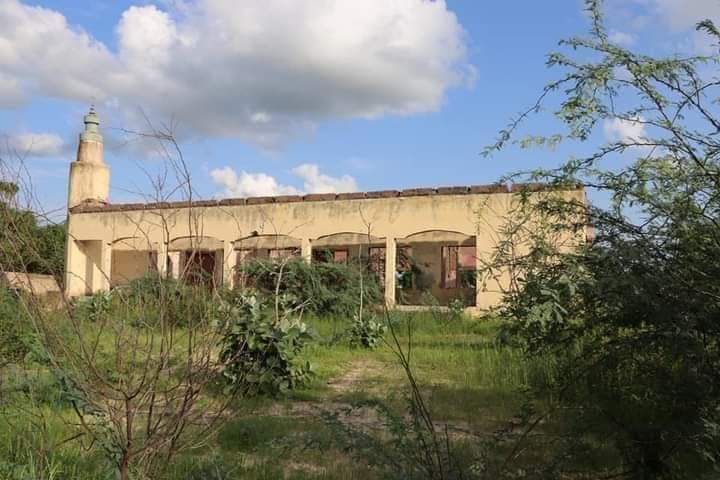
Borno govt to start reconstruction of former B/Haram stronghold

Borno govt to start reconstruction of former B/Haram stronghold
By Olatunji Omirin
The Borno State government have confirmed it readiness to commence immediate reconstruction of both public and residential structures in a former Boko Haram stonghold recently recaptured by the Nigerian military.
It reports that Gudumbali is a remote town in the fringe of lake chad and believed to have been one of the deadly stronghold of Boko Haram insurgents where hundreds of soldiers were killed, both public and private structures as well as armaments of the troops were completely destroyed.
The State Commissioner Ministry of Reconstruction Rehabilitation and Resettlement (MRRR) and Chairman of the Committee, Engr. Mustapha Gubio reaffirmed this after an assessment visit to Gudumbali town, headquarter of Guzamala local government area of Borno state at the weekend.
It was gathered that Governor Zulum had recently charged the troops to recapture the Gudumbali town to enables the ongoing rebuilding and resettlement process of his administration during an inaugural of the resettlement committee last month.
It would be recall that in 2014 Gudumbali town witnessed its first attack by Boko Haram and the communities were displaced to Monguno and Maiduguri respectively. They were resettled in 2018 to Gudumbali but after three months they were chased out and lastly resettled in 2020 they were equally displaced up to date.
Engr Mustapha Gubio maintained that the committee first priority is to have a military formation in Gudumbali town so that reconstruction and resettlement process would be achieved in a short possible time.
“We conduct an assessment on the level of destruction in Gulumbali the headquarters of Guzalama local government area, as the Chairman of the committee have said we are going back and submit the report to the governor then the committee will now reconstruction activity. Thereafter resettlement activity will follow.
Speaking on the immediate priority, “we need security on ground and they should stay here in Gudumbali town then they will now scan the whole town, this will now pave way for us to come in to clear the town and start the reconstruction of public and residential structures,” Engr. Gubio assured.
Other members in the entourage include Commissioner Ministry of Local Government and Emirates Affairs Hon Sugun Mai Mele, Permanent Secretary MRRR Engr Abba Yusuf, Permanent Secretary Housing and Energy, Mohammed Kyari Abdu, Hon Tijjani Special Adviser on Animals and Fisheries, Muhammad Musa Zarami Head of Humanitarian Activities NEDC,Chairman Guzamala LGA, District head of Gudumbali, Zannah Waziri Ibrahim Musa among others.



FG Moves to Mainstream Gender-Responsive Budgeting in 2027 Budget
By: Michael Mike
The Federal Government has stepped up efforts to institutionalise gender-responsive planning and budgeting across ministries, departments and agencies, with the 2027 national budget expected to reflect the new approach.
Permanent Secretary, Federal Ministry of Budget and Economic Planning, Dr. Deborah Odoh, disclosed this at a capacity-building programme on gender-responsive planning and budgeting, stressing that gender considerations must be embedded throughout the national planning and budgeting cycle.
Odoh said the Budget Office of the Federation had already included gender-responsive planning and budgeting in the guidelines for the 2027 budget, but expressed concern over the low level of response from government institutions.
She said the training of Permanent Secretaries and other senior government officials was expected to improve implementation and ensure that the approach cascades to other levels of the civil service.
“We expect that the 2027 budget will be a reflection of all the things that we have done,” she said, adding that the government was seeking more practical results from the ongoing capacity-building efforts.
According to her, gender-responsive budgeting is critical to ensuring that public resources address the different needs and circumstances of women, men, girls and boys, while promoting equitable development outcomes.
She said the Federal Ministry of Budget and Economic Planning, with support from UN Women and other development partners, had developed a gender-responsive planning and budgeting framework to guide MDAs in identifying gender gaps, designing appropriate interventions, aligning resources with priorities and establishing measurable indicators.
Odoh stressed that gender-responsive budgeting should not be treated as a standalone initiative but integrated into the entire planning and budgeting process, from policy formulation through monitoring, evaluation and reporting.
She also disclosed that the Federal Government had recently conducted a Renewed Hope Ward Development Survey covering all 8,809 wards across the country.
She said the findings, which are expected to be formally released soon, would help identify development potentials and needs at the ward level and support efforts to ensure that citizens benefit more equitably from public resources.
The Permanent Secretary further called for stronger institutional collaboration, noting that successful implementation could not be achieved by budget or gender departments alone.
She urged planning, budgeting, finance, statistics, programme, monitoring and evaluation units to work together to ensure that gender considerations are reflected in government programmes and expenditure.
Also speaking, UN Women Country Representative to Nigeria and ECOWAS, Ms. Beatrice Eyong, said the organisation was working with the Nigerian civil service to institutionalise gender-responsive planning and budgeting.
Eyong said UN Women had signed a memorandum of understanding with the civil service to promote gender-responsive budgeting and an inclusive working environment.
She disclosed that Permanent Secretaries from nearly all ministries, alongside representatives of the Accountant-General and National Bureau of Statistics, had already undergone training, with the initiative now being extended to directors and other civil servants.
According to her, the programme would also be taken to the state level to broaden technical capacity for implementing gender-responsive budgeting.
Eyong said implementation would be monitored under a five-year plan, adding that an “Agenda Report” would provide visibility on ministries, departments and agencies implementing gender-responsive planning and budgeting.
She said the framework also contained monitoring and accountability mechanisms designed to hold government institutions accountable for their commitments.
Eyong explained that the initiative was necessary because many Nigerians remain below the poverty line and public resources must therefore be allocated deliberately according to the different needs and circumstances of citizens.
She said gender-responsive budgeting would help ensure that development benefits were distributed more equitably and that no segment of the population was left behind.
Odoh, who formally declared the two-day capacity-building programme open, urged participating MDAs to use the training to strengthen their capacity to apply gender-disaggregated data, design responsive programmes, link activities to budgetary provisions, establish measurable targets and monitor both expenditure and development outcomes.
She also commended UN Women, the African Development Bank and other development partners for supporting Nigeria’s efforts to strengthen gender-responsive planning and budgeting.
FG Moves to Mainstream Gender-Responsive Budgeting in 2027 Budget
NAPTIP, France move to dismantle human trafficking networks
…New project targets digital recruitment, trafficking proceeds, weak prosecution, cross-border crime
By: Michael Mike
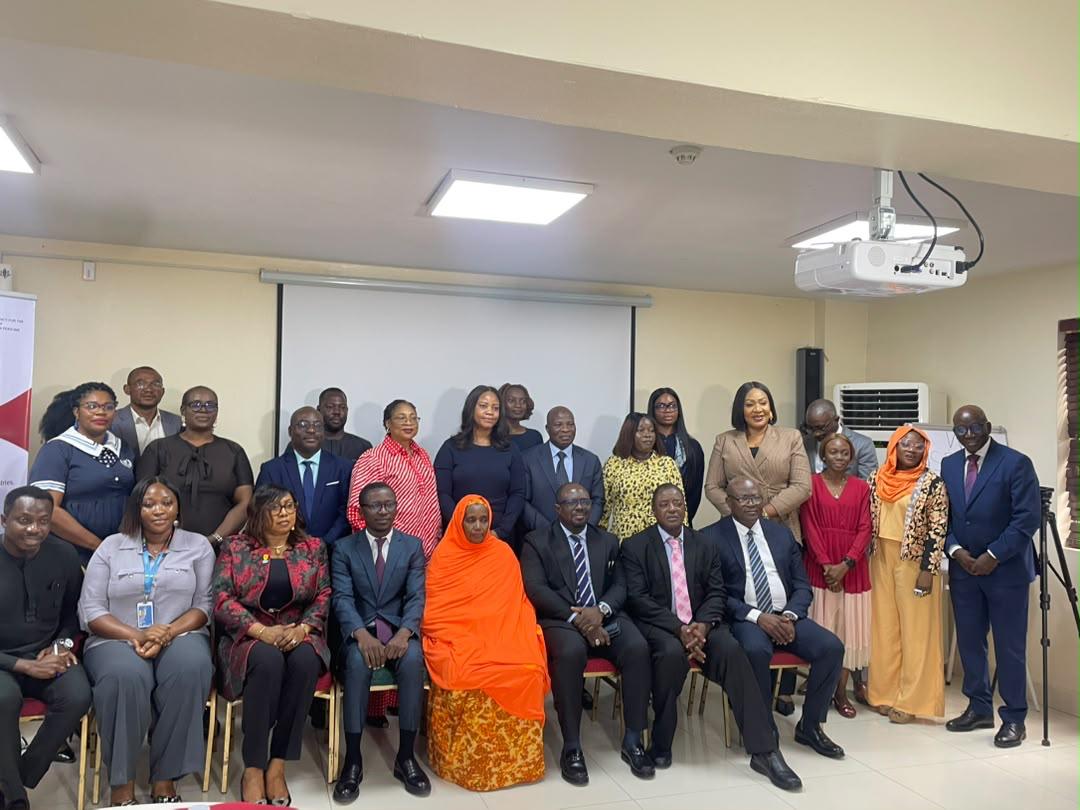
The Federal Government has launched a new regional initiative with France to strengthen Nigeria’s fight against human trafficking, with the National Agency for the Prohibition of Trafficking in Persons (NAPTIP) warning that criminal networks are increasingly exploiting digital platforms, irregular migration channels and vulnerable populations to expand their operations.
The PROTECT Regional Project, funded by the French Development Agency (AFD) and implemented by Expertise France, seeks to move Nigeria’s anti-trafficking response beyond the arrest of individual suspects to the disruption of the networks, financial systems and cross-border partnerships that sustain the exploitation of victims.
The five-country intervention, covering Nigeria, Benin, Guinea, Sierra Leone and Togo, was formally launched on Monday in Nigeria at a validation workshop on diagnostic assessments held in Abuja.
Speaking at the event, NAPTIP’s Director-General, Binta Adamu-Bello, said the changing nature of human trafficking required institutions responsible for prevention, investigation, prosecution and victim protection to evolve at the same pace as emerging threats.
She said traffickers were increasingly using social media and other digital platforms to recruit, communicate with and exploit victims, while also taking advantage of economic hardship, unemployment, conflicts, displacement and irregular migration channels.
“Trafficking is no longer confined to identifiable physical locations or traditional recruitment methods,” Adamu-Bello said, stressing that the growing use of technology had made the crime more complex and difficult to combat.
The NAPTIP boss said the agency had intensified public enlightenment across communities, schools, markets, transport corridors, religious institutions and other vulnerable locations, while expanding the use of radio, television and social media to reach young people targeted by traffickers.
She said NAPTIP also continued to provide skills acquisition, educational opportunities, family tracing and sustainable reintegration services for victims and survivors, but acknowledged that more needed to be done.
Adamu-Bello, however, identified delays in the judicial process as a major concern, saying some trafficking cases remained unresolved for extended periods.
She called for greater support from the judiciary and prosecutorial institutions to ensure timely conclusion of cases and effective accountability for perpetrators.
The Director-General said the agency was strengthening its investigative capacity to respond to technology-facilitated recruitment, exploitation and other crimes committed through digital platforms.
But she argued that effective enforcement must also target the financial foundations of trafficking.
According to her, Nigeria’s response must increasingly move beyond arresting individual traffickers to identifying, tracing and recovering the proceeds of trafficking and dismantling the criminal enterprises that finance and sustain exploitation.
“The greatest value of the project will be measured not simply by the number of activities conducted, but by the extent to which it leaves behind stronger institutions, better coordination, improved systems and more effective protection of vulnerable persons and survivors,” she said.
The intervention is built around five major components: strengthening institutional coordination and gender sensitivity; improving the criminal justice chain; preventing trafficking and protecting victims and survivors; enhancing bilateral, cross-border and regional cooperation; and improving the production and analysis of quality data and knowledge.
Adamu-Bello said the project would strengthen digital systems, improve data collection and support evidence-based policy development, operational planning and resource allocation.
She also urged ministries, departments and agencies to integrate anti-trafficking measures into relevant government policies and programmes, stressing that prevention and victim protection must remain part of broader national development efforts.
The NAPTIP boss called on state and local government authorities to strengthen community-level prevention, while urging civil society organisations to continue supporting awareness creation, victim assistance, advocacy, research and community-based interventions.
She tasked the media with responsible reporting that protects the privacy and dignity of victims and survivors, and encouraged traditional and religious leaders to support community awareness and prevention efforts.
“Prevention begins with awareness, vigilance and the willingness to report suspicious activities,” she said.
In his welcome address, NAPTIP’s Director of Research and Programme Development, Josiah Emerole, said the workshop marked the culmination of extensive consultations undertaken during the project’s inception phase.
Emerole said the diagnostic assessments were designed to provide a comprehensive understanding of Nigeria’s existing counter-trafficking challenges and identify areas requiring urgent intervention.
He said the findings reflected the experiences of survivors, frontline practitioners and professionals involved in the fight against trafficking.
According to him, the workshop was expected to produce stakeholder consensus on the proposed Nigerian Action Plan and Theory of Change, as well as prepare the groundwork for formal adoption of the instruments by the PROTECT Nigerian Committee.
He said the committee was scheduled to meet on September 22, 2026, for the formal adoption process.
The PROTECT Regional Project Manager at Expertise France, Modeste Krah, said the workshop marked both the validation of the project’s inception-phase work and the official launch of implementation in Nigeria.
Krah recalled that between 2019 and 2024, Expertise France worked with NAPTIP and other national and international stakeholders under an earlier anti-trafficking project funded by the European Union and France.
He said the partnership produced digital reporting mechanisms, toll-free reporting lines and other interventions aimed at strengthening trafficking prevention and control infrastructure.
He added that the experience also exposed areas requiring additional support and stronger cooperation, leading to the development of PROTECT.
Krah said trafficking networks were becoming increasingly sophisticated and connected to other forms of organised crime, with digital technologies and online platforms being used to recruit and control victims.
He stressed that strong laws and institutions alone were insufficient, calling for stronger inter-agency cooperation, better use of digital information systems, enhanced investigative and prosecutorial capacities, and effective mechanisms for identifying, referring and protecting victims.
He said the diagnostic assessments focused on institutional coordination, governance and asset recovery, digital systems and emerging trafficking trends, and gender considerations.
According to him, the assessments would provide the evidence base for determining priority areas and identifying where the project could provide meaningful support.
Krah emphasised that the validation process was not simply about endorsing reports, but about critically examining findings, challenging assumptions, strengthening the proposed Theory of Change and Action Plan, and ensuring that priorities reflected Nigeria’s realities and institutional needs.
He said the project was not intended to create parallel structures or duplicate existing initiatives, but to strengthen Nigerian institutions, address identified gaps, build sustainable capacity and facilitate cooperation.
Krah also stressed the importance of regional cooperation, noting that human trafficking did not respect national borders.
He said the launch of PROTECT in Nigeria marked a new phase of partnership aimed at delivering tangible, measurable and sustainable results, urging participants to ensure that agreed priorities translated into concrete improvements in trafficking prevention, investigation and prosecution, as well as protection and assistance for victims and survivors.
NAPTIP, France move to dismantle human trafficking networks

Vowles Arrives in Nigeria, Pledges to Strengthen UK-Nigeria Ties
By: Michael Mike
British High Commissioner Designate to Nigeria, Pete Vowles, has arrived in Abuja to assume leadership of the United Kingdom’s diplomatic mission, pledging to deepen the longstanding partnership between both countries.
Vowles, who succeeds Dr Richard Montgomery CMG, arrived in the Nigerian capital on Monday, according to a statement issued by the British High Commission.
Speaking on his arrival, the new envoy said his immediate priority would be to listen, learn and engage with Nigerians across the country.
“I am hugely excited to be in Nigeria. My first priority is to listen and learn – to travel, meet people and immerse myself in this extraordinary country, its culture and its energy,” he said.
He added that the relationship between the UK and Nigeria was anchored in strong people-to-people connections, expressing readiness to work with partners across the country to identify new areas of cooperation.
“The UK and Nigeria have a deep and enduring partnership, built above all on the connections between our people. I’m looking forward to discovering Nigeria for myself and working with partners across the country to build on that relationship and see what more we can achieve together,” Vowles said.
Vowles brings extensive diplomatic and development experience to his new assignment. Before his appointment, he served as His Majesty’s Ambassador to Zimbabwe and held senior leadership positions within the UK’s Foreign, Commonwealth & Development Office.
He previously served as Ambassador to Myanmar and occupied diplomatic and development positions in several African and Asian countries, including Bangladesh, India, the Democratic Republic of Congo and Kenya.
His appointment as the next British High Commissioner to Nigeria was announced on June 16, 2026.
The arrival comes as Nigeria and the UK continue to maintain broad diplomatic, economic, security and people-to-people ties, with both countries regularly engaging on issues of mutual interest.
Vowles Arrives in Nigeria, Pledges to Strengthen UK-Nigeria Ties

FG Moves to Mainstream Gender-Responsive Budgeting in 2027 Budget

NAPTIP Moves to Strengthen Justice Chain Against Trafficking, Migrant Smuggling

NAPTIP, France move to dismantle human trafficking networks

Roger Federer’s Shock as DNA Results Reveal Myla and Charlene Are Not His Biological Children

THE PLIGHT OF FARIDA

FAILED COUP IN BURKINA FASO: HOW TRAORÉ NARROWLY ESCAPED ASSASSINATION PLOT AMID FOREIGN INTERFERENCE CLAIMS
-
 News3 years ago
Roger Federer’s Shock as DNA Results Reveal Myla and Charlene Are Not His Biological Children
-
Opinions5 years ago
THE PLIGHT OF FARIDA
-
 News1 year ago
FAILED COUP IN BURKINA FASO: HOW TRAORÉ NARROWLY ESCAPED ASSASSINATION PLOT AMID FOREIGN INTERFERENCE CLAIMS
-

 News2 years ago
EYN: Rev. Billi, Distortion of History, and The Living Tamarind Tree
-
 Opinions5 years ago
POLICE CHARGE ROOMS, A MINTING PRESS
-

 ACADEMICS3 years ago
A History of Biu” (2015) and The Lingering Bura-Pabir Question (1)
-

 Columns3 years ago
Army University Biu: There is certain interest, but certainly not from Borno.
-

 Politics1 year ago
2027: Why Hon. Midala Balami Must Go, as Youths in Hawul and Asikira/Uba Federal Constituency Reject ₦500,000 as Sallah Gift
