
News
Breaking the Silence: Religion, Media and the Fight Against Sexual and Gender-Based Violence in Nigeria

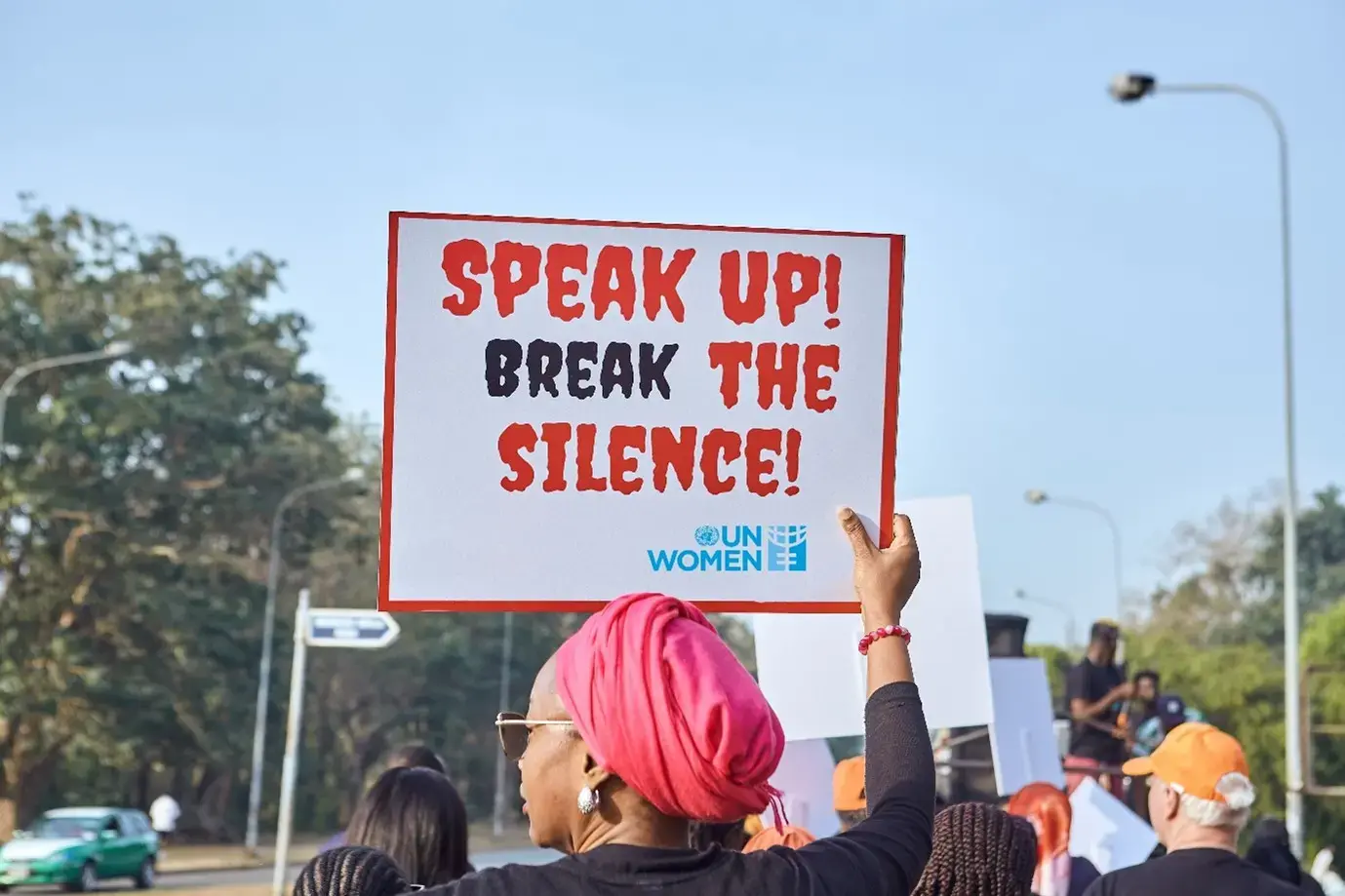
Breaking the Silence: Religion, Media and the Fight Against Sexual and Gender-Based Violence in Nigeria
As NAPTIP, EU, International IDEA launch Media Corps, stakeholders seek stronger religious and societal response to violence against women and girls
By Michael Olukayode
For years, sexual and gender-based violence (SGBV) in Nigeria has largely been treated as a collection of individual tragedies: a woman assaulted by her partner, a girl abused by someone she trusted, a victim of sexual exploitation trafficked across borders, or a survivor whose case briefly dominates the headlines before disappearing into the nation’s crowded news cycle.
But behind each case lies a larger story—of power, silence, stigma, poverty, fear, social attitudes, institutional weaknesses and, in many instances, the failure of communities to protect the vulnerable.
It is against this background that the decision by the National Agency for the Prohibition of Trafficking in Persons (NAPTIP), the European Union (EU) and the International Institute for Democracy and Electoral Assistance (International IDEA) to establish a dedicated Media Corps assumes wider significance.
Launched in Abuja under the EU-supported End Sexual and Gender-Based Violence Programme, the initiative seeks to strengthen the capacity of journalists to investigate, report and sustain public attention on SGBV.
The ambition is clear: move reporting beyond isolated stories of rape, domestic violence, sexual exploitation and abuse towards sustained journalism that investigates patterns, exposes institutional failures, challenges harmful social norms and keeps pressure on authorities to protect survivors and prosecute perpetrators.
But while the media has an important role to play, the battle against SGBV extends far beyond newsrooms, police stations and courtrooms.
It reaches into homes, schools, places of worship and communities.
And in a deeply religious country such as Nigeria, any serious national conversation about violence against women and girls cannot ignore the enormous influence of religion.
A crisis hidden behind silence
The scale of violence against women in Nigeria gives urgency to the conversation.
A figure cited in the context of the campaign indicates that 21 per cent of Nigerian women aged 15 to 49 have experienced physical or sexual violence.
Behind such statistics are individuals whose experiences are often concealed by shame, fear, economic dependence and social pressure.
Many survivors do not report abuse.
Some fear being blamed.
Others fear the collapse of their marriages, rejection by their families, retaliation by perpetrators or the consequences of confronting powerful individuals.
Some are told to remain silent “for the sake of the family.”
Others are encouraged to forgive without receiving justice, protection or meaningful support.
For children and adolescents, the barriers can be even greater because perpetrators may be relatives, guardians, teachers, religious figures, employers or other trusted adults.
The result is a vicious cycle: violence occurs, silence protects the perpetrator, the absence of accountability encourages further abuse, and society eventually treats another case as an isolated tragedy.
Breaking that cycle requires more than condemnation after an incident.
It requires prevention, education, protection, prosecution, survivor support and a fundamental change in attitudes towards violence.
What does religion say about violence?
Nigeria’s two dominant faith traditions—Christianity and Islam—have enormous moral authority.
Churches and mosques are among the most influential institutions in Nigerian communities. Religious leaders regularly speak to millions of people about marriage, family, morality, responsibility and the treatment of others.
That influence can either reinforce silence or help dismantle it.
At its core, neither Christianity nor Islam provides a theological licence for cruelty, sexual exploitation or the abuse of vulnerable people.
The Islamic tradition places strong emphasis on human dignity, justice and protection from harm.
The Qur’an instructs believers to treat women with kindness and fairness. In Qur’an 4:19, men are instructed to live with women in kindness and are warned against treating them harshly.
The Qur’an also condemns the coercion and exploitation of women. Qur’an 24:33, for instance, prohibits compelling women into prostitution.
These principles are important in conversations about SGBV because they challenge the idea that religion should be used to excuse violence or compel victims to remain in abusive situations without protection.
The Prophet Muhammad’s teachings also emphasise good treatment within families. A well-known hadith states that the best of believers are those who are best to their wives and families.
The broader Islamic principle of preventing harm is equally significant.
Violence, coercion, exploitation and humiliation cannot simply become acceptable because they occur within a marriage or family.
Marriage does not erase a person’s dignity.
Religious commitment should therefore strengthen the obligation to protect people from abuse rather than become an instrument for silencing them.
Christianity and the dignity of women
Christian teaching similarly places love, compassion, dignity and protection of others at the centre of moral conduct.
Jesus’ teaching in Matthew 7:12—the principle commonly known as the Golden Rule—calls on people to treat others as they would want to be treated.
The New Testament’s teaching on marriage also presents love as sacrificial rather than oppressive.
Ephesians 5:25 instructs husbands to love their wives as Christ loved the Church.
Whatever theological differences exist among Christian denominations, the principle of sacrificial love is fundamentally incompatible with cruelty, sexual exploitation and deliberate physical abuse.
A husband cannot reasonably invoke Christianity to justify beating, humiliating, coercing or terrorising his wife.
Nor should religious language be used to pressure a survivor into remaining in immediate danger.
The Christian obligation to care for the vulnerable is also central to the faith.
Jesus repeatedly demonstrated concern for people who were marginalised, vulnerable or socially powerless.
That principle has direct relevance to survivors of SGBV.
A church that welcomes a survivor should not become another place where she is blamed.
A pastor counselling an abused woman should not automatically prioritise preserving the appearance of a marriage over her safety.
And a religious community should not protect a respected member simply because acknowledging his wrongdoing would be embarrassing.
When religion is misunderstood
One of the most difficult aspects of the SGBV debate is distinguishing between religious teaching and cultural practices that are sometimes presented as religious requirements.
In some communities, harmful social expectations can acquire religious legitimacy simply because they have existed for generations.
Women may be expected to endure abuse because “marriage is for life.”
Victims may be told to forgive perpetrators without accountability.
Families may discourage women from reporting abuse because doing so is considered an embarrassment.
Such attitudes can have devastating consequences.
Forgiveness and reconciliation, where appropriate, are important concepts in both Christianity and Islam.
But forgiveness should not be confused with impunity.
Reconciliation cannot mean returning a vulnerable person to danger.
And religious counselling should never be used as a substitute for medical care, psychological support, protection or legitimate legal processes where these are required.
A survivor can forgive and still seek justice.
A family can seek reconciliation while insisting on safety and accountability.
A religious leader can preach mercy while simultaneously condemning abuse and cooperating with lawful efforts to protect victims.
The mosque, the church and the family
Religious institutions have an extraordinary opportunity to intervene before violence occurs.
A sermon in a mosque or church can challenge men who believe masculinity gives them ownership over women.
Religious education can teach young people about dignity, consent, boundaries, respect and responsible relationships.
Premarital counselling can address conflict resolution, emotional abuse, financial control and the consequences of violence.
Parents can be taught to listen to children rather than automatically dismiss their allegations.
Religious leaders can establish referral pathways for survivors requiring medical, psychological, legal or social support.
Perhaps most importantly, faith communities can create an environment in which reporting abuse is not treated as an act of betrayal.
A woman who reports domestic violence is not necessarily destroying her family.
A child who reports sexual abuse is not responsible for the shame of the family.
The shame belongs to the perpetrator—not the victim.
The danger of using “family unity” to conceal abuse
One of the most persistent challenges in Nigeria’s response to domestic violence is the tendency to prioritise the preservation of marriage above the safety of the people within it.
Family unity is valuable.
But a family cannot be genuinely united when one member lives in fear of another.
A home is not made peaceful by forcing a victim to remain silent.
Nor can a marriage be described as healthy merely because there are no public complaints about it.
This is where religious leaders can make an enormous difference.
Instead of simply advising couples to “pray about it,” leaders can ask difficult questions.
Is the victim safe?
Has violence occurred before?
Is the perpetrator willing to accept responsibility?
Are children at risk?
Does the survivor require medical or psychological assistance?
Is intervention by law enforcement or other professional services necessary?
Prayer and spiritual guidance can coexist with practical protection and justice.
Indeed, for communities that take faith seriously, protecting the vulnerable should be regarded as part of religious responsibility.
The media as the bridge between silence and accountability
This is where the NAPTIP-EU-International IDEA Media Corps becomes particularly significant.
Journalists can expose what communities would rather hide.
They can investigate patterns that individual victims may not have the power to confront.
They can ask why a case reported months ago has not progressed.
They can examine whether police responded appropriately.
They can investigate whether prosecutors have pursued cases effectively.
They can expose institutions that repeatedly protect alleged perpetrators.
But journalism about SGBV requires unusual care.
A sensational headline may generate clicks but destroy a survivor’s privacy.
Publishing an identifiable victim’s details may expose her to further humiliation or retaliation.
Reporting allegations as established facts can undermine due process.
And repeatedly portraying women as helpless victims without examining the structures that enable violence can produce sympathy without accountability.
The specialised training being offered through the Media Corps is therefore crucial.
Journalists need to understand the legal, psychological and social dimensions of SGBV.
They need to know how trauma affects survivors.
They need to understand how to interview children and vulnerable people responsibly.
They need to protect identities where necessary.
And they need to follow stories beyond the initial publication.
The ultimate objective should be accountability journalism.
From breaking news to sustained investigations
Too often, the Nigerian media cycle follows a familiar pattern.
A shocking case occurs.
The story dominates social media.
News organisations publish reports.
Politicians issue statements.
Religious leaders condemn the incident.
The public expresses outrage.
And then attention moves elsewhere.
The survivor, however, remains with the consequences.
The perpetrator may still be free.
The case may remain unresolved.
The institution responsible for responding may never explain what happened.
This is precisely the pattern the Media Corps has the potential to disrupt.
A specialised network of journalists can track cases over months and years.
It can examine prosecution rates.
It can investigate institutional failures.
It can compare responses across states.
It can identify patterns of abuse.
It can examine the relationship between trafficking and sexual exploitation.
It can investigate the experiences of survivors within the justice system.
It can also highlight institutions that are doing things correctly.
Such reporting would move SGBV from the realm of episodic tragedy into the realm of public policy and accountability.
Religious leaders must become part of the solution
The media cannot win this battle alone.
Religious leaders must become active this partners.
Imams, pastors, priests and other faith leaders can use their platforms to challenge violence and exploitation.
They can make clear that religious authority does not protect perpetrators.
They can encourage responsible reporting.
They can direct survivors towards appropriate professional services.
They can teach men that strength is not demonstrated through domination or violence.
They can teach boys that masculinity does not mean control over women.
They can teach girls that abuse is not their fault.
And they can help families understand that seeking protection is not a rejection of faith.
The credibility of religious leaders also gives them access to audiences that government campaigns sometimes struggle to reach.
A message against domestic violence delivered from the pulpit or minbar can reach a community at a deeply personal level.
Men and boys must be central to the conversation
Another important dimension of the fight against SGBV is the need to engage men and boys.
Women cannot carry the responsibility for ending violence against women.
Men must be part of the solution.
Religious institutions can provide an important platform for this conversation.
Young men need to be taught that consent matters, that anger does not justify violence, that marital status does not erase dignity, and that controlling a partner is not evidence of love.
They must also be encouraged to challenge friends and relatives who make jokes about rape, normalise domestic violence or blame victims.
Silence among men can become a shield for perpetrators.
Responsible intervention by men can become a barrier against abuse.
Justice must accompany compassion
There is also a danger in making the SGBV conversation entirely about compassion.
Compassion is necessary.
Survivors need empathy, protection and support.
But compassion without accountability can leave the structures that produced the violence untouched.
Justice must therefore remain central.
Where crimes have been committed, investigations must be credible.
Where evidence supports prosecution, cases must proceed.
Where institutions fail, those failures must be exposed.
Where victims require protection, that protection must be available.
And where perpetrators are convicted, the consequences must be meaningful.
This is where the media, religious institutions, civil society and government can reinforce one another.
The media exposes.
Civil society supports.
Religious communities educate and provide moral leadership.
Government institutions investigate, prosecute and protect.
And the justice system determines criminal responsibility according to law.
A national responsibility
The fight against SGBV ultimately demands a change in culture.
It requires parents to listen to children.
It requires communities to stop protecting perpetrators because they are wealthy, influential or respected.
It requires religious leaders to distinguish forgiveness from impunity.
It requires journalists to replace sensationalism with responsible investigation.
It requires institutions to respond promptly and professionally.
And it requires society to stop asking survivors why they did not remain silent and start asking why perpetrators believed they could act without consequences.
The establishment of the Media Corps is therefore an important intervention, but its real value will be measured by what comes next.
Will journalists investigate the cases that others would prefer forgotten?
Will they track whether institutions keep their promises?
Will religious leaders confront harmful interpretations and cultural practices?
Will communities protect survivors rather than reputations?
Will authorities prosecute perpetrators regardless of status?
And will Nigerians finally recognise SGBV not as a private family matter, but as a serious violation of human dignity and a national concern?
These are the questions that must now be answered.
Beyond the headlines
The fight against sexual and gender-based violence cannot be won by one agency, one programme or one profession.
It requires an alliance between government, the justice system, civil society, religious institutions, communities and the media.
The NAPTIP-EU-International IDEA Media Corps provides an opportunity to build one critical part of that alliance.
But the deeper challenge is cultural.
Nigeria must create an environment in which a survivor can speak without fear, a child can report abuse without being blamed, a woman can leave danger without being condemned, and a perpetrator cannot hide behind family influence, religious status, wealth or social respectability.
For Christians and Muslims alike, the moral argument is ultimately straightforward: human beings possess dignity, the vulnerable deserve protection, and cruelty cannot become acceptable simply because it occurs behind closed doors.
Religion can be part of the silence—or part of the solution.
The media can merely report the next tragedy—or investigate why the tragedy happened and who allowed it to continue.
And society can continue counting victims—or begin dismantling the conditions that produce them.
The new Media Corps has opened another front in that battle.
Its greatest achievement would be to ensure that SGBV is no longer a story that begins with outrage and ends with silence.
Because when silence protects the perpetrator, breaking that silence is not merely journalism. It is an act of accountability.
Breaking the Silence: Religion, Media and the Fight Against Sexual and Gender-Based Violence in Nigeria



Suspected militia kill motorcyclist along Nyong-Bodel road in Plateau
By Zagazola Makama
An unidentified person was killed by suspected militias along the Nyong-Bodel road in Bokkos Local Government Area of Plateau State.
Security sources told Zagazola Makama that the incident occurred at about 3:50 p.m. on Sept. 4, 2026.
According to the sources, troops of Sector 5, Operation Enduring Peace, deployed at Bodel, responded to a report of an attack and killing of the victim along the road.
The troops arrived at the scene and discovered the victim’s corpse alongside his motorcycle, while the suspected attackers fled after sighting the troops.
The corpse was evacuated to a mortuary, while efforts are ongoing to establish the identity of the victim and apprehend the assailants.
Security agencies are also intensifying patrols and surveillance along the route to prevent further attacks and restore confidence among residents and road users.
Suspected militia kill motorcyclist along Nyong-Bodel road in Plateau

Troops launch rescue operation after hospital matron kidnapped in Plateau
By Zagazola Makama
Troops of Sector 5, Operation Enduring Peace, have launched a rescue operation following the abduction of Mrs Sarah Dalang, a matron at Cottage Hospital, Bokkos, Plateau State.
Security sources told Zagazola Makama that the incident occurred at about 2:20 p.m. on Sept. 4, 2026.
According to the sources, the troops responded to a report of the kidnapping and mobilised alongside other security agencies to commence search and rescue operations.
The security personnel conducted operations around suspected hideouts of the kidnappers but no contact was established with the criminals.
Efforts are ongoing to track the kidnappers, locate the victim and secure her safe release.
Security agencies have continued to intensify operations across Bokkos and adjoining areas to disrupt criminal activities and protect residents.
Troops launch rescue operation after hospital matron kidnapped in Plateau
Troops neutralise terrorist, recover four motorcycles in Katsina
By Zagazola Makama
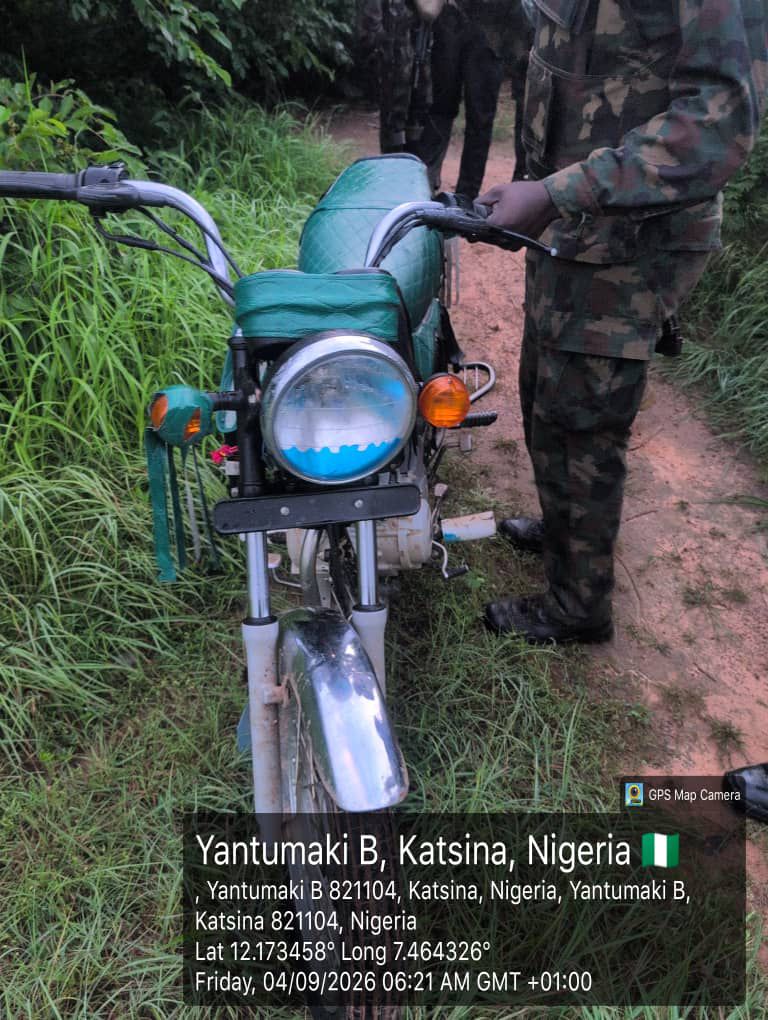
Troops of Sector 1, Joint Task Force North West, Operation Fansan Yamma, have neutralised a terrorist and recovered four motorcycles and other items during a dawn offensive operation in Dan Musa Local Government Area of Katsina State.
The operation was conducted on Sept. 4, 2026, following credible intelligence on the presence of terrorists around the Yantumaki Forest area.
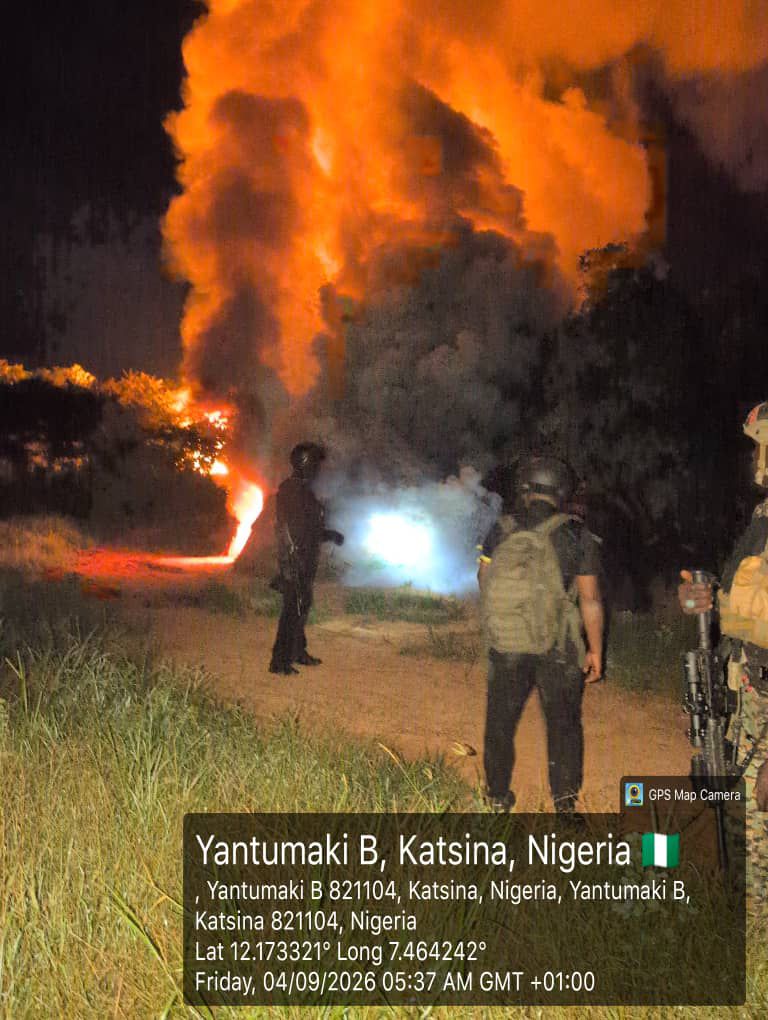
According to security sources, the troops launched a coordinated offensive against the terrorists and engaged them with superior firepower, forcing the surviving elements to flee into the surrounding bushes.
During the subsequent exploitation of the area, the troops confirmed the neutralisation of one terrorist and recovered four motorcycles, one mobile phone and five empty intravenous drip containers.
The recovered medical containers were suspected to have been used in treating wounded terrorists operating in the area.
The operation is part of ongoing efforts by Operation Fansan Yamma to sustain pressure on terrorist networks, degrade their operational capabilities and deny them freedom of movement within the Joint Operations Area.

The theatre has also urged members of the public to continue providing credible and timely information to security agencies to support ongoing operations and facilitate the eradication of terrorist elements across the Joint Operations Area.
Troops neutralise terrorist, recover four motorcycles in Katsina

Suspected militia kill motorcyclist along Nyong-Bodel road in Plateau

Troops launch rescue operation after hospital matron kidnapped in Plateau

Troops neutralise terrorist, recover four motorcycles in Katsina

Roger Federer’s Shock as DNA Results Reveal Myla and Charlene Are Not His Biological Children

THE PLIGHT OF FARIDA

FAILED COUP IN BURKINA FASO: HOW TRAORÉ NARROWLY ESCAPED ASSASSINATION PLOT AMID FOREIGN INTERFERENCE CLAIMS
-
 News2 years ago
Roger Federer’s Shock as DNA Results Reveal Myla and Charlene Are Not His Biological Children
-
Opinions5 years ago
THE PLIGHT OF FARIDA
-
 News1 year ago
FAILED COUP IN BURKINA FASO: HOW TRAORÉ NARROWLY ESCAPED ASSASSINATION PLOT AMID FOREIGN INTERFERENCE CLAIMS
-

 News2 years ago
EYN: Rev. Billi, Distortion of History, and The Living Tamarind Tree
-
 Opinions5 years ago
POLICE CHARGE ROOMS, A MINTING PRESS
-

 ACADEMICS3 years ago
A History of Biu” (2015) and The Lingering Bura-Pabir Question (1)
-

 Columns3 years ago
Army University Biu: There is certain interest, but certainly not from Borno.
-

 Politics1 year ago
2027: Why Hon. Midala Balami Must Go, as Youths in Hawul and Asikira/Uba Federal Constituency Reject ₦500,000 as Sallah Gift
