
News
Buhari, UN pledges to reduce humanitarian effect, as 35 aid providers killed

Buhari, UN pledges to reduce humanitarian effect, as 35 aid providers killed
By Olatunji Omirin
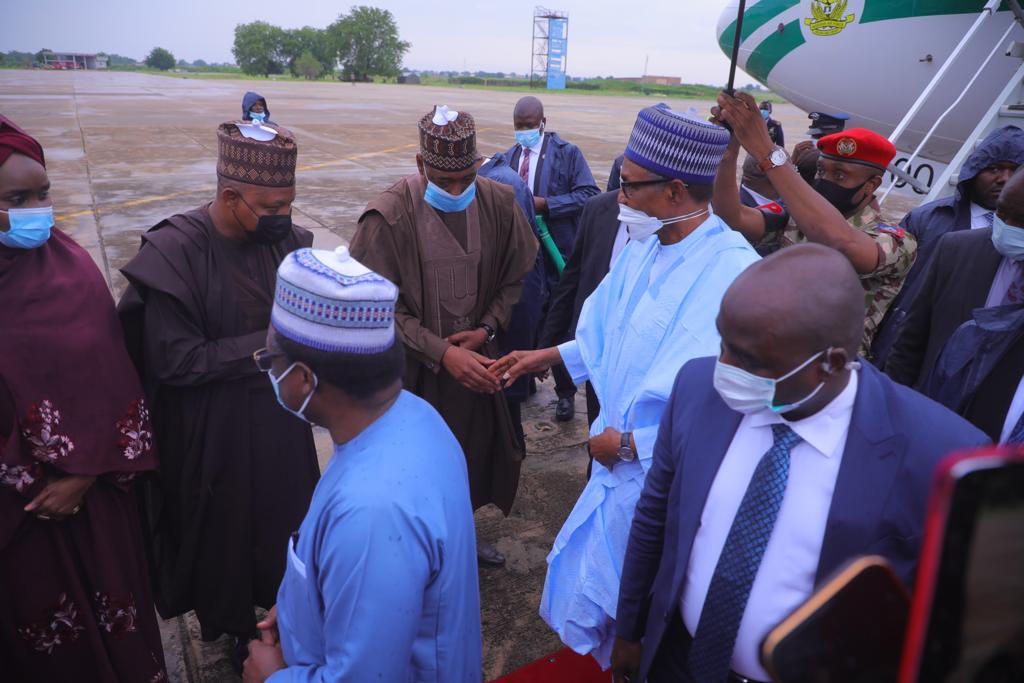
President Muhammadu Buhari has reiterated government’s commitment to reducing the effect of disasters, climate change, insurgency and challenges of Internally Displaced Persons (IDPs).
He directed the Ministry of Humanitarian Affairs, Disaster Management and Social Development and its agencies to address urgent threats posed by explosive remnants in the North East region.
Buhari issued the directive on the occasion of World Humanitarian Day 2022 with theme “IT TAKES A VILLAGE” in Maiduguri on Thursday.
‘‘On this 2022 World Humanitarian Day and every other day, we stand and shall continue to stand in solidarity with humanitarian aid workers and recognize their tremendous service and sacrifice.
”We celebrate their tireless efforts to save lives, preserve human dignity, and alleviate suffering. Their selfless commitment and actions stand as an example to us all.
“I hope to see more of our leaders commitment to humanitarian services, through government at all levels in our efforts to ensure a better life for our people.
On the fight against insurgency, Buhari reiterated his directive to security agencies to take the fight to the hideouts of the criminal elements and ensure ”they are completely eliminated.”
“I therefore implore you, not relent in your efforts to continue to take the fight to their hideout. And ensure they are completely eliminated.
” I implore you to ensure adequate security for farmers in their farming activities; agricultural activities are most needed for settlement and development of rural areas. And this can only be achieved if the farmers are sure of their safery.”he charged.
The president led other guests at the event in Maiduguri to observe a minute of silence in memory of all who lost their lives in disasters and humanitarian workers who died in the line of duty.
The president also thanked the UNDP, the European Union, the government of USA, United Kingdom and Germany, as well as other foreign establishments for their support in complementing the Administration’s effort to stabilize the North East Region.
On her part, the Minister of Humanitarian Affairs, Sadiya Farouq citing figures from Aid Worker Security Database that since 2016, 35 aid workers lost their lives, 22 wounded and 28 kidnapped.
She added that since the beginning of this year, six aid workers were kidnapped in the country.
On the choice of Borno for this year’s event, the minister explained that it was meant to highlight the humanitarian situation and plight of IDPs in the region and to inspire the much needed change.
“It truly takes a village to provide emergency relief, protection and assistance, to build peace and resilience of affected communities, to promote sustainable development and to lift people out of poverty, especially in complex and protracted humanitarian situation.
“Everyone gathered here today represents that community,” she said.
In his welcome address, Gov. Babagana Zulum of Borno said “the state is enjoying relative peace and stability, thanks to the sacrifices of gallant soldiers, security agencies, local vigilantes and the MNJTF.’’
Also, United Nations Resident Coordinator, Matthias Schmale urged all actors to find more effective ways of working together between the humanitarian and the development villages.
“I am encouraged by the opportunities to make a lasting difference in people’s lives, giving them hope for a better future.
“There are areas void of violence and enjoying a degree of stability in the north-east where longer-term and more durable solutions are possible. These locations offer windows of opportunity to focus on activities that increase resilience and self-reliance for displaced people and host communities.
“Such opportunities would not be possible without the dedication and expertise of local actors. Our ‘village’ includes national and local partners with invaluable insight into the needs, preferences, and concerns of affected people, and their work has been key throughout all aspects of the humanitarian response.” Matthias said.
While in Borno, Buhari inaugurated the Bulunkutu Teachers’ Quarters on Airport road and Molai 500 low-cost housing estate for IDPs constructed by the State Government with support of the Federal Government.


Military
Mutiny: Presidential Guard Tightens Security Around Niger Presidency Amid Reports of Military Protest
Mutiny: Presidential Guard Tightens Security Around Niger Presidency Amid Reports of Military Protest
By Zagazola Makama
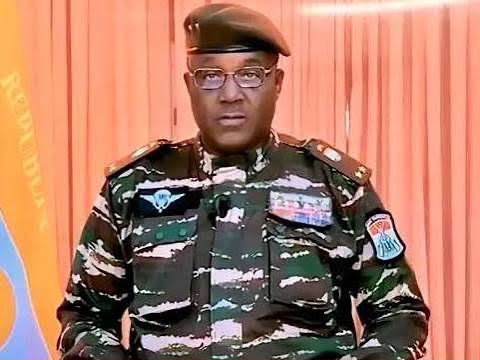
Security was significantly reinforced around Niger’s Presidential Palace in Niamey following reports of unrest involving elements of the country’s armed forces, security sources told Zagazola Makama.
According to multiple security sources, the heightened deployment of the Presidential Guard, supported by armoured vehicles around the Presidential Palace on the night of July 3 and into July 4, followed what was described as a limited protest by personnel of an armoured unit within the Niger Armed Forces (FAN).
The sources said some soldiers reportedly declined deployment to frontline positions in northern Tillabéri Region, particularly around Inatès and Chinagodrar, citing inadequate heavy equipment and insufficient operational resources to confront the growing security threats in the area.
The protest was described by one source as a “small mutiny,” although there has been no official confirmation from the Nigerien authorities.
Security sources said the development triggered concern within the country’s leadership, prompting the reinforcement of security around the Presidential Palace and temporary restrictions on movement in the surrounding area as a precautionary measure.
The Tillabéri Region remains one of Niger’s most volatile security zones, with recurrent attacks by armed extremist groups, including factions linked to the so-called Islamic State in the Greater Sahara (ISGS).
As of the time of filing this report, the Nigerien government and military authorities had not issued any official statement regarding the reported protest or the increased security presence around the Presidency.
The situation remains under close observation.
Mutiny: Presidential Guard Tightens Security Around Niger Presidency Amid Reports of Military Protest
Two suspected criminals arrested during patrol in Plateau
By: Zagazola Makama
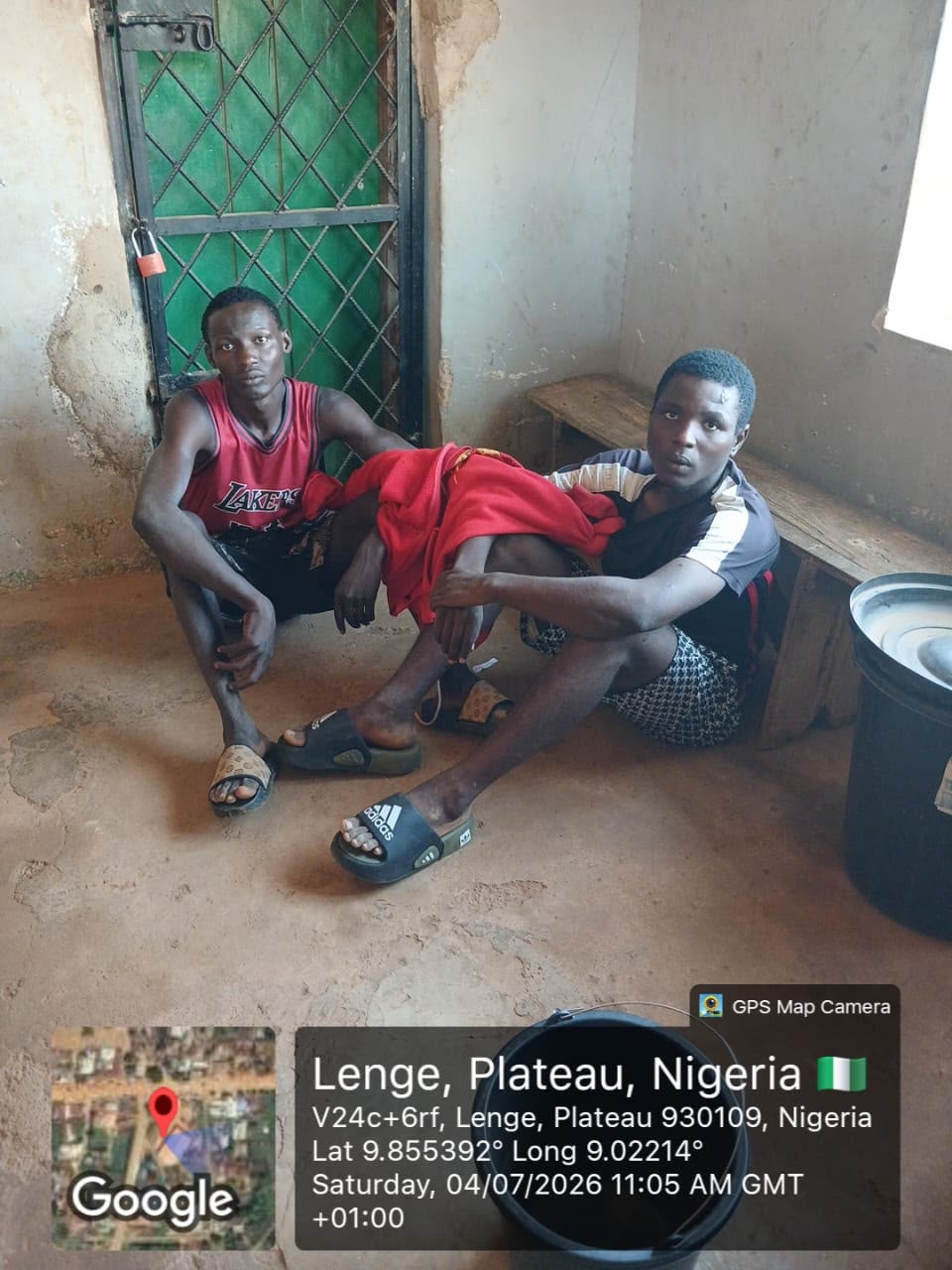
Troops of Sector 1 under Operation Enduring Peace have arrested two suspected criminals during a routine patrol in Jos East Local Government Area of Plateau.
Security sources disclosed that the suspects, identified as Azi Ezekiel, 21, and Ajiji Emmanuel, 19, were apprehended at about 10:30 a.m. on Saturday along the road leading to Forbur Village.
The sources said the suspects were intercepted by troops of Sector 1, Sub-Sector 12, while conducting a routine patrol in the area.
According to the sources, the two suspects have been handed over to the Keystone Police Station in Forbur for further investigation and possible prosecution.
The arrest forms part of ongoing security operations aimed at combating criminal activities and enhancing safety across Plateau State.
Two suspected criminals arrested during patrol in Plateau
Troops arrest suspected kidnapper in Plateau community
By: Zagazola Makama
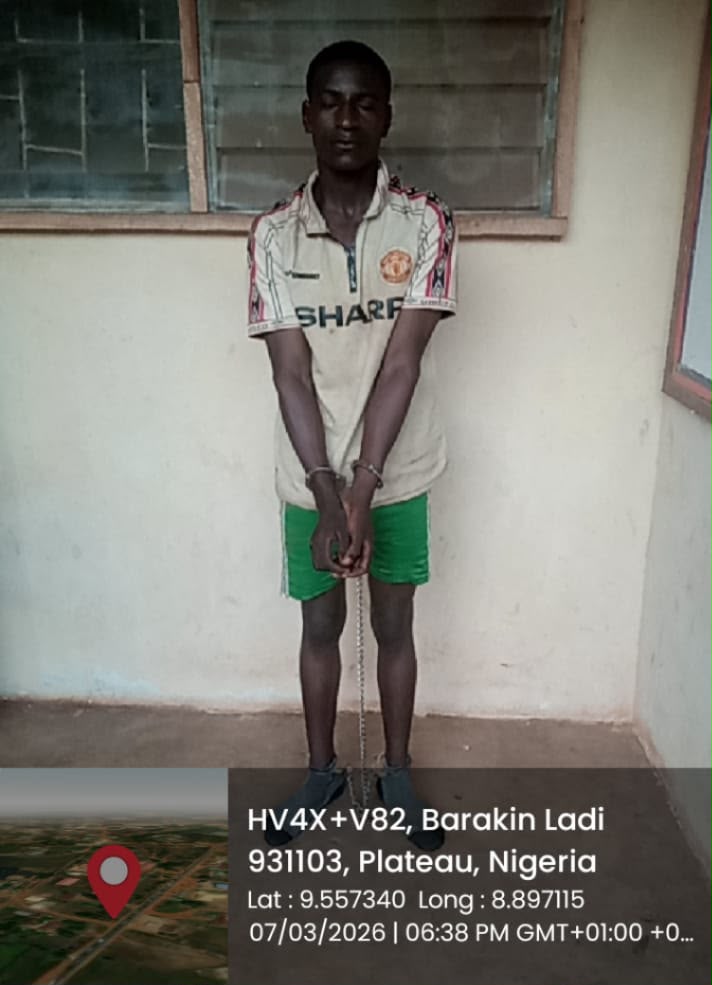
Troops of Sector 4 of Operation Enduring Peace have arrested a suspected kidnapper during a security operation in Barkin Ladi Local Government Area of Plateau.
Security sources said the suspect, identified as Mohamdu Surajo, 29, was arrested at about 6:45 p.m. on Friday at Sabon Layi Village following sustained security operations in the area.
The sources disclosed that the suspect is currently in military custody and is undergoing preliminary interrogation to aid ongoing investigations.
They added that the arrest is part of continued efforts by security forces to dismantle criminal networks and enhance security across Plateau State.
Troops arrest suspected kidnapper in Plateau community

President Tinubu Flags Off the Construction of Dikwa–Gamboru Ngala, Bama–Banki International Road Projects

Mutiny: Presidential Guard Tightens Security Around Niger Presidency Amid Reports of Military Protest

Troops Arrest Two Suspected Berom Militia Linked to NIPSS Attack as Security Sources Say Investigation Supports Earlier Leads

Roger Federer’s Shock as DNA Results Reveal Myla and Charlene Are Not His Biological Children

THE PLIGHT OF FARIDA

FAILED COUP IN BURKINA FASO: HOW TRAORÉ NARROWLY ESCAPED ASSASSINATION PLOT AMID FOREIGN INTERFERENCE CLAIMS
-
 News2 years ago
Roger Federer’s Shock as DNA Results Reveal Myla and Charlene Are Not His Biological Children
-
Opinions4 years ago
THE PLIGHT OF FARIDA
-
 News1 year ago
FAILED COUP IN BURKINA FASO: HOW TRAORÉ NARROWLY ESCAPED ASSASSINATION PLOT AMID FOREIGN INTERFERENCE CLAIMS
-

 News2 years ago
EYN: Rev. Billi, Distortion of History, and The Living Tamarind Tree
-
 Opinions5 years ago
POLICE CHARGE ROOMS, A MINTING PRESS
-

 ACADEMICS2 years ago
A History of Biu” (2015) and The Lingering Bura-Pabir Question (1)
-

 Columns2 years ago
Army University Biu: There is certain interest, but certainly not from Borno.
-

 Politics1 year ago
2027: Why Hon. Midala Balami Must Go, as Youths in Hawul and Asikira/Uba Federal Constituency Reject ₦500,000 as Sallah Gift
