
News
CHRICED Raises Alarm Over Nigeria’s Poor Capital Budget Implementation, Demands Accountability

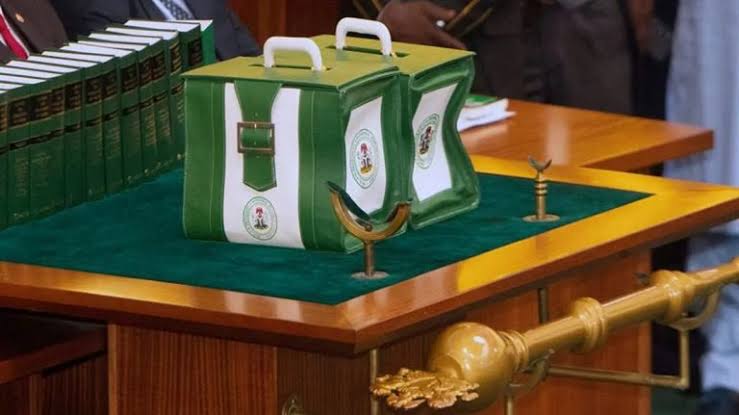
CHRICED Raises Alarm Over Nigeria’s Poor Capital Budget Implementation, Demands Accountability
By: Michael Mike
The Resource Centre for Human Rights and Civic Education (CHRICED) has raised serious concerns over what it described as the Federal Government’s persistent failure to implement the capital components of the national budget, warning that the trend is undermining development and worsening economic hardship for millions of Nigerians.
In a strongly worded statement issued by its Programme Manager, Victor Emejuiwe, the civic organisation said an examination of budget implementation data released by the Budget Office of the Federation reveals a consistent pattern of weak performance in the execution of capital projects.
CHRICED noted that although the Federal Government approved a capital budget of ₦9.9 trillion for the 2024 fiscal year, only ₦5.81 trillion was eventually released for implementation. Out of this amount, ₦3.27 trillion was utilized.
While the figure represents 81.91 percent of the funds released, the organisation argued that the performance is significantly weaker when compared with the total capital allocation approved in the budget, leaving numerous development projects either delayed or abandoned.
According to the group, the situation deteriorated further in 2025, describing the year’s implementation record as “deeply troubling.”
It pointed out that the Budget Office of the Federation has yet to publish the third and fourth quarter budget implementation reports for 2025, despite legal provisions that require regular disclosure of such information.
CHRICED said the limited data currently available shows that out of a projected ₦23.44 trillion capital budget for 2025, only ₦34.32 billion was released during the first quarter, while ₦393.86 billion was released in the second quarter.
The organisation stressed that the combined releases represent less than one percent of the total capital allocation, describing the situation as clear evidence that the country’s capital budgets for both 2024 and 2025 have largely remained unimplemented.
The group warned that the persistent failure to execute capital projects raises serious questions about governance priorities, particularly at a time when citizens are being asked to endure severe economic difficulties in the name of ongoing reforms.
“While Nigerians are facing rising fuel costs, inflation and declining purchasing power following the removal of fuel subsidy, there is little visible progress in the implementation of projects that should stimulate economic growth and improve living standards,” the statement said.
CHRICED argued that the imbalance between capital and recurrent spending has become increasingly pronounced, noting that funds required for government operations and administrative expenses continue to be released promptly, while development projects remain underfunded.
According to the organisation, the consequences of this imbalance are already evident in deteriorating infrastructure, struggling public services, and declining confidence in government institutions.
The group further warned that the country’s key sectors—including education, healthcare and electricity—are suffering from prolonged underinvestment, even as poverty levels remain high and unemployment continues to rise.
It also expressed concern that the approach of the 2027 Nigerian general elections could worsen the situation, cautioning that political calculations may begin to overshadow governance priorities.
CHRICED said there is a real risk that resources intended for development projects could be redirected toward political activities, a development it said would deepen corruption, accelerate inflationary pressures and further erode public trust in government.
The organisation also criticised the perceived silence of the National Assembly of Nigeria, saying the legislature must demonstrate stronger oversight to ensure that budget approvals translate into tangible development outcomes.
“The failure of the legislature to aggressively interrogate these recurring lapses raises serious concerns about its commitment to protecting the public interest and ensuring accountability in the management of national resources,” the group stated.
Against this backdrop, CHRICED called for a comprehensive audit of all capital allocations and releases from 2023 to 2026 to determine how public funds have been managed and whether approved projects have been executed.
The organisation also demanded the immediate publication of the outstanding 2025 budget implementation reports in accordance with the provisions of the Fiscal Responsibility Act (Nigeria).
In addition, it urged public officials planning to contest political positions ahead of 2027 to demonstrate transparency and accountability in the management of public resources.
CHRICED further called on citizens and civil society groups to remain vigilant and actively demand responsible governance, stressing that sustainable development cannot be achieved without transparency, fiscal discipline and effective implementation of national budgets.
CHRICED Raises Alarm Over Nigeria’s Poor Capital Budget Implementation, Demands Accountability


Military
COAS commissions 6 Division RSM House, reaffirms frontline leadership role of regimental sergeant majors
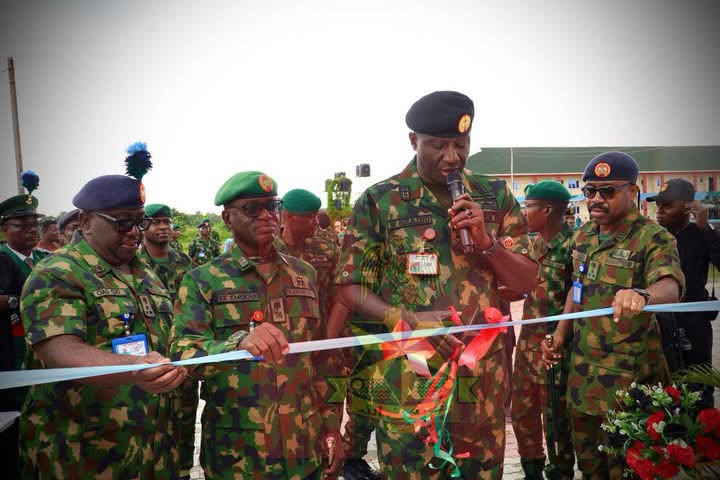
COAS commissions 6 Division RSM House, reaffirms frontline leadership role of regimental sergeant majors
By Zagazola Makama
The Chief of Army Staff (COAS), Lieutenant General Waidi Shaibu, has reaffirmed the critical role of Regimental Sergeant Majors (RSMs) in strengthening discipline, leadership and operational effectiveness across the Nigerian Army.
The COAS made the remarks on Friday during the commissioning of the newly constructed 6 Division Regimental Sergeant Major’s House in Port Harcourt as part of activities marking the 163rd Nigerian Army Day Celebration (NADCEL 2026).
Speaking at the event, Lt.-Gen. Shaibu described RSMs as the backbone of regimental administration and custodians of discipline, standards and morale within the Army.
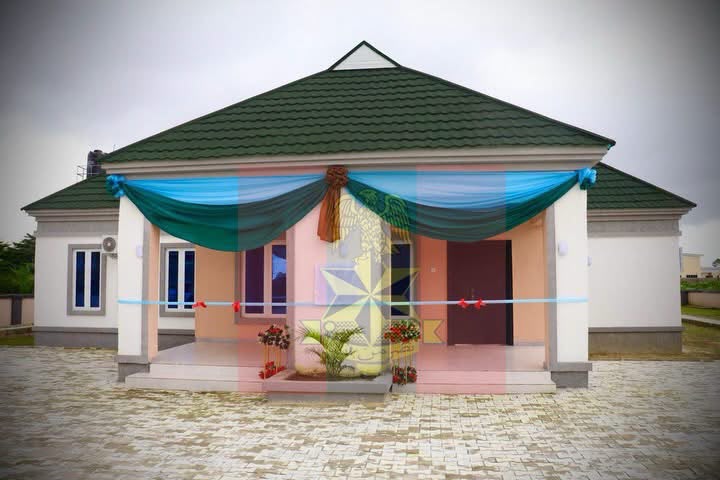
He said the provision of dedicated accommodation for RSMs was not merely a welfare initiative but a strategic investment aimed at enhancing leadership at the unit level and improving operational efficiency.
According to the Army Chief, RSMs play a vital role in translating command directives into action, maintaining troop cohesion and ensuring effective implementation of operational orders across various theatres of operation.
He added that the senior non-commissioned officers also serve as the crucial link between officers and soldiers, fostering professionalism, mutual trust and esprit de corps within formations and units.
Shaibu noted that the influence of RSMs in mentoring soldiers, enforcing discipline and sustaining troop morale remains indispensable to the success of military operations.
He stressed that providing conducive accommodation for key regimental leaders would enhance their ability to discharge their responsibilities effectively and contribute to improved operational readiness.
The COAS reiterated that under his “Soldier First” philosophy, the welfare of personnel, particularly those occupying critical leadership positions, remains a top priority.
He maintained that sustained investment in welfare infrastructure and leadership development would continue to strengthen the Nigerian Army’s capacity to remain a resilient, professional and combat-ready force capable of addressing the country’s evolving security challenges.
COAS commissions 6 Division RSM House, reaffirms frontline leadership role of regimental sergeant majors
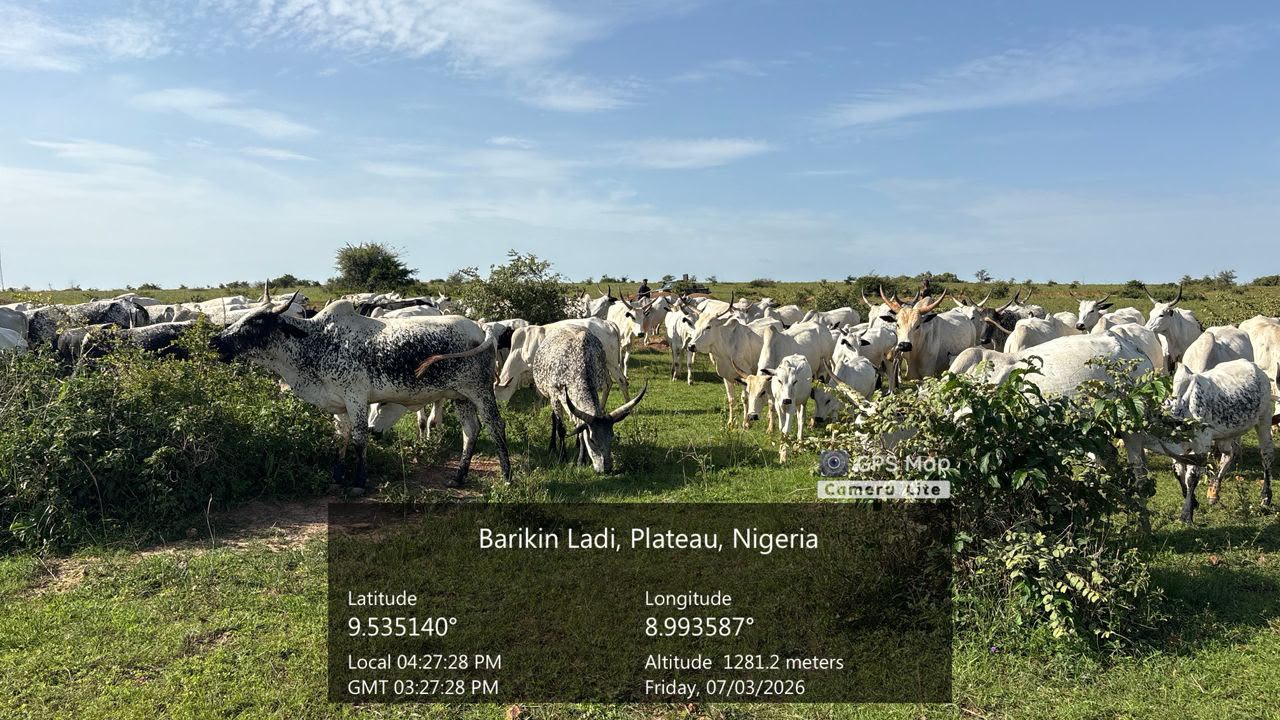
Troops intercept cattle grazing in restricted area in Plateau, herders flee
By: Zagazola Makama
Troops of Operation Enduring Peace (OPEP) have intercepted a herd of cattle found grazing in a restricted area in Barkin Ladi Local Government Area of Plateau State.
Intelligence sources told Zagazola Makama that the troops of Sector 4 OPEP responded to a report of illegal grazing at about 3:30 p.m. on Friday in Nyerwie village.
The sources said that upon arrival at the location, the troops found a herd of cattle grazing in the restricted area.
The herders reportedly fled into nearby bushes on sighting the troops, abandoning the livestock.
The intercepted cattle were subsequently moved to a secure location for necessary administrative action, while efforts are ongoing to identify and apprehend the fleeing herders, the sources said.
Troops intercept cattle grazing in restricted area in Plateau, herders flee
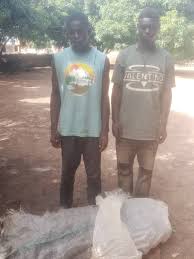
Troops Arrest Two Suspected Vandals, Recover Stolen Construction Materials in Jos
By: Zagazola Makama
Troops of Operation Enduring Peace (OPEP) have arrested two suspected vandals in Jos North Local Government Area of Plateau State for allegedly stealing construction materials from an ongoing road construction site.
Security sources said the suspects, identified as Arin Itse, 21, and Agwom Christopher, 19, were arrested at about 9:30 a.m. on Friday during a routine patrol by troops of Sector 1, Sub-Sector 12, along the Kwanga road in Jos North.
The sources said the suspects were intercepted while in possession of iron rods suspected to have been stolen from a road construction company handling an ongoing project in the area.
According to the sources, the suspects were taken into custody for further investigation, while the recovered iron rods were handed over to the construction company.
The sources added that investigations were ongoing to determine the circumstances surrounding the alleged theft and whether other persons were involved.
Troops Arrest Two Suspected Vandals, Recover Stolen Construction Materials in Jos

COAS commissions 6 Division RSM House, reaffirms frontline leadership role of regimental sergeant majors

Troops intercept cattle grazing in restricted area in Plateau, herders flee

Troops Arrest Two Suspected Vandals, Recover Stolen Construction Materials in Jos

Roger Federer’s Shock as DNA Results Reveal Myla and Charlene Are Not His Biological Children

THE PLIGHT OF FARIDA

FAILED COUP IN BURKINA FASO: HOW TRAORÉ NARROWLY ESCAPED ASSASSINATION PLOT AMID FOREIGN INTERFERENCE CLAIMS
-
 News2 years ago
Roger Federer’s Shock as DNA Results Reveal Myla and Charlene Are Not His Biological Children
-
Opinions4 years ago
THE PLIGHT OF FARIDA
-
 News1 year ago
FAILED COUP IN BURKINA FASO: HOW TRAORÉ NARROWLY ESCAPED ASSASSINATION PLOT AMID FOREIGN INTERFERENCE CLAIMS
-

 News2 years ago
EYN: Rev. Billi, Distortion of History, and The Living Tamarind Tree
-
 Opinions5 years ago
POLICE CHARGE ROOMS, A MINTING PRESS
-

 ACADEMICS2 years ago
A History of Biu” (2015) and The Lingering Bura-Pabir Question (1)
-

 Columns2 years ago
Army University Biu: There is certain interest, but certainly not from Borno.
-

 Politics1 year ago
2027: Why Hon. Midala Balami Must Go, as Youths in Hawul and Asikira/Uba Federal Constituency Reject ₦500,000 as Sallah Gift
