
News
Continuous training key to successful fight against drug cartels – Marwa


Continuous training key to successful fight against drug cartels – Marwa
By: Michael Mike
The importance of training in tackling the scourge of drug trafficking has been emphasised by the Chairman/Chief Executive Officer of the National Drug Law Enforcement Agency (NDLEA), Brig. Gen. Buba Marwa (rtd).
Marwa stated this on Friday at the closing ceremony of a two-week training sponsored by the German government for NDLEA officers on combating international drug trafficking.
The closing ceremony, held at the agency’s national headquarters was attended by top management team of the agency and a team of German instructors led by a representative of the German embassy in Nigeria.
Speaking at the occasion, Marwa said: “To tackle the drug challenge, the number one priority, obviously, is the professionalism of the human resources, which you can only achieve through training. Unless personnel are properly equipped with training, they cannot do their job. That is the more reason we are emphasizing the training of our personnel.”
The two-week training organised by the German Federal Criminal Police Office, otherwise known as Bundeskriminalamnt (BKA) covered core areas including principles of crime scene investigations and training in West Africa Police Investigation System (WAPIS). The 23 participants, drawn from various departments of the agency, were engaged in classroom work, presentations and practical exercises for the duration of the programme.
The representative of the German embassy, Ms. Uduak Abasi Akpabio said: “The federal foreign office funding of this programme is part of the German government’s greater engagement in police reforms and security sector reform more generally. Our support reflects the German government’s commitment to fostering stability, especially as it pertains to addressing the menace of international drug trafficking.”
She further appreciated the work of the NDLEA which she described as “a critical pillar in safeguarding Nigeria’s stability, security and wellbeing of its citizens”, adding that: “By investing in the capacity of these officers, you have strengthened not only Nigeria’s fight against drug trafficking but also the global framework for combating this menace.”
Marwa, while appreciating the German government’s gesture, said: “We appreciate deeply the gesture of supporting the NDLEA with the right training for combating international drug trafficking. It’s a collaborative effort now. Because the drug terrain is international.”
He noted that the canine unit supplied and funded by the Germans has been very effective in critical cases such as the discovery of the Captagon shipment in Lagos Port in 2021.
He said: “To those who have been trained today, congratulations. You are quite lucky to receive this calibre of training from the BKA, one of the world’s most efficient institutions on criminal policing. You have to remember that German training in any respect is at its peak globally. Count yourselves lucky that you are beneficiaries of training from BKA and you have to take full advantage of it and let’s see it on the ground. We also, in time, take full advantage of this training to also train others in the skills that you have acquired.”
The ceremony featured the presentation of certificates to the participants.
The BKA liaison officer in Nigeria, Dominik Muller presented a donation of kits and resources for substance test to the agency, while the NDLEA also presented plaques and mementos to the trainers in appreciation of their efforts.


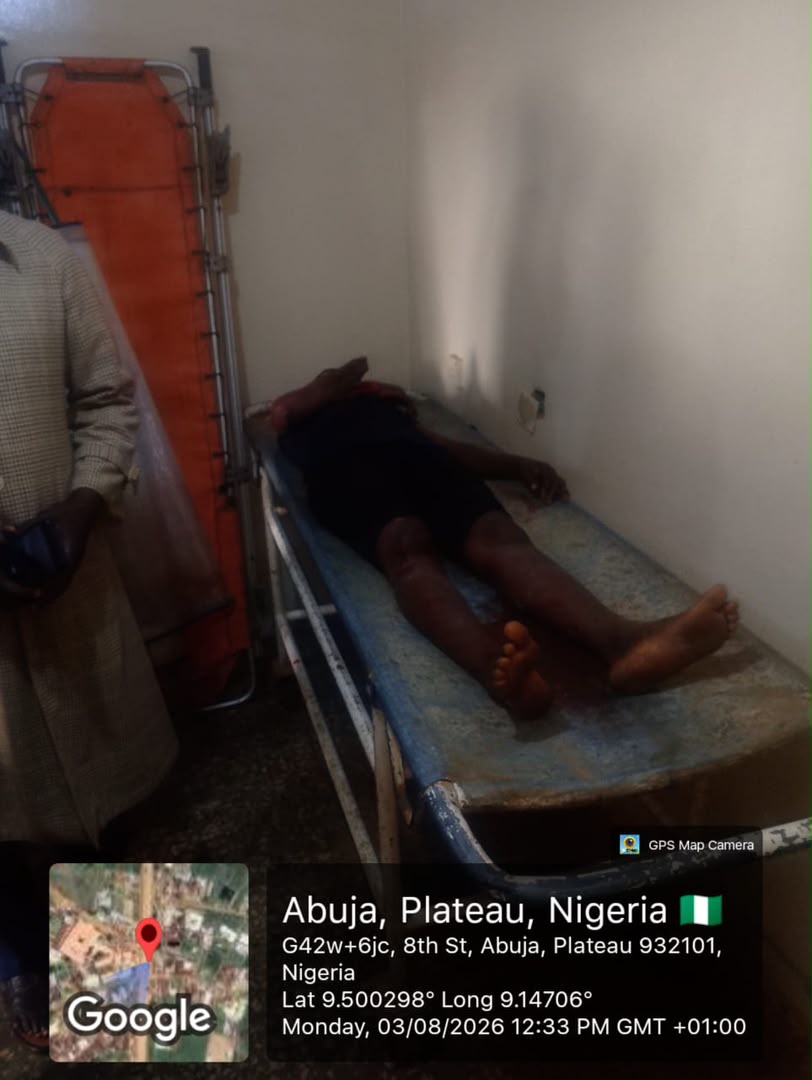
Woman Killed, Another Injured in Attack While Fetching Firewood in Plateau’s Mangu
By Zagazola Makama
One woman has been killed and another injured after suspected armed Fulani herders attacked two female villagers who had gone into the bush to fetch firewood in Mangu Local Government Area of Plateau State.
Intelligence sources told Zagazola Makama that the incident occurred at about 10:45 a.m. on Aug. 3 at Aloghom Village in Mangu LGA.
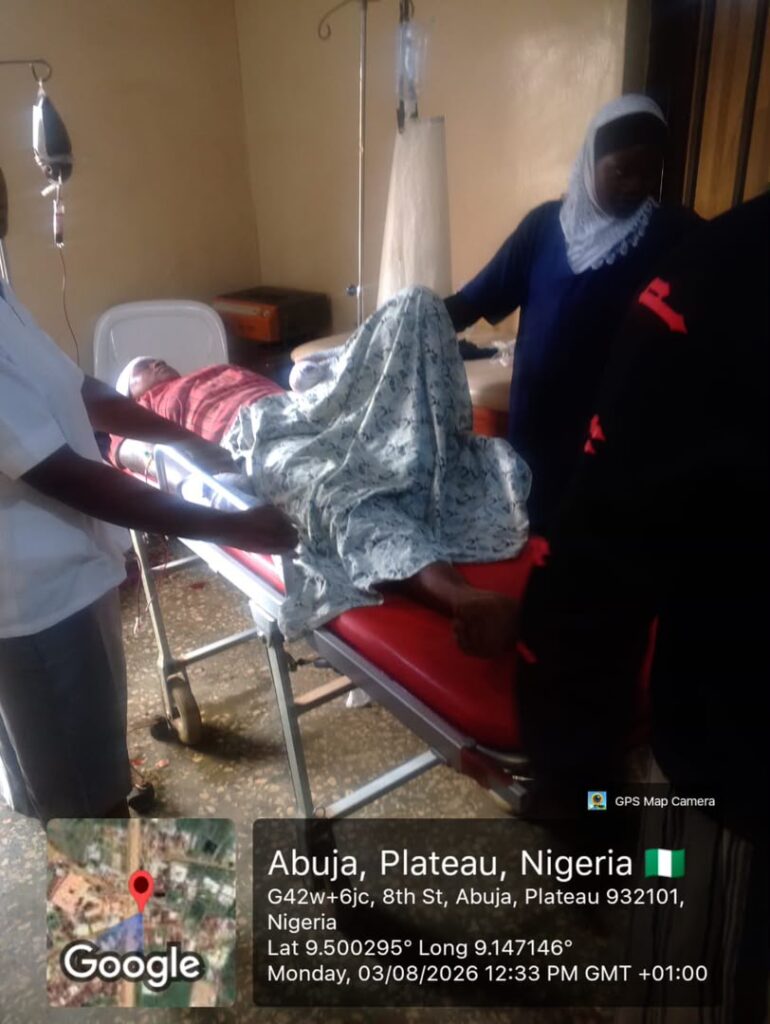
The sources said troops of Sector 8, Operation Enduring Peace (OPEP) swiftly responded to a distress call and moved to the scene, forcing the suspected attackers to flee before they could inflict further harm.
During a search of the area, the troops found the two victims, identified as Mrs. Priscilia Friday and Anna Obed Joseph, both with varying degrees of injuries.
The victims were immediately evacuated to Allah Nakowa Hospital for emergency treatment. However, medical personnel later confirmed Mrs. Priscilia Friday dead, while Anna Obed Joseph is receiving treatment.
Security sources said troops have intensified efforts to track down and apprehend the fleeing suspects, while patrols have been reinforced around the affected community to prevent further attacks.
The latest incident adds to the growing wave of violence in parts of Mangu Local Government Area, where security forces have continued to respond to attacks on civilians, livestock and farmlands amid ongoing efforts to prevent further escalation of the crisis.
Woman Killed, Another Injured in Attack While Fetching Firewood in Plateau’s Mangu
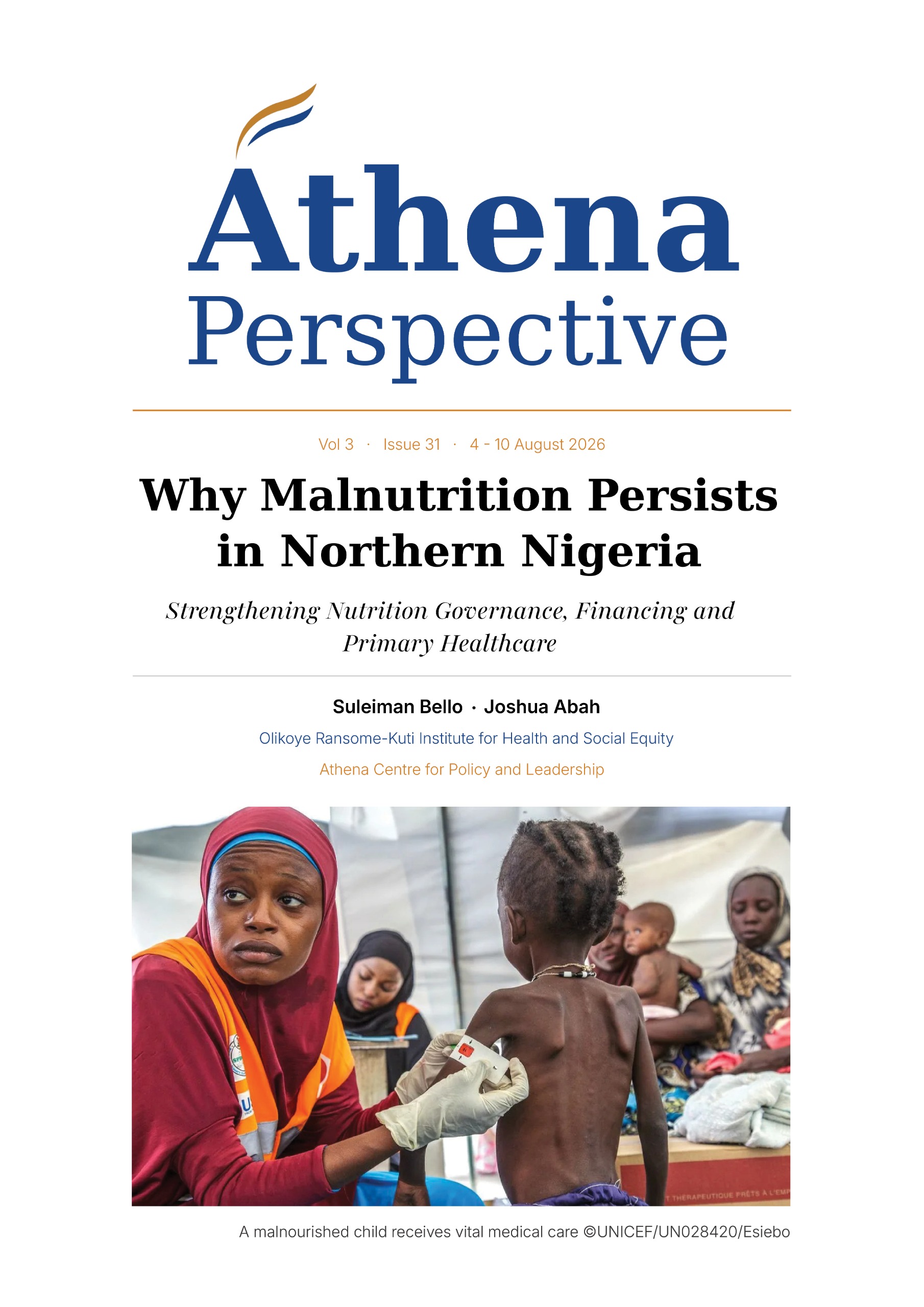
Governance Failures Fuel Northern Nigeria’s Child Malnutrition Crisis, Athena Centre Warns
By: Michael Mike
The Athena Centre for Policy and Leadership has blamed weak governance, poor financing and lack of institutional accountability for the persistent child malnutrition crisis in Northern Nigeria, warning that millions of children remain trapped in a cycle of hunger despite years of government nutrition policies and interventions.
In a new policy report released on Wednesday in Abuja, titled Why Malnutrition Persists in Northern Nigeria: Strengthening Nutrition Governance, Financing and Primary Healthcare, the Centre argued that Nigeria’s nutrition challenge is no longer primarily a policy problem but a governance failure that continues to undermine efforts to improve child health.
The report painted a grim picture of the country’s nutrition indicators, revealing that 40 per cent of Nigerian children under the age of five are stunted, eight per cent are wasted, while 27 per cent are underweight, with the situation considerably worse across the northern region.
According to the report, stunting affects 46.3 per cent of children in Katsina, 43.8 per cent in Sokoto and 42.6 per cent in Zamfara in the North-West. In the North-East, child food poverty affects 67 per cent of children in Borno, 66 per cent in Yobe and 60 per cent in Adamawa, underscoring the severity of the crisis.
The report also cited data from the World Food Programme showing that over 17 million people across nine conflict-affected northern states are currently experiencing crisis, emergency or catastrophic levels of hunger.
Authored by Dr. Suleiman Bello and Joshua Abah, the report acknowledged that Nigeria has developed several nutrition policies and identified proven interventions over the years, but noted that public institutions have consistently failed to translate those commitments into effective service delivery at community, ward, health facility and state levels.
It identified the absence of clear institutional leadership and accountability mechanisms linking nutrition financing, primary healthcare, agriculture, social protection and local implementation structures as major obstacles to reducing child malnutrition.
The report further criticised what it described as a reactive approach to nutrition management, arguing that government interventions are often activated only after children become severely malnourished rather than focusing on preventive measures during pregnancy and the crucial first 1,000 days of a child’s life.
To reverse the trend, the Athena Centre proposed four major reforms aimed at strengthening governance and accountability.
It recommended making verified nutrition preparedness a condition for accessing performance financing under the Basic Health Care Provision Fund in high-burden areas.
The Centre also called for the publication of a quarterly nutrition compliance ledger detailing budget releases, procurement of nutrition commodities, health facilities supplied, wards covered and outstanding government obligations.
In addition, it urged northern states to establish a lead nutrition accountability institution with authority to coordinate activities across the health, agriculture, water and sanitation, social protection, finance and humanitarian sectors.
The report also advocated strengthening Ward Development Committees to serve as frontline structures for identifying vulnerable mothers and children before malnutrition becomes life-threatening.
According to the report, nutrition must be treated as a measurable government responsibility rather than a humanitarian intervention triggered only after crises become visible.
It concluded with a stark warning: “A child should not have to become visibly wasted before the state becomes visible.”
Northern Nigeria has for years recorded some of the highest rates of child malnutrition in Africa, driven by a combination of armed conflict, displacement, widespread poverty, climate shocks, food insecurity and weak healthcare systems.
Despite successive national nutrition strategies and increased support from development partners, implementation gaps, inadequate funding, poor coordination among government institutions and weak monitoring systems have continued to limit progress, leaving millions of children vulnerable to preventable illness, impaired cognitive development and premature death.
The Athena Centre’s report adds to growing calls for governments at all levels to prioritise nutrition governance, improve accountability for public spending and strengthen primary healthcare as Nigeria works towards achieving the Sustainable Development Goals on hunger, health and child survival.
Governance Failures Fuel Northern Nigeria’s Child Malnutrition Crisis, Athena Centre Warns
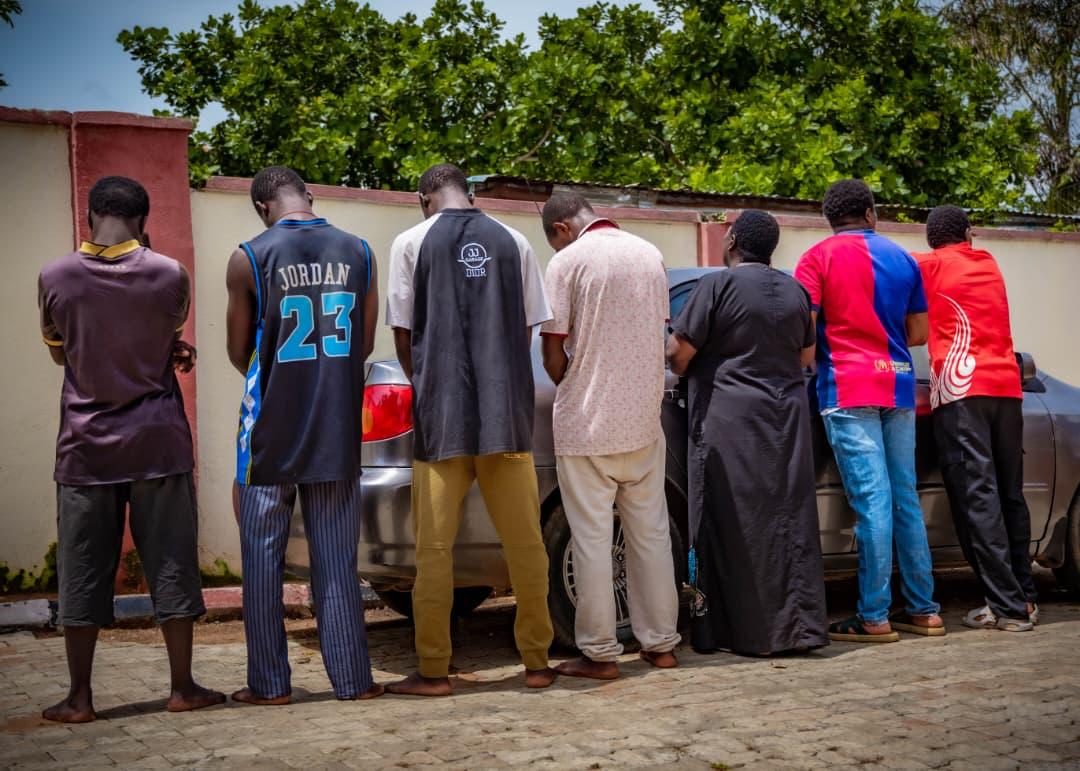
NSCDC Dismisses Officers, Sanctions 79 Personnel, Busts Illegal Arms Ring
By: Michael Mike
The Nigeria Security and Civil Defence Corps (NSCDC) has announced one of its most sweeping internal disciplinary actions in recent years, sanctioning 79 personnel for various acts of professional misconduct while simultaneously arresting 12 suspects over alleged illegal arms dealing and vandalism of critical national infrastructure.
The measures, announced on Wednesday by the Commandant General of the Corps, Professor Ahmed Audi, underscore what the NSCDC described as a renewed commitment to institutional accountability, discipline and the protection of national assets amid rising security challenges.
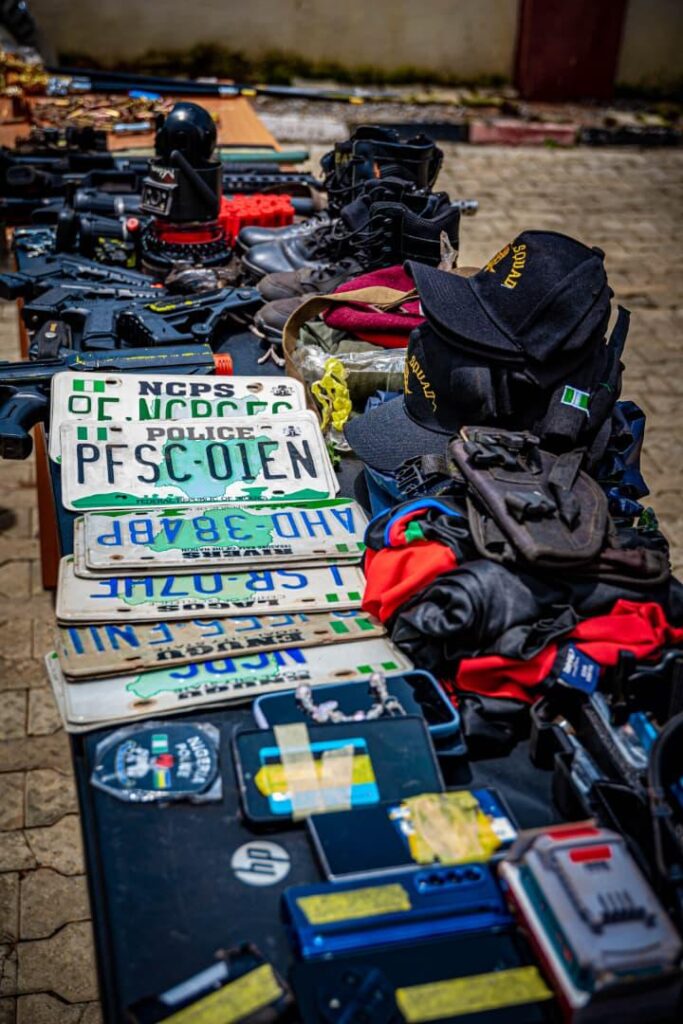
According to the Corps, disciplinary proceedings concluded under the Public Service Rules and the NSCDC Conditions of Service affected 75 personnel, comprising one Assistant Commandant General (ACG), two Deputy Commandants (DCs), 35 other senior officers and 37 junior officers.
The offences ranged from job racketeering, financial misconduct and theft to absenteeism without leave and acts considered prejudicial to national security.
The Corps said sanctions imposed include dismissal from service, compulsory retirement and recommendations for criminal prosecution where criminal liability was established.
Among the most serious cases was the February 18, 2026 operational incident at Rafin Gabas in Kokona Local Government Area of Nasarawa State, during which the Commander of the NSCDC Mining Marshals in the area, Levi Agada, was killed.
Investigations, according to the Corps, found that two officers—Hosea Habila and Jibrin Labaran—engaged suspected illegal miners with firearms without authorisation during the operation. Both officers have been dismissed from service and recommended for criminal prosecution.
The NSCDC also disclosed that four officers are currently facing separate disciplinary proceedings over alleged involvement in illegal arms dealing.
The officers are Superintendent Tesie Victor Nnamdi of the Enugu State Command, Assistant Superintendent II Okwuruinya Uchenna and Assistant Superintendent II Obaji Sampson, both of the Ebonyi State Command, while Superintendent Achor Favour of the Nasarawa State Command is undergoing administrative disciplinary proceedings over allegations relating to the mistreatment and negligence of a teenage domestic worker, Mercy Hajara Muhammad.
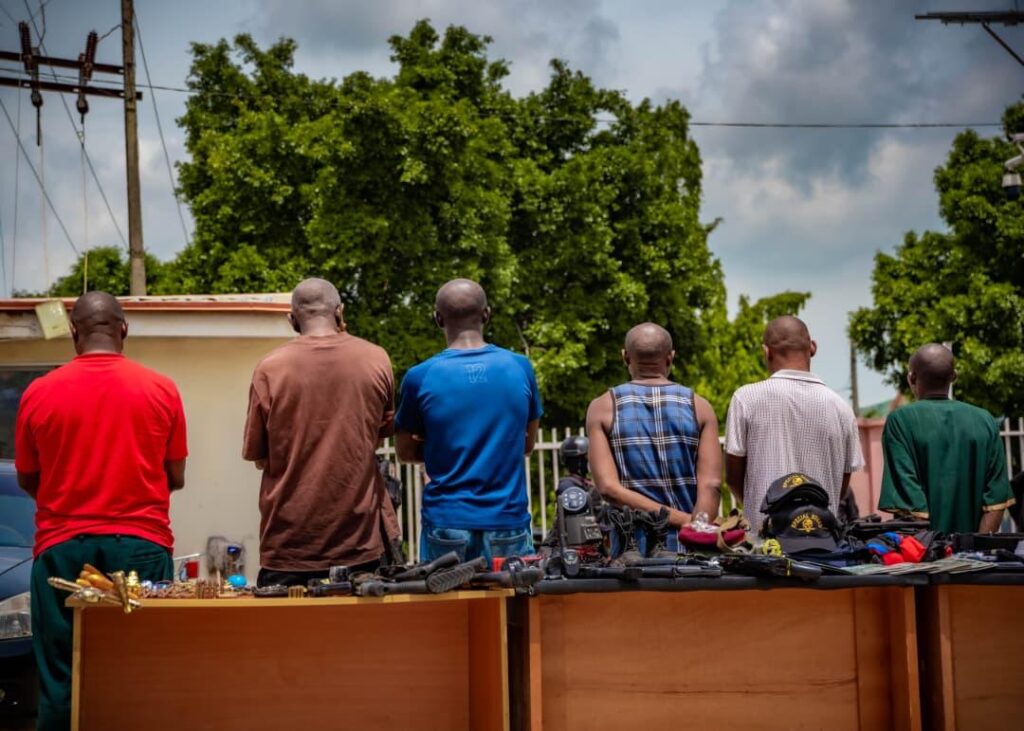
In a related operation, the Commandant General’s Special Intelligence Squad (CG’S SIS) arrested nine suspects across Ebonyi, Enugu, Kogi, Niger states and the Federal Capital Territory for alleged involvement in illegal firearms and ammunition trafficking.
Those arrested include Friday Nnanna Ujor, Chika Sampson Nwozaku, Nnanna Ujor Chinasa, Nnanna Fountain, Nnanna Abundant Ifechukwu, as well as three serving NSCDC officers identified as Tesie Victor Nnamdi, Okwuruinya Uchenna and Obaji Sampson.
The Corps also reported breakthroughs in its campaign against the vandalism of critical national assets and infrastructure.
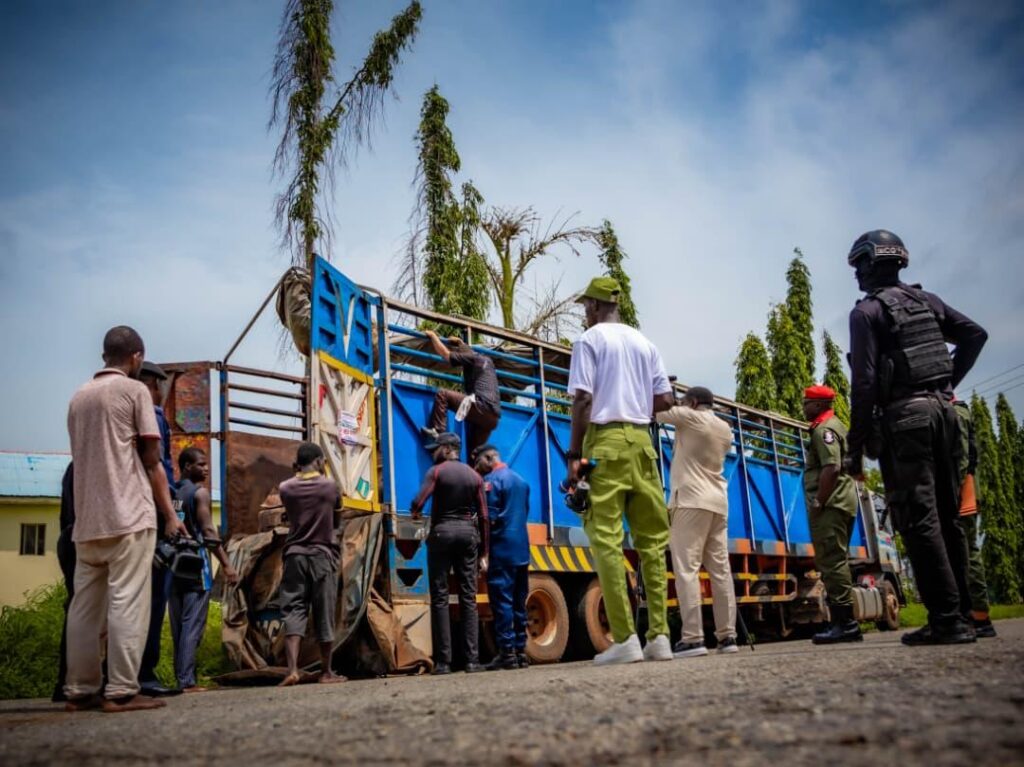
It said operatives intercepted six suspects allegedly transporting a trailer-load of vandalised railway sleepers at Sabon Wuse on July 25, 2026.
The stolen railway materials were concealed inside a blue DAF trailer bearing registration number ZAR 618 XT.
In another operation, two suspected members of a vandalism syndicate, Raphael Danjuma and Isaac Zegbe, were arrested over the alleged destruction and theft of electrical cables in Gwagwalada Area Council of the Federal Capital Territory.
Speaking on the development, Audi said the disciplinary actions demonstrate the Corps’ resolve to maintain professionalism and ensure that officers who undermine public confidence are held accountable.
He stressed that the misconduct of a few personnel should not overshadow the dedication and integrity of the overwhelming majority of NSCDC officers serving across the country.
The Corps further noted that all affected personnel and suspects remain entitled to due process as administrative and criminal proceedings continue.
The latest crackdown comes as security agencies intensify efforts to combat illegal mining, arms trafficking and the vandalism of critical infrastructure, crimes that have increasingly threatened Nigeria’s economic assets, public utilities and national security.
The NSCDC urged Nigerians to remain vigilant and continue providing credible intelligence to security agencies to help safeguard critical national infrastructure and strengthen internal security.
NSCDC Dismisses Officers, Sanctions 79 Personnel, Busts Illegal Arms Ring

Troops Impound 28 Livestock Over Illegal Grazing, Farm Destruction in Plateau’s Mangu

Woman Killed, Another Injured in Attack While Fetching Firewood in Plateau’s Mangu

Governance Failures Fuel Northern Nigeria’s Child Malnutrition Crisis, Athena Centre Warns

Roger Federer’s Shock as DNA Results Reveal Myla and Charlene Are Not His Biological Children

THE PLIGHT OF FARIDA

FAILED COUP IN BURKINA FASO: HOW TRAORÉ NARROWLY ESCAPED ASSASSINATION PLOT AMID FOREIGN INTERFERENCE CLAIMS
-
 News2 years ago
Roger Federer’s Shock as DNA Results Reveal Myla and Charlene Are Not His Biological Children
-
Opinions4 years ago
THE PLIGHT OF FARIDA
-
 News1 year ago
FAILED COUP IN BURKINA FASO: HOW TRAORÉ NARROWLY ESCAPED ASSASSINATION PLOT AMID FOREIGN INTERFERENCE CLAIMS
-

 News2 years ago
EYN: Rev. Billi, Distortion of History, and The Living Tamarind Tree
-
 Opinions5 years ago
POLICE CHARGE ROOMS, A MINTING PRESS
-

 ACADEMICS2 years ago
A History of Biu” (2015) and The Lingering Bura-Pabir Question (1)
-

 Columns2 years ago
Army University Biu: There is certain interest, but certainly not from Borno.
-

 Politics1 year ago
2027: Why Hon. Midala Balami Must Go, as Youths in Hawul and Asikira/Uba Federal Constituency Reject ₦500,000 as Sallah Gift
