
News
Council elections take place in Borno as Zulum votes at at his country home

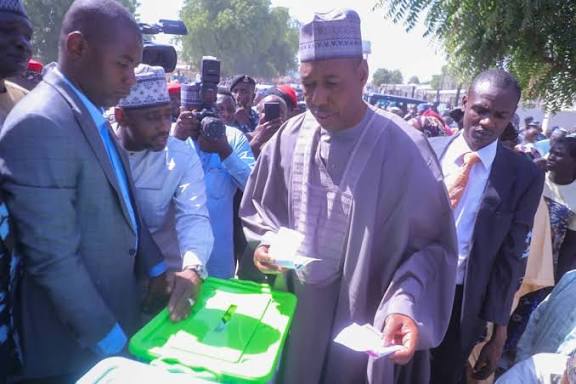
Council elections take place in Borno as Zulum votes at at his country home
By: Bodunrin Kayode
Governor Babagana Zulum has voted in today’s council election which took place in the 27 council areas of the state.
The Governor who voted at Ajari two polling unit 006 in Mafa central Ward, headquarters of Mafa council area cast his vote at about 12.23pm this afternoon.
Professor Zulum, cast his vote at this years Council election held across the 27 Local Government Areas and 312 political wards in Borno State today Saturday.
The election was contested by six political parties, including the All Progressives Congress (APC), the Peoples Democratic Party (PDP), the New Nigeria People’s Party (NNPP), the Social Democratic Party (SDP), the Labour Party (LP), and the People’s Redemption Party (PRP).
Speaking after casting his vote, Governor Zulum expressed satisfaction with the turnout in the council election which should produce new chairmen before the next general election in 2027.
“You have seen the turnout, you know this is my hometown. So, my general assessment of the process is good. It is expected that the 2027 election will also be well.
“This is a litmus test, and Insha Allah, in 2027, APC will win from the President down to each member of the state Assembly. Borno is the home of APC, more so, I am a son of this town,” Zulum stated.
Meanwhile Senator representing Borno Central senatorial district, Kaka Shehu described the Borno State local council election as credible.
He described the election as transparently clean and rancour-free adding that: “I must commend the State Independent Electoral Commission for conducting a well-organized election, and the security agencies for enduring security, peace and order at all the polling units and across my senatorial district,”
Senator Lawal, while assessing the conduct of the poll after casting his vote at his Lawan Asheik Alhaji Sadiq polling unit, Shehuri South Ward, Maiduguri metropolis told newsmen that he was impressed with the conduct of the election.
“I’m also impressed with the voter turnout, in spite of the hard times, which shows that the electorate are committed to genuine democratic governance in Borno State and Nigeria adding that “for me, the election is credible.”
Reps member, Abdulkadir Rahis, who voted at his Wakil Hassan polling unit, Gwange one ward, Maiduguri metropolis, told newsmen that he was impressed about the rancour-freeness of the election coupled with the peaceful and tranquil atmosphere which prevailed across his constituency.
Both NASS members expressed confidence that the pending 2027 general elections would also credible and rancour-free.
Also speaking to newsmen, the Deputy National Chairman (DNC) North of the ruling All Progressives Congress, APC, Ali Dalori expressed satisfaction with the impressive voter turnout witnessed during the elections.
He described the exercise as a clear sign of public trust in the democratic process, rule of law and grassroot inclusivity.
The APC Chieftain commended the orderly conduct of voters across the state and praised their commitment to peaceful participation.
He told reporters soon after he casted his vote at the Dalori/Wanori Primary School, Kajeri polling unit in Konduga council area of the state that he was excited at the defiance of people across the state against existing security threats by insurgents.
Dalori said that, although his office in Abuja was preoccupied with a lot of schedule duties, but as a grassroot politician, he had to move to the state, to exercise his franchise at his polling unit by electing credible leaders who would continue to complement efforts of Governor Babagana Zulum in providing dividends of democracy to the local communities.
His words: ” Let me use this medium to express satisfaction with the impressive voter turnout witnessed during the Borno State local government elections. It is a clear sign of public trust in the democratic process, rule of law and grassroots inclusivity.
“In my polling unit, the massive participation reflects citizens’ growing confidence in democratic governance. I wish all contestants success.
” I commend Members of the State Electoral Body, security agencies and other stakeholders for their unwavering commitment which led to the orderly conduct of voters across the state.
He however expressed optimism that his party, the APC will come out victorious in all elective positions such as the Chairmanship and Councillorship across the 27 local government areas, considering the numerous people- oriented projects executed by the present administration.
This reporter recalls that, the main opposition party in the state, the Peoples Democratic Party (PDP) pulled out from the exercise claiming that their efforts were fruitless as the state is already a one party state.
Council elections take place in Borno as Zulum votes at at his country home


Troops Arrest Three Suspected Cattle Rustlers in Borno
By: Zagazola Makama
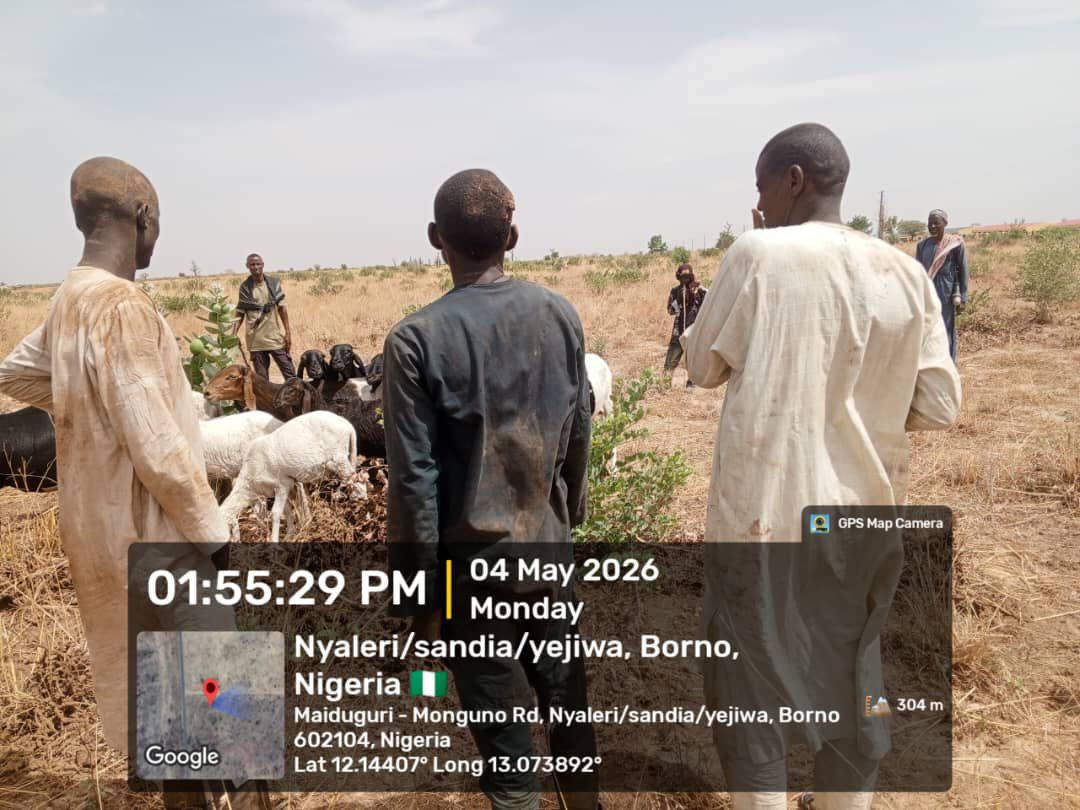
Troops of 212 Battalion deployed at Forward Operating Base (FOB) Tuba have arrested three suspected cattle rustlers during an operation in Karnuwa general area of Borno State.
Security sources said the operation followed intelligence provided by a local resident, Malam Muhammadu Ardo, concerning alleged cattle rustling activities within the area.

The troops reportedly mobilised to Karnuwa at about 12:30 p.m. on May 4, 2026, where they apprehended the suspects identified as Mallam Mohammad Abatcha, 28; Mallam Mamman Bukar, 18; and Malam Modu Hassan, 30.
According to the sources, the suspects were intercepted while using a pickup vehicle with registration number WW 806 GZ Delta, allegedly employed in transporting stolen cattle.
The rustled cattle were recovered and immediately handed over to their rightful owners at the scene of the arrest.

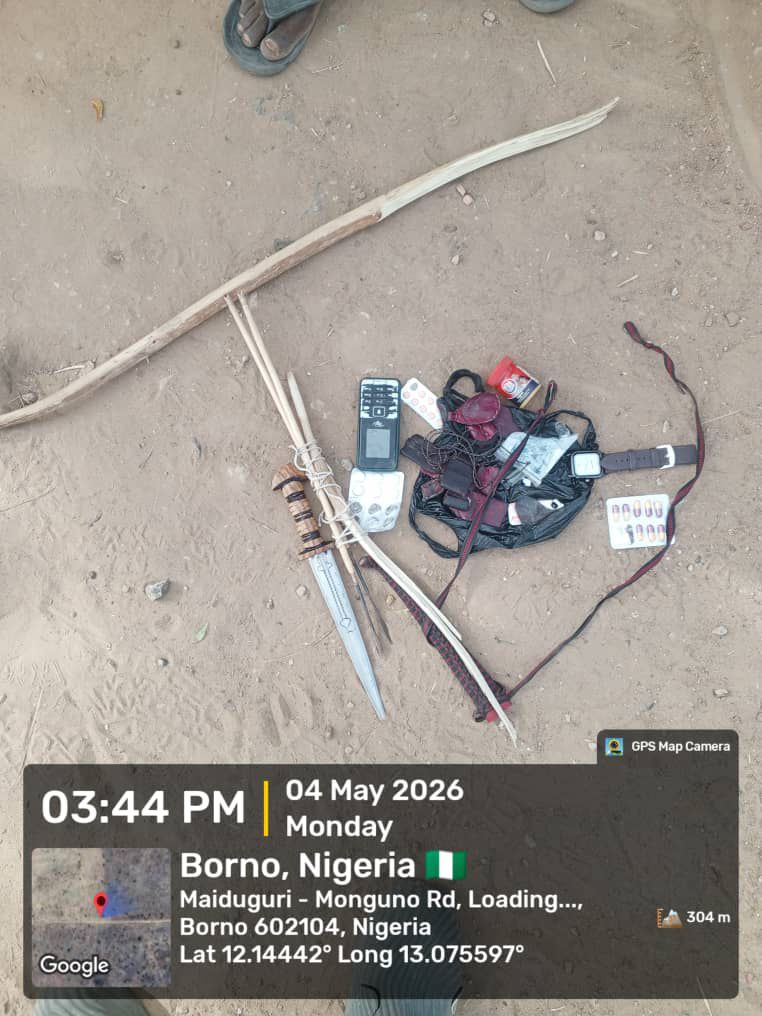
Items recovered from the suspects included a bow and arrow, three mobile phones, five national identity cards and the sum of N20,650.
Preliminary investigation reportedly revealed that the suspects admitted to repeatedly stealing and selling rustled cattle to buyers in Maiduguri.
Security sources further disclosed that investigators suspect possible links between the suspects and members of the Islamic State West Africa Province or Jama’atu Ahlis Sunna Lidda’awati wal-Jihad due to alleged inconsistencies observed in their statements during interrogation.
Troops Arrest Three Suspected Cattle Rustlers in Borno
Troops Discover Illegal Refinery Site, Recover 600 Litres of Stolen Crude in Rivers
By: Zagazola Makama
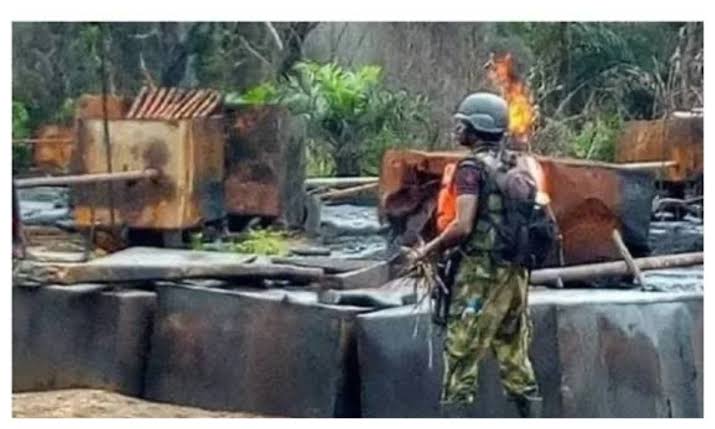
Troops of 29 Battalion operating under the Joint Task Force South-South, Operation Delta Safe (OPDS), have uncovered an illegal refining site and recovered about 600 litres of suspected stolen crude oil in Oyigbo Local Government Area of Rivers State.
Security sources said the discovery was made at about 10:00 a.m. on May 12, 2026, during ongoing anti-illegal bunkering operations in the Niger Delta region.
The troops reportedly discovered the illegal refining site around Asa community, where a large cooking pot loaded with stolen crude oil was found stockpiled in sacks.
Military authorities said the recovered products and equipment were handled in accordance with operational directives guiding anti-crude oil theft operations under Operation Delta Safe.
The operation was conducted without any confrontation or security incident.
The Nigerian military has continued to intensify operations against crude oil theft, illegal refining and other forms of economic sabotage across the Niger Delta region.
Troops Discover Illegal Refinery Site, Recover 600 Litres of Stolen Crude in Rivers

Troops, NDLEA Raid Drug Hideout in Katsina, Arrest Suspected Supplier to Terrorists
By: Zagazola Makama
Troops of the Forward Operating Base (FOB) Malumfashi at Kafur, in collaboration with the National Drug Law Enforcement Agency, have raided a suspected drug peddlers’ hideout in Kafur Local Government Area of Katsina State.
Security sources said the operation was conducted at about 12:30 p.m. on May 12, 2026, at Huguma village following intelligence on illicit drug activities within the area.
During the raid, troops apprehended one suspect identified as a major supplier of illicit drugs and other substances to terrorists and criminal elements operating within Kafur Local Government Area and surrounding communities.
Items recovered during the operation included 146 grams of suspected cannabis and 16.5 grams of a substance identified as Exol-5.
The suspect and the recovered drugs have since been handed over to the National Drug Law Enforcement Agency for further investigation and necessary legal action.
Troops, NDLEA Raid Drug Hideout in Katsina, Arrest Suspected Supplier to Terrorists

Troops Neutralise Two Terrorists in Night Ambush Operation in Borno

Troops Arrest Three Suspected Cattle Rustlers in Borno

Troops Intercept Vehicle Conveying Illegal Diesel in Bayelsa

Roger Federer’s Shock as DNA Results Reveal Myla and Charlene Are Not His Biological Children

THE PLIGHT OF FARIDA

FAILED COUP IN BURKINA FASO: HOW TRAORÉ NARROWLY ESCAPED ASSASSINATION PLOT AMID FOREIGN INTERFERENCE CLAIMS
-
 News2 years ago
Roger Federer’s Shock as DNA Results Reveal Myla and Charlene Are Not His Biological Children
-
Opinions4 years ago
THE PLIGHT OF FARIDA
-
 News1 year ago
FAILED COUP IN BURKINA FASO: HOW TRAORÉ NARROWLY ESCAPED ASSASSINATION PLOT AMID FOREIGN INTERFERENCE CLAIMS
-

 News2 years ago
EYN: Rev. Billi, Distortion of History, and The Living Tamarind Tree
-
 Opinions4 years ago
POLICE CHARGE ROOMS, A MINTING PRESS
-

 ACADEMICS2 years ago
A History of Biu” (2015) and The Lingering Bura-Pabir Question (1)
-

 Columns2 years ago
Army University Biu: There is certain interest, but certainly not from Borno.
-

 Opinions2 years ago
Tinubu,Shettima: The epidemic of economic, insecurity in Nigeria
