
Columns
Dadong: A Balanced Voice From Ungwan Rukuba

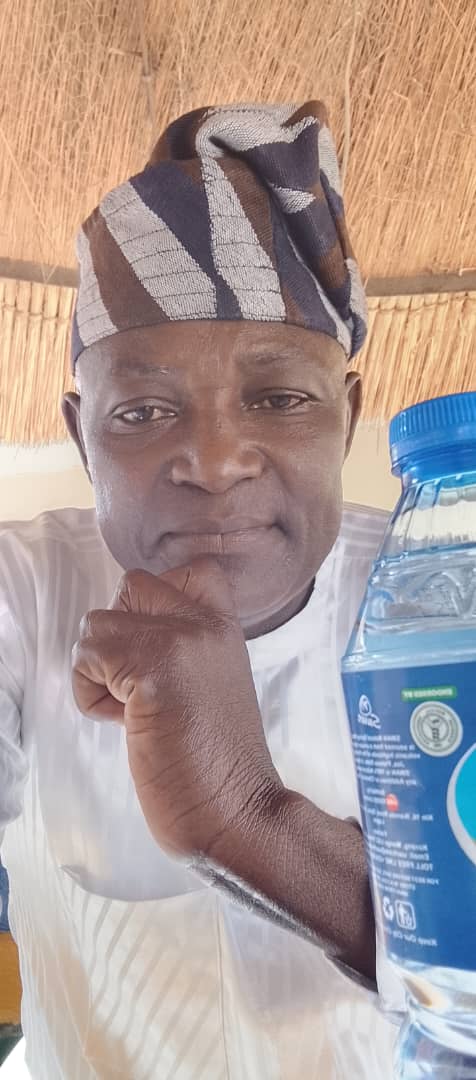
Dadong: A Balanced Voice From Ungwan Rukuba
By: Balami Lazarus
What does it take to be a public mouthpiece? That was the question I asked Comrade Dadong Solomon Antibas. My chats with him were a balanced interface. The answers can be found in the write-up for your review.
Democracy like ours has brought to the limelight public mouthpiece voices; some are weak and political, while others are strong, progressive, constructive, and fearless, demanding progress, growth, and development as dividends of good governance in a peaceful atmosphere.
Governments created by democratic processes are never left alone without citizens asking questions and demanding dividends of democracy for their community and the country at large.
Comrade Dadong Solomon Antibas is a Nigerian, law-abiding citizen. Antibas, a security expert and popular public mouthpiece on the Jos Plateau, has earned the confidence of the people of his community, Ungwan Rukuba, and most parts of the state over the years. For his community, he is their immediate mouthpiece who has been speaking on their plights, calling the attention of the government under the leadership of Governor Caleb Manasseh Mutfwang to do the needful.
Personality like Solomon Antibas’ public impression of him by some citizens of the state is all about seeking relevance and political appointments. “I have no interest whatsoever in any political appointment. My sincere concern for my dear country and my state, Plateau, is peace, progress, growth, and development for future generations.”
Nigerians should begin to speak out on good governance at all levels. Citizens are also responsible for failing to hold them accountable and demand good governance in terms of security, social amenities, and infrastructure.
Ungwan Rukuba is one of the wards in the Jos North Local Government Area. It is an integral part of the city center. Unfortunately, the peaceful Ungwan Rukuba became a flashpoint. The terrorist attack of March 29th, 2026, has put a scar of insecurity on the area.
On insecurity, he said that Mr. President Ahmed Bola Tinubu has failed Nigerians woefully. “Insecurity is a bone of contention. The federal government must take decisive measures on the insecurity challenges bedeviling the nation.”
My findings on Comrade Dadong Antibas revealed that he is not a public affairs commentator or an analyst but a progressive and active public mouthpiece, a voice of the voiceless.
For some, Dadong is attacking the government under the leadership of Governor Mutfwang. ” Is speaking the minds of citizens on bad governance and holding the government of Governor Caleb Manasseh Mutfwang a crime”?
Despite threats on Solomon Dadong, they have not deterred him from speaking for and on behalf of other citizens living in the state. “I have no other way to hold the government accountable than to publicly speak and constructively criticize the leadership’s voicing out feelings and lots of the people…In democracy, governments are made by the people, and as such, they must provide for the collective needs of the masses who voted them in.”
Comrade Antibas is one among the few indigenous people of Plateau who are outspoken and speak with passion and a patriotic mind for his state and Nigeria. “I will live and die in Nigeria speaking, advocating, demanding, and/or holding both federal and state governments accountable for good governance.”
Balami, Publisher/Columnist, 08036779290
Dadong: A Balanced Voice From Ungwan Rukuba


Bura Day on the Plateau: When Cultural Heritage Draws the Line
By: Balami Lazarus
I partly grew on the Plateau, Jos in particular. As a young MSN, I knew the presence of the Bura people as a tribal group in Jos was not as much as it is currently. Why did I say this?
The Bura Cultural Day was last held in 1980, if I correctly remember, or thereabouts at the township primary school playground in Jos.
Bura is a language and group of people with ancient ancestral clan names and origins. Is one of the independent ethnic groups of the human race in Nigeria, perhaps the most misunderstood tribal group in Nigeria because of the Babur-Bura concept that is
baseless with no historical foundation but a mere political linkage.
However, the Bura Community in Jos has drawn a line recently when they held their Cultural Day, where they displayed their independent cultures in unique traditional heritage and norms devoid of Pabir (Babur) people, whom they thought were not Bura, which is historically and culturally wrong.
The Bura ethnic nation are people and tribes. The cultural event was a day of cultural traditions and norms where sources of materials of food, music, dresses, and styles, among others that the Bura are known for and with, were colorful displayed.
According to observers and other sources, what stood out and impressed the public was the different modes and styles of dances with changes of musical beats, tones, lyrics, and rhythm in rhyme with the steps of dances during the occasion, including the species of the Bura garden egg (gauta) and how it was sliced, prepared, and garnished, adding color to the day.
Attires of dark blue stripes across White House fabric, known as ‘Bul,’ were among the major cultural identities of the Bura-speaking nation. The ‘bul’ represents the cultural and spiritual heritage of the Bura people; its importance to the people cannot be overemphasized. It symbolizes royalty/nobility. Sadly is used as a shroud for the departed in Buraland.
The day was witnessed by Bura Community leaders, including many of her sons and daughters living in Jos.
Balami, Publisher/Columnist 08036779290
Bura Day on the Plateau: When Cultural Heritage Draws the Line
Shosa: 2026 Reunion, Achievements, Challenges, and the Way Forward
By: Balami Lazarus
Many Sharamites (Platonians) may have refused to understand, accept, or agree with me. However, these are my experiences as one of them, an insider.
From far and near, Sharam Old Students known as Shosa recently came together at Silk Hotel Jos to rekindle memories and reunite as once ex-students of Plato College Sharam in the Kanke Local Government Area of Plateau State.
Associations of old students are known for their contributions to their alma mater, the host community, and, importantly, to their financially committed members, as they can happily go for assistance or associational protection as old students’ fraternities, either as class sets or lifetime friendships that have existed over the years and are still counting.
There is no denying the fact that school reunions rekindled memories, the glaring ambience of the gathering of ex-students. And a time when achievements are reeled out with the gleaning of challenges to move forward. Alas! What I met and saw with Shosa 2026 was nothing to write home about. Only a jamboree. Kallon kowa.
Childhood and secondary school friendships are rooted in time and space, honesty, sincerity, and commitment to purpose. This stage, in one’s life, marked the beginning of lifelong friendship. The Merchant of Venice—William Shakespeare has shown the meaning and essence of true friendship. My Samaru Nostalgia Group (SNG) is another good example.
Shosa Conventions/AGMs, including that of Jos 2026, are filled with challenges with little or no achievements to show as a group of old students who are today men and women, collectively and capable, with the capacity to change or influence matters and bring in developments and progress that will positively impart on us as a group and our community. But these are visibly lacking in Shosa.
I challenged any Sharamites to show me one tangible achievement/project that has been carried out by us as Shosa while our school at Sharam is soon about to be buried.
We are only but concerned and heartily interested in the yearly and meaningless get-together that lacks substance or value.
We have failed to look back to having those that will take over from us as a chain of continuity. And if this is the trend of things, I have no other option than to begin to prepare for peaceful existence.
Therefore, my alma mater, Plato College Sharam and Shosa, is faced with challenges of commitments by her members financially, capped with a lack of seriousness on the part of members of chapters thereof.
I reasonably believed that there are no benefits to why ex-students are to join the body known, called, and addressed as Shosa. As committed Sharamites, I saw that. And the lack of seriousness and commitments among many of us, including the few registered members who are willingly shying away from meetings and financial commitment
For me, the way forward for Shosa is to reorganize herself by amending her constitution and bylaws that will weed out unserious members, making any Sharamite willing to join must be ready to sit up henceforth. The fewer the merrier for chapters, hence the national body.
Let there be proper accountability in Shosa activities at the chapter level and the national level in every aspect, from handing to taking over. Chapters should also inform members of the positions of their finances from time to time.
I suggest Shosa should attract other ex-students with beneficial programs and projects.
Balami, Publisher/Columnist. 08036779290
Shosa: 2026 Reunion, Achievements, Challenges, and the Way Forward
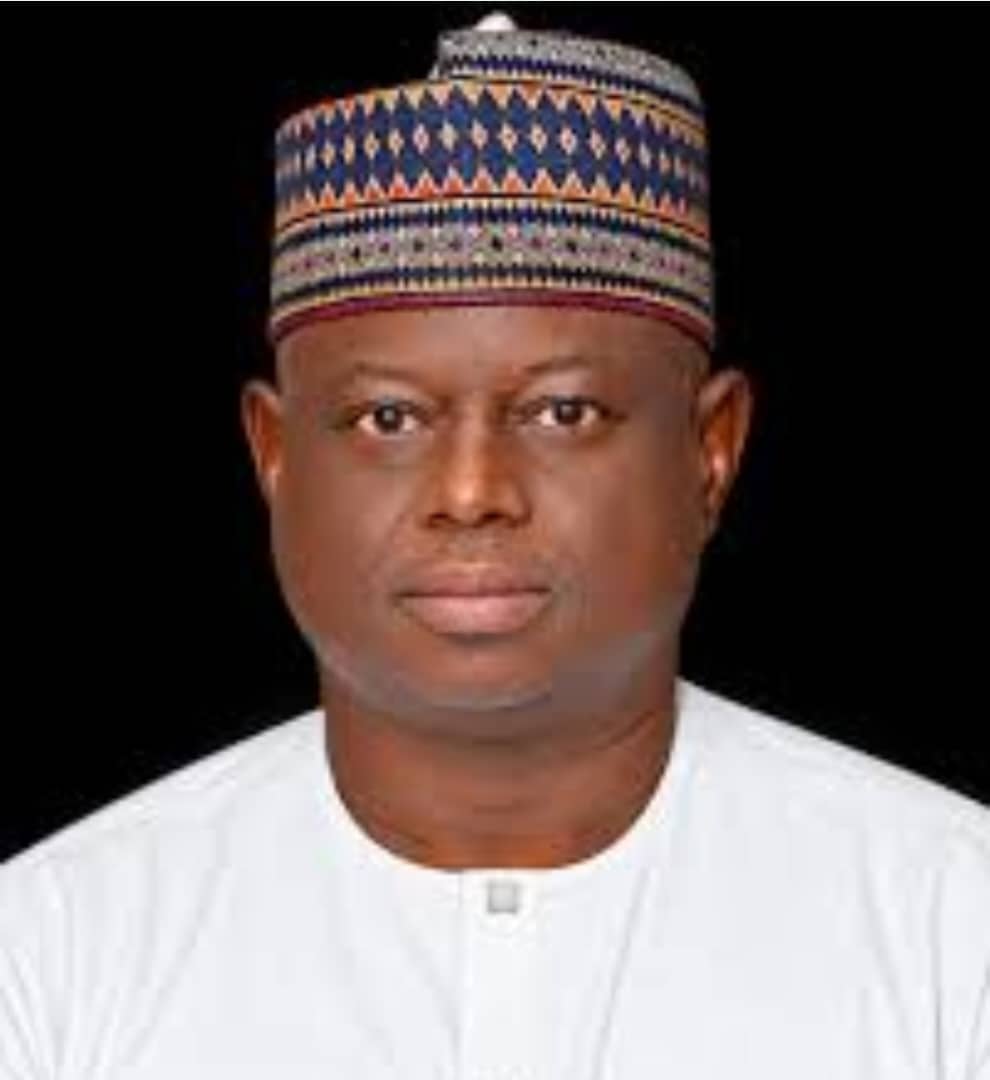
Prof. Faruk Buba is currently leading the affairs at UMTH
By: Balami Lazarus
The health sector has witnessed positive changes, with hospitals serving as agents of healthcare service delivery for patients and those in need of medical services.
Likewise, our health institution, the University of Maiduguri Teaching Hospital (UMTH), contributes to healthcare services, and despite the challenges faced, the CMD Prof. Faruk Buba will no doubt make a difference.
Aside from providing medical and healthcare, UMTH is a training institution for medical students; it also provides space for medical research and development (R&D) in various fields of medicines, which UMTH is long known for.
Whenever an organization or institution has a new chief executive, expectations are always high. The case of UMTH is not exceptional, as Prof. Faruk Buba now takes charge as the 9th Chief Medical Director of UMTH.
The atmosphere presently at UMTH is one of expectations of positive changes and performance to reset and reboot the hospital to engage staff and workers to deliver effective, efficient, and quality healthcare services.
UMTH under the leadership of Prof. Buba shall be better than he met it, going by his medical and administrative experiences/positions he held before: Deputy Chairman Medical Advisory Committee (DCMAC), Chairman Anti-Corruption and Transparency Unit (UMTH), Director of Ahmed Bola Tinubu ICT Centre, among other positions held.
Prof. Faruk Buba was born some 57 years ago. A professor of cardiology/consultant. He attended Ahmadu Bello University Zaria and began his medical career with UMTH and rose to where he is today. He hails from Gombe State.
Balalami, Publisher/Columnist 08036779290
Prof. Faruk Buba is currently leading the affairs at UMTH

30 HIGH-PROFILE CORRUPTION CASES EXPOSE JUSTICE SYSTEM FAILURES, STALLING ACCOUNTABILITY

Bura Day on the Plateau: When Cultural Heritage Draws the Line
Shosa: 2026 Reunion, Achievements, Challenges, and the Way Forward

Roger Federer’s Shock as DNA Results Reveal Myla and Charlene Are Not His Biological Children

THE PLIGHT OF FARIDA

FAILED COUP IN BURKINA FASO: HOW TRAORÉ NARROWLY ESCAPED ASSASSINATION PLOT AMID FOREIGN INTERFERENCE CLAIMS
-
 News3 years ago
Roger Federer’s Shock as DNA Results Reveal Myla and Charlene Are Not His Biological Children
-
Opinions5 years ago
THE PLIGHT OF FARIDA
-
 News2 years ago
FAILED COUP IN BURKINA FASO: HOW TRAORÉ NARROWLY ESCAPED ASSASSINATION PLOT AMID FOREIGN INTERFERENCE CLAIMS
-
 Opinions5 years ago
POLICE CHARGE ROOMS, A MINTING PRESS
-

 News3 years ago
EYN: Rev. Billi, Distortion of History, and The Living Tamarind Tree
-

 ACADEMICS3 years ago
A History of Biu” (2015) and The Lingering Bura-Pabir Question (1)
-

 Columns3 years ago
Army University Biu: There is certain interest, but certainly not from Borno.
-

 Politics1 year ago
2027: Why Hon. Midala Balami Must Go, as Youths in Hawul and Asikira/Uba Federal Constituency Reject ₦500,000 as Sallah Gift
