
News
Disquiet in NIS as CDCFIB promotes retired ACG to DCG


Disquiet in NIS as CDCFIB promotes retired ACG to DCG
By: Michael Mike
The promotion of Assistant Comptroller General of Immigration, Garba Bello, who retired in June, to Deputy Comptroller of Immigration, is causing disquiet in the Nigeria Immigration Service (NIS).
Many senior officers, who were overlooked in the recent promotion exercise, faulted Bello’s promotion as illegal and vowed to petition President Bola Tinubu over his recall from retirement.
Bello with NIS number 10892, was born on June 3, 1964, enlisted in the service in 1990 and retired on June 3, 2024, having clocked 60 years.
This was in line with the Public Service Rules, which pegged the mandatory retirement age at 60 or 35 years in service, as the case may be.
As part of his retirement, the service management held a send-forth ceremony for the former ACG in charge of investigation at the NIS headquarters in Abuja.
However, in what appeared to be a violation of the Public Service Rules, the Civil Defence, Correctional, Fire and Immigration Services Board listed Bello as one of the ACGs elevated to DCG.
Apart from Bello, other promoted ACGs include Anietum Essien, Umanah James, Micheal Dike, George Dikel, Tukur Umar, Afolayan Ayeni and Usman Nagado.
A letter with reference number, NIS/HQADM/4193/II/204 dated August 2, 2024, announced that Bello and seven others would be decorated with their DCG rank on Wednesday at the NIS headquarters.
The letter, titled, ‘Decoration of newly appointed Deputy Comptrollers General of Immigration,’ was signed by ACG Didel, on behalf of the Comptroller General of Immigration (CGI) Kemi Nandap.
It read, ‘’Further to letter ref: CDCFIB/APPT/CG&DCG/61/VOL.V/59 of July 29, 2024, on the forwarded list of newly appointed Deputy Comptrollers General of Immigration, I am directed to request your presence at the decoration ceremony of the under-listed senior officers scheduled to hold as follows:
‘’Date: Wednesday, 7th August, 2024; Venue: Muhammad Babandede Conference Centre, Service Headquarters, Abuja. Time: 11am prompt. Accord top priority, please.
It was further gathered that some junior officers were promoted over their seniors in the promotion exercise.
A look at the seniority list indicates that Didel, Umar and Ayeni were elevated above ACGs Sadiq Adebowale and Ngozi Odikpo, who are their senior in service.
While Didel, Umar and Ayeni were promoted to ACG in January 2023, Adebowale and Odikpo had been on the ACG rank since January 2022.
Commenting on Bello’s recall, a senior officer, who did not want to be named for security reasons, said, ‘’The Supreme Court had held that once a civil servant has retired, his employment with the government ends and he cannot be re-appointed or promoted within the civil service. Any subsequent engagement is treated as a new contract.
‘’In Federal Civil Service Commission vs Laoye, the court reiterated that promotions are part of career progression within active service and cannot apply to someone who has retired. So, the board cannot justify this illegality.’’
When asked why Bello was recalled from retirement and promoted, the NIS spokesman, Kenneth Udo, simply said, ‘’Because he wrote the (promotion) exams.’’
Asked to justify the decision, he said, ‘’But I am not part of the process. We have a board that handles promotion and the minister is the chairman. So, this enquiry should be directed to them.’’
But the Secretary to the CDCFIB, Ja’afaru Ahmed, could not be reached for comment on Monday as calls to his phone indicated it was unavailable. He had yet to respond to a text message seeking his comment on Bello’s recall and promotion.
Disquiet in NIS as CDCFIB promotes retired ACG to DCG


Military
Mutiny: Presidential Guard Tightens Security Around Niger Presidency Amid Reports of Military Protest

Mutiny: Presidential Guard Tightens Security Around Niger Presidency Amid Reports of Military Protest
By Zagazola Makama
Security was significantly reinforced around Niger’s Presidential Palace in Niamey following reports of unrest involving elements of the country’s armed forces, security sources told Zagazola Makama.
According to multiple security sources, the heightened deployment of the Presidential Guard, supported by armoured vehicles around the Presidential Palace on the night of July 3 and into July 4, followed what was described as a limited protest by personnel of an armoured unit within the Niger Armed Forces (FAN).
The sources said some soldiers reportedly declined deployment to frontline positions in northern Tillabéri Region, particularly around Inatès and Chinagodrar, citing inadequate heavy equipment and insufficient operational resources to confront the growing security threats in the area.
The protest was described by one source as a “small mutiny,” although there has been no official confirmation from the Nigerien authorities.
Security sources said the development triggered concern within the country’s leadership, prompting the reinforcement of security around the Presidential Palace and temporary restrictions on movement in the surrounding area as a precautionary measure.
The Tillabéri Region remains one of Niger’s most volatile security zones, with recurrent attacks by armed extremist groups, including factions linked to the so-called Islamic State in the Greater Sahara (ISGS).
As of the time of filing this report, the Nigerien government and military authorities had not issued any official statement regarding the reported protest or the increased security presence around the Presidency.
The situation remains under close observation.
Mutiny: Presidential Guard Tightens Security Around Niger Presidency Amid Reports of Military Protest

Two suspected criminals arrested during patrol in Plateau
By: Zagazola Makama
Troops of Sector 1 under Operation Enduring Peace have arrested two suspected criminals during a routine patrol in Jos East Local Government Area of Plateau.
Security sources disclosed that the suspects, identified as Azi Ezekiel, 21, and Ajiji Emmanuel, 19, were apprehended at about 10:30 a.m. on Saturday along the road leading to Forbur Village.
The sources said the suspects were intercepted by troops of Sector 1, Sub-Sector 12, while conducting a routine patrol in the area.
According to the sources, the two suspects have been handed over to the Keystone Police Station in Forbur for further investigation and possible prosecution.
The arrest forms part of ongoing security operations aimed at combating criminal activities and enhancing safety across Plateau State.
Two suspected criminals arrested during patrol in Plateau
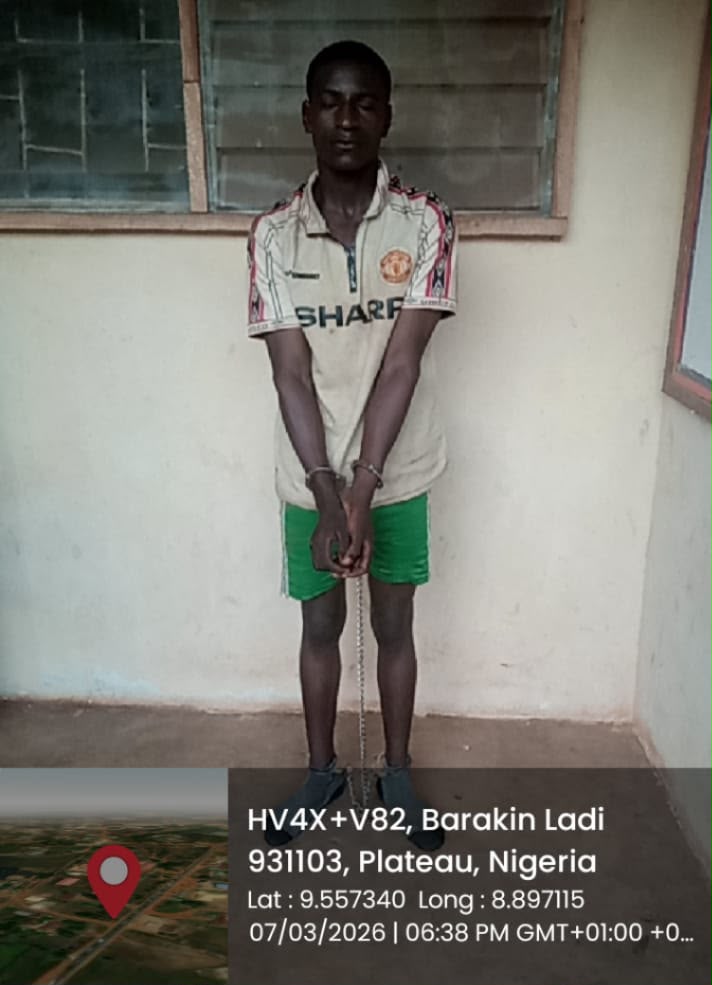
Troops arrest suspected kidnapper in Plateau community
By: Zagazola Makama
Troops of Sector 4 of Operation Enduring Peace have arrested a suspected kidnapper during a security operation in Barkin Ladi Local Government Area of Plateau.
Security sources said the suspect, identified as Mohamdu Surajo, 29, was arrested at about 6:45 p.m. on Friday at Sabon Layi Village following sustained security operations in the area.
The sources disclosed that the suspect is currently in military custody and is undergoing preliminary interrogation to aid ongoing investigations.
They added that the arrest is part of continued efforts by security forces to dismantle criminal networks and enhance security across Plateau State.
Troops arrest suspected kidnapper in Plateau community

President Tinubu Flags Off the Construction of Dikwa–Gamboru Ngala, Bama–Banki International Road Projects

Mutiny: Presidential Guard Tightens Security Around Niger Presidency Amid Reports of Military Protest

Troops Arrest Two Suspected Berom Militia Linked to NIPSS Attack as Security Sources Say Investigation Supports Earlier Leads

Roger Federer’s Shock as DNA Results Reveal Myla and Charlene Are Not His Biological Children

THE PLIGHT OF FARIDA

FAILED COUP IN BURKINA FASO: HOW TRAORÉ NARROWLY ESCAPED ASSASSINATION PLOT AMID FOREIGN INTERFERENCE CLAIMS
-
 News2 years ago
Roger Federer’s Shock as DNA Results Reveal Myla and Charlene Are Not His Biological Children
-
Opinions4 years ago
THE PLIGHT OF FARIDA
-
 News1 year ago
FAILED COUP IN BURKINA FASO: HOW TRAORÉ NARROWLY ESCAPED ASSASSINATION PLOT AMID FOREIGN INTERFERENCE CLAIMS
-

 News2 years ago
EYN: Rev. Billi, Distortion of History, and The Living Tamarind Tree
-
 Opinions5 years ago
POLICE CHARGE ROOMS, A MINTING PRESS
-

 ACADEMICS2 years ago
A History of Biu” (2015) and The Lingering Bura-Pabir Question (1)
-

 Columns2 years ago
Army University Biu: There is certain interest, but certainly not from Borno.
-

 Politics1 year ago
2027: Why Hon. Midala Balami Must Go, as Youths in Hawul and Asikira/Uba Federal Constituency Reject ₦500,000 as Sallah Gift
