
National News
Drug war: 31,675 arrests; 5,147 convictions; 6.3million kilogrammes drugs seized by NDLEA in 29 months – Marwa

Drug war: 31,675 arrests; 5,147 convictions; 6.3million kilogrammes drugs seized by NDLEA in 29 months – Marwa
By: Michael Mike
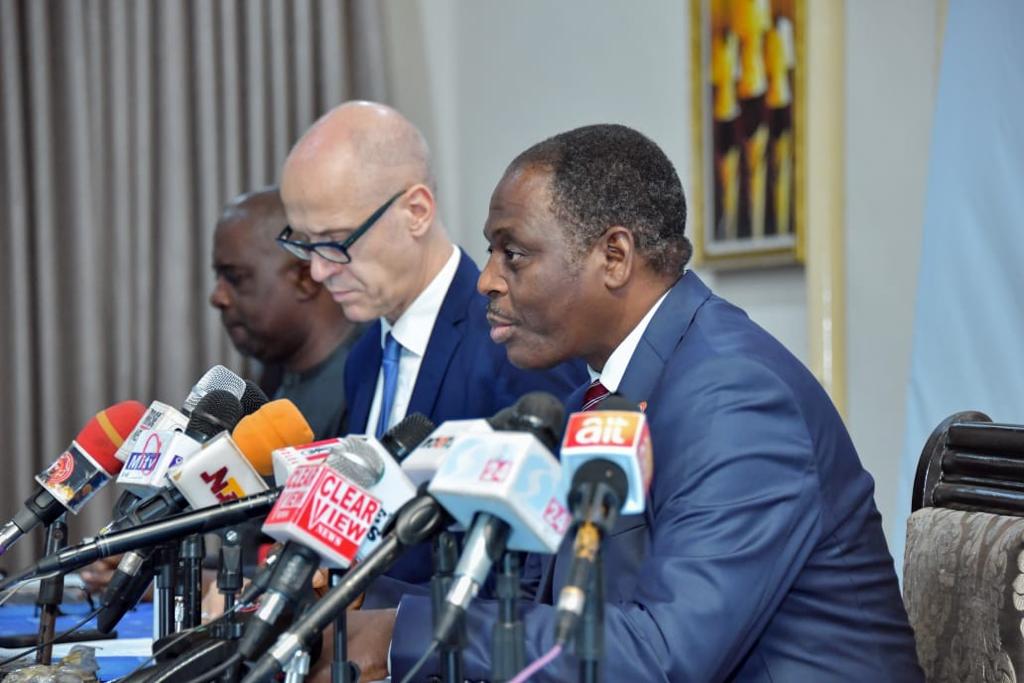
The National Drug Law Enforcement Agency (NDLEA) has arrested 31,675 drug offenders, out of which 5,147 of them were prosecuted and convicted with over 6.3 million kilogrammes of assorted drugs seized since the appointment 29 months ago of the Chairman/Chief Executive Officer of the agency, Brig. Gen. Buba Marwa (Retd).
The NDLEA boss while addressing a joint press briefing in Abuja on Monday with the Country Representative of the United Nations Office on Drugs and Crime, UNODC, Mr. Oliver Stolpe, said the fight against substance abuse and illicit drug trafficking has yielded significant results in the last 29 months since he came on board with the arrest of 31,675 drug offenders, 5,147 of them prosecuted and convicted while over 6.3 million kilogrammes of assorted drugs were seized within the same period.
Marwa, who was represented at the press conference to flag off a weeklong activities marking the 2023 World Drug Day, which is an annual event by the agency’s Secretary, Shadrach Haruna noted that the event “is to mobilise resources, align policies, and inspire organisations, communities, and nations to work in a particular direction to effectively tackle the challenges of illicit substances in society.”
He said: “This year’s theme, “People First: Stop Stigma and Discrimination, Strengthen Prevention,” is in furtherance of the whole-of-society approach to taming the drug scourge.
“This theme is especially pertinent to the Nigerian situation at the moment. In the past two and half years, we have strengthened our law enforcement efforts to cut down on the supply of drugs in society. In 29 months, we have arrested 31,675 drug offenders, including 35 barons; successfully prosecuted and got convicted 5,147 of them, and over 11,000 other cases still pending in court, while 23,725 drug users had been counselled and rehabilitated, majority of them through brief interventions. At least 6.3 million kilogrammes of various illicit substances have been recovered in response to our efforts to sweep up drugs and shut down the distribution channels.
“We have destroyed 852.142 hectares of cannabis farms and dismantled three clandestine methamphetamine laboratories. I can assure you that even as we speak, NDLEA agents are busy with interdiction activities somewhere.”
He however said that drug supply reduction remains only one of the components of the equation, stressing that: “Another crucial component is drug demand reduction, which operationally means prevention, treatment and rehabilitation. It should go without saying that we must strike a balance between these two crucial components if we are to achieve our desired utopia of a drug-free society.
He disclosed that: “NDLEA has made significant investments in prevention, treatment and rehabilitation over the last two years. The doors of our rehabilitation facilities are open at all times. In the last 29 months, we have acquired a few more rehab centres, given to us as donations, while we have also obtained the federal government’s approval for the construction of regional model rehabs.
“More private treatment facilities are also cooperating with NDLEA. To cap it all, NDLEA went above and beyond to invest in a toll-free, round-the-clock call centre that provides teletherapy. In summary, we have prioritised treatment, while our WADA advocacy initiative has taken a life of its own with our Commands, Formations and partnering civil society organisations taking sensitisation lectures and campaigns to schools, communities, worship places and many more across the country everyday.
“In addition, we have also produced TV commercials and radio jingles in differenty languages being broadcast on various platforms. This is simply aimed at prevention, by sensitising the people and equipping them with facts about drugs to enable them take the right decisions against substance abuse”,
He however charged the society to drop the stigmatization that discourages drug users from seeking treatment, a development, which he lamented, has serious socio-economic repercussions for individuals and their families.
He decried that: “Stigmatisation and discrimination make recovery and reintegration difficult for drug-dependent users who submit themselves to treatment. And the prevalence of such an attitude is counterproductive to the effort, time, and resources invested by governments, institutions, and corporate bodies working to contain the drug problem.
“This is what the year’s theme is about. We must rid ourselves of any bias against those who are drug-dependent to be able to support, expedite, and make permanent their recovery. The theme will serve as an impetus for us to make a collective effort to break down these invincible but formidable social barriers that undermine the attainment of the goal of a drug-free society.”
Marwa expressed appreciation for the partnership between NDLEA, NGOs, development partners, and the various groups, institutions, and relevant professionals in society, including media professionals, who have been very supportive of the renewed war on drugs.
He said: “I want to thank the United Nations Office on Drugs and Crime (UNODC), especially for its unquantified support that has contributed to the rapid evolution of NDLEA. In the same vein, we are thankful to the European Union (EU) and the governments of the United States, United Kingdom, France, India and Germany, who have all boosted our capacity to cope with the demands of our mandate.”
He disclosed that: “To celebrate this year’s World Drug Day, we have a line-up of activities for the week, some of which will be conducted in partnership with our stakeholders like the UNODC and MTN Foundation. Some of the events are educational, like the essay and the quiz competitions. We have days set aside for events like the Walk Against Drugs, NGO activities, and a campaign to raise awareness among young people who are not in school. The grand finale will be the ceremony at the State House on Monday, June 26.”
In his remarks at the media briefing, UNODC Country Rep, Oliver Stolpe emphasized the “benefits of international cooperation in criminal justice matters with a specific target of dismantling trafficking networks involved in this terrible trade.”
Stolpe added that: “Long overdue is the need to make sure that the public and primary health care providers are better prepared to take basic drug counseling needs, knowing how to deal with people suffering from drug use disorders.” He commended NDLEA for the successes recorded so far in the fight against substance abuse and illicit drug trafficking in the country.
Drug war: 31,675 arrests; 5,147 convictions; 6.3million kilogrammes drugs seized by NDLEA in 29 months – Marwa


National News
Tegbe Woos Investors to Power 35,000 Health Facilities, Says Healthcare Electrification Biggest Energy Opportunity in Africa
Tegbe Woos Investors to Power 35,000 Health Facilities, Says Healthcare Electrification Biggest Energy Opportunity in Africa
By: Michael Mike
The Federal Government has intensified efforts to attract local and international capital into Nigeria’s healthcare sector, with Minister of Power, Joseph Tegbe declaring the electrification of over 35,000 health facilities nationwide as one of Africa’s most attractive investment opportunities.
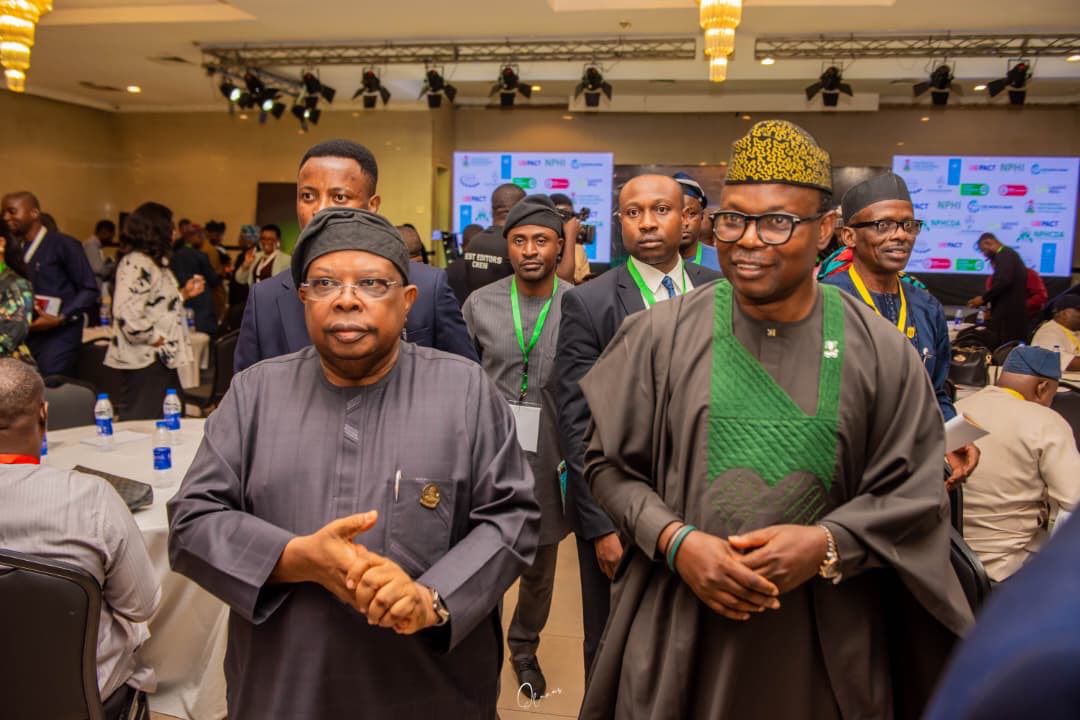
Speaking at the National Healthcare Electrification Investor Matchmaking Forum held in Lagos under the Nigeria Power for Health Initiative (NPHI), Tegbe urged investors to embrace innovative and sustainable financing models capable of ending the chronic energy deficits that continue to undermine healthcare delivery across the country.
The forum, organised by the Federal Ministry of Health and Social Welfare in partnership with UK PACT, brought together government officials, development partners, hospital administrators and private sector leaders to explore pathways for mobilising private capital into healthcare electrification.
Tegbe said reliable electricity had become indispensable to modern healthcare delivery, stressing that access to power was no longer merely an infrastructure issue but a critical determinant of patient outcomes, emergency response capabilities and the overall effectiveness of health institutions.
Describing himself as an early stakeholder in the initiative before assuming office as Minister of Power, he reaffirmed his commitment to driving its implementation, noting that the programme aligns with the power sector reform agenda of President Bola Ahmed Tinubu and the administration’s Renewed Hope Agenda.
According to the minister, the country’s more than 35,000 registered primary, secondary and tertiary healthcare facilities represent a vast pipeline of commercially viable projects capable of attracting investment into solar mini-grids, hybrid energy systems, battery storage technologies, smart metering, energy management platforms and climate-resilient infrastructure.
“The opportunity before investors is significant and scalable,” Tegbe said, adding that healthcare electrification offers long-term prospects for sustainable returns while addressing a critical social need.
He assured prospective investors that the Federal Government would provide the policy support, regulatory certainty and inter-ministerial coordination required to de-risk investments and ensure successful project delivery.
Tegbe disclosed that the Ministry of Power is already implementing similar interventions through the World Bank-supported Nigeria Electrification Project, under which solar mini-grids and hybrid energy solutions have been deployed in healthcare facilities across the country.
He also pointed to the provisions of the Electricity Act as a robust regulatory framework that supports power purchase agreements, mini-grid licensing and increased participation by state governments in electricity projects.
The minister maintained that the ultimate goal of the initiative is to strengthen healthcare infrastructure and position Nigeria as a preferred destination for quality healthcare services in Africa.
Also speaking at the forum, Minister of State for Health and Social Welfare, Iziaq Adekunle Salako, described the NPHI as a strategic departure from traditional donor-dependent interventions towards a commercially sustainable Energy-as-a-Service model.
Under the framework, he explained, specialised energy providers would finance, install and maintain power systems for healthcare facilities, thereby eliminating one of the most persistent obstacles to effective healthcare delivery.
Salako noted that unreliable power supply continues to threaten the operation of theatres, diagnostic equipment, vaccine cold-chain systems and emergency services across many health institutions.
He said the initiative is built on blended financing mechanisms, institutional preparedness and national scalability, with the first phase targeting federal tertiary hospitals before expanding to primary and secondary healthcare facilities nationwide.
According to him, a new governance structure has already been established to drive implementation, strengthen investor confidence and unlock private-sector participation in the healthcare energy market.
The renewed push by government signals a major attempt to leverage private investment to solve one of the healthcare sector’s most enduring challenges, while simultaneously opening a potentially multi-billion-dollar market for clean energy developers and infrastructure financiers.
Tegbe Woos Investors to Power 35,000 Health Facilities, Says Healthcare Electrification Biggest Energy Opportunity in Africa
Muslim Media Practitioners Demand Public Holiday for Islamic New Year
By: Michael Mike
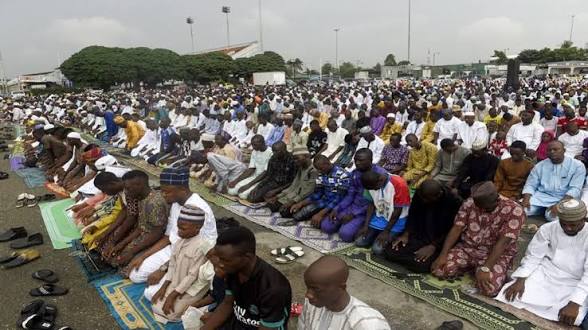
The Muslim Media Practitioners of Nigeria (MMPN) has renewed its call on the federal and state governments to declare the first day of the Islamic calendar, Muharram 1, a public holiday, arguing that millions of Muslims deserve the same recognition accorded Christians on January 1 of the Gregorian calendar.
The group made the demand as Muslims across Nigeria and the world marked the commencement of Hijrah 1448 A.H on Tuesday.
In a statement signed by its National President, Alhaji Abdur-Rahman Balogun, MMPN said the declaration of a public holiday for the Islamic New Year would reflect fairness, justice, and adherence to the rule of law while strengthening religious harmony in the country.
“Muharram 1 is our own January 1. We want both the Federal and state governments alike to declare it as such in the interest of religious harmony in the country,” Balogun stated.
The association argued that official recognition of the Islamic New Year would give Muslims a greater sense of belonging and further reinforce national unity in Nigeria’s multi-religious society.
MMPN also urged governments at all levels to formally recognize and use the Islamic calendar alongside the Gregorian calendar in official engagements.
The group called on the Nigerian Supreme Council for Islamic Affairs (NSCIA) to engage government authorities on the issue and other matters affecting the Muslim community.
While congratulating Muslims and non-Muslims on the new Islamic year, Balogun urged adherents of Islam to use the occasion for self-reflection, moral renewal, and prayers for the success of President Bola Ahmed Tinubu’s administration.
He also commended governors in several northern states as well as Oyo and Osun states for declaring public holidays to mark the Islamic New Year and urged other state governments to emulate the gesture.
On security, Balogun condemned ongoing attacks and killings by insurgent groups, describing them as un-Islamic, and appealed to perpetrators to embrace peace and end violence.
He further advocated tougher legislation against rape, kidnapping, and terrorism, lamenting what he described as a culture of impunity that allows many offenders to evade justice.
The MMPN president urged Nigerians to celebrate the Islamic New Year in moderation and pray for peace, stability, and progress in the country.
Muslim Media Practitioners Demand Public Holiday for Islamic New Year
National News
FG To Roll Out 10,000 Electric Tricycles To Nigerian Market In August, Says VP Shettima
FG To Roll Out 10,000 Electric Tricycles To Nigerian Market In August, Says VP Shettima
Adds: President Tinubu’s priority is to move Nigeria from fragmented transport system to integrated logistics chain
By: Our Reporter
The Federal Government is set to roll out 10,000 electric tricycles for use as part of a broad plan to ease public transportation across Nigeria.
The tricycles will be distributed by the North East Development Commission (NEDC) in August, 2026 for use across the northeast region and beyond.
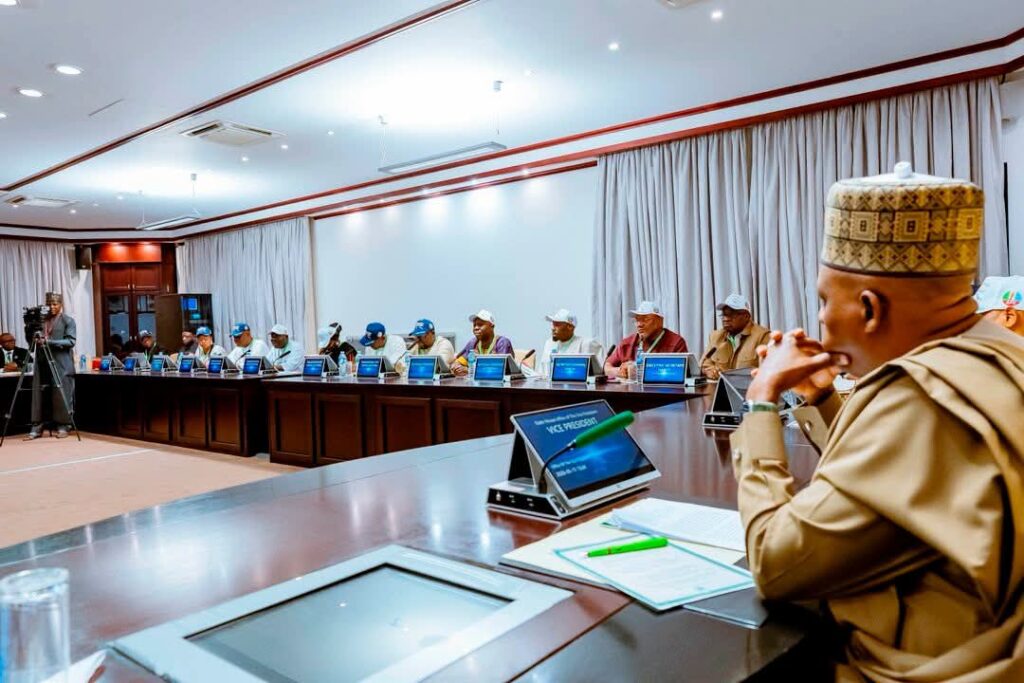
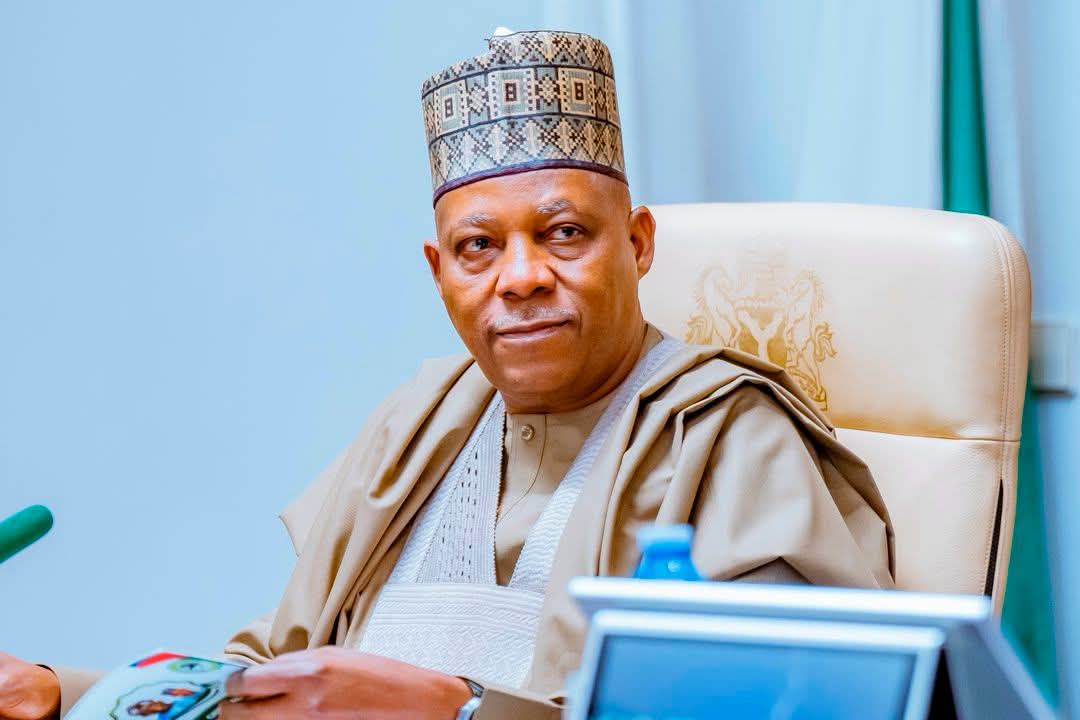
The Vice President, Senator Kashim Shettima, who disclosed this during a courtesy call by The Transporters For Tinubu / Shettima 2027, said the President “has approved the replication of the initiative in other parts of the country by the various regional development commissions.”
He noted that the priority of the administration of President Asiwaju Bola Ahmed Tinubu is to move Nigeria from a fragmented transport system to an integrated logistics chain where ports, rail lines, CNG-powered trucks, inland waterways, airports and local feeder roads work together to support commerce, agriculture, industry and national integration.
Senator Shettima explained that the federal government’s transport reform agenda is anchored on the nationwide rollout of Compressed Natural Gas, major port upgrades and a stronger logistics chain.
This, he said, is aimed at improving working conditions for transport workers across road, rail, maritime, aviation and pipeline operations.
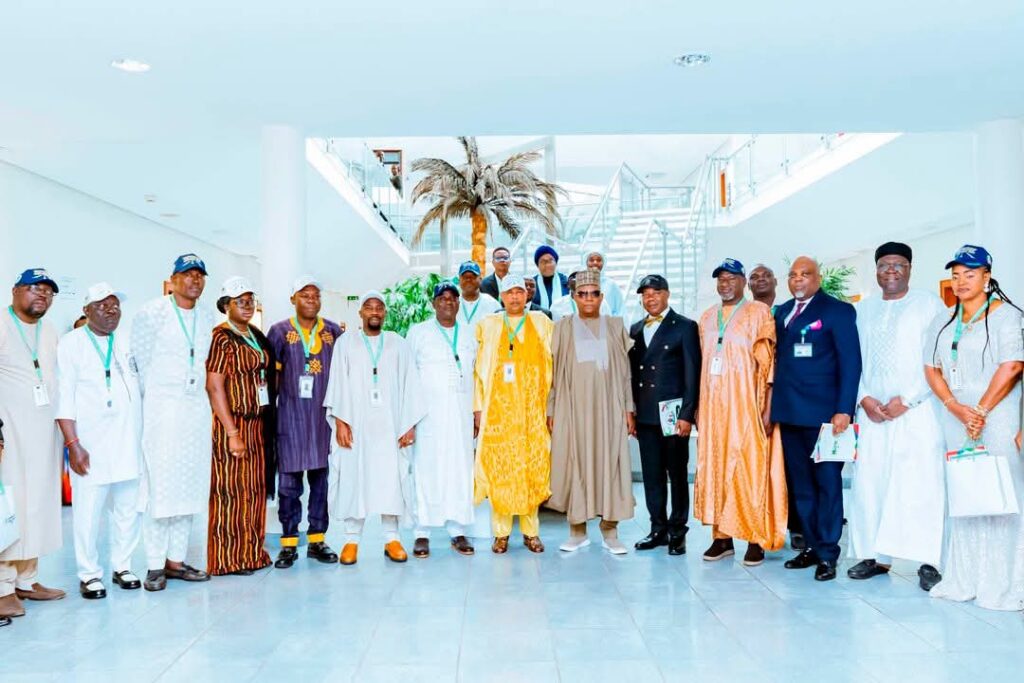
VP Shettima maintained that the Tinubu administration is determined to build a transport economy that lowers the cost of movement, reduces delays at ports, connects farms to markets, strengthens national productivity and gives transporters a more dignified place in the country’s development process.
“Our vision is an unbroken logistics chain, where a container moves from a deep-sea port to a rail wagon, then to a CNG-powered truck, then to a trader in Ariaria Market or Maiduguri, without delay or policy failure,” he said.
He said the Presidential Compressed Natural Gas Initiative has begun to prove that Nigeria can use its domestic gas resources to reduce the cost of transportation, especially for heavy-duty vehicles, while government continues to address the technical and infrastructure concerns affecting smaller vehicles.
“We said CNG could cut fuel costs by over 60 per cent, and many called it fantasy. Today, heavy-duty trucks run on Nigerian gas, proving sceptics wrong and returning money to your pockets,” he stated.
Senator Shettima added that the administration is also pushing reforms in the maritime sector through the operationalisation of Lekki Deep Sea Port, the development of the National Single Window and renewed attention to inland waterways, saying the objective is to make Nigerian ports more efficient and globally competitive.
“Before this administration, clearing a container could become an encounter with frustration, corruption, and decay. We promised to unlock the blue economy. Today, with Lekki Deep Sea Port operational, the National Single Window taking shape, and inland waterways receiving attention, our ports are preparing to compete with the world’s best,” he said.
The Vice President also assured transporters that the Federal Government would continue to support policies that promote affordable fuel, insurable fleets, bankable contracts and dignified working conditions.
“This administration shall continue to stand with the Nigerian transporter. We shall continue to fight for affordable fuel, insurable fleets, bankable contracts, and dignified working conditions. We shall build roads that last, rails that stretch across this great nation, ports that breathe, and airports that reflect our pride,” he said.
Earlier in his remarks, the Technical Adviser to the Vice President on Transportation, Logistics and Innovation, Prince Segun Obayendo, said the group, which constitutes a critical engine of Nigeria’s socio-economic survival, was unanimous in its endorsement and support for the Tinubu/Shettima presidency in the 2027 presidential election.
He said the executives of all the groups in the nation’s transport sector comprising air, maritime, rail and road unions, had consulted widely and were emphatic about their conviction and support for the Tinubu administration based on its achievements across different sectors.
Prince Obayendo said the group is convinced that the administration of President Tinubu has set the country on the path of positive growth hence they are prepared to mobilise the support of members of the various unions in the transport sector to ensure Mr President’s re-election in 2027.
For his part, Secretary-General of the Maritime Workers Union of Nigeria (MWUN), Comrade Oniha Erazua, expressed gratitude to the Tinubu administration for the recognition given to unions in the transport sector in his government.
He said transporters and other stakeholders are convinced that the reforms of the Tinubu administration in the sector would yield greater dividends if sustained, hence their resolve to support the Tinubu/Shettima ticket in the 2027 election.
FG To Roll Out 10,000 Electric Tricycles To Nigerian Market In August, Says VP Shettima

Is Zagazola Makama now siding with Plateau people?

A New Dawn for Nigeria’s Power Sector: Minister Tegbe’s Brilliant Start

ADC PICKS RT. HON. CHIBUIKE ROTIMI AMAECHI AS ATIKU’S RUNNING MATE

Roger Federer’s Shock as DNA Results Reveal Myla and Charlene Are Not His Biological Children

THE PLIGHT OF FARIDA

FAILED COUP IN BURKINA FASO: HOW TRAORÉ NARROWLY ESCAPED ASSASSINATION PLOT AMID FOREIGN INTERFERENCE CLAIMS
-
 News2 years ago
Roger Federer’s Shock as DNA Results Reveal Myla and Charlene Are Not His Biological Children
-
Opinions4 years ago
THE PLIGHT OF FARIDA
-
 News1 year ago
FAILED COUP IN BURKINA FASO: HOW TRAORÉ NARROWLY ESCAPED ASSASSINATION PLOT AMID FOREIGN INTERFERENCE CLAIMS
-

 News2 years ago
EYN: Rev. Billi, Distortion of History, and The Living Tamarind Tree
-
 Opinions5 years ago
POLICE CHARGE ROOMS, A MINTING PRESS
-

 ACADEMICS2 years ago
A History of Biu” (2015) and The Lingering Bura-Pabir Question (1)
-

 Columns2 years ago
Army University Biu: There is certain interest, but certainly not from Borno.
-

 Politics1 year ago
2027: Why Hon. Midala Balami Must Go, as Youths in Hawul and Asikira/Uba Federal Constituency Reject ₦500,000 as Sallah Gift
