
News
DSS Under Ajayi: Institutional Restraint That Should Earn Applause, By Sufuyan Ojeifo

DSS Under Ajayi: Institutional Restraint That Should Earn Applause, By Sufuyan Ojeifo
By: Zagazola Makama
The decision by the Director-General of the Department of State Services (DSS), Oluwatosin Adeola Ajayi, to approach the Federal High Court over the possibility of suspending the prosecution of African Action Congress (AAC) presidential candidate, Omoyele Sowore, until after the 2027 presidential election is one that deserves careful consideration—and, indeed, applause.
At a time when actions involving opposition figures are easily viewed through partisan lenses, Ajayi has demonstrated something often missing in public administration: institutional restraint. More importantly, he has placed a politically sensitive question before the court rather than attempting to resolve it through administrative discretion alone.
The request to pause the proceedings should not be mistaken for weakness, political favouritism or an attempt to place anyone above the law. On the contrary, it reflects an understanding that the rule of law also requires fairness, proportionality and respect for the democratic process.
The DSS is not asking the court to terminate the case. Nor is it asking the court to determine Sowore’s innocence or guilt. It is asking the court to consider whether continuing the prosecution during an election period could unnecessarily complicate the democratic process. That distinction is fundamental.
Sowore, like every other Nigerian, remains subject to the law. A presidential candidacy does not confer immunity from criminal prosecution, just as an allegation does not amount to a conviction. If the court approves a postponement, the allegations do not disappear. The prosecution can resume after the election, allowing the legal process to proceed without creating avoidable controversy around a presidential candidate at a particularly sensitive political moment.
This distinction matters because the credibility of the proposal rests on the fact that it neither extinguishes the case nor predetermines its outcome. It merely asks the judiciary to consider whether timing, in the peculiar circumstances of an electoral contest, warrants a temporary adjustment to the proceedings.
This is precisely where Ajayi’s approach deserves commendation.
Security agencies wield enormous powers, and the manner in which those powers are exercised matters greatly. An institution that knows when to act firmly and when to exercise restraint demonstrates confidence in its own professionalism. The exercise of power is ultimately judged not only by what an institution can do, but by whether it knows the limits of what it should do.
The Foundation for Democracy in Africa (FDA), in commending the DSS leadership, described the decision as consistent with democratic principles, due process, the rule of law and the integrity of elections. That assessment deserves attention.
Nigeria’s democracy does not only depend on elections taking place; it also depends on citizens believing that institutions are not being used to influence electoral outcomes. That confidence can be fragile, particularly when a candidate challenging the political establishment is simultaneously facing prosecution by a security agency. Even where the prosecution is entirely lawful, its timing can become a subject of political contestation.
By placing the matter before the Federal High Court, Ajayi has allowed the judiciary to determine the appropriate course of action. That is a significant point. Rather than unilaterally making a politically sensitive decision, the DSS is seeking judicial guidance. The court remains free to accept, reject or modify the request on the basis of the law and the facts before it. That is how institutional restraint should work in a constitutional democracy. Such an approach reinforces institutional accountability.
Ajayi’s record, as highlighted by the FDA, also provides useful context. Since assuming office in August 2024, he has been credited with efforts to strengthen due process within the service, including the release of persons allegedly detained in error and compensation for affected individuals.
At the same time, the DSS under his leadership has continued to perform its core national-security responsibilities, including operations against terrorism and insurgency and the arrest and prosecution of high-profile suspects.
These two dimensions should not be presented as mutually exclusive. A security service does not become less effective because it respects due process. If anything, a professional security institution should be capable of combining operational effectiveness with a disciplined regard for the law.
This combination of firmness on security and restraint where democratic sensitivities are involved is precisely what Nigerians should expect from a modern security institution.
There is sometimes a mistaken assumption that a strong security agency must always be seen taking the toughest possible position. But strength is not measured solely by arrests, prosecutions or enforcement actions. Sometimes, the greater demonstration of institutional strength is knowing when restraint serves the national interest better. That appears to be the thinking behind the Ajayi initiative.
There is, however, an important caveat. Institutional restraint should not become selective restraint. The credibility of this approach will ultimately depend on whether the same principle can be applied impartially, regardless of the identity, popularity or political affiliation of the person involved.
The 2027 elections will be an important test of Nigeria’s democratic institutions. Political parties will compete vigorously, candidates will make competing claims and public institutions will inevitably come under scrutiny.
In such an environment, every effort to reduce unnecessary institutional tension should be welcomed, provided it remains firmly anchored in law. The judiciary, rather than the DSS or any political actor, must have the final say on whether the proposed postponement is legally and procedurally justified.
The proposed pause in Sowore’s prosecution can therefore be viewed as an attempt to protect the credibility of the electoral process without compromising the justice system.
It is also important to stress that the decision does not create a special legal status for Sowore. It establishes no permanent immunity and does not erase the case. It simply creates the possibility of allowing the election to take place without an ongoing prosecution becoming an additional source of political controversy. That is a reasonable position question for the DSS to place before the court. Whether it is the right remedy is properly a matter for the court to decide.
Indeed, the principle should be bigger than any individual or political party. If Nigeria is serious about building institutions that command public confidence, security agencies must be prepared to demonstrate impartiality, professionalism and respect for judicial authority regardless of the political identity of the person involved. Ajayi’s approach offers an example of how this can be done.
It is worth stressing this because the real value of the episode should not be reduced to whether one candidate benefits from a postponement. The more consequential question is whether Nigeria’s institutions are learning to manage politically sensitive cases in ways that protect both the integrity of the law and public confidence in the democratic process.
The DSS must remain tough against terrorism, violent extremism, threats to national security and other criminal activities. But that firmness must coexist with respect for constitutional rights and democratic institutions. That balance is not a contradiction. It is the hallmark of responsible security leadership.
For that reason, the FDA’s commendation of Ajayi is understandable. His decision to seek judicial consideration rather than simply allowing a politically sensitive prosecution to become another flashpoint demonstrates an appreciation of the bigger picture.
It also sends an important institutional message: that the DSS recognises that its authority is exercised within a constitutional order, not above it.
In the end, democracy is strengthened not only by the enforcement of laws but also by the responsible exercise of institutional power.
The DSS under Ajayi appears to be demonstrating that restraint can be a sign of strength, not weakness. And for that If that restraint is consistently applied, transparently justified and firmly anchored in law, the DSS leadership deserves applause.
● Sufuyan Ojeifo, MNGE, MGOCOP, MNIPR, is a journalist and public affairs analyst.
DSS Under Ajayi: Institutional Restraint That Should Earn Applause, By Sufuyan Ojeifo


News
NSCDC Rescues 15 Trafficked Children, Recovers Stolen Rifles, Busts Telecom Vandalism Syndicate
NSCDC Rescues 15 Trafficked Children, Recovers Stolen Rifles, Busts Telecom Vandalism Syndicate
By: Michael Mike
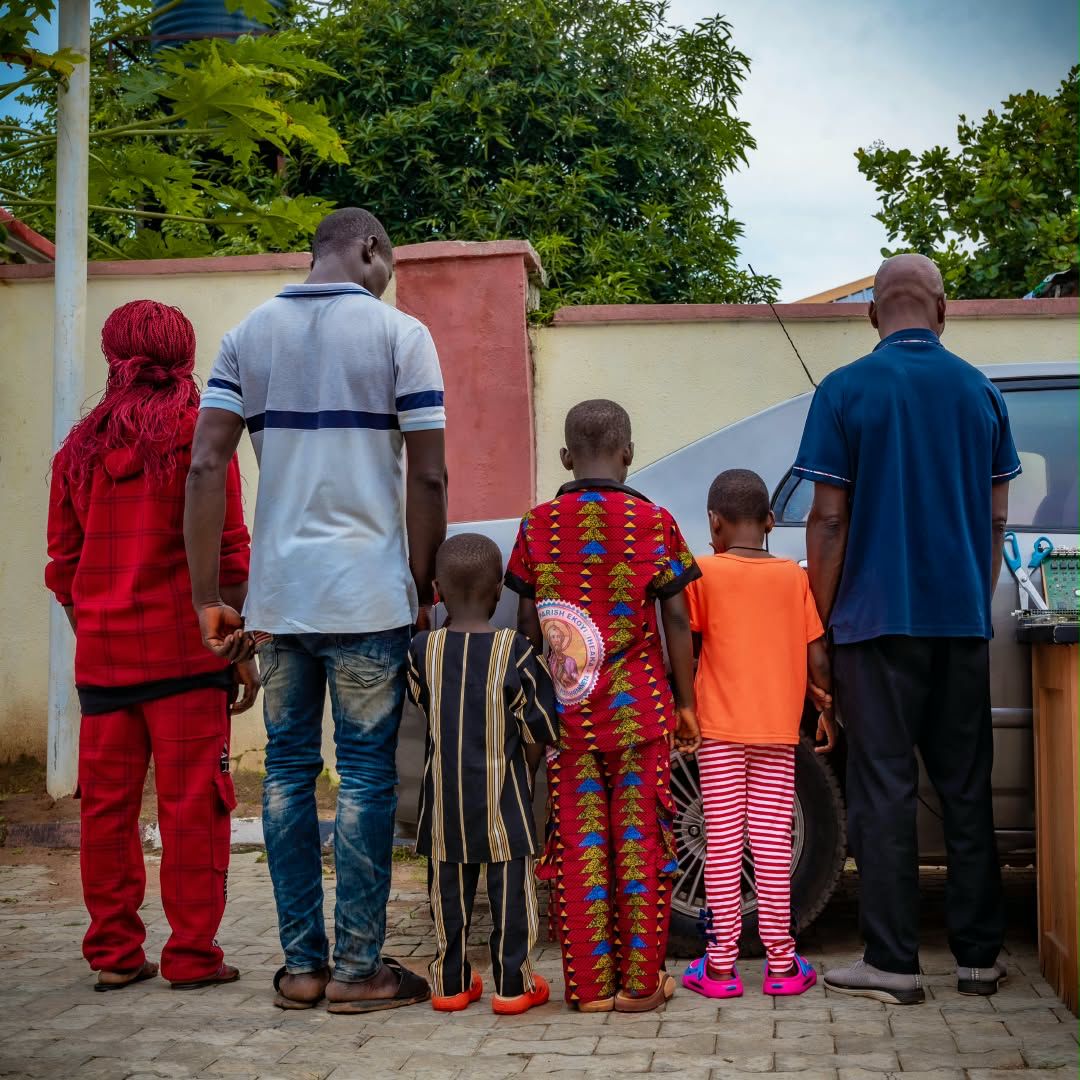
The Nigeria Security and Civil Defence Corps (NSCDC) has rescued 15 trafficked children, recovered three stolen service rifles and dismantled an inter-state syndicate involved in the vandalism and theft of telecommunications infrastructure across Delta and Kano States.
The breakthroughs were recorded by the Commandant General’s Special Intelligence Squad (CG’s SIS) in a series of intelligence-led operations targeting child trafficking, illegal arms diversion, internal corruption and critical infrastructure vandalism.
The National Public Relations Officer of the Corps, Assistant Commandant of Corps Babawale Afolabi, disclosed this in a statement issued on Friday.
He said the operations were conducted in line with the zero-tolerance policy of the Commandant General, Prof. Ahmed Audi, towards crime, corruption and the destruction of national assets.
On child trafficking, Afolabi said the squad commenced investigation following a petition over missing children in Kokona Local Government Area of Nasarawa State.
Investigations, he said, uncovered a syndicate allegedly led by one Anderson Archibong, who posed as an official of an organisation operating a purported “Back to School Project” under the National Council of Child Rights Advocate.
According to him, Archibong allegedly exploited low-income parents before trafficking their children to buyers across the country.
He said 16 children were fraudulently taken in January 2026 and allegedly sold for ₦2 million each.
“Through intelligence-led operations across transit routes, 15 of the 16 children were successfully rescued in Anambra, Imo, Enugu and other eastern transit corridors,” he said.
Afolabi added that three alleged buyers—Joy Julius, Ngozi and Eze Lazarus—were arrested and had confessed to their involvement, while efforts were ongoing to locate the remaining child.
In a separate investigation into illegal arms diversion, CG’s SIS operatives traced a missing AK-47 rifle to a serving NSCDC officer attached to the CG’s Crack Squad.
The officer, CAII Igah Ameh James, was allegedly found to have stolen an assigned AK-47 rifle, with breach number 02028, abandoned his duty post and transported the weapon to Otukpo, Benue State.
Investigators established that James allegedly sold the rifle to a middleman, Abakpa Simon Anthony, for ₦700,000, while Anthony subsequently sold it to an alleged illicit arms buyer, Sunday Akor, also known as IBB, for ₦800,000.
The rifle and two empty magazines were recovered following the arrest of the suspects.
The Corps also uncovered another arms diversion case at its Adamawa State Command following an armoury inventory audit.
Afolabi said the investigation led to the arrest of ASCI Peter Ardo, a former Head of Armoury, and CCA Boniface Lawyer.
He said investigations revealed that between 2018 and 2024, Ardo allegedly removed two unserviceable G3 service rifles, with breach numbers 10S838 and 69112944, from the armoury and sold them to Lawyer for ₦210,000 and ₦220,000 respectively.
The weapons were subsequently resold to a civilian, while Ardo allegedly altered physical inventory registers to conceal the removals and evade detection during routine checks.
Both officers, he said, were in custody after allegedly making full confessions.
Meanwhile, the CG’s SIS has also dismantled a network allegedly responsible for vandalising telecommunications infrastructure in Delta and Kano States.
Afolabi said operatives arrested Henry Dennis while allegedly vandalising an IHS telecommunications tower site in Uvwie Local Government Area of Delta State, where 12 vandalised telecom panels were recovered.
Further investigation reportedly exposed a wider network allegedly involving a scrap-market owner and financier, Yusuf Musa, who is accused of financing the theft operations and facilitating the resale of stolen telecommunications components.
The Corps said financial tracing uncovered suspicious transactions conducted through digital payment platforms, while efforts were underway to obtain search and arrest warrants for other members of the syndicate who remained at large.
The Commandant General commended the CG’s SIS for what he described as its tactical coordination and operational efficiency.
The NSCDC said internal administrative and disciplinary proceedings against implicated personnel had been concluded, while its Directorate of Legal Services had been directed to commence prosecution of the arrested suspects before courts of competent jurisdiction.
The Corps reaffirmed its commitment to protecting vulnerable citizens, safeguarding critical national infrastructure and maintaining integrity and accountability within its ranks.
NSCDC Rescues 15 Trafficked Children, Recovers Stolen Rifles, Busts Telecom Vandalism Syndicate
Troops rescue two abducted victims, recover terrorists’ motorcycles in Katsina
By Zagazola Makama
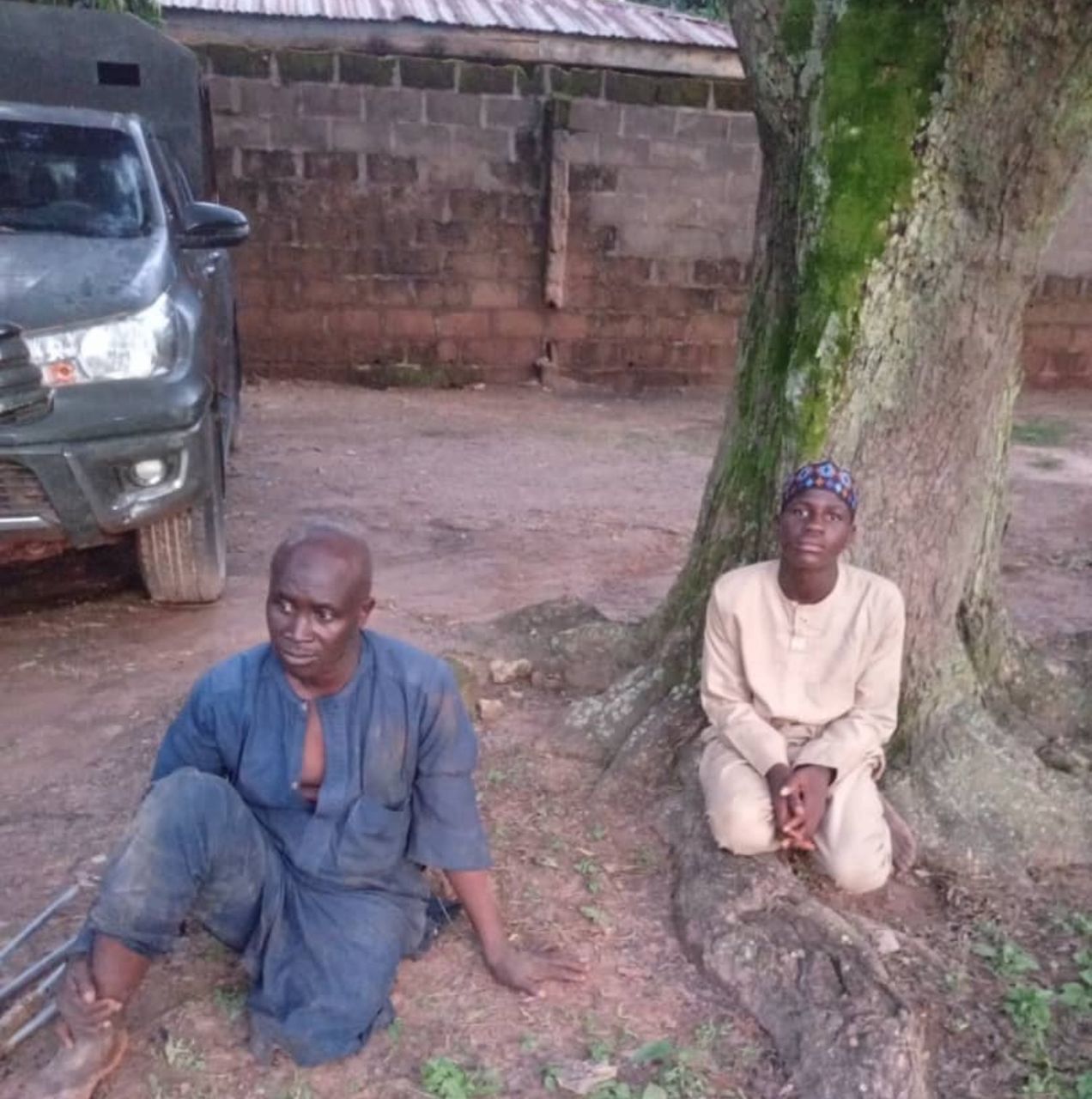
Troops of Sector 2, Operation FANSAN YAMMA, have rescued two abducted victims and recovered two motorcycles belonging to terrorists during a counter-terrorism operation in Sabuwa Local Government Area of Katsina State.
The troops, deployed for counter-terrorism and anti-banditry operations in the state, encountered an armed terrorist group while conducting routine security operations in the area.
The troops engaged the terrorists with superior firepower, forcing them to flee in disarray into the surrounding terrain.
During a subsequent search and clearance operation along the terrorists’ escape route, the troops rescued two male victims who had earlier been abducted along the Dandume–Damari axis.
The troops also recovered two motorcycles reportedly used by the terrorists to conduct their criminal activities.
The rescued victims are currently receiving necessary care and assessment before being reunited with their families.
Troops have maintained a heightened state of vigilance in the general area to safeguard local communities and prevent further attacks and criminal activities along critical transit corridors.
The operation forms part of the ongoing efforts by Operation FANSAN YAMMA to disrupt terrorist and bandit networks and restore lasting peace across the North-West.
Troops rescue two abducted victims, recover terrorists’ motorcycles in Katsina
Troops rescue 23 abducted civilians, foil kidnapping attempt in Zamfara
By Zagazola Makama
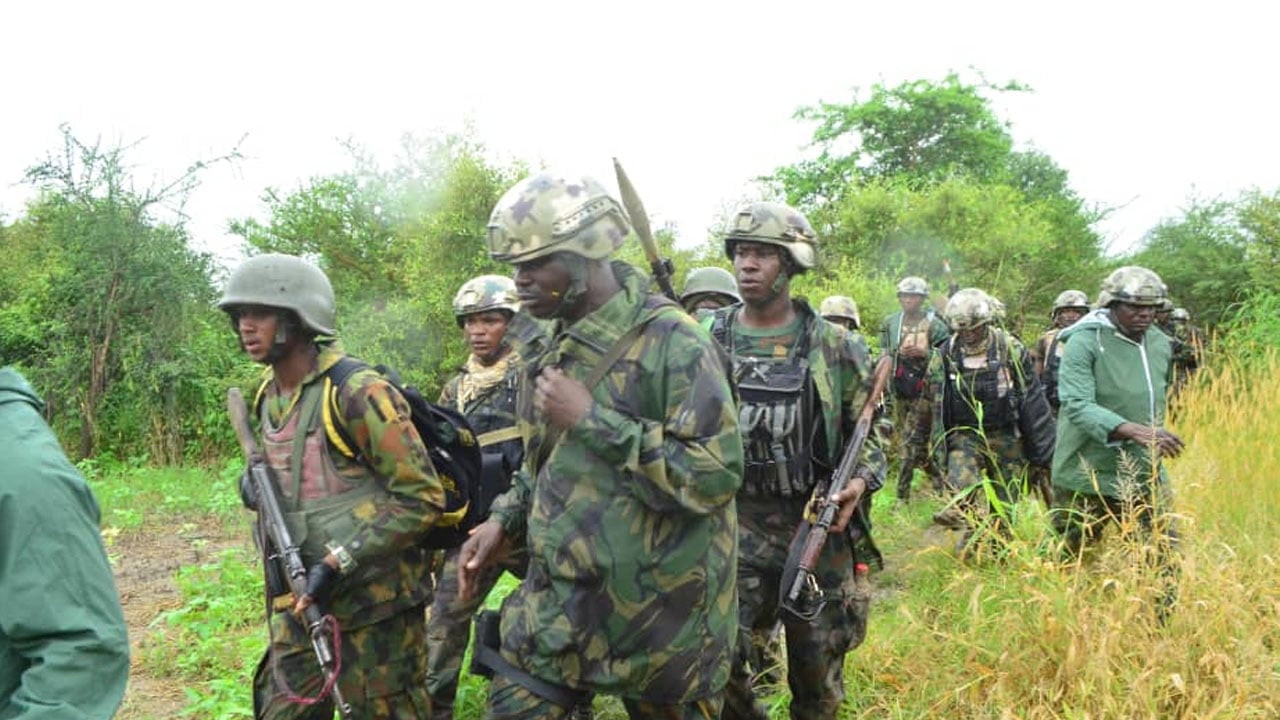
Troops of Operation FANSAN YAMMA have rescued 23 abducted civilians and foiled a separate kidnapping attempt during operations in Zamfara State.
The operations were conducted as part of ongoing counter-terrorism and anti-banditry efforts to disrupt criminal groups operating across the state.
In Anka Local Government Area, troops on combat patrol around the outskirts of Wuya Town encountered a group of terrorists and successfully secured the release of 23 kidnapped civilians.
The victims comprised three adult males and 20 females. Preliminary debriefing revealed that they were abducted from Gummi Local Government Area and had been held in captivity for about three weeks.
The rescued victims are currently receiving medical attention and other necessary support before being reunited with their families.
In a separate operation in Bungudu Local Government Area, troops responded to intelligence indicating that armed bandits had infiltrated Dankurmi Town with the intention of abducting residents.
The troops swiftly mobilised to the area and engaged the attackers in a heavy firefight.
The superior firepower of the troops forced the bandits to retreat without succeeding in abducting any civilian.
According to security sources, traces of blood were subsequently discovered along the terrorists’ withdrawal route, indicating that some of the attackers may have sustained gunshot wounds during the encounter.
Troops have maintained a strong presence in the area and are continuing operations to track the fleeing terrorists.
The latest successes further demonstrate the sustained efforts of Operation FANSAN YAMMA to rescue abducted citizens, disrupt bandit networks and restore security across Zamfara State.
Troops rescue 23 abducted civilians, foil kidnapping attempt in Zamfara

APC received 5000 decampees in Yobe

Borno APC candidate, Gubio attacked by ISWAP as security forces repel deadly ambush

NSCDC Rescues 15 Trafficked Children, Recovers Stolen Rifles, Busts Telecom Vandalism Syndicate

Roger Federer’s Shock as DNA Results Reveal Myla and Charlene Are Not His Biological Children

THE PLIGHT OF FARIDA

FAILED COUP IN BURKINA FASO: HOW TRAORÉ NARROWLY ESCAPED ASSASSINATION PLOT AMID FOREIGN INTERFERENCE CLAIMS
-
 News2 years ago
Roger Federer’s Shock as DNA Results Reveal Myla and Charlene Are Not His Biological Children
-
Opinions5 years ago
THE PLIGHT OF FARIDA
-
 News1 year ago
FAILED COUP IN BURKINA FASO: HOW TRAORÉ NARROWLY ESCAPED ASSASSINATION PLOT AMID FOREIGN INTERFERENCE CLAIMS
-

 News2 years ago
EYN: Rev. Billi, Distortion of History, and The Living Tamarind Tree
-
 Opinions5 years ago
POLICE CHARGE ROOMS, A MINTING PRESS
-

 ACADEMICS3 years ago
A History of Biu” (2015) and The Lingering Bura-Pabir Question (1)
-

 Columns3 years ago
Army University Biu: There is certain interest, but certainly not from Borno.
-

 Politics1 year ago
2027: Why Hon. Midala Balami Must Go, as Youths in Hawul and Asikira/Uba Federal Constituency Reject ₦500,000 as Sallah Gift
