
News
ECOWAS Court Orders Nigeria to Pay Journalist ₦10m for Rights Violations During #EndBadGovernance Protest

ECOWAS Court Orders Nigeria to Pay Journalist ₦10m for Rights Violations During #EndBadGovernance Protest
By: Michael Mike
The ECOWAS Community Court of Justice has found the Federal Republic of Nigeria liable for violating the fundamental rights of journalist and President of the Nigerian Union of Journalists (NUJ), FCT Correspondents’ Chapel, Mr. Jide Oyekunle, during the nationwide #EndBadGovernance protests in Abuja and ordered the government to pay him ₦10 million in compensation.
In a landmark judgment delivered on June 22, 2026, in suit No. ECW/CCJ/APP/29/25, the regional court held that Nigerian authorities violated Jide’s rights to freedom of expression, personal liberty, human dignity, protection against torture and degrading treatment, and his right to own and enjoy property following his treatment by security agents while covering the protest at Eagle Square on August 1, 2024.
The court also directed the Nigerian government to submit, within three months, a report detailing steps taken to implement the judgment and ordered it to bear the costs of the proceedings.
Jide had approached the regional court alleging that police officers assaulted him, unlawfully detained him and confiscated his professional equipment while he was performing his duties as a journalist during the protest. He claimed that security operatives fired tear gas at the protest venue, seized his mobile phone for about eight hours and damaged his Canon camera. He further alleged that he was subsequently subjected to unlawful surveillance and monitoring of his telephone communications.
The journalist sought declarations that his rights to freedom of expression, liberty, dignity, property and privacy had been breached and demanded ₦505 million in general and special damages.
The Nigerian government denied the allegations and argued that the protest had become violent, necessitating the deployment of security personnel to secure the Three Arms Zone in Abuja. It further contended that Jide’s temporary detention was lawful and resulted from his refusal to comply with directives issued by law enforcement officers.
However, the three-member panel of the court, presided over by Justice Ricardo Cláudio Monteiro Gonçalves and comprising Justices Sengu Mohamed Koroma and Edward Amoako Asante, dismissed the government’s defence, holding that the applicant was engaged in legitimate journalistic activity on a matter of significant public interest and that the state failed to provide any lawful basis for interfering with his work or confiscating his mobile phone.
The court ruled that the actions of security agents amounted to a violation of the journalist’s right to freedom of expression as guaranteed under the African Charter on Human and Peoples’ Rights and the International Covenant on Civil and Political Rights.
The judges further held that Nigeria failed to produce evidence of any judicial warrant or lawful process to justify Jide’s detention and consequently declared the detention arbitrary and a breach of his right to liberty and security of person.
Relying on video and photographic evidence tendered by the applicant, the court also found that security agents physically assaulted and dragged the journalist while he was carrying out his professional duties. It ruled that such treatment amounted to degrading treatment and torture and faulted the Nigerian authorities for failing to conduct an effective investigation into the allegations.
The court equally held that there was sufficient evidence to establish that Jide’s mobile phone was unlawfully confiscated during the protest, thereby violating his right to own and enjoy property.
However, the regional court declined to award special damages relating to the alleged destruction of his camera, holding that the evidence presented was insufficient to establish state responsibility for the damage. It also dismissed his claim that his right to privacy had been violated, ruling that he failed to provide sufficient evidence linking the alleged surveillance, interception of communications and deletion of data to state security agents.
The judgment is one of the most significant pronouncements by the ECOWAS Court on the protection of journalists and press freedom in recent years and comes amid persistent concerns by media and human rights organisations over the treatment of journalists covering protests and civil unrest in Nigeria. It reinforces the principle that journalists performing their professional duties, particularly while reporting on matters of public interest, are entitled to protection under regional and international human rights instruments and that states have a legal obligation to ensure that security operations do not infringe upon fundamental freedoms guaranteed by law.
ECOWAS Court Orders Nigeria to Pay Journalist ₦10m for Rights Violations During #EndBadGovernance Protest


NHRC Raises Alarm Over Rising Drug Abuse, Demands Human Rights-Based Response
By: Michael Mike
The National Human Rights Commission (NHRC) has expressed grave concern over the rising incidence of drug abuse and illicit drug trafficking in Nigeria, warning that the growing menace poses serious threats to public health, national security, human dignity and sustainable development.
The Executive Secretary of the Commission, Tony Ojukwu, made the remarks in a message marking the 2026 International Day Against Drug Abuse and Illicit Trafficking, describing substance abuse, particularly among young Nigerians, as an alarming crisis requiring urgent and coordinated intervention from all sectors of society.
According to Ojukwu, while the fight against drug abuse and illicit trafficking remains imperative, responses must be firmly rooted in human rights principles and the rule of law. He stressed that efforts to tackle the menace should be guided by the provisions of the 1999 Constitution, which guarantees citizens’ rights to life, dignity, liberty and fair hearing, as well as the provisions of the Mental Health Act 2021 and the National Health Act 2022.
He further noted that Nigeria’s response must also align with its international obligations under instruments such as the International Covenant on Civil and Political Rights, the International Covenant on Economic, Social and Cultural Rights, the African Charter on Human and Peoples’ Rights and the UN Drug Control Conventions.
The NHRC boss emphasised that individuals battling drug dependence should not be subjected to stigma, discrimination or degrading treatment. Rather, he said they should be guaranteed access to quality healthcare services, rehabilitation programmes, psychosocial support and opportunities for social reintegration.
Ojukwu observed that drug abuse has become a catalyst for numerous human rights violations, including domestic violence, criminality, human trafficking, exploitation and growing insecurity across communities, thereby undermining the enjoyment of fundamental rights and freedoms.
He stated that the Commission has consistently championed a public health approach to drug use and harm reduction in Nigeria, organising national legislative forums and other engagements aimed at stimulating public discourse and shaping evidence-based policies on drug use and addiction management.
The Executive Secretary called on the National Assembly to incorporate human rights safeguards into the proposed national policy on drug-use quantification thresholds. He urged lawmakers to clearly distinguish between individuals who use controlled substances for medicinal or therapeutic purposes and those engaged in drug trafficking and peddling, warning that people seeking treatment should not be criminalised.
He also called on government institutions, civil society groups, families, educational establishments, faith-based organisations and community leaders to intensify public awareness campaigns aimed at preventing drug abuse, especially among children and young people who are increasingly vulnerable to substance dependence.
Ojukwu further urged law enforcement agencies to strengthen the fight against illicit drug trafficking while ensuring full compliance with national and international human rights standards in the execution of their duties.
Reaffirming the Commission’s commitment to addressing the crisis, he said the NHRC would continue collaborating with relevant stakeholders to promote policies and programmes that tackle the underlying drivers of drug abuse, including poverty, unemployment, social exclusion and inadequate access to education and mental health services.
He called on Nigerians to collectively work towards building a society free from drug abuse, where the rights, dignity and well-being of every individual are protected and upheld.
NHRC Raises Alarm Over Rising Drug Abuse, Demands Human Rights-Based Response
News
Tinubu Reaffirms Commitment to Eradicating Drug Abuse, Commends NDLEA as Agency Seizes Drugs Worth N1.5tn in 18 Months
Tinubu Reaffirms Commitment to Eradicating Drug Abuse, Commends NDLEA as Agency Seizes Drugs Worth N1.5tn in 18 Months
By: Michael Mike
President Bola Tinubu on Friday reaffirmed Nigeria’s determination to tackle substance abuse and illicit drug trafficking through evidence-based and innovative interventions, declaring that his administration would continue to deploy a multi-pronged strategy to protect citizens and secure the country’s future.
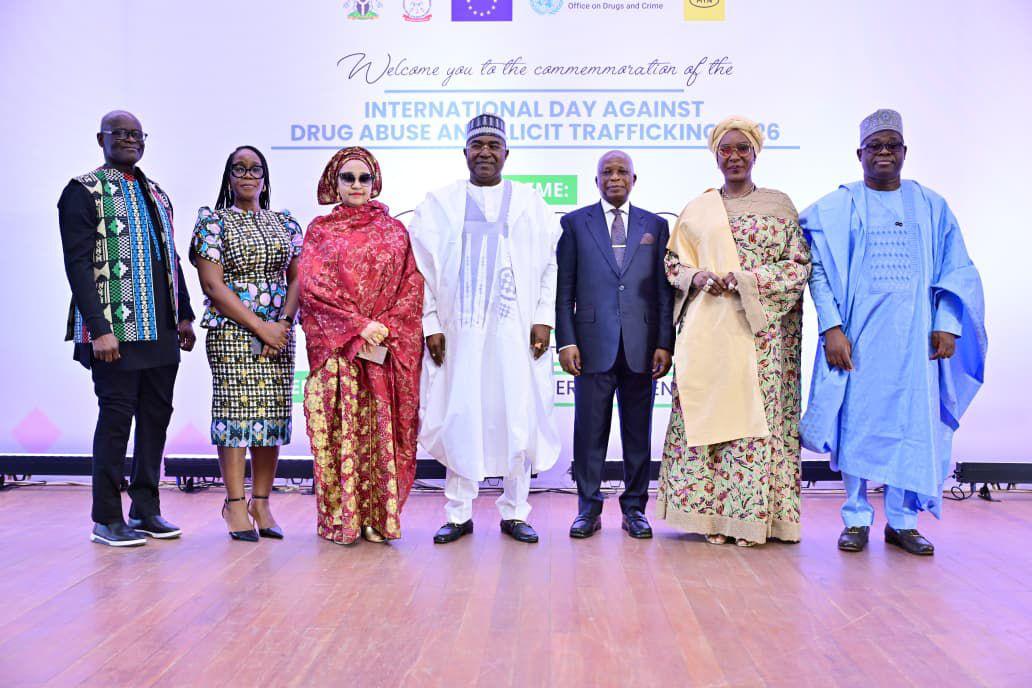
Speaking at the grand finale of activities marking the 2026 International Day Against Drug Abuse and Illicit Trafficking in Abuja, the President, represented by the Attorney General of the Federation and Minister of Justice, Prince Lateef Fagbemi (SAN), said the evolving global drug challenge requires vigilance, adaptability and collective action.
With this year’s theme, “The World Drug Problem: Persisting Issues, New Challenges, Innovative Responses,” Tinubu warned that the devastating impact of drug abuse extends beyond individual users to families, schools, workplaces and national security.
He said the federal government’s response under the Renewed Hope Agenda includes expanding access to education, promoting skills development, supporting entrepreneurship, creating employment opportunities and implementing social intervention programmes aimed at addressing the underlying factors that expose people, particularly young Nigerians, to substance abuse and criminal recruitment.
The President stressed that reducing the demand for illicit substances must go hand in hand with decisive efforts to disrupt supply chains through stronger border management, improved surveillance at airports, seaports and land borders, enhanced intelligence gathering and greater collaboration among national, regional and international law enforcement agencies.
According to him, science, technology and reliable data have become indispensable tools in combating the drug menace, noting that authorities must continue to improve their capacity to collect, analyse and utilise data for early detection of emerging trends and the design of effective interventions.
Tinubu also underscored the need to strengthen forensic laboratories, enhance technological capabilities and support scientific research to stay ahead of increasingly sophisticated drug networks and emerging psychoactive substances.
He added that law enforcement agencies, investigators, prosecutors and the courts all have critical roles to play in ensuring that criminal organisations are dismantled and offenders brought to justice.
The President used the occasion to commend the leadership and personnel of the National Drug Law Enforcement Agency (NDLEA), led by retired Brigadier General Mohamed Buba Marwa, for what he described as remarkable achievements in the fight against organised crime.
He praised the agency’s increased arrests and seizures, successful convictions, recovery of multi-billion-naira assets, extensive rehabilitation and advocacy campaigns, as well as the dismantling of organised drug cartels, including the syndicate behind the largest methamphetamine laboratory ever discovered in Nigeria.
According to him, these achievements demonstrate his administration’s zero tolerance for organised crime and unwavering commitment to protecting society from the devastating effects of narcotics.
However, Tinubu cautioned that government alone cannot win the war against drugs, calling on parents, families, schools, religious and traditional institutions, the media and the private sector to play active roles in prevention, awareness creation, treatment and rehabilitation initiatives.
He urged civil society organisations, international partners and citizens to strengthen their commitments toward building safer, healthier and drug-free communities.
In his welcome address, NDLEA Chairman and Chief Executive Officer, Brigadier General Buba Marwa (Rtd.), said Nigeria remains firmly aligned with the global community in confronting one of the most persistent threats to public health, national security, social stability and human development.
Marwa disclosed that despite increasingly sophisticated criminal networks, the agency had recorded major operational successes through intelligence-driven enforcement operations across airports, seaports, land borders and remote communities.
He highlighted the dismantling of the notorious Amadi Simon drug cartel in a collaborative operation involving the United States Drug Enforcement Administration and law enforcement authorities from Greece, France and Switzerland.
He also revealed that the agency had neutralised a sophisticated cross-continental methamphetamine syndicate with the arrest of a 63-year-old Nigerian drug kingpin, Innocent Anochili, alongside three Mexican nationals and six Nigerian accomplices.
The NDLEA boss further disclosed that the agency recently uncovered another industrial-scale clandestine methamphetamine laboratory hidden in a forest in Tapa village, Ibarapa North Local Government Area of Oyo State, where a Mexican national and four others were arrested and their multi-billion-naira drug infrastructure dismantled.
Marwa said the agency’s aggressive five-year campaign has significantly weakened drug trafficking operations in Nigeria, leading to the arrest of at least 234 drug barons who coordinated major trafficking networks across the country.
He revealed that in the last 18 months alone, the NDLEA recorded 29,262 arrests, seized 5,305,484.88 kilograms of assorted illicit drugs valued at more than N1.5 trillion and secured the conviction of 5,225 offenders.
According to him, the figures represent millions of lives saved, billions of naira in criminal proceeds confiscated and renewed hope for Nigeria’s young population.
Marwa emphasised that enforcement alone cannot solve the drug problem, noting that the agency has substantially expanded its drug demand reduction initiatives.
He disclosed that through the War Against Drug Abuse (WADA) campaign, the agency has carried out 6,645 sensitisation and awareness programmes in schools, worship centres, workplaces, markets, motor parks, communities and correctional facilities, reaching nearly five million Nigerians with drug prevention messages.
He added that 13,508 drug users had received counselling, treatment and rehabilitation services across the agency’s 31 rehabilitation centres nationwide within the same period.
In line with this year’s focus on innovative responses, Marwa said the agency is increasingly deploying technology, deep-web intelligence and advanced data analytics to identify emerging drug trends before they spread across communities. He also highlighted efforts to strengthen forensic and chemical analysis capabilities for improved detection of precursor chemicals and new psychoactive substances.
He further unveiled the agency’s Alternative Development Programme, described as the first of its kind in Africa, which seeks to provide illicit cannabis farmers with alternative and legitimate means of livelihood through the cultivation of crops such as cassava, maize, cowpeas and cocoa.
Marwa expressed appreciation to President Tinubu for his support and political will in the fight against drug trafficking and substance abuse, while also thanking local and international partners, civil society organisations, the media and community leaders for supporting the agency’s work.
Delivering the guest lecture titled “Celebrating Progress and Inspiring Collective Actions against Drug Abuse,” Professor Oluwatoyin Odeku of the Department of Pharmaceuticals and Industrial Pharmacy, University of Ibadan, said the progress recorded in the past five years provides ample reasons for optimism.
According to her, many once believed the war against drugs was unwinnable when the NDLEA was reinvigorated in 2021, but available data now tells a different story and offers reasons to celebrate.
The United Nations Office on Drugs and Crime (UNODC) also commended the Federal Government for adopting a balanced and coordinated approach to the drug problem.
Represented by Dr. Akanidomo Ibanga, UNODC Country Representative Cheikh Touré said Nigeria’s approach reflects a growing recognition that effective drug control must integrate supply and demand reduction strategies while being guided by evidence and respect for human rights.
He reaffirmed the UN agency’s commitment to supporting Nigeria through technical assistance, partnerships and innovative solutions tailored to realities on the ground.
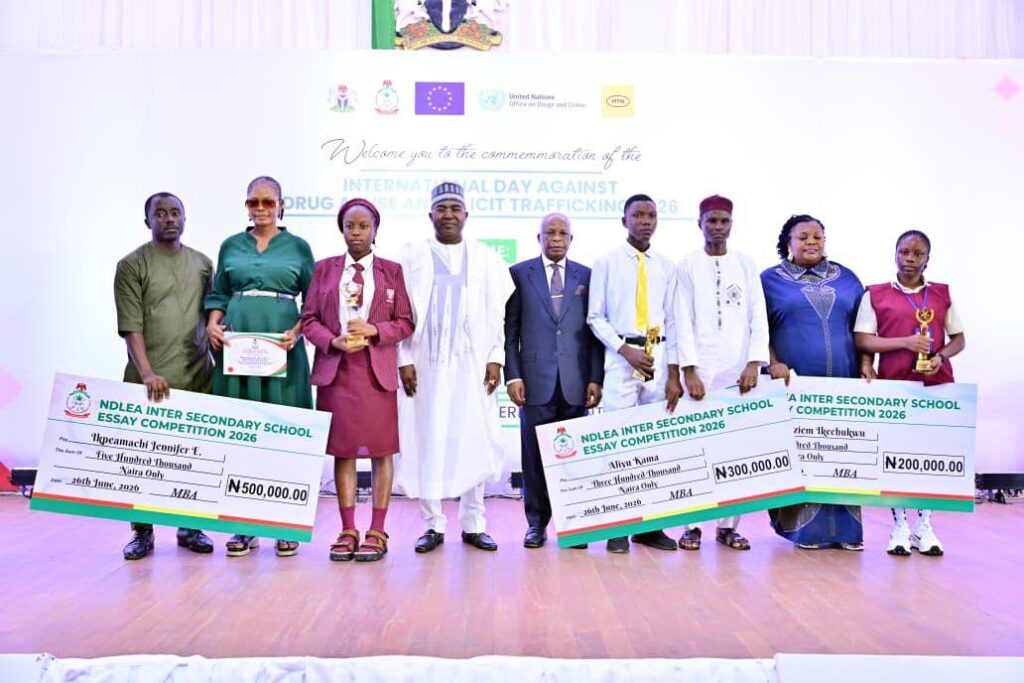
The event also featured the presentation of prizes to winners of the NDLEA inter-secondary school essay competition, with Ikpeamachi Jennifer of Federal Government College, Enugu, emerging overall winner and receiving N500,000 and a trophy. Aliyu Kama of General Murtala Muhammed College, Yola, came second and won N300,000, while Chiagoziem Ikechukwu of Mimshak Academy, Mbawsi, Abia State, finished third and received N200,000 and a trophy.
Tinubu Reaffirms Commitment to Eradicating Drug Abuse, Commends NDLEA as Agency Seizes Drugs Worth N1.5tn in 18 Months
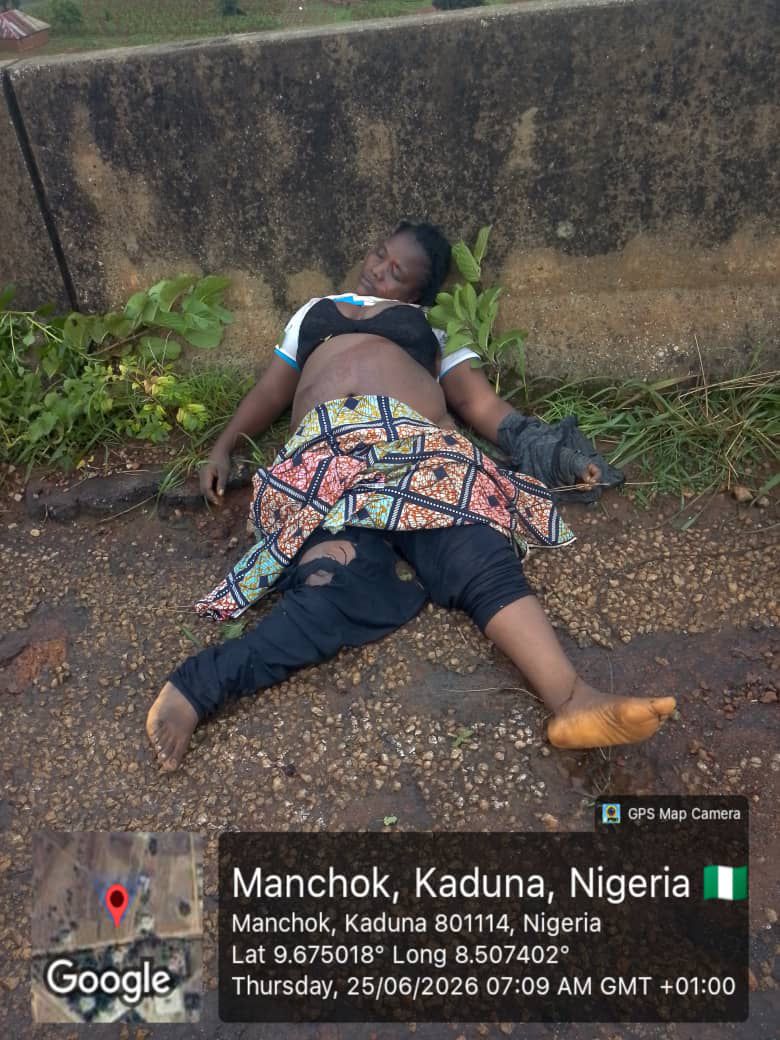
Troops recover body of unidentified woman along roadside in Plateau
By: Zagazola Makama
Troops of Operation Enduring Peace have recovered the body of an unidentified woman found by the roadside in Riyom Local Government Area of Plateau State.
Intelligence sources told Zagazola Makama that the discovery was made at about 7:00 a.m. on June 25 after troops of Sector 6 responded to a report of a corpse lying along the Bum axis in Ganawuri.
On arrival at the scene, the troops found the lifeless body of the woman bearing multiple injuries.
Preliminary assessment by security personnel indicated that the victim was suspected to have been knocked down by a vehicle.
The body was subsequently evacuated to the General Hospital, Riyom, where it was deposited in the mortuary pending identification and further investigation.
Security sources said efforts are ongoing to ascertain the identity of the deceased and the circumstances surrounding the incident.
Troops recover body of unidentified woman along roadside in Plateau

NHRC Raises Alarm Over Rising Drug Abuse, Demands Human Rights-Based Response

Tinubu Reaffirms Commitment to Eradicating Drug Abuse, Commends NDLEA as Agency Seizes Drugs Worth N1.5tn in 18 Months

Troops arrest suspect over assault on Nigerian Air Force personnel in Bauchi

Roger Federer’s Shock as DNA Results Reveal Myla and Charlene Are Not His Biological Children

THE PLIGHT OF FARIDA

FAILED COUP IN BURKINA FASO: HOW TRAORÉ NARROWLY ESCAPED ASSASSINATION PLOT AMID FOREIGN INTERFERENCE CLAIMS
-
 News2 years ago
Roger Federer’s Shock as DNA Results Reveal Myla and Charlene Are Not His Biological Children
-
Opinions4 years ago
THE PLIGHT OF FARIDA
-
 News1 year ago
FAILED COUP IN BURKINA FASO: HOW TRAORÉ NARROWLY ESCAPED ASSASSINATION PLOT AMID FOREIGN INTERFERENCE CLAIMS
-

 News2 years ago
EYN: Rev. Billi, Distortion of History, and The Living Tamarind Tree
-
 Opinions5 years ago
POLICE CHARGE ROOMS, A MINTING PRESS
-

 ACADEMICS2 years ago
A History of Biu” (2015) and The Lingering Bura-Pabir Question (1)
-

 Columns2 years ago
Army University Biu: There is certain interest, but certainly not from Borno.
-

 Politics1 year ago
2027: Why Hon. Midala Balami Must Go, as Youths in Hawul and Asikira/Uba Federal Constituency Reject ₦500,000 as Sallah Gift
