
News
Education Gets Highest Share as Zulum Presents N890.33bn 2026 Budget to Borno Assembly

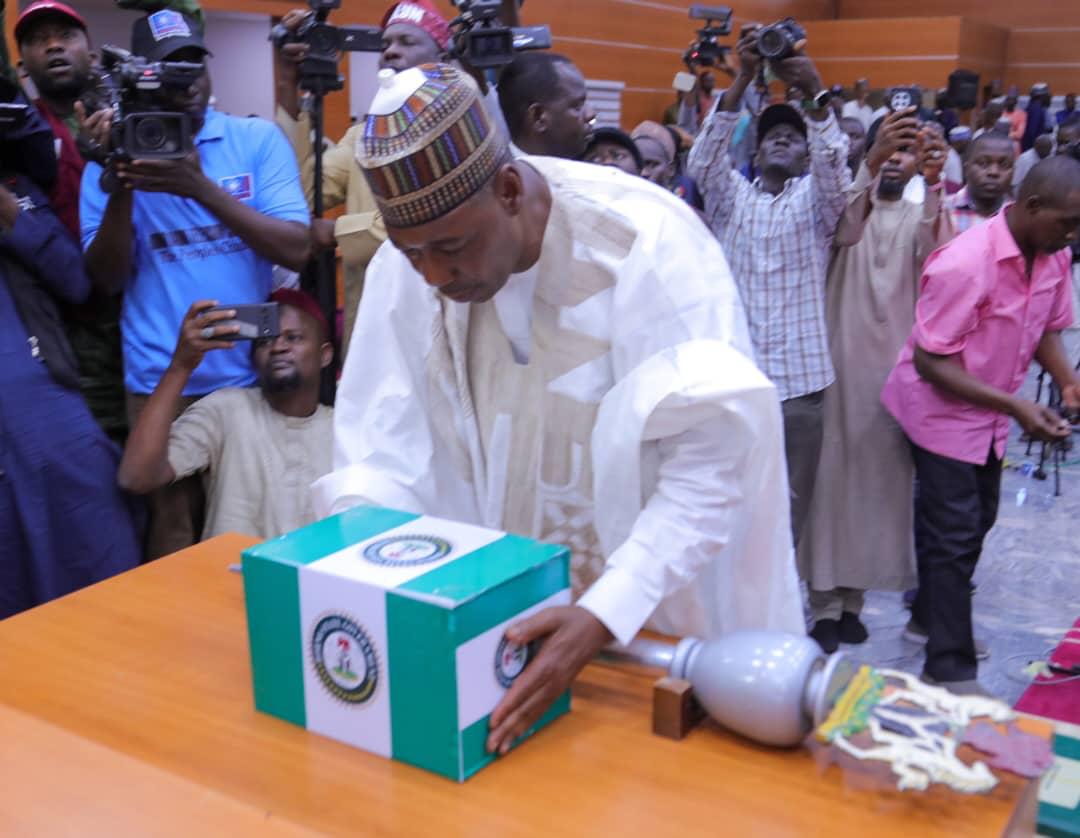
Education Gets Highest Share as Zulum Presents N890.33bn 2026 Budget to Borno Assembly
By: Michael Mike
Borno State Governor, Prof. Babagana Zulum has presented an N890.33 billion budget proposal for the 2026 fiscal year to the State House of Assembly, with the education sector receiving the largest allocation.
The budget, titled “Budget of Sustained Recovery and Growth,” places strong emphasis on capital development, with over 61 per cent of the total expenditure devoted to capital projects, while recurrent spending accounts for about 39 per cent.p
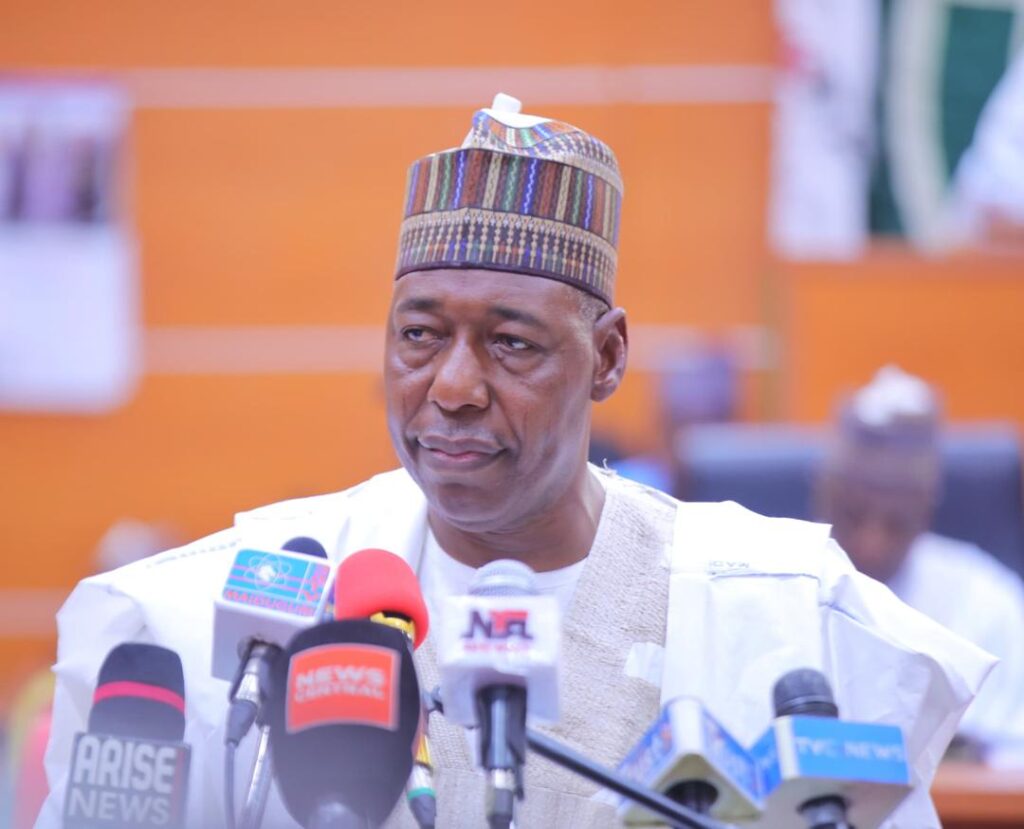
Addressing members of the House of Assembly, Zulum disclosed that the proposal comprises N353.77 billion for recurrent expenditure and N536.56 billion for capital expenditure, stressing that the spending plan is designed to deepen recovery efforts and accelerate development in the state.
According to the governor, the budget reflects the administration’s commitment to rebuilding infrastructure, revitalising the economy and improving the quality of life for residents following years of insurgency.
The sectoral breakdown of allocations showed that education tops the list with N135.43 billion. The funds are expected to support the construction and rehabilitation of schools, teacher recruitment, and scholarship programmes across the state.
The works and housing sector received N94.27 billion to fund road construction, bridge projects and housing development, while the health sector was allocated N66.41 billion for the completion of hospitals, procurement of medical equipment and supply of essential drugs.
Other key allocations include N58.71 billion for the Ministry of Reconstruction, Rehabilitation and Resettlement to facilitate the return and resettlement of displaced persons, N44.95 billion for agriculture to boost food production, and N21.35 billion for water resources projects. Funds were also set aside for information and internal security to strengthen peace and stability.
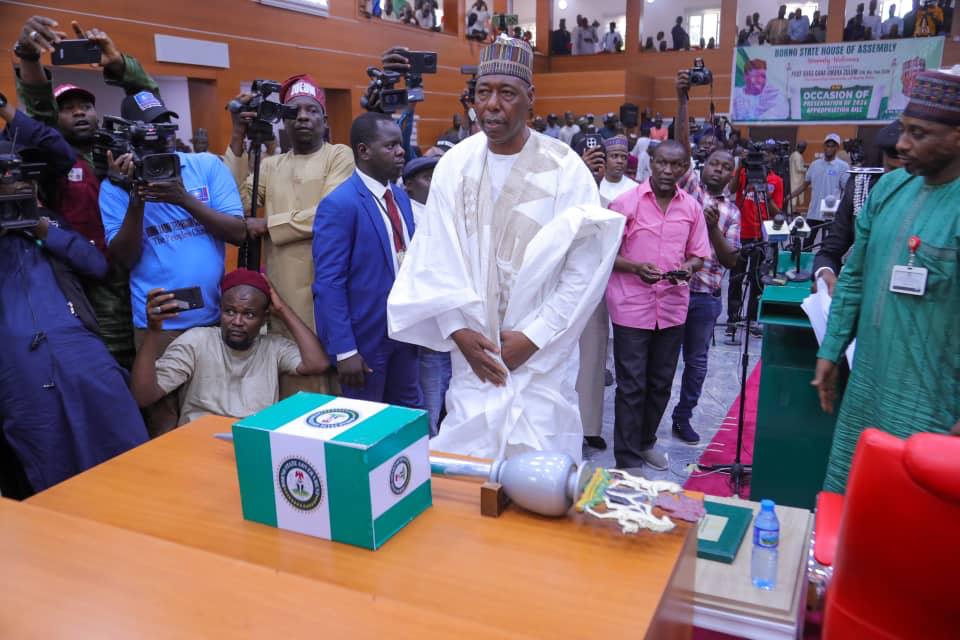
On the revenue side, the state expects N317.69 billion from the Federation Account, N44.30 billion from internally generated revenue, and N417.23 billion from capital receipts, including grants and development funds.
In his response, Speaker of the House of Assembly, Abdulkarim Lawan, assured the governor that the legislature would give the budget proposal prompt and thorough consideration to ensure it aligns with the state’s development priorities before passage.
Education Gets Highest Share as Zulum Presents N890.33bn 2026 Budget to Borno Assembly



Nigeria Condemns Fresh Houthi Attacks on Saudi Arabia
By: Michael Mike
The Federal Government has condemned the latest attacks by Houthi forces in Yemen on Saudi Arabia, warning that the renewed hostilities pose a grave threat to regional stability and could further endanger civilians and disrupt global energy supplies.
The Ministry of Foreign Affairs, in a statement signed by its spokesperson, Oluwafemi Adeniyi, said the attacks, which occurred on Monday, September 7, 2026, injured scores of civilians and damaged civil infrastructure in the Kingdom.
Nigeria described the development as a serious threat to the security and sovereignty of Saudi Arabia, as well as a potential source of wider instability across the Middle East.
The government urged all parties involved in the conflict to respect international law and exercise maximum restraint, stressing that further military actions could worsen the situation and place more civilian lives at risk.
Nigeria also warned against actions capable of disrupting the flow of global energy supplies, highlighting the wider economic consequences that prolonged instability in the Middle East could have on countries dependent on the region for energy.
The latest attacks come against the backdrop of the protracted conflict in Yemen involving the Iran-aligned Houthi movement and forces supporting Yemen’s internationally recognised government.
The Houthis, formally known as Ansar Allah, seized control of Yemen’s capital, Sanaa, in 2014, triggering a wider conflict that drew in Saudi Arabia and a coalition of Arab states. Saudi Arabia subsequently led a military intervention in Yemen in 2015 in support of the Yemeni government.
The conflict has since developed into one of the Middle East’s most complex security crises, with repeated missile and drone attacks by the Houthis targeting Saudi territory at various points during the conflict.
Although Saudi Arabia and the Houthis have pursued dialogue and de-escalation efforts in recent years, tensions in and around Yemen have remained closely linked to broader regional conflicts and security developments.
The Houthis have also emerged as a significant actor in regional maritime security, particularly following attacks launched against commercial shipping in the Red Sea amid the wider Middle East crisis. The developments have raised concerns over international trade, shipping routes and energy supplies.
Against this background, Nigeria urged all sides to avoid steps that could trigger further escalation.
The Federal Government said renewed violence could undermine ongoing efforts to promote peace and stability in the region while exposing more civilians and critical infrastructure to danger.
Nigeria expressed solidarity with the government and people of Saudi Arabia and wished those injured in the attacks a speedy recovery.
The government also reiterated its commitment to supporting peace processes and conciliatory frameworks capable of promoting regional peace, international security and stability.
It stressed that diplomatic efforts remain essential to preventing further escalation and creating conditions for lasting peace, shared prosperity and development in the Middle East.
Nigeria Condemns Fresh Houthi Attacks on Saudi Arabia
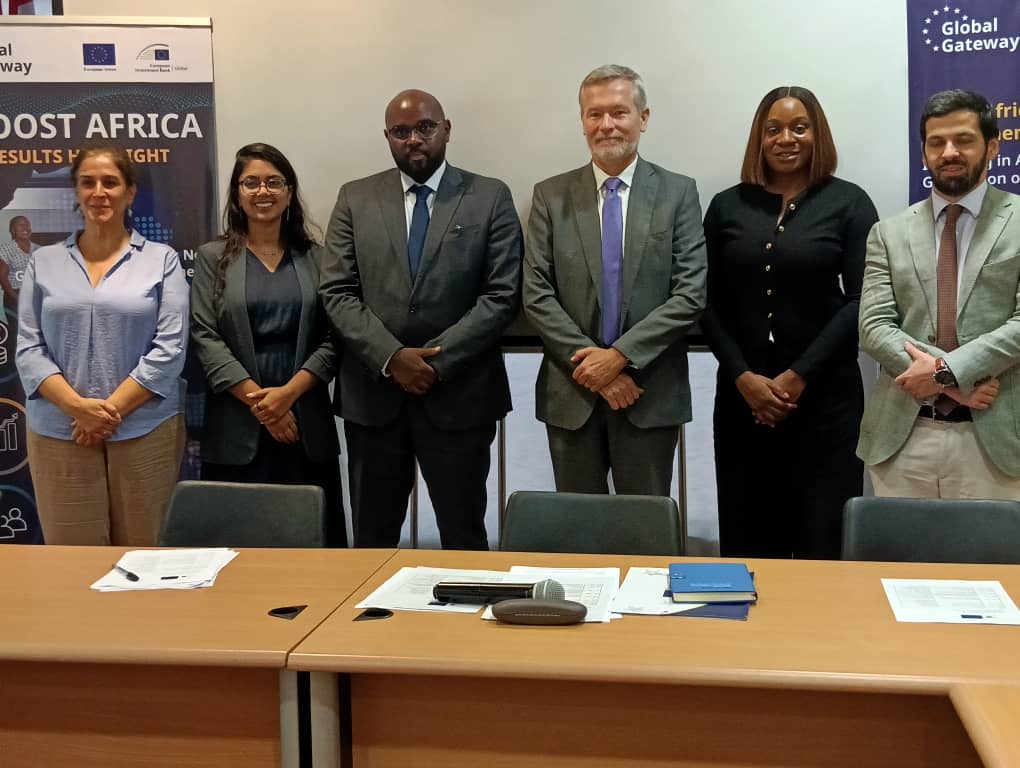
€108m EU-EIB Fund Unlocks €400m for African Businesses, Jobs
By: Michael Mike
A €108 million investment by the European Union (EU) and European Investment Bank (EIB) in Africa’s emerging businesses has succeeded in attracting an additional €400 million in capital, underscoring the growing push to use entrepreneurship as a major engine of job creation and economic transformation on the continent.
The investment, deployed through the Boost Africa initiative, has supported early-stage businesses and venture capital funds while helping to build an ecosystem capable of taking promising African companies from startup to regional expansion.
The development was disclosed in Abuja on Wednesday by EU Ambassador to Nigeria and ECOWAS, Gautier Mignot, during a media briefing ahead of the Boost Africa Impact Forum, themed, “Investing in Africa’s Next Generation of Entrepreneurs: From Investment to Impact.”
Mignot said the significance of the programme lay not simply in the money committed but in its ability to unlock much larger pools of capital and translate investment into businesses, employment and opportunities for Africa’s rapidly growing young population.
The initiative, he said, demonstrated how development finance could be used to reduce the risks associated with investing in young African businesses and encourage private investors to back entrepreneurs operating in markets where conventional financing remains difficult to obtain.
“For every single euro that was invested through Boost Africa, we were able to attract additional three euros through different investors,” EIB Country Relationship Manager for Nigeria, Moussa Nakoulima, said.
The leverage effect means that the €108 million deployed through the initiative has helped mobilise approximately €400 million in additional investment, significantly expanding the financial resources available to African entrepreneurs.
Beyond financing, the programme has been credited with supporting job creation, strengthening venture capital markets and helping African companies develop the capacity to expand beyond their domestic markets.
Nakoulima said Africa possessed a large pool of talented entrepreneurs capable of developing solutions to some of the continent’s most pressing problems, but warned that many promising businesses failed to reach scale because they could not secure capital at the earliest and riskiest stages of development.
He said the funding gap was particularly acute in sectors such as financial services, healthcare, digital technology and renewable energy, where innovative companies often required substantial investment before becoming commercially attractive to traditional lenders.
Boost Africa was established in 2016 by the EIB and African Development Bank, with backing from the EU and the Organisation of African, Caribbean and Pacific States (OACPS), specifically to address that challenge.
Rather than functioning as a conventional bank providing direct loans to individual businesses, the initiative channels investment through venture capital funds and financial intermediaries that identify and support high-potential startups and small businesses.
Nakoulima said the model was designed to make development finance catalytic rather than substitutive — using public and institutional capital to absorb some of the risks that private investors might otherwise avoid.
He said the programme combined three critical components: investment capital, technical assistance and ecosystem development.
The technical assistance component provides support in areas including accounting, legal structuring, market analysis, governance and business strategy, while ecosystem development connects entrepreneurs with incubators, accelerators, investors and other players capable of helping them scale.
The impact is already being seen in businesses operating across several African markets.
Investment Director at Cathay AfricInvest Innovation Fund, Lavanya Anand, said the €110 million fund had invested in 15 Series A technology companies across Africa, with the EIB serving as one of its anchor investors.
She said companies supported through the ecosystem were operating across healthcare, financial services, logistics, e-commerce and education technology.
The fund’s portfolio, she disclosed, had created 7,600 direct jobs and 272,000 indirect jobs, while reaching more than 46 million people with improved financial services and training more than 13,000 students.
One of the companies cited was Turaco, a technology-driven insurance company that has provided coverage to more than two million previously uninsured people across Kenya, Uganda, Nigeria, Ghana and Zambia.
Another beneficiary, OZE, received assistance in developing its banking partnership strategy, helping it establish relationships with financial institutions including Ecobank.
In Nigeria, the impact has also extended into the power sector.
Chief Strategy Officer of Beacon Power Services, Christine Adejorooluwa, said investment and technical assistance enabled the energy technology company to expand from serving one utility to 12 utilities across seven African countries.
She said the company’s technology helps electricity distribution companies improve visibility of their networks, reduce outages and limit energy losses and revenue leakages.
According to her, an independent study commissioned through Boost Africa found that BPS’s intervention at one utility prevented approximately 78,000 megawatt-hours of lost load.
At another utility, she said, the intervention contributed to a $191 million increase in revenue through measures including identifying new customers and reducing outage hours.
Adejorooluwa said the intervention demonstrated that the real value of development finance could be measured by what happens after the investment — stronger businesses, more reliable infrastructure, increased revenues and improved livelihoods.
“For me, that is what investment to impact really looks like,” she said.
For Nigeria, Mignot said the opportunity was particularly significant because of the country’s large youthful population and vibrant entrepreneurial ecosystem.
“Nigeria is one of Africa’s most dynamic entrepreneurial ecosystems, and we believe that supporting innovation and enterprise is essential for sustainable economic growth and job creation,” he said.
He said the EU’s approach under its Global Gateway strategy was to work with member states, development banks and private-sector partners as “Team Europe” to create investment partnerships capable of producing sustainable economic opportunities.
The initiative also seeks to produce businesses capable of crossing national borders and developing into African companies with regional and continental reach.
Nkoulima said the ultimate goal was to see entrepreneurs transform successful local ideas into businesses operating across multiple African markets.
“When an entrepreneur in Lagos develops a solution that can be subsequently operating in Ghana, in Côte d’Ivoire, in South Africa, in Kenya, we are beginning to see the real creation, value creation, creation of genuine Pan-African champions,” he said.
With Africa facing a persistent youth employment challenge and a large financing gap for small and emerging businesses, the EU-EIB-backed model highlights the potential of targeted development capital to attract private investment while helping African entrepreneurs turn innovation into scalable businesses and jobs.
€108m EU-EIB Fund Unlocks €400m for African Businesses, Jobs
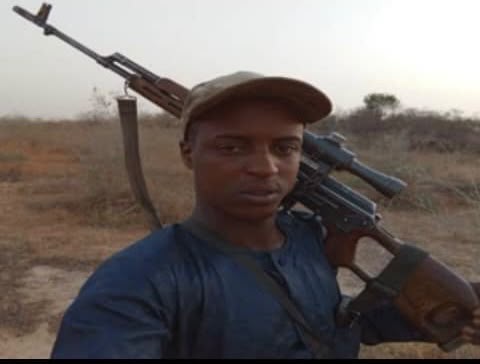
Troops neutralise terrorist, recover phones and cash in Zamfara
By: Zagazola Makama
Troops of Sector 2, Operation Fansan Yamma (OPFY), have neutralised a suspected terrorist during a counter-terrorism and anti-banditry operation in Shinkafi Local Government Area of Zamfara State.
Zagazola Makama gathered from military sources that the troops, deployed in the Galadi area of Sokoto State, sighted suspected terrorists riding motorcycles while attempting to cross a road in Shinkafi LGA.
The troops engaged the suspects with fire, neutralising one of them, while others reportedly fled the area.
Upon inspection, the deceased suspect was found wearing a woodland camouflage vest underneath his traditional kaftan.
Further exploitation of his mobile phone reportedly revealed photographs of the deceased wearing camouflage and allegedly brandishing a PKM machine gun.
The troops recovered four mobile phones and N30,350 in cash from the suspect.
The operation is part of ongoing efforts by security forces to disrupt terrorist and bandit activities across the North-West.
Troops neutralise terrorist, recover phones and cash in Zamfara

Nigeria Condemns Fresh Houthi Attacks on Saudi Arabia

Berom Militia attack herders in Plateau, kill fulani herders, shot seven livestock and rustle dozens in unprovoked assault

€108m EU-EIB Fund Unlocks €400m for African Businesses, Jobs

Roger Federer’s Shock as DNA Results Reveal Myla and Charlene Are Not His Biological Children

THE PLIGHT OF FARIDA

FAILED COUP IN BURKINA FASO: HOW TRAORÉ NARROWLY ESCAPED ASSASSINATION PLOT AMID FOREIGN INTERFERENCE CLAIMS
-
 News2 years ago
Roger Federer’s Shock as DNA Results Reveal Myla and Charlene Are Not His Biological Children
-
Opinions5 years ago
THE PLIGHT OF FARIDA
-
 News1 year ago
FAILED COUP IN BURKINA FASO: HOW TRAORÉ NARROWLY ESCAPED ASSASSINATION PLOT AMID FOREIGN INTERFERENCE CLAIMS
-

 News2 years ago
EYN: Rev. Billi, Distortion of History, and The Living Tamarind Tree
-
 Opinions5 years ago
POLICE CHARGE ROOMS, A MINTING PRESS
-

 ACADEMICS3 years ago
A History of Biu” (2015) and The Lingering Bura-Pabir Question (1)
-

 Columns3 years ago
Army University Biu: There is certain interest, but certainly not from Borno.
-

 Politics1 year ago
2027: Why Hon. Midala Balami Must Go, as Youths in Hawul and Asikira/Uba Federal Constituency Reject ₦500,000 as Sallah Gift
