
News
Entrepreneur Calls on Government to Rethink Youth Employment Strategy

Entrepreneur Calls on Government to Rethink Youth Employment Strategy
By: Michael Mike
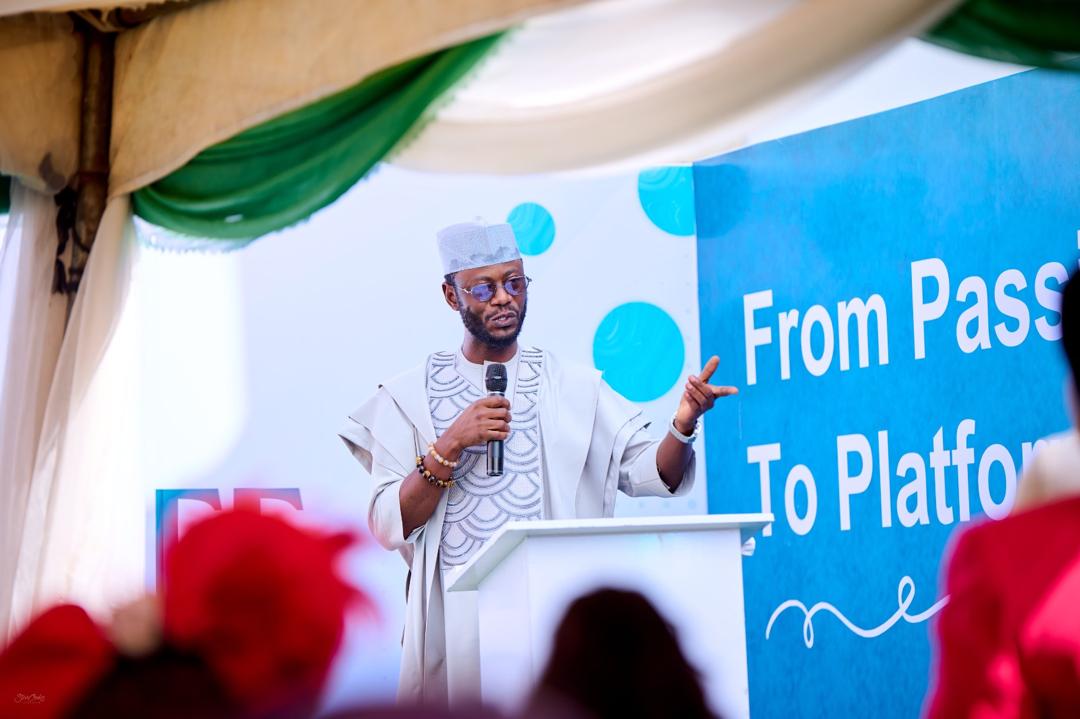
As Nigeria battles rising youth unemployment and mounting economic pressure, a fashion entrepreneur, Abdusalam Lukman, popularly known as Embroidery Chief, has made a bold case for embroidery and digital garment design to be adopted as a core pillar of the country’s youth employment strategy.
Speaking in Abuja at the launch of a large-scale embroidery warehouse, Lukman argued that Nigeria can no longer rely solely on conventional academic pathways to job creation, insisting that practical, technology-driven skills offer faster and more sustainable solutions.
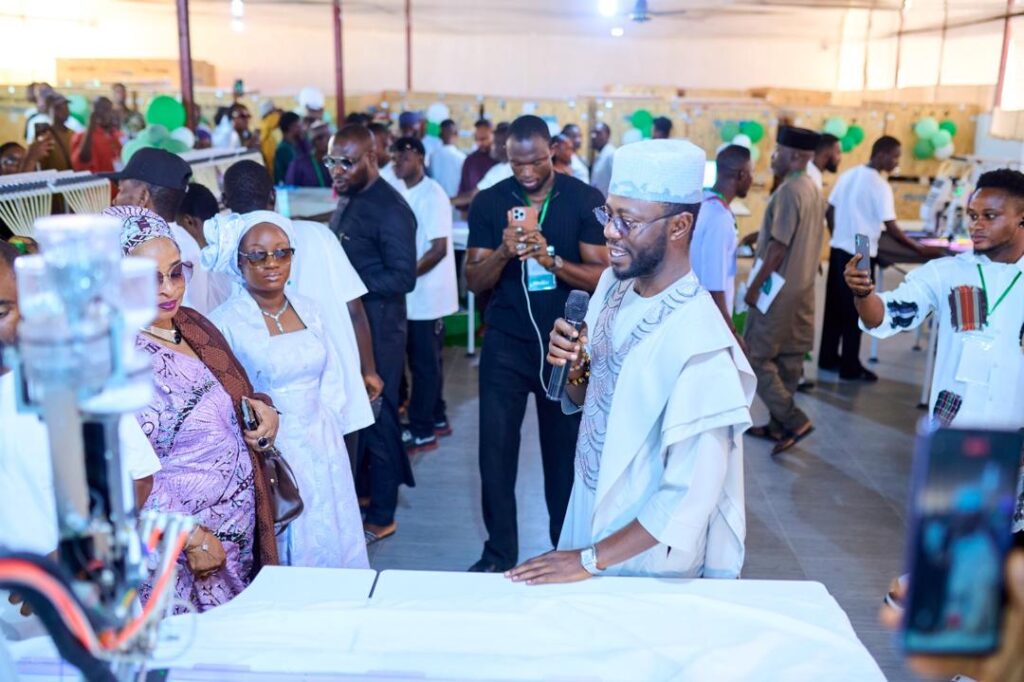
The new facility is projected to empower over 1,000 youths with modern embroidery and digital design expertise, positioning them for immediate employment or entrepreneurship.
Lukman described embroidery as an untapped labour-intensive industry with strong links to Nigeria’s booming fashion and creative sector.
According to him, formal government recognition and integration of embroidery into youth empowerment programmes could unlock thousands of jobs nationwide while easing pressure on the overstretched labour market.
He said: “Nigeria must start creating jobs locally and intentionally,” adding that: “Embroidery is not just sewing; it is technology, design, and production combined. It attracts young people, creates value quickly, and does not require years of university education to be productive.”
He called on the government to support structured training, certification and easier access to funding for industrial embroidery equipment.
Lukman explained that trainees at the warehouse are exposed to the full production chain — from operating and maintaining advanced industrial machines to digitising complex designs — enabling them to become job creators rather than job seekers.
Beyond employment, Lukman highlighted the macroeconomic implications of strengthening local embroidery production. He noted that many embroidered garments and fashion accessories are currently imported, draining foreign exchange that could be conserved through local manufacturing.
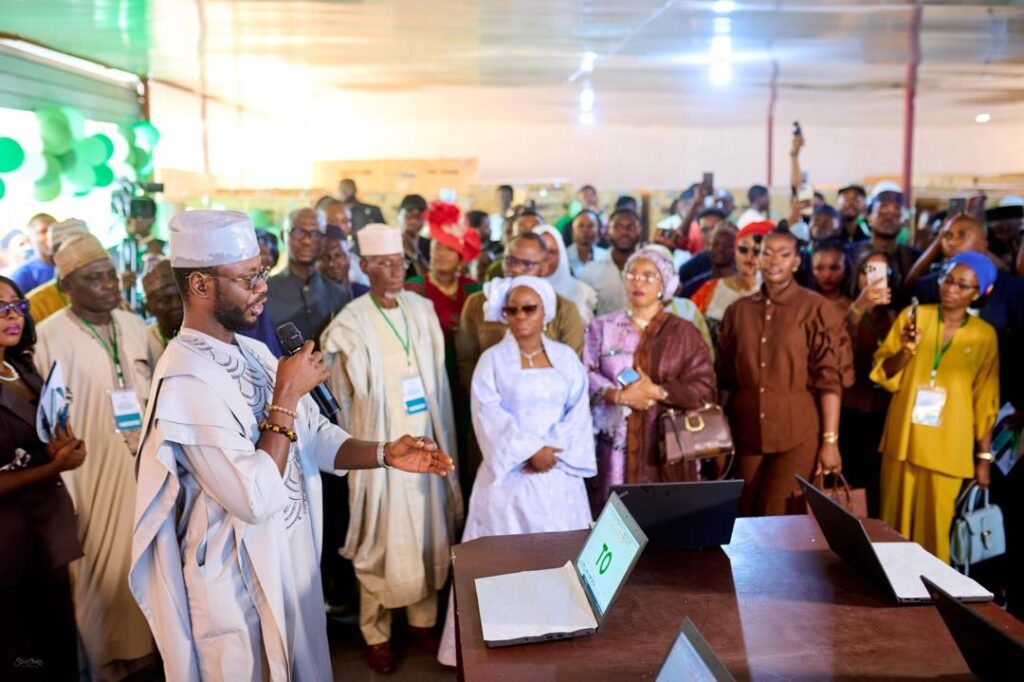
“If we produce locally what we currently import, we reduce pressure on foreign exchange and strengthen the economy at the same time,” he said.
The initiative’s training model blends free skills acquisition for machine owners with a monthly intake of selected applicants through an online process, while a growing digital community of over 500 members connects trained designers and machine operators with fashion businesses across the country.
The event also drew support from industry stakeholders and public figures, including Alhaji Aminu Yahaya and popular entertainer Real Warri Pikin, who urged lawmakers and government agencies to back local embroidery machinery distribution, maintenance and production. They stressed the need for backward integration to reduce dependence on imports and position Nigeria as a regional production hub.
Speakers at the launch agreed that with the right policy support, embroidery could evolve from a niche craft into a structured industrial subsector capable of driving employment, boosting GDP contributions and expanding Nigeria’s influence in the West African fashion market.
As debates continue over how best to tackle youth unemployment, Lukman’s proposal adds momentum to growing calls for government to shift focus toward practical, skills-based industries that combine technology, creativity and local production.
Entrepreneur Calls on Government to Rethink Youth Employment Strategy



Troops gun down kidnapper, recover locally fabricated rifle made in Plateau
By: Zagazola Makama
Troops of Sector 6, Operation ENDURING PEACE (OPEP), have neutralised a suspected kidnapper during a gun battle with a group of kidnappers at Angwan Boka in Riyom Local Government Area of Plateau State.
The troops, who were deployed in the area, engaged the suspected kidnappers at about 4:30 p.m. on Wednesday, Sept. 9, 2026, following a report of their activities in the area.
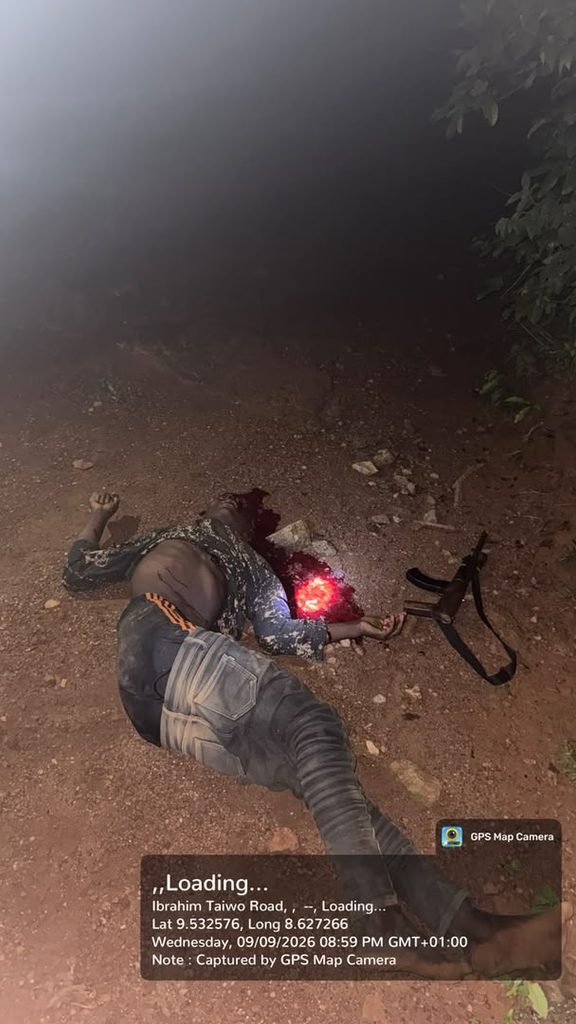
During the encounter, the troops brought their superior firepower to bear, neutralising one of the kidnappers, while others fled into the surrounding area.
The troops subsequently exploited the area and recovered one locally fabricated AK-47 rifle loaded with six rounds of 7.62mm special ammunition.
Security sources told Zagazola Makama that troops are currently conducting clearance operations in the area to track down and neutralise other fleeing members of the kidnapping gang.
The operation is part of ongoing efforts by troops of Operation ENDURING PEACE to disrupt criminal activities and improve security across Plateau State.
Troops gun down kidnapper, recover locally fabricated rifle made in Plateau

Mailantarki table tennis camp opens in Abuja
The highly anticipated high-performance table tennis training camp has officially commenced in Abuja, featuring six carefully selected young talents. The intensive program is being spearheaded by certified International Table Tennis Federation (ITTF) High-Performance Coach, Nasiru Bello, who has taken charge of preparing these rising stars for upcoming international championships.
This is contained in a press statement issued to journalists by Mr Adamu Usman Ahmed, Mailantarki’s media aide.
The highly organized camp, fully sponsored by the NTTF Vice President, Honourable Khamisu Ahmed Mailantarki, further underscores his unwavering commitment, passion, and continuous philanthropic gestures toward sports development in Northern Nigeria and the country at large.
Speaking on the opening day of the camp on Tuesday, Hon. Mailantarki expressed absolute confidence that the veteran coach will equip the players with the elite skills required to compete successfully on the global stage.
“I am deeply delighted to get this camping exercise underway in order to prepare our young talents to attain the highest level of the game,” Hon. Mailantarki stated.
“The choice of Coach Nasiru Bello, who happens to be the former NTTF Technical Director, will massively benefit these players. He has exactly what it takes to ensure they are fully prepared for international championships when the opportunity arises.”
The NTTF Vice President also hinted at massive plans for the future, adding; “We are just starting, we still have other developmental programs in the pipeline across various zones in the country.”
The high-performance camp which is well attended by young upcoming global stars Mathew Fabunmi, Mustapha mukhtar, Joseph Marvelous, Dominion Joseph, Joseph victor and Harison Jacob, is scheduled to run for one week, concluding with a grand closing and award ceremony on Monday, 14th September 2026.
Mailantarki table tennis camp opens in Abuja
Nigeria Condemns Fresh Houthi Attacks on Saudi Arabia
By: Michael Mike
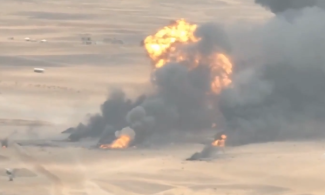
The Federal Government has condemned the latest attacks by Houthi forces in Yemen on Saudi Arabia, warning that the renewed hostilities pose a grave threat to regional stability and could further endanger civilians and disrupt global energy supplies.
The Ministry of Foreign Affairs, in a statement signed by its spokesperson, Oluwafemi Adeniyi, said the attacks, which occurred on Monday, September 7, 2026, injured scores of civilians and damaged civil infrastructure in the Kingdom.
Nigeria described the development as a serious threat to the security and sovereignty of Saudi Arabia, as well as a potential source of wider instability across the Middle East.
The government urged all parties involved in the conflict to respect international law and exercise maximum restraint, stressing that further military actions could worsen the situation and place more civilian lives at risk.
Nigeria also warned against actions capable of disrupting the flow of global energy supplies, highlighting the wider economic consequences that prolonged instability in the Middle East could have on countries dependent on the region for energy.
The latest attacks come against the backdrop of the protracted conflict in Yemen involving the Iran-aligned Houthi movement and forces supporting Yemen’s internationally recognised government.
The Houthis, formally known as Ansar Allah, seized control of Yemen’s capital, Sanaa, in 2014, triggering a wider conflict that drew in Saudi Arabia and a coalition of Arab states. Saudi Arabia subsequently led a military intervention in Yemen in 2015 in support of the Yemeni government.
The conflict has since developed into one of the Middle East’s most complex security crises, with repeated missile and drone attacks by the Houthis targeting Saudi territory at various points during the conflict.
Although Saudi Arabia and the Houthis have pursued dialogue and de-escalation efforts in recent years, tensions in and around Yemen have remained closely linked to broader regional conflicts and security developments.
The Houthis have also emerged as a significant actor in regional maritime security, particularly following attacks launched against commercial shipping in the Red Sea amid the wider Middle East crisis. The developments have raised concerns over international trade, shipping routes and energy supplies.
Against this background, Nigeria urged all sides to avoid steps that could trigger further escalation.
The Federal Government said renewed violence could undermine ongoing efforts to promote peace and stability in the region while exposing more civilians and critical infrastructure to danger.
Nigeria expressed solidarity with the government and people of Saudi Arabia and wished those injured in the attacks a speedy recovery.
The government also reiterated its commitment to supporting peace processes and conciliatory frameworks capable of promoting regional peace, international security and stability.
It stressed that diplomatic efforts remain essential to preventing further escalation and creating conditions for lasting peace, shared prosperity and development in the Middle East.
Nigeria Condemns Fresh Houthi Attacks on Saudi Arabia

Troops gun down kidnapper, recover locally fabricated rifle made in Plateau

Mailantarki table tennis camp opens in Abuja

Nigeria Condemns Fresh Houthi Attacks on Saudi Arabia

Roger Federer’s Shock as DNA Results Reveal Myla and Charlene Are Not His Biological Children

THE PLIGHT OF FARIDA

FAILED COUP IN BURKINA FASO: HOW TRAORÉ NARROWLY ESCAPED ASSASSINATION PLOT AMID FOREIGN INTERFERENCE CLAIMS
-
 News2 years ago
Roger Federer’s Shock as DNA Results Reveal Myla and Charlene Are Not His Biological Children
-
Opinions5 years ago
THE PLIGHT OF FARIDA
-
 News1 year ago
FAILED COUP IN BURKINA FASO: HOW TRAORÉ NARROWLY ESCAPED ASSASSINATION PLOT AMID FOREIGN INTERFERENCE CLAIMS
-

 News2 years ago
EYN: Rev. Billi, Distortion of History, and The Living Tamarind Tree
-
 Opinions5 years ago
POLICE CHARGE ROOMS, A MINTING PRESS
-

 ACADEMICS3 years ago
A History of Biu” (2015) and The Lingering Bura-Pabir Question (1)
-

 Columns3 years ago
Army University Biu: There is certain interest, but certainly not from Borno.
-

 Politics1 year ago
2027: Why Hon. Midala Balami Must Go, as Youths in Hawul and Asikira/Uba Federal Constituency Reject ₦500,000 as Sallah Gift
