
National News
Environment Ministry have strategies for nine priority areas-Ikeazor

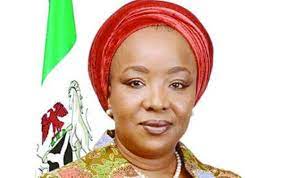
Environment Ministry have strategies for nine priority areas-Ikeazor
The Ministry of Environment has said the strategies have been developed along the nine priority areas of the present administration of President Muhammadu Buhari.
Speaking at the meeting of the 15th National Council of Environment in Abuja on Friday, the Minister of State for Environment, Chief Sharon Ikeazor said: “In fulfilling our mandate, the Ministry has developed strategies along the nine priority areas outlined by the current administration.”
She noted that the priority areas are: Build a thriving and sustainable economy; Enhance social inclusion and reduce poverty; Enlarge agricultural output for food security and export; Attain energy sufficiency in power and petroleum products and expand transport and other infrastructural development to achieve agriculture and food security and ensure energy sufficiency in power and petroleum products by/through taking targeted actions.
She said: “In fulfilling this mandate, the Ministry is accelerating the implementation of the Ogoni Clean-up through the Hydrocarbon Pollution Remediation Project (HYPREP). 15.3 Hectares of polluted land has so far been remediated into arable land suitable for agricultural activities in Ogoniland; currently on-going is the construction of six water supply schemes with a capacity of supplying 2400 cubic meters (m3) of portable water per day to communities across the four LGAs of Ogoniland.”
Ikeazor said “to realize the environment of our dreams, it is imperative to consistently tackle these environmental challenges which includes climate change, deforestation, desert encroachment, loss of biodiversity, flood and erosion, environmental pollution amongst others.”
The Minister who said the theme for the 15th Council of Environment is: “Appraisal of the Emerging Challenges and the opportunities in the Environment Sector: A call for Actions towards the Environment of our Dream,” said it was arrived at to reflect the current realities.
She noted that the Ministry is also accelerating the implementation of the Great Green Wall Programme, through its Agency, the National Agency for the Great Green Wall (NAGGW), which was established principally to reverse land degradation and desertification by supporting local communities in the sustainable management and use of natural resources to reduce poverty, enhance food security and promote sustainable livelihood.
Also Read: India reaches a billion COVID-19 vaccination milestone
She disclosed that the Agency has cumulatively increased the total average of arable land recovered from a baseline of 90 hectares in 2019 to 4,792 hectares by second quarter of 2021. It has also increased the number of trees (Orchards and Woodlots) Planted from 1,080,000 to 5,612,400.
She also disclosed that the Federal Department of Forestry and Forestry Research Institute of Nigeria (FRIN) has also increased the vegetation cover from the baseline of 155,200 trees in 2019 to 635,840 by the second quarter of 2021.
She noted that: “We have actively collaborated with the private sector to create a large number of well-paying jobs for Nigerian youths. The Ministry has been able to create 74,413 direct and indirect jobs through the implementation of various people oriented projects and programmes as of the second quarter of 2021. A total number of 25,263 persons classified as the rural and poorest of the poor have received various livelihood enhancement training and support and have gone ahead to make a decent living for themselves.”
She reiterated the nation’s commitment to the Nigeria Energy Transition Plan of universal access to energy by 2030; zero carbon emission by 2050; and industrialization to alleviate poverty and drive economic growth. Nigeria
Environment Ministry have strategies for nine priority areas-Ikeazor


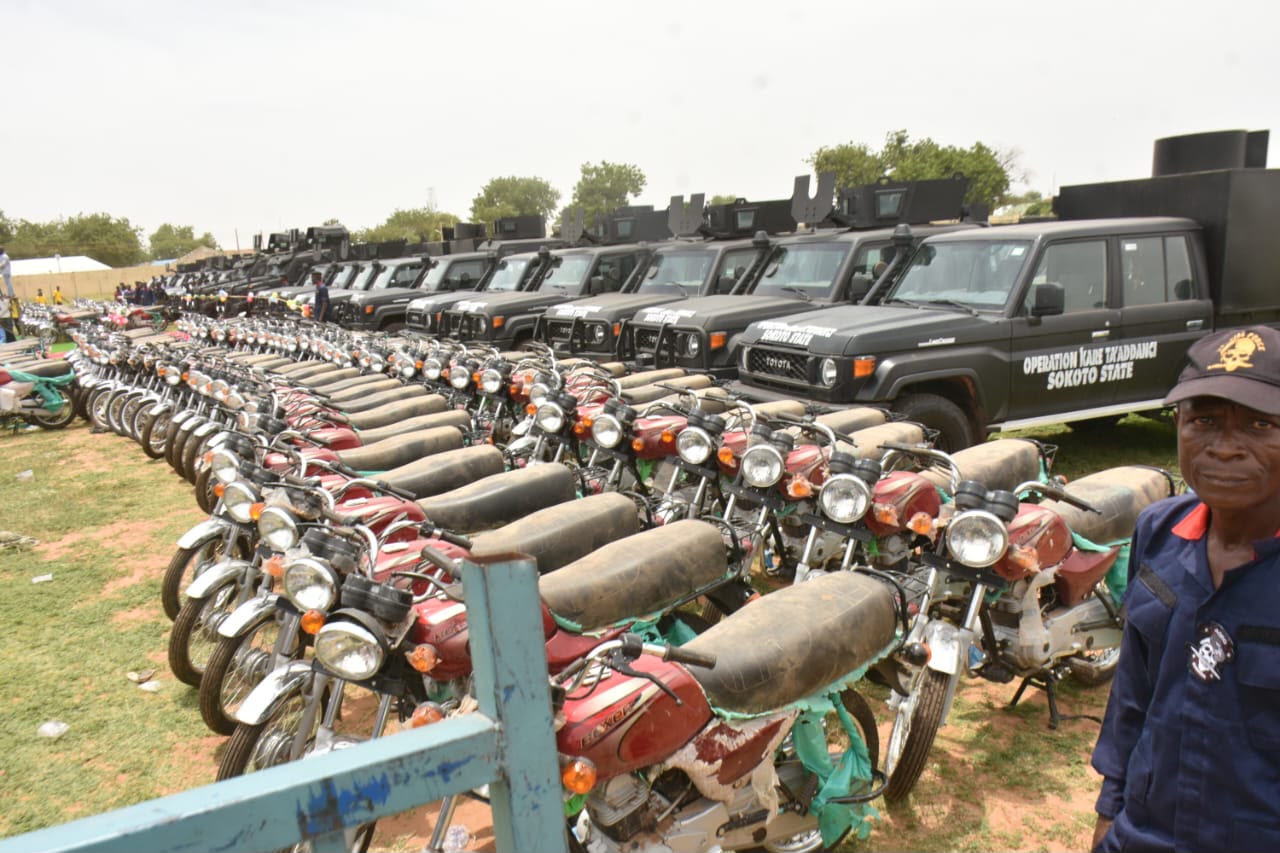
Sokoto donates 62 armoured vehicles, 320 motorcycles to security agencies
By: Zagazola Makama
The Christopher Gwabin Musa has expressed confidence that Nigeria’s current security challenges will soon be overcome, urging Nigerians to continue supporting security agencies in the fight against terrorism and banditry.
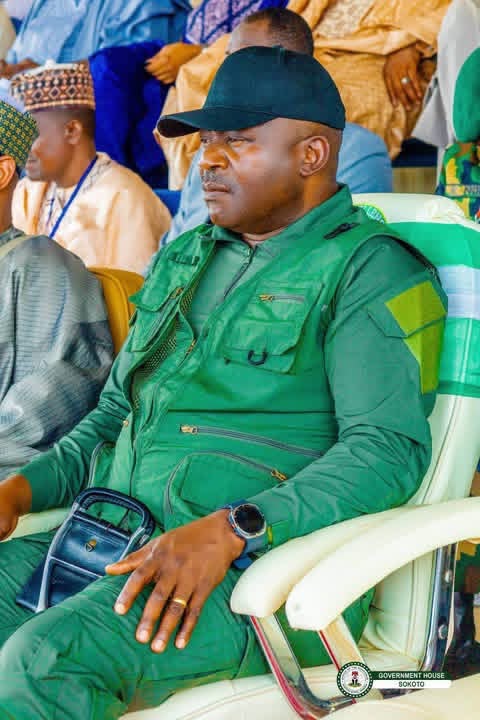
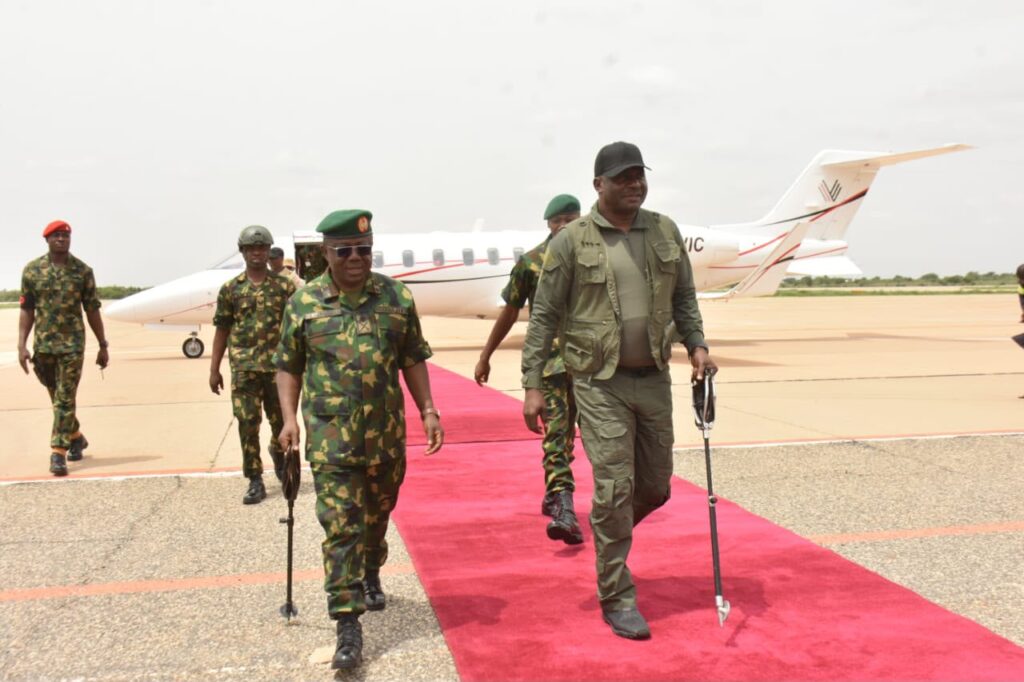
Musa made the remarks on Wednesday in Sokoto during the inauguration of 62 armoured vehicles and 320 motorcycles procured by the Sokoto State Government for deployment by various security agencies operating in the state.
The security assets, valued at about N27.7 billion, are expected to enhance the operational capabilities of security agencies in tackling banditry, terrorism, kidnapping and other violent crimes across the state.
The defence chief stressed the need for security personnel to remain resolute in confronting criminal elements, while urging Nigerians to regard security as a collective responsibility through timely intelligence sharing and community support.
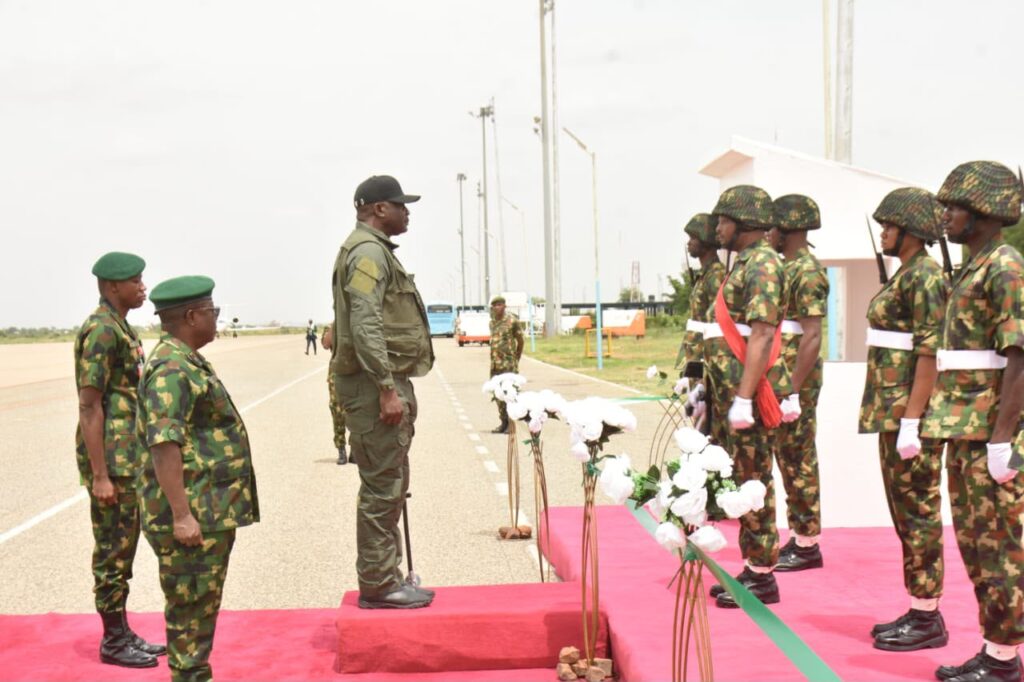
He described Sokoto as his home state, recalling that he was born and raised there, and commended the efforts of the state government in sustaining peace despite recent security challenges in some parts of the state.
According to him, the administration of Ahmed Aliyu has consistently supported security agencies with critical logistics, noting that the latest intervention would further boost troop morale and operational effectiveness.
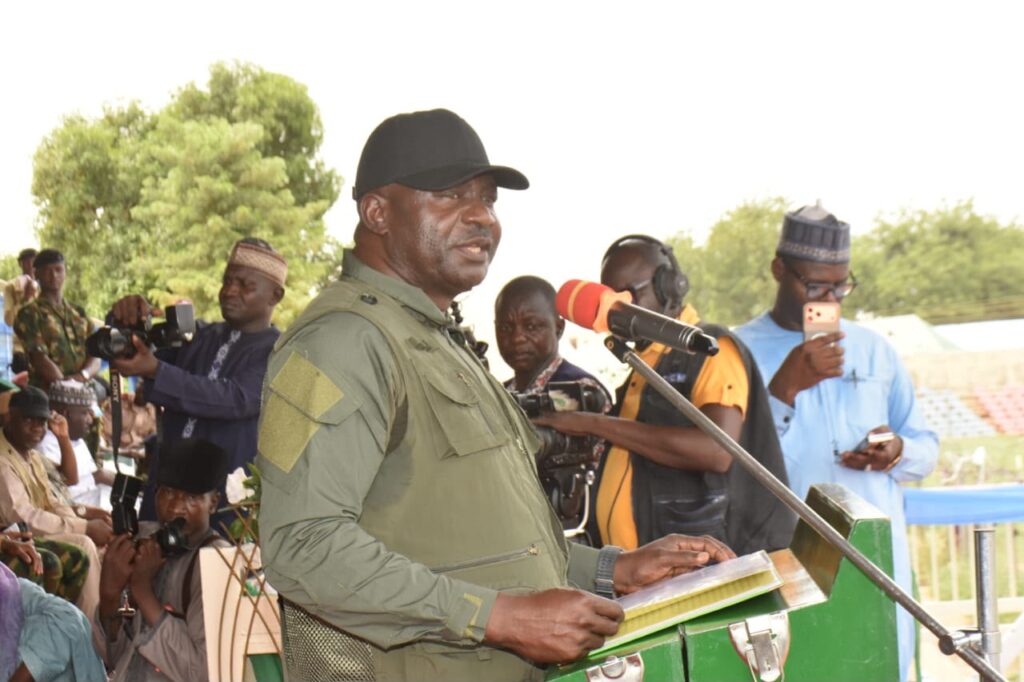
Musa appealed to other state governments and well-meaning Nigerians to emulate the Sokoto Government by supporting security agencies with logistics and other resources needed to combat insecurity.
He also said that security remains a key priority under the Renewed Hope Agenda of Bola Ahmed Tinubu, assuring Nigerians of the Federal Government’s commitment to restoring lasting peace and stability across the country.
Earlier, Gov. Ahmed Aliyu said the newly acquired armoured vehicles and motorcycles would be deployed to identified flashpoints to strengthen ongoing operations against bandits, kidnappers and other criminal elements.
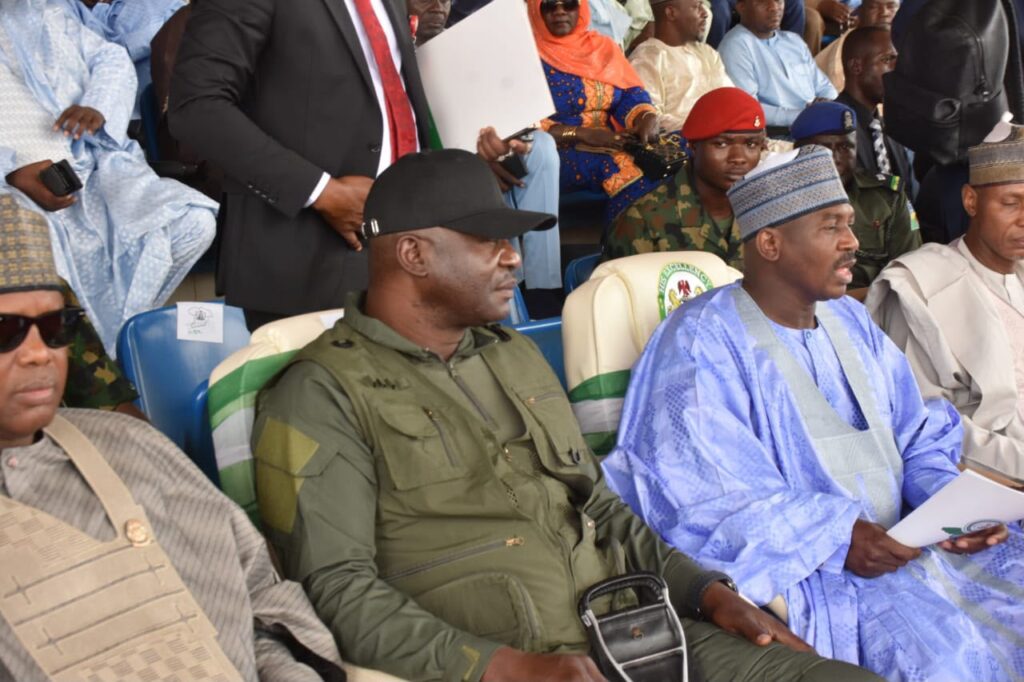
The governor said the intervention was aimed at improving the operational efficiency of security agencies and ensuring the protection of lives and property across the state.
He disclosed that his administration had previously spent more than N36.27 billion on similar logistics support for the Armed Forces and other security agencies operating in Sokoto State.
Aliyu further revealed that the Sokoto State House of Assembly was considering legislation that would prescribe sanctions for informants aiding criminal groups, similar to those imposed on bandits.
He reaffirmed that security remains a top priority under his administration’s Nine-Point Smart Agenda and commended the Federal Government, the Armed Forces, other security agencies and stakeholders for their continued efforts in addressing insecurity.
The governor also appreciated President Bola Tinubu for his sustained support towards improving the nation’s security architecture.
In his remarks, the Sa’ad Abubakar, represented by the Wazirin Sokoto, Sambo Wali Junaidu, commended the governor for his sustained investment in security, describing the intervention as a significant contribution to the protection of lives and property in the state.
Sokoto donates 62 armoured vehicles, 320 motorcycles to security agencies
Nigeria Mourns 21 Killed in China Landslide, Reaffirms Strategic Partnership
By: Michael Mike
The Federal Government has extended its condolences to the Government and people of China following the devastating landslide that struck Tanchang County in Gansu Province, killing at least 21 people and leaving several others affected, as Abuja reaffirmed the enduring strategic partnership between the two countries.
In a statement issued on Wednesday, the spokesperson for the Ministry of Foreign Affairs, Kimiebi Ebienfa, described the disaster as a tragic incident and said Nigeria stood in solidarity with China as rescue teams continued efforts to reach victims and support affected communities.
The landslide occurred on Tuesday in Tanchang County, a mountainous area in northwestern China’s Gansu Province, where heavy rainfall triggered the collapse of earth and debris, burying homes and disrupting transportation. Emergency responders were immediately deployed to search for survivors, evacuate residents and provide humanitarian assistance.
Expressing the Federal Government’s sympathy, Ebienfa said Nigeria shared in China’s grief over the lives lost.
“The Federal Government of Nigeria expresses deep condolences to the Government and people of the People’s Republic of China following the tragic landslide that struck Tanchang County in Gansu Province on Tuesday, July 7, 2026,” he said.
He added: “Nigeria mourns the loss of lives in this disaster, which has claimed at least 21 lives, with others affected amid the rescue operations. Our thoughts and prayers are with the families of the deceased, the injured, and all those who have lost loved ones or property in this unfortunate incident.”
The spokesperson also commended the swift response mounted by the Chinese authorities, praising emergency personnel for their efforts to rescue survivors and provide relief to victims.
“Nigeria commends the swift response of the Chinese authorities and rescue teams in their efforts to save lives and provide relief to those impacted,” he stated.
Beyond the immediate humanitarian message, Nigeria used the occasion to reaffirm the strength of its diplomatic and economic relationship with China, one of its largest trading partners and a key investor in critical infrastructure projects across the country.
Over the years, China has played a significant role in financing and constructing major Nigerian infrastructure, including rail lines, airport terminals, highways and power projects. The two countries have also deepened cooperation in trade, investment, security, agriculture, technology and human capital development under the framework of their Comprehensive Strategic Partnership.
Reflecting on these longstanding ties, Ebienfa said: “Nigeria and China share a long-standing strategic partnership built on mutual respect, friendship, and cooperation. Nigeria stands in solidarity with China during this difficult time, and we are confident in the resilience of the Chinese people and government as they work towards recovery and rehabilitation in the affected areas.”
He also offered prayers for those affected by the disaster.
“We pray for the peaceful repose of the souls of the departed, the speedy recovery of the injured, and strength and comfort for the bereaved families,” he said.
The latest tragedy underscores the vulnerability of many mountainous regions in China to landslides and flash floods, particularly during the annual rainy season. Chinese authorities have in recent years strengthened early warning systems, disaster preparedness and emergency response mechanisms, but extreme weather events linked to intense rainfall continue to pose significant risks to lives and infrastructure.
Nigeria’s condolence message joins those from countries around the world expressing solidarity with China as rescue operations continue and recovery efforts begin in the affected communities.
Nigeria Mourns 21 Killed in China Landslide, Reaffirms Strategic Partnership
National News
President Tinubu Flags Off the Construction of Dikwa–Gamboru Ngala, Bama–Banki International Road Projects

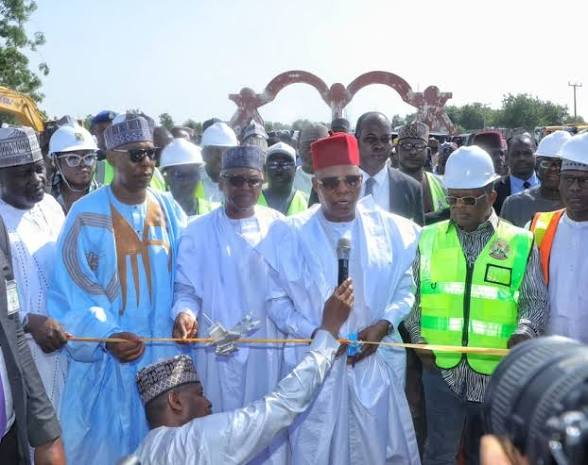
President Tinubu Flags Off the Construction of Dikwa–Gamboru Ngala, Bama–Banki International Road Projects
By: Bodunrin Kayode
President Bola Tinubu on Saturday flagged off the construction of the 49.55-kilometre Dikwa–Gamboru Ngala Road and the 49.15-kilometre Bama–Banki Road, describing the strategic highways as critical to economic growth, regional integration, and national security.
The two road projects, regarded as economic lifelines of North-East Nigeria, serves as key gateways to neighbouring African countries, which will bolster cross-border trade, facilitate the movement of agricultural produce, and strengthen security operations in a region recovering from over a decade of insurgency.
The groundbreaking ceremony was held along the Maiduguri–Gamboru Ngala Road, where President Tinubu was represented by Vice President Senator Kashim Shettima.
The Vice President said the rehabilitation of the roads would improve connectivity and deliver on the administration’s commitment to infrastructure development across the country.
“His Excellency, President Bola Ahmed Tinubu, GCFR, has made infrastructure a central priority. This is what Mr. President promised Nigerians, and I’m here today to affirm our readiness to redeem the promise and to convey his goodwill and gratitude for the support you have shown us,” Shettima said.
“The Bama–Banki Corridor carries special strategic weight. It is a top route of agriculture, movement, and national security. The Dikwa–Gamboru Ngala Road belongs to the same vision of reconnecting communities and restoring economic confidence across Borno State.”
The President also commended Borno State Governor, Professor Babagana Zulum, for prioritising infrastructure and maintaining a strong partnership with the Federal Government.
“The partnership between the Federal Government and Borno State shows what becomes possible when public institutions are united by the urgency of service. Certainly, Your Excellency, Professor Babagana Umara Zulum, you are one of the best-performing governors in the federation,” Tinubu stated.
Governor Zulum expressed appreciation to President Tinubu for approving the road projects and other critical interventions in Borno State.
“The successful commencement of this project reflects the strong partnership between the Federal Government and the Borno State Government. We deeply appreciate and remain eternally grateful to the President of the Federal Republic of Nigeria, President Bola Ahmed Tinubu, GCFR, for his unwavering commitment to the development, peace, and security of the North East and Nigeria as a whole.
“Borno State Government recognizes that infrastructure remains a critical foundation for development. Since assuming office, our administration has prioritized the rehabilitation and construction of roads, schools, hospitals, water facilities, and other critical infrastructure as part of our commitment to improving the lives of our citizens,” he added.
Governor Zulum also pledged the state’s political support for President Tinubu in the next presidential election.
“I want to assure the President and indeed the Vice President that, Insha Allah, come January 2027, the people of Borno State will overwhelmingly vote him into office.”
The Governor equally praised his representative Vice President Shettima for his sustained support towards the reconstruction and development of Borno State.
“Your Excellency, your personal interest in the reconstruction and development of our state continues to inspire confidence among our people. We sincerely appreciate your leadership and steadfast commitment.” said Zulum.
Zulum also acknowledged the humanitarian contributions of Alhaji Aliko Dangote, particularly through the Aliko Dangote Foundation, during the state’s recovery from insurgency and the 2024 flood disaster.
He recalled the construction of Dangote Village, the donation of ₦1.5 billion to the National Emergency Management Agency (NEMA), ₦1 billion to the Borno State Government following the 2024 flood, and the distribution of relief materials to internally displaced persons.
“Through the Aliko Dangote Foundation, thousands of displaced persons received food and non-food items. Essentially, in 2017, he donated 106 trucks of food to IDPs.
“Alhaji Aliko Dangote has also donated ₦1.5 billion to NEMA to support flood victims in Borno State in the year 2024.”
Governor Zulum assured that the road projects would be closely monitored to ensure value for money and strict compliance with quality standards. He also appealed to the Minister of Works to grant the Borno State Government a waiver to regulate the activities of heavy-duty truck drivers using the roads intermittently.
Earlier, the Minister of Works, Senator David Umahi, disclosed that the projects would be executed in two phases and expressed confidence that construction would be completed within six months.
The ceremony was attended by the Borno State Deputy Governor, Umar Kadafur; APC Deputy National Chairman (North), Hon. Ali Dalori; senators; members of the House of Representatives; the Shehu of Borno, represented by the Shehu of Dikwa; ministers; members of the Borno State House of Assembly; APC leaders; the Secretary to the State Government; the Head of Service; the Acting Chief of Staff; commissioners; heads of government agencies; and other dignitaries.
President Tinubu Flags Off the Construction of Dikwa–Gamboru Ngala, Bama–Banki International Road Projects

NIMC, NIPOST Integrate Identity, Digital Address Systems to Revolutionise Public Service Delivery

Troops foil multiple ISWAP infiltration attempts in Maiduguri, Buratai axis

Troops foil suspected terrorist supply chain, arrest Chadian woman with drugs in Borno

Roger Federer’s Shock as DNA Results Reveal Myla and Charlene Are Not His Biological Children

THE PLIGHT OF FARIDA

FAILED COUP IN BURKINA FASO: HOW TRAORÉ NARROWLY ESCAPED ASSASSINATION PLOT AMID FOREIGN INTERFERENCE CLAIMS
-
 News2 years ago
Roger Federer’s Shock as DNA Results Reveal Myla and Charlene Are Not His Biological Children
-
Opinions4 years ago
THE PLIGHT OF FARIDA
-
 News1 year ago
FAILED COUP IN BURKINA FASO: HOW TRAORÉ NARROWLY ESCAPED ASSASSINATION PLOT AMID FOREIGN INTERFERENCE CLAIMS
-

 News2 years ago
EYN: Rev. Billi, Distortion of History, and The Living Tamarind Tree
-
 Opinions5 years ago
POLICE CHARGE ROOMS, A MINTING PRESS
-

 ACADEMICS2 years ago
A History of Biu” (2015) and The Lingering Bura-Pabir Question (1)
-

 Columns2 years ago
Army University Biu: There is certain interest, but certainly not from Borno.
-

 Politics1 year ago
2027: Why Hon. Midala Balami Must Go, as Youths in Hawul and Asikira/Uba Federal Constituency Reject ₦500,000 as Sallah Gift
