
News
EU–IDEA, Stakeholders Call for Urgent Review of Social Development Act, Seek National Alignment

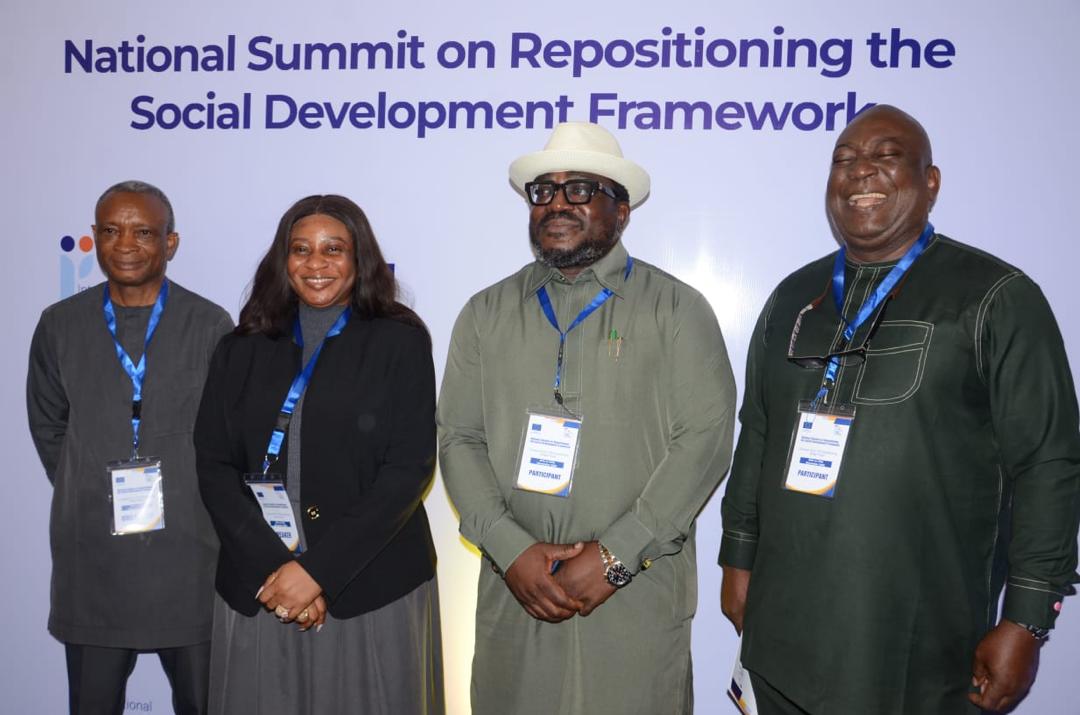
EU–IDEA, Stakeholders Call for Urgent Review of Social Development Act, Seek National Alignment
By: Michael Mike
The European Union- International Institute for Democracy and Electoral Assistance (EU-IIDEA), as well as relevant stakeholders has called for an urgent review of Nigeria’s Social Development Act (SDA), insisting that it may be impossible to achieve inclusive growth or protect vulnerable groups in the country under the current fragmented framework.
The call was made on Wednesday in Abuja at the National SDA summit, organized by the International Institute for Democracy and Electoral Assistance (IIDEA), a programme funded by the European Union under its CSOs-Bridge Strengthening Project, in Abuja.
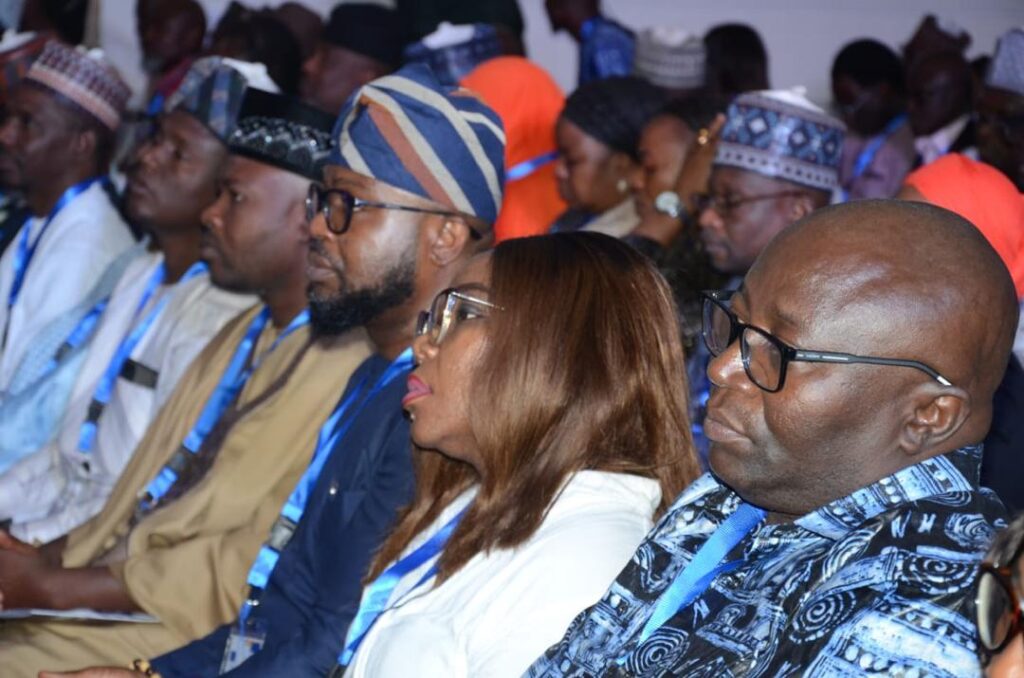
The SD Act was first conceptualised in the 1970s and enacted in 2004 as the central framework for coordinated and inclusive social development in the country.
The Enugu State Commissioner for Children, Gender and Social Development, Valentina Enih, while delivering the keynote address, decried that the existing Act, originally enacted as Decree 12 in 1974 and later reissued in 2004, does not any longer reflects the country’s realities.
She described the Act aa older than many of people in the hall, insisting that outdated provisions and emerging social challenges demand urgent reform.
She also stressed that unity among civil society organisations (CSOs) remained essential for progress, adding that personal interests often overshadowed collective objectives.
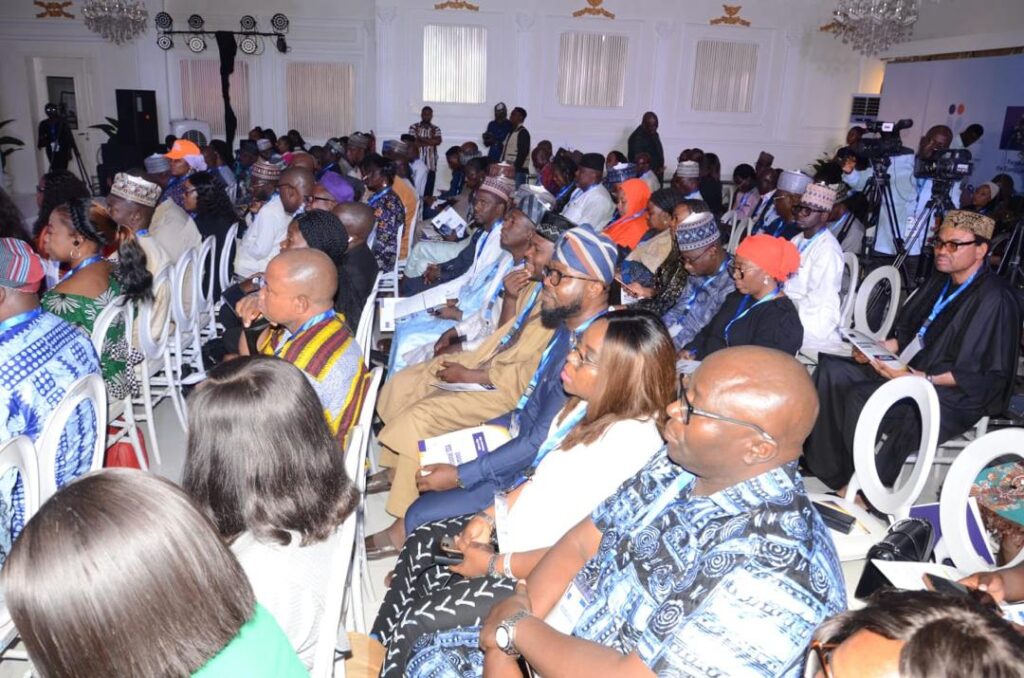
She noted that: “One stick is easily broken, but a bundle of broomsticks is not. We must speak with one voice,” while appealing to lawmakers to increase funding for ministries responsible for women affairs, poverty eradication and social protection, added that: “Many times, we use our personal resources just to ensure the work is done.”
On his part, the Chairman of the House Committee on Civil Society Organisations and Development Partners, Hon. Victor Obuzor acknowledged the legislative gaps that have hindered effective coordination of social development nationwide.
He said the National Assembly had made the Act’s review a priority, noting that: “Fragmentation, institutional reassignments and multiple regulatory frameworks have weakened the effectiveness of the Social Development Act.
“Our Committee is reviewing historical gaps, engaging stakeholders and supporting the development of a modernised civil society regulatory bill.”
He said the revised law would create clearer lines of authority, harmonise federal and state mandates and institutionalise civil society participation.
The Deputy Director at the Ministry of Humanitarian Affairs and Poverty Reduction, Peter Audu, said the forum aligns with federal reforms targeting gender equality, social protection and national cohesion.
He noted that the government was committed to building stronger collaboration across ministries, development partners and state institutions.
“This forum provides an important opportunity to consider proposed amendments and develop a national coalition for sustainable financing and measurable results,” he said.
The CEO of the Accountability and Transparency Initiative, Dr. Fumi Akinyele, called for the revised law to embed gender responsiveness from the design stage.
She noted that many rural women were excluded from social protection programmes due to requirements such as smartphones, bank verification numbers and digital literacy.
“Inclusion must go beyond words. We need clear definitions, gender-responsive budgeting and disaggregated data. Committees must be balanced so that different voices are heard,” she said.
The Chairman of the Anambra Civil Society Network, Prince Chris Azor, shared experiences illustrating the challenges faced by sub-national CSOs, including inconsistent regulations that once led to the closure of community organisations’ bank accounts.
“We were stranded. Even registration processes were unclear. When grassroots operators cannot function, you are shrinking the civic space,” he said.
He urged that the amended Act provide states with a clear legal framework for social protection and civil society participation. “We want a standing law that expands the civic space and ensures citizens are part of governance.”
EU–IDEA, Stakeholders Call for Urgent Review of Social Development Act, Seek National Alignment


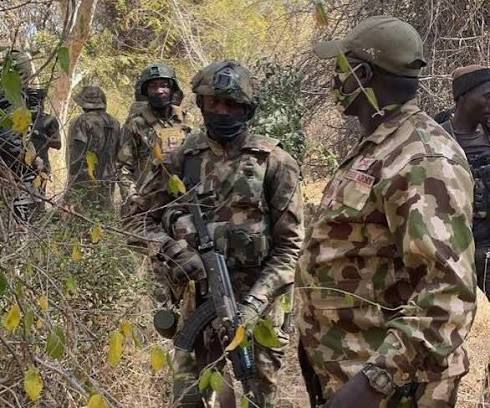
Troops Foil ISWAP/JAS Attack on Military Position in Borno, Recover UXOs
By: Zagazola Makama
Troops of 3 Battalion (Mechanised)/24 Task Force Brigade have successfully repelled an attack by suspected Islamic State West Africa Province (ISWAP) terrorists in Ngala Local Government Area of Borno State.
Security sources said the attack occurred at about 2:44 a.m. on June 12 when terrorists launched coordinated assaults on the troops’ location from Wurge, Manawaji and Kinuba.
According to the sources, the troops engaged the attackers with superior firepower, supported by reinforcements from battalion headquarters, as well as mortar and artillery fire support, forcing the insurgents to withdraw.
Following the encounter, the fleeing terrorists retreating and scampered into the bushes.
At about 5:45 a.m., troops and auxiliary forces conducted a follow-up exploitation along the withdrawal route towards Wurge, during which three RPG-7 high-explosive unexploded ordnances (UXOs) and two torchlights were recovered.
The sources further disclosed that a main battle tank developed technical faults during the aftermath of the engagement, while one soldier sustained injuries from fragments of an RPG blast.
The wounded personnel was evacuated to the 3 Battalion Regimental Aid Post (RAP) for medical treatment.
Military authorities said clearance and follow-up operations were ongoing in the area to consolidate gains and prevent further terrorist regrouping.
They reaffirmed commitment to sustaining aggressive counter-terrorism operations across the North-East theatre.
Troops Foil ISWAP/JAS Attack on Military Position in Borno, Recover UXOs
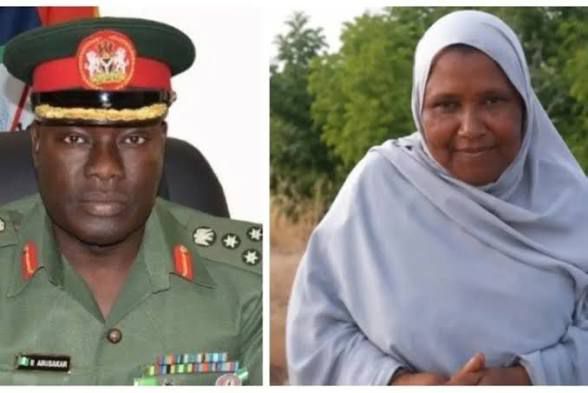
Katsina Govt Confirms Death of Retired Major General Rabe in Bandits’ Captivity
By: Zagazola Makama
The Katsina State Government has announced the death of retired Major General Rabe Abubakar while in the captivity of bandits.
The government, in a statement issued on Friday by the Commissioner for Internal Security and Home Affairs, Dr Nasiru Mu’azu, described the development as tragic and a major loss to the state and the nation.
According to the statement, the retired senior military officer died from complications arising from diabetes and hypertension while in captivity.
The government said that despite sustained efforts by the state government and security agencies to secure his release, the situation ended in tragedy.
“The deceased retired general died a natural death from complications of diabetes and hypertension,” the statement said.
It noted that the late officer’s abduction and subsequent death represented not only a loss to his immediate family and Katsina State but also a monumental loss to the country.
Governor Dikko Umaru Radda expressed deep condolences to the family of the deceased, describing the incident as a dark moment and a reminder of the need for intensified efforts against criminal elements threatening peace and security.
The governor reaffirmed the state government’s commitment to working closely with the Federal Government and security agencies to ensure that those responsible for the abduction are brought to justice.
He also assured residents that the government remained resolute in its determination to eliminate banditry and safeguard lives and property across the state.
The government prayed for the repose of the soul of the late retired Major General and urged citizens to continue supporting security agencies in the fight against insecurity.
Katsina Govt Confirms Death of Retired Major General Rabe in Bandits’ Captivity
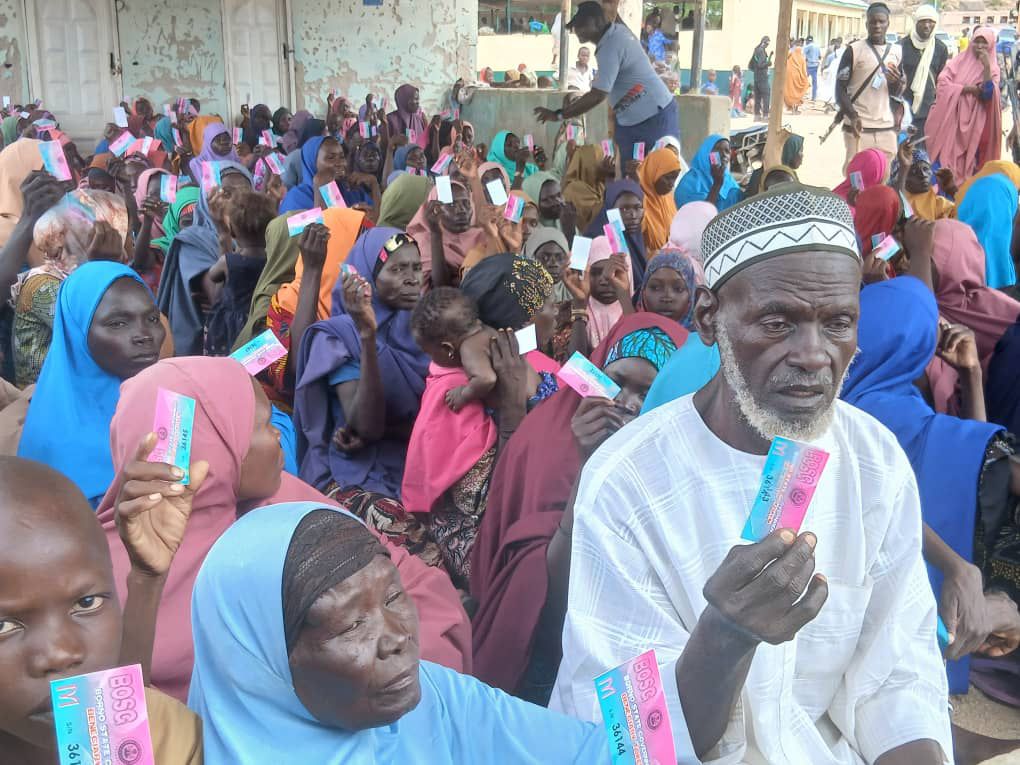
Zulum Delivers Relief, Cash Support to 434 Ngoshe Residents Rescued from Boko Haram
By: Our Reporter
Borno State Government has distributed relief materials to 434 indigenes of Ngoshe community in Gwoza Local Government Area who were recently rescued by security agencies after spending three months in Boko Haram captivity.
Governor Babagana Umara Zulum visited the victims in Pulka on Monday and directed the immediate distribution of food and non-food items to support their recovery and reintegration.
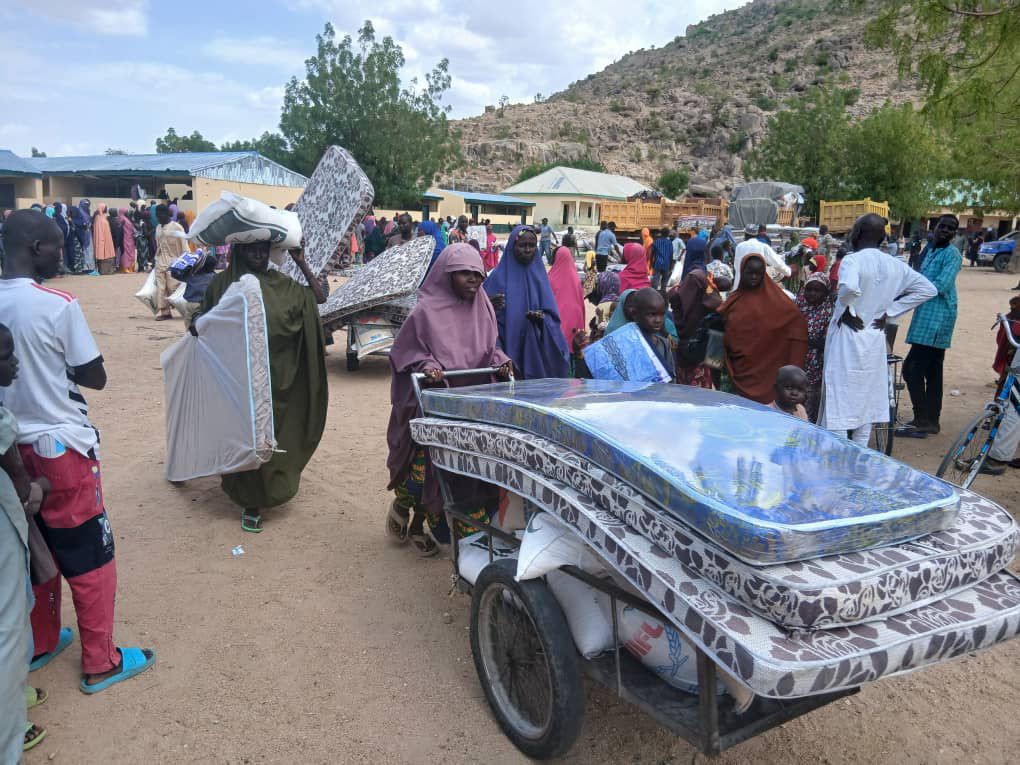
In compliance with the Governor’s directive, the Director General of the Borno State Emergency Management Agency (SEMA), Alhaji Ali Abdullahi Isa, promptly supervised the distribution exercise.
Each rescued person received a bag of rice, a bag of maize grits, a mattress, a wrapper, and a shadda, while children received two pairs of clothing.
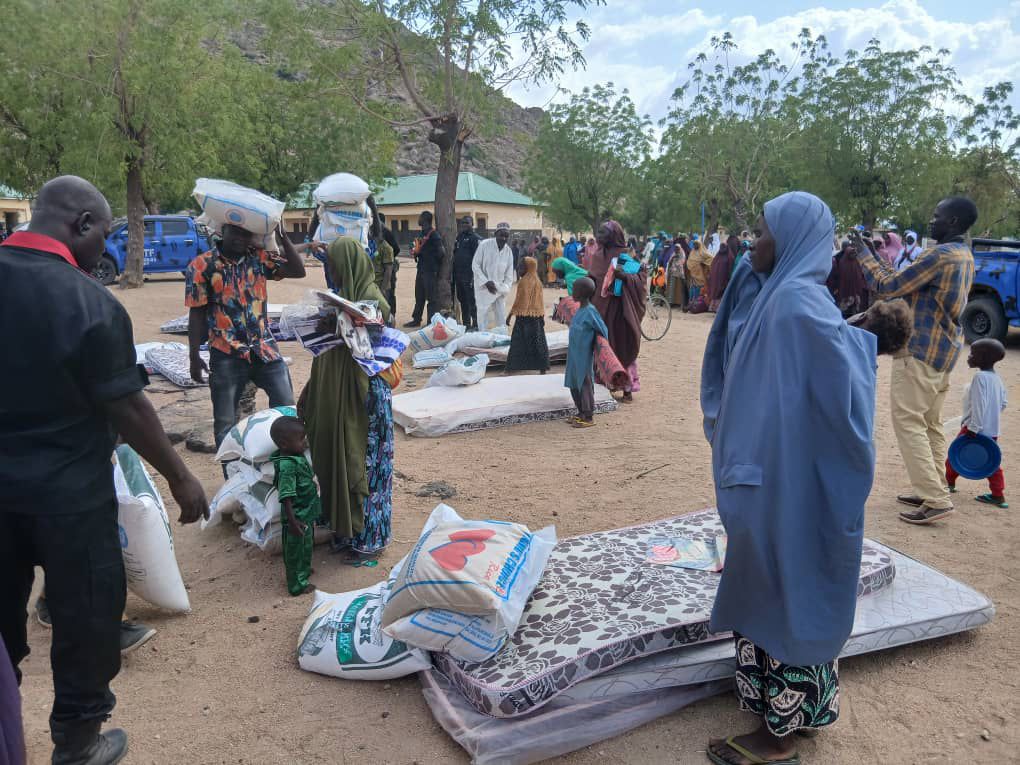
In addition, 208 heads of households received N50,000 each, fulfilling Governor Zulum’s earlier pledge of financial assistance.
Speaking during the distribution, the SEMA Director General said the intervention was part of the government’s immediate response to ease the hardship faced by the rescued victims.
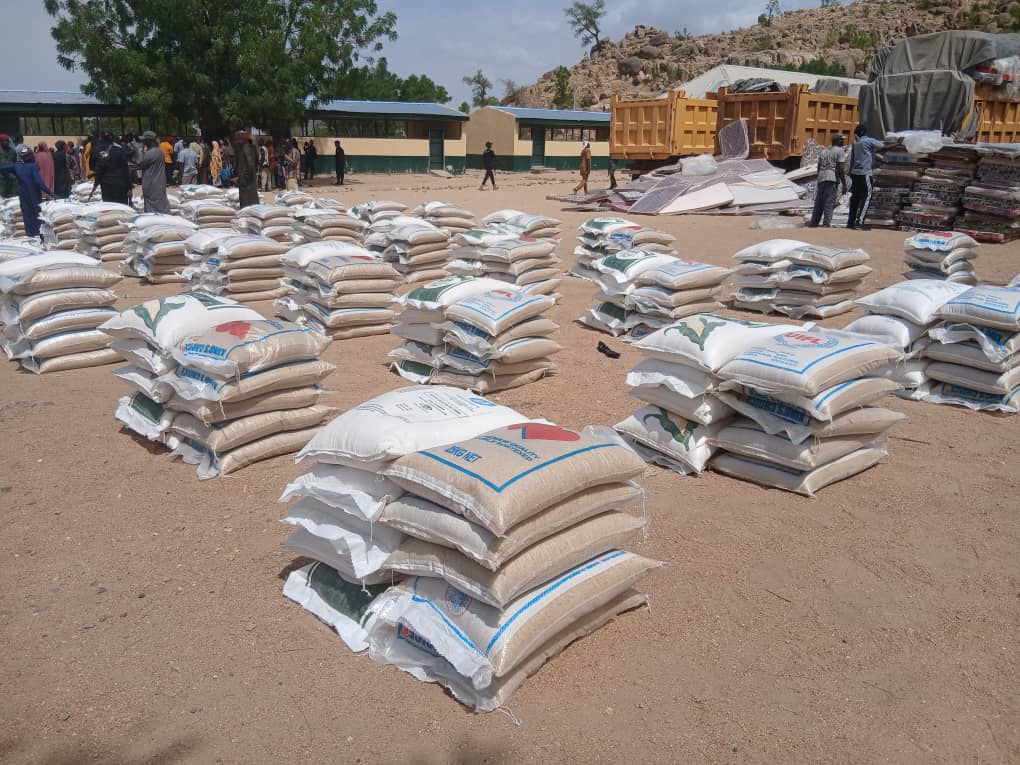
“I am here at the instance of His Excellency, Governor Babagana Umara Zulum, who was here some few days ago, and to deliver the items he directed that it should be given to you as emergency relief,” Ali stated.
The rescued individuals are currently receiving medical care and psychosocial support at a government facility. Upon completion of the rehabilitation process, they will be reintegrated into their respective communities.
The exercise was carried out alongside the Chairman of Gwoza local government, representatives of the Ngoshe community, and other officials.
Zulum Delivers Relief, Cash Support to 434 Ngoshe Residents Rescued from Boko Haram

Troops Recover AK-47 Rifle, Ammunition in Failed ISWAP Reconnaissance Operation in Borno

Troops Foil ISWAP/JAS Attack on Military Position in Borno, Recover UXOs

Katsina Govt Confirms Death of Retired Major General Rabe in Bandits’ Captivity

Roger Federer’s Shock as DNA Results Reveal Myla and Charlene Are Not His Biological Children

THE PLIGHT OF FARIDA

FAILED COUP IN BURKINA FASO: HOW TRAORÉ NARROWLY ESCAPED ASSASSINATION PLOT AMID FOREIGN INTERFERENCE CLAIMS
-
 News2 years ago
Roger Federer’s Shock as DNA Results Reveal Myla and Charlene Are Not His Biological Children
-
Opinions4 years ago
THE PLIGHT OF FARIDA
-
 News1 year ago
FAILED COUP IN BURKINA FASO: HOW TRAORÉ NARROWLY ESCAPED ASSASSINATION PLOT AMID FOREIGN INTERFERENCE CLAIMS
-

 News2 years ago
EYN: Rev. Billi, Distortion of History, and The Living Tamarind Tree
-
 Opinions4 years ago
POLICE CHARGE ROOMS, A MINTING PRESS
-

 ACADEMICS2 years ago
A History of Biu” (2015) and The Lingering Bura-Pabir Question (1)
-

 Columns2 years ago
Army University Biu: There is certain interest, but certainly not from Borno.
-

 Politics1 year ago
2027: Why Hon. Midala Balami Must Go, as Youths in Hawul and Asikira/Uba Federal Constituency Reject ₦500,000 as Sallah Gift
